Why the fuck was this review needed? You're so out-of-date you don't constantly follow stroke research?
Efficacy and Safety of Early Mobilization and Factors Associated with Rehabilitation After Stroke—Review

1
Neurological and
Neurosurgical Nursing Department, Faculty of Health Science, Collegium
Medicum in Bydgoszcz, Nicolaus Copernicus University in Toruń, 85-821
Bydgoszcz, Poland
2
Department of Neurological Nursing, Faculty of Health Science, Poznań University of Medical Sciences, 60-806 Poznań, Poland
*
Author to whom correspondence should be addressed.
J. Clin. Med. 2025, 14(5), 1585; https://doi.org/10.3390/jcm14051585
Submission received: 29 January 2025
/
Revised: 18 February 2025
/
Accepted: 25 February 2025
/
Published: 26 February 2025
(This article belongs to the Special Issue Clinical Perspectives in Stroke Rehabilitation)
Abstract
Background/Objectives: Knowledge
about the safety and effectiveness of early post-stroke mobilization and
its correlation with various factors is necessary to select an
appropriate rehabilitation program and reduce the time of convalescence.
Understanding the above processes will help to effectively lower the
economic burden. Thus, we conducted a review to assess the safety and
effectiveness of early post-stroke rehabilitation and the impact of
various factors on the course of therapy.
Methods: The analysis
included publications meeting the inclusion criteria published in the
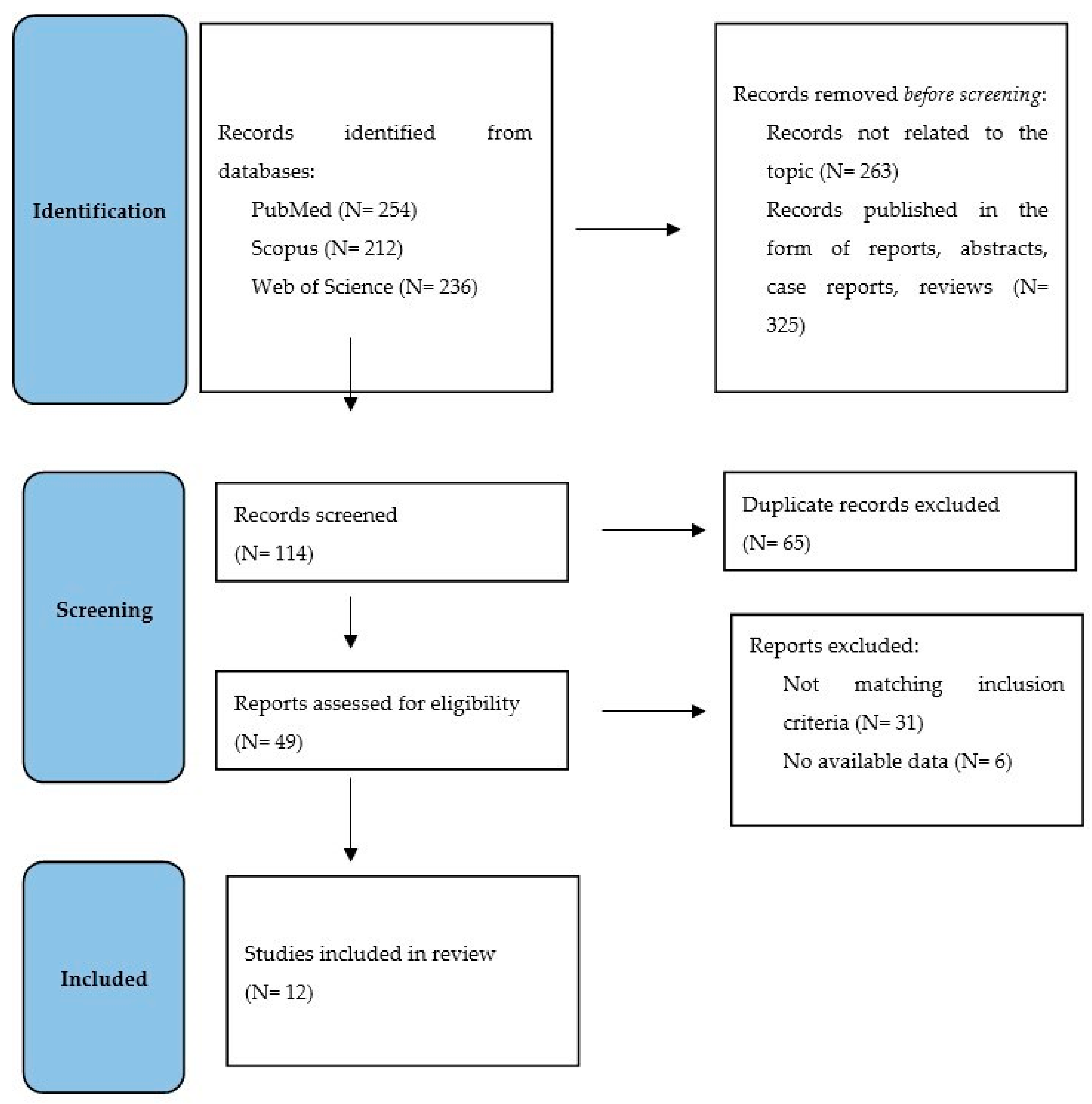
years 2015–2024 in Web of Science, Scopus, Embase, and PubMed. Finally,
12 studies were qualified for the review. The study group ranged from 37
to 2325 people.
Results: The results of studies on early stroke
mobilization indicate possible benefits, including reduced time of
hospitalization and faster achievement of higher functional scores. It
has been shown that the important factors correlating with the
effectiveness of therapy include: rehabilitation intensity, age,
functional status before the stroke, depression, social support, lesion
location, lower extremity deep vein thrombosis, cognitive disorder,
dysphagia, and lower limb spasticity.
Conclusions: There is a
strong need for research into post-stroke rehabilitation to speed up
recovery times and reduce the economic burden on the country. Current
research findings on the efficacy and safety of early rehabilitation are
inconsistent. There is a strong need for international guidelines.
1. Introduction
According
to the American Stroke Association: “A stroke occurs when a blood
vessel that carries oxygen and nutrients to the brain is either blocked
by a clot or bursts (or ruptures). When that happens, part of the brain
cannot get the blood (and oxygen) it needs, so it and brain cells die” [1].
Stroke is a disease with a high risk of death. The World Health
Organization estimates that 15 million people worldwide suffer a stroke
each year, and 5 million of them die. Another five million people
struggle with many permanent consequences of stroke, such as paresis,
paralysis, cognitive impairment, epilepsy, and aphasia. The permanent
disability of patients significantly burdens the community and family [2,3].
It is recognized that the direct clinical consequences of stroke are
associated with many more or less known medical, psychosocial, and
musculoskeletal problems [4].
The goal of post-stroke therapy is primarily to enhance the functional
and structural reorganization of the brain. Therefore, healthcare
workers and scientists are still looking for effective methods to
stimulate the natural healing process, which is influenced by many
factors, e.g., the area of damage and its location in the brain, the
patient’s condition before the stroke, genetic factors, and
comorbidities. Currently, rehabilitation is the only form of treatment
that is considered an effective way to enhance the healing process both
in the subacute and chronic period after vascular incidents [5,6].
Stroke
remains the leading cause of death and disability worldwide. The
economic costs of caring for stroke patients are high. Nearly 34% of
global health expenditure is spent on stroke [7,8].
Nevertheless, implementing early rehabilitation after stroke
contributes to reducing the costs of care for neurological patients.
Early mobilization is defined as out-of-bed activities in the acute
stroke phase [9].
In many countries, patients are qualified for rehabilitation after 24 h
from the moment of stroke. In general, it is worth noting that the
optimal time to start physiotherapy is still elusive and is subject to
many trials and studies. Both early and long-term and intensive
rehabilitation play a significant role [10].
One study conducted in Washington among 72 patients showed that the
respondents in the group of therapy initiated 2–3 months after the
stroke were characterized by the greatest improvement one year after the
stroke. The authors of the study emphasize the need to provide patients
with more intensive physical rehabilitation in the period from 60 to 90
days after the stroke [11].
In turn, the primary justification for early rehabilitation is to
prevent or reduce the risk of complications (falls, infections and deep
vein thromboembolism, loss of cardiovascular fitness, muscle atrophy),
promoting brain recovery. Furthermore, there are a number of doubts
regarding early mobilization due to, among others, its possible impact
on blood pressure. These concerns apply mainly to patients with
hemorrhagic stroke and patients treated with recombinant tissue-type
plasminogen activator (r-tPA). Many of the previously published research
results on the efficacy and safety of early mobilization after acute
stroke are inconsistent [12]. The A Very Early Rehabilitation Trial (AVERT) [13]
series of studies highlighted that very early rehabilitation after
stroke is not always beneficial. These studies also included patients
who had received rt-PA. The authors of the study pointed out that, as
usual, care in a stroke unit varies depending on the location.
Therefore, it would be an oversimplification to simply advise usual
care. However, another multicenter study, the Early Sitting in Ischemic
Stroke Patients (SEVEL) [14],
showed that sitting exercises over 24 h can reduce neurological deficit
both at discharge and within 3 months after stroke. Due to the large
discrepancies in the results of the studies conducted, the most
reasonable solution would be to introduce the required safety criteria
taking into account the patient’s condition, type of stroke, treatment
applied, blood pressure measurement, and others. Due to the fact that
the current discussion lacks a common understanding regarding the
definition of early rehabilitation, evidence regarding patient
qualifications, benefits, and risks of its implementation, we decided to
conduct a general review of currently published studies. The aim of
this review of studies was to assess the impact of the start time of
rehabilitation, its effectiveness, and the correlation of multiple
factors in terms of physiotherapy on the overall improvement in the
functioning of patients after stroke.
More at link.


No comments:
Post a Comment