All because her STROKE MEDICAL 'PROFESSIONALS' COMPLETELY FUCKING FAILED AT HER 100% RECOVERY!
Young adult learns to live after ischemic stroke
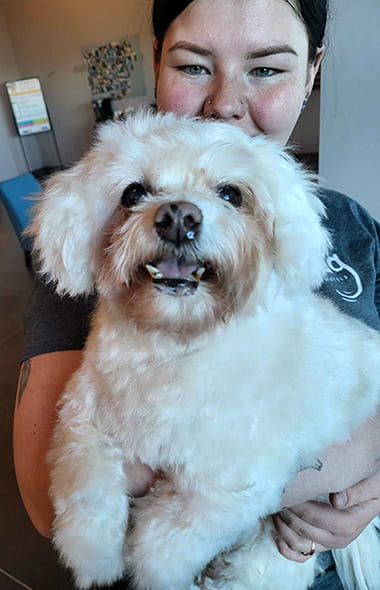 At
just 21, Melody McMurray dismissed her sudden lightheadedness,
dizziness and slurred speech as the result of sleep deprivation. But
these were the first signs of something far more serious: an ischemic
stroke caused by a blood clot blocking blood flow to part of her brain.
At
just 21, Melody McMurray dismissed her sudden lightheadedness,
dizziness and slurred speech as the result of sleep deprivation. But
these were the first signs of something far more serious: an ischemic
stroke caused by a blood clot blocking blood flow to part of her brain.
McMurray was cleaning her Aurora, Colorado house to prepare for a home inspection on Feb. 2, 2024. She and her sister were having a typical conversation and joking around, but then McMurray started struggling to speak.
“I couldn’t get the words out I was trying to say,” said McMurray, now 22. “I would slur like I was drunk, but I was sober. I thought I was just sleep-deprived and tired.”
McMurray sat down, then felt fine. Assuming the strange episode was over, she drove to the store with her boyfriend, Tyler Kurgan, to shop for groceries. She still felt fine until she got about halfway down the aisle with cleaning products when she felt her left arm go limp.
“I couldn’t move it,” McMurray said. “That’s when I started feeling lightheaded and dizzy again. I needed to sit down.”
McMurray had shown two of the symptoms highlighted in the F.A.S.T. acronym for identifying a stroke and acting quickly: F for face drooping, A for arm weakness, S for speech difficulty and T for time to call 911.
She called her father, Jeremy, who was concerned about her slurred speech. Meanwhile, Kurgan – who watched both of his grandparents have a stroke – knew almost immediately what was happening with his girlfriend, and his face paled.
“We need to go to the hospital!” Kurgan said.
He rushed McMurray to HCA HealthONE Aurora, about 25 minutes away; meanwhile, she was fully conscious.
“Honestly, it was sheer panic that went through my body,” said McMurray, a dog groomer. “I didn’t want to believe it; there’s no way I’m having a stroke. Of course, I couldn’t get anything out because it was hard to speak.”
McMurray was diagnosed with an ischemic stroke in the ER. She spent two days in the ICU and another day in the regular medical/surgical ward.
While McMurray’s stroke came as a shock because she had no known health problems, doctors said that her birth control pills, which can contribute to blood clots, were potentially a factor. Doctors at the HCA Healthcare hospital in Aurora administered medication to break up blood clots, then performed a mechanical thrombectomy procedure to remove the clot.
When McMurray was discharged from the hospital, she was able to speak and walk, thanks to the quick treatments that cleared the clot. However, she felt drained and defeated. McMurray has tried to maintain a positive attitude and her sense of humor throughout her recovery. Except for an occasional episode of a hand tensing up and locking, as well as some struggling with slowed speech, her recovery is nearly complete.
She takes blood thinners to prevent clots, and she now uses birth control pills with only progesterone; estrogen is thought to raise the risk of blood clots. Lupus, a recent surprise diagnosis after leaving the hospital, may also have contributed to McMurray’s stroke, she said. Nine months after the trauma, McMurray is still struggling to come to terms with what happened to her. A stroke for such a young adult had seemed impossible.
“I didn’t ever think it could happen to someone this young,” McMurray said. “When they told me it could happen to anyone, I was in shock.”
McMurray shares this advice for people after her ordeal: “Learn the signs of stroke and respond quickly. Don’t hesitate and just get them to the hospital as soon as possible.”
If it weren’t for her boyfriend’s awareness of stroke symptoms, McMurray said, she probably wouldn’t be alive today.


No comments:
Post a Comment