Changing stroke rehab and research worldwide now.Time is Brain! trillions and trillions of neurons that DIE each day because there are NO effective hyperacute therapies besides tPA(only 12% effective). I have 523 posts on hyperacute therapy, enough for researchers to spend decades proving them out. These are my personal ideas and blog on stroke rehabilitation and stroke research. Do not attempt any of these without checking with your medical provider. Unless you join me in agitating, when you need these therapies they won't be there.

What this blog is for:

My blog is not to help survivors recover, it is to have the 10 million yearly stroke survivors light fires underneath their doctors, stroke hospitals and stroke researchers to get stroke solved. 100% recovery. The stroke medical world is completely failing at that goal, they don't even have it as a goal. Shortly after getting out of the hospital and getting NO information on the process or protocols of stroke rehabilitation and recovery I started searching on the internet and found that no other survivor received useful information. This is an attempt to cover all stroke rehabilitation information that should be readily available to survivors so they can talk with informed knowledge to their medical staff. It lays out what needs to be done to get stroke survivors closer to 100% recovery. It's quite disgusting that this information is not available from every stroke association and doctors group.

Showing posts with label wellbeing. Show all posts

Friday, June 20, 2025

Wellbeing May Help Protect Memory in Middle Age

 Still in middle age at age 69, happier than all get out.

 I reflect on my life with a stroke at age 50 being the best thing to happen to me.

 My story: I would still be leading a life of quiet desperation if still married.

Why my stroke was the best thing to ever happen to me

(Life is definitely better as I age, I got divorced enhancing my happiness immeasurably. I'm retired and comfortably well off. And healthy as I can be post stroke. I'm going to live a long time yet.)

People really need to start listening to and repeating the Ani DeFranco song. I'm happy.
"If Yr Not"
If you’re not, if you’re not
If you’re not getting happier as you get older
Then you’re fuckin’ up

Wellbeing May Help Protect Memory in Middle Age

Summary: A new 16-year study of over 10,000 adults finds that higher wellbeing is linked to better memory performance in middle age. Researchers tracked participants’ psychological wellbeing and memory recall, finding that those with higher life satisfaction were more likely to retain stronger cognitive function over time.

This effect persisted even after adjusting for depression, suggesting a unique link between wellbeing and brain health. The results add to growing evidence that mental and emotional health can play a key role in protecting memory and delaying cognitive decline.

Key Facts:

  • Sustained Link: Higher psychological wellbeing predicted better memory scores, even 16 years later.
  • Independent of Depression: The wellbeing–memory connection held even after adjusting for depressive symptoms.
  • Preventative Potential: Enhancing wellbeing could be a protective factor against age-related cognitive decline.

Source: Taylor and Francis Group

Higher levels of wellbeing may help reduce the risk of memory loss in middle age, suggests new research, which tracked more than 10,000 over 50-year-olds across a 16-year span.

Findings that are published today, in the peer-reviewed journal Aging & Mental Health, found those who said they had higher wellbeing were more likely to subsequently have better scores on memory tests.

This shows a happy older man.
This study found that people over 50 who reported they felt happier and more fulfilled in life had a better memory over time. Credit: Neuroscience News

These people – all of whom were determined as having ‘healthy brains’ – also reported a greater sense of control, independence, and freedom to make choices.  

This association between psychological wellbeing and better recall was small but significant. The link was also independent of depressive symptoms, according to the researchers.

However, the analysis by a cohort of 15 experts across the UK, US and Spain found no evidence to suggest better memory was linked with later higher wellbeing, although the authors say the possibility cannot be discounted.

The academics add that the results highlight that psychological and social factors affect brain health, and wellbeing may protect against cognitive impairment. Interventions to promote psychological wellbeing such as mindfulness could maintain mental functions such as memory as people age.  

“In the context of an ageing population, understanding factors that may protect and maintain healthy cognitive function is critical for enhanced population health and health policy development,” explains lead author Dr Amber John, a Lecturer in Psychology at the University of Liverpool and a current Alzheimer’s Research UK Fellow, who specialises in research on ageing, with a specific focus on mental health, neurodivergence, and dementia.

“While, in this research, we can’t examine and understand the relationship between causes and effects, determining if one event leads to another (causality), our findings are important in proposing that good wellbeing predates better memory rather than vice versa.

“This suggests that the link between wellbeing and memory is not just because people with poor memory have poor wellbeing and that, if causality is demonstrated, improving wellbeing could protect against subsequent memory decline.”

Co-author Joshua Stott, a Professor of Ageing and Clinical Psychology at UCL, adds: “This study represents an important step toward understanding the interplay between wellbeing and memory over time. It offers new insights into how self-rated wellbeing is associated with memory and vice versa.

“While our findings are preliminary, they highlight the importance of considering psychosocial influences on brain health such as memory.”

Depression and anxiety are widely recognised as risk factors in faster decline of brain health and dementia. A key global healthcare priority is now to prevent dementia.

Wellbeing is defined as emotional health combined with being able to function effectively. Happiness, confidence, a sense of purpose and control over life are among the elements of wellbeing.

Existing studies have suggested a positive link between wellbeing, age-related decline in mental processes in the brain, and mild impairment of these functions. Memory is regarded as a cornerstone of an individual’s mental processes.

However, most studies have only tested this link between wellbeing and memory in one direction or another. The aim of this research was to provide longer-term insights into the relationship between wellbeing and memory in people who have yet to experience significant cognitive decline.  

Data was based on 10,760 men and women who took part in the English Longitudinal Study of Ageing Self-reported. This existing long-term research project involves UK adults over the age of 50 and includes attitudes to well-being.

Participants were assessed on wellbeing and memory every two years – a total of nine times during the 16-year study period stretching back to 2002.

Researchers used a learning task to check participants’ ability to recall ten words immediately and after a delay. Wellbeing was assessed using a quality-of-life questionnaire. Participants scored themselves based on satisfaction of specific needs – pleasure, control, autonomy, and self-realisation. Questions included ‘I can do the things that I want to do’, and ‘I feel that life is full of opportunities’.

The authors excluded anyone with a dementia diagnosis at the start of the study.

Results showed a small but significant association between higher wellbeing and better memory. In addition, the study found that the impact of wellbeing on memory was significant even after adjusting for depression. The authors say this suggests links between wellbeing and memory exist independent from depressive symptoms.

Biological factors such as cardiovascular disease and those linked to lifestyle – such as physical activities – are among possible reasons for the effect of wellbeing on memory, say the authors. Age, gender, lifestyle, and socioeconomic status may also have a negative or positive impact on the relationship between wellbeing and memory function.

Despite the lack of evidence for memory affecting wellbeing, the authors say this cannot be ruled out. They say lower psychological wellbeing may be a sign of ‘oncoming cognitive impairment’ before symptoms become apparent.

The research was funded by Alzheimer’s Research UK; Medical Research Council (a part of UKRI); National Institute on Aging; and National Institute for Health and Care Research (NIHR).

Emma Taylor, Information Services Manager at Alzheimer’s Research UK, comments: “Loving your heart, staying sharp and keeping connected are key to protecting our brain health as we age. 

“There are 14 established health and lifestyle risk factors for dementia, including lack of physical exercise, social isolation, and depression, which are linked to wellbeing. 

“This study found that people over 50 who reported they felt happier and more fulfilled in life had a better memory over time. However, this research is observational – and more work is needed to understand how a positive wellbeing and memory are connected and whether this has a knock-on effect on dementia risk.

“Looking after our mental wellbeing plays an important part in our overall health. And it’s never too late to start taking steps to keep our brains healthy throughout our lives and lessen the devastating impact of dementia.”

As with all long running longitudinal studies, one limitation of this paper is sample attrition over the follow-up period. However, the team used a research methodology which enabled use of use of all available information in the observed data, without imputation or discarding cases.

To conclude, authors say their results could provide the basis for further research into what factors can enhance brain health in aging populations.

Co-author Dr Emily Willroth, an Assistant Professor of Psychological & Brain Sciences at Washington University, in St Louis, Missouri, adds: “Going forwards it would be fantastic if this research can build on the foundations of ongoing memory research to potentially inform strategies supporting cognitive health in ageing populations – that is the aim.”

About this aging and cognition research news

Author: Simon Wesson
Source: Taylor and Francis Group
Contact: Simon Wesson – Taylor and Francis Group
Image: The image is credited to Neuroscience News

Original Research: Open access.
Wellbeing and memory function: testing bidirectional associations in the English Longitudinal Study of Ageing (ELSA)” by Amber John et al. Aging & Mental Health

Friday, November 15, 2024

Senior Wellbeing Report; The Best Countries and States to Enjoy your Golden Years

 I'll take better health over low cost anytime, but then I'm biased since I'm from Minnesota and I actually like winters.

Senior Wellbeing Report; The Best Countries and States to Enjoy your Golden Years

The best countries and states to enjoy your golden years

Growing older is a natural part of life, but it brings a unique set of challenges you may not have encountered in your younger years. As you age, new medical ailments can surface,
your social circle can shrink, and it can be challenging to maintain the same lifestyle you’ve been used to.

These challenges to health and lifestyle often require specialist support, such as social groups for seniors, accessible public facilities, and reasonable access to specialist healthcare and prescription drugs.

However, the availability of these services can vary significantly from place to place, leading to very different outcomes for seniors. Access to healthcare and appropriate medication will
vary depending on location and insurance status. At the same time, cultural differences can lead to considerable disparities in social support and the risk of isolation in old age.

To better understand how senior well-being changes from place to place, the team at Universal Drugstore has compared the healthcare, social support, and quality of life in different locations. This will allow us to reveal the best places for seniors in the U.S. and internationally.

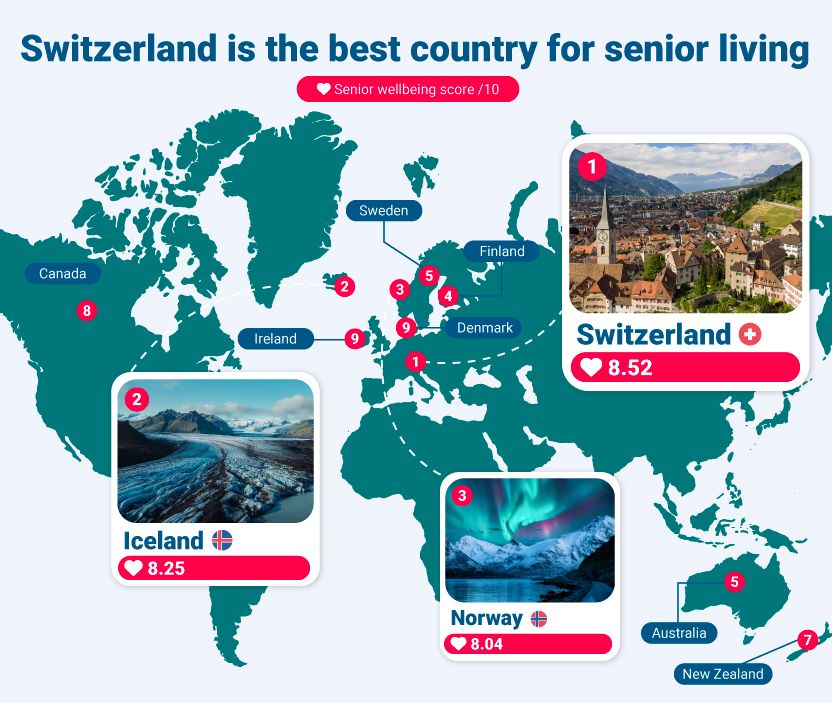
Switzerland is the best country for senior living

  1. Switzerland
    Senior Wellbeing Score: 8.52

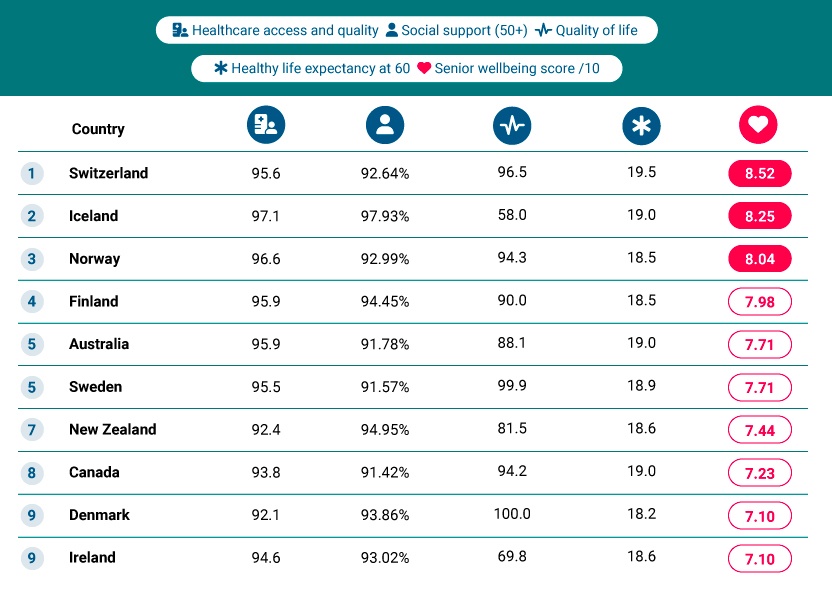
    Switzerland is the best country for living in your later years, with a senior well-being score of 8.52. This beautiful alpine country at the heart of Europe is one of the wealthiest countries in the world per capita and is well-known for its excellent healthcare and healthy population.

    The country performed very highly across all factors, offering a brilliant quality of life with clean mountain air, excellent access to healthcare, and a healthy life expectancy of 60 of 19.5 years. This means the average elderly Swiss person can expect to reach the age of 79.5 in relatively good health, the fourth highest age after Japan, South Korea, and France.

  2. Iceland
    Senior Wellbeing Score: 8.25

    Iceland has the second-highest senior wellbeing score of 8.25. This remote island nation between Norway and Greenland has a small population of 383,700 people. Smaller populations can breed strong social connections and make it more difficult for people to slip through the cracks, which could explain why Iceland has the highest social support rating for people aged 50+ at 97.93%.

    However, despite having the highest social support score and the best access to quality healthcare, Iceland has received a relatively low quality of life score of 58.0. This score is based on a wide range of factors, with Iceland performing particularly poorly for affordability, meaning older people may have to make financial sacrifices to get by.

  3. Norway
    Senior Wellbeing Score: 8.04

    Norway takes third place with a senior well-being score of 8.04. This Scandinavian country performs well across all factors, providing a good experience for seniors in their later years. Healthy life expectancy at age 60 in the country is 18.5 years, meaning the average healthy 60-year-old could make it to 78.5.

    Norway's third-place finish means Northern Europe dominates the top three, while the only non-European countries in the top ten are Australia, New Zealand, and Canada. All top ten countries are wealthy and developed nations, many of which have socialized all or part of their healthcare systems.

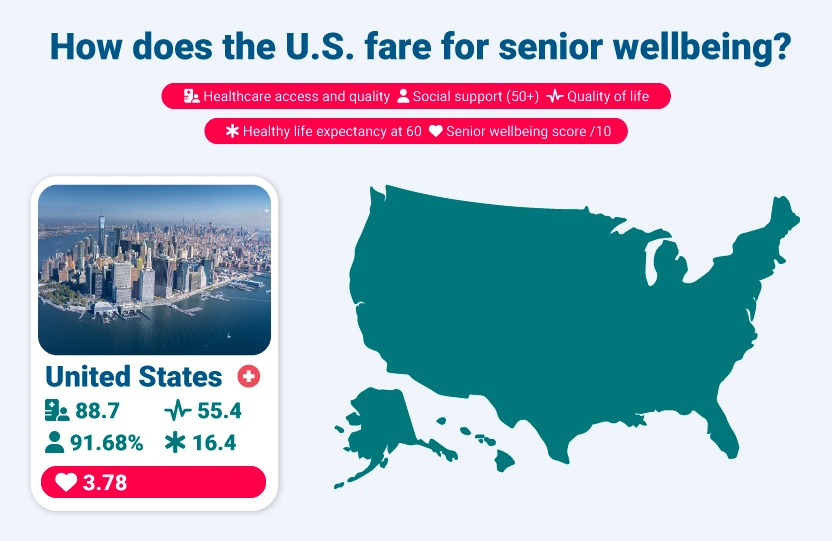
How does the U.S. fare for senior well-being?

The United States did not perform well, coming in 26th out of 38 countries with a senior well-being score of 3.78. However, the country performed best for social support for people aged 50+, earning the 16th highest score of 91.68%.

The United States tied with Italy for quality of life, with both countries receiving a score of 55.4 out of 100. However, the European nation performed better overall, with a senior well-being score of 5.34.

Known for its prohibitively expensive healthcare system, the United States performed relatively poorly regarding healthcare access and quality, taking 26th place with a score of 88.7 out of 100.

However, the United States’ worst performance was for healthy life expectancy for people aged 60. The average healthy 60-year-old in the country can expect to live another 16.4 years in good health, which only beats five other countries in our study.

This data shows much room for improvement in the United States regarding senior well-being. This is likely the result of socioeconomic factors, such as affordable medication and healthcare availability, a culture where walking is uncommon, driving is prioritized, and an abundance of unhealthy hyper-processed food options.

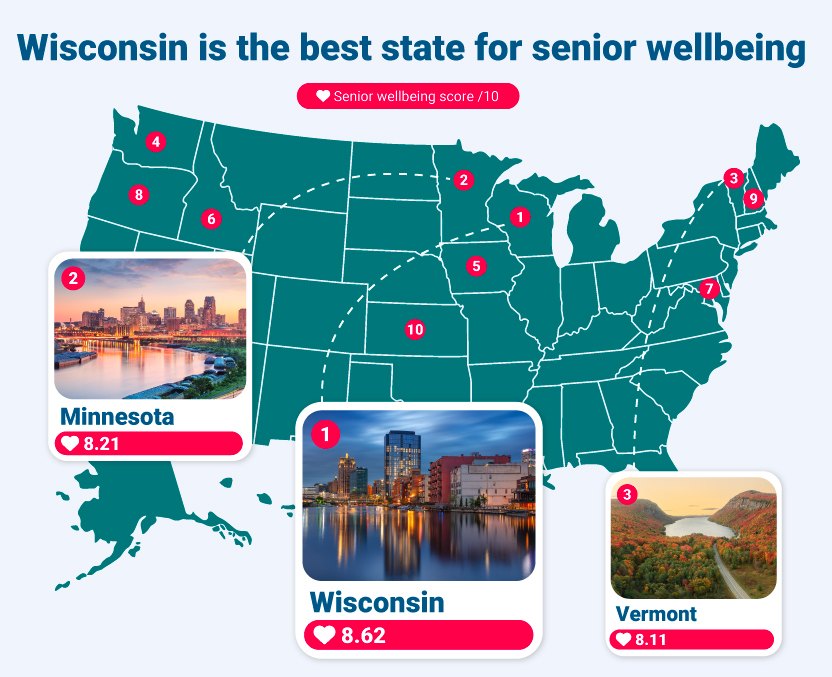
Wisconsin is the best state for senior wellbeing

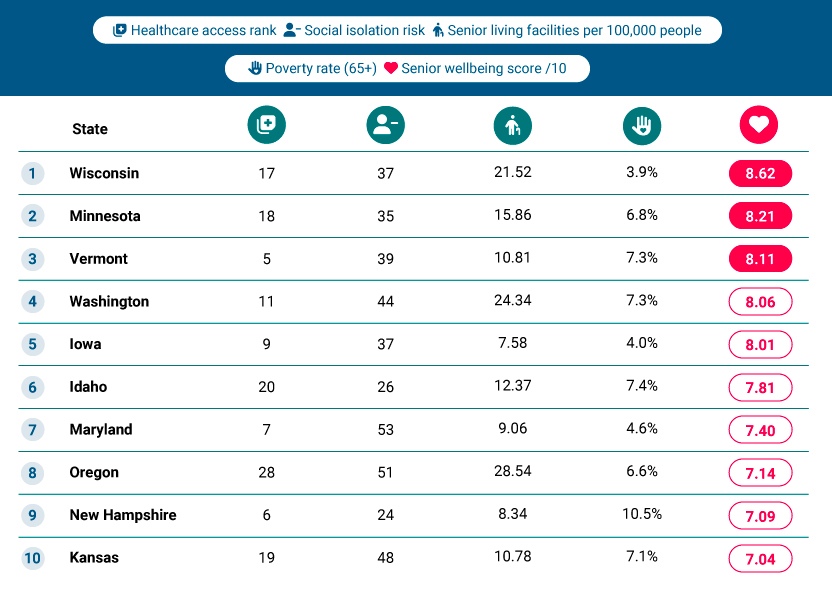
  1. Wisconsin
    Senior Wellbeing Score: 8.62

    Wisconsin is the best state in the USA for senior well-being, with a score of 8.62. This midwestern state has the lowest poverty rate among seniors, at just 3.9%, making it a good place for local affordability. It also has a wide range of senior living facilities, with 21.52 per 100,000 people.

    The state also performed well for its social isolation risk, finishing in joint-ninth place alongside Iowa, scoring 37 out of 100. Wisconsin’s weakest factor was healthcare access, though it still earned 17th place, well into the top half of states.

  2. Minnesota
    Senior Wellbeing Score: 8.21

    Minnesota earned a senior well-being score of 8.21, making it the second-best state for living in your later years. Minnesota performed well across most factors, with a low social isolation score of 35 and a very low senior poverty rate of 6.8%. There are also plenty of assisted living and retirement facilities in the state, with 15.86 per 100,000 people.

    Situated on the Eastern border of first-place Wisconsin, Minnesota’s strong performance suggests that there may be some cultural or regional impacts that make the area a great place for senior living. This appears even more likely considering that Iowa, which borders both states, took fifth place with a score of 8.01.

  3. Vermont
    Senior Wellbeing Score: 8.11

    Vermont is the third-best state in the country for senior well-being, earning an overall score of 8.11. This densely forested New England state is known for its beautiful natural landscapes, clean mountain air, and relaxed atmosphere, making it an attractive destination for many senior citizens. 

    Vermont doesn’t top the charts for any individual factor but performs relatively well across the board. The state performs best when it comes to healthcare access, ranking fifth in the country, while it takes 11th place for both social isolation risk and the availability of senior living facilities.

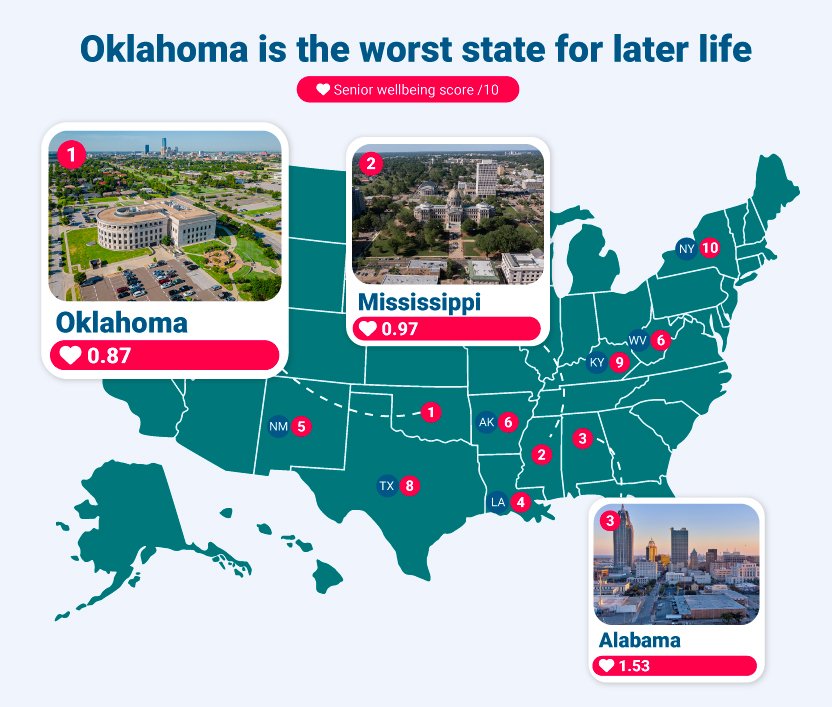
Oklahoma is the worst state for later life

  1. Oklahoma
    Senior Wellbeing Score: 0.87

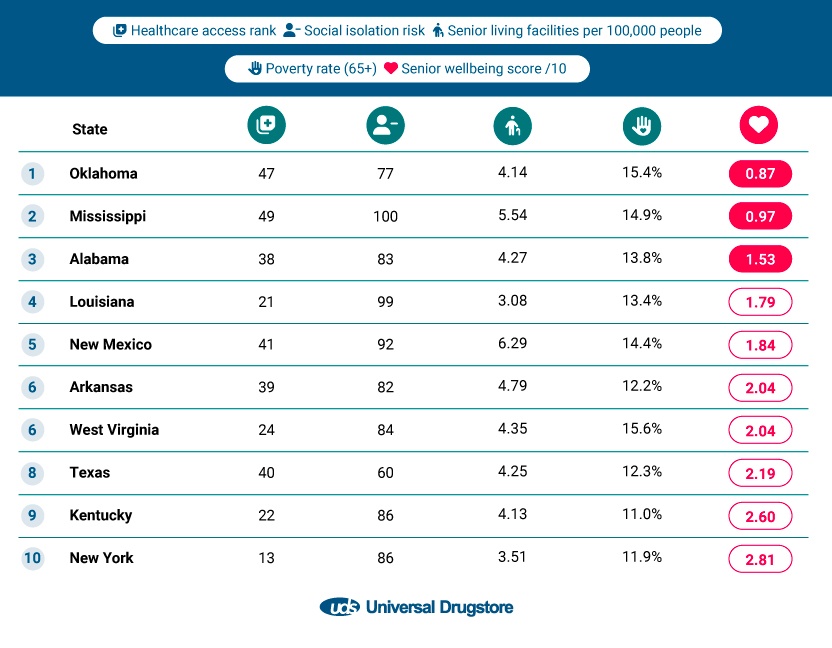
    Oklahoma recorded the worst senior well-being score in our study at just 0.87. The state recorded the second-highest poverty rate among seniors at 15.4%, with only West Virginia recording a higher rate.

    Oklahoma also performed poorly across all other factors, with just 4.14 senior living facilities per 100,000 people, a high social isolation risk score of 77 out of 100, and received the fourth lowest rank for healthcare access.

  2. Mississippi
    Senior Wellbeing Score: 0.97

    Mississippi had the second-lowest senior wellbeing score of 0.97, narrowly avoiding the bottom spot. The state received the highest possible score of 100 for the risk of social isolation while also receiving the second-lowest rank for healthcare access. 

    Mississippi performed marginally better when it came to the number of senior living facilities, with 5.54 per 100,000 people, but the state’s very high rate of poverty among seniors, 14.9%, kept its overall score as one of the lowest.

  3. Alabama
    Senior Wellbeing Score: 1.53

    Alabama came third from the bottom with a senior well-being score of 1.53. This southeastern state did not perform well in any category, with a social isolation risk score of 83 out of 100, a 13.8% poverty rate among seniors, and just 4.27 senior living facilities per 100,000 people.

    However, Alabama is just one of eight southern states featured in the bottom 10 locations for senior well-being in the United States. Louisiana, Texas, New Mexico, and Kentucky all performed poorly, suggesting a clear difference in the quality of life for seniors between the northern and southern parts of the country. The only two states in the bottom 10 that aren’t southern are West Virginia and New York, both in the eastern United States.

How to get the most out of your retirement years

While getting older can present numerous challenges, they do not have to stop us from enjoying our senior years. Aging is a natural part of life, so why shouldn’t you make the most of it and enjoy your golden years to their fullest?

Whether you face medical obstacles associated with old age, or you struggle to remain social, there are many ways to overcome these challenges. Here are just a few of the ways you can ensure a happy old age.

  1. Join clubs and groups

    Staying socially active is incredibly important for maintaining good mental health. As you get older, it can be difficult to find opportunities to meet new people and experience a sense of community. By joining a club, you can ensure you get regular time with people who have similar interests, giving you a schedule to look forward to and the opportunity to build new friendships.

  2. Find a hobby

    Finding a hobby is an excellent way to keep your mind active and engaged, especially once you’ve retired from work. The free time that retirees have is a blessing, allowing for new passions to be uncovered or for interest in old hobbies to be rekindled. There are a plethora of hobbies to choose from, but whatever your personal interests, it will give you a sense of direction and accomplishment the more you engage in it.

  3. Stay physically active

    Staying physically active is incredibly important for our health, particularly in old age. This could include anything from going on long walks to enjoying a regular swim session or even maintaining a garden. Regular exercise has a range of health benefits and will help keep your body and mind in good shape for longer, allowing you to stay healthy well into old age.

    If you have conditions that prevent you from doing certain exercises, do not worry. Simply choose whatever activity you are comfortable with, as some activity is always better than none.

  4. Build a support network

    Support networks are important for everyone in society, but when you reach your senior years they can become vital. One reason for this is that becoming socially isolated in old age is a known risk, as the everyday points of contact we have with work and friends gradually reduce. This is why it’s important to stay in regular contact with friends and family members, building them into your daily or weekly routine.

  5. Keep on top of ailments

    One unfortunate part of getting older is an increase in the number of ailments we seem to pick up. While it's very easy to let these come and go, sometimes they will develop into something more serious. Therefore, it’s important to always look for a solution to medical problems as soon as they arise, preventing them from getting any worse. This includes following the advice of your doctors, taking the prescribed medication, and following any instructions they give you.

  6. Reasonable budgeting

    We all hope to be able to retire in comfort and security, often putting a lot of effort into building a healthy retirement fund to support us in later life. However, the funds we gather for this do have a limit, so it’s important to plan ahead and try to keep to a budget for everyday spending. 

    That said, it’s equally important not to let your finances cause you worry or prevent you from enjoying life. Remember that you’re perfectly entitled to treat yourself and spend money on things that will bring you or your loved ones joy.

  7. Fill your diary

    Having things to look forward to is crucial to maintaining a happy and positive frame of mind. We can all go through periods of sadness or feeling at a loss for what to do with ourselves, but with a little effort, this can be countered. Finding things to put in your diary can seem a little daunting if you’ve been stuck in a rut, but having even the smallest events planned can do wonders for your mental health. These can be anything, from family visits to club meetings, seeing a new movie, or going out for dinner.

  8. Practice mindfulness

    Another way to ensure you make the most of your senior years is to practice mindfulness. This means pausing to take a moment away from your everyday thoughts and worries. You may stop and reflect on events and people around you or in your past, you may choose to sit somewhere peaceful and simply empty your mind, or you might even use a guided meditation to help you relax. However you practice mindfulness, it will help to keep you relaxed and positive-minded so you can enjoy your golden years.

Methodology

We wanted to find out which countries and US states are the best for senior wellbeing. To do this, we collected data across a range of factors and combined them into a single, rankable score.

To compare countries, we made a list of OECD nations and collected data for the following factors:

Data for these factors was then combined into a single equally weighted “Senior Wellbeing Score.” We used this score to rank the countries and revealed the highest-scoring locations as the best for senior well-being.

To compare US states, we made a list of all 50 states and collected data for the following factors:

Data for these factors was then combined into a single equally weighted “Senior Wellbeing Score.” We used this score to rank the states and reveal the highest-scoring locations as the best for senior well-being.

Share:

Thursday, August 29, 2019

Further Evidence That Acting Like An Extravert Can Boost Wellbeing

How many decades before your doctor informs you of this and has a protocol for you to accomplish this? I used to consider myself a complete introvert, moving to Michigan knowing absolutely no one required me to put myself out there and be open to any overture. Now I'm considered the life of the party and usually close it down. 

Further Evidence That Acting Like An Extravert Can Boost Wellbeing 

By Matthew Warren
Researchers have long known that people who are more extraverted tend to be happier, leading some to suggest that encouraging extraverted behaviour could improve wellbeing. Last year we reported on the first trial of such an intervention, which found that acting like an extravert for a week led to an increase in positive emotions in certain people. Now a second study appears to have replicated that result — and shown that behaving like an introvert may also reduce wellbeing.

In the new study, published in the Journal of Experimental Psychology: General, Seth Margolis and Sonja Lyubomirsky at the University of California, Riverside, asked 131 participants to alter their behaviour over a two week period to be more extraverted or introverted. For one week, participants were encouraged to act as “talkative”, “assertive” and “spontaneous” as possible; for the other, they were told to act “deliberate”, “quiet” and “reserved” (all participants completed both weeks, but half began with the extraverted week while the others began with with the introverted week). 
To encourage the participants to actually alter their behaviour, the researchers asked them to list five specific changes they planned on making, and then sent them periodic reminders of their task throughout the study.  At various points across the two weeks, the participants completed scales measuring their experience of positive and negative emotions and others aspects of wellbeing, as well as their personality traits.
Compared to baseline levels at the start of the study, participants experienced more positive emotions during the extraverted week — and also showed reduced positive emotions during the introverted week. Some other measures of wellbeing, such as feelings of connectedness and flow (the experience of being immersed in — and enjoying — an activity) were also boosted by acting extraverted and reduced by acting introverted.
However, these results didn’t hold for all measures of wellbeing. For instance, participants seemed to have reduced negative emotions compared to baseline during both interventions (although the exact pattern of results differed depending on whether participants began with the extraverted or introverted week).
The results add to the small, albeit growing, body of evidence that acting like an extravert can improve certain aspects of wellbeing — particularly measures of positive emotion. But the authors suggest that their biggest contribution is to show that acting like an introvert can also have an effect. “Given that introversion is generally not regarded as desirable or advantageous in U.S. culture … we believe our most compelling results are those showing that well-being decreases can be substantial when people act more introverted than usual,” they write.
Still, it seems too soon to suggest that we should we all begin behaving like extraverts. The study the Digest reported on last year found that people who had high trait levels of introversion didn’t report the same benefits of acting like an extravert as the rest of the participants, and actually became more fatigued and experienced more negative emotions. On the other hand, the new paper found that baseline levels of extraversion and introversion didn’t affect the results – but it’s still clear that researchers need a better understanding of how individual differences could influence the effectiveness of the intervention.
And it will also be important to figure out which behaviours are actually causing the increases or decreases in wellbeing reported in these studies. It’s not yet clear whether it was being more “talkative”, “assertive”, or “spontaneous” that resulted in an increase in wellbeing in the extraverted week, for instance, and the researchers suggest examining changes in a more specific sub-set of extraverted behaviours in the future. “We hope that research from our and others’ laboratories encourages future investigators to test the potential of behavioral interventions to spur both personality change and well-being gains,” they conclude.
Experimental manipulation of extraverted and introverted behavior and its effects on well-being
Matthew Warren (@MattbWarren) is Editor of BPS Research Digest

Tuesday, December 13, 2016

MindSurf: A pilot study to assess the usability and acceptability of a smartphone app designed to promote contentment, wellbeing, and goal achievement

You need contentment, wellbeing, and goal achievement. What protocols does your doctor have for these needs? ANYTHING AT ALL? Big Whoopee, trying to make you feel better rather than actually address the underlying causes of your lack of  contentment, wellbeing, and goal achievement
https://www.mdlinx.com/family-medicine/medical-news-article/2016/12/13/mental-health-smartphone-app/6979222/? 

 
BMC Psychiatry, 12/13/2016
Carey TA, et al. – A pilot study was conducted to survey the usability and acceptability of receiving Method of Levels (MOL)–style questions via intermittent daily text messages. The findings demonstrate that MindSurf will be a usable and acceptable app.

Methods

  • A pilot study utilizing quantitative as well as qualitative methods and incorporating a repeated measures, A-B design was directed.

Results

  • The 23 members were healthy adult volunteers who were all either undergraduate students, postgraduate students, or staff of the University of Manchester.
  • They got MOL-style questions on their mobile phones over a 1-week period.
  • Qualitative outcomes were encouraging and demonstrated that the format and style of questioning were acceptable to participants and did not lead to increased worry or concern.
  • A one-way, repeated measures ANOVA demonstrated that there was a nonsignificant decrease in scores on the 21-item Depression, Anxiety, and Stress Scale (DASS21) over a 2 week period.
Go to Abstract Print Article Summary Cat 2 CME Report