Has the dietician been instructed to create individual diet protocols based on this? NO? So, you don't have a functioning stroke doctor that follows and implements research, do you?
Nutrigenomics and the Future of Nutrition
March 2018
On December 5, 2017, the Food Forum of the National Academies of Sciences, Engineering, and Medicine hosted a public workshop in Washington, DC, to review current knowledge in the field of nutrigenomics and to explore the potential impact of personalized nutrition on health maintenance and chronic disease prevention. This Proceedings of a Workshop—in Brief highlights key points made by individual speakers during the workshop presentations and discussions and is not intended to provide a comprehensive summary of information shared during the workshop.1 The information summarized here reflects the knowledge and opinions of individual workshop participants and should not be seen as a consensus of the workshop participants, the Food Forum, or the National Academies of Sciences, Engineering, and Medicine.
SETTING THE STAGE
In her opening presentation, Patsy Brannon of Cornell University explained how the first two steps of the risk assessment framework are central to current, population based dietary guidance. First, a health outcome is identified from a review of the literature and a synthesis of the evidence and, second, the dose–response relationship between a nutrient, or diet, and the health outcome is characterized. Using this population-based approach, Dietary Reference Intakes (DRIs) are based on distributions of nutrient intake. In the past, Brannon continued to explain, it has been impossible to ascertain where in one of these distributions an individual's needs fall. Therefore, it has been impossible to provide specific nutrition recommendations for individuals. “That's at the heart of the change of what nutrigenomics opens up as a possibility,” she said.
The fact that there is a distribution of responses to nutrient intakes, even in a healthy population, raised the question for Brannon: Why do people vary? She discussed how genetic, epigenetic, and nutrient–gene interactions drive individual variation in nutritional kinetics and dynamics,2 elaborated on the complexity of these interrelationships, and illustrated how this complexity is reflected in the variety of ways that different authoritative bodies have defined nutrigenomics. In her opinion, this complexity will need to be addressed as population-based nutrition guidance transitions into personalized nutrition guidance (see Figure 1).
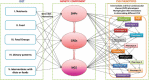
“Adding to this complexity,” Brannon continued, “is the reality that consumer and food behavior is very, very difficult to fully elucidate and understand.” Health is not the only driving force and is likely not even the major driving force in food choices. “Taste is often the primary force,” she said, “and nutrigenomics is not going to change that reality.”
In closing, Brannon opined that, because of these complexities, rather than thinking about population-based and personalized dietary guidance as an either-or situation, the two approaches will likely need to be integrated.
NUTRIGENOMICS AND CHRONIC DISEASE ENDPOINTS
In the first session, moderated by Naomi Fukagawa of the U.S. Department of Agriculture, speakers discussed the interrelationships of diet, genomics, and health outcomes, with a focus on chronic disease endpoints.
To begin, José Ordovás of Tufts University discussed both the genome and epigenome in relation to nutrition and disease risk. According to Ordovás, the root of personalized therapies is newborn screening. In the United States, each year, more than 1,000 babies are born with congenital hypothyroidism (CH), one of several monogenic diseases that require specific treatments. A cording to Ordovás, the approximate cost of screening for CH is $20 million, compared to $400 million in benefits (i.e., costs avoided by having treated the disease). Costs and benefits of such screening aside, he continued, “what we know” is that the genome influences what therapies we need and how we respond to pharmacological and diet treatments. As a less extreme example than CH, he described what scientists have been learning about APOA23 and how earlier research had showed that individuals homozygous for the less common C allele (CC genotype) ate more food, specifically fatty foods, and as a result weighed more than individuals with TT and TC genotypes. Yet, in later work, scientists discovered that under low saturated fat conditions, genotype no longer mattered and that only when consuming a high saturated fat diet, which Ordovás described as a diet that stresses the physiology, do individuals with the CC genotype gain more weight than individuals with either of the other two genotypes. “This is a polymorphism that may have a significant impact in terms of personalized recommendations,” he said. He emphasized that this later finding has been replicated not only across populations worldwide, but also across ethnicities.
Although the absolute complexity of the epigenome is smaller than the genome, with its 30 million CpG dinucleotides4 in various states of methylation, compared to the genome's more than 300 million base pairs, Ordovás remarked that it is much more difficult to study in humans with respect to its importance in nutrition because of its dynamic nature. Unlike the genome, the epigenome changes over time and across organs and cell types. Yet, evidence in humans that nutrition-related epigenetic changes can influence adult-onset chronic diseases is beginning to emerge. Ordovás described some of what has been learned about the consequences of fetal starvation during the Dutch famine of 1944–1945 (the “Dutch Hunger Winter”), including obesity and neurological disorders later in life and significant differences in the epigenetic profiles of individuals who experienced fetal starvation compared to those who did not. He provided additional examples as well, including cases where both genetics and epigenetics ought to be taken into consideration when predicting the impact of diet on health. Otherwise, he said, recommending that everyone increase their intake of the omega-3 fatty acid or EPA (eicosapentaenoic acid) for example, would result in a positive effect in some individuals with respect to HDL cholesterol, but a negative effect in others.
In closing, Ordovás remarked that the microbiome also plays a role in nutrition and that personalized nutrition will likely require combining not just an individual's genomics and epigenomics, but his/her microbiome as well. “I don't know that we'll ever get to perfect,” he concluded, meaning 100 percent personalized nutrition. However, paraphrasing an old Italian proverb, he said, “perfection is the enemy of good.” There is enough known now, in Ordovás's opinion, to begin putting the pieces of the puzzle together in the right places and to control some of what he described as the “snake oil” being sold by some commercial ventures.
“Why can't we understand and cure the common metabolic and degenerative diseases?” Douglas Wallace of the University of Pennsylvania began his presentation on mitochondrial genetics and its relationship with disease risk. He suspected that perhaps the problem is not the effort, given the trillions of dollars that have been spent trying to understand chronic disease in humans; rather it is the basic assumptions upon which the scientific community is studying disease. Rather than focusing on anatomy and Mendelian (i.e., nuclear) inheritance alone, Wallace suggested also thinking about bioenergetics and non-Mendelian (i.e., mitochondrial) inheritance. He described how nuclear and mitochondrial DNA have differentiated over evolutionary time, with today's mitochondrial genome specializing in energy. The flow of energy across the mitochondrial membrane is, he said, “absolutely critical” to life.
Wallace explained how the different components of the mitochondrial “wiring diagram” have co-evolved and how maternal inheritance of mitochondrial DNA has ensured that these co-evolved components remain tightly coupled. Through this tight coupling, energy production is more efficient than it would be otherwise. However, although mitochondrial DNA does not undergo sexual recombination, mitochondria are constantly replicating and, as they replicate, mutations accumulate. As these mutations accumulate, the different tissues in the body become mosaics of different mitochondrial genotypes, Wallace continued to explain. And as the number of mutant mitochondrial DNA increases, energy output declines. Regardless of the type of mitochondrial mutation, when energy output crosses a minimum energy threshold for that organ, disease begins.
“Once we begin to think energetically,” Wallace said, “then all the common diseases have the same etiology: a bioenergetics defect.” He described results from several studies of mitochondrial mutations, as well as mitochondrial heteroplasmy (cells with a mixed population of mutant and normal mitochondria), in relation to a wide range of disease and behavior phenotypes.
PERSONALIZED NUTRITION IN THE REAL WORLD
Shifting the focus from research to personalized nutrition in the real world, Nathan Price of the Institute for Systems Biology presented work under way at Arivale, a wellness and personal coaching company he co-founded. But first, he discussed the complexity of the relationship between nutrition and disease at the molecular level; the many different systems biology inputs that contribute to this complexity (e.g., genetics, metabolic function, physical activity); and the estimated 90 percent of a person's lifetime health that is attributed to genetics, behavior, or the environment (as opposed to health care). He differentiated between the health care industry and the wellness industry, the latter having a mixed reputation, in his opinion, because of the many non-scientifically-based approaches being applied. Price discussed how he and a colleague proposed the 100K Wellness Project to increase credibility in the wellness industry. The goal of scientific wellness, he explained, is to predict and prevent disease before it happens; the goal of the 100K Wellness Project is to collect a dense, dynamic dataset for 100,000 individuals that can be watched over time for early warning signs of disease.
In the meantime, Price and colleagues have completed a 9-month feasibility study, the Pioneer 100 Wellness Project, which involved 108 participants who underwent detailed laboratory tests at three different times and received personal wellness coaching for the duration of the study. Data were collected on hundreds of metabolites and markers and the investigators also provided participants with wellness coaching. Regarding the coaching, Price referred to other workshop speakers' emphases on the critical role of behavior change in personalized nutrition. Over the course of the study, participants showed improvements in a number of clinical markers, such as a 12 percent improvement in inflammation by 6 months (i.e., inflammation was reduced). Price noted that participants who have stayed with the program, through participation in Arivale's scientific wellness program, have shown continued improvements. In addition to mining the data and returning new health discoveries back to the study participants, Price and colleagues have also been studying the nearly 4,000 correlations detected among the different data types (e.g., associations between metabolites in the blood and genetic risk scores). “These data types had never before been measured simultaneously on a population of people,” he said.
Continuing the focus on the potential for nutrigenomics in the real world, next, Claudia Morris of Emory University shared her research on arginine deficiency syndromes, mostly in relation to sickle cell disease and trauma. She described both as having distinct nutritional requirements that develop because of metabolic abnormalities that may benefit from arginine replacement therapy. Arginine, a conditionally essential amino acid (i.e., it becomes indispensable under stress or critical illness, but is otherwise non-essential) is an obligate substrate for nitric oxide (NO) production. NO, in turn, is a potent vasodilator with multiple functions. Morris stressed that a drop in an amino acid does not necessarily translate into a clinically significant deficiency. For a nutritional deficiency to occur, a biological process that is dependent on that nutrient has to be compromised, that compromise has to lead to an abnormal physiological response that is causative of a poor outcome, and those poor outcomes need to be reversible when the nutrient is replaced. In the case of pulmonary hypertension in sickle cell disease, Morris demonstrated how low arginine bioavailability meets these criteria: it leads to endothelial dysfunction (i.e., the compromised biological process), which may lead to pulmonary hypertension (i.e., the abnormal physiological response), which is associated with increased mortality in patients with sickle cell disease (i.e., the poor outcome) and may be reversible with arginine supplementation.
Patients with sickle cell disease have also been shown to have lowered arginine-to-ornithone ratios, which, in turn, have been associated with higher risk for pulmonary hypertension. Morris and colleagues observed decreases in pulmonary hypertension among sickle cell patients treated with arginine similar to what has been reported for some of the pulmonary hypertension medications on the market. She described how arginine deficiency also has been shown to play a role in other diseases, including cardiovascular disease. In one study, the arginine-to-ornithone ratio was more predictive of cardiovascular disease than cholesterol.
Although the potential benefit of arginine therapy for sickle cell disease, as well as for trauma, has been demonstrated in mice and humans, most of these studies are limited by methodological weaknesses, according to Morris. Additionally there is a paucity of data in children. There are other therapeutic strategies to consider as well, such as arginine precursors (e.g., glutamine) and combination therapies that target multiple mechanisms. Morris concluded by calling for more research, including the identification of sub-populations that would likely benefit the most from arginine replacement therapy.
“We have heard a lot of evidence that has tremendous promise,” David Alpers of the Washington University School of Medicine in St. Louis began, but said, “we are just in the early stages of where we can utilize this information.” Nutrigenomic studies are difficult not only because they are complex, but also because proving causation from associations is especially challenging in the field of nutrition. There are many components in the diet that interact and which, together, cause multiple metabolic changes in the body. Additionally, except for diseases caused by single gene defects, it is very difficult to isolate which components of a disease phenotype are related to nutrition and which to other factors. In the clinic, Alpers said, “usually by the time we see a well-developed chronic disease, the effects of the disease itself are more potent than that of nutritional deficiencies.” Because of these difficulties, many scientific approaches to studying links between genomics and nutritional phenotypes have relied on in vitro and in vivo animal studies. For example, turmeric and garlic extracts and other nutrient components have been shown to play potent roles in preventing some cancer changes in cells or in animals. But most of these findings have not been translated to human data. Alpers further stated that the human data that do exist, for example, studies on omega-3 fatty acid supplementation, are not as suggestive as they are in animal studies. In sum, Alpers expects a long lag before strong human data are available and nutrigenomics can be commercially implemented.
Meanwhile, he continued, there are many personalized Internet services currently available to consumers that provide individuals with information based on an analysis not of their genomes, but of their dietary patterns. Many of these services are mobile phone based, which Alpers predicts will become a potent method for modifying behavior when nutrigenomics does become commercially implemented. Also available are personalized programs based on phenotypic data, for example, wrist-watch accelerometers that monitor and deliver physical activity information. Alpers acknowledged that these programs work in terms of the immediate feedback they provide, but reiterated that what is missing is whether the information provided, if used by the recipient, will actually change a disease phenotype. Finally, in fact, there are some personalized nutrition services already available that rely on genomic data; however, most of the information comes from observational studies linking single nucleotide polymorphisms (SNPs) to dietary patterns. “That's not really enough in itself,” Alpers said, as those links have yet to be translated into changes in disease phenotypes.
In closing, Alpers remarked, “the concept of genomics for personalized nutrition is a sound one, and many of the strategies are in place. What is missing is the data that translate those strategies or the preclinical work to actual clinical outcomes.”
The final speaker of this session, Ahmed El-Sohemy of the University of Toronto and founder of Nutrigenomix, Inc., remarked that, while he agreed with many of Alpers's comments, he would also be presenting evidence to show that many of Alpers' criticisms “are actually not true.” He acknowledged, however, that the field is not without controversy, as what is being offered is quite varied and some of what is being offered is not rooted in robust scientific evidence. But where there have been enough observational studies linking nutritional factors with health outcomes, the responses are variable. El-Sohemy emphasized the importance of understanding genetic differences that help to explain these variable responses. Without this understanding, he argued, “outlier” individuals could actually be harmed by advice that benefits others. As an example, he described coffee intake and how the risk of myocardial infarction associated with coffee intake depends on whether one is a fast metabolizer or a slow metabolizer based on the CYP1A2 genotype. The CYP1A2 genotype has also been shown to modify the association between coffee intake and several other health outcomes, El-Sohemy continued to describe. While questions remain about the economic and social aspects of genetic testing, including the cost and accessibility of such testing, in terms of the science, referring to the CYP1A2 studies, El-Sohemy said, “I think these are some really good examples of proof of concept at how an individual SNP, a single SNP, can modify the association between a dietary component and a variety of different health outcomes.”
El-Sohemy went on to describe some of the ways that nutrigenomics is portrayed in the media and what he perceived as problems in how information is communicated. He provided an example of an article where a pediatrician who was asked during an interview about the variability of diet response and he was unaware of the evidence that suggests that people respond differently to different diets. Per El-Sohemy, not only does such evidence exist, but it is “pretty robust” and has been replicated. He was referring to evidence showing that a person's response (i.e., change in fat mass) to a low protein versus a high protein diet depends on an individual's FTO gene variant. Specifically, people with an AA genotype lost a considerably greater amount of fat mass on a high protein diet, compared to a low protein diet. In contrast, individuals with the TT or TA genotypes showed no difference in loss of fat mass on a low protein versus a high protein diet. Bringing to mind Brannon's prediction in her opening presentation that the future likely will bring an integration of population-based and individualized dietary guidance, as opposed to completely transitioning into individualized dietary guidance, El-Sohemy asked: How can this kind of personalized dietary advice (e.g., regarding FTO genotype) be balanced with public health recommendations for populations? He described the results of a randomized clinical trial showing that people who were provided with DNA-based dietary advice had a greater understanding of the recommendations, compared to people who did not receive the advice; were motivated to change their eating habits; and showed greater compliance 1 year later. This finding has been replicated, according to El-Sohemy, suggesting that providing people with personal information can be a very useful tool for motivating them to change their eating habits.
More at link.


No comments:
Post a Comment