Showing posts with label jumping. Show all posts
Showing posts with label jumping. Show all posts
Saturday, May 23, 2026


Wednesday, May 6, 2026
5 Simple Exercises To Build Ankle Strength—and Why It Matters for Your Fitness Routine
Your competent? doctor did give you ankle exercises to prevent ankle rolling post stroke, right! Oh No, you DON'T have a functioning stroke doctor, do you? And your board of directors is so incompetent they have NO standards for excellence in their hospital! Sounds like the hospital needs to be reconstituted! I use the BOSU ball for this purpose, round side down, more challenging but less likely to roll the ankle.
5 Simple Exercises To Build Ankle Strength—and Why It Matters for Your Fitness Routine
While ankle strength isn't typically a central training focus, it’s an important aspect of healthy movement patterns that affects your entire fitness routine and everyday life. Here are five exercises to build your ankle strength:
1. Single-Leg Balance Drill
:max_bytes(150000):strip_icc():format(webp)/Health-GettyImages-1464223888-247875b9f6a04f1f93889c3d93ead909.jpg)
NickyLloyd / Getty Images
Balance is one of the simplest—and most underrated—ways to build ankle stability. Your ankle relies heavily on proprioception (your body’s sense of position), and better balance improves joint awareness and reaction time.1
Here's how to do a single-leg balance drill:
(I've failed the one leg standing test of the Berg Balance Scale from the
beginning, now 20 years later(age 70) I still fail.)
Stand tall with your gaze forward.
- Lift one leg so your knee is at 90 degrees and you’re balancing on one foot.
- Hold the position for 30-60 seconds, and then switch sides.
Tip: You can progress the exercises by closing your eyes, turning your head, or standing on an unstable surface like a foam pad.
2. Calf Raises
 |
| Video at link. |
A staple for ankle stability and strength, this movement trains your calf muscles, which support the ankle joint and play a key role in walking, running, and jumping. It’s best to do these slowly and controlled so you get full activation.2
Here's how to do a calf raise:
- Keep your feet shoulder-width apart and create a slight arch with each foot by pressing your big toe into the floor.
- With equal toe pressure, lift your heels off the ground as high as you can.
- Pause for a moment at the top and feel the contraction.
- Slowly lower with control before completing more reps.
Tip: The next step is to add more resistance to progress this exercise. Hold dumbbells in your hands for a bigger challenge.
3. Tibialis Raises (Wall-Supported)
This exercise works the front of your shins, called the tibialis muscle, which is just as important as your other calf muscles for ankle stability. Each step or landing requires your ankle to control how your foot lowers to the ground, which is driven by the tibialis anterior. When it’s weak, the foot drops uncontrollably and increases stress on the ankle. Stronger tibs create smoother, more stable landings.3
Here's how to do a wall-supported tibialis raise:
- Lean your back against a wall with heels about 6–12 inches away.
- With control, lift your toes toward your shins as high as you can.
- Pause at the top, feel the contraction, and slowly lower.
- Do as many reps as you can until you notice you can’t lift as high during the next rep.
Tip: Progress it by inching your feet further away from the wall.
4. Step-Down Control Drill
:max_bytes(150000):strip_icc():format(webp)/Health-GettyImages-692109722-751dcc9db6c149fb8a4659269f8d0162.jpg)
Alexandr Sherstobitov / Getty Images
This drill strengthens the ankle through loaded dorsiflexion (when your foot and shin move closer together), which is how your body actually uses the joint during movements like walking, running, and squatting. It also reinforces proper alignment—training your knee, ankle, and foot to work together, which is essential for healthy movement patterns. 4
Here's how to do a step-down control drill:
- Stand on a step while creating a slight arch with your foot and maintaining big toe pressure.
- Slowly lower one heel toward the ground as you step off the box.
- Once you land, step back onto the box and repeat the slow descent back down for more reps.
Tip: Make sure to keep your knee tracking over your toes so it doesn't collapse inward. You can progress this exercise by holding weights in your hand or going even slower on the descent.
5. Lateral Hops
 |
| Video at link. |
A more advanced drill, this plyometric exercise trains ankle stability through explosive movement driven by a coordinated effort of your strength, speed, balance, and reaction time.
Functionally, lateral hops train the ankle to rapidly absorb and reapply force, especially in the side-to-side direction where most ankle sprains occur. They improve reactive stability, meaning your ankle can quickly adjust to unexpected shifts in position, like stepping on uneven ground or quickly changing directions. 5
Here's how to do lateral hops: (This is totally impossible for me, I have never been able to jump since stroke)
- Stand with your feet shoulder-width apart and your core tight.
- In a coordinated effort, explosively hop to the side by bouncing off your toes while keeping your arches engaged as best as possible to prevent your knees from collapsing inward.
- When you land, immediately hop back to the starting position from your toes and repeat in a dynamic fashion, making sure to land softly and with bounce.
Tip: If you find the explosive side-to-side movement too much, you can practice hopping to the side and sticking the landing each time. Reset and then hop back in the other direction. As you get more comfortable, you can start doing it faster and eventually with shorter ground contact time.
Why It's Good To Have Strong Ankles
Strong ankles improve balance, power, and injury resilience. Weak ankles, on the other hand, can contribute to instability, poor movement mechanics, and a higher risk of sprains or overuse injuries. Whether you’re walking, lifting, running, jumping, or doing HIIT, ankle strength is foundational.6
Monday, April 13, 2026
Power up! Could force be the secret to supercharging your fitness?
I can't do this with my left leg at all, proven by not being able to jump off the ground at all.
Power up! Could force be the secret to supercharging your fitness?
Discover why health experts suggest incorporating power, the ability to generate force quickly, into your fitness routine to stay active longer
Saturday, March 14, 2026
The power of wall balls
Ask your competent? doctor to get you 100% recovered to be able to do this. Impossible for me, left hand will not open, I can't jump at all and can't get my left arm past my shoulder while standing.
The power of wall balls
Throwing a heavy ball at a wall provides a full-body workout in a single move.
By Matthew Solan, Former Executive Editor, Harvard Men's Health Watch
- Reviewed by Kaitlyn Buckwell, MS, CSCS, TSAC-F, Contributor
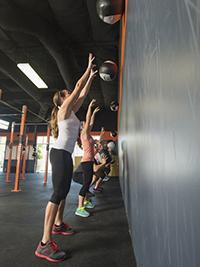 Bouncing a ball against a wall is one of the simplest pleasures of childhood. For adults, it's one of the best ways to increase strength, power, and endurance.
For wall ball exercises (commonly called "wall balls"), you squat with a large ball in your hands, then rise explosively, throwing the ball high against a wall. You complete the move by catching the ball and dropping back into a squat, ready for the next repetition.
Wall balls use lower-body strength and power while engaging multiple muscle groups at once: the chest, midsection, buttocks, legs, and shoulders. The steady up-and-down movement also boosts the heart rate.
"Not only are wall balls an effective full-body movement, but they also can improve your ability to perform daily tasks like lifting, reaching, and getting up and down from a seated position," says Kaitlyn Buckwell, a strength and conditioning specialist with the Center for Sports Performance and Research at Harvard-affiliated Mass General Brigham. "The constant throwing-and-catching motion can also improve coordination and balance."
Choosing the right wall ball
A wall ball is 14 inches in diameter (think of a large-sized pizza) with a soft synthetic leather or vinyl shell and a textured surface that makes it easier to throw and catch. You can purchase the balls online. They're also available at most gyms or stores that sell sporting goods.
Tuesday, December 2, 2025
Why You Should Add Jumping to Your Workout Routine by Super Age
I can't jump at all, not even an inch off the ground. My left leg strength is considerable, so it seems quite bizarre I can't get further off the ground. I was able to leg press 100 lbs. with only my left leg. Trying to jump using only my right leg and holding my left foot up behind me resulted in getting off the ground 2-3 inches. So, what the hell is preventing me from getting off the ground using both legs? It's an ADL, so there has to be an answer in the stroke clinical world.
Ask your therapist and doctor to get you recovered enough to do this! How do you get fast-twitch muscles firing properly?
Why You Should Add Jumping to Your Workout Routine
Unless you play sports or take part in something like CrossFit, it’s probably been a while. Jumping just isn’t part of most adults’ day-to-day lives.
But if you want to age powerfully and gracefully, it probably should be. Jump training is highly underrated—many people don’t know that it can help you stay strong and build a more resilient body in just a few minutes a week.
And, frankly, it’s a fun way to add variety to your workout routine.
Let’s take a look at why jumping is so important and how you can get started—because the earlier you integrate jumps into your workout routine, the better.
Jumping Builds Age-Defying PowerFirst, let’s talk about the difference between strength and power.
Strength is your ability to create force—this is what you’ll use when you lift something heavy, like a big piece of furniture.
Power is your ability to create force quickly. This helps you with things like getting up from a chair or walking up a set of stairs. It’s also necessary for staying upright when life throws you off-balance, whether you’re hiking a steep trail, chasing a grandchild around the park, or making your way down an icy sidewalk. Jump training helps you train fast-twitch muscles that generate high amounts of power and maintain function.” Unfortunately, power declines more quickly than strength as we age. And, as it turns out, power is highly important in maintaining function. This 2020 study puts it succinctly:“Reduced lower-limb power and slowing of force production have been proposed as important predictors of age-related deterioration in functional performance and should be targeted in exercise programs for older adults.”
Resistance training, while extremely useful for building bone density and even protecting your brain, doesn’t help with power unless you’re moving weight fast. Jump training helps you train fast-twitch muscles that generate high amounts of power and maintain function.
But that’s not all it does.
Jumps Strengthen Bones for Resilient Aging
Beyond developing power, jumping exercises have been shown to promote skeletal growth, which is crucial for staying active and safe at all ages.
“There are two types of bone health,” says fitness expert, transformation coach, and Super Age advisor Michelle MacDonald. “[bohn min-er-uhl den-si-tee]nounA key indicator of bone strength and fracture risk.LEARN MORE and architectural strength. Impact training can improve both, and we’re seeing estimates of 4% improvements from these interventions.”
Research backs this up: studies have shown that jump training can increase bone mineral density at the hip and in the lumbar spine—two places where people with low bone density often get fractures.
And it doesn’t take a significant amount of training.
One study found that just 10 to 20 jumps, done twice a day, increased bone density in premenopausal women. Another study showed that just 10 maximum-height jumps, performed three times per week, was enough to make an improvement.
(Of course, jumping more than that, especially after you’ve built some strength and power, can accelerate your progress.)
Both men and women at different ages have seen improved power generation, increased bone density, and better functional performance from jump training.
With all of these proven benefits, it seems like everyone should add jump training to their regimen. And that’s basically true—but there are a few things to know first.
Who Should Be Jumping?
The ability to generate power is helpful in any stage of life. And jump training is a research-backed way to improve power generation in the lower body.
But MacDonald points out that women at higher risk of accelerated bone loss should talk to their doctors before including high-impact training in their regular exercise routines. Those at higher risk include women who
- experience early menopause (before age 45),
- have a family history of osteoporosis,
- have a low body weight or BMI,
- have a history of smoking or excessive alcohol use,
- lead a sedentary lifestyle, or
- have a history of dieting or insufficient nutrition (especially calcium and [vai-tuh-min dee]nounA vitamin essential for bone health and immune function.LEARN MORE).
These women—and anyone else who’s concerned about their bone health–should speak with their doctors before starting jump training. Your doctor can tell you about your risk levels and how you should approach jump training. They may also recommend a DEXA scan to get a baseline measurement of your bone density.
How to Add Jumps to Your Routine
So—you’re ready to start jumping. What kind of exercises should you be focusing on to get the most benefit?Jennifer Wagner, MD, MS, founder and CEO of PROSPER and another Super Age advisor, recommends keeping it simple: “Starting with hopping, jumping jacks, or jumping rope is a good way to introduce jumping into a workout routine.”She also recommends working with a trainer if you’re interested in higher-impact work, like hard-landing training that fosters bone health or plyometrics that boost muscular power.
If you’re training on your own, here’s a set of exercises that you can use to start building lower-limb power and bone strength:
- Plyo hops (small hops up and down, side to side, or forward and back)
- Skip jumps (hops on one foot while raising the opposite knee)
- Jump squats (adding a jump between full-depth squats and immediately squatting again upon landing)
- Broad jumps (jumping forward as far as you can)
- Skater jumps (jumping from side to side, taking off on one leg and landing on the other)
- Dumbbell jump squats (squat jumps while holding weights in each hand)
Start with just a few, aiming for around 20 jumps three times per week. When you start to feel stronger after a couple weeks, increase the number of jumps, the frequency of your workouts, or the difficulty of the exercise.
Supplement Jump Training to Meet Your Goals
If you’re looking to improve your power generation, agility, and balance, adding jumps to your routine is a great start.
But when it comes to bone-strengthening, it’s worth noting that jumping on its own may not be enough to counter accelerated bone loss, says MacDonald.
“Starting with hopping, jumping jacks, or jumping rope is a good way to introduce jumping into a workout routine.” – Jennifer Wagner, MD, MS”If your bone density is already low or you’re at a higher risk of osteoporosis, jumping should be part of “a holistic approach to bone health, [including] adequate protein and nutrition, calcium and vitamin D supplementation, and pharmacological intervention,” she adds.
Be sure to ask your doctor about a bone health screening, nutritional counseling, or proven drugs for helping you on your bone-building journey if you’re at higher risk. And remember that aging well is about more than optimizing your workout: it’s about building longevity-promoting habits, from nutrition to stress management to your outlook on life.
Monday, June 16, 2025
Why You Should Add Jumping to Your Workout Routine
I can't jump at all, not even an inch off the ground. My left leg strength is considerable, so it seems quite bizarre I can't get further off the ground. I was able to leg press 100 lbs. with only my left leg. Trying to jump using only my right leg and holding my left foot up behind me resulted in getting off the ground 2-3 inches. So, what the hell is preventing me from getting off the ground using both legs? It's an ADL, so there has to be an answer in the stroke clinical world.
Ask your therapist and doctor to get you recovered enough to do this! How do you get fast-twitch muscles firing properly?
Why You Should Add Jumping to Your Workout Routine
When was the last time you jumped? (On purpose, that is.) Unless you play sports or take part in something like CrossFit, it’s probably been a while. Jumping just isn’t part of most adults’ day-to-day lives.But if you want to age powerfully and gracefully, it probably should be. Jump training is highly underrated—many people don’t know that it can help you stay strong and build a more resilient body in just a few minutes a week. And, frankly, it’s a fun way to add variety to your workout routine. Let’s take a look at why jumping is so important and how you can get s
Jumping Builds Age-Defying Power First, let’s talk about the difference between strength and power. Strength is your ability to create force—this is what you’ll use when you lift something heavy, like a big piece of furniture. Power is your ability to create forcequickly. This helps you with things like getting up from a chair or walking up a set of stairs. It’s also necessary for staying upright when life throws you off-balance, whether you’re hiking a steep trail, chasing a grandchild around the park, or making your way down an icy sidewalk. Jump training helps you train fast-twitch muscles that generate high amounts of power and maintain function. Unfortunately, power declines more quickly than strength as we age. And, as it turns out, power is highly important in maintaining function. This 2020 study puts it succinctly: “Reduced lower-limb power and slowing of force production have been proposed as important predictors of age-related deterioration in functional performance and should be targeted in exercise programs for older adults.” Resistance training, while extremely useful for building bone density and even protecting your brain, doesn’t help with power unless you’re moving weight fast. Jump training helps you train fast-twitch muscles that generate high amounts of power and maintain function.
But that’s not all it does. Jumps Strengthen Bones for Resilient Aging Beyond developing power, jumping exercises have been shown to promote skeletal growth, which is crucial for staying active and safe at all ages. “There are two types of bone health,” says fitness expert, transformation coach, and Super Age advisor Michelle MacDonald. “Bone mineral density and architectural strength. Impact training can improve both, and we’re seeing estimates of 4% improvements from these interventions.” Research backs this up: studies have shown that jump training can increase bone mineral density at the hip and in the lumbar spine—two places where people with low bone density often get fractures And it doesn’t take a significant amount of training. One study found that just 10 to 20 jumps, done twice a day, increased bone density in premenopausal women. Another study showed that just 10 maximum-height jumps, performed three times per week, was enough to make an improvement. (Of course, jumping more than that, especially after you’ve built some strength and power, can accelerate your progress.) Both men and women at different ages have seen improved power generation, increased bone density, and better functional performance from jump training. With all of these proven benefits, it seems like everyone should add jump training to their regimen. And that’s basically true—but there are a few things to know first. Who Should Be Jumping? The ability to generate power is helpful in any stage of life. And jump training is a research-backed way to improve power generation in the lower body. But MacDonald points out that women at higher risk of accelerated bone loss should talk to their doctors before including high-impact training in their regular exercise routines. Those at higher risk include women who experience early menopause (before age 45), have a family history of osteoporosis, have a low body weight or BMI, have a history of dieting or insufficient nutrition (especially calcium and vitamin D). These women—and anyone else who’s concerned about their bone health–should speak with their doctors before starting jump training. Your doctor can tell you about your risk levels and how you should approach jump training. They may also recommend a DEXA scan to get a baseline measurement of your bone density. How to Add Jumps to Your Routine So—you’re ready to start jumping. What kind of exercises should you be focusing on to get the most benefit? Jennifer Wagner, MD, MS, founder and CEO of PROSPER and another Super Age advisor, recommends keeping it simple: “Starting with hopping, jumping jacks, or jumping rope is a good way to introduce jumping into a workout routine.” She also recommends working with a trainer if you’re interested in higher-impact work, like hard-landing training that fosters bone health or plyometrics that boost muscular power. If you’re training on your own, here’s a set of exercises that you can use to start building lower-limb power and bone strength: Plyo hops(small hops up and down, side to side, or forward and back) Skip jumps(hops on one foot while raising the opposite knee) Jump squats(adding a jump between full-depth squats and immediately squatting again upon landing) Broad jumps(jumping forward as far as you can) Skater jumps(jumping from side to side, taking off on one leg and landing on the other) Dumbbell jump squats (squat jumps while holding weights in each hand) Start with just a few, aiming for around 20 jumps three times per week. When you start to feel stronger after a couple weeks, increase the number of jumps, the frequency of your workouts, or the difficulty of the exercise. Supplement Jump Training to Meet Your Goals If you’re looking to improve your power generation, agility, and balance, adding jumps to your routine is a great start. But when it comes to bone-strengthening, it’s worth noting that jumping on its own may not be enough to counter accelerated bone loss, says MacDonald. “Starting with hopping, jumping jacks, or jumping rope is a good way to introduce jumping into a workout routine.” – Jennifer Wagner, MD, MS If your bone density is already low or you’re at a higher risk of osteoporosis, jumping should be part of “a holistic approach to bone health, [including] adequate protein and nutrition, calcium and vitamin D supplementation, and pharmacological intervention,” she adds. Be sure to ask your doctor about a bone health screening, nutritional counseling, or proven drugs for helping you on your bone-building journey if you’re at higher risk. And remember that aging well is about more than optimizing your workout: it’s about building longevity-promoting habits, from nutrition to stress management to your outlook on life. The information provided in this article is for educational and informational purposes only and is not intended as health or medical advice. Do not use this information to diagnose or treat any health condition. Always consult a qualified healthcare provider regarding any questions you may have about a medical condition or health objectives. Read our disclaimers
Subscribe to:
Posts (Atom)