Changing stroke rehab and research worldwide now.Time is Brain! trillions and trillions of neurons that DIE each day because there are NO effective hyperacute therapies besides tPA(only 12% effective). I have 523 posts on hyperacute therapy, enough for researchers to spend decades proving them out. These are my personal ideas and blog on stroke rehabilitation and stroke research. Do not attempt any of these without checking with your medical provider. Unless you join me in agitating, when you need these therapies they won't be there. Did your doctor somehow miss the recovery protocol that Pedro Bach-y-Rita used to recover fully back in 1958 with only a partial brain?

What this blog is for:

My blog is not to help survivors recover, it is to have the 10 million yearly stroke survivors light fires underneath their doctors, stroke hospitals and stroke researchers to get stroke solved. 100% recovery. The stroke medical world is completely failing at that goal, they don't even have it as a goal. Shortly after getting out of the hospital and getting NO information on the process or protocols of stroke rehabilitation and recovery I started searching on the internet and found that no other survivor received useful information. This is an attempt to cover all stroke rehabilitation information that should be readily available to survivors so they can talk with informed knowledge to their medical staff. It lays out what needs to be done to get stroke survivors closer to 100% recovery. It's quite disgusting that this information is not available from every stroke association and doctors group.

Showing posts with label proprioception. Show all posts

Wednesday, October 28, 2026

Three Proprioception and Vestibular Drills for Fall Prevention by SIM/60


Probably much better than you're getting from your doctor and therapists! I had no fall prevention or proprioception training. And nothing on how to get up after a fall.

Three Proprioception and Vestibular Drills for Fall Prevention


DRILL 1: ANKLE ALPHABET BALANCE (SUNDAY’S FEATURED DRILL)

The eyes-closed progression is the critical advancement: when the eyes are closed, the brain cannot use visual information to correct postural sway. It must rely entirely on the ankle and hip proprioceptors and the vestibular system. This is the most specific training available for the sensory systems that actually prevent falls in real environments, where there is rarely time to look down at the feet before a misstep occurs.

Progression: after the eyes-closed alphabet is manageable, add slow head turns during the balance. Turn the head slowly left and right while maintaining single-leg balance. This adds the vestibular challenge of gaze change to the proprioceptive challenge of single-leg stance.


DRILL 2: HEAD MOVEMENT BALANCE TRAINING

Best for:  Specifically training the vestibular-ocular reflex and the brain’s ability to maintain balance during head movement — the scenario most commonly associated with falls during turning and head-turning movements.

How to do it:

  • Stand in a comfortable stance near a wall, feet shoulder-width apart

  • Slowly turn the head to the right and hold 3 seconds, then to the left and hold 3 seconds — 10 repetitions each direction

  • Then tilt the head back to look at the ceiling and hold 3 seconds, then down to look at the floor — 10 repetitions

  • Progress: perform in tandem stance (heel to toe) during the head movements

  • Further progress: perform with eyes closed during the head movements

The inner ear (vestibular system) is most challenged by head movements, particularly in combination with postural demands. This drill specifically trains the vestibulo-spinal reflex — the automatic postural adjustment that the body makes in response to head movement — which becomes slower and less accurate after 60.


This exercise trains the vestibulo-ocular reflex — the coordination between vestibular signals and eye movement that allows the visual field to remain stable during head movement. Degradation of this reflex is a primary contributor to the ‘wobbly world’ feeling that many adults over 60 experience in busy visual environments.
 
  • Fix a small target (a dot on a piece of paper taped to a wall) at eye level about 2 to 3 feet away

  • While keeping the eyes fixed on the target, slowly turn the head to the right and then left — the head moves but the eyes stay on the target

  • Perform at increasing speeds: slow (2 seconds per rotation), medium (1 second), and then quickly (0.5 seconds)

  • 20 repetitions each direction, 2 to 3 rounds

  • If dizziness occurs, slow the head movement speed and gradually build tolerance over days to weeks

How to do it:
 

Best for:  People who experience dizziness during head movement, who struggle with balance in visually busy environments (crowds, stores, traffic), or who feel unstable when quickly changing visual targets.

DRILL 3: GAZE STABILIZATION EXERCISE

Saturday, June 27, 2026

Hybrid VR and Nerve Stimulation Doubles Stroke Recovery

 Still not 100% recovery, so still a failure! The only goal in stroke is 100% recovery

Hybrid VR and Nerve Stimulation Doubles Stroke Recovery

Summary: Stroke remains a primary driver of long-term adult disability globally. Even when survivors undergo intensive early-stage physical therapy, immense numbers continue to struggle with permanent upper limb deficits, experiencing a profound loss of hand dexterity, blunted sensory perception, and distorted body ownership.

While standard rehabilitation routines can slowly improve basic muscle mechanics, they almost exclusively prioritize raw movement training. This leaves underlying sensory deficits and altered body awareness virtually unaddressed, leaving a critical structural gap in comprehensive neuro-rehabilitation strategy.

To close this therapeutic gap, an international engineering coalition developed MultiSensy, a personalized rehabilitation platform that seamlessly merges immersive virtual reality (VR) with real-time transcutaneous electrical nerve stimulation (TENS). Rather than treating movement in a vacuum, MultiSensy pairs targeted digital tasks (such as reaching, grasping, and pinching) with synchronized skin electrodes that physically recreate the tactile sensation of touching virtual objects.

Key Facts

  • The Hybrid MultiSensy Array: MultiSensy combines an immersive, task-based VR environment with real-time skin electrodes that stimulate peripheral nerves, enabling stroke survivors to physically feel the shape, position, and texture of virtual digital objects.
  • Doubling Motor Recovery Rate: On the Fugl-Meyer Assessment (FMA-UE)—the global clinical gold standard for measuring post-stroke upper limb motor recovery—the MultiSensy group demonstrated nearly twice the structural improvement seen in the conventional control group.
  • Everyday Functional Gains: Participants using the sensory-VR platform achieved massive functional leaps on the Action Research Arm Test (ARAT), proving that the combined training transfers directly into everyday life activities like forearm rotation and pinching.
  • Healing Altered Body Somatognosis: Beyond restoring motor control, the real-time electrical feedback successfully repaired touch deficits and reduced body schema distortions, such as patients perceiving their paralyzed arm as warped in size, shape, or space.
  • Continuous Kinematic Data Logging: The MultiSensy platform functions as an active diagnostic tool, continuously harvesting precise movement and trajectory data during gameplay to supply clinicians with automated, objective indicators of recovery.
  • Chronic-Phase Efficacy: The clinical trial confirms that sensory-motor integration can successfully trigger neuroplastic recovery in chronic stroke patients long after the acute event (greater than three months post-stroke), clearing a pathway for future home-based, decentralized therapy.

Source: University of Vienna

Stroke is one of the leading causes of long-term disability worldwide. Even after intensive early physiotherapy, many stroke survivors continue to live with reduced arm and hand function, impaired sensation and altered body awareness long after the initial event.

While conventional rehabilitation can improve motor functions, it often focuses primarily on movement training, instead sensory deficits and body awareness are frequently given insufficient attention. There is therefore a need for more comprehensive rehabilitation strategies.

This shows a man in a vr headset.
Combining immersive tasks with electrotactile feedback accelerates upper limb motor recovery by closing the brain’s processing loop. Credit: Neuroscience News
Personalised training in a virtual environment

To address this need, a research team led by Stanisa Raspopovic (Center for Medical Physics and Biomedical Engineering, MedUni Vienna) has developed “MultiSensy”, a rehabilitation platform for patients with arm and hand impairments following a stroke, which combines immersive virtual reality with transcutaneous electrical nerve stimulation. The system turns rehabilitation exercises into interactive virtual tasks designed to train specific arm and hand functions, including reaching, grasping, pinching, and forearm rotation. 

At the same time, electrodes attached to their skin stimulate the nerves in real time, allowing participants to feel virtual objects as if they were physically touching them. Inspired by occupational therapy principles, the games can be adapted to each participant’s impairment level, allowing training to be both targeted and engaging.

“Our aim was to go beyond mere movement training,” says study leader Stanisa Raspopovic. “After a stroke, patients often have difficulty not only moving the affected limb, but also feeling it and perceiving it correctly. MultiSensy was developed to reconnect movement, sensation and body awareness during rehabilitation.” (Fixing proprioception then!)

The system was tested on 34 patients who had suffered a stroke more than three months before the study. Some participants trained using MultiSensy: they wore VR goggles and performed arm and hand exercises in a digital training environment designed to simulate everyday tasks. The control group received conventional rehabilitation, including physiotherapy and occupational therapy. Both groups completed a three-week rehabilitation protocol consisting of twelve training sessions. The clinical examinations were supported by a team from the Faculty of Medicine in Belgrade.

Improvements in function and body perception 

The study showed greater improvements in arm and hand recovery in participants treated with MultiSensy than in those receiving conventional rehabilitation. In the Fugl-Meyer Assessment for the upper limb, a standard measure of motor impairment after stroke, the MultiSensy group showed nearly twice the improvement observed in the control group. Similar benefits were also seen in the Action Research Arm Test, which evaluates how well patients can use their arm and hand in everyday functional tasks. But motor disability is just a part of the problem.

“After a stroke, some patients struggle to feel touch in their affected hand and may even perceive the arm as distorted in size, shape, or position. Participants treated with the new system showed improvements in their sense of touch and in perception of their affected arm,” adds lead author Valerio Aurucci (ETH Zurich).

Furthermore, the platform collects movement data during training, providing objective indicators of rehabilitation progress. This allows patients’ performance and recovery to be monitored over time, helping clinicians to assess progress more precisely and adapt therapy for each individual.

“The results provide early clinical evidence that immersive virtual reality combined with sensory nerve stimulation can support recovery after stroke, even after months from the event”, says Stanisa Raspopovic.

“The technology is still at the research stage, and larger clinical trials are needed to confirm its benefits. However, the study opens a promising perspective for future personalised and potentially home-based stroke rehabilitation.”

Key Questions Answered:

Q: Why does adding tactile electrical simulation to a VR game make a stroke survivor’s paralyzed arm recover twice as fast?

A: When a stroke damages the brain’s motor networks, it doesn’t just interrupt the signals going out to the muscles; it also breaks the sensory pathways coming back in. Traditional therapy focuses on moving the limb, but without sensory feedback, the brain struggles to map out and rewire the damaged circuits. MultiSensy fixes this by closing the sensory-motor loop. When a patient reaches out in VR and grabs a digital cup, electrodes instantly stimulate their skin nerves to mimic the physical touch. This combined blast of visual intent and tactile reality forces the brain’s remaining pathways to undergo accelerated neuroplasticity, effectively doubling the speed of motor recovery.

(Margaret Yekutiel wrote a whole book about this in 2001, 'Sensory Re-Education of the Hand After Stroke'. Does your incompetent? doctor and therapists even know about it?)

Q: What is a “distorted body schema,” and how does this technology help fix it after a stroke?

A: Following a stroke, the brain can lose its internal map of the body, a condition known as distorted body somatognosis. Because the brain is no longer receiving healthy baseline signals from the affected limb, patients often perceive their arm as a dead weight, or even visualize it as warped, swollen, or structurally altered in size and position. By immersing patients in a virtual environment where they see a healthy digital arm moving perfectly in tandem with their real-world attempts, while simultaneously feeling accurate touch bursts, MultiSensy anchors the brain back to reality. This multi-sensory synchronization recalibrates the brain’s internal map, restoring an accurate sense of touch and limb ownership.

Q: Is this technology ready for stroke patients to use at home right now?

A: Currently, MultiSensy is still in its advanced research and clinical validation phase, meaning it isn’t quite ready for commercial purchase or deployment in home kitchens. While this initial 34-patient clinical trial delivered phenomenal proof-of-concept evidence, larger and more diverse clinical trials are required to fully clear safety and regulatory hurdles. However, because the system relies on portable VR headsets and standard transcutaneous skin electrodes rather than massive, hospital-locked robotic exoskeletons, the ultimate goal of the research team is to scale this into an affordable, home-based, personalized telerehabilitation system.

Editorial Notes:

  • This article was edited by a Neuroscience News editor.
  • Journal paper reviewed in full.
  • Additional context added by our staff.

About this stroke and neurotech research news

Author: Karin Kirschbichler
Source: University of Vienna
Contact: Karin Kirschbichler – University of Vienna
Image: The image is credited to Neuroscience News

Original Research: Open access.

“Immersive virtual reality with synchronous neurostimulation for upper-limb recovery after stroke: a randomized feasibility trial” by Giuseppe Valerio Aurucci, Olivera Djordjevic, Andrea Cimolato, Natalija Secerovic, Tijana Dimkic Tomic, Maria Dolores Ardura Carnicero, Haotian Yao, Ljubica Konstantinovic & Stanisa Raspopovic. Nature Medicine
DOI:10.1038/s41591-026-04486-4

Saturday, June 20, 2026

Proprioceptive-augmented virtual reality influences the kinematic properties of movement imitation

 How will your competent? doctor use this to get you recovered? Oh sorry; DOESN'T KNOW ABOUT IT AND WILL DO NOTHING!

And won't get further research going on stroke subjects!

Proprioceptive-augmented virtual reality influences the kinematic properties of movement imitation

    We are providing an unedited version of this manuscript to give early access to its findings. Before final publication, the manuscript will undergo further editing. Please note there may be errors present which affect the content, and all legal disclaimers apply.

    Abstract

    Background

    Virtual Reality (VR) has been proposed as a tool in rehabilitation to create more realistic, interactive, and engaging environments that can enhance the sense of embodiment, and thus possibly the effect of the treatment itself. Previous research has shown that combining movement observation with somatosensory stimulation may further improve training outcomes. The present study aimed to examine whether a protocol integrating the observation of human movements within an VR environment with proprioceptive stimulation, thereby establishing a Proprioceptive-Augmented virtual Reality (PAR) paradigm, could enhance participants’ ability to imitate the dynamic properties of movements presented in VR.

    Methods

    Twenty-three healthy young adults were asked to imitate the features of a flexion–extension forearm movement observed in an immersive VR environment, either while receiving or not receiving 80 Hz muscle tendon vibration that induced an illusory sensation of movement congruent with the observed direction (PAR). The imitation task was performed with the stimulated forearm either after the stimulation had ended (OFFLINE imitation) or concurrently with it (ONLINE imitation). Participants’ ability to reproduce the avatar’s mean and maximal velocities was assessed (reproduction error). Root means square error (RMSE) between avatar and participants’ trajectory was calculated. In addition, a questionnaire evaluating the sense of embodiment was administered after the OFFLINE imitation task under both conditions, as well as the evaluation of the vividness evoked by PAR and VR.

    Results

    In the OFFLINE task the reproduction error was lower in PAR than in VR, while the opposite was obtained in the ONLINE task. In the OFFLINE task no difference emerged between PAR and VR RMSE values, whilst in the ONLINE task PAR RMSE was higher than that in VR. PAR evoked a higher sense of embodiment and higher vividness compared to VR when considering all the domain tested (body ownership, sense of agency, location of the body).

    Conclusions

    These findings indicate that proprioceptive stimulation in the PAR condition positively affected movement reproduction during the OFFLINE imitation task, likely benefiting from the heightened sense of embodiment and vividness elicited in this condition. This suggests that muscle tendon vibration can enhance the perception of self-motion in VR, enabling richer interaction strategies and offering promising prospects for sensorimotor rehabilitation.

    Saturday, May 30, 2026

    Targeted ankle proprioceptive training improves balance, gait, and functional mobility in chronic stroke survivors: a multicenter randomized controlled trial with longitudinal follow-up


    Did your competent? doctor give you ANYTHING TO RECOVER PROPRIOCEPTION? NO?  So, fucking incompetent then!

    You need to create EXACT PROTOCOLS FOR THIS! And completely failed at that! NO protocol and no delivery to all stroke hospitals!

    Targeted ankle proprioceptive training improves balance, gait, and functional mobility in chronic stroke survivors: a multicenter randomized controlled trial with longitudinal follow-up

      We are providing an unedited version of this manuscript to give early access to its findings. Before final publication, the manuscript will undergo further editing. Please note there may be errors present which affect the content, and all legal disclaimers apply.

      Abstract

      Background

      One of the most common predictors of post-stroke balance and gait problems is ankle proprioceptive impairment. Previous cross-sectional studies have shown strong links, especially with inversion proprioception, but causality, progression over time, and effectiveness in severe cases has not been proven.

      Objective

      To determine the causal effects of ankle proprioceptive training on balance, gait, and mobility in moderate-to-severe and non-ambulatory chronic stroke survivors, and to examine the long-term impact of proprioception training across different stroke stages.

      Methods

      A total of 132 participants (mean age 58.4 ± 11.2 years; 18 to 72 months post stroke) completed the 12 weeks of intervention and immediate post-intervention assessments, (68 were randomly assigned to the intervention group(proprioceptive ankle training) while 64 to the control group(standard rehabilitation)).The primary outcome was weight-bearing ankle proprioception, assessed with the Active Movement Extent Discrimination Apparatus (AMEDA) while the secondary outcomes included the Berg Balance Scale (BBS), Timed Up and Go Test (TUG), 10-meter walk test (10-MWT), Fugl-Meyer Lower Extremity Test (FM-LE), and Functional Ambulation Category(FAC). An assessment from acute to chronic stages was conducted on a longitudinal subsample (n = 42).

      Results

      The intervention led to significant and clinically meaningful improvements in proprioception (inversion Δ = 0.21), balance(BBS + 12.4 points), gait speed (+ 0.32 m/s)(TUG), and mobility(10-MWT, FM-LE, FAC), which were sustained at 6-month follow-up (all p < 0.001). Benefits were evenly observed in severe/non-ambulatory individuals who experienced a stroke. This was supported by mediation analysis showing that 72% of the functional gains in severe/non-ambulatory chronic stroke participants were influenced by improved inversion proprioception. Longitudinal data indicated a progressive bilateral decline, with the earliest and steepest drop occurring in inversion.

      Conclusion

      Targeted proprioceptive exercises are causally efficacious in enhancing functional recovery across all levels of severity in post stroke populations and it therefore compliments routine clinical practice.

      Trial registration This study was retrospectively registered at Clinical Trials.gov (Registration Number NCT07420608) on 18th February,2026.
      Tuesday, May 26, 2026

      A Slight Tweak to Your Walking Routine Could Help Restore Your Body’s “Sixth Sense”(Proprioception) by 'Nice news'

       Did your competent? doctor give you ANYTHING TO RECOVER PROPRIOCEPTION? NO?  So, fucking incompetent then!

      Walking’s ability to boost physical and mental well-being has been sung far and wide — but the activity comes with one health pro you may not have heard of. As we age or after an injury, our proprioception, aka our “sixth sense” that enables us to identify where our bodies are in space, declines. Walking on uneven surfaces such as grass or sand, however, can help train your proprioception in your lower body and improve your balance.
      ​
      If your proprioception is impaired, you’re more susceptible to falling, as you can “get into a position where you need to catch yourself, but you don’t have the quickness to catch yourself,” physical therapist Claire Morrow told HuffPost. And if you don’t work on restoring this sense, it’s possible to lose it entirely.
      ​
      But when you walk on slanted ground, you challenge your limbs to react to something new. Your proprioception kicks in, notifying your body that “the position of your joint is different and so it would activate muscles in a different way so that you don’t fall over to the right,” Morrow said.
      ​
      Want to give it a try? Morrow advises starting on pressed dirt, then working up to sand and grass. If you’d like more stability, walk with hiking poles for extra support. And “if you don’t mind getting your feet dirty, then doing it barefoot is sometimes a fun way” to get into the habit too, she noted.

      Monday, March 2, 2026

      How to Build Strength and Power, And Keep It by Super Age

       I bet this is better than anything you're getting from your stroke medical 'professionals'.

      How to Build Strength and Power, And Keep It

      Friday, November 21, 2025

      Robot testing reveals hidden stroke damage - proprioception

       Your incompetent? doctor has known of proprioception problems for well over a decade and still has DONE FUCKING NOTHING ABOUT IT!

      And is paid for being incompetent?

    • proprioception (76 posts to March 2011)
    • Robot testing reveals hidden stroke damage

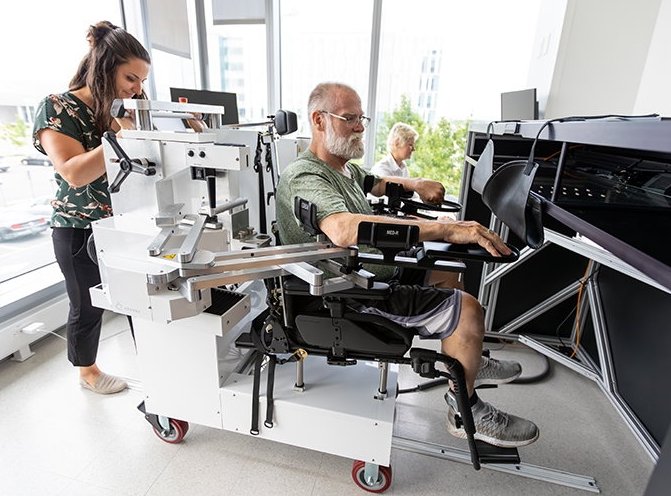
      Joanna Hoh, a biomechanics and movement science (BIOMS) doctoral student at the...Joanna Hoh, a biomechanics and movement science (BIOMS) doctoral student at the University of Delaware, tests a patients’ sensory loss in his arm post-stroke using a robotic exoskeleton.
      Image credit: Ashley Barnas Larrimore/ University of Delaware Robot testing reveals hidden stroke damage. New study could pave the way for more precise rehabilitation University of Delaware researchers are working to understand one of the most overlooked challenges in stroke recovery – proprioception, the body's ability to sense movement and position. "To simplify the concept, in class, I tell my undergraduates to close their eyes and touch their nose; if people can't do that, it means they likely have impaired proprioception," said Jennifer Semrau, associate professor of kinesiology and applied physiology, in the College of Health Sciences. In findings recently published in the journal Neurorehabilitation and Neural Repair, Semrau and doctoral candidate Joanna Hoh suggest it's possible to identify hidden sensory losses after stroke without requiring patients to move their affected arm. This advance could make assessments more accessible in clinical settings. We found that just 1% of clinicians assess proprioception in people with stroke. It's a newer area, but research also shows that without sensory recovery, a person will not gain full recovery of function after a stroke Jennifer SemrauInside the lab, Semrau uses a KINARM robotic exoskeleton that tracks upper limb movement, allowing her to better understand the neural and behavioral mechanisms that contribute to recovery of sensory and motor function in stroke survivors. Semrau's lab used several tests, including a new one – the single-arm measurement- to gauge perception-based movement. The test moves a patient's stroke-affected arm robotically while they respond with their non-affected arm if they can feel the movement of their stroke-affected arm. "We're trying to determine the lowest level someone can detect their arm moving," Semrau said. The average person, who hasn't had a stroke, can feel as little movement as a half centimeter. For people post-stroke, it varies. "Some can't tell their arm was moved 10 centimeters, and that could be the difference between touching a hot stove or a knife in the kitchen," Semrau said. The communication from the brain to the receptors in the muscles, which are responsible for detecting movement, is disrupted after a stroke. "When you move, the receptors lengthen or shorten, and if the information isn't getting from the brain to those muscle receptors, you can't properly coordinate movement," Semrau said. However, someone with a proprioceptive deficit could still feel pain and may not have a touch impairment. "Pain is part of the somatosensory system and is relayed on a different set of nerves. After a stroke, some may have increased or decreased sensitivity to pain, and it's the same with touch," Semrau said. "Every person is a fingerprint--impairments each person has after a stroke are unique and require individualized treatment." The difficulty Semrau faces: it's challenging to tease apart sensory deficits from motor deficits because they're deeply intertwined. "It's hard to determine whether the issue is the person's ability to feel the arm or their ability to move," she said. "The tasks we're studying in our lab get to the heart of the matter." Hoh, an occupational therapist, became interested in upper-limb stroke research after working with patients in rehabilitation. "We often think about movement through motor function," said Hoh. "I had a blind spot to the sensory system in terms of stroke recovery and realized this is an avenue we don't consider enough as clinicians." That inspired her to pursue her doctorate in biomechanics and movement science at UD. Her dissertation focuses on individuals with sensory issues following a stroke and how these issues affect their daily activity levels. Semrau hopes their ongoing research will raise awareness of the problem and encourage more clinicians to integrate this kind of precision testing. "In one of our studies, we found that just 1% of clinicians assess proprioception in people with stroke," Semrau said. "It's a newer area, but research also shows that without sensory recovery, a person will not gain full recovery of function after a stroke."  To develop a personalized medicine approach to treatment, both Semrau and Hoh emphasized the need for a better understanding of post-stroke impairments. "The onus is on clinicians and researchers to ensure they're testing for sensory deficits. Just because someone is impaired motorically, it doesn't mean they will or won't be impaired sensory-wise," Hoh said. Semrau added, "Understanding the connection between motor and sensory impairments that affect function is key to better targeting therapies and tailoring recovery for each individual."  
      Source: University of Delaware 

      Tuesday, July 1, 2025

      From Astronauts to Stroke Survivors: How the TheraSuit Method® can Boost Balance and Recovery


      How does this compare to the Regent suit from Russia?

      Regent Suit and stroke rehabilitation March 2011 

      Do you prefer your doctor and hospital incompetence NOT KNOWING? OR NOT DOING?

      The latest here;

       From Astronauts to Stroke Survivors: How the TheraSuit Method® can Boost Balance and Recovery

      Rose  LampertRose Lampert1,2*Rahul  GoelRahul Goel3João  Vitor OblancaJoão Vitor Oblanca4Daniel  Fernandes MartinsDaniel Fernandes Martins1,2
      1Experimental Neuroscience Laboratory (LaNEX), Palhoça, Brazil, Palhoça, SC, Brazil
      2Postgraduate Program in Health Sciences, University of Southern Santa Catarina (UNISUL), Palhoça, Brazil
      3Independent Biomedical Researcher, Houston, TX, United States
      4State University of Maringá, Maringá, Paraná, Brazil
      The human body exhibits remarkable adaptability to diverse environments. Astronauts in microgravity experience physiological changes like those observed in stroke patients due to inactivity. This shared challenge inspires the exploration of rehabilitation methods, bridging the gap between space medicine and physical therapy. This perspective examines the physiological similarities between microgravity and stroke, focusing on proprioceptive deficits. We then introduce the axial loading suit astronauts use to counteract these deficits and its potential application in stroke rehabilitation. We propose the TheraSuit Method®, a suit utilizing similar principles, as a promising tool to enhance whole-body proprioception and facilitate muscle activation against gravity, thereby promoting strength and functional recovery in stroke patients.

      Sunday, June 8, 2025

      A pilot study for self-guided, active robotic training of proprioception of the upper limb in chronic stroke


      What is your doctor's current protocol to recover proprioception? Incompetently doesn't have one, right? No protocol, YOUR DOCTOR HAS BEEN INCOMPETENT FOR OVER A DECADE!

       If your doctor writes E.T. prescriptions (Evaluate and Treat) to the OT, PT and OT like mine did, it means they KNOW NOTHING ABOUT STROKE RECOVERY! Why haven't they been fired yet? I could train a chimp to do that. If he knew anything about stroke recovery it didn't show.

       Send me hate mail on this: oc1dean@gmail.com. I'll print your complete statement with your name and my response in my blog. Or are you afraid to engage with my stroke-addled mind? Your patients need an explanation of why you don't have proprioception protocols.

      Why isn't your 'professional' solving stroke?

      Laziness? Incompetence? Or just don't care? NO leadership? NO strategy? Not my job? Not my Problem!

      A pilot study for self-guided, active robotic training of proprioception of the upper limb in chronic stroke

      Abstract

      Background

      Proprioceptive impairments of the upper limb are common after stroke. These impairments are not typically addressed during assessment or rehabilitation. Currently, most robotic paradigms for training of the upper limb have focused solely on improving motor function or have targeted proprioception in individuals with combined use of visual feedback. Our goal was to design a training paradigm that directly targets proprioception of the upper limb, while minimizing reliance on other sensory information to improve sensorimotor function after stroke.

      Methods

      In this pilot study, 5 individuals with stroke and 5 age-matched controls were tested on a single-day proprioceptive training paradigm. Here, participants used a joystick with their less-affected arm to send commands to a KINARM exoskeleton that would passively move their more-affected arm. To complete the passive reaching task, participants relied only on proprioceptive feedback from the more-affected arm and were only given knowledge of results information after each trial. Sensorimotor function of the upper limb was measured pre- and post-training via robotic measures of motor function [Visually Guided Reaching (VGR)] and position sense [Arm Position Matching (APM)]. Sensorimotor function was quantified as a Task Score, which incorporated multiple task-relevant parameters for both VGR and APM. Changes in sensorimotor performance due to training were calculated as the pre- to post-training difference for VGR and APM within the control and stroke groups.

      Results

      We found significant improvements from pre-training to post-training for VGR in individuals with stroke (p < 0.001, CLES = 100) that were not observed in control participants (p = 0.87, CLES = 80). We observed significant changes from pre- to post-training in both VGR (Posture Speed, Reaction Time, Initial Direction Angle, Min–Max Speed Difference, and Movement Time) and APM (Contraction/Expansion Ratiox and Shifty) parameters.

      Conclusions

      Our novel proprioceptive training paradigm is one of the first to implement a self-guided sensory training protocol. We observed improvements in motor function and proprioception for individuals with stroke. This pilot study demonstrates the feasibility of self-guided proprioceptive training to improve motor and sensory function in individuals with stroke. Future studies aim to examine multi-day training to examine longer-term impacts on upper limb sensorimotor function.

      Background

      Proprioception refers to our sense of static position (position sense) and movement (kinesthesia) in space [1]. Proprioception is critical for movement execution of the upper limb [2,3,4,5] and when proprioception is largely eliminated, as in individuals with sensory deafferentation, movement quality is significantly compromised [6, 7]. Neurological impairments, such as stroke, have also been shown to impair proprioception, with many individuals (~ 50 to 60%) after stroke exhibiting some type of proprioceptive impairment [8,9,10,11,12].

      Historically, motor impairments following stroke have been studied extensively and remain a primary area for targeted improvement in neurorehabilitation [13,14,15,16,17,18]. In contrast, proprioceptive impairments are an often underexplored area of rehabilitation, as clinicians report that 1–25% of completed evaluations contain proprioceptive assessments [19]. Further, they report that use of evidence-based somatosensory training occurs in 18% or less of clinical interventions [20]. However, recent work has utilized robotic paradigms for the upper limb to examine whether proprioception can be improved [21,22,23,24,25,26]. Previous work in adults who are neurologically intact has shown efficacy for training proprioception using forced choice paradigms. Here, the participant’s arm is passively moved to the right or left of the midline. They report the perceived direction of movement and then receive feedback on response accuracy [21, 24, 26]. Other paradigms have required participants to make unseen reaches in 3D space to remembered targets [22] and actively retrace a pattern after being passively moved through the pattern [23]. A recent study implemented a forced choice paradigm in individuals with stroke and found improvements in both motor and proprioceptive behavior, providing promising evidence for targeted improvement of proprioception after stroke [25]. It is unsurprising that proprioceptive training improved reaching behavior as proprioception is critical for smooth and coordinated reaching movements [2, 4, 6, 27, 28]. Additionally, two of these studies have promoted active subject participation [22, 23] and yielded more robust improvements in proprioception compared to those studies with more passive designs [21, 24,25,26].

      The goal of the current study was to design a proprioceptive training paradigm to improve proprioception in individuals with chronic stroke that would build on the insight gathered from a set of recent successful proprioceptive training studies [21, 23,24,25,26]. Here, we target the following task objectives: (1) promotion of active subject participation during task execution, (2) require and encourage participants to use real-time proprioception of the more-affected limb for task success, (3) cooperative interplay between the less-affected limb to actively guide passive movement of the more-affected limb. For evaluation of the developed paradigm, a sample of individuals post-stroke and control participants were recruited to participate in a single-session proprioceptive training protocol. We hypothesized that robotic proprioceptive training would result in a reduction of proprioceptive deficits associated with chronic stroke. Therefore, we predicted that (1) individuals with stroke would improve both their motor and proprioceptive performance after training, and (2) individuals with stroke would show more spatial and temporal errors and slower learning during proprioceptive training compared to age-matched controls [29].

      More at link.