Changing stroke rehab and research worldwide now.Time is Brain! trillions and trillions of neurons that DIE each day because there are NO effective hyperacute therapies besides tPA(only 12% effective). I have 523 posts on hyperacute therapy, enough for researchers to spend decades proving them out. These are my personal ideas and blog on stroke rehabilitation and stroke research. Do not attempt any of these without checking with your medical provider. Unless you join me in agitating, when you need these therapies they won't be there. Did your doctor somehow miss the recovery protocol that Pedro Bach-y-Rita used to recover fully back in 1958 with only a partial brain?

What this blog is for:

My blog is not to help survivors recover, it is to have the 10 million yearly stroke survivors light fires underneath their doctors, stroke hospitals and stroke researchers to get stroke solved. 100% recovery. The stroke medical world is completely failing at that goal, they don't even have it as a goal. Shortly after getting out of the hospital and getting NO information on the process or protocols of stroke rehabilitation and recovery I started searching on the internet and found that no other survivor received useful information. This is an attempt to cover all stroke rehabilitation information that should be readily available to survivors so they can talk with informed knowledge to their medical staff. It lays out what needs to be done to get stroke survivors closer to 100% recovery. It's quite disgusting that this information is not available from every stroke association and doctors group.

Showing posts with label Inspiratory Muscle Strength Training. Show all posts

Saturday, July 8, 2023

Master Your Breath, Master Your Health: The Transformative Power of Controlled Breathing

 What is your doctor's breathing protocol? Doesn't have one, then you don't have a functioning stroke doctor. 

RUN AWAY!


What does your doctor think? Should you be doing slow breathing as the book

'Breath: The New Science of a Lost Art' by James Nestor

says?

5 Ways To Improve Your Breathing with James Nestor

Or should you be doing fast breathing in

Creation of nitric oxide via Breath of Fire  February 2014 

And why doesn't your doctor know a damn thing about a breathing protocol?

You doctor has had years to know about this. Are you giving them a pass on being incompetent?


The latest here:


Master Your Breath, Master Your Health: The Transformative Power of Controlled Breathing

Summary: Breathing, an autonomous function, also possesses a feature unique to a few bodily activities: we can control it.

According to research, controlled breathing stimulates the nervous and cardiovascular systems, potentially altering both physical and mental health states. By consciously slowing our breathing, we can stimulate the ‘rest and digest’ response managed by the parasympathetic nervous system.

Techniques such as inspiratory muscle strength training (IMST) or mindful, slow breathing have shown potential in reducing stress, improving mental health, and lowering blood pressure.

Key Facts:

  1. Controlled breathing doesn’t just alter the amount of oxygen intake, but also impacts how much blood is ejected from our hearts, affecting cardiovascular health.
  2. Techniques like IMST can lead to significant health improvements, such as a reduction in systolic blood pressure.
  3. Controlled breathing can also help manage mental health by reducing feelings of stress, anxiety, and depression, and can be used as a tool for pain control.

Source: American Heart Association

Odds are, if you are reading this, you know something about breathing. You’re probably doing it right now.

It’s an essential act that requires no thought. But thinking about it can alter your physical and mental health.

That’s because breathing isn’t just about the lungs, said Daniel Craighead, an assistant research professor in the department of integrative physiology at the University of Colorado Boulder.

It affects the nervous and cardiovascular systems and more. Changing how much we inhale affects more than just the amount of oxygen we get. “When we breathe, that actually impacts how much blood is ejected from our hearts.”

Breathing happens regardless of whether we pay attention, said Dr. Ni-Cheng Liang, an integrative pulmonologist in private practice in Encinitas, California. “But what’s a bit more miraculous about breathing is that, contrary to a lot of other bodily functions, we can also control our breathing.”

To understand how that can be healthy, it helps to start with knowing how breathing both affects and is affected by the nervous system.

Breathing and heart rate are regulated by the same parts of the brain, and each “talks” to the other to work in sync. When we inhale, our lungs expand, and pressure on the heart and blood vessels changes. That stimulates sensory nerves that, in return, affect how hard we breathe.

When we encounter a threat – such as an attacking tiger or an angry boss – it triggers the “fight or flight” response.

“Along with that comes the increase in heart rate, the increase in sweaty palms and the increase in muscle tension,” said Liang, who also is a voluntary assistant professor at the University of California San Diego and a mindfulness teacher. We breathe faster, and blood rushes to the muscles as the body braces for action.

That’s the work of the sympathetic nervous system.

Conversely, when we’re relaxed, we breathe more slowly. Heart rate decreases, blood vessels dilate and more blood flows to the gut to help with digestion. This “rest and digest” response is managed by the parasympathetic nervous system.

Breathing is affected by these systems, but by consciously slowing our breathing we can manipulate them. Research suggests that controlled breathing can trigger the “rest and digest” response by stimulating the vagus nerve, which controls many involuntary functions, including heart rate.

If you take a slow, deep breath to calm down, that’s actually working physiologically by affecting the nervous system, Craighead said. “It’s not just all mental.”

Craighead, a cardiovascular physiologist, led research demonstrating just how much a specific breathing activity can affect one important measure of health: blood pressure.

Saturday, May 18, 2019

This 5-minute workout can save your life

Is this any different than the Kundalini Breath of Fire from 5 years ago which produces nitric oxide thus dilating your blood vessels?  Which of course your doctor irresponsibly did nothing with. NO protocol, no knowledge of it. nothing.  


This 5-minute workout can save your life

Melissa Sammy, MDLinx | May 16, 2019
Five minutes of Inspiratory Muscle Strength Training (IMST) daily can improve cardiovascular health, enhance fitness and sports performance, and sharpen cognitive function, according to preliminary clinical trial results from University of Colorado Boulder (CU Boulder) researchers.

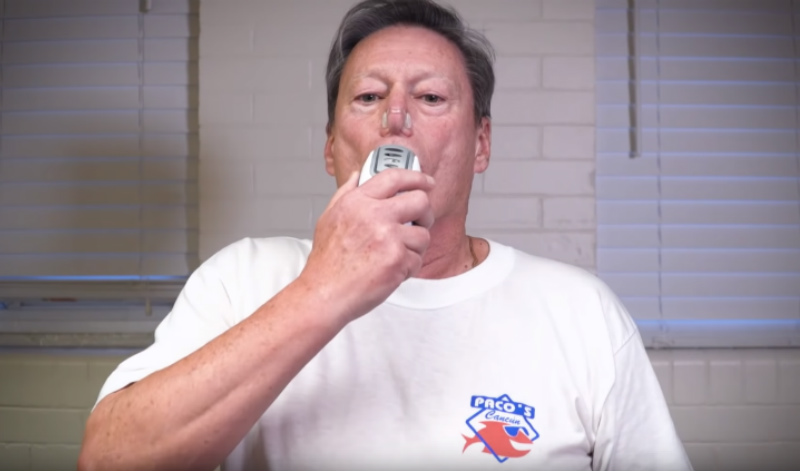
Man using inspiratory muscle training device With IMST, just taking 30 deep breaths daily (5 minutes) using the hand-held inspiratory muscle trainer device can improve your cardiovascular health and boost your physical and cognitive function. (Photo: CU Boulder)
A simple workout, IMST involves vigorous inhalation through a hand-held device called an inspiratory muscle trainer that provides resistance.
“It’s basically strength-training for the muscles you breathe in with,” explained study lead Daniel Craighead, PhD, postdoctoral fellow, Integrative Physiology of Aging Laboratory, CU Boulder, Boulder, CO.
The technique was first developed in the 1980s as a non-pharmacological intervention for the improvement of respiratory symptoms in critically ill patients following mechanical ventilation cessation. However, IMST has also been assessed in other studies for the improvement of various respiratory conditions, notably chronic obstructive pulmonary disease, as well as lung capacity improvement in patients with lung diseases.
In a 6-week trial on the effects of IMST on obstructive sleep apnea, University of Arizona researchers found that 30 inhalations a day using a hand-held device resulted in more restful sleep, stronger inspiratory muscles, and lower systolic blood pressure levels (by about 12 mmHg) among participants.

The promising results from this trial prompted CU Boulder researchers to investigate the potential benefits of IMST for cardiovascular, cognitive, and physical health in a cohort of 50 middle-aged adults in a 6-week study. Participants were assigned either to an IMST intervention group or a control group. In the intervention group, participants were tasked with taking 30 deep breaths daily, which took about 5 minutes to complete, via the inspiratory muscle trainer. In the control group, participants mimicked the same process but used a low-resistance sham breathing device instead.
Now roughly half-way through the study, the researchers have noted significant reductions in blood pressure levels and improvements in large-artery function among IMST intervention participants vs those in the control group. Furthermore, cognitive and treadmill test results were superior among participants in the intervention group vs participants in the control group. Specifically, the IMST group was able to run for longer and keep their heart rate and oxygen consumption low when asked to exercise to exhaustion.
“We suspect that as you improve the function of your respiratory muscles, they don’t need as much blood to work and that blood can be redistributed to your legs, so you exercise longer,” said Dr. Craighead.(If you think that you don't understand the creation of nitric oxide and what it does.)
The researchers hope that the ease of the technique coupled with the comfort of a home setting will encourage people to perform the 5-minute workout regularly and enjoy health benefits they might not otherwise receive.

Monday, April 15, 2019

5-minute Breathing Exercise Slashes Blood Pressure and Could Improve Cognitive Function

Is this any different than the Kundalini Breath of Fire from 5 years ago which produces nitric oxide thus dilating your blood vessels?  Which of course your doctor irresponsibly did nothing with. NO protocol, no knowledge of it. nothing.  

5-minute Breathing Exercise Slashes Blood Pressure and Could Improve Cognitive Function

News   Apr 10, 2019 | Original story from University of Colorado Boulder
 
5-minute Breathing Exercise Slashes Blood Pressure and Could Improve Cognitive Function A volunteer demonstrates Inspiratory Muscle Strength Training at the University of Colorado Boulder. Credit: CU Boulder