Changing stroke rehab and research worldwide now.Time is Brain! trillions and trillions of neurons that DIE each day because there are NO effective hyperacute therapies besides tPA(only 12% effective). I have 523 posts on hyperacute therapy, enough for researchers to spend decades proving them out. These are my personal ideas and blog on stroke rehabilitation and stroke research. Do not attempt any of these without checking with your medical provider. Unless you join me in agitating, when you need these therapies they won't be there. Did your doctor somehow miss the recovery protocol that Pedro Bach-y-Rita used to recover fully back in 1958 with only a partial brain?

What this blog is for:

My blog is not to help survivors recover, it is to have the 10 million yearly stroke survivors light fires underneath their doctors, stroke hospitals and stroke researchers to get stroke solved. 100% recovery. The stroke medical world is completely failing at that goal, they don't even have it as a goal. Shortly after getting out of the hospital and getting NO information on the process or protocols of stroke rehabilitation and recovery I started searching on the internet and found that no other survivor received useful information. This is an attempt to cover all stroke rehabilitation information that should be readily available to survivors so they can talk with informed knowledge to their medical staff. It lays out what needs to be done to get stroke survivors closer to 100% recovery. It's quite disgusting that this information is not available from every stroke association and doctors group.

Showing posts with label palliative care. Show all posts

Monday, October 13, 2025

Trends of palliative care utilization for nontraumatic intracerebral hemorrhage: Analysis of the national inpatient sample

 If palliative care is suggested by your competent? doctor, ask what went wrong with their interventions that recovery is not occurring. YOU have to put your doctors on the spot; that's the only way they'll try to get better! If ' All strokes are different, all stroke recoveries are different' comes out of their mouth, start screaming: 'Only incompetent persons would use that excuse!'

Trends of palliative care utilization for nontraumatic intracerebral hemorrhage: Analysis of the national inpatient sample


https://doi.org/10.1016/j.jocn.2025.111686Get rights and content

Abstract

Background

We investigated the trends and hospital outcome measures associated with the utilization of consultative palliative care (PC) services among patients with nontraumatic intracerebral hemorrhage (ICH).

Methods

This was a retrospective observational cohort study using the National Inpatient Sample (2002–2022) of patients admitted with ICH. Variables recorded included the rate of PC, age, gender, race, income, insurance type, hospital location and region, comorbidities, ICH severity indicators (coma, cerebral edema, brain compression, hydrocephalus, neurosurgical procedures), and in-hospital outcomes (mortality, cost, disposition). Temporal trends were assessed using linear logistic models for each patient-level variable. The cohort was divided in PC and non-PC (nPC) groups. Propensity-score matching (PSM) was applied to balance comorbidities and severity between the two groups. Binary logistic regression was used to analyze in-hospital outcomes. P value was set at 0.01.

Results

Of 452,250 ICH cases during the study period, 69,360 (15.3 %) received PC. Compared to nPC, ICH patients receiving PC were older [IQR] (75 [63–84] vs. 68 [56–79] years), more frequently women (52.4 % vs. 48.1 %), White (67.7 % vs. 56.2.%), and more likely to be in the highest income quartile (23.2 % vs. 22.6 %), p < 0.01 for all. Temporal analysis showed a significant increase in PC utilization from 1.7 % in 2002 to 23.5 % in 2022 (β = 0.013, 95 % CI: 0.011–0.014), with the steepest increase after 2007. Within subgroups, there was statistically greater increases of the use of PC among White patients (β = 0.014, 95 % CI: 0.012–0.016, p < 0.01), Medicare payers (β = 0.015, 95 % CI: 0.013–0.017, p < 0.01) and age ≥ 80 years (β = 0.02, 95 % CI: 0.018–0.022, p < 0.01) throughout the study period. There were trends toward higher increase in PC utilization in women and in Midwest among U.S. region, without reaching statistical significance. After 1:1 PSM, PC utilization remained independently associated with shorter length of stay (OR: 0.619, 95 %CI: 0.604–0.635), lower hospitalization cost (OR: 0.853, 95 %CI: 0.832 – 0.874), and higher odds of discharge to hospice/in-hospital mortality (RR: 4.444, 95 %CI: 4.342–4.549), p < 0.01 for all.

Conclusions

The use of PC in ICH patients has increased over the past two decades. PC is associated with more efficient healthcare resource utilization and higher odds of discharge to hospice/in-hospital mortality.(Which can only be described as failure of the hospital.) Disparities in PC utilization persist among underprivileged groups and racial minorities.

Wednesday, March 19, 2025

Integrating Palliative Care into the ongoing treatment of People Living with Stroke - World Stroke Academy

 Needed because the WSO IS A COMPLETE FUCKING FAILURE AT ADDRESSING 100% RECOVERY PROTOCOLS! They need to be destroyed and run by survivors!

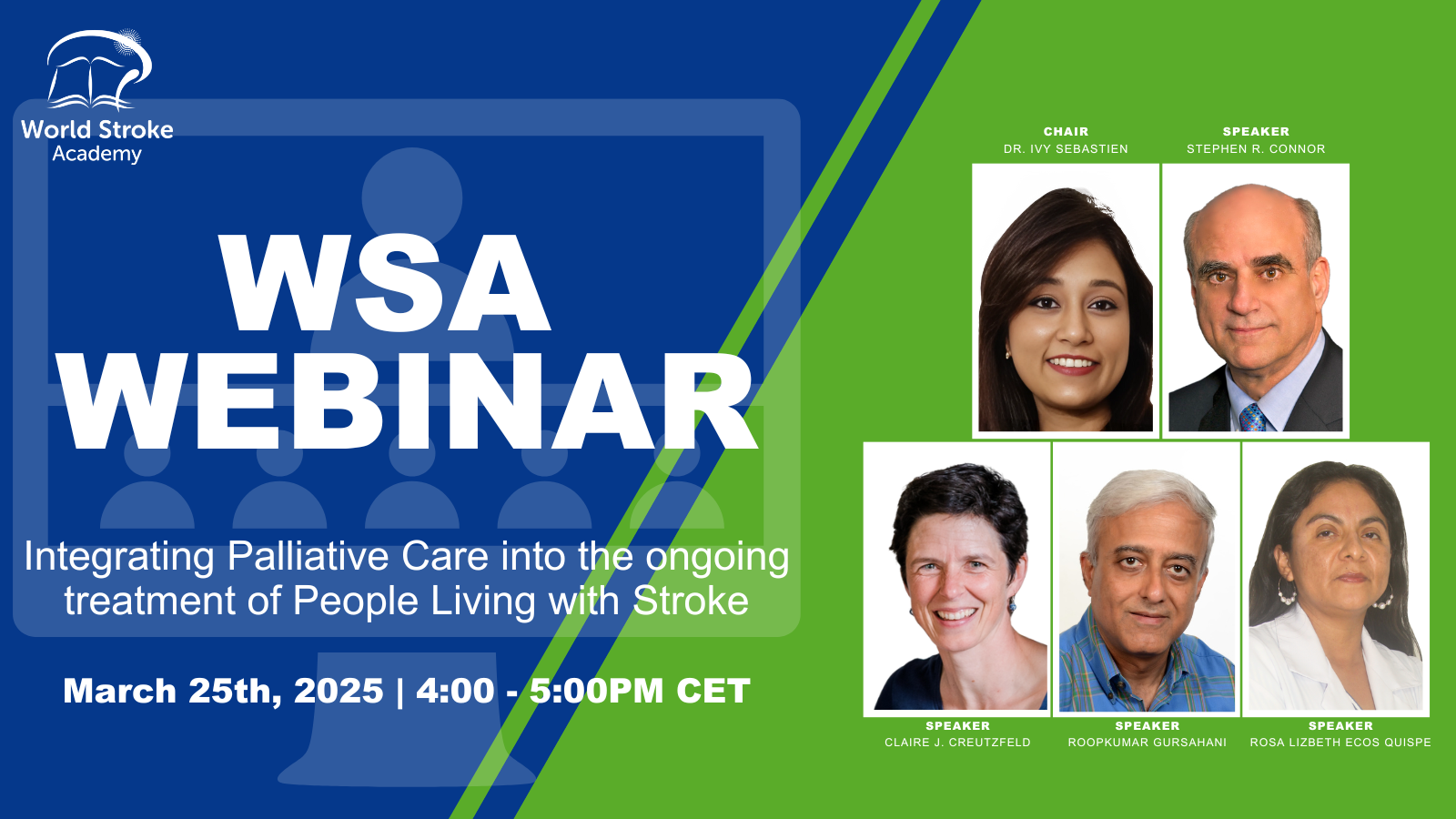
Integrating Palliative Care into the ongoing treatment of People Living with Stroke

Join us 25th March 4 – 5 PM (CET) for a webinar on “Integrating Palliative Care into the ongoing treatment of People Living with Stroke”
Palliative care is often overlooked in stroke management, despite its importance in addressing the complex needs of patients and caregivers. This webinar will explore how healthcare professionals can integrate palliative care into stroke treatment, covering symptom management strategies, the needs of families and caregivers, and approaches to improving access to palliative care, particularly in low-resource settings. This webinar is organized in collaboration with the Worldwide Hospice Palliative Care Alliance (WHPCA).

Learning Objectives:
  • To describe the population of patients suffering from stroke that need palliative care and their special needs throughout the trajectory of illness.
  • To identify the palliative symptom management strategies used in management of stroke.
  • To understand the physical, psychological, social, and practical needs of families and caregivers following stroke.
  • To improve the ability of neurological professionals to integrate palliative care into their practices.
Chair: Dr. Ivy Sebastian - Assistant Professor, Department of Neurology, St. Stephen’s Hospital, New Delhi (India)

Speakers:
  • Dr. Stephen R. Connor, Ph.D. – Executive Director of the London, UK based Worldwide Hospice Palliative Care Alliance (WHPCA), London (UK)
  • Prof. Claire J. Creutzfeld, MD - UW School of Medicine Associate Professor of Neurology, Washington (USA)
  • Dr. Roopkumar Gursahani, MBBS, FAAN – PD Hinduja Hospital & Research Center, Mumbai (India)
  • Dr. Rosa Lizbeth Ecos Quispe, MD - National Institute of Neurologic Sciences, Lima (Peru)
Scientific Program:
  • Welcome and Introduction by chair
  • Overview of Stroke Care Need Worldwide – Dr. Stephen R. Connor
  • Palliative & End-of-Life Care in Stroke – Prof. Claire J. Creutzfeld
  • Managing CD & Symptom Management in LMICs – Dr. Roopkumar Gurashanti
  • Stroke Rehabilitation in Peru, Country Realities – Dr. Rosa Lizbeth Ecos Quispe
  • Q&A Discussion
  • Closing Remarks
Date & Time: March 25th, 4 – 5 PM (CET)

Thursday, December 26, 2024

‘Fundamental for all patients’: Exploring the benefits of palliative care for stroke survivors


If your hospital has to put you in pallative care then your incompetent hospital completely failed at getting you 100% recovered. If they didn't do an analysis to see where they failed they are worse than worthless and the complete hospital needs to be started over.

‘Fundamental for all patients’: Exploring the benefits of palliative care for stroke survivors

Palliative care is known to help stroke survivors manage the long-term physical, mental and emotional challenges associated with recovery. It is consistently underutilized, however, prompting the American Heart Association (AHA) to share a new scientific statement focused on both its benefits and ways it can improve in the years ahead.

The document is available in full in Stroke, a journal distributed by both the AHA and American Stroke Association.[1]

“Stroke is often thought of as an event that is over quickly, but that is not true,” Claire J. Creutzfeldt, MD, chair of the statement’s writing group and an associate professor of neurology at the University of Washington in Seattle, said in a statement. “Even though the majority of strokes are not immediately life-threatening, every stroke is life-altering, and every stroke requires high-quality, person-centered care. Integrating palliative care principles into stroke care is fundamental for all patients and at every stage after a stroke.”

The AHA estimates that approximately 800,000 strokes occur each year in the United States alone. Most people survive, due in part to key advances in patient care over the years, yet survivors often go forward without receiving the help they need. 

This new scientific statement represents an update of AHA recommendations published back in 2014, building on that prior document while highlighting key updates from the last decade and detailing what healthcare providers can do to integrate palliative care principles into day-to-day patient care. The statement also examines healthcare inequities that remain and what care teams can do to help make them a thing of the past. 

Another key takeaway is the fact that stroke survivors need many kinds of support—it’s not just about making sure they take their medications or tracking their symptoms; it’s also about providing both emotional and spiritual support in a way that considers each stroke survivor as their own person with their own wants and needs. 

“It’s essential to recognize the impact of illness and disability on someone’s quality of life and understand that treatment decisions will vary from patient to patient, based on their values, their beliefs and their culture,” Creutzfeldt said. “An individualized and culturally sensitive approach to assessment and management is always best. Additionally, the palliative care needs of patients and their families or care partners after a stroke fluctuate over the course of their illness based on events, symptoms, changes in function and stage of the illness.” 

The new scientific statement covers much more ground. Click here to read the full document.

Tuesday, December 17, 2024

This underused type of care can help in stroke recovery, report says

 Survivors don't want 'help'; THEY WANT EXACT 100% RECOVERY PROTOCOLS! GET THERE!

If your hospital has to put you in pallative care then your hospital completely failed at getting you 100% recovered. If they didn't do an analysis to see where they failed they are worse than worthless and the complete hospital needs to be started over.

This underused type of care can help in stroke recovery, report says

Stroke survivors and their family members could benefit from palliative care, which focuses on easing pain and other symptoms once they leave the hospital, but the approach is widely underutilized, especially among Black, Hispanic and Asian patients, according to a new science report from the American Heart Association.

The scientific statement, published Monday in the AHA journal Stroke, encourages integrating palliative care into all stages of post-stroke care, including strategies for psychosocial health, how to navigate complex health care systems and how to prepare for end-of-life care when necessary.

"Stroke is often thought of as an event that is over quickly, but that is not true," Dr. Claire J. Creutzfeldt, who led the statement writing group, said in a news release. Creutzfeldt is an associate professor of neurology at the University of Washington in Seattle. "Even though the majority of strokes are not immediately life-threatening, every stroke is life-altering, and every stroke requires high-quality, person-centered care. Integrating palliative care principles into stroke care is fundamental for all patients and at every stage after a stroke."

Every year, nearly 800,000 people in the U.S. have a stroke, which occurs when a blood vessel to the brain ruptures or becomes blocked by a clot, interrupting blood flow and causing brain cells to die. Stroke is a leading cause of disability and the fifth-leading cause of death in the U.S., contributing to the deaths of about 160,000 people each year.

Advances in treatment have allowed stroke survivors to live longer, but they often face long-term challenges, such as cognitive and physical disabilities along with psychosocial problems. The added responsibility of providing care to stroke survivors can be overwhelming for family members.

The new statement said palliative care efforts should include strategies to improve communication about prognosis and care goals, navigate complex health systems, address psychosocial needs such as coping with loss, and prepare for death with end-of-life care when necessary. The statement also highlights the need to reduce sociodemographic and regional care disparities.

The statement suggests a holistic approach to palliative care that goes beyond physical symptoms and pain to include emotional, psychosocial, spiritual and existential distress and takes the family's expectations, values and goals into consideration. It highlights the importance of emotional, spiritual and psychosocial support in high-quality stroke care for survivors and their care partners. It also outlines the phases that follow a severe stroke, provides a palliative care checklist and screening tools to recognize and manage patient and family needs.

"It's essential to recognize the impact of illness and disability on someone's quality of life and understand that treatment decisions will vary from patient to patient based on their values, their beliefs and their culture," Creutzfeldt said. "An individualized and culturally sensitive approach to assessment and management is always best." The care needs of survivors and their families or partners, she added, can change over time depending on events, symptoms, changes in function and the stage of the illness.

There is limited research on palliative care for stroke survivors and wide variation in the type of care they receive, the statement notes. Important symptoms, such as pain, may be undertreated. For example, post-stroke pain may be greatest four to six months and two years following a stroke, but it is often underdiagnosed. Research shows up to 45% of stroke survivors leave the hospital with no plan for additional services, such as home health care or hospice services, and referrals for palliative care often don't occur until the end of life.

Black and Hispanic people, who face disproportionately higher stroke rates and poorer outcomes, are less likely to receive acute treatments such as intravenous therapy or surgery to treat blood clots, the statement said. And they are substantially less likely than white people to have "do not resuscitate" orders or advance directives in place. Black, Hispanic and Asian stroke patients also are less likely to be discharged to hospice care than white patients.

The statement noted that while some disparities may be attributed to cultural differences, other factors, such as the hospital where the patient was treated, have been associated with the likelihood of receiving palliative care, suggesting system-level inequities may play a role. A 2023 AHA scientific statement on ways to address racial and ethnic disparities in stroke treatment highlights the need to better understand how clinicians, hospitals, systems and others influence these care patterns and explores ways to correct them.


American Heart Association News Stories

American Heart Association News covers heart disease, stroke and related health issues. Not all views expressed in American Heart Association News stories reflect the official position of the American Heart Association. Statements, conclusions, accuracy and reliability of studies published in American Heart Association scientific journals or presented at American Heart Association scientific meetings are solely those of the study authors and do not necessarily reflect the American Heart Association’s official guidance, policies or positions.

Copyright is owned or held by the American Heart Association, Inc., and all rights are reserved. Permission is granted, at no cost and without need for further request, for individuals, media outlets, and non-commercial education and awareness efforts to link to, quote, excerpt from or reprint these stories in any medium as long as no text is altered and proper attribution is made to American Heart Association News.

Other uses, including educational products or services sold for profit, must comply with the American Heart Association’s Copyright Permission Guidelines. See full terms of use. These stories may not be used to promote or endorse a commercial product or service.

HEALTH CARE DISCLAIMER: This site and its services do not constitute the practice of medical advice, diagnosis or treatment. Always talk to your health care provider for diagnosis and treatment, including your specific medical needs. If you have or suspect that you have a medical problem or condition, please contact a qualified health care professional immediately. If you are in the United States and experiencing a medical emergency, call 911 or call for emergency medical help immediately.

Wednesday, May 17, 2023

Improving Access to Specialist Palliative Care for Patients With Catastrophic Strokes Using Best Practice Advisory- a Feasibility Study

So the recommendation for those difficult stroke cases is to immediately put them into palliative care. Aren't you glad your stroke medical 'professionals' are that lazy they don't believe in solving difficult cases? Hope comeuppance bites them hard on the ass when they have strokes. 

Here is the National Institutes of Health Stroke Scale so you can make sure your score stays below 20. 

I consider the NIHSS subjective stroke scale as worthless and shouldn't be used for anything serious like this.

The latest here:

Improving Access to Specialist Palliative Care for Patients With Catastrophic Strokes Using Best Practice Advisory- a Feasibility Study

Abstract

Background and Purpose

The American Heart Association and American Stroke Association (AHA/ASA) strongly recommend specialty palliative care (PC) for all patients hospitalized with life-threatening or life-altering strokes to provide expert symptom management, improve communication, promote shared decision-making and relieve suffering. We piloted an intervention to remind physicians about high PC needs of their patients admitted with catastrophic stroke.

Methods

We worked with colleagues from medical informatics to create a “Best Practice Advisory” (BPA) to recommend a goals-of-care conversation and PC consultation for patients with a National Institutes of Health Stroke Scale (NIHSS) score of 20 or more in our electronic medical record (Epic). We evaluated the impact of this BPA, after implementation, on the number and timing of PC consults and reviewed barriers to this system change.

Results

The BPA was operational in Jan 2019. Data analysis showed that it fired for all patients with an entered NIHSS score of ≥20. Though a large portion of the BPAs (more than 90%) were acknowledged without documented reason (after selecting “do not order”), PC consultations per 100 patients with triggered BPA increased from the first year of implementation (11.7 in 2019) to the next 2 years (20.7 in 2020, 15.6 in 2021). Also, the providers learned to manage BPA alerts better resulting in more than 30% reduction in the number of BPA alerts fired for each patient encounter in 2020-2021 compared to 2019.

Get full access to this article

Tuesday, October 19, 2021

When Should Neuroendovascular Care for Patients With Acute Stroke Be Palliative?

 If your doctor and hospital had EXACT STROKE PROTOCOLS LEADING TO 100% RECOVERY, then this palliative care would be vastly reduced. The status quo on current stroke rehab is a massive failure, using that failure to justify palliative care is unconscionable. You fix what is broke, don't hide the broken failure to recover by letting patients die and justifying their death by saying; 'Nothing could be done, or DO NOTHING!'

When Should Neuroendovascular Care for Patients With Acute Stroke Be Palliative?

Learning Objectives
1. Explain a new or unfamiliar viewpoint on a topic of ethical or professional conduct
2. Evaluate the usefulness of this information for his or her practice, teaching, or conduct
3. Decide whether and when to apply the new information to his or her practice, teaching, or conduct
Abstract

Noncurative surgeries intended to relieve suffering during serious illness or near end of life have been analyzed across palliative settings. Yet sparse guidance is available to inform clinical management decisions about whether, when, and which interventions should be offered when ischemic stroke and other neurological complications occur in patients whose survival is extended by other novel disease-modifying interventions. This case commentary examines key ethical and clinical considerations in palliative neuroendovascular care of patients with acute stroke.

Case

Mr J is a 64-year-old man with metastatic non-small cell lung cancer (NSCLC), who, while eating, abruptly developed right hemiplegia and aphasia. He had been diagnosed 10 months earlier with NSCLC; his estimated life expectancy was approximately 1 year. After a course of chemotherapy with pemetrexed and carboplatin, Mr J started pembrolizumab, an antiprogrammed death-1 immune checkpoint inhibitor offered possibly to extend his life but not as a cure for his cancer.1,2 Since diagnosis, Mr J has suffered multiple hematologic complications, including thrombosis and hemorrhage. When brought to an emergency department, he was confirmed as full code and intubated on arrival due to poor mental status and aspiration risk. Computed tomography (CT) imaging of his head and neck revealed normal brain parenchyma and occlusion of the proximal left middle cerebral artery (MCA), which supplies blood to most of the brain's left hemisphere, including areas critical for language and right-side sensorimotor function.3 The mechanism of Mr J's left MCA occlusion was presumed to be thromboembolism, to which he was predisposed by hypercoagulability of malignancy, pembrolizumab,4- 6 and intracardiac hemostasis, given his known low left ventricular ejection fraction.

After discussion of acute stroke as a likely a complication of Mr J's cancer, Mr J's health care proxy, GG, consented to Mr J undergoing an emergent thrombectomy. This neuroendovascular procedure is a minimally invasive alternative to more invasive interventions and is the standard method for thrombectomy for acute ischemic stroke with large-vessel occlusion using an endovascular approach. Emergent thrombectomy utilizes femoral artery access to position an intracranial catheter system that permits intracerebral thrombus removal, with the goals of reestablishing blood flow to vascular territory downstream from an occlusion and enabling salvage of the ischemic penumbra to restore neurological function and prevent further impairment.7 If thrombectomy is not performed, a large proximal-vessel stroke typically occurs, potentially leading to extended brain tissue infarction, cerebral edema, and other symptoms of elevated intracranial pressure (eg, nausea, vomiting, headache, visual changes, and cranial neuropathies) that can exacerbate a patient's impairment and suffering.8- 11

Mr J's thrombectomy was uncomplicated and resulted in rapid and successful left MCA territory reperfusion. A subsequent brain magnetic resonance (MR) image, however, revealed multifocal infarcts affecting the left and the right hemisphere of Mr J's brain and bilateral cerebellar hemispheres, consistent with his presumed cardioembolic etiology. Mr J was unable to communicate or meaningfully interact. After neurological examination, Dr N informed GG of key findings, including bilateral infarcts expected to produce long-term bilateral weakness, disordered speech, and cognitive impairment. Dr N also explained to GG that Mr J would likely need life support, including tracheostomy, gastrostomy, and rehabilitation if he survived much longer. GG expressed understanding and asked the team to prioritize Mr J's comfort.

Commentary

More than 1 in 10 patients who present with acute ischemic stroke are estimated to have comorbid cancer.12,13 As the median survival of patients with cancer improves with novel targeted therapies, the frequency of acute stroke and other neurologic complications in this expanding population is expected to rise.14- 18 Malignancy can predispose patients to ischemic stroke through hypercoagulability, nonbacterial thrombotic endocarditis, systemic treatment effects, or, rarely, tumor embolism or angioinvasion.14,19 Since many patients seeking emergency evaluation of acute stroke symptoms might have comorbid cancer, clarifying ethical questions in these patients' stroke care, especially for patients near the end of life, is key. Should clinicians try to preempt or reverse neurological dysfunction when the end of a patient's life is near? When, to what extent, and according to whom should thrombectomy for patients with terminal illness be considered palliative? How should palliative or comfort care goals be set in order to guide appropriate neuroendovascular management decisions in the context of end-of-life care?

Palliative Thrombectomy Goals

Palliative care is defined by the World Health Organization (WHO) as “active total care of patients whose disease is not responsive to curative treatment” that aims to achieve “the best quality of life for patients and their families.”20 The Center to Advance Palliative Care (CAPC) conceives of the field as “specialized medical care for people with serious illnesses [that is] focused on providing patients with relief from the symptoms, pain, and stress of a serious illness.… The goal is to improve quality of life … and [palliative care] can be provided along with curative treatment.”21 Noncurative surgery intended to relieve symptoms in patients with serious illness or near the end of life has been analyzed in a range of contexts, particularly in surgical oncology.22- 31 However, invasive neurological procedures intended to address indirect complications of terminal illnesses (eg, thrombosis due to hypercoagulability of malignancy) have received little clinical or ethical attention. Especially in clinical neuroscience, little evidence is available to guide neuroendovascular intervention decisions with patients who develop ischemic stroke or other neurological complications near the end of life.

Although in Mr J's case, thrombectomy did not appreciably reduce disability near the end of his life, we argue that Dr N's team's decision to perform thrombectomy was ethically justifiable based on its concordance with Mr J's goals that the team gleaned through conversations with GG. As highlighted by the WHO and CAPC definitions, appropriate palliative care consists not merely of pain control but of the active total care of a patient who strives for the best quality of life. To the extent that neurological symptoms, including sensorimotor dysfunction (eg, weakness and numbness), headache, delirium, aphasia, dysarthria, imbalance, gait disturbance, and cranial neuropathies can detract from quality of life, it is incumbent upon clinicians to diligently address symptoms throughout a patient's illness.32- 35 Among patients who experience acute ischemic stroke, more severe neurological impairment has been linked with significantly lower quality of life.35,36

Neuroendovascular approaches, such as thrombectomy, are specifically intended to attenuate or prevent accumulated neurological disability37- 39 and are supported by randomized clinical trials.40,41 The location and type of stroke and the extent of salvageable ischemic penumbra must be considered case by case in terms of whether foreseeable benefits of thrombectomy outweigh its risks. Eligibility criteria for late endovascular treatment trials for patient-subjects with acute ischemic stroke have included occlusion of proximal MCA or internal carotid artery on CT imaging or MR angiography, a score greater than 6 on the National Institutes of Health Stroke Scale up to 24 hours from the time the patient was last seen well, significant ischemic penumbra, and factors such as age, baseline modified Rankin Scale score, and life expectancy. Exclusion criteria have varied by trial and have been a source of practice variation across centers.42 Another source of complexity is that treatment decisions are typically made emergently.

Minimally invasive neuroendovascular interventions can aptly be considered palliative for a patient with limited life expectancy and should not be withheld based solely on a patient's terminal comorbidity. Even if a patient is expected to live only a few weeks or months, any additional stroke-related neurological impairment could exacerbate their suffering near the end of life. Many patients who undergo thrombectomy experience reversal of neurologic impairment or return to functional independence due to their reduced risk of ischemic penumbra.40 Successful reperfusion of ischemic penumbra might forestall development of malignant cerebral edema, cerebral herniation, or other symptoms of increased intracranial pressure, as evidenced by lower rates of decompressive hemicraniectomy since the advent of mechanical thrombectomy.43- 46 Following the ethical principles of doing good and avoiding harm47- 49 likely requires clinicians to offer palliative thrombectomy, even when a patient has incurable comorbidity.

Decision Sharing

Patient-centered care requires assessing (1) a patient's functional status at baseline; (2) their preferences, values, and goals, perhaps as expressed by surrogates; and (3) their prospects for recovery.50- 53 Interpreting each stroke not as a discrete new disease but in the context of a patient's broader health state, relevant comorbidities, and illness narrative can foster holistic, goal-concordant intervention and might help avoid unnecessary discontinuity or fragmentation in a patient's care.54- 57 Clinicians' conversations with patients and surrogates should emphasize that estimates of an intervention's effects are extrapolated from studies in which subjects were drawn not from the unique population of patients with terminal illnesses but from a general population with minimal preexisting disability. Decision sharing and informed consent require conveying uncertainty about how well the available evidence applies to a particular patient.

Equity and Evolving Therapies

Further research on the efficacy of palliative neuroendovascular care is essential, although the practical and ethical problems of conducting clinical research in patient-subjects with advanced illnesses deserve careful consideration.58- 61 In one study of persons with metastatic NSCLC, newly diagnosed patients whose care plans integrated early palliative care experienced improved quality of life and mood,62 and the challenges of ensuring goal-concordant palliative care given the growth of novel interventions in the past decade are actively being studied.63,64 Equity as an organizational ethical value requires inclusion of all key stakeholders' perspectives and goals—curative and palliative—when crafting policy and evaluating downstream implications of decisions to administer or withhold neuroendovascular interventions in individual cases.

In the case, Mr J had an acceptable health-related quality of life and—assuming his comparability to otherwise healthy patients with acute stroke—a higher chance of making a functional recovery with treatment than without it, at very low procedural risk.65 While caution must be exercised in generalizing from studies of acute stroke patients who did not have cancer, the data indicate that patients treated with thrombectomy for acute proximal MCA occlusion stroke lived the remainder of their lives with fewer neurologic impairments than if untreated and with reduced need for aggressive care and institutionalization following a sentinel cerebrovascular event.64,66- 68

While not a factor in this Mr J's case, do-not-intubate (DNI) orders are common and worthy of mention here. DNI orders should not independently influence stroke care decisions “unless otherwise explicitly indicated,” as emphasized by an American Heart Association/American Stroke Association statement (Class IIa recommendation).69 Generally, clinicians should express respect for patients' right to decline interventions70 but should recognize that such interventions can have palliative roles by preventing debilitating neurological impairment and concomitant end-of-life suffering.71,72 Palliative radiotherapy, including stereotactic radiosurgery for patients with advanced cancer with brain metastases, has been pursued,73- 76 as have deep brain stimulation for Parkinson disease management near the end of life77 and palliative decompressive spinal surgery for patients with metastatic spinal cord compression.78- 81

Care Planning

Unlike decisions about specific palliative interventions, decisions about stroke care are typically made quickly, given the urgency of acute stroke, its impact on patients' capacity to participate in decision making, and the exquisite time sensitivity of implementing acute stroke interventions. Although outcomes data for specific palliative neuroendovascular interventions are limited, advance care planning should include surrogate designation and discussion of minimally invasive intervention preferences, which could help safeguard value-concordant goal setting and decision sharing later.71,82

Ethically appropriate palliative neuroendovascular care for patients with acute stroke includes more than pain control and extends to management of distressing physical, spiritual, emotional, and psychosocial symptoms.83,84 Recognizing the relatively high frequency of neurological complications among patients with terminal illnesses,12,85- 89 clinicians can implement patient-centered palliative neuroendovascular care with guidance from the ideas in the Table.

Table.

Elements of Ethically Appropriate Palliative Neuroendovascular Care

Recognize palliative care as more than pain control; extend it to management of potentially disabling, distressing neurologic symptoms.
Clarify the patient's (or surrogate's) values and goals of care.
Avoid assumptions about a patient's values, preferences, or goals.
Discuss intended aims, prospective benefits, and possible risks of a neuroendovascular intervention with a patient or surrogate.
Explain the range of possible postprocedural outcomes to motivate transparency.
Discuss likely outcomes of no neuroendovascular intervention or alternative interventions.
Ensure that decision making is sensitive to patient preferences, values, and goals.
Clearly document and communicate decisions to colleagues and care team members.