Changing stroke rehab and research worldwide now.Time is Brain! trillions and trillions of neurons that DIE each day because there are NO effective hyperacute therapies besides tPA(only 12% effective). I have 523 posts on hyperacute therapy, enough for researchers to spend decades proving them out. These are my personal ideas and blog on stroke rehabilitation and stroke research. Do not attempt any of these without checking with your medical provider. Unless you join me in agitating, when you need these therapies they won't be there. Did your doctor somehow miss the recovery protocol that Pedro Bach-y-Rita used to recover fully back in 1958 with only a partial brain?

What this blog is for:

My blog is not to help survivors recover, it is to have the 10 million yearly stroke survivors light fires underneath their doctors, stroke hospitals and stroke researchers to get stroke solved. 100% recovery. The stroke medical world is completely failing at that goal, they don't even have it as a goal. Shortly after getting out of the hospital and getting NO information on the process or protocols of stroke rehabilitation and recovery I started searching on the internet and found that no other survivor received useful information. This is an attempt to cover all stroke rehabilitation information that should be readily available to survivors so they can talk with informed knowledge to their medical staff. It lays out what needs to be done to get stroke survivors closer to 100% recovery. It's quite disgusting that this information is not available from every stroke association and doctors group.

Showing posts with label Stroke Recovery and Rehabilitation Roundtable. Show all posts

Monday, March 10, 2025

Standardized Measurement of Quality of Upper Limb Movement After Stroke: Consensus-Based Core Recommendations From the Second Stroke Recovery and Rehabilitation Roundtable


Absolutely useless! 'Measurements' DO NOTHING TO GET SURVIVORS RECOVERED! I'd have you all fired! This proves the absolute fucking stupidity of the stroke medical world!

Send me hate mail on this: oc1dean@gmail.com. I'll print your complete statement with your name and my response in my blog. Or are you afraid to engage with my stroke-addled mind? No excuses are allowed! You're medically trained; it should be simple to precisely state EXACTLY WHAT GOOD 'measurements' do to get survivors recovered with NO EXCUSES! Your definition of competence in stroke is obviously much lower than stroke survivors' definition of your competence! Swearing at me is allowed, I'll return the favor. Don't even attempt to use the excuse that brain research is hard.

Standardized Measurement of Quality of Upper Limb Movement After Stroke: Consensus-Based Core Recommendations From the Second Stroke Recovery and Rehabilitation Roundtable

G. Kwakkel 1 , E. E. H. van Wegen 2 , J. H. Burridge 3 , C. J. Winstein 4 , L. E. H. van Dokkum 5 , M. Alt Murphy 6 , M. F. Levin 7 , and J. W. Krakauer 8 ; on behalf of the ADVISORY group 


Abstract 

The second Stroke Recovery and Rehabilitation Roundtable “metrics” task force developed consensus around the recognized need to add kinematic and kinetic movement quantification to its core recommendations for standardized measurements of sensorimotor recovery in stroke trials. Specifically, we focused on measurement of the quality of upper limb movement. We agreed that the recommended protocols for measurement should be conceptually rigorous, reliable, valid and responsive to change. The recommended measurement protocols include four performance assays (i.e. 2D planar reaching, finger individuation, grip strength, and precision grip at body function level) and one functional task (3D drinking task at activity level) that address body function and activity respectively. This document describes the criteria for assessment and makes recommendations about the type of technology that should be used for reliable and valid movement capture. Standardization of kinematic measurement protocols will allow pooling of participant data across sites, thereby increasing sample size aiding meta-analyses of published trials, more detailed exploration of recovery profiles, the generation of new research questions with testable hypotheses, and development of new treatment approaches focused on impairment. We urge the clinical and research community to consider adopting these recommendations. Keywords Stroke, rehabilitation, biomechanics, measurement, upper extremity, recovery, consensus 

Friday, December 1, 2023

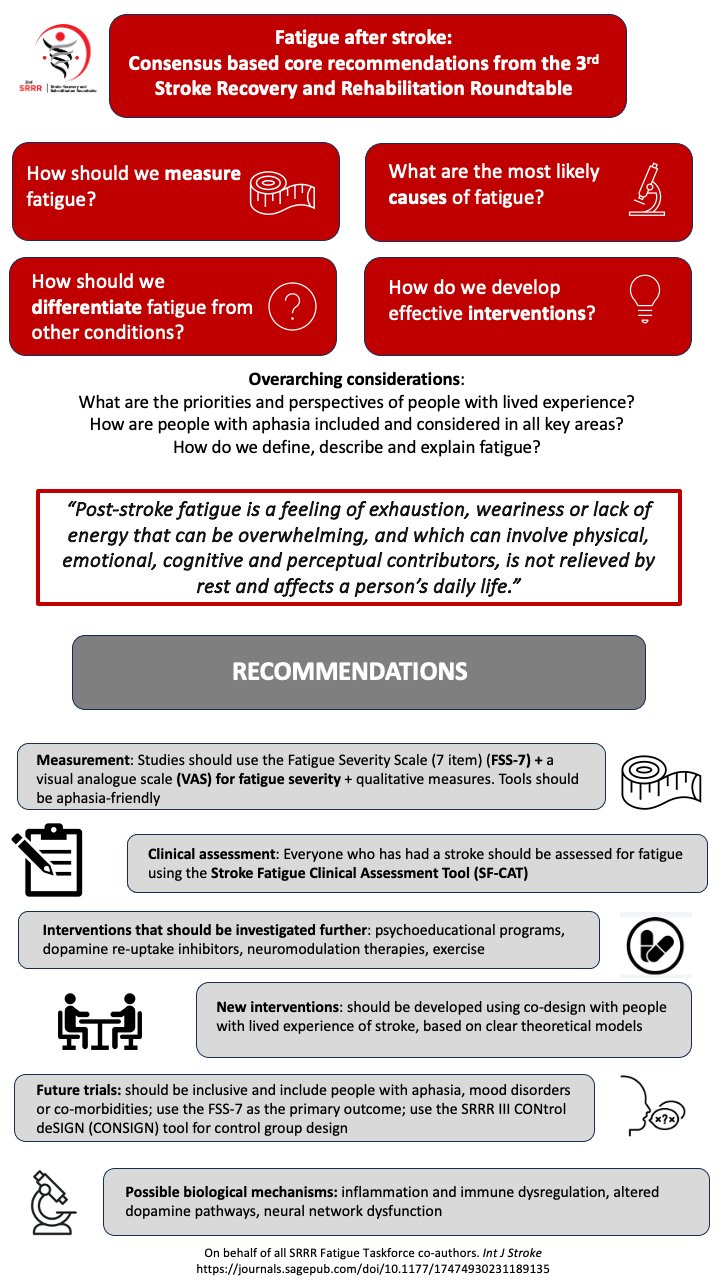
A roadmap for research in post-stroke fatigue: Consensus-based core recommendations from the third Stroke Recovery and Rehabilitation Roundtable


The point is to solve the fatigue problem! HOW EXACTLY ARE YOU GOING TO ACCOMPLISH THAT? 

Survivors don't want to 'cope' They want to have fatigue cured! GET THERE!

Well, post stroke fatigue has been proven for years! Don't you keep up-to-date on research? 

 This post stroke fatigue has been known forever. SOLVE THE FUCKING PROBLEM!

At least half of all stroke survivors experience fatigue Known since March 2017

Or is it 70%? Known since March 2015

Or is it 40%? Known since September 2017

I'd have you all fired for incompetence for not solving the problem of fatigue! Telling us it exists does nothing for survivor recovery!

The latest here:

A roadmap for research in post-stroke fatigue: Consensus-based core recommendations from the third Stroke Recovery and Rehabilitation Roundtable

Abstract

Rationale:

Fatigue affects almost half of all people living with stroke. Stroke survivors rank understanding fatigue and how to reduce it as one of the highest research priorities.

Methods:

We convened an interdisciplinary, international group of clinical and pre-clinical researchers and lived experience experts. We identified four priority areas: (1) best measurement tools for research, (2) clinical identification of fatigue and potentially modifiable causes, (3) promising interventions and recommendations for future trials, and (4) possible biological mechanisms of fatigue.(So you don't even have a goal of solving fatigue!) Cross-cutting themes were aphasia and the voice of people with lived experience. Working parties were formed and structured consensus building processes were followed.

Results:

We present 20 recommendations covering outcome measures for research, development, and testing of new interventions and priority areas for future research on the biology of post-stroke fatigue. We developed and recommend the use of the Stroke Fatigue Clinical Assessment Tool.

Conclusions:

By synthesizing current knowledge in post-stroke fatigue across clinical and pre-clinical fields, our work provides a roadmap for future research into post-stroke fatigue.

Introduction

One in two stroke survivors experience post-stroke fatigue (pooled prevalence estimate 47% (95% CI = 43–50%)).1 Fatigue is a significant and disabling condition in its own right and is a significant barrier to engaging in rehabilitation and other activities that promote recovery. Despite its prevalence and impact, a recent systematic review of 200 stroke clinical guidelines found no strong recommendations for fatigue prevention or management.2 Fatigue is a critical unmet need which stroke survivors identify as a high-priority research area.3 Therefore, the International Stroke Recovery and Research Alliance selected post-stroke fatigue as a focus topic of their 3rd Stroke Recovery and Rehabilitation Roundtable (SRRR).
Post-stroke fatigue is not merely “tiredness,” nor simply physical deconditioning; some people have post-stroke fatigue despite high fitness levels.4 Post-stroke fatigue is not always associated with effort, nor always relieved by rest. Superficially, fatigue can seem like depression or apathy, and it may co-present with both, but is distinct. For the purposes of this work, we undertook a process of literature reviews, expert consensus, and engagement with people with lived experience of stroke to define to define post-stroke fatigue as:
. . . a feeling of exhaustion, weariness or lack of energy that can be overwhelming, and which can involve physical, emotional, cognitive and perceptual contributors, which is not relieved by rest and affects a person’s daily life.
Despite the high prevalence and burden of post-stroke fatigue, research is limited. Cohorts and assessment tools vary, making pooling data and systematic analysis difficult. Intervention trials are mostly underpowered and inconclusive. Few studies include participants with a speech-language disorder, and fewer have explored the relationship between fatigue and aphasia. Yet some hypothesize a bidirectional relationship5 given the large effort required to understand and/or produce language.
Clearly, post-stroke fatigue is a multi-faceted condition. An abundance of biopsychosocial factors are associated with fatigue,6 but causal relationships remain unclear, and there is overlap between depression and fatigue. Fatigue may predispose the development of depression, and fatigue can be a symptom of depression,7 but the selective efficacy of fluoxetine on depression and not fatigue8 suggests that they can be distinct. Fatigue likely hampers engagement in productive and meaningful activities, and elevates risk of social isolation and its secondary effects.
The overarching aim of this Roundtable was to bring together current knowledge of post-stroke fatigue based on best available evidence from multidisciplinary perspectives (clinical, pre-clinical, and lived experience), identify key knowledge gaps, and provide a roadmap for future research.

Methods

In December 2021, the Co-Chairs (C.E. and G.M.) identified international researchers (based on Scopus searches for most published authors in the field) to invite to the taskforce, following the principles of the SRRR initiative (diversity in discipline, geography, and gender). Through a process of structured discussion, rapid literature reviews, and surveys (Figure 1), the taskforce identified four priority questions for focus:
1.
What is the best outcome measure of fatigue for research?
2.
In clinical practice, how should fatigue and its potentially modifiable causes be identified?
3.
What are the most promising interventions for post-stroke fatigue, and what are important considerations for future trials?
4.
What are the possible biological mechanisms of fatigue?

Thursday, October 19, 2023

A roadmap for research in post-stroke fatigue: Consensus-based core recommendations from the third Stroke Recovery and Rehabilitation Roundtable

So after 13 years you finally decided to do something on fatigue. Good to know there are NO leaders anywhere in stroke!   It would be great if you could at least factually pin down the rate of occurrence!  Proof of massive incompetency in all of stroke!

My doctor just said I needed to get more cardiovascularly fit. He never tested me on that. 3 years post stroke at a physical I had a resting heart rate of 54 at age 53, level of an athlete. That doctor asked what exercises I was doing, 'I've done no exercises for the past 3 years'. That fitness did nothing to stop my fatigue.

A roadmap for research in post-stroke fatigue: Consensus-based core recommendations from the third Stroke Recovery and Rehabilitation Roundtable

Abstract

Rationale:

Fatigue affects almost half of all people living with stroke. Stroke survivors rank understanding fatigue and how to reduce it as one of the highest research priorities.

Methods:

We convened an interdisciplinary, international group of clinical and pre-clinical researchers and lived experience experts. We identified four priority areas: (1) best measurement tools for research, (2) clinical identification of fatigue and potentially modifiable causes, (3) promising interventions and recommendations for future trials, and (4) possible biological mechanisms of fatigue. Cross-cutting themes were aphasia and the voice of people with lived experience. Working parties were formed and structured consensus building processes were followed.

Results:

We present 20 recommendations covering outcome measures for research, development, and testing of new interventions and priority areas for future research on the biology of post-stroke fatigue. We developed and recommend the use of the Stroke Fatigue Clinical Assessment Tool.

Conclusions:

By synthesizing current knowledge in post-stroke fatigue across clinical and pre-clinical fields, our work provides a roadmap for future research into post-stroke fatigue.
Image

Introduction

One in two stroke survivors experience post-stroke fatigue (pooled prevalence estimate 47% (95% CI = 43–50%)).1 Fatigue is a significant and disabling condition in its own right and is a significant barrier to engaging in rehabilitation and other activities that promote recovery. Despite its prevalence and impact, a recent systematic review of 200 stroke clinical guidelines found no strong recommendations for fatigue prevention or management.2 Fatigue is a critical unmet need which stroke survivors identify as a high-priority research area.3 Therefore, the International Stroke Recovery and Research Alliance selected post-stroke fatigue as a focus topic of their 3rd Stroke Recovery and Rehabilitation Roundtable (SRRR).
Post-stroke fatigue is not merely “tiredness,” nor simply physical deconditioning; some people have post-stroke fatigue despite high fitness levels.4 Post-stroke fatigue is not always associated with effort, nor always relieved by rest. Superficially, fatigue can seem like depression or apathy, and it may co-present with both, but is distinct. For the purposes of this work, we undertook a process of literature reviews, expert consensus, and engagement with people with lived experience of stroke to define to define post-stroke fatigue as:
. . . a feeling of exhaustion, weariness or lack of energy that can be overwhelming, and which can involve physical, emotional, cognitive and perceptual contributors, which is not relieved by rest and affects a person’s daily life.
Despite the high prevalence and burden of post-stroke fatigue, research is limited. Cohorts and assessment tools vary, making pooling data and systematic analysis difficult. Intervention trials are mostly underpowered and inconclusive. Few studies include participants with a speech-language disorder, and fewer have explored the relationship between fatigue and aphasia. Yet some hypothesize a bidirectional relationship5 given the large effort required to understand and/or produce language.
Clearly, post-stroke fatigue is a multi-faceted condition. An abundance of biopsychosocial factors are associated with fatigue,6 but causal relationships remain unclear, and there is overlap between depression and fatigue. Fatigue may predispose the development of depression, and fatigue can be a symptom of depression,7 but the selective efficacy of fluoxetine on depression and not fatigue8 suggests that they can be distinct. Fatigue likely hampers engagement in productive and meaningful activities, and elevates risk of social isolation and its secondary effects.
The overarching aim of this Roundtable was to bring together current knowledge of post-stroke fatigue based on best available evidence from multidisciplinary perspectives (clinical, pre-clinical, and lived experience), identify key knowledge gaps, and provide a roadmap for future research.
 
More at link.

Wednesday, October 18, 2023

Standardized measurement of balance and mobility post-stroke: Consensus-based core recommendations from the third Stroke Recovery and Rehabilitation Roundtable

You do realize how fucking useless 'measurements' are to getting survivors recovered?  Or do you not understand what survivors want?

I consider this Roundtable worthless until they listen to survivors!

Standardized measurement of balance and mobility post-stroke: Consensus-based core recommendations from the third Stroke Recovery and Rehabilitation Roundtable

Abstract

Background:

Mobility is a key priority for stroke survivors. Worldwide consensus of standardized outcome instruments for measuring mobility recovery after stroke is an essential milestone to optimize the quality of stroke rehabilitation and recovery studies and to enable data synthesis across trials.

Methods:

Using a standardized methodology, which involved convening of 13 worldwide experts in the field of mobility rehabilitation, consensus was established through an a priori defined survey-based approach followed by group discussions. The group agreed on balance- and mobility-related definitions and recommended a core set of outcome measure instruments for lower extremity motor function, balance and mobility, biomechanical metrics, and technologies for measuring quality of movement.

Results:

Selected measures included the Fugl-Meyer Motor Assessment lower extremity subscale for motor function, the Trunk Impairment Scale for sitting balance, and the Mini Balance Evaluation System Test (Mini-BESTest) and Berg Balance Scale (BBS) for standing balance. The group recommended the Functional Ambulation Category (FAC, 0–5) for walking independence, the 10-meter Walk Test (10 mWT) for walking speed, the 6-Minute Walk Test (6 MWT) for walking endurance, and the Dynamic Gait Index (DGI) for complex walking. An FAC score of less than three should be used to determine the need for an additional standing test (FAC < 3, add BBS to Mini-BESTest) or the feasibility to assess walking (FAC < 3, 10 mWT, 6 MWT, and DGI are “not testable”). In addition, recommendations are given for prioritized kinetic and kinematic metrics to be investigated that measure recovery of movement quality of standing balance and walking, as well as for assessment protocols and preferred equipment to be used.

Conclusions:

The present recommendations of measures, metrics, technology, and protocols build on previous consensus meetings of the International Stroke Recovery and Rehabilitation Alliance to guide the research community to improve the validity and comparability between stroke recovery and rehabilitation studies as a prerequisite for building high-quality, standardized “big data” sets. Ultimately, these recommendations could lead to high-quality, participant-specific data sets to aid the progress toward precision medicine in stroke rehabilitation.

Introduction

Stroke is a major disabling condition in the adult population worldwide, and recovery of post-stroke mobility is largely dependent on the ability to regain lower extremity function, sitting, and standing balance.1 The International Classification of Functioning, Disability and Health (ICF) framework2 defines “mobility” as: (1) changing and maintaining body position (d410-d429), (2) carrying, moving, and handling objects (d430-d449), (3) walking and moving (d450-d469), and (4) moving around using transportation (d470-d489).2 These functions determine independence in mobility and are often chosen as a rehabilitation priority by stroke survivors.3 Consequently, improving mobility is selected as a primary objective in stroke recovery and rehabilitation trials.4,5 Although epidemiological studies remain scarce,6 prospective cohort studies suggest that 807–95%8 of people with stroke regain walking independence, with or without the use of walking aids, within the first 3–6 months post-stroke.6 This rate drops to 60% in individuals unable to walk in the first week post-stroke.9 Besides the strong time-dependency of using outcome measurement instruments (OMIs) in the first 3 months,10 recovery of walking has been significantly associated with factors, such as an intact corticospinal tract,11 muscle strength of the most affected lower extremity,11 continence,11 sitting,12 standing balance,13 and cognition.11
Currently, the comparison or pooling of existing prognostic stroke studies and trials applying similar interventions is hindered by the heterogeneity of mobility-related OMI.11,14 For example, many different distances are used in the literature to measure walking speed, such as the 3, 5, 7, 8, 10, or 12 meters.15 Each walking speed test is based on different testing protocols resulting into different psychometric properties.15 Standardization of OMI allows for meta-synthesis of data from different studies needed for adequate power exploration of the many complex body functions that underpin independent mobility. Thus, there is an urgent need for a recommended core set of OMI allowing synthesis and comparison of participant data. Ultimately, these recommendations could lead to high-quality, participant-specific data sets to aid the progress toward precision medicine in stroke rehabilitation.
So far, no overarching recommendations for using the same OMI and biomechanical metrics for balance and mobility exists in the stroke research community. Existing recommendations15,16,17 that guide clinical practice are too elaborate, as they recommend without substantiating multiple OMI for the same construct16 whereas recommendations on biomechanical metrics are lacking for measuring balance and mobility. Consensus on measuring the fine-grained movement quality measures that are sensitive and specific, able to capture small behavioral changes, is imperative, not only for distinguishing behavioral restitution from compensation in stroke recovery and rehabilitation trials, but also to make proper interpretation of longitudinal neuroimaging studies (e.g. functional magnetic resonance imaging (fMRI), diffusion tensor imaging (DTI), and electroencephalography (EEG)) that may underly functional recovery post-stroke.18
The International Stroke Recovery and Rehabilitation Alliance aims to facilitate breakthroughs for stroke survivors through global collaborations on specific themes.19 Through this initiative, we invited international experts in the field of stroke mobility to take part in the third Stroke Recovery and Rehabilitation Roundtable (SRRR3). The SRRR3 builds on achieved consensus on defining different time points post-stroke,20 recommended core set of OMI (SRRR1)21 and biomechanical metrics to measure quality of upper extremity movement (SRRR2).18 These metrics allow us to differentiate between recovery achieved from behavioral restitution or compensation.22 Furthermore, the achieved consensus is based on different ICF constructs and includes recommendations on standardized assessment protocols, and equipment for quantitative assessment of mobility. Therefore, the work in this SRRR3 addressed the following questions to aid future stroke rehabilitation and recovery studies:
1.
Which baseline characteristics for participants should be added to the SRRR1 recommendations in the field of lower extremity motor function, balance, and mobility?
2.
At what time points within the first 6 months post-stroke should lower extremity motor function, balance, and mobility outcomes be measured?
3.
How should constructs of lower extremity motor function, balance, and mobility be defined?
4.
Which core set of OMI and accompanying assessment protocols should be recommended for investigating lower extremity motor function, balance and mobility post-stroke?
5.
Which biomechanical metrics should be recommended for quantifying quality of balance and mobility recovery post-stroke?
6.
Which types of technological equipment should be recommended for measuring quality of balance and mobility recovery post-stroke?
 
More at link.

Friday, October 13, 2023

Global Experts Advocate Innovation for Enhanced Stroke Recovery

 These can't be 'experts', they don't have the goal of solving stroke to 100% recovery. And they most certainly are not leaders; leaders tackle and solve the hard problems. 

Global Experts Advocate Innovation for Enhanced Stroke Recovery

University of Melbourne

Scientists from The Florey are among the world's leading stroke experts who have mapped out how researchers and clinicians can improve outcomes for people who have survived a stroke.

The third Stroke Recovery and Rehabilitation Roundtable, an initiative of the International Stroke Recovery and Rehabilitation Alliance, has made a series of key recommendations about managing fatigue, measuring mobility, harnessing non-invasive brain stimulation technologies and improving how trials are designed. The highly influential gathering of world stroke experts published their findings in a special edition of International Journal of Stroke.

Associate Professor Kate Hayward from The Florey and University of Melbourne in Australia, co-chaired and convened the current roundtable, which was established by fellow Florey stroke expert Professor Julie Bernhardt in 2016.

"The roundtables aim to address gaps that are hampering progress across the field of stroke recovery and rehabilitation. Momentum is gathering in stroke recovery and it's so important that we work together, pulling in the right direction, for the benefit of the millions of people globally who are affected by stroke," Associate Professor Hayward said.

"Post-stroke fatigue, for instance, is common and complex, yet very little is known about it. To address this, an expert panel of researchers and people living with stroke sought to define fatigue, create a roadmap for future research and design a new fatigue assessment tool," she said.

The Florey's Professor Julie Bernhardt said the roundtable's recommendations are essential reading for clinicians and researchers in the field of stroke recovery and rehabilitation.

"It is through these collective actions that we can accelerate progress towards effective treatments that enhance the lives of the millions of people affected by stroke each year.

"The vision of our International Stroke Recovery and Rehabilitation Alliance is a world where global collaboration leads to major breakthroughs for people with stroke. Consensus building with these international taskforce recommendations is having impact and are an essential part of us achieving our vision," Professor Bernhardt said.

Fatigue after stroke

The fatigue panel, led by University of Newcastle Professor Coralie English and University of Edinburgh Professor Gillian Mead, noted that fatigue affects almost half of all people living with stroke, yet there are no clear recommendations for preventing, recognising, treating or managing it.

The taskforce defined post-stroke fatigue as "a feeling of exhaustion, weariness or lack of energy that can be overwhelming, and which can involve physical, emotional, cognitive and perceptual contributors, which is not relieved by rest and affects a person's daily life."

They recommended that everyone who has had a stroke be assessed using a new Stroke Fatigue Clinical Assessment Tool, which asks a series of questions to ensure that fatigue isn't missed, and to draw attention to potentially modifiable factors. Questions include whether the patient:

  • feels tired all the time
  • feels sad, depressed, anxious or stressed
  • has trouble sleeping
  • lacks exercise or misses meals
  • has trouble remembering or concentrating
  • feels fatigued after talking or listening to others talk.

The panel recommended future research investigates psycho-education interventions such as cognitive behavioural therapy, exercise, anti-depressants and neuromodulation therapies.

Fatigue taskforce co-lead, Professor English, said: "For many people living with stroke, fatigue is their number one issue. For too long this area of stroke recovery has been neglected in research. We hope our paper will inspire researchers to work in this area and motivate breakthroughs that will improve the lives of people living with post-stroke fatigue."

Non-invasive brain stimulation and stroke

A second panel, led by University of Ottawa's Associate Professor Jodi Edwards and University of Montreal's Professor Numa Dancause, focused on finding ways to eliminate barriers for the use of non-invasive brain stimulation technologies as a treatment for stroke rehabilitation. The expert panel found that there is experimental and clinical evidence supporting such technologies as safe and potentially effective adjuncts to therapy post-stroke, yet their use is largely limited to treating major depression and pain.

Brain stimulation taskforce co-lead, Associate Professor Edwards, said: "Our panel sought to identify missing evidence for how to optimise these technologies for use as a standard treatment in post-stroke care. Surprisingly, we found that in addition to evidence gaps, there were major limitations with existing trials. This means as a field we are much farther from having the evidence necessary to optimize these technologies than initially thought. We propose a set of core recommendations and put forward a new checklist (You blithering idiots need to create an exact stroke protocol on this. Checklists DO NOTHING!) for future studies and clinical trials to help advance the field of brain stimulation post-stroke towards a pathway for translation to the clinic."

Mobility and stroke

A third panel, led by Amsterdam University Medical Centre's Professor Gert Kwakkel and KU Leuven's Professor Geert Verheyden, recommended ways researchers can improve data on post-stroke mobility, a key priority for stroke survivors. The mobility panel said it was essential for researchers to use standardised instruments to enable data from different projects to be compared. The members also agreed on metrics, definitions and instruments that researchers should use to measure aspects of mobility including balance, walking independence and walking endurance.

Mobility taskforce co-lead, Professor Kwakkel, said: "Mobility problems are experienced by 80 per cent of stroke survivors and often the most important goal for many post-stroke as it affects their independence and quality of life. However, mobility is a complex construct that encompasses different domains that require different measurement instruments to assess recovery. In this panel, we achieved consensus on how and when to measure balance and mobility problems of people included in stroke recovery and rehabilitation studies."

Research trials for stroke

The fourth roundtable, led by Associate Professor Hayward and Washington University Professor Catherine Lang, focused on trial design, specifically the control comparator group used in preclinical and clinical trials of stroke recovery interventions. This panel developed the CONtrol DeSIGN (CONSIGN) decision support tool to address challenges identified and enhance control comparator selection, description, and reporting.

Associate Professor Hayward, said: "Identifying an appropriate type of control to use in a preclinical or clinical trial is challenging, yet critically important. The benefit of an experimental intervention is established relative to a pre-specified control, and poor selection can reduce the ability to demonstrate a difference between the two."

Scientists from The Florey are among the world's leading stroke experts who have mapped out how researchers and clinicians can improve outcomes for people who have survived a stroke.

The third Stroke Recovery and Rehabilitation Roundtable, an initiative of the International Stroke Recovery and Rehabilitation Alliance, has made a series of key recommendations about managing fatigue, measuring mobility, harnessing non-invasive brain stimulation technologies and improving how trials are designed. The highly influential gathering of world stroke experts published their findings in a special edition of International Journal of Stroke.

Associate Professor Kate Hayward from The Florey and University of Melbourne in Australia, co-chaired and convened the current roundtable, which was established by fellow Florey stroke expert Professor Julie Bernhardt in 2016.

"The roundtables aim to address gaps that are hampering progress across the field of stroke recovery and rehabilitation. Momentum is gathering in stroke recovery and it's so important that we work together, pulling in the right direction, for the benefit of the millions of people globally who are affected by stroke," Associate Professor Hayward said.

"Post-stroke fatigue, for instance, is common and complex, yet very little is known about it. To address this, an expert panel of researchers and people living with stroke sought to define fatigue, create a roadmap for future research and design a new fatigue assessment tool," she said.

The Florey's Professor Julie Bernhardt said the roundtable's recommendations are essential reading for clinicians and researchers in the field of stroke recovery and rehabilitation.

"It is through these collective actions that we can accelerate progress towards effective treatments that enhance the lives of the millions of people affected by stroke each year.

"The vision of our International Stroke Recovery and Rehabilitation Alliance is a world where global collaboration leads to major breakthroughs for people with stroke. Consensus building with these international taskforce recommendations is having impact and are an essential part of us achieving our vision," Professor Bernhardt said.

Fatigue after stroke

The fatigue panel, led by University of Newcastle Professor Coralie English and University of Edinburgh Professor Gillian Mead, noted that fatigue affects almost half of all people living with stroke, yet there are no clear recommendations for preventing, recognising, treating or managing it.(And I don't see you solving this problem! You're fired!)

The taskforce defined post-stroke fatigue as "a feeling of exhaustion, weariness or lack of energy that can be overwhelming, and which can involve physical, emotional, cognitive and perceptual contributors, which is not relieved by rest and affects a person's daily life."

They recommended that everyone who has had a stroke be assessed using a new Stroke Fatigue Clinical Assessment Tool, which asks a series of questions to ensure that fatigue isn't missed, and to draw attention to potentially modifiable factors. Questions include whether the patient:

  • feels tired all the time
  • feels sad, depressed, anxious or stressed
  • has trouble sleeping
  • lacks exercise or misses meals
  • has trouble remembering or concentrating
  • feels fatigued after talking or listening to others talk.

The panel recommended future research investigates psycho-education interventions such as cognitive behavioural therapy, exercise, anti-depressants and neuromodulation therapies.

Fatigue taskforce co-lead, Professor English, said: "For many people living with stroke, fatigue is their number one issue. For too long this area of stroke recovery has been neglected in research. We hope our paper will inspire researchers to work in this area and motivate breakthroughs that will improve the lives of people living with post-stroke fatigue."

Non-invasive brain stimulation and stroke

A second panel, led by University of Ottawa's Associate Professor Jodi Edwards and University of Montreal's Professor Numa Dancause, focused on finding ways to eliminate barriers for the use of non-invasive brain stimulation technologies as a treatment for stroke rehabilitation. The expert panel found that there is experimental and clinical evidence supporting such technologies as safe and potentially effective adjuncts to therapy post-stroke, yet their use is largely limited to treating major depression and pain.

Brain stimulation taskforce co-lead, Associate Professor Edwards, said: "Our panel sought to identify missing evidence for how to optimise these technologies for use as a standard treatment in post-stroke care. Surprisingly, we found that in addition to evidence gaps, there were major limitations with existing trials. This means as a field we are much farther from having the evidence necessary to optimize these technologies than initially thought. We propose a set of core recommendations and put forward a new checklist for future studies and clinical trials to help advance the field of brain stimulation post-stroke towards a pathway for translation to the clinic."

Mobility and stroke

A third panel, led by Amsterdam University Medical Centre's Professor Gert Kwakkel and KU Leuven's Professor Geert Verheyden, recommended ways researchers can improve data on post-stroke mobility, a key priority for stroke survivors. The mobility panel said it was essential for researchers to use standardised instruments to enable data from different projects to be compared. The members also agreed on metrics, definitions and instruments that researchers should use to measure aspects of mobility including balance, walking independence and walking endurance.

Mobility taskforce co-lead, Professor Kwakkel, said: "Mobility problems are experienced by 80 per cent of stroke survivors and often the most important goal for many post-stroke as it affects their independence and quality of life. However, mobility is a complex construct that encompasses different domains that require different measurement instruments to assess recovery. In this panel, we achieved consensus on how and when to measure balance and mobility problems of people included in stroke recovery and rehabilitation studies."

Research trials for stroke

The fourth roundtable, led by Associate Professor Hayward and Washington University Professor Catherine Lang, focused on trial design, specifically the control comparator group used in preclinical and clinical trials of stroke recovery interventions. This panel developed the CONtrol DeSIGN (CONSIGN) decision support tool to address challenges identified and enhance control comparator selection, description, and reporting.

Associate Professor Hayward, said: "Identifying an appropriate type of control to use in a preclinical or clinical trial is challenging, yet critically important. The benefit of an experimental intervention is established relative to a pre-specified control, and poor selection can reduce the ability to demonstrate a difference between the two."

/Public Release. This material from the originating organization/author(s) might be of the point-in-time nature, and edited for clarity, style and length. Mirage.News does not take institutional positions or sides, and all views, positions, and conclusions expressed herein are solely those of the author(s).View in full here.

Control intervention design for preclinical and clinical trials: Consensus-based core recommendations from the third Stroke Recovery and Rehabilitation Roundtable

Whatever the hell this means.

Control intervention design for preclinical and clinical trials: Consensus-based core recommendations from the third Stroke Recovery and Rehabilitation Roundtable

Abstract

Control comparator selection is a critical trial design issue. Preclinical and clinical investigators who are doing trials of stroke recovery and rehabilitation interventions must carefully consider the appropriateness and relevance of their chosen control comparator as the benefit of an experimental intervention is established relative to a comparator. Establishing a strong rationale for a selected comparator improves the integrity of the trial and validity of its findings. This Stroke Recovery and Rehabilitation Roundtable (SRRR) taskforce used a graph theory voting system to rank the importance and ease of addressing challenges during control comparator design. “Identifying appropriate type of control” was ranked easy to address and very important, “variability in usual care” was ranked hard to address and of low importance, and “understanding the content of the control and how it differs from the experimental intervention” was ranked very important but not easy to address. The CONtrol DeSIGN (CONSIGN) decision support tool was developed to address the identified challenges and enhance comparator selection, description, and reporting. CONSIGN is a web-based tool inclusive of seven steps that guide the user through control comparator design. The tool was refined through multiple rounds of pilot testing that included more than 130 people working in neurorehabilitation research. Four hypothetical exemplar trials, which span preclinical, mood, aphasia, and motor recovery, demonstrate how the tool can be applied in practice. Six consensus recommendations are defined that span research domains, professional disciplines, and international borders.
 
More at link.

Saturday, March 18, 2023

The International Stroke Recovery and Rehabilitation Alliance


 The complete stroke medical world is a total fucking failure! At least survivors in charge would have a vision for 100% recovery; not this crapola! And yes these are all famous stroke researchers but they are not solving stroke at all!

The International Stroke Recovery and Rehabilitation Alliance

The global burden of disability after stroke is increasing despite therapeutic advances. One in four adults will have a stroke and about 63% of these events will occur in people younger than 70 years of age. Increasing access to effective rehabilitation(Survivors want effective recovery! Not just access to ineffective rehab!) is a global health priority, particularly in low-income and middle-income countries. Optimising recovery requires both new, biologically informed treatment approaches and enhanced (high-dose and high-quality) delivery of training-based treatments. Patient-centred research priority setting exercises can highlight knowledge gaps. Advances have been difficult to achieve because stroke recovery and rehabilitation practice is complex, with multiple interacting domains (eg, motor, language, and cognitive), disability levels (impairment, activity, and participation), and individuals involved (eg, patient, family members, and multidisciplinary team). Our shared vision is a world where global collaboration brings breakthroughs for people living with stroke. Succeeding will require highly coordinated research efforts by international, interdisciplinary teams.
The Stroke Recovery and Rehabilitation Roundtable, created in 2016, built consensus and aligned efforts for improvements in research and practice. Our approach identified priority areas and led to the creation of international, interdisciplinary, expert task forces that—together with junior faculty—worked to identify consensus objectives. Our first recommendations were reported in a position paper and we have continued to provide expert guidance on research methods, research targets, and clinical practice. The need to transition from being a recommendation group to being an action group for stroke recovery and rehabilitation became clear and, in 2020, we endorsed the International Stroke Recovery and Rehabilitation Alliance (ISRRA).
The greatest impact on the burden of disability after stroke will come through building research partnerships that include people with lived experience of stroke.(I see no examples of this.) Our aim is to establish topic-specific, strategic working groups, overseen by our Scientific Committee. Diverse in scope, the aims of current groups include building the economic case for rehabilitation and creating criteria for Centres of Clinical Excellence. Task forces on exercise and frailty are recent additions. Building impactful research projects both in high-income countries and in low-income and middle-income countries is a top priority. Our approach creates a dynamic Alliance that will focus on achieving our vision.
Our membership includes a full array of clinicians and researchers with an interest in recovery after stroke, from acute stroke physicians to basic scientists, from 36 countries. ISRRA is open to all, and our work has just begun.
We thank the many individuals who have contributed to the work of past Stroke Recovery and Rehabilitation Roundtables and to the building of the strategy and work plans for the Alliance to date. Our work is sponsored by the National Health and Medical Research Council (NHMRC; Australia) Centre of Research Excellence in Stroke Rehabilitation and Brain Recovery (APP 1077898), the Canadian Partnership for Stroke Recovery, NHMRC (Australia) Centre of Research Excellence in Stroke Trials (APP 2015705), Moleac, and Ipsen.

References

  1. 1.
    • Wafa HA
    • Wolfe CDA
    • Emmett E
    • Roth GA
    • Johnson CO
    • Wang Y
    Burden of stroke in Europe: thirty-year projections of incidence, prevalence, deaths, and disability-adjusted life years.
    Stroke. 2020; 51: 2418-2427
  2. 2.
    • Gimigliano F
    • Negrini S
    The World Health Organization “Rehabilitation 2030: a call for action”.
    Eur J Phys Rehabil Med. 2017; 53: 155-168
  3. 3.
    • Leitch S
    • Logan M
    • Beishon L
    • Quinn TJ
    International research priority setting exercises in stroke: a systematic review.
    Int J Stroke. 2023; 18: 133-143
  4. 4.
    • Bernhardt J
    • Hayward KS
    • Kwakkel G
    • et al.
    Agreed definitions and a shared vision for new standards in stroke recovery research: The Stroke Recovery and Rehabilitation Roundtable taskforce.
    Int J Stroke. 2017; 12: 444-450