Changing stroke rehab and research worldwide now.Time is Brain! trillions and trillions of neurons that DIE each day because there are NO effective hyperacute therapies besides tPA(only 12% effective). I have 523 posts on hyperacute therapy, enough for researchers to spend decades proving them out. These are my personal ideas and blog on stroke rehabilitation and stroke research. Do not attempt any of these without checking with your medical provider. Unless you join me in agitating, when you need these therapies they won't be there.

What this blog is for:

My blog is not to help survivors recover, it is to have the 10 million yearly stroke survivors light fires underneath their doctors, stroke hospitals and stroke researchers to get stroke solved. 100% recovery. The stroke medical world is completely failing at that goal, they don't even have it as a goal. Shortly after getting out of the hospital and getting NO information on the process or protocols of stroke rehabilitation and recovery I started searching on the internet and found that no other survivor received useful information. This is an attempt to cover all stroke rehabilitation information that should be readily available to survivors so they can talk with informed knowledge to their medical staff. It lays out what needs to be done to get stroke survivors closer to 100% recovery. It's quite disgusting that this information is not available from every stroke association and doctors group.

Showing posts with label European Stroke Organisation Conference. Show all posts

Wednesday, July 3, 2024

Highlights of the 2024 European Stroke Organization Conference

 Look at that! NOTHING ON GETTING SURVIVORS RECOVERED! You would think with stroke in the name, it would be about helping stroke survivors! 22 minute podcast, I'm not listening.

Highlights of the 2024 European Stroke Organization Conference

Dr. Andy Southerland talks with Dr. Seemant Chaturvedi about recent trials presented at the European Stroke Organization Conference.

Show references: 

Tenecteplase for Ischemic Stroke at 4.5 to 24 Hours without Thrombectomy 

Rationale and Design of Tenecteplase Reperfusion Therapy in Acute Ischaemic Cerebrovascular Events III (TRACE III)

Colchicine for Prevention of Vascular Inflammation in Non-CardioEmbolic Stroke (CONVINCE)

Intensive Ambulance-Delivered Blood- Pressure Reduction in Hyperacute Stroke

This podcast is sponsored by argenx. Visit www.vyvgarthcp.com for more information.

Disclosures can be found at Neurology.org.

Andrew M. Southerland, MD, MSc, FAHA, FAAN

Editorial Board, Neurology® Education

Andrew M. Southerland is a Harrison Distinguished Teaching Professor of Neurology and Public Health Sciences at the University of Virginia. He received his M.D. as a Brody Scholar from the Brody School of Medicine at East Carolina University, and completed his Neurology Residency and Vascular Neurology Fellowship at the University of Virginia. He currently serves as Residency Program Director and Executive Vice Chair in the UVA Department of Neurology. Dr. Southerland also serves on the AAN Education Committee and the Editorial Board for Neurology: Education.

Seemant Chaturvedi, MD, FAAN, FAHA

Editorial Board, Neurology®

Thursday, June 27, 2024

ESOC(European Stroke Organisation Conference) 2024 Key Highlights now available

You'll immediately notice how useless this was. 'Care', NOT how we are getting survivors to 100% recovery! The WSO is totally worthless for getting survivors recovered!

Send me hate mail on this: oc1dean@gmail.com. I'll print your complete statement with your name and my response in my blog. Or are you afraid to engage with my stroke-addled mind?  You'll want 100% recovery when you are the 1 in 4 per WHO that has a stroke! My definition of competence is 100% recovery, what is your definition?

 ESOC(European Stroke Organisation Conference) 2024 Key Highlights now available

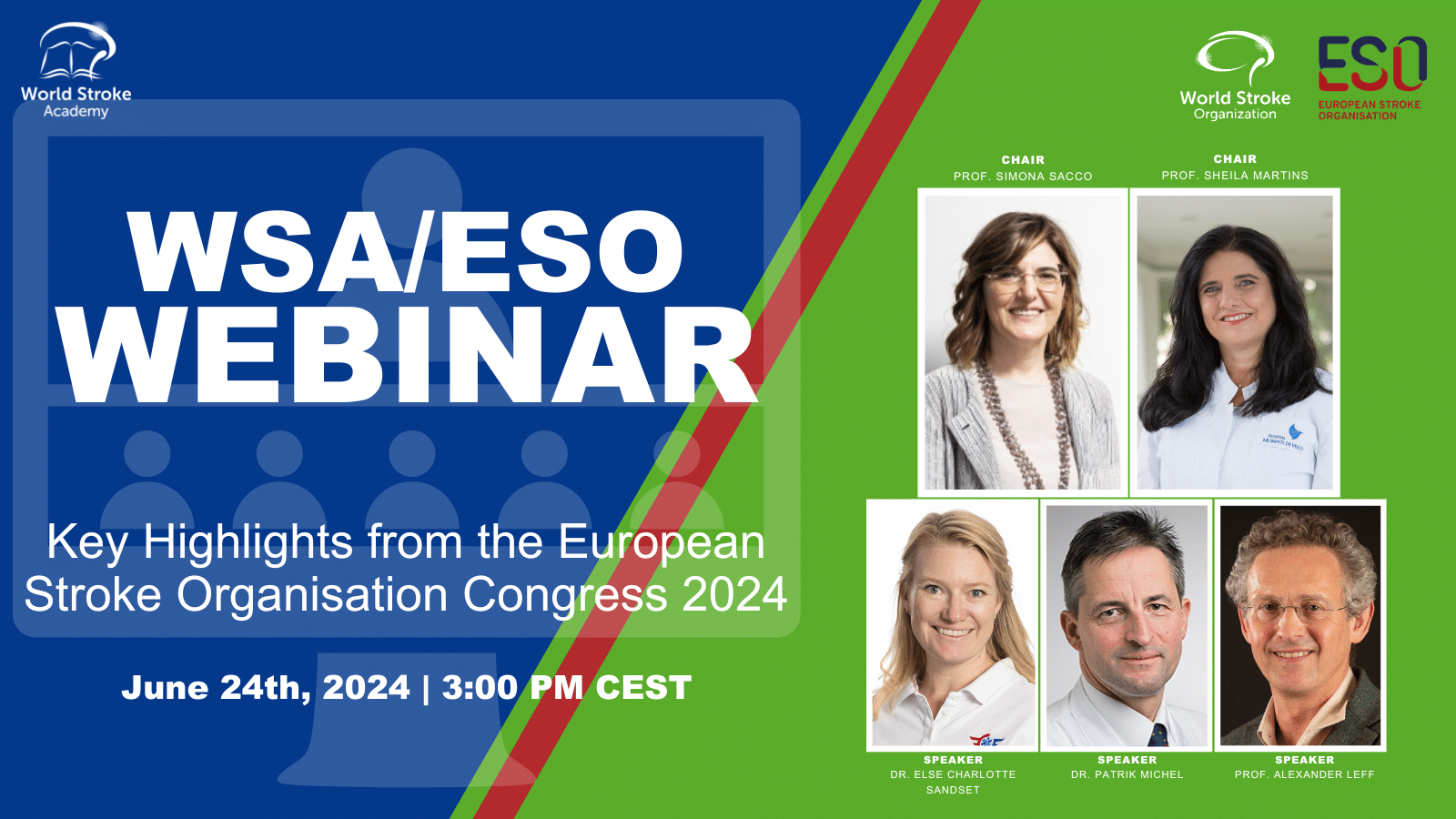
Description: Join us for an insightful webinar organized jointly by the European Stroke Organisation (ESO) and the World Stroke Organisation (WSO) to share the most significant highlights from the recent European Stroke Congress held in Basel (Switzerland) in May 2024. This is a must-attend event for healthcare professionals, researchers, and anyone involved in stroke care(NOT RECOVERY!) and treatment. Don’t miss this opportunity to stay at the forefront of stroke research and clinical practice.

Learning Objectives:

  1. Delve into the latest research and discussions on whether current protocols for treating Intracerebral Hemorrhage (ICH) need an update to improve patient outcomes
  2. Explore the criteria for selecting patients for Tenecteplase treatment, informed by the newest evidence and expert insights
  3. Gain a comprehensive understanding of the future directions in stroke rehabilitation research and the promising advancements on the horizon.

Chairs: Prof. Simona Sacco (Italy) and Prof. Sheila Martins (Brazil)

Scientific Program:

  • Welcome & Introduction by chairs
  • Is it time to change our protocols in treating ICH? – Dr. Else Charlotte Sandset (Norway)
  • Who to treat and not to treat with tenecteplase? – Dr. Patrik Michel (Switzerland)
  • Research in stroke rehabilitation: where does the road take us? Prof. Alexander Leff (UK)
  • Q&A Discussion

Date & Time: June 24th, 3pm (CEST)

Wednesday, June 5, 2024

ESOC 2024 Session Report: “Hyperacute Management”

 This is ABSOLUTELY APPALLING! 'Management' NOT RECOVERY! I don't think there is a stroke association in the world that has any clue on what survivors want(100% recovery) and are working towards that!

ESOC 2024 Session Report: “Hyperacute Management”

Originally published 10.1161/blog.20240603.559421

European Stroke Organisation Conference
May 15–17, 2024

Session: Hyperacute Management

The session on hyperacute management was chaired by Else Charlotte Sandset (Oslo, Norway) and Marc Ribo (Barcelona, Spain).

Yijun Zhang (Beijing, China) kicked off the session with “Edaravone Dexborneol In Treatment Of Large Artery Atherosclerosis Stroke.” Edavarone, a free radical scavenger of reactive oxygen species and reactive nitrogen species which penetrates the blood brain barrier, holds promise as a potential neuroprotective agent and has been widely used in Japan, China, and India. Dr. Zhang emphasized the importance of large artery atherosclerosis, which is the most frequent etiology of ischemic stroke in the Chinese population. This study was a post hoc analysis of the TASTE trial and the TASTE-SL trial and assessed the effects of edaravone dexborneol in 658 patients with large artery atherosclerosis-etiology stroke with treatment <48 hours of onset and a duration of 2 weeks.  Treatment significantly increased rates of excellent functional outcome on the mRS scale with no difference in safety outcomes after 90 days. These results have to be validated in the future.

Next, Yufei Wei (Beijing, China) presented “Timing Of Antihypertensive Treatment Initiation In Anterior Versus Posterior Circulation Acute Ischemic Stroke.” This post hoc analysis of the CATIS-2 trial analyzed outcomes of anterior and posterior circulation strokes. The rate of death and major disability (mRS³3) was 12.4% in anterior circulation stroke and 8.3% in posterior circulation stroke regarding early antihypertensive treatment. Wei concluded that anterior circulation stroke patients are more susceptible to blood pressure fluctuations, which lead to a passive decrease in cerebral perfusion. This may exacerbate secondary neuronal damage in the ischemic penumbra. Further studies are needed to explore the underlying mechanisms of these findings.

Davide Carone from Oxford, United Kingdom, presented “Patients Randomized To Glenzocimab Suffered Less Hemorrhagic Transformation With Greater Benefit In Larger Baseline Infarct Core.” The ACTISAVE trial did not result in better outcomes when using glenocizumab, which was presented in the main session. Carone showed data which support the hypothesis that mechanical thrombectomy-related ICH is moderated by glenocizumab (frequency and size). Additionally, glenocizumab reduced the risk of hemorrhagic transformation associated with larger infarcts at admission. Also, the influence of hemorrhage on functional outcome is moderated by glenocizumab. Carone concluded that, despite a moderate imbalance of baseline characteristics of the two groups, glenocizumab-treated patients had a trend for smaller lesion volumes at 24 hours after treatment compared to placebo. The smaller follow-up infarct volumes are likely due to both having less hemorrhagic transformation (frequency and volume) and ischemic injury. These data suggest a more pronounced effect in patients with larger infarct cores. Finally, Carone concluded that a reduction in hemorrhagic transformation volume can drive safer clinical outcomes.

Greg Albers from Stanford, United States, presented “Secondary Analyses From The Timeless Trial” where tenecteplase was investigated against placebo in the late time window of intravenous thrombolysis. In the subgroup of M1 occlusions only, use of tenecteplase resulted in a higher proportion of favorable functional outcome (mRS 0-2) at 3. On the contrary, in the M2 occlusion subgroup, there was no difference in achievement of favorable functional outcome. In wake-up stroke patients, final infarct volume growth showed a trend in favor for tenecteplase not reaching statistical significance. Three-month mRS ordinal shift and functional independence were numerically higher and infarct growth was less in patients with M1 occlusion treated with tenecteplase compared to placebo.

“Intravenous Thrombolytic Is Associated With Increased First Pass Effect In Thrombectomy” was presented by Steven Bush from Parkville, Australia. This sub study from the IRIS collaboration investigated if bridging thrombolysis increased the likelihood of angiographic first pass effect (FPE), which is considered to have beneficial effects on outcomes and safety. Bridging thrombolysis increased the likelihood of FPE by 27% translating to a Number Needed to Treat from 4 to move 1 patient into the FPE group. The odds of a patient having a favorable functional outcome at 3 months increased by 170% with FPE when compared to non-FPE thrombectomy. For patients that achieved eTICI2c or 3 revascularization, the odds of experiencing a favorable functional outcome increased by 40% when FPE was achieved. In these patients, the risk for developing an ICH or procedural complications decreased by 45% with FPE, but FPE had no impact on death or symptomatic ICH. Bush concluded that bridging thrombolysis significantly increases the chance of achieving a first pass effect, and the benefit of it on functional outcomes and safety was confirmed, even after adjusting for TICI score and procedural times of endovascular treatment.

João Pedro Marto from Lisbon, Portugal, presented results from the ETIICA Study – “Endovascular Treatment For Isolated Cervical Internal Carotid Artery Occlusion.” In 998 included patients from multiple international centers, no difference in 3-month mRS, 3-month favorable outcome (mRS 0-2), or 3-month mortality was observed in patients treated with endovascular treatment and thrombolysis compared to best medical treatment alone. Furthermore, the risk of intracerebral hemorrhage was higher in the group treated with thrombectomy. Marto concluded that in patients with isolated cervical internal artery occlusion, endovascular treatment was associated with similar chance of disability and mortality but resulted in a potentially higher risk of ICH. Further RCTs are warranted to find the optimal treatment for isolated cervical internal artery occlusion patients.

Nabila Wali from Amsterdam, the Netherlands, presented “Admission Systolic Blood Pressure And Outcomes After Endovascular Treatment In Acute Ischemic Stroke: A Cohort Study From The Eva-Trisp Collaboration.” This study found that both lower and higher admission systolic blood pressure was associated with poor functional outcome (mRS >2) with the threshold ~ 150 mmHg. The same applied to diastolic blood pressure ~ 80 mmHg. Lower systolic blood pressure was associated with higher mortality, and higher systolic blood pressure was associated with higher NIHSS after 24 hours and increased sICH-risk. Each 10-mmHg decrease, or increase showed a significant effect on 3-month poor functional outcome (mRS >2). Wali concluded that EVT was most effective in patients with a systolic blood pressure ~ 150 mmHg.

Davide Strambo from Lausanne, Switzerland, completed the session with “Influence Of Stroke Severity And Occlusion Site On Endovascular Therapy Effect For Posterior Cerebral Artery Occlusion Strokes,” a secondary analysis of the PLATO study. This study investigated if in acute ischemic stroke from isolated posterior cerebral artery occlusion, the association of endovascular treatment plus medical management is modified by baseline stroke severity and the segment of arterial occlusion within PCA (P1 or P2-segment). Of 1059 patients, 35% received EVT; IVT was administered in 40% of each study group. In patients with a moderate to severe baseline stroke severity (NIHSS >6), EVT was associated with a higher odds for functional independence at 3 months, whereas in patients with milder strokes (NIHSS <7), EVT was associated with a worse outcome, compared to those with medical management. There were no differences in ordinal mRS shift, excellent outcome, independence, sICH, or mortality when comparing P1 and P2-segment occlusions. Strambo concluded that in isolated posterior cerebral artery occlusion, baseline NIHSS appears to be an important modifier of the association of EVT and outcomes. EVT was associated with more favorable disability outcomes than medical management only in moderate-to-severe strokes. The risk of symptomatic intracerebral hemorrhage was increased with EVT irrespective of baseline stroke severity. Mortality was higher with EVT compared to medical management in both minor and severe stroke, but to a greater extent in the latter group. These results might be important for  hypothesis generating and clinical trial design in future randomized trials of EVT in isolated posterior cerebral artery occlusions. The reasons why sICH risk was increased are subject to further investigation. In my opinion, the lower sensitivity of non-contrast CT in the posterior circulation might underestimate early ischemic lesions, and, therefore, sICH risk might be increased in patients with a longer onset-to-recanalization time. Secondly, differences in autoregulation properties and lower sympathetic nervous activity of the posterior circulation arteries compared to anterior circulation arteries might play a role in higher sICH risk after reperfusion in posterior circulation stroke.

Friday, December 29, 2023

Reflecting on a year of the ESO Young Stroke Physicians and Researchers Committee: A look back at 2023 and beyond

I see ABSOLUTELY NOTHING  here that even remotely suggests anyone is working on 100% recovery.  This is why we need survivors in charge, existing stroke medical 'professionals' are incompetent!

Reflecting on a year of the ESO Young Stroke Physicians and Researchers Committee: A look back at 2023 and beyond

Author: Märit Jensen, Ellis van Etten

Twitter:

@maeritjensen

@Ellis_van_Etten

2023 was a year full of great events, collaborative efforts and significant new research findings in the field of stroke. The ESO YSPR committee has been actively involved in these activities on numerous occasions.

In May, at ESOC 2023 in Munich, Germany offered insights into the latest developments in stroke research and clinical practice including late-breaking presentations of important large clinical trials. Following the success of previous editions, the YSRP Research Design Workshop provided a platform for young researchers to present their projects and receive valuable feedback from experts. We are looking forward to the ESOC 2024 in Basel, Switzerland – you can still submit you application for the YSPR Research Design Workshop at ESOC 2024 here.

Another highlight was the 10th Edinburgh Stroke Research Workshop, which offered aspiring stroke researchers the opportunity to connect with other researchers and develop new research questions. The 10th ESO/ESMINT/ESNR Stroke Winter School in Bern, Switzerland, welcomed 64 participants from 18 countries for this interdisciplinary teaching course. Besides, the 26th ESO Stroke Summer School took place in September in L’Aquila, Italy, where young physicians were provided with expert knowledge in cerebrovascular diseases. Would like to join one of next year’s courses? Then look out for the announcement of the 2024 workshops and do not miss the opportunity to apply.

In collaboration with the European Stroke Journal (ESJ), we continued our European Stroke Journal Young Reviewer Programme. Our selected candidates worked together with their dedicated mentors on peer-reviews. Besides, the YSRP committee is now also involved in the editing of the ESJ’s graphical abstracts, and we look forward to continuing this in the coming year.

The Department to Department Programme continued its mission to facilitate the exchange of physicians between specialized stroke departments. The experiences shared in our ESO blog give an insight into the participants’ experiences and leave no doubt that this programme represents a great opportunity to get to know other systems of stroke care, meet interesting people, and maybe make friends for life. The application is now open for the D2D visits in 2024.

For the ESO blog we will continue to share the latest advantages in stroke research in the coming year, highlight new ESJ papers and report on the activities of the YSRP and the ESOC.

At the end of the year, we would like to thank all ESO members who contributed to the success of the initiatives and events in 2023. Looking ahead, we wish everybody a fantastic new year full of collaboration, innovation, and positive impact on the stroke community.

Happy new year and see you in 2024!

ESOC is Europe’s leading forum for advances in research and clinical care of patients with cerebrovascular diseases. ESOC 2024 will live up to its expectation, and present to you a packed, high quality scientific programme including major clinical trials, state-of-the-art seminars, educational workshops, scientific communications of the latest research, and debates about current controversies. Learn more.

Saturday, June 10, 2017

CONTRALATERAL HEMISPHERIC BRAIN ATROPHY AFTER HEMORRHAGIC STROKE

An abstract from the European Stroke Organisation Conference 2017.  You are completely on your own to find out what can be done about it.
S. Joo1
1Chonnam National University Hospital, Gwangju, Republic of Korea
Background and Aims: Brain atrophy occurs on the ipsilateral hemisphere in patients with intracerebralhematoma (ICH). This study aimed to investigate contralateral hemispheric volume change in patients with ICH and related factors.
Method: In surgically treated 312 patients with ICH between January 2010 and December 2015, 44 patients were included in this study. We measured contralateral hemispheric brain area in three different level of axial brain computed tomography (CT) images using CT based software. Proportion of contralateral hemispheric parenchyma to intracranial area was measured to adjust individual difference in head size. We analyzed relationship between various possible factors and the contralateral hemispheric volume change.
Results: The median follow up interval between preoperative and postoperative brain CT was 89.5 days (range, 30–180). The average volume ratios of preoperative and postoperative contralateral hemispheric parenchyma were 92.3% vs. 88.8%, 90.3% vs. 85.3% and 86.9% vs. 82.5% in the level of third ventricle, septum pellucidum and lateral ventricle, respectively. The declination of contralateral parenchymal volume ratio had all statistical significance in three different levels through paired t-test (p-value <0.001). In various possible factors, presence of intraventricular hematoma (IVH) was the most significant factor for contralateral parenchymal volume ratio decrease (p-value = 0.006). Glasgow coma scale (GCS) on arrival and smoking were independent factors in multivariate analysis (p-value = 0.016, 0.039).
Conclusion: Contralateral parenchymal volume ratio was decreased significantly on the 3 months follow up brain CT scan. The mechanism of this morphological change might be associated with neuroinflammation and diaschisis.

Thursday, June 8, 2017

European Stroke Organisation Conference 2017 - Afternoon Highlights

I see nothing here that suggests there is any strategy to get  survivors to 100% recovery. 
http://www.alphagalileo.org/ViewItem.aspx?ItemId=175432&CultureCode=en
Highlights from the first afternoon of ESOC 2017

* ESO-SAFE partnership is launched with the release of the Burden of Stroke Report, and a report on policy, access and quality of care.

* VISTA Collaborators: The benefits of thrombectomy are confirmed and the importance of rapid treatment emphasised.

* HERMES Collaborators: The benefits of mechanical thrombectomy for acute ischaemic stroke are greater with smaller ischaemic core but it remains effective with increasing volume.

* TO-ACT Study: No significant benefit from endovascular treatment in severe cerebral venous sinus thrombosis.

* TALOS Study: Further research of SSRIs is required to assess benefit after ischaemic stroke.

* TESPI Study: Findings support thrombolysis for acute ischaemic stroke in patients over 80 years of age.
See video interviews with principal investigators and summary slides at: http://www.esoc2017.com/conference-information/conference-news.
Attendance at the third European Stroke Organisation Conference (ESOC) outstripped demand for space in the opening plenary as more than 4,000 delegates gathered in Prague for three days of the latest clinical study results, teaching courses and practical training. Excitement generated by the scientific programme continued into the afternoon with further data announcements, as well as the launch of the new partnership between the European Stroke Organisation and the Stroke Alliance For Europe (ESO-SAFE). Highlights from the afternoon's scientific programme are outlined below.

Launch of the Action Plan for Stroke in Europe 2018-2030, ESO-SAFE Memorandum of Understanding and Burden of Stroke Report
The Memorandum of Understanding between the European Stroke Organisation and the Stroke Alliance for Europe, cements a partnership between the leading European professional and patient organisations. The first act was to launch the Burden of Stroke Report, providing the most accurate, up to date record of the incidence, prevalence and outcomes from stroke as well as a report on policy, healthcare infrastructure, service provision and quality related to stroke treatment. These initiatives are important steps in the development of the Action Plan for Stroke in Europe 2018 to 2030. This will guide European Union policy on research and management of stroke for the next decade.

Modifiers of Endovascular Treatment Effect and Importance of Time Delays
Mechanical thrombectomy has revolutionised the treatment of large vessel ischaemic stroke. In the largest study of its kind, the factors which modify the efficacy of this treatment were assessed by the Virtual International Stroke Trials Archive (VISTA) Collaborators. Principal investigators, Prof Pooja Khatri (University of Cincinnati, USA) and Prof Diederik Dippel (Erasmus University Medical Center, Rotterdam, The Netherlands) presented an analysis of data from 14 studies.
Key findings presented by Professor Khatri:

* The odds ratio for improved disability was 1.94 (95% CI 1.6 to 2.39) with endovascular treatment compared to control.

* There was no significant difference in mortality.

* Age did not modify the effect of treatment but older age was associated with worse outcome in both groups.
Key findings presented by Prof Dippel:

* There was a significant relationship between time from onset to groin puncture and efficacy of thrombectomy.

* There was a significant relationship between time from onset to reperfusion and efficacy of thrombectomy.
"The evidence for endovascular therapy is robust, even if we include the prior negative trials," said Khatri. "For a one hour delay the absolute reduction in likelihood of a good functional outcome is 9.5%," added Prof Dippel.

Prognostic and Treatment Impact of Penumbral Imaging
Data from the ground-breaking HERMES Collaboration of the thrombectomy randomised studies has been used to assess the effects of CT-perfusion imaging on predicting the benefit from mechanical thrombectomy for acute ischaemic stroke due to large vessel occlusion. On behalf of the HERMES Collaborators, principal investigator Prof Bruce Campbell (Royal Melbourne Hospital and The University of Melbourne, Australia) presented findings from an assessment of the modified Rankin Scale (mRS) scores at 90 days in 900 patients.
Key findings:

* Ischaemic core size on CT-perfusion and MRI were independently associated with functional outcome but did not modify the effect of treatment

* Despite poorer outcome, endovascular intervention was still beneficial in patients with larger ischaemic cores, up to at least 70mls. Beyond this, benefit was uncertain.
"The number of patients needed to treat (with mechanical thrombectomy) to achieve good outcome tends to increase with estimated ischaemic core volume," commented Prof Campbell. "However, overall point estimates remain at levels that may be worthwhile at higher estimated core volumes."
These data should help to guide patient selection for thrombectomy.

TO-ACT Study: Endovascular Treatment in Severe Cerebral Venous Sinus Thrombosis
Cerebral venous thrombosis is a rare cause of stroke and the optimal management in severe cases is unclear. Principal investigator Prof Jonathan Coutinho (Academisch Medisch Centrum, Amsterdam, The Netherlands) presented the first results from the TO-ACT study in 63 patients with severe CVT, randomised to endovascular treatment with thrombolysis and/or mechanical thrombectomy, or anticoagulation alone. The primary outcome was mRS score at 12 months. The trial was stopped at the first interim analysis for futility.
Key findings of the TO-ACT study:

* Endovascular treatment does not alter outcomes in severe cerebral venous sinus thrombosis.

o There was no significant difference in mRS scores between groups (OR 0.95, 0.34-2.68).
This small study demonstrated no significant benefit from endovascular treatment in severe CVT.

TALOS Study: Potential Benefit of Selective Serotonin Reuptake Inhibitors (SSRIs) After Acute Ischaemic Stroke
Previous studies have demonstrated a possible benefit from antidepressant drugs called SSRIs after acute ischaemic stroke. Principal investigator Prof Kristian Kraglund (Aarhus University Hospital, Denmark) presented the initial findings of the TALOS study in which 642 patients with acute ischaemic stroke were randomised to receive citalopram or placebo.
Key findings from the TALOS study:

* Citalopram was safe in ischaemic stroke.

* There was a no significant benefit from citalopram in improving functional status (OR for mRS improvement 1.27, 0.92-1.74, p=0.14).

* There was no difference in rate of recurrent vascular events.
This study shows that further research is required before SSRIs can be used in stroke rehabilitation. "Although we have shown that treatment with citalopram was safe," said Prof Kraglund. "It is not yet time to recommend the use of SSRIs after stroke in patients without depression."

TESPI Study : First Dedicated Study of the Benefit of Intravenous Thrombolysis in Patients >80 Years of Age
Treatment with intravenous alteplase for acute ischaemic stroke (thrombolysis) has been the standard of care for more than 20 years, but there has not yet been a dedicated study in patients over 80 years of age. Co-principal investigator Prof Svetlana Lorenzano (Acute Stroke Unit, Policlinico Umberto Hospital, Rome, Italy) presented the results of the TESPI trial in patients over 80 years of age, within 3 years of onset. Despite early cessation of the study, there was a trend towards benefit in this patient group consistent with findings from studies in younger patients and subgroups of patients over the age of 80 included in other studies.
Key findings from the TESPI study:

* There was a non-significant increase in patients with a good functional outcome measured using the mRS with alteplase (mRS 0-2: OR 1.35, 0.69-2.64)

* There was no increase in rates of symptomatic intracerebral haemorrhage with alteplase.
These findings, in the light of similar results from other studies, support the use of alteplase in this age group. "If we compare these data with those from previous trials, the results of thrombosis within three hours in elderly patients are similar to those reported in younger patients," said Prof Lorenzano.

Poster Abstracts from European Stroke Organisation Conference 2017

I see nothing here that even remotely suggests that anyone is following a strategy to get all stroke survivors to 100% recovery. That goal is non-negotiable.
http://journals.sagepub.com/doi/full/10.1177/2396987317705242


Late Breaking Abstracts from 3rd European Stroke Organisation Conference (ESOC 2017)

Useless, I don't see anything that addresses the neuronal cascade of death or any useful rehab strategies. Proves once again there is no strategy to get all stroke survivors 100% recovered.
http://journals.sagepub.com/doi/full/10.1177/2396987317706897


European Stroke Journal