Use the labels in the right column to find what you want. Or you can go thru them one by one, there are only 34,483 posts. Searching is done in the search box in upper left corner. I blog on anything to do with stroke. DO NOT DO ANYTHING SUGGESTED HERE AS I AM NOT MEDICALLY TRAINED, YOUR DOCTOR IS, LISTEN TO THEM. BUT I BET THEY DON'T KNOW HOW TO GET YOU 100% RECOVERED. I DON'T EITHER BUT HAVE PLENTY OF QUESTIONS FOR YOUR DOCTOR TO ANSWER.
Changing stroke rehab and research worldwide now.Time is Brain!trillions and trillions of neuronsthatDIEeach day because there areNOeffective hyperacute therapies besides tPA(only 12% effective). I have 523 posts on hyperacute therapy, enough for researchers to spend decades proving them out. These are my personal ideas and blog on stroke rehabilitation and stroke research. Do not attempt any of these without checking with your medical provider. Unless you join me in agitating, when you need these therapies they won't be there. Did your doctor somehow miss the recovery protocol that Pedro Bach-y-Rita used to recover fully back in 1958 with only a partial brain?
What this blog is for:
My blog is not to help survivors recover, it is to have the 10 million yearly stroke survivors light fires underneath their doctors, stroke hospitals and stroke researchers to get stroke solved. 100% recovery. The stroke medical world is completely failing at that goal, they don't even have it as a goal. Shortly after getting out of the hospital and getting NO information on the process or protocols of stroke rehabilitation and recovery I started searching on the internet and found that no other survivor received useful information. This is an attempt to cover all stroke rehabilitation information that should be readily available to survivors so they can talk with informed knowledge to their medical staff. It lays out what needs to be done to get stroke survivors closer to 100% recovery. It's quite disgusting that this information is not available from every stroke association and doctors group.
Ask your competent? doctorPRECISELY which glucose monitor to get and what to track. This is all just guidelines(NOT PROTOCOLS!) which tell you nothing actionable.
If you've been thinking about your brain health, you might already be tracking sleep, stress, or your omega-3 intake. But a large new study suggests there's another number worth paying attention to, one most people only associate with diabetes risk.
Blood
glucose. And according to researchers, it may be the single most
important metabolic marker when it comes to how fast your brain ages.
About the study
We've
known blood sugar affects the body, but its specific relationship to
brain aging, across a general population, is still being mapped. This
study set out to do exactly that.
Here's how it worked:
Brain age predictions:
Researchers used machine learning to analyze brain MRI scans from
healthy participants, training a model to estimate how old a brain looks
based on its structure.
Brain age gap:
They applied those predictions across 37,458 people to calculate each
person's "brain age gap" (how much older or younger your brain appears
compared to your actual age). A positive gap means your brain is aging
faster than expected.
Blood marker analysis: From there, they looked at blood data from more than 21,000 people to find which markers were most closely tied to that gap.
All data came from the UK Biobank, one of the largest health research databases in the world.
Glucose came out on top
Out of nine blood markers that showed a meaningful connection to brain aging, glucose stood out the most.
To
make sure this wasn't just a coincidence, researchers used a technique
called Mendelian randomization, basically a way of using people's
genetic data to test whether one thing is actually causing another, rather than just happening to appear alongside it.
The result?
There's real evidence that elevated glucose may be actively driving faster brain aging, not just tagging along for the ride.
Higher
glucose levels were also linked to shrinkage across 80 different brain
regions, areas tied to memory, movement, and mood. And people with
higher glucose tended to score lower on tests of thinking ability,
physical function, and mental health.
The brain conditions connected to glucose
The findings didn't stop at brain aging in general. Higher blood glucose was linked to seven specific brain-related conditions:
All-cause dementia: an umbrella term for all types of dementia
Vascular dementia: dementia caused by reduced blood flow to the brain
Parkinson's disease: a progressive condition that affects movement and coordination
Stroke: when blood supply to part of the brain is cut off
Depression: a mood disorder with well-established connections to brain structure
Anxiety: closely tied to changes in brain function over time
That's
a wide-ranging list, spanning memory disorders, movement conditions,
and mental health, which suggests blood sugar's impact on the brain goes
far beyond any one condition.
This isn't just a diabetes story
You don't need a diabetes diagnosis for blood sugar to matter to your brain.
Think
of it less like an on/off switch and more like a dial. The lower you
can keep that dial, the more you may be protecting your brain for the
long haul.
How to keep your glucose working in your brain's favor
Blood sugar balance
is one of the most modifiable numbers in your health profile, and the
habits that support it aren't complicated. A few evidence-informed
places to start:
Prioritize proteinat every meal:
Protein slows digestion and softens the blood sugar spike that follows
eating; aim to include a quality source (eggs, fish, legumes, poultry)
at every meal.
Add fiber to your plate:
Fiber from vegetables, legumes, and whole grains slows how quickly
glucose enters your bloodstream, helping keep levels steadier throughout
the day; for foods that support blood sugar balance, there are some well-researched options worth knowing.
Move after meals:
Even a 10-minute walk after eating can reduce the blood sugar spike
that follows a meal; it doesn't have to be a workout, just movement.
Pair your carbs:
Eating refined carbohydrates on their own sends glucose levels surging;
pairing carbs with fat, fiber, or protein softens that response.
Consider tracking your glucose:
Continuous glucose monitors (CGMs) are small wearable sensors that
track your blood sugar in real time and can show you exactly how your
body responds to specific foods, sleep, and stress.
The takeaway
Of
all the metabolic markers researchers tested, glucose had the strongest
link to how fast the brain ages, and the connection extended to seven
brain-related conditions, from dementia to depression.
That makes blood sugar one of the most compelling levers for brain health, and one of the most actionable.
New research on Omega-3s comes to a different conclusion. The rest is just standard boilerplate dementia prevention; guidelines, NOT PROTOCOLS that would guarantee not getting it!
As the brain ages, protein buildup and inflammation are linked to conditions like Alzheimer's.
Dr. Rudolph Tanzi, a brain aging researcher, takes supplements like omega-3 and cat's claw extract.
He participated in creating or advising on most of the supplements he takes.
If Dr. Rudolph Tanzi has learned anything from his many years of research, it is that nothing helps the brain more than healthy habits.
"Even if you're taking supplements, nothing substitutes for lifestyle," Tanzi, the director of Genetics and Aging Research at Massachusetts General Hospital and a professor of child neurology at Harvard Medical School, told Business Insider.
Tanzi, who is entering clinical trials for his own supplement brand CogniSHIELD, said "SHIELD" is a reference to an acronym he came up with to encourage good brain health and potentially reduce the risk of Alzheimer's and other cognitive issues down the road.
He shared why he recommends SHIELD to everyone and one daily supplement he takes to boost his brain health.
A mantra for great brain health
Tanzi broke down what SHIELD stands for:
Sleep for 7-8 hours a night to clear harmful protein buildup, such as amyloid plaques. "The faster you make amyloid, the sooner you get Alzheimer's," Tanzi said.
Handle stress. "Chronic stress causes chronic inflammation," he said. Being more mindful can reduce the chances of cognitive decline.
Interact with others. Loneliness negatively impacts the brain — and increases the risk of Alzheimer's "twofold," Tanzi said.
Exercise to encourage nerve cell growth and dissolve amyloid buildup.
Learn new things. "The more synapses you make in life, it's like money in the bank," Tanzi said. Keeping busy and having hobbies are also linked to greater longevity.
Diet, such as the Mediterranean diet. Tanzi recommended focusing on plants to balance the gut microbiome. While Tanzi said more research is needed to understand why a healthy gut is linked to the removal of amyloid, he said a high-fiber diet rich in fruits, vegetables, nuts, seeds, and whole grains definitely helps.
Mounting evidence suggests those effects confer anti-aging benefits. For example, in a 2025 study of 777 participants, those who took a gram of omega-3 a day experienced slower brain aging. The effect was more pronounced for people who also exercised and took vitamin D supplements.
While omega-3 can be found in foods like salmon and chia seeds, taking supplements like fish oil can help make up for any dietary deficits.
Tanzi, a vegetarian, takes daily vegan omega-3 supplements made from algae. For people looking into fish oil supplements, he advised doing research on the brand.
He said he likes brands like Centrum and Nordic Naturals (he has no affiliations with either) because of their distilling processes.
"Oceans, unfortunately, are filthy," he said. Some companies may not be adequately filtering their fish oil to get toxic heavy metals like mercury or cadmium out. "If you're buying fish oil capsules and they're not double- or triple-distilled, you may be doing more harm than good."
If you enjoyed this story, be sure to follow Business Insider on MSN.
I'd be alarmed too since your doctor HAS NOTHING FOR COGNITIVE REHABILITATION! Ask, and not politely! You'll find NO protocols for any of your recovery! You'll get shitworthy guidelines(NOT PROTOCOLS!) which they will pass off as useful!
Modern medicine has achieved many miracles in saving the lives of stroke patients. However, after overcoming the "gates of death," many patients must face another silent yet persistent battle: cognitive decline. This is the journey to regain memory, thinking abilities, and autonomy—the factors that determine the quality of life after a stroke.
On July 16, at a scientific conference organized by Bach Mai Hospital under the chairmanship of Prof. Dr. Mai Duy Ton, Director of the Stroke Center, and Assoc. Prof. Dr. Nguyen Thi Thu Hoai, Director of the Vietnam Heart Institute, experts focused on analyzing a problem of increasing concern: post-stroke cognitive impairment (PSCI). This is not only a challenge in treatment but also a public health issue that needs to be identified early.
Nearly half of stroke patients face the risk of cognitive impairment.
In the perception of many, stroke sequelae are often associated with observable manifestations such as hemiplegia, facial drooping, or dysphagia. However, behind the motor impairments lies an "invisible sequela" that can completely alter a patient's life.
According to Dr. Dao Viet Phuong, Deputy Director of the Stroke Center, Bach Mai Hospital, a meta-analysis of 21 clinical studies shows that for every 100 cerebral infarction patients who are saved, up to 45 suffer from cognitive impairment within the first year.
Many patients after hospital discharge can walk on their own but gradually lose the ability to remember, think logically, and perform daily living activities. They lose their independence, entailing a long-term care burden for families and society.
Pathophysiological analyses show that when blood flow to the brain is interrupted, the brain not only lacks oxygen but also rapidly experiences a depletion of vital neurotransmitters. Approximately 30 seconds after a stroke occurs, the level of Acetylcholine—a substance essential for memory and concentration—can decrease by up to 50%; after 10 minutes, the reduction reaches 83%, causing severe damage to nerve cells and the loss of their connectivity.
That is also why experts particularly emphasize the "golden 6 months" following a stroke. If this period is missed, the risk of progressing from cognitive impairment to vascular dementia increases significantly and becomes very difficult to reverse.
Comprehensive recovery for patients to return to a normal life.
According to experts, the goal of current stroke treatment is not only to save the patient's life but also to help them recover comprehensively, both physically and cognitively.
The recommended treatment strategy consists of three pillars: strict control of risk factors such as hypertension, diabetes, and dyslipidemia; cognitive rehabilitation using specialized exercises to increase neuroplasticity; and simultaneously applying neuroprotective measures and providing cerebral nutritional support in accordance with professional indications.
Notably, the implementation of neuroprotective protocols within the first 24 hours in patients with acute cerebral infarction has demonstrated positive effectiveness. International assessment scales such as the NIHSS and Barthel have both recorded better recovery capabilities in patients treated early and according to the correct protocol.
According to studies, for every 100 cerebral infarction patients who are saved, up to 45 suffer from cognitive impairment within the first year
Experts also emphasized that strictly following the 2024 Guidelines(NOT PROTOCOLS!) for Diagnosis and Treatment of Cerebral Stroke issued by the Ministry of Health from the initial stage not only helps improve neurological function but also shortens the length of hospital stay, reduces dependency levels, and lowers the burden of long-term treatment costs.
The consistent message conveyed at the conference is: saving the patient's life is only the beginning. Proactive screening, early detection of cognitive impairment, and intervention for recovery from the very first days after a stroke are the keys to helping patients truly return to an autonomous, high-quality, and fulfilling life.
A new guidance from the American Academy of Neurology (AAN) advised clinicians on how to approach the growing use of consumer wearable devices in neurologic care, with respect to their potential application in epilepsy, headache, sleep disorders, and stroke risk detection.
The document focuses on devices such as smartwatches, fitness trackers, and digital health apps that have not received FDA clearance. While these tools may provide additional patient-generated data, questions remain about their accuracy, reliability, and role in clinical care.
Wearable devices are best viewed as an adjunct to traditional care rather than a replacement for clinical evaluation, guideline author Sarah M. Benish, MD, associate professor and General Neurology Division Director at the University of Minnesota, Minneapolis, explained to Medscape Medical News.
“The clinical situations where wearable data will be helpful are expected to be highly variable both with clinical diagnosis but also due to each individual patient. I don’t see wearables replacing clinical visits. I see them as an add-on to bring more data for even better decision-making,” Benish said.
Defined by the authors as “electronics worn to monitor activities and vital signs,” wearables have become increasingly common. Individuals use them to track health data such as heart rate, sleep, and daily activity, and many are now sharing these data with their clinicians.
Sarah M. Benish, MD
This new guidance is part of the Emerging Issues in Neurology series which offers timely expert commentary on evolving technologies rather than formal clinical recommendations.
The document highlights examples of how wearable devices are being used or evaluated in areas such as cardiac monitoring, epilepsy management, headache disorders, and sleep assessment.
To develop the report, the authors drew on published research and illustrative case examples describing the use of consumer wearable devices in neurologic care. Part of the AAN’s Emerging Issues in Neurology series, the document, reflects expert consensus rather than a systematic review.
It also highlights common limitations of consumer wearables, including inconsistent patient adherence, incomplete data capture, and concerns about the accuracy and interpretation of device-generated data.
For cardiac monitoring, the guidance notes that consumer wearables may help flag possible arrhythmias such as atrial fibrillation (AFib), a major risk factor for stroke, but the authors note that abnormal readings should be confirmed with medical-grade testing.
Results of the 2019 Apple Heart Study, which was published in TheNew England Journal of Medicine, showed 0.52% of the study’s 419,297 participants received irregular pulse notifications from a smartwatch algorithm.
Among those who underwent follow-up ECG patch testing, AFib was detected in 153 participants, and 44% of those who received alerts later reported a new AFib diagnosis, compared with 1.0% of participants who received no alerts.
Tracking Seizures, Identifying Triggers
Beyond cardiac monitoring, wearable technologies are also being explored in other areas of neurologic care, including epilepsy management. However, the authors caution that many consumer devices and algorithms remain insufficiently validated and should not replace clinical evaluation.
Consumer wearable devices and associated digital applications may assist with epilepsy management in several ways, including seizure detection, trigger identification, seizure-risk forecasting, symptom logging, and management of comorbidities.
Seizure detection is the most widely studied application. Wrist- or arm-worn devices use sensors such as accelerometry, photoplethysmography, and electrodermal activity to detect physiologic changes associated with convulsive seizures. Some of these systems have been validated against video-electroencephalography monitoring, the clinical reference standard, although most consumer devices have not undergone extensive validation.
“The most studied application is detecting convulsive seizures to alert caregivers, reducing morbidity and mortality,” the guidance notes.
Wearable devices may also help identify seizure triggers. In a 2022 study published in Epilepsy & Behavior, 234 patients with epilepsy who used a smartwatch diary to self-report seizures identified stress and poor sleep as common triggers. Preliminary studies integrating electronic seizure diaries with fitness trackers have also shown potential to improve the accuracy of seizure forecasting.
Headache Management, Biofeedback
Wearable technologies are also being explored in the management of headache disorders.
The report highlights emerging uses of wearable technologies in the management of headache disorders, particularly for delivering biofeedback therapy and monitoring activity patterns.
Biofeedback is an evidence-based treatment for migraine and can be delivered through wearable sensors that measure heart rate variability, skin temperature, and muscle activity to help patients regulate stress responses.
Actigraphy data from wearable devices have also been used to assess patterns associated with headache episodes. In a 2022 study published in Pain and Therapy, 509 participants who used Fitbit devices along with daily headache diaries tended to sleep more, engage in less physical activity, and have lower maximum heart rates during headache episodes.
However, the study also highlighted challenges with data completion and sustained device use.
Sleep Monitoring
Wearable technologies are also increasingly being used to monitor sleep.
The AAN guidance notes that consumer wearable devices may help monitor sleep patterns but should be interpreted cautiously in clinical practice.
Devices such as wristbands, rings, and headbands estimate sleep duration and sleep stages using accelerometry and pulse rate variability.
“Most consumer sleep detection devices have been reasonably well-validated against the gold standard of laboratory polysomnography,” the authors noted.
However, many devices underestimate wake time after sleep onset and have not been fully validated in patients with neurologic disease or sleep disorders. Moreover, proprietary algorithms often prevent clinicians from gaining access to raw data for independent analysis, which can limit its clinical utility.
These proprietary algorithms may give “sleep clinicians and researchers pause toward adopting consumer technologies without ability to scrutinize validity of accurate sleep-wake state detection,” the authors noted.
Despite these limitations, the AAN guidance suggests wearable sleep monitors may become more useful because they allow extended home-monitoring over longer periods of time.
Real-World Uses, Practical Challenges
Wearable devices and smartphones are reshaping neurologic research and care by enabling real-time monitoring, event detection, and outcome tracking.
Guidance author Mia T. Minen, MD, MPH, director of Headache Services and associate professor in the Department of Neurology at NYU Langone Medical Center in New York City, said integrating wearable data into routine neurologic care will require changes to current reimbursement and workflow models.
“As a headache specialist, despite so many patients preferring or needing nonpharmacologic treatment options, it’s nearly impossible to get commercial insurances to pay for these safe management options,” she told Medscape Medical News.
“We also need to figure out effective reimbursable workflow solutions for reviewing and then acting upon the digital data,” she added.
The guidance also cautions clinicians to consider the psychological effects wearable devices may have on some patients. Benish said clinicians should discuss both the potential benefits and drawbacks of device use.
“As a neurologist works with a patient, it is their role to outline the risks and benefits of using such devices,” she said. “Important steps during a patient visit include discussing how the person feels when they get alerts, asking how often they check the device or app for information, and inquiring about the psychological impact.”
A ‘Transformative Effect’
Outside expert Richard Lipton, MD, professor of neurology at Albert Einstein College of Medicine in New York City, who was not involved in developing the AAN guidance, said he uses wearable devices and smartphones in research on cognitive aging, dementia, and migraine.
Lipton said these tools may be particularly valuable for neurologic conditions characterized by episodic or fluctuating events, including seizures, migraine attacks, and cardiac arrhythmias.
“Devices can provide an objective record of events otherwise identified by self-report, and frequently under-ascertained,” he told Medscape Medical News.
He noted that almost 1 in 3 Americans use a wearable device such as a smartwatch or band to track health and fitness.
Wearables may also help capture real-world consequences of neurologic conditions. For example, step counts often drop during migraine attacks, providing an objective measure of activity impairment, Lipton said.
Environmental data collected by wearable devices, such as air pollution exposure, may also offer insights into potential triggers affecting cognitive status, seizure risk, or headaches.
Lipton said he remains optimistic about the broader potential of wearable technologies in clinical care.
“I believe wearables will have a transformative effect on neurologic practice, promoting healthy behaviors, detecting events and diseases, characterizing risk factors, and supporting education and intervention,” he said.
The guidance was supported by the AAN. Benish and Lipton reported no relevant financial disclosures. Minen reported receiving research support from National Institutes of Health and personal compensation for serving on the American Headache Society first contact-primary care advisory board and as a consultant for a PCORI grant on migraine evidence-based map for stakeholders with ECRI.
Xiaokang Wang &Zhe ZhangCite this article https://doi.org/10.1080/00207454.2026.2643316 Citations
Background
To retrieve and summarize the best evidence for frailty management in patients with ischemic stroke during the rehabilitation period, providing reference for clinical practice.
Methods
The system searches for literature on stroke frailty management in domestic and foreign databases and guideline websites, with a search period from the establishment of the database to November 2024. Two researchers independently evaluated the quality of the literature and organized and summarized the evidence.
Results
A total of 22 articles were included, 4 guidelines, 1 expert consensus, 7 systematic reviews, 1 evidence summary, 1 quasi-experimental study, and 8 randomized controlled trials. Finally, 31 pieces of evidence were summarized from six aspects: frailty assessment, team building, exercise intervention, nutritional support, psychosocial support, and health education.
Conclusions
The best evidence summary for frailty management in stroke patients is comprehensive, and medical staff should combine clinical application evidence to effectively improve patient frailty.
What a FUCKING SHITSHOW! Guidelines; NOT PROTOCOLS! Doesn't anyone in stroke have a functioning brain?
Send
me personal hate mail on this: oc1dean@gmail.com. I'll print your complete
statement with your name and my response in my blog. Or are you afraid
to engage with my stroke-addled mind? No excuses are allowed! You're
medically trained; it should be simple to precisely state EXACTLY WHY you aren't working on 100% recovery protocols with NO EXCUSES! I've
never received any communications from any stroke association. You'd
think they would want to talk to their fiercest critic, but no, they are
hiding under a rock someplace, probably don't even know I exist!
Swearing at me is allowed, I'll return
the favor.
Don't even attempt to use the excuse that brain research is hard.
Andrei Alexandrov, MD, an award-winning leader in stroke research and clinical care, discussed the clinical impact of the latest stroke guidelines and their implications for diagnosis and care.
Acute ischemic stroke (AIS) occurs when a cerebral artery becomes suddenly occluded, leading to interruption of blood flow and oxygen delivery to brain tissue. It accounts for approximately 85% of all strokes and represents a neurologic emergency in which rapid diagnosis and treatment are critical to preserving brain function and reducing long-term disability.¹
The recently published stroke guidelines, developed and maintained by the American Heart Association in collaboration with its stroke-focused division, the American Stroke Association, were written by experts in vascular neurology, emergency medicine, neurointervention, neurosurgery, neuroradiology, and rehabilitation medicine. Final documents underwent peer review and were published in the journal Stroke to support evidence-based stroke care across diverse health care settings.²
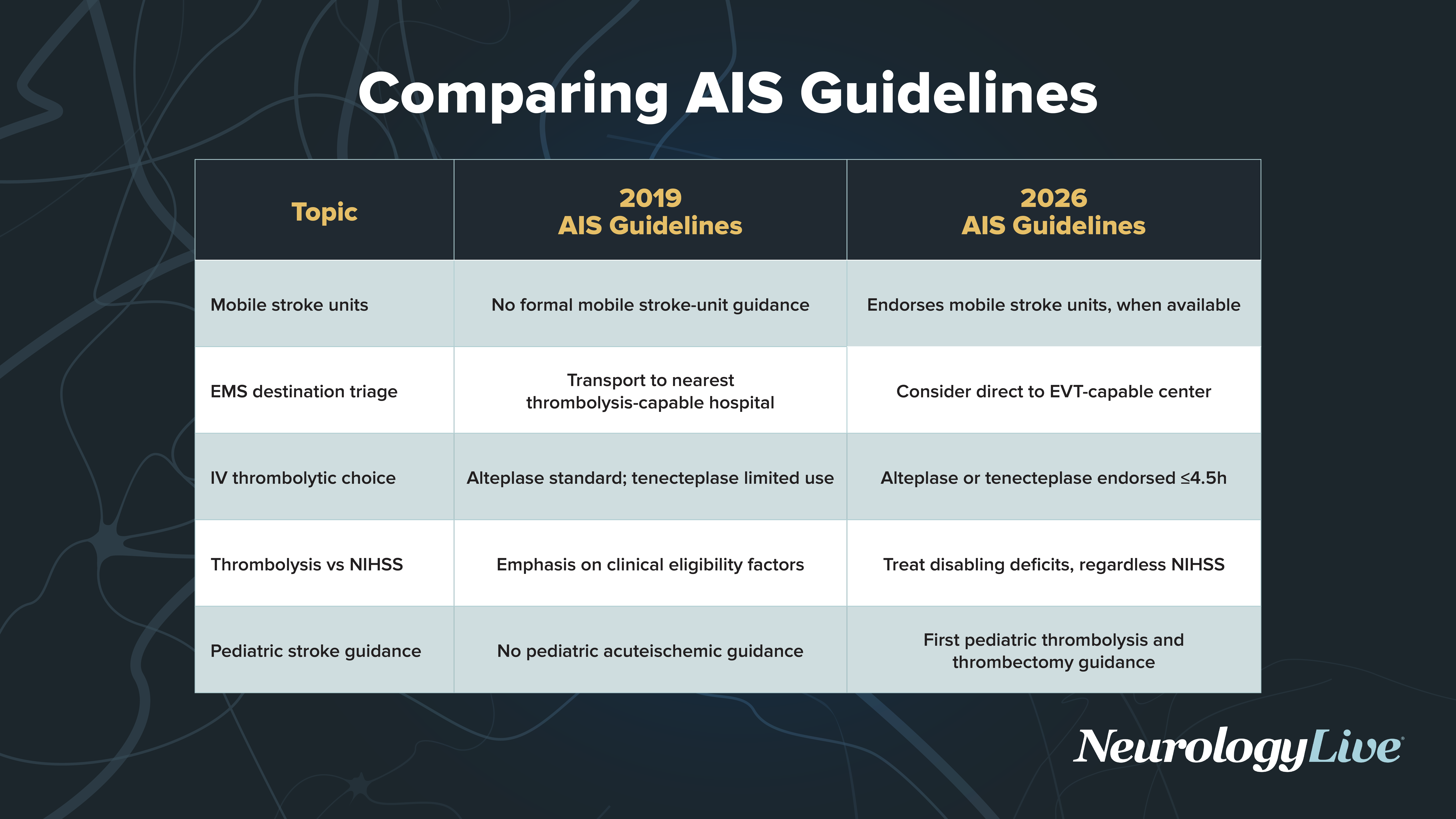
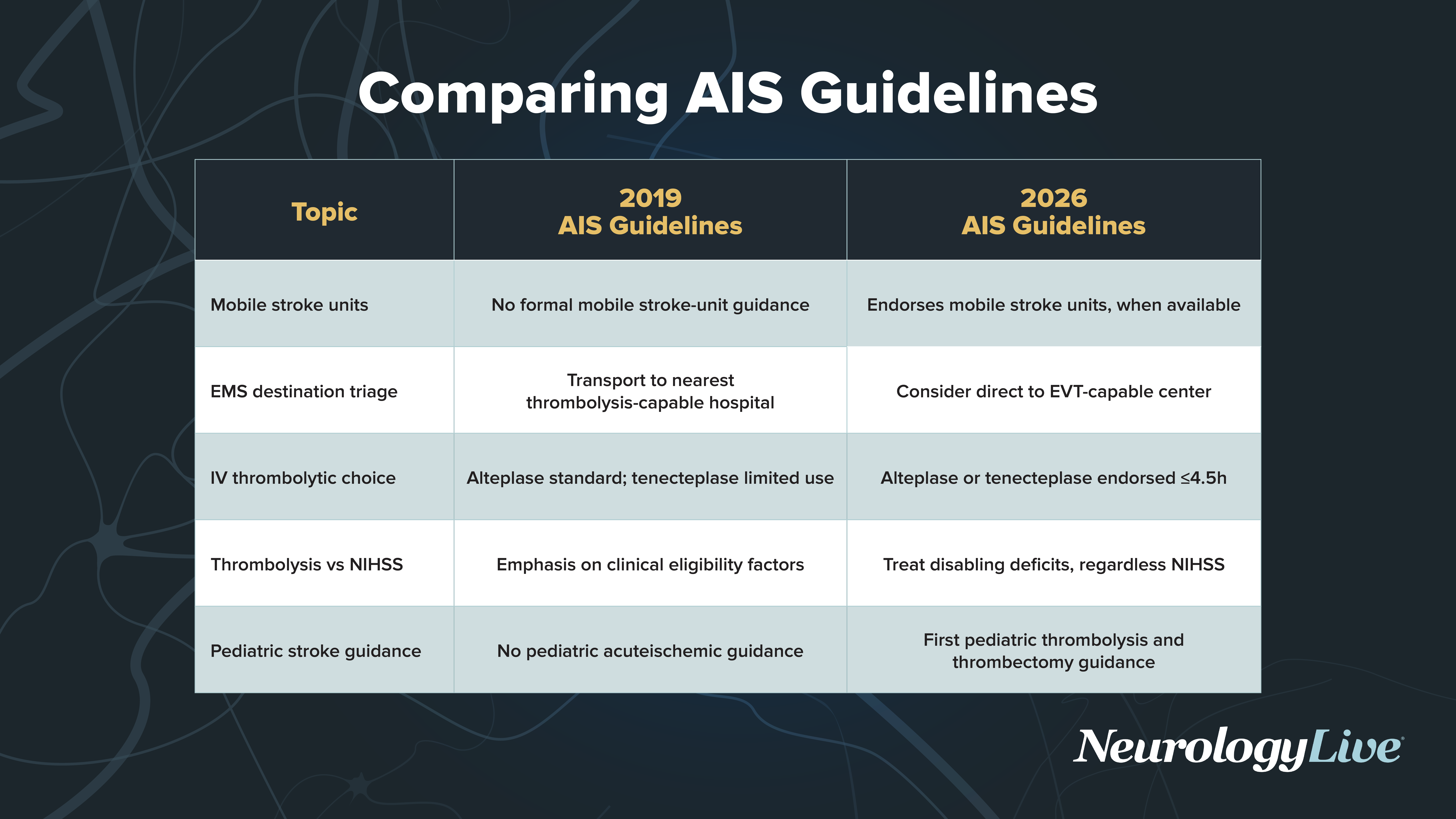
The updated stroke guidelines span the full continuum of acute ischemic stroke care, from prehospital triage and selection of intravenous thrombolytic agents to refined criteria for mechanical thrombectomy and post-procedural management. They clarify indications for tenecteplase and basilar artery thrombectomy, offer more cautious guidance for medium and distal vessel occlusions, and introduce structured recommendations for pediatric stroke and post-stroke dysphagia treatment. In addition to informing real-world clinical decision-making, the guidelines identify ongoing gaps in areas such as blood pressure management after reperfusion and device optimization, helping to shape future clinical trials and innovation in stroke systems of care.
As part of ongoing coverage, NeurologyLive® spoke with Andrei Alexandrov, MD, an award-winning leader in stroke research and clinical care, for an in-depth discussion of the updated guidelines. In this interview, Alexandrov shared key takeaways from the recommendations, examined their implications for everyday clinical practice, and highlighted remaining challenges in post-stroke blood pressure management. He also offered insight into how the revised criteria may shape future research priorities and therapeutic development in the field.
Top Takeaways From the 2026 Stoke Guidelines
Alexandrov explained that the updated 2026 stroke guidelines align formal recommendations with evolving real-world practice. Most notably, tenecteplase (TNK) is now recommended alongside alteplase as an acceptable agent for intravenous thrombolysis, reflecting widespread adoption at advanced stroke centers. The guidelines also formally endorse mobile stroke units for rapid thrombolysis delivery and triage where available, and, for the first time, incorporate structured recommendations for pediatric stroke, including imaging, registry development, and treatment considerations.
Major Takeaways
Tenecteplase is now recommended alongside alteplase as an acceptable intravenous thrombolytic agent.
Mobile stroke units are endorsed for rapid thrombolysis delivery and triage where available.
Pediatric stroke is formally included, with guidance on imaging, registries, and treatment considerations.
The guidelines are among the most comprehensive and detailed stroke updates published to date.
Unanswered Questions: Blood Pressure management and Reperfusion injury
Alexandrov noted that optimal blood pressure management after successful reperfusion remains unsettled. Although cerebral hyperperfusion is recognized after thrombectomy, trials of intensive blood pressure lowering have not improved outcomes and may cause harm. The field now faces the challenge of determining whether more individualized and standardized approaches are needed.
Major Takeaways
Cerebral hyperperfusion occurs in a substantial subset of patients after successful reperfusion.
Intensive blood pressure lowering has not consistently improved outcomes in trials.(Why should it? You're reducing the blood flow and oxygen delivery to the brain when it needs it most to prevent penumbra death! Can't you think at all?)
Individualized blood pressure strategies may be preferable to one-size-fits-all approaches.
More rigorous and standardized trials are needed to guide post-thrombectomy management.
Expanding the Scope of Stroke Care: Dysphagia and Rehabilitation
('care' NOT RECOVERY! For that alone, you're fired!)
Alexandrov spotlighted guidelines expansion beyond acute reperfusion, highlighting pharyngeal electrical stimulation (PES) as a recommended option for post-stroke dysphagia. With FDA approval supported by European data, this therapy represents a shift toward more active treatment of neurogenic dysphagia rather than relying solely on compensatory measures.
Major Takeaways
Pharyngeal electrical stimulation is now recommended for selected patients with post-stroke dysphagia.
FDA approval was supported by European data demonstrating safety and efficacy.
The guidelines may accelerate adoption of more active dysphagia therapies in US practice.
Stroke care continues to expand beyond acute reperfusion to include rehabilitation innovation.
Looking Ahead: A Tool for Practice Change and Future Research
Alexandrov concluded by mentioning that the 2026 update serves both as a consolidation of current evidence and a roadmap for future investigation. It equips clinicians to implement updated protocols while identifying research gaps in thrombectomy expansion, device development, and post-reperfusion management.
Major Takeaways
The guidelines can help clinicians advocate for updated institutional protocols.
Research gaps are clearly identified, guiding future clinical trials.
Mechanical thrombectomy, thrombolysis, and rehabilitation strategies continue to evolve.
The 2026 update represents both consolidation of progress and a roadmap for future innovation.
REFERENCES 1. American Heart Association / American Stroke Association. 2026 Guideline for the Early Management of Patients With Acute Ischemic Stroke. Published in Stroke. 2026. 2. American Heart Association. Guideline Development Manual. American Heart Association Scientific Statements and Clinical Practice Guidelines Methodology.