Use the labels in the right column to find what you want. Or you can go thru them one by one, there are only 33,359 posts. Searching is done in the search box in upper left corner. I blog on anything to do with stroke. DO NOT DO ANYTHING SUGGESTED HERE AS I AM NOT MEDICALLY TRAINED, YOUR DOCTOR IS, LISTEN TO THEM. BUT I BET THEY DON'T KNOW HOW TO GET YOU 100% RECOVERED. I DON'T EITHER BUT HAVE PLENTY OF QUESTIONS FOR YOUR DOCTOR TO ANSWER.
Changing stroke rehab and research worldwide now.Time is Brain!trillions and trillions of neuronsthatDIEeach day because there areNOeffective hyperacute therapies besides tPA(only 12% effective). I have 523 posts on hyperacute therapy, enough for researchers to spend decades proving them out. These are my personal ideas and blog on stroke rehabilitation and stroke research. Do not attempt any of these without checking with your medical provider. Unless you join me in agitating, when you need these therapies they won't be there.
What this blog is for:
My blog is not to help survivors recover, it is to have the 10 million yearly stroke survivors light fires underneath their doctors, stroke hospitals and stroke researchers to get stroke solved. 100% recovery. The stroke medical world is completely failing at that goal, they don't even have it as a goal. Shortly after getting out of the hospital and getting NO information on the process or protocols of stroke rehabilitation and recovery I started searching on the internet and found that no other survivor received useful information. This is an attempt to cover all stroke rehabilitation information that should be readily available to survivors so they can talk with informed knowledge to their medical staff. It lays out what needs to be done to get stroke survivors closer to 100% recovery. It's quite disgusting that this information is not available from every stroke association and doctors group.
Because acknowledging it would have resulted in vast pressure to do the trial. It is much cheaper to not release the report. The company doesn't care about anyone's health, profit is the only concern.
A
team of researchers inside Pfizer made a startling find in 2015: The
company's blockbuster rheumatoid arthritis therapy Enbrel, a powerful
anti-inflammatory drug, appeared to reduce the risk of Alzheimer's
disease by 64 per cent.
The results were from an analysis of
hundreds of thousands of insurance claims. Verifying that the drug would
actually have that effect in people would require a costly clinical
trial - and after several years of internal discussion, Pfizer opted
against further investigation and chose not to make the data public, the
company confirmed.
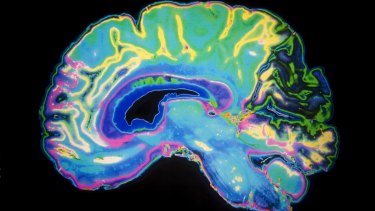
Alzheimer's cause plaques between nerve cells in the brain.
Researchers
in the company's division of inflammation and immunology urged Pfizer
to conduct a clinical trial on thousands of patients, which they
estimated would cost $US80 million, to see if the signal contained in
the data was real, according to an internal company document obtained by
The Washington Post.
"Enbrel could potentially safely
prevent, treat and slow progression of Alzheimer's disease,'' said the
document, a PowerPoint slide show prepared for review by an internal
Pfizer committee in February 2018.
The
company said it decided during its three years of internal reviews that
Enbrel did not show promise for Alzheimer's prevention because the drug
does not directly reach brain tissue. It deemed the likelihood of a
successful clinical trial to be low. A synopsis of its statistical
findings prepared for outside publication, it says, did not meet its
"rigorous scientific standards".
Science was the sole determining factor against moving forward, company spokesman Ed Harnaga said.
Pfizer
said it opted against publication of its data because of its doubts
about the results. It said publishing the information might have led
outside scientists down an invalid pathway.
Pfizer's
deliberations, which previously have not been disclosed, offer a rare
window into the frustrating search for Alzheimer's treatments inside one
of the world's largest drug companies. Despite billions spent on
research, Alzheimer's remains a stubbornly prevalent disease with no
effective prevention or treatment.
Some
outside scientists disagree with Pfizer's assessment that studying
Enbrel's potential in Alzheimer's prevention is a scientific dead end.
Rather, they say, it could hold important clues to combating the disease
and slowing cognitive decline in its earliest stages.
Pfizer did
share the data privately with at least one prominent scientist, but
outside researchers believe Pfizer also should at least have published
its data, making the findings broadly available to researchers.
"Of
course they should. Why not?'' said Rudolph Tanzi, a leading
Alzheimer's researcher and professor at Harvard Medical School and
Massachusetts General Hospital.
"It would benefit the scientific
community to have that data out there,'' said Keenan Walker, an
assistant professor of medicine at Johns Hopkins who is studying how
inflammation contributes to Alzheimer's. "Whether it was positive data
or negative data, it gives us more information to make better informed
decisions.''
Internal
discussions about possible new uses of drugs are common in
pharmaceutical companies. In this case, Pfizer's deliberations show how
decisions made by industry executives - who are ultimately accountable
to shareholders - can have an impact well beyond corporate board rooms.
As
its Enbrel deliberations ended early last year, Pfizer was getting out
of Alzheimer's research. It announced in January 2018 that it would be
shutting down its neurology division, where Alzheimer's treatments were
explored, and laying off 300 employees.
The company says it was not worth pursuing the results.Credit:AP
Drug
companies often are criticised for extending the patent life of a drug -
and winning new profits - by merely tweaking a drug's molecule or
changing the method of delivery into the body. But it is a "heavy lift''
for a company to win regulatory approval to use a drug for a completely
different disease, said Robert Field, a professor of law and health
care management at Drexel University.
"Our patent laws do not
provide the appropriate incentives,'' Field said. Drug therapy for early
Alzheimer's "would be a godsend for American patients, so we should be
doing everything we can as a country to encourage development of
treatments. It's frustrating that there may be a missed opportunity.''
As
Enbrel's life cycle winds down, Pfizer has introduced a new rheumatoid
arthritis drug, Xeljanz, that works differently from Enbrel. Pfizer is
putting its marketing muscle behind the new treatment. While Enbrel
revenue is shrinking, Xeljanz revenue is growing. The Xeljanz patent
expires in 2025 in the United States and 2028 in Europe, according to
Pfizer's public disclosures. The drug is on track to make Pfizer
billions more each year for the foreseeable future.
Drug companies
frequently have been pilloried for not fully disclosing negative side
effects of their drugs. What happens when the opposite is the case? What
obligation does a company have to spread potentially beneficial
information about a drug, especially when the benefits in question could
improve the outlook for treating Alzheimer's, a disease that afflicts
at least 500,000 new US patients per year?
A
medical ethics expert argued that Pfizer has a responsibility to
publicise positive findings, although it is not as strong as an
imperative to disclose negative findings.
"Having acquired the
knowledge, refusing to disclose it to those who might act upon it hides a
potential benefit, and thereby wrongs and probably harms those at risk
of developing Alzheimer's by impeding research,'' said Bobbie Farsides,
professor of clinical and biomedical ethics at Brighton and Sussex
Medical School in London.
Pfizer already forewarned that it
was cutting jobs and projects out of its neuro unit. Now we have the
full list of retired candidates, alongside a host of other experimental
drugs up for the chop.
The neuro cuts come as no surprise, as during the J.P. Morgan
Healthcare Conference at the start of the month, the Big Pharma giant
announced, much to the disappointment of charities, that it was to cut
around 300 jobs and a number of earlier stage projects from its
neuroscience pipeline.
The move was set to see it back out of work
in Alzheimer’s and Parkinson’s disease, two notoriously difficult areas
for the industry, especially the former, which has not seen any real
R&D advance in 15 years. RELATED: Pfizer axing neuroscience jobs, but seeks new VC fund
Released during its financials this morning, Pfizer said that
on the neuro side, it was axing eight projects in total, predominately
phase 1 tests in Alzheimer’s, but also a midstage Parkinson’s drug, and a
phase 2 drug for epilepsy, namely PF-06372865.
On top of this,
it’s also cutting a phase 1 project in NASH that worked as a
myeloperoxidase inhibitor and in hyperlipidemia, which was a
diacylglycerol O-acyltransferase 2 inhibitor.
Also in phase 1 it axed three cancer assets: an ephrin-A4
targeted cytotoxicity; a chemokine (C-X-C motif) receptor 4 (CXCR4)
inhibitor for a certain type of blood cancer; and an IDO1 inhibitor.
This IDO, a hot topic in cancer research right now, was partnered with Belgium's iTeos Therapeutics; back in September, the pair started work on the drug in certain forms of brain cancer.
In all, 14 projects were cut from its pipeline since the last quarter.
You as a stroke survivor will likely need these. So start saving your pennies to fund your own researchers or create that great stroke association that will simply write RFPs to researchers to solve this and get foundation grants to pay for it. We stroke survivors are completely on our own to fix stroke. Our doctors aren't doing it, our stroke hospitals aren't doing it, our fucking failures of stroke associations certainly aren't doing it. The solutions are out there, we just need researchers to put them into translational interventions. Everyone so far is not a leader, I expect leaders to try for 100% recovery for all.
NEW YORK (Reuters) - Pfizer Inc (PFE.N)
is abandoning research to find new drugs aimed at treating Alzheimer’s
and Parkinson’s disease, the U.S. pharmaceutical company announced on
Saturday.
FILE
PHOTO: The Pfizer logo is seen at their world headquarters in New York
April 28, 2014. REUTERS/Andrew Kelly/File Photo
The
company said it expects to eliminate 300 positions from the
neuroscience discovery and early development programs in Andover and
Cambridge, Massachusetts, and Groton, Connecticut, as it redistributes
the money spent on research, according to the emailed statement.
Pfizer
is not making any changes to research and development funding for
tanezumab, which is marketed as a treatment for joint pain from
osteoarthritis, fibromyalgia treatment Lyrica, or its rare disease
program.
“This was an exercise to re-allocate spend across our
portfolio, to focus on those areas where our pipeline, and our
scientific expertise, is strongest,” the company said.
Pfizer
has invested heavily in research for Parkinson’s and Alzheimer‘s, and
is one of several drugmakers, along with GlaxoSmithKline (GSK.L) and Eli Lilly (LLY.N),
that is part of the Dementia Discovery Fund, a venture capital fund
launched in 2015 by industry and government groups that seeks to develop
treatments for Alzheimer‘s.
However, some of Pfizer’s investments have resulted in disappointment. In 2012, Pfizer and partner Johnson & Johnson (JNJ.N)
called off additional work on the drug bapineuzumab after it failed to
help patients with mild to moderate Alzheimer’s in its second round of
clinical trials.
The company said on Saturday that it will launch a new venture fund to invest in neuroscience research projects.
Pfizer
is expected to make a presentation on Monday at the JP Morgan
healthcare conference in San Francisco, a key annual event for
healthcare investors.
Reporting By Elizabeth Dilts, Editing by Rosalba O'Brien