Changing stroke rehab and research worldwide now.Time is Brain! trillions and trillions of neurons that DIE each day because there are NO effective hyperacute therapies besides tPA(only 12% effective). I have 523 posts on hyperacute therapy, enough for researchers to spend decades proving them out. These are my personal ideas and blog on stroke rehabilitation and stroke research. Do not attempt any of these without checking with your medical provider. Unless you join me in agitating, when you need these therapies they won't be there. Did your doctor somehow miss the recovery protocol that Pedro Bach-y-Rita used to recover fully back in 1958 with only a partial brain?

What this blog is for:

My blog is not to help survivors recover, it is to have the 10 million yearly stroke survivors light fires underneath their doctors, stroke hospitals and stroke researchers to get stroke solved. 100% recovery. The stroke medical world is completely failing at that goal, they don't even have it as a goal. Shortly after getting out of the hospital and getting NO information on the process or protocols of stroke rehabilitation and recovery I started searching on the internet and found that no other survivor received useful information. This is an attempt to cover all stroke rehabilitation information that should be readily available to survivors so they can talk with informed knowledge to their medical staff. It lays out what needs to be done to get stroke survivors closer to 100% recovery. It's quite disgusting that this information is not available from every stroke association and doctors group.

Showing posts with label never give up. Show all posts

Thursday, September 3, 2026

The Role of Routine: Creating a Supportive Daily Routine for Stroke Recovery

 With no EXACT 100% RECOVERY PROTOCOLS  from your incompetent? doctor; this is just changing the deck chairs on the Titanic!

I have given up on consistent stroke rehab because it's pretty much useless until somebody solves spasticity. I don't need to beat my head against the wall when life is out there to live and useless rehab doesn't get me any better. 

The Role of Routine: Creating a Supportive Daily Routine for Stroke Recovery

Establishing a stroke recovery routine is one of the most powerful tools survivors can have. A predictable daily rhythm may reduce some barriers, conserve mental energy, and make important activities easier to begin, even on more difficult days.

Early stroke recovery may include regular therapy sessions, structured schedules, and guidance from rehabilitation professionals. When stroke survivors return home or transition to another care setting, continuing rehabilitation may become more challenging.

Survivors and their support teams may need practical ways to continue recommended activities. A flexible routine may help organize the day, support consistent practice, and make daily activities feel more manageable.

Every stroke recovery journey is unique. The most effective routine is one that reflects personal goals, abilities, energy level, and recommendations from a healthcare team. As recovery changes, routine may change too.

Repeating the same movements helps the brain relearn lost skills, and repetition is the driving force behind neuroplasticity, which is the brain’s ability to create new connections and reorganize itself after a stroke. The more often stroke survivors practice a movement, the more the brain can adapt and strengthen the connections that support recovery.¹

A daily routine can also reduce mental fatigue and make it easier to stick with rehabilitation goals. Stroke survivors may experience changes in movement, thinking, communication, vision, mood, and energy throughout recovery. Following a routine reduces the number of decisions they have to make, helping save energy for recovery.² When survivors don’t have to decide each day whether to do their exercises, when to do them, or which ones to prioritize, they’re more likely to follow through consistently.

Key Components of a Daily Routine

An effective stroke recovery routine balances three essential elements: physical rehabilitation, cognitive training, and adequate rest. Each component plays a role in supporting neuroplasticity and functional improvement.

Movement and Daily Activities

Physical therapy exercises form the foundation of most home stroke rehabilitation routines. These exercises target the specific impairments caused by stroke, like weakness, reduced range of motion, balance problems, and coordination difficulties. 

A daily rehab plan for stroke typically includes exercises prescribed by physical and occupational therapists, tailored to each survivor’s particular needs and abilities.³ The exercises might focus on strengthening weakened muscles, improving fine motor control, practicing balance, or working on walking patterns and endurance.

The key to effective physical practice is consistency and progressive challenge. Stroke survivors benefit from practicing their exercises daily, even if only for short sessions. Starting with manageable exercises and gradually increasing difficulty follows the principle of neuroplasticity: the brain adapts best when challenged at the right level. 

Everyday activities—such as dressing, grooming, meal preparation, hobbies, or household tasks—can become meaningful opportunities to practice recovery skills.

Cognitive Training and Daily Tasks

Cognitive rehabilitation addresses the thinking, memory, attention, and problem-solving skills that stroke can affect. Some survivors might work on specific cognitive exercises recommended by therapists, or practice real-world cognitive tasks that matter to daily life, like managing finances, following recipes, planning errands, or using technology.⁴

Research shows that combining thinking skills with practice of everyday tasks can improve daily function. It can also help stroke survivors use those skills at home, in their community, and at work.⁴

Activities of daily living become opportunities for rehabilitation when approached intentionally, such as:

  • Getting dressed works on sequencing and fine motor coordination.
  • Managing medications requires attention, memory, organization, and safety. Follow your healthcare team’s recommendations regarding the amount of assistance needed.
  • Planning a grocery list engages executive function and language skills.

Rest and Recovery Periods

Rest is an active component of recovery, not an afterthought, and it should be intentionally scheduled. Sleep and rest are when a lot of the brain’s rebuilding actually happens.

Sleep plays a critical role in stroke rehabilitation, as the brain processes and retains new motor skills, undergoes tissue repair, and builds stronger neural connections during rest.⁵ Sleep disturbance and fatigue are common in stroke survivors, and poor sleep quality is associated with greater fatigue severity and reduced motor performance.⁶

A structured routine should include scheduled rest periods throughout the day, not just at night. Many stroke survivors experience post-stroke fatigue, which makes alternating activity periods with rest breaks essential for preventing exhaustion. Some survivors schedule a mid-morning or afternoon rest period, while others take short breaks between therapy sessions.

Nighttime sleep quality matters just as much as daytime rest. Establishing a consistent bedtime routine, creating a comfortable sleep environment, and addressing sleep disruptions with healthcare providers all support the restorative sleep that rehabilitation requires.

A Sample Daily Stroke Recovery Schedule

A structured stroke recovery schedule provides a template that survivors can adapt to their own needs and energy patterns. While every survivor’s routine will look different based on their specific challenges and goals, having a general framework helps establish consistency:

  • Morning: If this is when a stroke survivor feels their best, they can consider stretching, self-care activities, or movement practice.This can include range-of-motion exercises, gentle stretching, walking practice, or transfer training.
  • Midday: Work on cognitive activities and everyday tasks. This may include memory exercises, reading, communication practice, meal preparation, or household chores. Take breaks as needed to prevent fatigue.
  • Evening: Slow down with lighter activities and relaxation. Gentle stretching, breathing exercises, journaling, or reviewing the day’s progress can help prepare for the next day and support better sleep.

The key is flexibility. Some days will require adjustments based on energy levels, therapy appointments, or how the body feels. The schedule serves as a guide, not a rigid prescription.

Incorporating Therapy Into Everyday Activities

Daily activities offer countless opportunities to incorporate therapy skills. Survivors can practice balance, work on fine motor control, or improve coordination during the course of the day. Even tasks like grocery shopping strengthen planning, memory, endurance, and problem-solving. Recognizing these opportunities helps survivors accumulate practice time without adding separate therapy sessions.

Habit stacking, the practice of attaching a new behavior to an existing daily habit, can make consistency in stroke recovery easier to maintain.⁷ Examples include:

  • After making morning coffee, a survivor might practice five minutes of physical therapy exercises.
  • While waiting for the shower to warm up, they could do balance exercises holding the counter.
  • After sitting down for lunch, they might complete a brief cognitive task.

The existing habit becomes the cue that triggers the therapeutic activity, removing the need to remember or decide when to practice. Over time, the rehabilitation activity becomes as automatic as the original habit, building consistent practice into the natural rhythm of the day.

Tracking Progress and Staying Motivated

Visible progress fuels motivation, and tracking systems make improvement easier to recognize. Choose whatever tracking system feels natural and easy to maintain:

  • Journals: Written reflections on daily exercises, energy levels, and accomplishments
  • Apps: Smartphone habit trackers or rehabilitation-specific programs
  • Checklists: Simple daily task lists
  • Charts: Visual graphs showing weekly or monthly trends in strength, endurance, or function
  • Photos or videos: Documenting movement patterns or functional abilities over time

The key is consistency, so select something that takes seconds, not minutes, to update each day.

Celebrating small wins is equally important. Progress may look different for everyone. Small improvements, such as needing less help, using your affected arm more often, or completing part of a daily task independently, are meaningful achievements and significant neurological wins. Acknowledging these victories, whether through self-recognition, sharing with family, or marking milestones on a tracking chart, reinforces the behaviors that led to improvement and builds momentum.

Making Your Stroke Recovery Routine Work

Structure provides the framework for recovery, but flexibility keeps it sustainable. A well-designed routine creates the consistency needed for neuroplasticity and functional improvement, turning rehabilitation into a natural part of each day. The most effective routines allow room for adjustment based on energy levels, appointments, or how the body feels. 

Small, consistent efforts can add up over time. Remember that recovery is different for everyone, and progress is not always linear. A few minutes of exercise each morning, cognitive practice over lunch, intentional rest periods can compound into substantial gains. Recovery is a marathon, not a sprint, and finding a rhythm that can be maintained is essential.

Frequently Asked Questions About Stroke Recovery Routines

How long should a daily stroke recovery routine be?
There is no single right length. Many survivors start with short sessions of just five to ten minutes and build up as energy and stamina improve. Consistency matters more than duration, so a routine that is easy to repeat every day is more valuable than a long one that is hard to sustain.¹

What should a stroke recovery routine include?
An effective routine balances three elements: physical rehabilitation, cognitive training, and intentional rest. Survivors often add everyday tasks like getting dressed or preparing meals, which double as therapy when approached with purpose.³

When is the best time of day to do stroke recovery exercises?
Many survivors do mobility and stretching in the morning when energy is highest, save cognitive tasks for midday, and wind down with lighter activities in the evening. However, the best time is whenever a survivor feels the most alert and has the energy to participate safely.

How do you stay motivated during stroke recovery?
Tracking progress and celebrating small wins helps. Journals, checklists, apps, or photos make improvement visible, and recognizing small gains reinforces the habits that drive recovery.⁷

©2026 Kandu, Inc. All Rights Reserved. | 8090.1197.E

References:

  1. Interventions for Neural Plasticity in Stroke Recovery, National Institutes of Health, https://pmc.ncbi.nlm.nih.gov/articles/PMC12442928/
  2. What doctors wish patients knew about decision fatigue, American Medical Association, https://www.ama-assn.org/public-health/behavioral-health/what-doctors-wish-patients-knew-about-decision-fatigue
  3. New evidence for therapies in stroke rehabilitation, National Institutes of Health, https://pmc.ncbi.nlm.nih.gov/articles/PMC3679365/
  4. Exploring the Efficacy of Combined Task-Specific and Cognitive Strategy Training in Subacute Stroke, ClinicalTrials.gov, https://clinicaltrials.gov/study/NCT01309165
  5. Rest Right, Recover Better: The Role of Sleep in Stroke Rehabilitation, The Stroke Foundation, https://www.thestrokefoundation.org/news/rest-right-recover-better-the-role-of-sleep-in-stroke-rehabilitation
  6. Improving physical movement during stroke rehabilitation: investigating associations between sleep measured by wearable actigraphy technology, fatigue, and key biomarkers, National Institutes of Health, https://pmc.ncbi.nlm.nih.gov/articles/PMC11131210/
  7. Everything You Need To Know About Habit Stacking for Self-Improvement, Cleveland Clinic, https://health.clevelandclinic.org/habit-stacking

Friday, November 21, 2025

Quitting Impossible Goals May Actually Boost Wellbeing

 Well, I agree completely. I'm not doing any therapy to try to recover because NOTHING OUT THERE ACTUALLY EXACTLY GETS YOU RECOVERED!

No one in stroke knows anything useful about stroke recovery, all you get are crappy guidelines; NOT PROTOCOLS!


Wharton's No. 1 professor Adam Grant: 'Never give up is bad advice.'


Why "Never Give Up" Is Bad Advice - Heleo


Why "Never Give Up" is a Bad Motto - The Berkeley Science Review


3 reasons why "Never Give Up" is really bad advice - The Chief


15 Reasons "Never Give Up" Is Terrible Advice | TheTalko


When "Never Give Up" is Bad Advice - The Meaning Movement

The latest here:

Quitting Impossible Goals May Actually Boost Wellbeing

Summary: A sweeping analysis of 235 studies shows that holding onto impossible goals harms mental and physical wellbeing, increasing stress and lowering life satisfaction. In contrast, releasing unachievable goals — and crucially, shifting toward new, attainable ones — improves mood, resilience, and overall psychological health.

The study identifies a wide range of factors, from personality traits to life history, that shape how easily people can adjust their goals. These findings suggest that flexibility, not blind persistence, may be the healthier long-term strategy for personal growth.

Key Facts:

  • Quitting Helps: Letting go of unattainable goals reduces stress, anxiety, and depression.
  • Reengagement Restores Wellbeing: Pursuing new goals brings back purpose, satisfaction, and resilience.
  • Adjustment Is Complex: Motivation, coping style, relationships, health, and life history all shape how people change course.

Source: Curtin University

Though many people may benefit from setting life goals, new research led by Curtin University has revealed working towards unachievable targets could in fact have a negative impact on overall wellbeing – and knowing when to abandon or change your goals may be just important as persistence.

The research, published in Nature Human Behaviour, looked at 235 studies with more than 1400 findings from multiple disciplines including psychology, health and social sciences, on how people adjust their goals when faced with obstacles.

The study found letting go of unattainable goals was linked to reduced stress, anxiety, and depression, while shifting to new goals was found to restore wellbeing and life satisfaction.

Lead researcher Dr Hugh Riddell, from the Curtin School of Population Health, said the study showed quitting isn’t always a sign of weakness.

“Sticking with impossible goals can take a real toll, with previous research suggesting it can lead to higher stress, poorer wellbeing and even physical health costs such as illness,” Dr Riddell said.

“But letting go and – crucially – reengaging with new goals, was found to restore purpose and wellbeing.

“Changing how you pursue your goals by being flexible rather than rigid could help people stay resilient and still have a focus in their lives, even if it has changed.”

Dr Riddell said the review revealed different predictors such as personality traits, coping styles, social support, and life circumstances can influence whether someone is more likely to let go, reengage, or adapt their goals.

“It isn’t a one-size-fits-all approach, as different people take different paths and a wide range of things can all impact how we approach our goals in life,” Dr Riddell said.

“For example, someone’s motivation, age, stress management, strength of relationships, experiences growing up, health status and more were all found to play a part in how we approach our goals.

“This study essentially distils all the previous research down to a conceptual roadmap charting what kinds of things might contribute to adjusting one’s goals and how this might benefit a person.”

Dr Riddell said the next step in the research is to better understand when the right time is to stick to a plan or change things up.

“Finding out when exactly people should stick with their goals or change course, without giving up too early, is really the next piece of the puzzle,” Dr Riddell said.

Key Questions Answered:

Q: How do unattainable goals affect mental health?

A: Persisting with impossible goals increases stress, anxiety, and depression.

Q: What improves wellbeing when goals can’t be reached?

A: Letting go of unattainable goals and reengaging with new, achievable ones restores purpose and satisfaction.

Q: What influences whether someone can adjust their goals?

A: Traits like coping style, motivation, social support, and life circumstances shape how people disengage and reengage.


Editorial Notes:

  • This article was written by a Neuroscience News editor.
  • Journal paper reviewed in full.
  • Additional context added by our staff.

Author: Samuel Jeremic
Source: Curtain University
Contact: Samuel Jeremic – Curtin University
Image: The image is credited to Neuroscience News

Original Research: Open access.
“A meta-analytic review and conceptual model of the antecedents and outcomes of goal adjustment in response to striving difficulties” by Hugh Riddell et al. Nature Human Behavior

Thursday, March 9, 2023

Resilient by Rick Hanson,Ph.D

 You need massive amounts of resilience and persistence post stroke to keep trying to recover when your therapists and doctors KNOW NOTHING SPECIFIC ABOUT RECOVERY!

In here is a frog story; 

Once upon a time, some frogs fell into a bucket of cream. The sides were steep, none of the frogs could escape, and one by one they gave up and drowned. But one frog kept swimming, working its little legs methodically to stay afloat. And slowly, ever so slowly, it churned the cream into solid butter. Then the frog hopped out of the bucket and lived happily ever after.

Another frog story on the same theme: 


It reminds me of the other frog story I've heard.

Two Frogs

By: Author Unknown 

A number of frogs were traveling through the woods. Two of them fell into a deep pit. All the other frogs gathered around the pit. When they saw how deep the pit was, they told the two frogs that they were as good as dead. The two frogs ignored the comments and tried to jump up out of the pit with all of their might. The other frogs kept telling them to stop, that they were as good as dead. Finally, one of the frogs took heed to what the other frogs were saying and gave up. He fell down and died. The other frog continued to jump as hard as he could. Once again, the crowd of frogs yelled at him to stop the pain and just die. He jumped even harder and finally made it out. When he got out, the other frogs said, "Did you not hear us?" The frog explained to them that he was deaf. He thought they were encouraging him the entire time. This story teaches two lessons: 

1. There is the power of life and death in the tongue. An encouraging word to someone who is down can lift them up and help them make it through the day.

2. A destructive word to someone who is down can be the push over the edge. Be careful of what you say. Speak life to those who cross your path. Anyone can speak words that can rob another of the spirit to push forward in difficult times. 

I have given up on consistent stroke rehab because it's pretty much useless until somebody solves spasticity. I don't need to beat my head against the wall when life is out there to live and useless rehab doesn't get me anywhere better.


Wharton's No. 1 professor Adam Grant: 'Never give up is bad advice.'


Why "Never Give Up" Is Bad Advice - Heleo


Why "Never Give Up" is a Bad Motto - The Berkeley Science Review


3 reasons why "Never Give Up" is really bad advice - The Chief


15 Reasons "Never Give Up" Is Terrible Advice | TheTalko


When "Never Give Up" is Bad Advice - The Meaning Movement


Saturday, October 29, 2022

Determination and rehab promote stroke survivor's message: never give up!


Or would you rather get this opposite information? I have given up on consistent stroke rehab because it's pretty much useless until somebody solves spasticity. I don't need to beat my head against the wall when life is out there to live and useless rehab doesn't get me anywhere better.


Wharton's No. 1 professor Adam Grant: 'Never give up is bad advice.'


Why "Never Give Up" Is Bad Advice - Heleo


Why "Never Give Up" is a Bad Motto - The Berkeley Science Review


3 reasons why "Never Give Up" is really bad advice - The Chief


15 Reasons "Never Give Up" Is Terrible Advice | TheTalko


When "Never Give Up" is Bad Advice - The Meaning Movement

The latest here:

Determination and rehab promote stroke survivor's message: never give up!

Do you have a news tip? Click here to send to our news team.


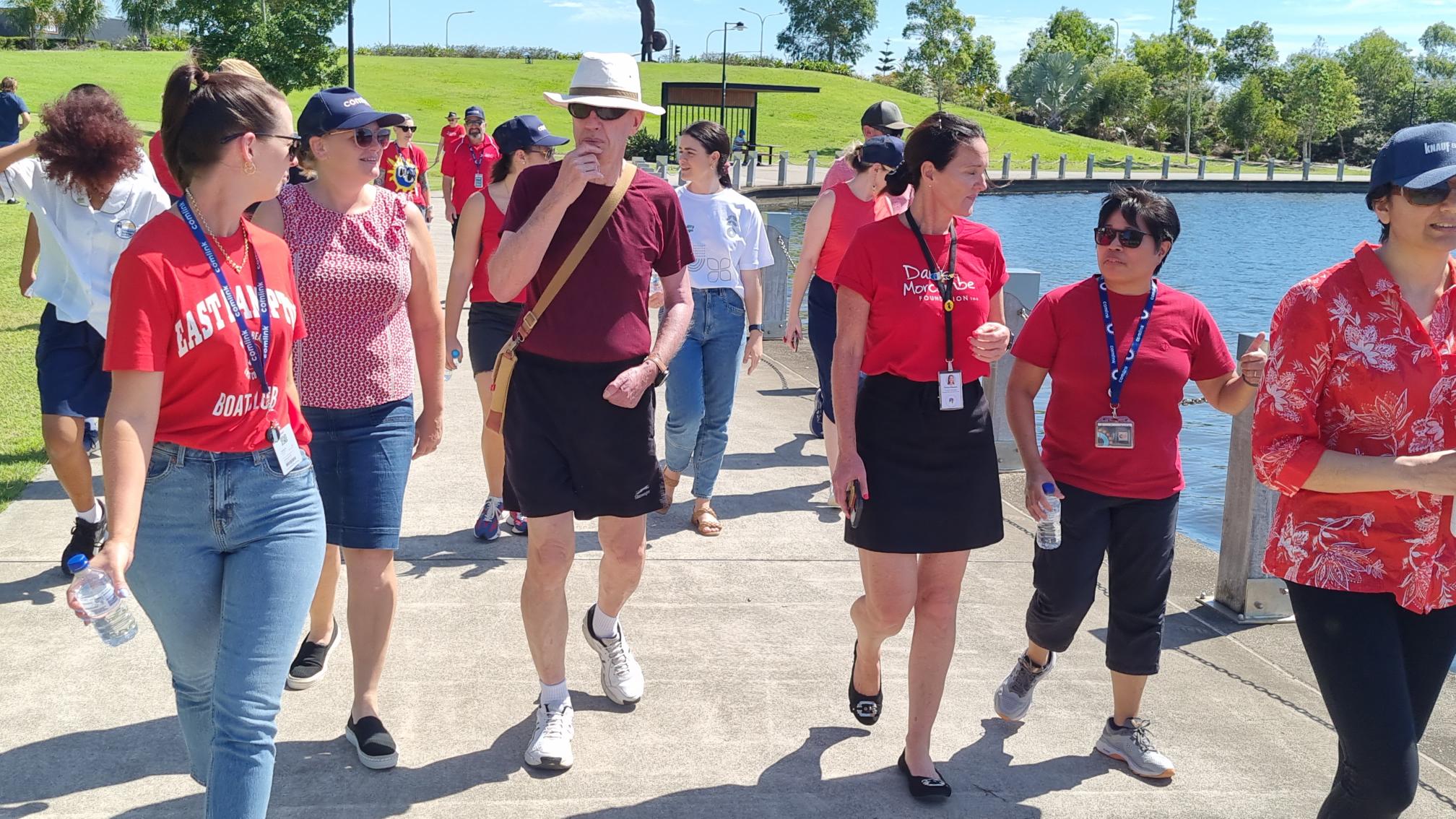
The victim of three strokes in a matter of 14 months has turned his back on his wheelchair and taken his place among walkers in a Kawana business hub’s Walk for Daniel.

Garry Reynolds attributed his recovery to his ‘never give up’ attitude, the support of his family and the great work of several rehabilitation and support services, including Comlink on the Sunshine Coast.

SUBSCRIBE here now for our FREE news feed, direct to your inbox daily!

“I was bedridden to start with and the therapist asked me, ‘Alright, mate, what is your vision?’ and I said, ‘I’d like to walk out of here and be part of mainstream life again and not a passenger’,” Garry explained.

“And I’d like to ballroom dance again, because I had a stroke on a ballroom dance floor’.

“So, we set that goal, they had me working out at the gym, five hours a day, the whole bit.”

Comlink volunteer Jenny Humphrey with her pup Geordie, and stroke survivor Garry Reynolds. Picture: Richard Bruinsma.

Garry was living in Canberra at the time of his strokes and was so determined to bounce back that, when he moved to Caloundra earlier this year, he left his wheelchair behind.

Through the work of rehabilitation staff initially at the University of Canberra and these days at the Sunshine Coast University Hospital, Garry has recovered strongly and is now living independently. Comlink Australia provides him with in-home care and support.

He even had a dancer-turned-therapist who used his love of ballroom dancing to influence some exercises.

“She was so keen and she was so creative with the exercises – she would come up with routines and would make all the exercises really fun,” Garry said.

“And they would let me choose the music in the gym, and turn the volume up, so I got really spoiled.”

He was invited by Comlink to join the mini Walk for Daniel hosted by Comlink and the Vitality Village health hub near SCUH.

Garry Reynolds takes part in the mini Walk for Daniel around 
Lake Birtinya. Picture: Richard Bruinsma.

Teneale Rush, of Comlink Sunshine Coast, said Garry showed just what can be achieved in life if you combine the right attitude with the right professional support.

“He struggled deeply with feeling like a burden to his family members as he was living with his daughter and her husband … he requested that they allow him six months to prove he could live independently with the help of Comlink Australia,” she explained.

“Fourteen months later he is now fully mobile, highly socially active … he is a wonderful gentleman.”

Garry was a teacher and public servant and wrote six books during in his working life; he has used writing as therapy and is now writing some of the life stories of friends and acquaintances.

He still has another goal to tick off his to-do list – a return to ballroom dancing.

But for now, he’s happy with his progress and to share his positive story.

“Things could look bad … (but) if you look hard enough, there’s always a win-win result.”

For information about Comlink Australia visit comlinkaustralia.com.au