Changing stroke rehab and research worldwide now.Time is Brain! trillions and trillions of neurons that DIE each day because there are NO effective hyperacute therapies besides tPA(only 12% effective). I have 523 posts on hyperacute therapy, enough for researchers to spend decades proving them out. These are my personal ideas and blog on stroke rehabilitation and stroke research. Do not attempt any of these without checking with your medical provider. Unless you join me in agitating, when you need these therapies they won't be there. Did your doctor somehow miss the recovery protocol that Pedro Bach-y-Rita used to recover fully back in 1958 with only a partial brain?

What this blog is for:

My blog is not to help survivors recover, it is to have the 10 million yearly stroke survivors light fires underneath their doctors, stroke hospitals and stroke researchers to get stroke solved. 100% recovery. The stroke medical world is completely failing at that goal, they don't even have it as a goal. Shortly after getting out of the hospital and getting NO information on the process or protocols of stroke rehabilitation and recovery I started searching on the internet and found that no other survivor received useful information. This is an attempt to cover all stroke rehabilitation information that should be readily available to survivors so they can talk with informed knowledge to their medical staff. It lays out what needs to be done to get stroke survivors closer to 100% recovery. It's quite disgusting that this information is not available from every stroke association and doctors group.

Showing posts with label memory boost. Show all posts

Saturday, January 17, 2026

Study finds a simple path to stronger memory and a biologically younger brain

This requires your competent? doctor to get you 100% recovered! Not doing that IS COMPETE INCOMPETENCE OF YOUR DOCTOR!

 Study finds a simple path to stronger memory and a biologically younger brain

A steady aerobic routine might do more than boost your mood and stamina. New findings suggest it can nudge your brain’s biology in a younger direction, at least as measured by brain scans. 

Over 12 months, adults who stuck with regular cardio ended the year with brains that looked almost a year “younger” than those who kept their usual activity levels.The research, led by the AdventHealth Research Institute, focused on “brain age” – an MRI-based estimate of how old a brain appears relative to a person’s actual age. 

A higher brain-predicted age difference, or brain-PAD, signals a brain that looks older than expected.

Previous studies have linked higher brain-PAD to worse physical and cognitive outcomes and a higher risk of death.

Measuring the brain’s age

Many brain health studies rely on tests of memory or attention, or they wait for clear clinical changes to appear.

This study leaned on imaging and asked a different question: can lifestyle shift an early biological marker before problems show up?

The researchers used MRI scans to estimate brain age at the start of the study and again at the end of the year.

The main number they tracked was brain-PAD, the gap between a person’s predicted brain age and their real age.

“We found that a simple, guideline-based exercise program can make the brain look measurably younger over just 12 months,” said lead author Lu Wan, a data scientist at the AdventHealth Research Institute. 

“Many people worry about how to protect their brain health as they age. Studies like this offer hopeful guidance grounded in everyday habits. These absolute changes were modest, but even a one-year shift in brain age could matter over the course of decades.”

Inside the clinical trial

The clinical trial enrolled 130 healthy adults between 26 and 58 years old. Participants were randomly assigned either to an exercise program or to a usual-care control group that didn’t change its activity routine.

Those in the aerobic group followed a plan designed to match widely used fitness guidelines.

They completed two supervised 60-minute sessions each week in a lab setting and added home exercise to reach roughly 150 minutes of aerobic activity per week. 

That target mirrors the American College of Sports Medicine’s (ACSM) recommendations for moderate-to-vigorous aerobic exercise.

To track changes beyond the MRI, the team also measured cardiorespiratory fitness using peak oxygen uptake, known as VO2peak, at the beginning and end of the 12-month period.

Exercise slowed brain aging

Over the year, the exercise group’s brain-PAD dropped by about 0.6 years on average. In plain terms, their brains looked a little younger at follow-up than they did at baseline. 

The control group moved in the opposite direction, with an average increase of about 0.35 years, though that shift wasn’t statistically significant on its own.

What stood out most was the gap between groups. When the researchers compared the two trajectories, the difference in brain age was close to one full year, in favor of the people who exercised.

“Even though the difference is less than a year, prior studies suggest that each additional ‘year’ of brain age is associated with meaningful differences in later-life health,” said senior author Kirk I. Erickson, a neuroscientist and director at AdventHealth Research Institute.

“From a lifespan perspective, nudging the brain in a younger direction in midlife could be very important.”

Possible biological pathways

Exercise is known to improve many things that should, in theory, support brain health: cardiovascular function, blood pressure, body composition, and certain molecules involved in neural plasticity.

The researchers tried to see whether any of these changes could explain the shift in brain-PAD.

They examined several candidates, including fitness improvements, changes in body composition, and blood pressure.

Researchers also looked at levels of brain-derived neurotrophic factor (BDNF) – a protein often linked to learning, memory, and the brain’s ability to adapt.

Fitness and exercise effects on brain age: A randomized clinical trial. Credit: Journal of Sport and Health Science. Click image to enlarge.

More questions about brain aging

Fitness improved clearly in the exercise group, but none of the measured factors statistically accounted for the change in brain age within this trial.

“That was a surprise,” Wan noted. “We expected improvements in fitness or blood pressure to account for the effect, but they didn’t. 

“Exercise may be acting through additional mechanisms we haven’t captured yet, such as subtle changes in brain structure, inflammation, vascular health, or other molecular factors.”

In other words, the brain age shift seems real in this dataset, but the “how” is still open. The answer may involve multiple small changes happening at once, or changes the study didn’t measure in enough detail.

The case for early prevention

A lot of exercise-and-brain research concentrates on older adults, when age-related changes are more obvious.

This trial aimed earlier, in early to mid-adulthood, when decline can be subtle and prevention may have more runway.

The idea is not that people in their 30s, 40s, or 50s are already destined for cognitive problems. It’s that brain aging is gradual, and intervening sooner might shift the slope in a way that pays off later.

“Intervening in the 30s, 40s and 50s gives us a head start,” Erickson said.

“If we can slow brain aging before major problems appear, we may be able to delay or reduce the risk of later-life cognitive decline and dementia.”

Future brain aging research

The researchers stress that the volunteers were healthy and relatively well educated, which can limit how broadly the results apply.

The brain age changes were also modest, even if the between-group difference was meaningful in context.

While brain-PAD is a promising biomarker, it’s still a proxy. Larger studies and longer follow-ups are needed to see whether shaving down brain age on MRI translates into fewer strokes or less dementia.

Additional research will also be needed to determine whether a reduced brain age leads to other measurable reductions in brain-related disease.

Still, for people looking for something practical to do now, the takeaway is refreshingly straightforward.

“People often ask, ‘Is there anything I can do now to protect my brain later?’” Erickson said.

“Our findings support the idea that following current exercise guidelines – 150 minutes per week of moderate-to-vigorous aerobic activity – may help keep the brain biologically younger, even in midlife.”

The study is published in the Journal of Sport and Health Science.

—–

Like what you read? Subscribe to our newsletter for engaging articles, exclusive content, and the latest updates.

Check us out on EarthSnap, a free app brought to you by Eric Ralls and Earth.com.

Tuesday, October 14, 2025

Socially enriched environments linked to better memory and cognitive flexibility in aged rats

Preventing social isolation IS COMPLETELY YOUR DOCTOR'S RESPONSIBILITY! By delivering EXACT 100% RECOVERY PROTOCOLS! No excuses are allowed! You can't blame the patient for not recovering!

 Socially enriched environments linked to better memory and cognitive flexibility in aged rats

A new research paper was published in Volume 17, Issue 9 of Aging-US on August 22, 2025, titled, "The impact of long-term social housing on biconditional association task performance and neuron ensembles in the anterior cingulate cortex and the hippocampal CA3 region of aged rats."

The research team led by Anne M. Dankert from Providence College and University of North Carolina, Chapel Hill, showed that aged rats who lived in socially enriched environments throughout life retained better memory and cognitive flexibility than those housed alone. This study highlights the importance of social interaction in protecting the aging brain.

Cognitive decline, such as memory loss and reduced problem-solving ability, affects many people over the age of 65. While many factors contribute to age-related cognitive decline, this study suggests that one key factor may be surprisingly simple: long-term social connection. To explore how social interaction might influence memory performance and brain activity, the researchers designed a study using rats as a model for aging in humans.

"Cognitive decline and changes in neuronal activity are hallmarks of aging."

They compared three groups of rats: young adults, aged rats housed alone, and aged rats housed socially in groups. All groups had access to the same physical enrichment, such as exercise and stimulating objects, but only some experienced lifelong social companionship. The team tested these animals on a complex memory challenge known as the biconditional association task, which requires animals to make context-based decisions-an ability that typically declines with age.

The results showed that aged rats living in social groups performed just as well as young adults on the memory task, while those housed alone showed significant impairments. Socially housed rats also made fewer working memory errors and required less effort to complete cognitive tasks, suggesting not only better performance but more efficient brain function. These benefits were not observed in aged rats who received only environmental enrichment without social interaction.

Brain imaging revealed additional differences between the groups. Socially housed aged rats showed increased activity in the hippocampus, particularly in the CA3 region, which plays a key role in forming and separating memories. In contrast, aged rats that lived alone had lower activity in this region, which may explain their poorer performance. Interestingly, socially housed rats also showed reduced overactivity in the anterior cingulate cortex-a brain area involved in attention and decision-making-suggesting a more balanced and efficient neural response.

This research provides new insight into how lifelong social experiences shape brain health during aging. While earlier studies have shown that physical activity and cognitive stimulation help preserve cognitive function, this study identifies social interaction as an independent and powerful protective factor. The findings are consistent with human studies showing that older adults who remain socially active tend to experience slower cognitive decline and stronger brain function.

Overall, these results emphasize that brain aging is not inevitable but may be influenced by our social environments. This research suggests that fostering lifelong social connections could be a critical, low-cost strategy to protect memory and mental flexibility in older adults.

Source:
Journal reference:

Dankert, A. M., et al. (2025). The impact of long-term social housing on biconditional association task performance and neuron ensembles in the anterior cingulate cortex and the hippocampal CA3 region of aged rats. Aging. doi.org/10.18632/aging.206310

Fermented soy boosts memory in older adults

Will your incompetent? doctor not get the dietician to immediately update the diet protocols for all stroke survivors? Oh, your DOCTOR WILL DO NOTHING LIKE USUAL!

Fermented soybeans are soybeans that have undergone a process using bacteria or mold to break down their components, changing their texture and flavor. Popular examples include Japanese nattō, known for its slimy texture and strong smell, and Indonesian tempeh, a firm cake with an earthy flavor. Other examples include miso, soy sauce, and stinky tofu.  In a groundbreaking 12-week trial, researchers discovered that a daily dose of fermented soy could sharpen memory in older adults, especially women over 70, hinting at a simple, diet-based way to support brain health with age.

At least miso and tempeh are palatable.

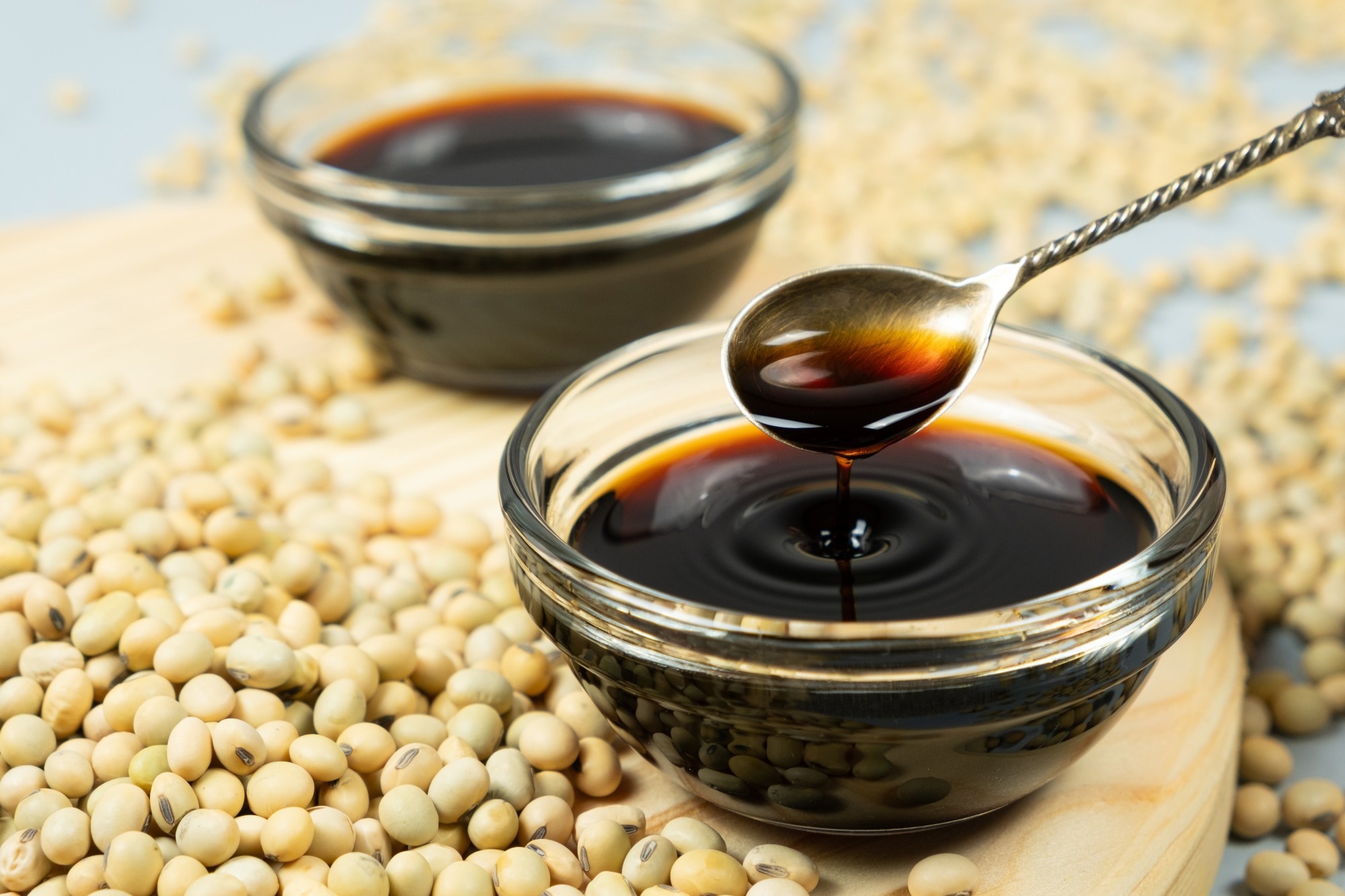
Umami-Rich Soy Sauce in Spoon Among Soybeans.

Study: Effects of Fermented Soy on Cognition in Older Adults: Outcomes of a Randomized, Controlled Trial. Image credit: Garna Zarina/Shutterstock.com

A recent Nutrients study investigated the effects of fermented soy on cognitively healthy older adults. It found that fermented soy intake significantly improved memory in these adults.

Aging population and dementia

The increased life expectancy has contributed to an aging population, along with an overwhelming increase in dementia cases worldwide. A healthy diet and other lifestyle factors reduce the risk of cognitive decline.

Oxidative stress and neuroinflammation increase the risk of neuronal damage and age-related cognitive decline (ARCD). Several studies have highlighted the neuroprotective effects of plant-based foods due to the presence of high levels of antioxidants, n-3 polyunsaturated fatty acids, and anti-inflammatory phytonutrients, such as polyphenols. Phytonutrients reduce oxidative stress and neuroinflammation, promoting cognitive and cerebrovascular function.

Asian people commonly consume soy, which is rich in important secondary metabolites, such as phenolic flavonoids and isoflavones (daidzein and genistein). These metabolites possess antioxidant and estrogen-like properties, which benefit skeletal, cardiovascular, and cognitive health.

The available observational studies and clinical trials on soy and cognition in older adults have presented contradictory results, possibly due to the limited bioavailability of key isoflavones in their native glycoside forms. Previous studies have shown that fermented soy has an improved nutritional profile because, in this form, isoflavone glycosides are converted into aglycones, which are highly bioactive and are readily absorbed. Furthermore, fermentation enhances soy's antioxidant and anti-inflammatory properties, which are plausible mechanisms for improving its neuroprotective effects.

Most human-based research has assessed the cognitive benefits of fermented soy in people with mild cognitive impairment (MCI). For instance, a 12-week trial revealed the potential benefits of a probiotic fermented soybean powder on improving attention and memory composites. This treatment also enhanced brain-derived neurotrophic factor (BDNF) in older adults with MCI. Considering the benefits of fermented soy, it is essential to understand its effect on cognitively healthy older adults.

About the study

The current study performed a 12-week, triple-blind, placebo-controlled randomized controlled trial (RCT) to assess the cognitive effects of a non-probiotic, fermented soy product in cognitively healthy older adults. Healthy men and postmenopausal women 65 years and older were recruited from Loma Linda, USA. Any individuals with neurodegenerative disease and MCI, undergoing kidney dialysis and cancer treatment, and those who were intolerant or allergic to soy or dairy products were excluded.

Participants were advised to continue their usual physical activities, diet, and other lifestyle habits and refrain from taking any supplements that could affect cognition and immunity during the study period.

A total of 76 participants met the eligibility criteria, of whom 61 agreed to participate in this study. These candidates were randomized into either one of two groups: fermented soy (n = 33) and control (n = 28), stratified by sex. Household members were also randomized together into the same group. Participants consumed two pre-measured packets of Q-Can Plus® (fermented soy powder) or whey-based placebo powder each day for 12 weeks.

Q-Can Plus® is a non-probiotic fermented soy product, patented by BESO Biological Research Inc. The fermented soy powder contained 4.5g of fat, 8.4g of carbohydrates, 9.4g of protein, 5.6g of fiber, and 36.3mg of isoflavones per day. The placebo powder contained 15.6g of carbohydrate, 1.0g of fat, 8.5g of protein, 0g of fiber, and 0mg of isoflavones. Both fermented soy and placebo powders were flavored with cocoa and monk fruit sweetener.

Participants completed questionnaires on demographics, diet, stress, sleep, physical activity, and use of alcohol, tobacco, and caffeine. Participants’ height, body mass index (BMI), and body composition were measured at baseline.  Every month, the participants met the study clinician and completed questionnaires about their experience with the intervention product. At baseline and after 12 weeks, all participants underwent a comprehensive battery of neuropsychological tests.

Study findings

The majority of the randomized participants were postmenopausal women 70 years and older. An individual assigned to the placebo group was removed because of a recent MCI diagnosis. The overall dropout rate was 22%, comprising five participants in the placebo group and eight in the fermented soy group. The reason for most dropouts was linked to the palatability of the intervention.

A total of 47 participants completed the study (fermented soy group: 25 and control: 22). The mean age of participants who completed the study was 74.0 years, and the mean age of participants who dropped out was 71.7 years. Interestingly, Hispanic participants exhibited a higher dropout rate compared to Whites and other racial groups.

The fermented soy and control groups did not significantly differ in participant characteristics or cognitive scores. Approximately 90% of participants adhered to the fermented soy and placebo interventions. After adjusting for baseline scores, the fermented soy group exhibited a modest yet statistically significant improvement limited to memory scores (p = 0.041) compared to the placebo group. No significant between-group differences were found in other cognitive domains or in overall global cognition.

Exploratory analyses revealed a more prominent effect among postmenopausal women who were 70 years and older. These post hoc analyses indicated that women in this subgroup experienced improvements in both memory and global cognition. However, the authors cautioned that these findings should be interpreted carefully due to the analyses' small sample size and exploratory nature. A mean improvement in memory scores of 8.47% was estimated for the fermented soy group, compared to 2.05% for the placebo group.

Conclusions

The current study suggests that fermented soy may support memory function in older adults. Modest improvements in memory, and exploratory evidence for global cognition, were observed among postmenopausal women 70 years and older. However, the authors emphasized that these results are hypothesis-generating and that causality cannot be inferred. Larger and longer-term studies are needed to confirm these preliminary findings.

Rather than recommending consumption outright, the researchers propose that fermented soy could be a promising dietary component to help maintain cognitive health and potentially delay cognitive decline when integrated into an overall healthy lifestyle.

Download your PDF copy now!

Journal reference:

Sunday, July 21, 2024

Alzheimer's breakthrough as nasal spray may boost memory

 In mice, so don't expect anything in your children's or grandchildren's lifetime

Alzheimer's breakthrough as nasal spray may boost memory

Nasal sprays could revolutionize Alzheimer's treatment by swiftly delivering brain-boosting medicine and improving cognitive function, a new study shows.

This research is the latest in recent years to show showing promising results that support nasal therapy as a potential treatment for degenerative brain conditions.

Researchers at the Mitchell Center for Neurodegenerative Diseases, University of Texas, tested a spray containing tiny lipophilic micelles (oil/fat particles that can carry substances through water) on aging mice, administering the treatment through their noses.

These findings could guide the development of more effective treatments for Alzheimer's and related diseases.

More From Newsweek Vault: What Is a Health Savings Account?

The bulk of recent studies indicating the same outcomes could bring hope to the 6.9 million Americans who are living with Alzheimer's at present.

Begin your day with a curated outlook of top news around the world and why it matters.

With the global number of sufferers projected to exceed 78 million by 2030, breakthroughs like this are crucial.

Model Brain Held By Scientist
A model of a human brain being held in a hand. To get an antibody into the brain rapidly, a team put it into tiny packages called micelles and delivered it through mice's nose. Photo by Matthew Horwood/Getty Images

Nasal sprays are a promising new treatment for Alzheimer's because they deliver medicine directly to the brain quickly and effectively.

The intranasal solution was found to improve their cognitive function. This was achieved through the development of a confirmation-specific antibody (TTCM2)—a type which recognizes and binds to a protein only when that protein is in a specific shape or form.

Wednesday, June 19, 2024

Keto Diet Boosts Memory in Aging Mice

 Ask your competent? doctor about this then;

Keto diet is not healthy and may harm the heart 

The latest here:

Keto Diet Boosts Memory in Aging Mice

Summary: A new study reveals how a ketogenic diet, high in fat and low in carbohydrates, improves memory in aging mice. Researchers found that the diet triggers a molecular signaling pathway that enhances synapse function, leading to improved memory. This discovery could pave the way for new therapies targeting memory without the need for dietary changes.

Key Facts:

  • Ketogenic diet improves memory in aging mice by modifying the synaptic proteome.
  • The protein kinase A signaling pathway is activated by the ketogenic diet, enhancing synapse function.
  • This research offers a potential new approach to improving memory through molecular targeting, independent of dietary changes.

Source: Buck Institute

The ketogenic diet has its fanatics and detractors among dieters, but either way, the diet has a scientifically documented impact on memory in mice.

While uncovering how the high fat, low carbohydrate diet boosts memory in older mice, Buck scientists and a team from the University of Chile identified a new molecular signaling pathway that improves synapse function and helps explain the diet’s benefit on brain health and aging.

Published in the June 5, 2024 issue of Cell Reports Medicine, the findings provide new directions for targeting the memory effects on a molecular level, without requiring a ketogenic diet or even the byproducts of it.

This shows food.
Further testing indicated that in synapses, a particular signaling pathway (protein kinase A, which is critical to synapse activity) was activated by the ketogenic diet. Credit: Neuroscience News

The paper is titled “Ketogenic diet administration later in life improves memory by modifying the synaptic cortical proteome via the PKA signaling pathway in aging mice.”

“Our work indicates that the effects of the ketogenic diet benefit brain function broadly, and we provide a mechanism of action that offers a strategy for the maintenance and improvement of this function during aging,” said the study’s senior author, Christian González-Billault, Ph.D., who is a professor at the Universidad de Chile and director of their Geroscience Center for Brain Health and Metabolism, and adjunct professor at the Buck Institute.

“Building off our previous work showing that a ketogenic diet improves healthspan and memory in aging mice, this new work indicates that we can start with older animals and still improve the health of the aging brain, and that the changes begin to happen relatively quickly,” said John Newman, MD, Ph.D., whose laboratory at Buck collaborated with Dr. González-Billault on the study.

Newman is both an assistant professor at the Buck Institute, and a geriatrician at University of California, San Francisco. “It is the most detailed study to date of the ketogenic diet and aging brain in mice.”

More than a century ago, researchers observed that rats that consumed less food lived longer.

“We now know that being able to manipulate lifespan is not about specifically eating less,” said Newman, but actually is related to signals inside cells that turn on and off specific pathways in response to available nutrients.

Many of those pathways are related to aging, such as controlling protein turnover and metabolism.

Some of those signals are the ketone bodies, which consist of acetoacetate (AcAc), β-hydroxybutyrate (BHB) and to a much lesser extent, acetone. These molecules are routinely produced in the liver.

They ramp up when glucose is in short supply, whether due to caloric restriction, intense exercise or low carbohydrate intake, such as with a ketogenic diet.

Seven years ago, Newman led a team that published the first proof of the concept that if a ketogenic diet exposes mice to increased levels of ketone bodies over much of their adult life, it helps them to live longer and age in a more healthy way.

“The most striking effect on their health as they aged was that their memory was preserved; it was possibly even better than when they were younger,” he said.

The current study, designed to answer what part of the ketogenic diet was having the effect and how it was affecting the brain on a molecular level to improve memory, was led by González-Billault in a collaboration with scientists at the Buck. Mice on a ketogenic diet are fed a ratio of 90% calories from fat and 10% from protein, while mice on a control diet received the same amount of protein but only 13% fat.

The test mice, of “advanced age” of more than two years old, received one week of the ketogenic diet, cycled with one week of the control diet, to keep the mice from overeating and becoming obese.

The benefits of the ketogenic diet, said, González-Billault, were demonstrated through neurophysiological and behavioral experiments with the mice that test how well the mechanisms involved in memory generation, storage, and retrieval function in aged animals.

When these showed that the ketogenic diet appeared to benefit how well the synapses responsible for memory worked, they took a deep dive into the protein composition at these synapses in the hippocampus, in a collaboration with Buck professor Birgit Schilling, Ph.D., who directs the Proteomics and Mass Spectrometry Center.

“Surprisingly, we saw that the ketogenic diet caused dramatic changes in the proteins of the synapse,” said Schilling. Even more surprising, she said, was that the changes started after a relatively brief exposure to the diet (tested after only one week on the diet) and only became more pronounced over time (tested again after six weeks and a year).

Further testing indicated that in synapses, a particular signaling pathway (protein kinase A, which is critical to synapse activity) was activated by the ketogenic diet. In isolated cells, the team then showed that it appears that BHB, the main ketone body produced in a ketogenic diet, is activating this pathway.

This leads to the idea, said González-Billault, that ketone bodies (specifically BHB) play a crucial role not only as an energy source, but also as a signaling molecule.

“BHB is almost certainly not the only molecule in play, but we think this is an important part of understanding how the ketogenic diet and ketone bodies work,” said Newman.

“This is the first study to really connect deep molecular mechanisms of ketone bodies all the way through to improving the aging brain.”

Looking forward, he said, the next step would be to see if the same memory protection could be achieved by using BHB alone, or possibly going even more targeted than that by manipulating the protein kinase A signaling pathway directly.

“If we could recreate some of the big-picture effects on synapse function and memory just by manipulating that signaling pathway in the right cells,” he said, “we wouldn’t even need to eat a ketogenic diet in the end.”

About this diet, aging, and memory research news

Author: Christian González-Billault
Source: Buck Institute
Contact: Christian González-Billault – Buck Institute
Image: The image is credited to Neuroscience News

Original Research: Open access.
“Ketogenic diet administration later in life improves memory by modifying the synaptic cortical proteome via the PKA signaling pathway in aging mice” by Christian González-Billault et al. Cell Reports Medicine

Thursday, February 22, 2024

Drug-Activated Protein Boosts Memory

 Did your competent? doctor and hospital do anything with this earlier research on rapamycin?

rapamycin (5 posts to May 2017)

Or anything with these 26 posts on memory loss?

Or are you dealing with total incompetence in your stroke medical 'professionals'?

Drug-Activated Protein Boosts Memory

Summary: Researchers made a breakthrough in memory research by genetically modifying the LIMK1 protein, crucial for memory, to be controlled by the drug rapamycin.

This study demonstrates the ability to enhance memory functions by manipulating synaptic plasticity in the brain.

The engineered protein showed significant memory improvement in animal models with age-related cognitive decline, offering potential for innovative treatments for neuropsychiatric diseases like dementia. This ‘chemogenetic’ approach, blending genetics and chemistry, opens new avenues in neurological research and therapy.

Key Facts:

  1. The LIMK1 protein, essential for memory formation, was genetically modified to be activated by rapamycin.
  2. The modification improved memory in animal models, suggesting potential for treating memory-related neurodegenerative diseases.
  3. The study represents a pioneering ‘chemogenetic’ strategy, offering a new method to control synaptic plasticity and memory functions.

Source: Universita Cattolica del Sacro Cuore

Neuroscientists at the Faculty of Medicine and Surgery of the Catholic University, Rome, and the Fondazione Policlinico Universitario Agostino Gemelli IRCCS have genetically modified a molecule, the protein LIMK1, which is normally active in the brain, with a key role in memory.

They added a “molecular switch” that is activated by administering a drug, rapamycin, known for its several anti-aging effects on the brain.

Credit: Neuroscience News

This is the result of a study published in the journal Science Advances, which involves the Catholic University, Rome, and the Fondazione Policlinico Universitario Agostino Gemelli IRCCS. The study was coordinated by Claudio Grassi, Full Professor of Physiology and Director of the Department of Neuroscience.

The research, supported by the Italian Ministry of Education, University and Research, the American Alzheimer’s Association Foundation, and the Italian Ministry of Health, has great potential applications, by improving our understanding of memory function and facilitating the identification of innovative solutions for neuropsychiatric diseases like dementia.

The LIMK1 protein plays a crucial role in determining structural changes in neurons, namely the formation of dendritic spines, which enhance information transmission in neural networks and are crucial in learning and memory processes.

Prof. Claudio Grassi, senior author of the study, explains: “Memory is a complex process that involves modifications in synapses, which are the connections between neurons, in specific brain areas such as the hippocampus, which is a neural structure playing a critical role in memory formation.

“This phenomenon, known as synaptic plasticity, involves changes in the structure and function of synapses that occur when a neural circuit is activated, for example, by sensory experiences. These experiences promote the activation of complex signaling pathways involving numerous proteins” Prof. Grassi adds.

“Some of these proteins are particularly important for memory, in fact reduced expression or modifications of these proteins are associated with alterations in cognitive functions.

“One of these proteins is LIMK1. The goal of our study was to regulate the activity of this protein, as it plays a key role in the maturation of dendritic spines between neurons. Controlling LIMK1 with a drug means being able to promote synaptic plasticity and, therefore, the physiological processes that depend on it,” Prof. Grassi emphasizes.

Cristian Ripoli, Associate Professor of Physiology at the Catholic University, and first author of the study, adds: “the key to this innovative ‘chemogenetic’ strategy, which combines genetics and chemistry, is precisely linked to the use of rapamycin”, an immunosuppressive drug known to increase life expectancy and for its beneficial effects on the brain, in preclinical models.

“We have therefore modified the sequence of the LIMK1 protein by inserting a molecular switch that allowed us to activate it, on command, through the administration of rapamycin” Prof. Ripoli emphasizes.

“In animals with age-related cognitive decline, using this gene therapy to modify the LIMK1 protein and activate it with the drug resulted in a significant memory improvement. This approach allows us to manipulate synaptic plasticity processes and memory in physiological and pathological conditions.

“Furthermore, it paves the way for the development of further ‘engineered’ proteins that could revolutionize research and therapy in the field of neurology,” the expert emphasizes.

“The next step will be to verify the effectiveness of this treatment in experimental models of neurodegenerative diseases exhibiting memory deficits, such as Alzheimer’s disease. Further studies will also be necessary to validate the use of this technology in humans” Prof. Grassi concludes.

About this memory research news

Author: Nicola Cerbino
Source: Universita Cattolica del Sacro Cuore
Contact: Nicola Cerbino – Universita Cattolica del Sacro Cuore
Image: The image is credited to Neuroscience News

Original Research: The findings will appear in Science Advances