Changing stroke rehab and research worldwide now.Time is Brain! trillions and trillions of neurons that DIE each day because there are NO effective hyperacute therapies besides tPA(only 12% effective). I have 523 posts on hyperacute therapy, enough for researchers to spend decades proving them out. These are my personal ideas and blog on stroke rehabilitation and stroke research. Do not attempt any of these without checking with your medical provider. Unless you join me in agitating, when you need these therapies they won't be there.

What this blog is for:

My blog is not to help survivors recover, it is to have the 10 million yearly stroke survivors light fires underneath their doctors, stroke hospitals and stroke researchers to get stroke solved. 100% recovery. The stroke medical world is completely failing at that goal, they don't even have it as a goal. Shortly after getting out of the hospital and getting NO information on the process or protocols of stroke rehabilitation and recovery I started searching on the internet and found that no other survivor received useful information. This is an attempt to cover all stroke rehabilitation information that should be readily available to survivors so they can talk with informed knowledge to their medical staff. It lays out what needs to be done to get stroke survivors closer to 100% recovery. It's quite disgusting that this information is not available from every stroke association and doctors group.

Showing posts with label ISRIB. Show all posts

Friday, November 11, 2022

Rapid Mental Rejuvenation: Experimental Drug Reverses Age-Related Cognitive Decline Within Days - In mice


WHOM IS THE STROKE LEADER WE CAN CONTACT TO GET THIS RESEARCH DONE IN HUMANS? 

This drug was mentioned here in December 2020 and I bet nothing happened from your doctors, your hospital, your stroke medical 'professionals', your fucking failures of stroke associations. Survivors are screwed until we run everything stroke-related.

Drug Reverses Age-Related Mental Decline Within Days December 2020

The latest here: 

Rapid Mental Rejuvenation: Experimental Drug Reverses Age-Related Cognitive Decline Within Days - In mice

Brain Enhancement Concept

Rapid mental rejuvenation in old mice suggests age-related losses may be broadly reversible.

Just a few doses of an experimental drug can reverse age-related declines in memory and mental flexibility in mice, according to a new study by UC San Francisco scientists. The drug, called ISRIB, has already been shown in laboratory studies to restore memory function months after traumatic brain injury (TBI), reverse cognitive impairments in Down Syndrome, prevent noise-related hearing loss, fight certain types of prostate cancer, and even enhance cognition in healthy animals.In the new study, published on December 1, 2020, in the open-access journal eLife, researchers showed rapid restoration of youthful cognitive abilities in aged mice, accompanied by a rejuvenation of brain and immune cells that could help explain improvements in brain function.
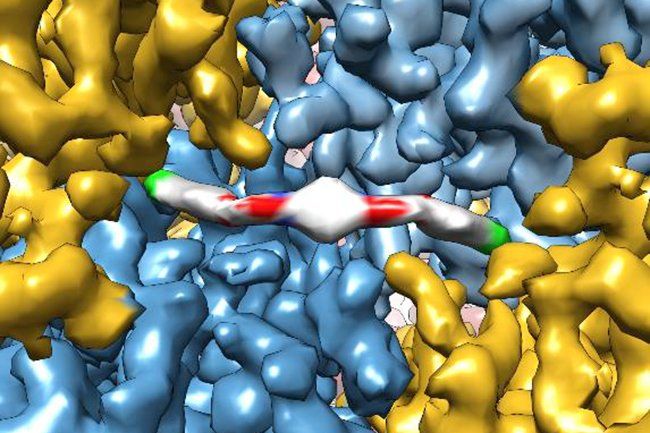
ISRIB Molecule

A cryo-electron microscope rendering of an ISRIB molecule. Credit: Adam Frost lab

“ISRIB’s extremely rapid effects show for the first time that a significant component of age-related cognitive losses may be caused by a kind of reversible physiological “blockage” rather than more permanent degradation,” said Susanna Rosi, PhD, Lewis and Ruth Cozen Chair II and professor in the departments of Neurological Surgery and of Physical Therapy and Rehabilitation Science.

“The data suggest that the aged brain has not permanently lost essential cognitive capacities, as was commonly assumed, but rather that these cognitive resources are still there but have been somehow blocked, trapped by a vicious cycle of cellular stress,” added Peter Walter, PhD, a professor in the UCSF Department of Biochemistry and Biophysics and a Howard Hughes Medical Institute investigator. “Our work with ISRIB demonstrates a way to break that cycle and restore cognitive abilities that had become walled off over time.”

Could Rebooting Cellular Protein Production Hold the Key to Aging and Other Diseases?

Walter has won numerous scientific awards, including the Breakthrough, Lasker and Shaw prizes, for his decades-long studies of cellular stress responses. ISRIB, discovered in 2013 in Walter’s lab, works by rebooting cells’ protein production machinery after it gets throttled by one of these stress responses – a cellular quality control mechanism called the integrated stress response (ISR; ISRIB stands for ISR InhiBitor).
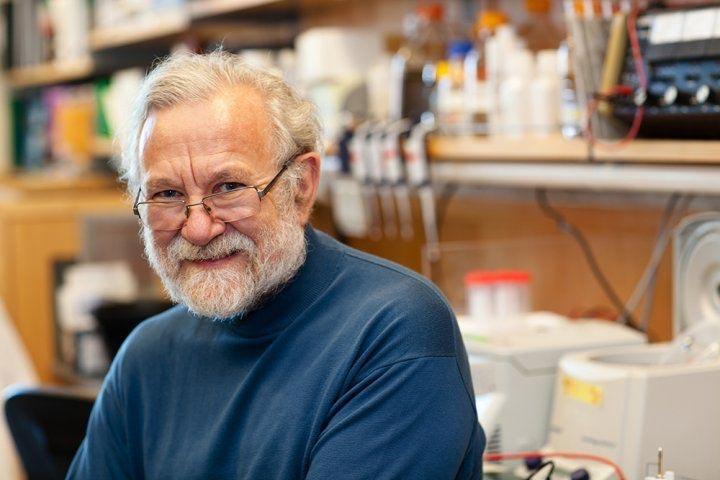
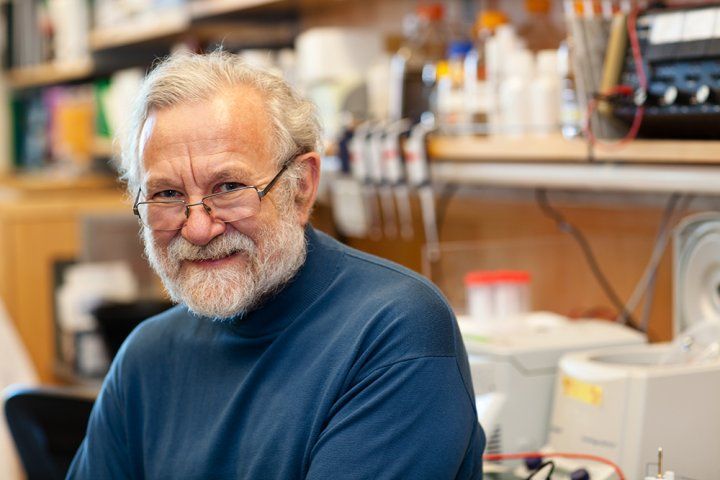
Peter Walter

Peter Walter, PhD. Credit: Elisabeth Fall

The ISR normally detects problems with protein production in a cell — a potential sign of viral infection or cancer-promoting gene mutations — and responds by putting the brakes on cell’s protein-synthesis machinery. This safety mechanism is critical for weeding out misbehaving cells, but if stuck in the on position in a tissue like the brain, it can lead to serious problems, as cells lose the ability to perform their normal activities, Walter and colleagues have found.

In particular, recent animal studies by Walter and Rosi, made possible by early philanthropic support from The Rogers Family Foundation, have implicated chronic ISR activation in the persistent cognitive and behavioral deficits seen in patients after TBI, by showing that, in mice, brief ISRIB treatment can reboot the ISR and restore normal brain function almost overnight.

The cognitive deficits in TBI patients are often likened to premature aging, which led Rosi and Walter to wonder if the ISR could also underlie purely age-related cognitive decline. Aging is well known to compromise cellular protein production across the body, as life’s many insults pile up and stressors like chronic inflammation wear away at cells, potentially leading to widespread activation of the ISR.

“We’ve seen how ISRIB restores cognition in animals with traumatic brain injury, which in many ways is like a sped-up version of age-related cognitive decline,” said Rosi, who is director of neurocognitive research in the UCSF Brain and Spinal Injury Center and a member of the UCSF Weill Institute for Neurosciences. “It may seem like a crazy idea, but asking whether the drug could reverse symptoms of aging itself was just a logical next step.”

Improves Cognition, Boosts Neuron and Immune Cell Function

In the new study, researchers led by Rosi lab postdoc Karen Krukowski, PhD, trained aged animals to escape from a watery maze by finding a hidden platform, a task that is typically hard for older animals to learn. But animals who received small daily doses of ISRIB during the three-day training process were able to accomplish the task as well as youthful mice, much better than animals of the same age who didn’t receive the drug.

The researchers then tested how long this cognitive rejuvenation lasted and whether it could generalize to other cognitive skills. Several weeks after the initial ISRIB treatment, they trained the same mice to find their way out of a maze whose exit changed daily – a test of mental flexibility for aged mice who, like humans, tend to get increasingly stuck in their ways. The mice who had received brief ISRIB treatment three weeks before still performed at youthful levels, while untreated mice continued to struggle.
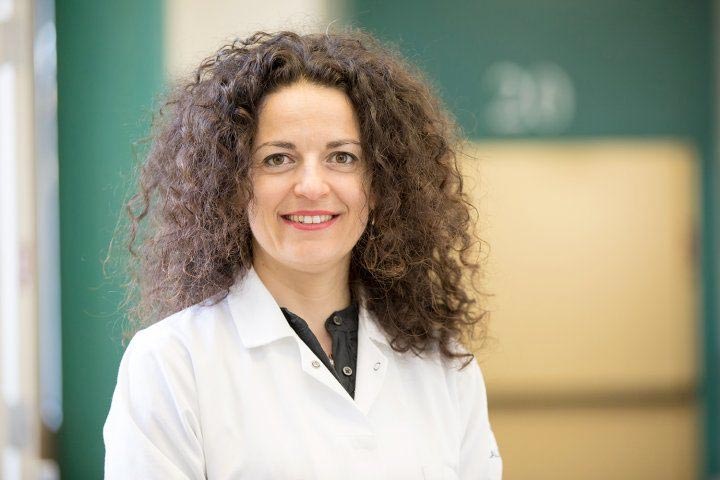
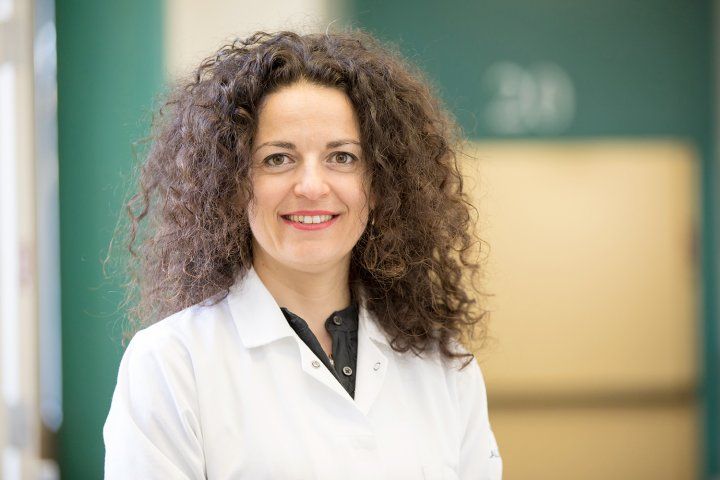
Susanna Rosi

Susanna Rosi, PhD. Credit: Susan Merrell

To understand how ISRIB might be improving brain function, the researchers studied the activity and anatomy of cells in the hippocampus, a brain region with a key role in learning and memory, just one day after giving animals a single dose of ISRIB. They found that common signatures of neuronal aging disappeared literally overnight: neurons’ electrical activity became more sprightly and responsive to stimulation, and cells showed more robust connectivity with cells around them while also showing an ability to form stable connections with one another usually only seen in younger mice.

The researchers are continuing to study exactly how the ISR disrupts cognition in aging and other conditions and to understand how long ISRIB’s cognitive benefits may last. Among other puzzles raised by the new findings is the discovery that ISRIB also alters the function of the immune system’s T cells, which also are prone to age-related dysfunction. The findings suggest another path by which the drug could be improving cognition in aged animals, and could have implications for diseases from Alzheimer’s to diabetes that have been linked to heightened inflammation caused by an aging immune system.

“This was very exciting to me because we know that aging has a profound and persistent effect on T cells and that these changes can affect brain function in the hippocampus,” said Rosi. “At the moment, this is just an interesting observation, but it gives us a very exciting set of biological puzzles to solve.”

Broad Effects Exemplify ‘Serendipity’ of Basic Research

Rosi and Walter were introduced by neuroscientist Regis Kelly, PhD, executive director of the University of California’s QB3 biotech innovation hub, following Walter’s 2013 study showing that the drug seemed to instantly enhance cognitive abilities in healthy mice. To Rosi, the results from that study implied some walled-off cognitive potential in the brain that the molecule was somehow unlocking, and she wondered if this extra cognitive boost might benefit patients with neurological damage from traumatic brain injury.

The labs joined forces to study the question in mice, and were astounded by what they found. ISRIB didn’t just make up for some of the cognitive deficits in mice with traumatic brain injury – it erased them. “This had never been seen before,” Rosi said. “The mantra in the field was that brain damage is permanent – irreversible. How could a single treatment with a small molecule make them disappear overnight?”

Further studies demonstrated that neurons throughout the brains of animals with traumatic brain injury are thoroughly jammed up by the ISR. Using ISRIB to release those brakes lets brain cells immediately get back to their normal business. More recently, studies in animals with very mild repetitive brain injury – akin to pro athletes who experience many mild concussions over many years – showed that ISRIB could reverse increased risk-taking behavior associated with damage to self-control circuits in the frontal cortex.

“Added to this, Karen’s new results in aging mice are just amazing. It’s not often that you find a drug candidate that shows so much potential and promise,” Walter added. “This project also shows the power of the UCSF community – Susanna and I didn’t know each other and were living in different worlds until Regis Kelly brought us together, making this powerful connection that neither of us had realized before.”

“Amazing breakthroughs like this need more than the brilliance and experimental skills of Susanna and Peter,” said Kelly. “They also need donors like the Rogers Family Foundation willing to bridge the gap between great basic research and products that could be highly beneficial to society.”

ISRIB has been licensed by Calico, a South San Francisco, California company exploring the biology of aging, and the idea of targeting the ISR to treat disease has been picked up by many other pharmaceutical companies, Walter says.

One might think that interfering with the ISR, a critical cellular safety mechanism, would be sure to have serious side effects, but so far in all their studies, the researchers have observed none. This is likely due to two factors, Walter says. First, it takes just a few doses of ISRIB to reset unhealthy, chronic ISR activation back to a healthier state, after which it can still respond normally to problems in individual cells. Second, ISRIB has virtually no effect when applied to cells actively employing the ISR in its most powerful form – against an aggressive viral infection, for example.

Naturally, both of these factors make the molecule much less likely to have negative side effects – and more attractive as a potential therapeutic. “It almost seems too good to be true, but with ISRIB we seem to have hit a sweet spot for manipulating the ISR with an ideal therapeutic window,” Walter said.

Reference: “Small molecule cognitive enhancer reverses age-related memory decline in mice” by Karen Krukowski, Amber Nolan, Elma S Frias, Morgane Boone, Gonzalo Ureta, Katherine Grue, Maria-Serena Paladini, Edward Elizarraras, Luz Delgado, Sebastian Bernales, Peter Walter and Susanna Rosi, 1 December 2020, eLife.
DOI: 10.7554/eLife.62048

Authors: Other authors on the study were Amber Nolan, Elma S. Frias, Morgane Boone, Katherine Grue, Maria-Serena Paladini, and Edward Elizarraras of UCSF; and Gonzalo Ureta, Luz Delgado and Sebastian Bernales of Fundación Ciencia & Vida in Santiago, Chile. Bernales is also an employee of Praxis Biotech, LLC.

Funding: The study was supported by continued generous support of the Rogers Family Foundation, as well as the UCSF Weill Innovation Award, the U.S. National Institutes of Health (NIH R01AG056770), National Institute on Aging (NIA F32AG054126); National Center for Advancing Translational Sciences (NCATS TL1 TR001871); ANID Project AFB 170004; National Institute of Neurological Disorders and Stroke (NINDS K08NS114170) and the Howard Hughes Medical Institute (HHMI).

Disclosures: Gonzalo Ureta works at Fundacion Ciencia & Vida and receives partial funding from Praxis Biotech. Sebastian Bernales is an employee of Praxis Biotech. Peter Walter is an inventor on U.S. Patent 9708247 held by the Regents of the University of California that describes ISRIB and its analogs. Rights to the invention have been licensed by UCSF to Calico.

New Drug Reverses Neural and Cognitive Effects of a Concussion

Will this work for stroke? WHOM IS THE STROKE LEADER WE CAN CONTACT TO GET THIS RESEARCH DONE? 

This drug was mentioned here in December 2020 and I bet nothing happened from your doctors, your hospital, your stroke medical 'professionals', your fucking failures of stroke associations. Survivors are screwed until we run everything stroke-related.

Drug Reverses Age-Related Mental Decline Within Days December 2020

The latest here: 

New Drug Reverses Neural and Cognitive Effects of a Concussion

Brain Hurt Head Concussion Pain

The drug was also shown to cause sustained gains in working memory.

UCSF researchers use ISRIB to block the molecular stress response in order to restore cognitive function.

ISRIB, a tiny molecule identified by University of California, San Francisco (UCSF) researchers can repair the neural and cognitive effects of concussion in mice weeks after the damage, according to a new study.

ISRIB blocks the integrated stress response (ISR), a quality control process for protein production that, when activated chronically, can be harmful to cells.

The study, which was recently published in the Proceedings of the National Academy of Sciences, discovered that ISRIB reverses the effects of traumatic brain injury (TBI) on dendritic spines, an area of neurons vital to cognition. The drug-treated mice also showed sustained improvements in working memory.

“Our goal was to see if ISRIB could ameliorate the neural effects of concussion,” said Michael Stryker, Ph.D., a co-senior author of the study and professor of physiology at UCSF. “We were pleased to find the drug was tremendously successful in normalizing neuronal and cognitive function with lasting effects.”

TBI is a leading cause of long-term neurological disability, with patients’ quality of life suffering as a result of difficulties in concentration and memory. It’s also the strongest environmental risk factor for dementia — even a minor concussion boosts an individual’s risk dramatically.

Reversing the Effects of Concussion

ISRIB was created in the lab of co-senior author Peter Walter, Ph.D., who is currently an emeritus professor of biochemistry at Altos Labs and was a biochemistry professor at UCSF at the time of the work. Previous research indicated that the molecule could successfully block the integrated stress response and that it seemed to improve cognition and behavior in a variety of TBI-affected mouse models. However, the cellular mechanisms through which ISR inhibition restored cognition remained unexplained.

To investigate this, UCSF graduate student Elma Frias, Ph.D., began to explore how the ISR and its inhibition affected neurons in the parietal cortex, a brain region involved in working memory.

Using advanced imaging techniques, Frias observed the effects of TBI on dendritic spines, the primary site of excitatory communication between neurons, over the course of multiple days.

In healthy conditions, neurons show a fairly consistent rate of spine formation, maturation, and elimination – dynamics that support learning and memory. But after a single mild concussion, mouse cortical neurons showed a massive burst of newly formed spines and continued to make excessive spines for as long as they were measured.

“Some may find this counterintuitive at first, assuming more dendritic spines would be a good thing for making new memories,” said co-senior author Susanna Rosi, PhD, a professor of physical therapy and neurological surgery at UCSF at the time of the study, now also at Altos Labs. “But in actuality, having all too many new spines is like being in a noisy room – when too many people are talking, you can’t hear the information you need.”

These new spines didn’t stick around for very long, however, and most were removed within days, meaning they hadn’t formed lasting functional synaptic connections.

These aberrant dynamics were rapidly reversed once mice were treated with ISRIB. By blocking the ISR, the drug was able to repair the neuronal structural changes resulting from the brain injury and restore normal rates of spine dynamics. These neuronal structural alterations were also associated with an improvement in performance to normal levels in a behavioral assay of working memory, which persisted for over a month after the final treatment.

“A month in a mouse is several years in a human, so to be able to reverse the effects of concussion in such a lasting way is really exciting,” said Frias.

Restoring the Brain’s Potential to Heal

The authors suggest that TBI triggers a persistent activation of the ISR, which in turn leads to the ongoing proliferation of transient spines that fail to support memory formation. Future experiments will explore whether ISRIB has similar effects on other cell types, brain areas, and cognitive tasks.

ISR activation has been implicated in many neurological disorders, including Alzheimer’s disease, Parkinson’s disease, multiple sclerosis (MS), and amyotrophic lateral sclerosis (ALS). Thus, the researchers believe ISRIB may have therapeutic potential in multiple patient populations.

While there was no evidence of the drug’s toxicity in mice, clinical trials are currently evaluating the safety and effectiveness of ISRIB in humans.

“This study reminds us that the brain is very plastic; it can be rewired and healed,” said Rosi. “By briefly inhibiting this stress pathway, we may be able to restore healthy synaptic and cognitive function in many neurological conditions.”

Reference: “Aberrant cortical spine dynamics after concussive injury are reversed by integrated stress response inhibition” by Elma S. Frias, Mahmood S. Hoseini, Karen Krukowski, Maria Serena Paladini, Katherine Grue, Gonzalo Ureta, Kira D. A. Rienecker, Peter Walter, Michael P. Stryker and Susanna Rosi, 13 October 2022, Proceedings of the National Academy of Sciences.
DOI: 10.1073/pnas.2209427119

The study was funded by the National Institutes of Health, the National Science Foundation, the Roger’s family, and a Weill Innovation Award. 

Peter Walter has a patent application for the invention of ISRIB, and rights to the invention have been licensed by UCSF to Calico. 

Monday, December 14, 2020

Drug Reverses Age-Related Mental Decline Within Days

 Now we just need our stroke doctors and stroke hospitals to contact stroke leadership and get this moved to the first in line for human stroke research. Oh wait, our stroke doctors and hospitals do nothing and we have NO STROKE LEADERSHIP. And since you lost 5 cognitive years from the stroke.

Just maybe you want your doctor to have a protocol to recover that.

Drug Reverses Age-Related Mental Decline Within Days

Rapid Rejuvenation of Mental Faculties in Aged Mice Implicates Reversible Physiological ‘Blockage’ Behind Age-Related Cognitive Losses

By Nicholas Weiler

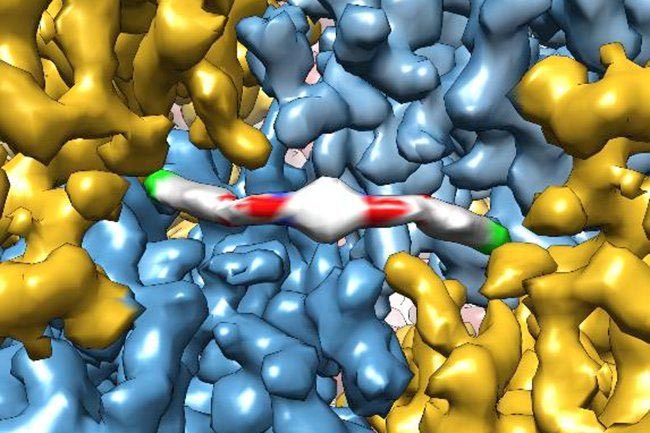
A cryo-electron microscope rendering of an ISRIB molecule. Image by the Adam Frost lab

Just a few doses of an experimental drug can reverse age-related declines in memory and mental flexibility in mice, according to a new study by UC San Francisco scientists. The drug, called ISRIB, has already been shown in laboratory studies to restore memory function months after traumatic brain injury (TBI), reverse cognitive impairments in Down Syndrome, prevent noise-related hearing loss, fight certain types of prostate cancer, and even enhance cognition in healthy animals.

In the new study, published Dec. 1, 2020, in the open-access journal eLife, researchers showed rapid restoration of youthful cognitive abilities in aged mice, accompanied by a rejuvenation of brain and immune cells that could help explain improvements in brain function.

“ISRIB’s extremely rapid effects show for the first time that a significant component of age-related cognitive losses may be caused by a kind of reversible physiological “blockage” rather than more permanent degradation,” said Susanna Rosi, PhD, Lewis and Ruth Cozen Chair II and professor in the departments of Neurological Surgery and of Physical Therapy and Rehabilitation Science.

“The data suggest that the aged brain has not permanently lost essential cognitive capacities, as was commonly assumed, but rather that these cognitive resources are still there but have been somehow blocked, trapped by a vicious cycle of cellular stress,” added Peter Walter, PhD, a professor in the UCSF Department of Biochemistry and Biophysics and a Howard Hughes Medical Institute investigator. “Our work with ISRIB demonstrates a way to break that cycle and restore cognitive abilities that had become walled off over time.”

Could Rebooting Cellular Protein Production Hold the Key to Aging and Other Diseases?

Walter has won numerous scientific awards, including the BreakthroughLasker and Shaw prizes, for his decades-long studies of cellular stress responses. ISRIB, discovered in 2013 in Walter’s lab, works by rebooting cells' protein production machinery after it gets throttled by one of these stress responses – a cellular quality control mechanism called the integrated stress response (ISR; ISRIB stands for ISR InhiBitor).

Peter Walter, PhD. Photo by Elisabeth Fall

The ISR normally detects problems with protein production in a cell — a potential sign of viral infection or cancer-promoting gene mutations — and responds by putting the brakes on cell’s protein-synthesis machinery. This safety mechanism is critical for weeding out misbehaving cells, but if stuck in the on position in a tissue like the brain, it can lead to serious problems, as cells lose the ability to perform their normal activities, Walter and colleagues have found.

In particular, recent animal studies by Walter and Rosi, made possible by early philanthropic support from The Rogers Family Foundation, have implicated chronic ISR activation in the persistent cognitive and behavioral deficits seen in patients after TBI, by showing that, in mice, brief ISRIB treatment can reboot the ISR and restore normal brain function almost overnight.

The cognitive deficits in TBI patients are often likened to premature aging, which led Rosi and Walter to wonder if the ISR could also underlie purely age-related cognitive decline. Aging is well known to compromise cellular protein production across the body, as life’s many insults pile up and stressors like chronic inflammation wear away at cells, potentially leading to widespread activation of the ISR.

“We’ve seen how ISRIB restores cognition in animals with traumatic brain injury, which in many ways is like a sped-up version of age-related cognitive decline,” said Rosi, who is director of neurocognitive research in the UCSF Brain and Spinal Injury Center and a member of the UCSF Weill Institute for Neurosciences. “It may seem like a crazy idea, but asking whether the drug could reverse symptoms of aging itself was just a logical next step.”

Improves Cognition, Boosts Neuron and Immune Cell Function

In the new study, researchers led by Rosi lab postdoc Karen Krukowski, PhD, trained aged animals to escape from a watery maze by finding a hidden platform, a task that is typically hard for older animals to learn. But animals who received small daily doses of ISRIB during the three-day training process were able to accomplish the task as well as youthful mice, much better than animals of the same age who didn’t receive the drug.

The researchers then tested how long this cognitive rejuvenation lasted and whether it could generalize to other cognitive skills. Several weeks after the initial ISRIB treatment, they trained the same mice to find their way out of a maze whose exit changed daily – a test of mental flexibility for aged mice who, like humans, tend to get increasingly stuck in their ways. The mice who had received brief ISRIB treatment three weeks before still performed at youthful levels, while untreated mice continued to struggle.

To understand how ISRIB might be improving brain function, the researchers studied the activity and anatomy of cells in the hippocampus, a brain region with a key role in learning and memory, just one day after giving animals a single dose of ISRIB. They found that common signatures of neuronal aging disappeared literally overnight: neurons' electrical activity became more sprightly and responsive to stimulation, and cells showed more robust connectivity with cells around them while also showing an ability to form stable connections with one another usually only seen in younger mice.

Susanna Rosi, PhD. Photo by Susan Merrell

The researchers are continuing to study exactly how the ISR disrupts cognition in aging and other conditions and to understand how long ISRIB’s cognitive benefits may last. Among other puzzles raised by the new findings is the discovery that ISRIB also alters the function of the immune system’s T cells, which also are prone to age-related dysfunction. The findings suggest another path by which the drug could be improving cognition in aged animals, and could have implications for diseases from Alzheimer’s to diabetes that have been linked to heightened inflammation caused by an aging immune system.

“This was very exciting to me because we know that aging has a profound and persistent effect on T cells and that these changes can affect brain function in the hippocampus,” said Rosi. “At the moment, this is just an interesting observation, but it gives us a very exciting set of biological puzzles to solve.”

Broad Effects Exemplify ‘Serendipity’ of Basic Research

Rosi and Walter were introduced by neuroscientist Regis Kelly, PhD, executive director of the University of California’s QB3 biotech innovation hub, following Walter’s 2013 study showing that the drug seemed to instantly enhance cognitive abilities in healthy mice. To Rosi, the results from that study implied some walled-off cognitive potential in the brain that the molecule was somehow unlocking, and she wondered if this extra cognitive boost might benefit patients with neurological damage from traumatic brain injury.

The labs joined forces to study the question in mice, and were astounded by what they found. ISRIB didn’t just make up for some of the cognitive deficits in mice with traumatic brain injury – it erased them. “This had never been seen before,” Rosi said. “The mantra in the field was that brain damage is permanent – irreversible. How could a single treatment with a small molecule make them disappear overnight?”

Further studies demonstrated that neurons throughout the brains of animals with traumatic brain injury are thoroughly jammed up by the ISR. Using ISRIB to release those brakes lets brain cells immediately get back to their normal business. More recently, studies in animals with very mild repetitive brain injury – akin to pro athletes who experience many mild concussions over many years – showed that ISRIB could reverse increased risk-taking behavior associated with damage to self-control circuits in the frontal cortex.

“Added to this, Karen’s new results in aging mice are just amazing. It’s not often that you find a drug candidate that shows so much potential and promise,” Walter added. “This project also shows the power of the UCSF community – Susanna and I didn’t know each other and were living in different worlds until Regis Kelly brought us together, making this powerful connection that neither of us had realized before.”

“Amazing breakthroughs like this need more than the brilliance and experimental skills of Susanna and Peter,” said Kelly. “They also need donors like the Rogers Family Foundation willing to bridge the gap between great basic research and products that could be highly beneficial to society.”

ISRIB has been licensed by Calico, a South San Francisco, Calif. company exploring the biology of aging, and the idea of targeting the ISR to treat disease has been picked up by many other pharmaceutical companies, Walter says.

One might think that interfering with the ISR, a critical cellular safety mechanism, would be sure to have serious side effects, but so far in all their studies, the researchers have observed none. This is likely due to two factors, Walter says. First, it takes just a few doses of ISRIB to reset unhealthy, chronic ISR activation back to a healthier state, after which it can still respond normally to problems in individual cells. Second, ISRIB has virtually no effect when applied to cells actively employing the ISR in its most powerful form – against an aggressive viral infection, for example.

Naturally, both of these factors make the molecule much less likely to have negative side effects – and more attractive as a potential therapeutic. “It almost seems too good to be true, but with ISRIB we seem to have hit a sweet spot for manipulating the ISR with an ideal therapeutic window,” Walter said.

Authors: Other authors on the study were Amber Nolan, Elma S. Frias, Morgane Boone, Katherine Grue, Maria-Serena Paladini, and Edward Elizarraras of UCSF; and Gonzalo Ureta, Luz Delgado and Sebastian Bernales of Fundación Ciencia & Vida in Santiago, Chile. Bernales is also an employee of Praxis Biotech, LLC.

Funding: The study was supported by continued generous support of the Rogers Family Foundation, as well as the UCSF Weill Innovation Award, the U.S. National Institutes of Health (NIH R01AG056770), National Institute on Aging (NIA F32AG054126); National Center for Advancing Translational Sciences (NCATS TL1 TR001871); ANID Project AFB 170004; National Institute of Neurological Disorders and Stroke (NINDS K08NS114170) and the Howard Hughes Medical Institute (HHMI).

Disclosures: Gonzalo Ureta works at Fundacion Ciencia & Vida and receives partial funding from Praxis Biotech. Sebastian Bernales is an employee of Praxis Biotech. Peter Walter is an inventor on U.S. Patent 9708247 held by the Regents of the University of California that describes ISRIB and its analogs. Rights to the invention have been licensed by UCSF to Calico.

The University of California, San Francisco (UCSF) is exclusively focused on the health sciences and is dedicated to promoting health worldwide through advanced biomedical research, graduate-level education in the life sciences and health professions, and excellence in patient care. It includes UCSF Health, which comprises three top-ranked hospitals, as well as affiliations throughout the Bay Area.