

Changing stroke rehab and research worldwide now.Time is Brain! trillions and trillions of neurons that DIE each day because there are NO effective hyperacute therapies besides tPA(only 12% effective). I have 523 posts on hyperacute therapy, enough for researchers to spend decades proving them out. These are my personal ideas and blog on stroke rehabilitation and stroke research. Do not attempt any of these without checking with your medical provider. Unless you join me in agitating, when you need these therapies they won't be there.

What this blog is for:

My blog is not to help survivors recover, it is to have the 10 million yearly stroke survivors light fires underneath their doctors, stroke hospitals and stroke researchers to get stroke solved. 100% recovery. The stroke medical world is completely failing at that goal, they don't even have it as a goal. Shortly after getting out of the hospital and getting NO information on the process or protocols of stroke rehabilitation and recovery I started searching on the internet and found that no other survivor received useful information. This is an attempt to cover all stroke rehabilitation information that should be readily available to survivors so they can talk with informed knowledge to their medical staff. It lays out what needs to be done to get stroke survivors closer to 100% recovery. It's quite disgusting that this information is not available from every stroke association and doctors group.

Showing posts with label Dietary Supplement Health and Education Act. Show all posts

Monday, August 25, 2025

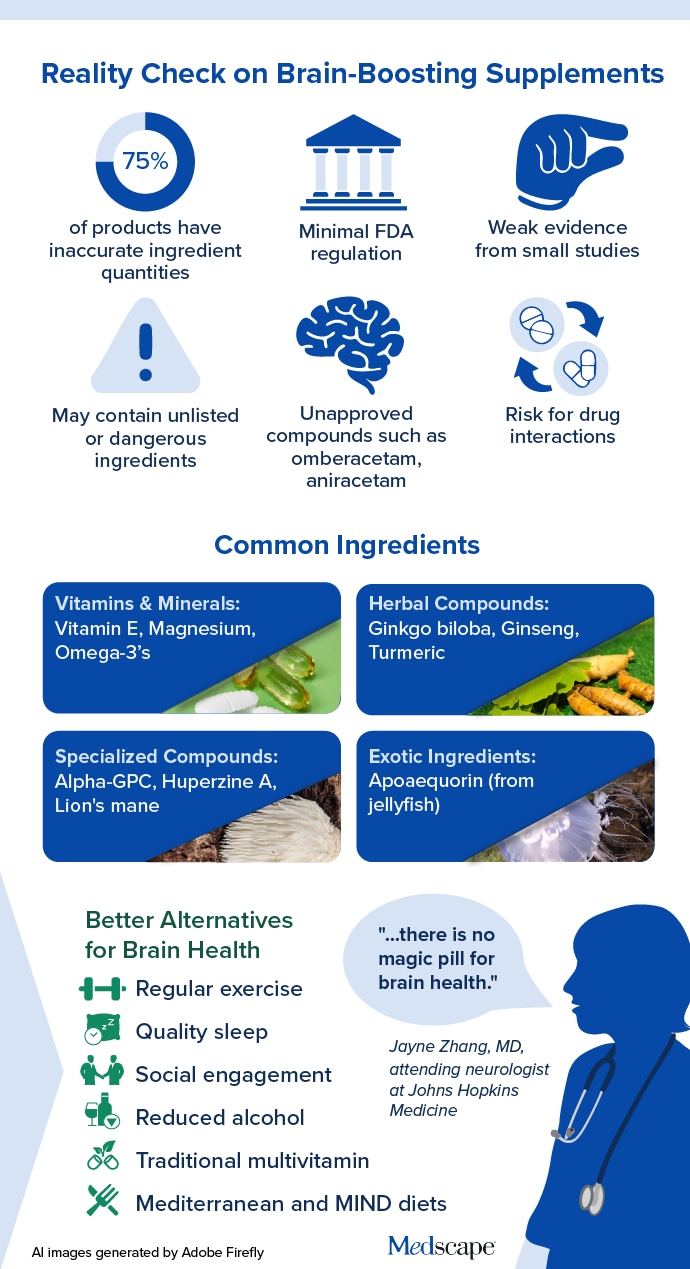
Reality Check on Brain-Boosting Supplements

 If our fuckingly stupid federal legislators hadn't passed the Dietary Supplement Health and Education Act of 1994 (DSHEA): (DSHEA) defined dietary supplements as a category of food, which put them under different regulations than drugs. They are considered safe until proven otherwise. But zero guarantee of what is in the supplements. Caveat Emptor.

Reality Check on Brain-Boosting Supplements


infographic

Thursday, August 7, 2025

Brain-Boosting Supplements: All Hype or Some Hope?


The supplements in the US have zero guarantee of purity or efficacy due to the fucking stupidity of the US Congress passing the Dietary Supplement Health and Education Act of 1994 (DSHEA).

This note from Feb. 24 just proves that stupidity. 

Prescription galantamine drugs were labeled accurately, but dietary supplements were not.

Brain-Boosting Supplements: All Hype or Some Hope?

Media consumers are bombarded daily with aggressive, testimonial-driven ads for pricey supplements purported to sharpen memory, focus, and working brain function.

Some even claim to stop or slow the development of dementia.

Patients, especially older adults, may express interest in these supplements during clinic visits.

Most claim to be “clinically tested.” However, since the FDA exercises only limited regulatory control over these products, they are not held to the same purity, safety, and efficacy standards as are FDA-approved drugs.

“Manufacturers have a lot of leeway to market them as they want,” said Pieter Cohen, MD, director of the Supplement Research Program at the Cambridge Health Alliance in Somerville, Massachusetts, and an associate professor of medicine at Harvard Medical School in Boston. “That’s not to say they haven’t been studied — there might be small studies posted online done in, say, 100 people in another country, for example.”

photo of Pieter Cohn MD
Pieter Cohen, MD

Cohen, therefore, does not generally recommend that his patients take them to improve brain health, “although I do recommend supplements to patients who need them to treat medical conditions,” he told Medscape Medical News.

Many contain dubious or unlisted ingredients, he noted. In a 2021 study of over-the-counter (OTC) cognitive enhancement supplements, Cohen and colleagues identified unapproved drugs (omberacetam, aniracetam, phenibut, vinpocetine, and picamilon) — as well as compounds not listed on the label and with unknown health effects. For those products with ingredient quantities provided on the labels, 75% of declared quantities were inaccurate. 

These OTC brain enhancers may feature, alone or in combination, nonpharmaceutical ingredients such as vitamins (including vitamin E), minerals like magnesium, omega-3 fatty acids, turmeric, and herbal compounds like ginseng, Ginkgo biloba, and coffee fruit extract. Some feature alleged boosters of brain performance that are less familiar, including alpha-GPC (L-alpha-glycerylphosphorylcholine), huperzine A, the Chinese mushroom lion’s mane, L-carnitine, and the Ayurvedic medicine compound Bacopa monnieri.

Some ingredients are more exotic. The memory enhancer Prevagen, for example, contains apoaequorin, a lab-made version of a protein found in the bioluminescent jellyfish Aequorea victoria.

In 2024, the Federal Trade Commission and a federal district court in New York State ordered Prevagen’s makers to stop their claims on the grounds they lacked reliable evidence.

photo of Jayne Zhang MD
Jayne Zhang, MD

The brain health supplements all have one thing in common, noted Jayne Zhang, MD, an attending neurologist specializing in cerebrovascular disease at Johns Hopkins School of Medicine in Baltimore — uncertain evidence of claimed efficacy.

“There is some modest support for a benefit from these products in people who already have nutritional deficiencies or mental degeneration, but there’s not a lot of strong evidence from rigorous trials,” she told Medscape Medical News.

Tuesday, April 2, 2024

5 Dead and Over 100 Hospitalized From Recalled Japanese Health Supplements

This could easily happen in the United States due to the completely unregulated nature of supplements here.

The supplements in the US have zero guarantee of purity or efficacy due to the fucking stupidity of the US Congress passing the Dietary Supplement Health and Education Act of 1994 (DSHEA).

This note from Feb. 24 just proves that stupidity. 

Prescription galantamine drugs were labeled accurately, but dietary supplements were not.


5 Dead and Over 100 Hospitalized From Recalled Japanese Health Supplements

The government's health ministry warned the number of deaths could keep growing

A photo of Akihiro Kobayashi, president of Kobayashi Pharmaceutical
(Yohei Fukuyama/Kyodo News via AP)

TOKYO (AP) -- Five people who took a Japanese health supplement have died and more than 100 have been hospitalized as of Friday, a week after a pharmaceutical company issued a recall of the products, officials said.

Osaka-based Kobayashi Pharmaceutical Co. came under fire for not going public quickly with problems known internally as early as January. The first public announcement came March 22.

Earlier in the week, the number of deaths stood at two people. Company officials updated the number of dead to five Friday, and said 114 people were being treated in hospitals after taking products -- including Benikoji Choleste Help meant to lower cholesterol -- that contain an ingredient called benikoji, a red species of mold.

Some people developed kidney problems after taking the supplements, but the exact cause was still under investigation in cooperation with government laboratories, according to the manufacturer.

"We apologize deeply," President Akihiro Kobayashi told reporters Friday, bowing for a long time to emphasize the apology alongside three other top company officials.

He expressed remorse to those who have died and have been sickened, and to their families. He also apologized for the troubles caused to the entire health food industry and the medical profession, adding that the company was working to prevent further damage and improve crisis management.

The company's products have been recalled -- as have dozens of other products that contain benikoji, including miso paste, crackers, and a vinegar dressing. Japan's health ministry put up a list on its official site of all the recalled products, including some that use benikoji for food coloring.

The ministry warned the deaths could keep growing. The supplements could be bought at drug stores without a prescription from a doctor, and some may have been purchased or exported before the recall, including by tourists who may not be aware of the health risks.

Kobayashi Pharmaceutical had been selling benikoji products for years, with a million packages sold over the past 3 fiscal years, but a problem crept up with the supplements produced in 2023. Kobayashi Pharmaceutical said it produced 18.5 tons of benikoji last year.

Some analysts blame the recent deregulation initiatives, which simplified and sped up approval for health products to spur economic growth.

Saturday, February 24, 2024

Alzheimer's Supplements Fail Compared With Generic Drugs


 Well! You're on your own with supplements, better start your own testing lab.

The supplements in the US have zero guarantee of purity or efficacy due to the fucking stupidity of the US Congress passing the Dietary Supplement Health and Education Act of 1994 (DSHEA).

Alzheimer's Supplements Fail Compared With Generic Drugs

Prescription galantamine drugs were labeled accurately, but dietary supplements were not

A photo of bottles of galantamine supplement capsules.

Galantamine sold as prescription generic drugs was labeled accurately and free of contamination, but galantamine sold as dietary supplements was not, an analysis showed.

Across 10 brands of dietary supplements, the actual quantity of galantamine -- a plant alkaloid with anticholinergic effects used to treat Alzheimer's dementia -- was anywhere from 2% to 110% of the labeled quantity, reported Pieter Cohen, MD, of Cambridge Health Alliance in Massachusetts, and colleagues in a JAMA research letter.

In contrast, the amount of galantamine in 11 brands of generic drugs ranged from 97.5% to 104.2% of the labeled content.

Moreover, three of the over-the-counter dietary supplements were contaminated with Bacillus cereus sensu stricto, which may suggest a lack of appropriate quality control during manufacturing, the researchers noted.

"What we found was a striking difference between the products," Cohen noted in an email to MedPage Today.

"Generic galantamine aced the tests. The amount of galantamine listed on the label accurately represented the amount of galantamine in the pills and, importantly, no bacterial contamination was found," he said.

"The galantamine dietary supplements, on the other hand, almost universally failed our tests: 90%, or 9 out of the 10 brands, had an inaccurate amount of galantamine on the label and, disturbingly, 30%, 3 out of 10 brands, were also contaminated with bacteria that could, if consumed at higher levels, cause diarrheal illnesses."

Galantamine is derived from botanical sources including narcissus and snowdrops. Prescription galantamine (Razadyne) was approved in 2001 and several generic brands are now sold. The cholinesterase inhibitor is indicated for mild to moderate dementia in Alzheimer's and has been shown to decrease the risk of severe dementia.

Galantamine appears to be ineffective in treating mild cognitive impairment or preventing dementia, but the supplement is marketed for a variety of cognitive conditions.

"When sold as a dietary supplement, manufacturers claim galantamine can improve memory, initiate lucid dreams, and improve 'cognitive acuity,' but what's actually in those bottles of galantamine and how that compares to prescription galantamine is not known," Cohen said.

In June 2023, Cohen and co-authors purchased all dietary supplements available on Amazon that were labeled with galantamine as an ingredient and carried a supplement facts panel (to ensure the product was marketed as a dietary supplement). The supplements were bought online in the U.S.

In September 2023, they purchased all generic immediate-release formulations of galantamine available in the U.S. Generic drugs were labeled as containing 4, 8, and 12 mg of galantamine per tablet or capsule.

The contents of all products were reconstituted in water and analyzed for the presence of galantamine. The researchers also assessed the products for possible contamination with microorganisms.

Overall, 100% of the generic drugs and only one supplement (10%) contained a quantity of galantamine that was within 10% of the quantity declared on the label.

Clinicians should query patients with memory concerns about their use of dietary supplements and advise patients not to use galantamine supplements, Cohen and colleagues said.

"For patients with Alzheimer's disease, use of galantamine supplements instead of generic galantamine may adversely affect their care," they pointed out.

"Furthermore, the sale of inaccurately labeled galantamine supplements promoted for nonspecific memory and other cognitive problems is concerning given the lack of proven efficacy, potential drug-drug interactions, and adverse effects, including nausea, vomiting, dizziness, bradycardia, and syncope," they added.

The study has several limitations, the researchers acknowledged. Galantamine supplements were purchased at one time point only and findings might not apply to products available at other times. Whether results are generalizable to other substances like niacin, potassium, or iron that also are available as either supplements or drugs isn't known, they added.

"Our study raises a troubling question: Are the laws regulating dietary supplements in the U.S. adequate to ensure the quality of the many active drugs sold directly to U.S. consumers as supplements?" Cohen asked. "We think not."

  • Judy George covers neurology and neuroscience news for MedPage Today, writing about brain aging, Alzheimer’s, dementia, MS, rare diseases, epilepsy, autism, headache, stroke, Parkinson’s, ALS, concussion, CTE, sleep, pain, and more. Follow

Disclosures

Cohen reported receiving grants from Consumers Union and PEW Charitable Trust and personal fees from UpToDate and the CDC outside the submitted work.

Co-authors had no disclosures to report.

Primary Source

JAMA

Source Reference: Cohen PA, et al "Accuracy of labeling of galantamine generic drugs and dietary supplements" JAMA 2024; DOI: 10.1001/jama.2024.0328.

Tuesday, July 18, 2023

Presence and Quantity of Botanical Ingredients With Purported Performance-Enhancing Properties in Sports Supplements

 Well! You're on your own with supplements, better start your own testing lab.

The supplements in the US have zero guarantee of purity or efficacy due to the fucking stupidity of the US Congress passing the Dietary Supplement Health and Education Act of 1994 (DSHEA).

Presence and Quantity of Botanical Ingredients With Purported Performance-Enhancing Properties in Sports Supplements

JAMA Netw Open. 2023;6(7):e2323879. doi:10.1001/jamanetworkopen.2023.23879
Introduction

Since the US Food and Drug Administration (FDA) banned ephedra from dietary supplements in 2004, supplement manufacturers have promoted a complex variety of alternative botanical compounds for sports enhancement. Extracts of Rauwolfia vomitoria containing α-yohimbine, the caffeine-like compound methylliberine, the partial β2-agonist halostachine, the plant steroid turkesterone, and norepinephrine-like octopamine are all found in plants and are promoted in dietary supplements for their stimulant or anabolic effects.1-3

The FDA does not preapprove these ingredients, or any supplement ingredient, for either efficacy or safety before their introduction, but FDA inspections have found that supplement manufacturers often fail to comply with basic manufacturing standards, such as establishing the identity, purity, or composition of the final product. Given the products’ potentially complex physiologic effects and concerns regarding manufacturing quality, we determined the accuracy of dietary supplement labels declaring R vomitoria, methylliberine, halostachine, octopamine, and turkesterone.

Methods

Dietary supplement products were included in this case series if they were labeled as containing 1 of the following ingredients: R vomitoria, methylliberine, turkesterone, halostachine, or octopamine. All products were purchased online, and products were excluded if the actual label did not list 1 of the 5 ingredients. Powder from the dietary supplement products was reconstituted in methanol and analyzed for the presence and quantity of the 5 ingredients and FDA-prohibited ingredients by liquid chromatography quadrupole time-of-flight mass spectrometry. See the eAppendix in Supplement 1 for additional details.

Results

Of the 63 products purchased, 6 did not list 1 of the 5 ingredients on the label; therefore, 57 products were analyzed (13 listing R vomitoria; 21, methylliberine; 8, turkesterone; 7, halostachine; and 8, octopamine). Twenty-three of 57 products (40%) did not contain a detectable amount of the labeled ingredient. Of the products that contained detectable amounts of the listed ingredient, the actual quantity ranged from 0.02% to 334% of the labeled quantity (Table). Six of 57 products (11%) contained a quantity of the ingredient within 10% of the labeled quantity.

Seven of 57 products (12%) were found to contain at least 1 FDA-prohibited ingredient (Table). Five different FDA-prohibited compounds were found, including 4 synthetic simulants, 1,4-dimethylamylamine, deterenol, octodrine, oxilofrine, and omberacetam. Six products contained 1 of these prohibited ingredients, and 1 product contained 4 different prohibited ingredients.

Discussion

Eighty-nine percent of dietary supplement labels did not accurately declare the ingredients found in the products, and 12% of products contained FDA-prohibited ingredients. A prior study4 of dietary supplements, before the FDA ephedra ban, found that 6 of 12 products (50%) contained ephedra within 10% of the labeled amount. In a more recent study5 of caffeine content of sports supplements, 9 of 20 products (45%) contained a quantity of caffeine within 10% of the labeled quantity. In the current study, which to our knowledge is the first to quantify these 5 supplement ingredients, only 11% of products were accurately labeled and 5 different FDA-prohibited ingredients were found, including an unapproved drug available in Russia (ie, omberacetam), 3 drugs formerly available in Europe (ie, octodrine, oxilofrine, and deterenol), and 1 drug that has never been approved in any country (ie, 1,4-dimethylamylamine).6

The study has limitations, including that the sample size was small, only 1 sample of each brand was analyzed, and only supplements containing 1 of 5 targeted ingredients were analyzed. It is not known whether the results are generalizable to other botanical ingredients in sports supplements or whether quantities might also vary among batches within a given brand. Given these findings, clinicians should advise consumers that supplements listing botanical ingredients with purported stimulant or anabolic effects may not be accurately labeled and may contain FDA-prohibited drugs.

Back to top
Article Information

Accepted for Publication: May 21, 2023.

Published: July 17, 2023. doi:10.1001/jamanetworkopen.2023.23879

Open Access: This is an open access article distributed under the terms of the CC-BY License. © 2023 Cohen PA et al. JAMA Network Open.

Corresponding Author: Pieter A. Cohen, MD, Department of Medicine, Cambridge Health Alliance, 300 Broadway, Somerville, MA 02143 (pcohen@challiance.org).

Author Contributions: Drs Cohen and Avula had full access to all of the data in the study and take responsibility for the integrity of the data and the accuracy of the data analysis.

Thursday, September 22, 2022

Study finds potential link between daily multivitamin and improved cognition in older adults

 Ask your doctor if the upside potential outweighs the downsides. Don't do anything with this until your doctor informs you of their analysis. Of course you have no clue what is in the vitamins you take.

The supplements in the US have zero guarantee of purity or efficacy due to the fucking stupidity of the US Congress passing the Dietary Supplement Health and Education Act of 1994 (DSHEA).

Study finds potential link between daily multivitamin and improved cognition in older adults

(CNN)Taking a daily multivitamin might be associated with improved brain function in older adults, a new study says, and the benefit appears to be greater for those with a history of cardiovascular disease.

The findings did not surprise the researchers -- rather, they were shocked, said Laura Baker, an author of the study and professor of gerontology and geriatric medicine at Wake Forest University in North Carolina.
"I have to use the word 'shocked,' " Baker said.
The researchers -- from the Wake Forest University School of Medicine, in collaboration with Brigham and Women's Hospital in Boston -- analyzed cognitive function in older adults who were assigned to take either a cocoa extract supplement containing flavonoids, a multivitamin or a placebo every day for three years. No one, not even the researchers, knew who was assigned to which daily routine until the results were revealed.
What to eat for a sharper mind
What to eat for a sharper mind 00:58
"We really believed that the cocoa extract was going to have some benefits for cognition based on prior reports of cardiovascular benefit. So we're waiting for that big reveal in our data analysis -- and it was not cocoa extract that benefited cognition but rather the multivitamin," Baker said. "We are excited because our findings have uncovered a new avenue for investigation -- for a simple, accessible, safe, inexpensive intervention that could have the potential to provide a layer of protection against cognitive decline."
But she added that she and her team are not ready to recommend that older adults immediately add a daily multivitamin to their routine based on these results alone.
The findings, published Wednesday in Alzheimer's & Dementia: The Journal of the Alzheimer's Association, are not definitive and cannot be generalized to the public. More research is needed to confirm them.
"It's too soon to make these recommendations," Baker said. "I feel like we need to do this in one other study."

Finding connections in brain health

The new study included 2,262 people, 65 and older, who were enrolled between August 2016 and August 2017 and followed for three years. The participants completed tests over the phone annually to evaluate their cognitive function. They were scored on recalling stories, showing verbal fluency and ordering digits, among other tests.
The researchers analyzed function, based on test scores, among those who took cocoa extract daily compared with a placebo, and among those who took the daily multivitamin compared with a placebo.
The researchers found that three years of taking the multivitamin appeared to have slowed cognitive aging by 1.8 years, or 60%, compared with the placebo. Daily cocoa extract supplementation for three years did not affect cognitive function, the researchers wrote.
The study -- supported by the National Institute on Aging of the National Institutes of Health -- also found that multivitamins were most beneficial for older adults who had a history of cardiovascular disease.
"It's well-known that those with cardiovascular risk factors could have lower levels in their blood of vitamins and minerals. So supplementing those vitamins and minerals could improve cardiovascular health and, by virtue of that, improve cognitive health -- and we know that there's a strong connection between cardiovascular health and brain health," said Dr. Keith Vossel, a professor of neurology and director of the Mary S. Easton Center for Alzheimer's Research and Care at the University of California, Los Angeles.
Thanks to that connection between cardiovascular and brain health, taking steps to prevent cardiovascular disease or other chronic diseases -- such as maintaining a healthy diet and exercise -- can benefit the brain too, said Vossel, who was not involved in the new study.
"If we can really eliminate or really prevent chronic diseases, we could prevent dementias," he said. "Roughly up to 40% of dementia could be prevented with just better preventative measures throughout life's span."
The specific factors driving this link between a multivitamin and cognitive function are unclear and require more research, but Baker and her team think the findings might be connected to the way multivitamins can benefit people who might be lacking in micronutrients such as vitamin C, vitamin E, magnesium or zinc.
"With aging, the situation can get worse. A lot of our older adults do not have adequate nutrition for a number of reasons," Baker said.
"As we get older, we are more likely to have medical conditions that can compromise micronutrient sufficiency," she said. "The medications that we take for these conditions can also affect micronutrient sufficiency by interfering with the body's ability to absorb these essential nutrients from the diet."

'We've been down this road a little before'

Other studies have had mixed results in the association between certain vitamins and supplements and dementia risk, Vossel warned.
How safe are supplements?
How safe are supplements? 02:58
"We've been down this road a little before with vitamins and dementia research. For many years, dementia specialists were recommending vitamin E based on some early promising results with vitamin E and cognition, and especially those with Alzheimer's disease. But then, the results have been mixed since then," Vossel said.
Older adults should talk to their primary care physician before starting a vitamin or supplement routine, he added.
"Supplementing is usually safe, but it needs to be monitored carefully, especially for those who have memory loss, because overdosing with vitamins can be very dangerous," Vossel said. "Even with vitamin E overdosing or taking high levels of vitamin E can increase the risk of bleeding. So these are just some considerations."
Get CNN Health's weekly newsletter


Overall, the new study's findings are encouraging, said Heather Snyder, vice president of medical and scientific relations at the Alzheimer's Association.
"There's certainly follow-up work that we need to see happen -- particularly independent confirmation in studies that are in larger and more diverse populations -- but this is encouraging," she said. "There is more research that needs to be done to understand what it might be in the multivitamin that may have a benefit."

Sunday, March 15, 2020

Habitual fish oil supplementation lowers risk for mortality, CV events

Your doctor has a lot of research and explaining to do.

The supplements in the US have zero guarantee of purity or efficacy due to the fucking stupidity of the US Congress passing the Dietary Supplement Health and Education Act of 1994 (DSHEA).

But this:

Fish oils do not prevent heart attack or strokes in people with diabetes

August 2018

And this:

Study: Fish Oil Supplements May Not Combat Stroke

March 2018 

And this:

Long-term consumption of sunflower and fish oils damages the liver

January 2018

And this:

Omega-3 Fatty Acid Supplementation and Warfarin: A Lethal Combination in Traumatic Brain Injury

January 2017

The latest here:

Habitual fish oil supplementation lowers risk for mortality, CV events

Adults who regularly took a fish oil supplement experienced lower risk for all-cause and CVD mortality as well as a moderate reduction in CV events, especially in those with hypertension, according to findings published in The BMJ.
Among 133,438 participants (mean age, 56 years; 55% women; 92% white) who habitually took fish oil supplements, researchers observed a 13% lower risk for all-cause mortality (adjusted HR = 0.87; 95% CI, 0.83-0.9), a 16% lower risk for CVD mortality (aHR = 0.84; 95% CI, 0.78-0.91) and a 7% lower risk for CV events among the general population (aHR = 0.93; 95% CI, 0.9-0.96).
In addition, the protective effects of fish oil on CV events was stronger in participants with hypertension (P for interaction = .005).
“Fish oil is a rich source of long-chain omega-3 fatty acids, a group of polyunsaturated fats that primarily include eicosapentaenoic acid and docosahexaenoic acid,” Zhi-Hao Li, PhD, of the department of epidemiology in the School of Public Health at Southern Medical University, Guangdong, China, and colleagues wrote. “Initially, these compounds were recommended for daily omega-3 fatty acid supplementation for the prevention of CVD. Consequently, the use of fish oil supplements is widespread in the United Kingdom and other developed countries.”
#
Mortality and CV event reductions due to regular fish oil intake.
According to a subgroup analysis, the protective effects of habitual fish oil supplementation on all-cause mortality were stronger in men (P for interaction = .01) and current smokers (P for interaction = .009).
For this population-based, prospective cohort study, researchers used data from the UK Biobank of patients aged 40 to 69 years with no CVD or cancer at baseline to analyze the effect of regular fish oil supplementation on all-cause mortality, CVD mortality and CV events.
“These findings indicate that habitual fish oil supplementation could have a marginal benefit for CVD outcomes, but further studies are needed to examine how the dose of fish oil supplements affects its clinically meaningful effectiveness,” the researchers wrote. – by Scott Buzby
Disclosures: The authors report no relevant financial disclosures.

Wednesday, May 30, 2018

Most popular vitamin and mineral supplements provide no health benefit, study finds

But did the supplements even contain what they said they contain? Bad research.

Herbal and dietary supplements often mislabeled October 2017

 What do you expect when the fucking stupidity of the US Congress passes the Dietary Supplement Health and Education Act of 1994 (DSHEA): (DSHEA) defined dietary supplements as a category of food, which put them under different regulations than drugs.
The solution to this is simple;
1. Determine the circulating micronutrient level in the blood that has a specific effect.
2. Determine the dosage per body weight and sex.
3. Rerun the tests that prove health benefits.
Nothing will occur because your doctor and stroke hospital never followup any research. 

Most popular vitamin and mineral supplements provide no health benefit, study finds

Toronto, May 29, 2018
By Ana Gajic


The most commonly consumed vitamin and mineral supplements provide no consistent health benefit or harm, suggests a new study led by researchers at St. Michael's Hospital and the University of Toronto.
Published today in the Journal of the American College of Cardiology, the systematic review of existing data and single randomized control trials published in English from January 2012 to October 2017 found that multivitamins, vitamin D, calcium and vitamin C - the most common supplements - showed no advantage or added risk in the prevention of cardiovascular disease, heart attack, stroke or premature death. Generally, vitamin and mineral supplements are taken to add to nutrients that are found in food.
“We were surprised to find so few positive effects of the most common supplements that people consume,” said Dr. David Jenkins*, the study's lead author. “Our review found that if you want to use multivitamins, vitamin D, calcium or vitamin C, it does no harm – but there is no apparent advantage either.”
The study found folic acid alone and B-vitamins with folic acid may reduce cardiovascular disease and stroke. Meanwhile, niacin and antioxidants showed a very small effect that might signify an increased risk of death from any cause.
“These findings suggest that people should be conscious of the supplements they’re taking and ensure they’re applicable to the specific vitamin or mineral deficiencies they have been advised of by their healthcare provider,” Dr. Jenkins said.
His team reviewed supplement data that included A, B1, B2, B3 (niacin), B6, B9 (folic acid), C, D and E; and β-carotene; calcium; iron; zinc; magnesium; and selenium. The term ‘multivitamin’ in this review was used to describe supplements that include most vitamins and minerals, rather than a select few.
“In the absence of significant positive data – apart from folic acid’s potential reduction in the risk of stroke and heart disease – it’s most beneficial to rely on a healthy diet to get your fill of vitamins and minerals,” Dr. Jenkins said. “So far, no research on supplements has shown us anything better than healthy servings of less processed plant foods including vegetables, fruits and nuts.”

*David Jenkins is Director of the Clinical Nutrition and Risk Factor Modification Centre, scientist at the Li Ka Shing Knowledge Institute of St. Michael's Hospital and university professor in the Department of Nutrition Sciences and Medicine at the University of Toronto.
This study was funded by the Canada Research Chair Endorsement, Loblaw Cos. Ltd., and the Canadian Institutes for Health Research (CIHR).


This paper is an example of how St. Michael's Hospital is making Ontario Healthier, Wealthier, Smarter.

About St. Michael's Hospital

St. Michael’s Hospital provides compassionate care to all who enter its doors. The hospital also provides outstanding medical education to future health care professionals in more than 29 academic disciplines. Critical care and trauma, heart disease, neurosurgery, diabetes, cancer care, care of the homeless and global health are among the Hospital’s recognized areas of expertise. Through the Keenan Research Centre and the Li Ka Shing International Healthcare Education Centre, which make up the Li Ka Shing Knowledge Institute, research and education at St. Michael’s Hospital are recognized and make an impact around the world. Founded in 1892, the hospital is fully affiliated with the University of Toronto.

Wednesday, October 25, 2017

Herbal and dietary supplements often mislabeled

What do you expect when the fucking stupidity of the US Congress passes the Dietary Supplement Health and Education Act of 1994 (DSHEA): (DSHEA) defined dietary supplements as a category of food, which put them under different regulations than drugs. They are considered safe until proven otherwise. Companies and profits are more important than consumers. 
https://www.mdlinx.com/family-medicine/top-medical-news/article/2017/10/25/7478530?

Reuters Health News
Product information on labels of most herbal and dietary supplements are inaccurate, according to research presented at The Liver Meeting, held by the American Association for the Study of Liver Diseases.
Products used for body building and weight loss are most apt to be mislabeled, Dr. Victor Navarro from Einstein Healthcare Network in Philadelphia, and his colleagues found.
They did a chemical analysis of 203 herbal and dietary supplements (HDS) and compared the results to ingredients listed on the product labels.
Fewer than half of the products (90 of 203, 44%) had labels that accurately reflected their contents.
Based on the composition of the product, mislabeling occurred in 80% of products made principally of steroidal ingredients, 54% of those made principally of vitamin ingredients, and 48% of those made largely of botanical ingredients, the researchers say.
Products intended for bodybuilding, weight loss, energy boosters, and general health/well-being had mislabeling rates of 79%, 72%, 60%, and 51%, respectively.
Similar mislabeling rates were found in the 166 HDS products judged to be responsible for liver injury by investigators with the Drug Induced Liver Injury Network (DILIN).
“What is novel in terms of actually testing products, is the extent of the mislabeling of over-the-counter supplements, which translates into significant health risks for consumers taking them,” Samantha Heller, registered dietitian and senior clinical nutritionist, NYU Langone Health, told Reuters Health by email.
“There are a high number of cases of liver injury due to dietary supplements that include hepatotoxicity, acute liver failure and subsequent death or transplantation, as well as nephrotoxicity,” said Heller, who was not involved in the study.
Heller said the message is clear. “Don’t bother taking any dietary supplement that claims to promote fast weight loss, build muscle, detox or cleanse the body, boost brain power, cure disease, or offer other miraculous results. At this time there is no scientific evidence to support any of these claims. Consumers’ money is better spent on a fitness center membership, seeing a registered dietitian for evidence-based nutritional guidance, adopting healthy lifestyle habits, and getting a massage.”
The study had no funding, and the authors have no relevant disclosures.