Use the labels in the right column to find what you want. Or you can go thru them one by one, there are only 34,483 posts. Searching is done in the search box in upper left corner. I blog on anything to do with stroke. DO NOT DO ANYTHING SUGGESTED HERE AS I AM NOT MEDICALLY TRAINED, YOUR DOCTOR IS, LISTEN TO THEM. BUT I BET THEY DON'T KNOW HOW TO GET YOU 100% RECOVERED. I DON'T EITHER BUT HAVE PLENTY OF QUESTIONS FOR YOUR DOCTOR TO ANSWER.
Changing stroke rehab and research worldwide now.Time is Brain!trillions and trillions of neuronsthatDIEeach day because there areNOeffective hyperacute therapies besides tPA(only 12% effective). I have 523 posts on hyperacute therapy, enough for researchers to spend decades proving them out. These are my personal ideas and blog on stroke rehabilitation and stroke research. Do not attempt any of these without checking with your medical provider. Unless you join me in agitating, when you need these therapies they won't be there. Did your doctor somehow miss the recovery protocol that Pedro Bach-y-Rita used to recover fully back in 1958 with only a partial brain?
What this blog is for:
My blog is not to help survivors recover, it is to have the 10 million yearly stroke survivors light fires underneath their doctors, stroke hospitals and stroke researchers to get stroke solved. 100% recovery. The stroke medical world is completely failing at that goal, they don't even have it as a goal. Shortly after getting out of the hospital and getting NO information on the process or protocols of stroke rehabilitation and recovery I started searching on the internet and found that no other survivor received useful information. This is an attempt to cover all stroke rehabilitation information that should be readily available to survivors so they can talk with informed knowledge to their medical staff. It lays out what needs to be done to get stroke survivors closer to 100% recovery. It's quite disgusting that this information is not available from every stroke association and doctors group.
LOPES
researchers hope to get the device into rehabilitation clinics by early
2012, with a mid-2012 target for introduction into the market. Is
it available and does your hospital know about it? Have they been
following this for the past 13 years? Or are they completely incompetent? But then it doesn't seem to work that well.
Participants and companions could learn to operate Eve, a self-balancing exoskeleton recently approved by the FDA, and met key functional and usability end points, including measures of walking performance and activities of daily living.
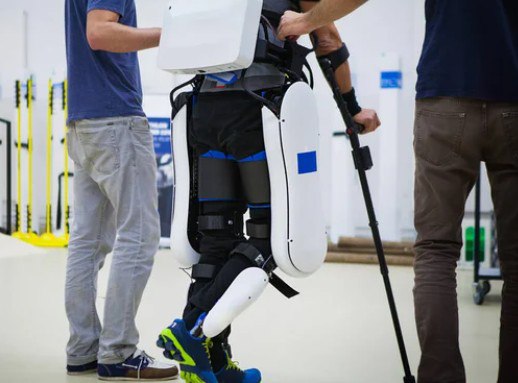
HealthDay News — The U.S. Food and Drug Administration has cleared Eve (Wandercraft), the first self-balancing personal exoskeleton for eligible adult wheelchair users living with spinal cord injury.
Eve enables eligible users, who can operate the device’s remote control, to walk and perform certain activities of daily living hands-free. The device is intended for use on level indoor surfaces and adjacent outdoor areas under the supervision of a specially trained companion.
A trial at three clinical sites showed that participants and companions could learn to operate Eve and met key functional and usability end points, including measures of walking performance and activities of daily living. Participants reported daily life improvements, including health status, psychological well-being, endurance during daily activities, lower-limb spasticity, and sitting balance. Improvements in sleep quality and bladder and bowel function were also reported by some participants.
“What makes these findings meaningful is that the technology was evaluated not only on engineering performance but also on how users and companions could safely integrate it into real-world activities,” Gail Forrest, Ph.D., director of the Tim and Caroline Reynolds Center for Spinal Stimulation at the Kessler Foundation, one of the clinical trial sites, said in a statement.
LOPES
researchers hope to get the device into rehabilitation clinics by early
2012, with a mid-2012 target for introduction into the market. Is
it available and does your hospital know about it? Have they been
following this for the past 13 years? Or are they completely incompetent? But then it doesn't seem to work that well.
Study used lower-limb exoskeletons to facilitate therapist-patient interactions while performing functional tasks
Therapist’s and stroke survivor’s exoskeletons were virtually connected at the hips and knees
Patients reported high levels of motivation and enjoyment from new therapy
EVANSTON, Ill. — Physical therapists have long walked alongside stroke survivors during recovery. Now, they are walking with them.
Scientists at Northwestern University and Shirley Ryan AbilityLab have developed a first-of-its-kind rehabilitation system that virtually connects therapists and patients through robotic exoskeletons. The real-time connection allows therapists to respond to a patient’s movements, continuously adapting support and assistance as the patient’s performance evolves.
Ask your competent? doctor if this has proven better than all these previous exoskeletons! NO knowledge of them; FIRE THAT IDIOT!
No excuses are allowed, your doctor is supposed to know this stuff, and because s/he doesn't YOU
get to be the failure point of not recovering. My doctor knew nothing
of stroke rehab as completely proven by writing three prescriptions to
PT, OT, ST all saying the same thing(E.T- Evaluate and Treat) completely
proving NO knowledge of anything that will hep you recover! I could
train a chimpanzee to write that.
Ask your doctor which of these walking exoskeletons will get you 100% recovered, meaning walking without the exoskeleton.
There are many more exoskeletons out there. Which ones has your hospital tested?
LOPES
researchers hope to get the device into rehabilitation clinics by early
2012, with a mid-2012 target for introduction into the market. Is
it available and does your hospital know about it? Have they been
following this for the past 13 years? Or are they completely incompetent? But then it doesn't seem to work that well.
Researchers at Nazarbayev University have completed development and secured state registration for a medical exoskeleton designed to aid stroke rehabilitation. The device is now ready for clinical use and mass production, according to the university’s press service.
Named the Astana Gait Exoskeleton Assisted Rehabilitation (A.GEAR), the system is intended to help restore motor function in stroke survivors and individuals with musculoskeletal disorders. It received official certification following a positive evaluation from the National Center for Expertise of Medicines and Medical Devices. Nazarbayev University stated that this is one of the few high-tech medical solutions developed domestically that has received full clinical approval.
Cost efficiency is cited as A.GEAR’s main competitive advantage. According to project estimates, the exoskeleton is several times more affordable than foreign alternatives, reducing Kazakhstan’s reliance on imports and increasing accessibility to modern rehabilitation tools.
Professor Prashant Jamwal, the project lead, noted that it took just four years to progress from a lab concept to a certified medical product far shorter than the global average of 10 to 15 years. He added that the system could not only replace imported equipment but also reduce public expenditure on rehabilitation technologies.
The project began in late 2021 at the university’s Medical Robotics Competence Center. Clinical trials took place in Karaganda and Astana, involving stroke patients and adolescents with cerebral palsy. Following the successful trials, the team began negotiations for a long-term contract with SK-Pharmacy LLP and sought a commercial distributor.
Commercialization is being overseen by Robotics and Artificial Intelligence, led by Nazarbayev University graduate Shyngys Dauletbayev. In 2026, the university’s technopark aims to produce at least five exoskeleton units, with plans to scale production for distribution to medical institutions nationwide.
University President Professor Waqar Ahmad highlighted that Nazarbayev University researchers rank among the top 2% of scientists globally, based on a bibliometric analysis by Stanford University.
According to the Ministry of Health of Kazakhstan, approximately 40,000 people in the country suffer strokes annually, underlining a consistent demand for advanced rehabilitation solutions. As previously reported by The Times of Central Asia, Kazakhstan is also expanding the use of artificial intelligence for early diagnosis of strokes and cancer.
Ask your competent? doctor if this has proven better than all these previous exoskeletons! NO knowledge of them; FIRE THAT IDIOT!
No excuses are allowed, your doctor is supposed to know this stuff, and because s/he doesn't YOU get to be the failure point of not recovering. My doctor knew nothing of stroke rehab as completely proven by writing three prescriptions to PT, OT, ST all saying the same thing(E.T- Evaluate and Treat) completely proving NO knowledge of anthing that will hep you recover! I could train a chimpanzee to write that.
Ask your doctor which of these walking exoskeletons will get you 100% recovered, meaning walking without the exoskeleton.
There are many more exoskeletons out there. Which ones has your hospital tested?
LOPES
researchers hope to get the device into rehabilitation clinics by early
2012, with a mid-2012 target for introduction into the market. Is
it available and does your hospital know about it? Have they been
following this for the past 13 years? Or are they completely incompetent? But then it doesn't seem to work that well.
The Baltimore stroke-rehab startup has plans to build upper-extremity devices, too, CEO Bradley Hennessie said.
NextStep Robotics is located at the University of Maryland BioPark campus (Courtesy)This story was made possible through support from TEDCO, the Maryland Technology Development Corporation, which enhances economic empowerment growth through the fostering of an inclusive entrepreneurial innovation ecosystem. TEDCO identifies, invests in, and helps grow technology and life science-based companies in Maryland. Learn more at tedcomd.com.
Startup profile: NextStep Robotics
Founded by:Bradley Hennessie, Richard Macko, Larry Forrester, Anindo Roy
Year founded: 2017
Headquarters: Baltimore, MD
Sector: Biotech
Funding and valuation: $8 million raised at a $10 million valuation, according to the company
Key ecosystem partners: TEDCO, Abell Foundation, University of Maryland, Baltimore
A Baltimore startup could help stroke survivors improve how they move, even months after rehab ends.
NextStep Robotics’ AMBLE device targets foot drop, a condition that limits someone’s ability to lift the front of the foot while walking. The assistive tech is gathering another FDA authorization, with affordability front of mind, according to CEO Bradley Hennessie.
“Our clinical trial results show that it has much more benefit than just being helpful during exercise.”
Most rehabilitation happens in lower-budget clinics rather than resource-rich institutions, Hennessie said. AMBLE charges clinics a subscription fee for the device and software package, instead of an upfront fee, but costs can vary, Hennessie said.
The device is worn on the knee, paired with a sensor on the shoe that tracks a patient’s steps in real time. It helps lift the foot with robotic assistance, adjusting as the patient gets stronger.
AMBLE is currently FDA-cleared as an exercise device, which allows NextStep to sell it to clinics for use during gait therapy. But Hennessie said he hopes the next level of FDA clearance, called a De Novo submission, will expand its use.
The team completed its three-year, National Institutes of Health–funded clinical trials in 2024, after the onset of the COVID-19 pandemic delayed the study’s start. Conducted at the University of Maryland, Baltimore, the trials found that patients continued to improve in key walking measures for months after training ended, including follow-ups more than a year later.
Potential for spine, arm assistive tech
While AMBLE was initially developed to treat foot drop, the company sees broader potential for the technology.
Most recently, NextStep received approval from the Kennedy Krieger Institute to test the device with spinal cord injury patients. The team is planning to gather preliminary data from a small pool of patients before conducting a larger study, Hennessie said.
NextStep is also developing other devices.
The company is creating a standalone version of its shoe-based sensor that can track how someone walks without the exoskeleton, according to Hennessie. The sensor is designed to monitor changes in walking patterns and, over time, help identify patients at risk of falling.
NextStep is also developing an upper-extremity device, for the arm or hand, that uses the same “assist-as-needed” approach as AMBLE.
The company is finalizing its shoe sensor product. An initial prototype of its upper extremity device was developed and tested as a part of a Ph.D. project at the University of Maryland, Baltimore.
“We make sure that,” Hennessie said, “the user is making as much of the motion on their own [as possible].”
LOPES
researchers hope to get the device into rehabilitation clinics by early
2012, with a mid-2012 target for introduction into the market. Is
it available and does your hospital know about it? Have they been
following this for the past 13 years? Or are they completely incompetent? But then it doesn't seem to work that well.
We are providing an unedited version of this manuscript to give early access to its findings. Before final publication, the manuscript will undergo further editing. Please note there may be errors present which affect the content, and all legal disclaimers apply.
Abstract
Background
Neuromuscular diseases (NMD) result in progressive muscle weakness, significantly impairing functional abilities and quality of life. Assistive devices like the Keeogo, a lightweight, non-self-supported powered exoskeletons have the potential to enhance mobility and independence in NMD. This study seeks to fill the gap in our understanding of how these devices impact mobility and function in this specific population.
Methods
We investigated efficacy, perceptions and biomechanical effects of the powered exoskeleton Keeogo in adults with NMD during a 2-min walk test (2MWT), 10-m walk test (10mWT), 30-s sit-to-stand test (STS30), and postural stability test (SWAY). Patient’s perception of stability, exertion, dyspnea and pain, muscle strength, gait parameters, joint kinematics, and muscle activation were evaluated.
Results
Knee extensor strength was 45.5 ± 63.5 Nm, corresponding to 27.6 ± 42.9% of predicted value based on normative data. Walking performance during 2MWT and 10mWT were significantly reduced while wearing the Keeogo, with decreased gait speed, stride length, and cadence. Hip flexion–extension range of motion was reduced and gastrocnemius medialis, rectus femoris, and vastus lateralis muscle activation were diminished when using the device. Major contributors to reduced gait performance when using the device identified using LASSO model was as follows: knee extension and ankle dorsiflexion strength, cadence, ankle angle at toe-off, and late hip extension and ankle dorsiflexion peak angles. The gluteus maximus muscle activation was lower during chair tests when using the Keeogo. No changes in static postural stability were observed.
Conclusions
The Keeogo exoskeleton, while not improving static postural stability, adversely affected dynamic walking and transfer performance and kinematics the studied groups of adults with NMD, proportionally to the level of weakness and functional impairments. However, muscle loading was lessened in several muscle groups, emphasizing the potential of the device for alleviating muscle load. These findings highlight the need for customized exoskeleton hardware and software design to optimize assistance to the severity and distribution of muscle weakness.
Data availability
The data supporting the findings of this study are available on request from the corresponding author. The data are not publicly available due to privacy or ethical restrictions.
Have your competent? doctor contact the corresponding author to see how to get this exoskeleton for your rehab, it should work even better if used immediately. Can your fuckingly incompetent doctor even manage to send an email? My definition of competence in stroke is 100% recovery protocols: NOTHING LESS!
Do you prefer your doctor, hospital and board of director's incompetence NOT KNOWING? OR NOT DOING?
We are providing an unedited version of this manuscript to give early access to its findings. Before final publication, the manuscript will undergo further editing. Please note there may be errors present which affect the content, and all legal disclaimers apply.
Abstract
Objective
This study aimed to observe the efficacy of unilateral lower limb exoskeleton robot training and its effect on neuroplasticity in hemiplegic patients with stroke by comparing it with conventional treatment.
Methods
Twenty-four patients with chronic stroke were randomly assigned to either the robot group (RG) or the control group (CG). The CG was treated with conventional rehabilitation, and the RG was treated with unilateral lower limb exoskeleton robot-assisted walking training based on conventional rehabilitation. The study’s primary outcome measures included gait analysis and plantar pressure testing before and after treatment. Secondary outcome measures included changes in lower limb Fugl-Meyer (FMA), Timed Up and Go Test (TUG), and Modified Barthel Index (MBI). In addition, we used functional near - infrared spectroscopy (fNIRS) to measure neural activity before and after the intervention.
Results
The robot group had significantly greater improvements in walking speed and stride length compared to the control group. The robot group showed greater improvements in FMA scores and reductions in TUG duration compared to the control group. Changes in plantar pressure and oxyhemoglobin (HbO) concentrations were observed only in the robot group.
Conclusion
Both conventional rehabilitation therapy and robot-assisted gait training improve walking function in patients with chronic stroke, but robot-assisted intervention shows more favorable outcomes.
Data availability
The data presented in this study are available on request from the corresponding author.
'Enhances' is NOT GOOD ENOUGH! Survivors want full recovery! When the hell will you GET THERE? Why is failure to get to 100% recovery not being treated as career ending in stroke research?
Stroke is one of the leading causes of non-traumatic disability
worldwide, affecting more than 15 million people each year, with about
three-quarters experiencing long-term functional impairments. This makes
it crucial to develop long-term rehabilitation programs that can
promote motor relearning, enhance neural plasticity, and restore daily
motor function. Robot-assisted rehabilitation, which combines
neuroscience, biomechanics, and advanced control systems, is emerging as
a highly promising approach.
In recent years, exoskeleton-type rehabilitation robots that enable
distributed interaction across multiple joints have gained popularity
due to additional improvements in upper-limb motor abilities. Some
prominent examples of such robots include ArmeoPower, ANYexo, and
EXO-UL8. They employ control strategies that optimize robotic
intervention and maximize active patient participation. However, few
existing systems simultaneously incorporate motion intention detection,
desired trajectory generation, and assistance level personalization for
effective and efficient neurorehabilitation.
In an innovation, a team of researchers from China, led by Professor
Zeng-Guang Hou from the State Key Laboratory of Multimodal Artificial
Intelligence Systems (MAIS), Institute of Automation, Chinese Academy of
Sciences, have developed CASIA-EXO, an upper-limb exoskeleton, and
proposed an exciting control strategy for motor learning in post-stroke
patient-in-the-loop neurorehabilitation. Their novel findings were
published in Volume 12, Issue 8 of the IEEE/CAA Journal of Automatica Sinica on 20 August 2025. The team includes researchers Chen Wang and Liang Peng from MAIS.
According to Prof. Hou, "CASIA-EXO is a five degree-of-freedom biomimetic exoskeleton that comprises three rotational joints adopting an oblique arrangement and two rotational jointsco-locating
in a serial chain. Its dynamics is modelled and linearized to identify
unknown parameters embedded in the shoulder, elbow and wrist
mechanisms."
Following the modelling, the researchers propose a novel
patient-in-the-loop control strategy for rehabilitation training for
post-stroke motor recovery.
Viva Saliva Book: The ultimate guide to saliva Book preview Download eBookCompilation of the top interviews, articles, and news in the last year.Download the latest edition
"It consists of the intention-based trajectory planning and performance-based intervention adaptation. While an oscillator-based intention estimator quantifies
the time-varying training requirement and integrates the invariant laws
in normal motion patterns into the multi-joint trajectory generation,
the performance-based adaptive algorithm alters the
assistance and resistance levels during the robot-aided rehabilitation,
which can enhance active participation of subjects with various
impairment levels," explains Dr. Wang.
The research team conducted various experiments to demonstrate the efficacy of
their proposed system, wherein 10 healthy subjects sat in a chair with
their dominant arm coupled with CASIA-EXO and passed the wooden boxes
over and then brought them back using a virtual reality display. They
found that their novel control strategy steadily individualized the
training trajectory and intervention level as per the subject's changing
requirements and motor abilities, facilitating closed-loop robot-aided
rehabilitation. Consequently, the close cooperation between trajectory
planning and intervention adaptation can aid motor relearning and
functional recovery in patients with motor impairments as naturally as
possible.
This breakthrough underscores the potential of CASIA-EXO to deliver
safer, smarter, and more personalized rehabilitation for stroke
survivors.
Wang, C., et al., (2025) Development and Control of an Upper-Limb Exoskeleton CASIA-EXO for Motor Learning in Post-Stroke Rehabilitation. IEEE/CAA Journal of Automatica Sinica. doi: 10.1109/JAS.2024.124662. https://ieeexplore.ieee.org/document/10916678