Changing stroke rehab and research worldwide now.Time is Brain! trillions and trillions of neurons that DIE each day because there are NO effective hyperacute therapies besides tPA(only 12% effective). I have 523 posts on hyperacute therapy, enough for researchers to spend decades proving them out. These are my personal ideas and blog on stroke rehabilitation and stroke research. Do not attempt any of these without checking with your medical provider. Unless you join me in agitating, when you need these therapies they won't be there.

What this blog is for:

My blog is not to help survivors recover, it is to have the 10 million yearly stroke survivors light fires underneath their doctors, stroke hospitals and stroke researchers to get stroke solved. 100% recovery. The stroke medical world is completely failing at that goal, they don't even have it as a goal. Shortly after getting out of the hospital and getting NO information on the process or protocols of stroke rehabilitation and recovery I started searching on the internet and found that no other survivor received useful information. This is an attempt to cover all stroke rehabilitation information that should be readily available to survivors so they can talk with informed knowledge to their medical staff. It lays out what needs to be done to get stroke survivors closer to 100% recovery. It's quite disgusting that this information is not available from every stroke association and doctors group.

Showing posts with label translational. Show all posts

Wednesday, February 7, 2024

The answer is 17 years, what is the question: understanding time lags in translational research

With NO leadership in stroke, you better postpone your stroke for decades!

The answer is 17 years, what is the question: understanding time lags in translational research

Abstract

This study aimed to review the literature describing and quantifying time lags in the health research translation process. Papers were included in the review if they quantified time lags in the development of health interventions. The study identified 23 papers. Few were comparable as different studies use different measures, of different things, at different time points. We concluded that the current state of knowledge of time lags is of limited use to those responsible for R&D and knowledge transfer who face difficulties in knowing what they should or can do to reduce time lags. This effectively ‘blindfolds’ investment decisions and risks wasting effort. The study concludes that understanding lags first requires agreeing models, definitions and measures, which can be applied in practice. A second task would be to develop a process by which to gather these data.

Introduction

Timely realization of the benefits of expensive medical research is an international concern attracting considerable policy effort around ‘translation’., Policy interventions to improve translation respond to a vast empirical literature on the difficulties of getting research across research phases and into practice.

Both literature and policy tend to assume that speedy translation of research into practice is a good thing. Delays are seen as a waste of scarce resources and a sacrifice of potential patient benefit. Although some lag will be necessary to ensure the safety and efficacy of new interventions or advances, in essence we should aim to optimize lags. One recent study (of which JG and SW were co-authors) estimating the economic benefit of cardiovascular disease (CVD) research in the UK between 1975 and 2005, found an internal rate of return (IRR) of CVD research of 39%. In other words, a £1.00 investment in public/charitable CVD research produced a stream of benefits equivalent to earning £0.39 per year in perpetuity. Of this, 9% was attributable to the benefit from health improvements, which is the focus of this paper. (The remaining 30% arise from ‘spillovers’ benefiting the wider economy.) This level of benefit was calculated using an estimated lag of 17 years. Varying the lag time from 10 to 25 years produced rates of return of 13% and 6%, respectively, illustrating that shortening the lag between bench and bedside improves the overall benefit of cardiovascular research. What is notable is that all the above calculations depended upon an estimated time lag; estimated because, despite longstanding concerns about them, time lags in health research are little understood.

It is frequently stated that it takes an average of 17 years for research evidence to reach clinical practice.,, Balas and Bohen, Grant and Wratschko all estimated a time lag of 17 years measuring different points of the process. Such convergence around an ‘average’ time lag of 17 years hides complexities that are relevant to policy and practice which would benefit from greater understanding.

Despite longstanding concerns about delays in getting research into practice, the literature on time lags seems surprisingly under-developed. To help address this gap, this paper aims to synthesize existing knowledge and to offer a conceptual model that can be used to standardize measurement and thus help to quantify lags in future. This would allow efforts to reduce lags to be focused on areas of particular concern or value, or on areas where interventions might be expected to have best effect. It would also provide the potential for evaluating the cost-effectiveness of translation interventions if their impact on lags can be measured. The aim was to overlay empirical lag data onto the conceptual model of translational research to provide an overview of estimated time lags and where they occur. The first part of the paper explores conceptual models of the translation pipeline in order to provide context. The second part of the paper presents a review of the literature on time lags to present current estimates and issues. This leads to a discussion on the current state of understanding about time lags and considers the implications for future practice and policy.

More at link.

Friday, January 26, 2024

Seven Strategies to Integrate Equity within Translational Research in Neurology

 FYI.

Seven Strategies to Integrate Equity within Translational Research in Neurology

First published: 25 January 2024

Abstract

The rapidly accelerating translation of biomedical advances is leading to revolutionary therapies that are often inaccessible to historically marginalized populations. We identified and synthesized recent guidelines and statements to propose 7 strategies to integrate equity within translational research in neurology: (1) learn history; (2) learn about upstream forces; (3) diversify and liberate; (4) change narratives and adopt best communication practices; (5) study social drivers of health and lived experiences; (6) leverage health technologies; and (7) build, sustain, and lead culturally humble teams. We propose that equity should be a major goal of translational research, equally important as safety and efficacy. ANN NEUROL 2024

The pace of translational biomedical and technological advances to treat neurological conditions has been astonishing. Life-changing and curative therapies are now available for conditions previously considered incapacitating and lethal. Regrettably, the burden of neurological disease continues to increase as these therapies are often inaccessible to people historically marginalized due to their race, ethnicity, age, sex, gender, culture, or abilities.1-3 Structural and systemic inequities that exist at upstream sociopolitical and economic levels have also shaped, infiltrated, and compromised the scientific rigor and integrity prioritized by the translational research enterprise in neurology. Translational research grows from preclinical study design to clinical trials to therapy dissemination and implementation. In a similar fashion, avoidable research inequities begin at the design phase, and inadvertently grow to become health care disparities when reaching the dissemination and implementation phases (Fig 1). Inequitable research environments further facilitate this process, which could at least partially explain why health care disparities continue to grow despite significant efforts at the dissemination and implementation phases. In this article, we synthesized recent guidelines and statements to propose 7 actionable strategies to integrate equity within translational research in neurology (Table 1). We use race and ethnicity as the main examples, but these strategies could be applicable to other axes of diversity in an intersectional manner.

Details are in the caption following the image
Schematic representation of equity, safety, and efficacy during translational research and health care. Equity is considered a major goal of health care, and it is usually addressed after implementation and dissemination of therapies developed during translational research. Safety and efficacy are considered major goals of translational research, and they are usually achieved through scientific rigor and integrity during earlier phases of translational research. Systemic and structural inequities affect all phases of translational research, and they could exacerbate existing health care disparities. Thus, equity could also be considered a major goal of translational research, equally important as safety and efficacy. (Adapted from the National Center for Advancing Translational Sciences website: https://ncats.nih.gov/translation/spectrum.)
Table 1. Seven Strategies to Integrate Equity within Translational Research in Neurology
Strategies Recommendations
1. Learn history

–Learn about craniometry studies

–Learn about “race corrections”

2. Learn about upstream forces

–Learn about the cost of translational research

–Learn how research funding areas are prioritized in the United States and advocate for support for research to inform and drive health policies that reduce health disparities

–Consider, validate, and promote potentially less expensive research methods

3. Diversify and liberate

–Be inclusive, authentic, transparent, deliberate, and accountable

–Move from ethnographic authority to shared power and practices that prioritize science

–Share roles of researcher and research participant

–Include an “equity focus” or an “equity and implementation plan” during study design

4. Change narratives and adopt best communication practices

–Use a culturally humble communication style

–Spell names correctly

–Ask for correct name pronunciations

–Ask for correct pronouns

–Use language that promotes equity

5. Study social drivers of health and lived experiences

–Consider measuring and analyzing relevant social drivers of health

–Consider using qualitative interviews or predefined scales to measure and analyze the lived experiences of racism, perceived discrimination, and trust in research

–Consider how social oppression has shaped our identities as researchers and research participants

6. Leverage health technologies

–Consider innovative and accessible health technologies

–Monitor for and prevent unintended consequences of technology dissemination, including exacerbation of existing inequities

7. Build, sustain, and lead culturally humble teams

–Welcome everyone as a potential team member

–Measure and train yourself, and your team members, in implicit bias and shared leadership skills

–Consider participating and contributing to programs that specifically address workforce diversity

More at link.

Wednesday, October 18, 2023

A translational roadmap for transcranial magnetic and direct current stimulation in stroke rehabilitation: Consensus- based core recommendations from the third stroke recovery and rehabilitation roundtable

Thiis 'expert' panel totally missed the only goal in stroke: 100% RECOVERY! With stroke medical 'professionals' not even trying for the right goals, stroke survivors will be forever screwed!

 A translational roadmap for transcranial magnetic and direct current stimulation
in stroke rehabilitation: Consensus-based core recommendations from the
third stroke recovery and rehabilitation roundtable

https://doi.org/10.1177/17474930231203982
International Journal of Stroke
1 –13
© 2023 World Stroke Organization
Article reuse guidelines:
sagepub.com/journals-permissions
DOI: 10.1177/17474930231203982
journals.sagepub.com/home/wso
International Journal of Stroke, 00(0)
A translational roadmap for transcranial
magnetic and direct current stimulation
in stroke rehabilitation: Consensus-
based core recommendations from the
third stroke recovery and rehabilitation
roundtable
Jodi D Edwards1,2 , Adan Ulises Dominguez-Vargas3 ,
Charlotte Rosso4
, Meret Branscheidt5
, Lisa Sheehy6
,
Fanny Quandt7 , Simon A Zamora5
, Melanie K Fleming8
,
Valentina Azzollini9
, Ronan A Mooney10
, Charlotte J Stagg8
,
Chiristian Gerloff 7 , Simone Rossi11
, Leonardo G Cohen9
,
Pablo Celnik 10
, Michael A Nitsche12
, Cathrin M Buetefisch13
and Numa Dancause3

Abstract

Background and Aims:  
The purpose of this Third Stroke Recovery and Rehabilitation Roundtable (SRRR3) was
to develop consensus recommendations to address outstanding barriers for the translation of preclinical and clinical research using the non-invasive brain stimulation (NIBS) techniques Transcranial Magnetic Stimulation (TMS) and Transcranial Direct Current Stimulation (tDCS) and provide a roadmap for the integration of these techniques into clinical practice.
Methods: International NIBS and stroke recovery experts (N = 18) contributed to the consensus process. Using a nominal group technique, recommendations were reached via a five-stage process, involving a thematic survey, two priority ranking surveys, a literature review and an in-person meeting.
 
Results and Conclusions:  
Results of our consensus process yielded five key evidence-based and feasibility barriers for
the translation of preclinical and clinical NIBS research, which were formulated into five core consensus recommendations. Recommendations highlight an urgent need for (1) increased understanding of NIBS mechanisms, (2) improved methodological rigor in both preclinical and clinical NIBS studies, (3) standardization of outcome measures, (4) increased clinical relevance in preclinical animal models, and (5) greater optimization and individualization of NIBS protocols.
To facilitate the implementation of these recommendations, the expert panel developed a new SRRR3 Unified NIBS Research Checklist. These recommendations represent a translational pathway for the use of NIBS in stroke rehabilitation research and practice.

1University of Ottawa Heart Institute, Ottawa, ON, Canada
2School of Epidemiology and Public Health, University of Ottawa, Ottawa, ON, Canada
3Université de Montréal, Montréal, QC, Canada
4Institut du Cerveau et de la Moelle épinière, Paris, France
5Cereneo Center for Neurology and Rehabilitation, Vitznau, Switzerland
6Bruyére Research Institute, Ottawa, ON, Canada
7University Medical Center Hamburg-Eppendorf, Hamburg, Germany
8University of Oxford, Oxford, UK
9National Institutes of Health, Bethesda, MD, USA
10 Johns Hopkins University, Baltimore, MD, USA
11 University of Siena, Siena, Italy
12 Leibniz Research Center for Working Environment and Human Factors, Dortmund, Germany
13 Emory University, Atlanta, GA, USA
This contribution, first published in International Journal of Stroke, is being co-published in the following journals: Neurorehabilitation and Neural Repair.

Wednesday, September 6, 2023

Stroke patients may benefit from brain stimulation


In here is one that is non-invasive, no surgery. Why was this research done with all this earlier stuff? Your mentors and senior researchers incompetently didn't know about it?

Stroke patients may benefit from brain stimulation

At a Glance

  • In a small trial, deep brain stimulation plus physical therapy helped improve upper limb function in some patients who had impaired movement after a stroke.
  • The effectiveness of the approach would need to be confirmed in larger trials before it could be considered for broader use.
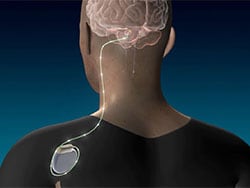
Illustration showing a lead implanted in the lower rear of the brain and stimulating nerves that connect to other brain regions. A single DBS lead is implanted into the cerebellum, with nerve fibers extending from the implant region through the thalamus and into the motor cortex. Cleveland Clinic Foundation

Stroke is a leading cause of death and serious long-term disability in the United States. About half of those who survive a stroke are left with ongoing impairments that affect their everyday activities, such as walking or lifting objects. Physical therapy can help to improve movement and reduce symptoms. But its benefits often level off about a year following the stroke.

Scientists have been exploring the possibility of encouraging the brain to form new connections between nerve cells by using electrical stimulation. The approach, called deep brain stimulation, delivers constant electrical stimulation to a particular brain region through a surgically implanted thin wire, or electrode.

A research team co-led by Drs. André Machado and Kenneth B. Baker of the Cleveland Clinic targeted a brain region called the dentate nucleus. It lies within the brain’s cerebellum, in the lower back of the head. The cerebellum is known to play a role in coordinating muscle movements. Decades of animal studies have shown that the dentate nucleus is a key connector that helps link the cerebellum to the motor cortex, which controls voluntary movements.

In a phase 1 clinical trial, the team enrolled 12 people who had moderate to severe impairment of their upper limbs one to three years after a stroke. At the start of the study, participants engaged in a month of physical therapy twice a week to rule out possible recovery based on physical therapy alone. Each then underwent surgery to insert the electrode in the brain’s dentate nucleus. After a recovery period, physical therapy continued, and deep brain stimulation was delivered continuously for four to eight months. Results were reported in Nature Medicine on August 14, 2023.

The researchers found that their technique of combining deep brain stimulation with physical therapy was safe. No serious adverse events or device failures were noted. Nine of the 12 participants had improved motor function after the treatment. These improvements continued even after stimulation was turned off.

Importantly, the length of time since a patient’s stroke did not seem to affect the potential for improvement. But the level of motor function in the hand did seem relevant to recovery. Participants who had retained some level of motor function in the hand had clinically significant improvement. Those with a low level of motor function showed only minor gains.

“The results of the study found that deep brain stimulation, paired with physical therapy, improved movement in patients who were more than a year out from their stroke and whose motor improvements had largely plateaued,” Baker says. “This tells us the research warrants further investigation in larger patient samples.”

Saturday, August 19, 2023

Deep Brain Stimulation Promising in Post-Stroke Recovery

In here is one that is non-invasive, no surgery. Why was this research done with all this earlier stuff? Your mentors and senior researchers incompetently didn't know about it?


Deep Brain Stimulation Promising in Post-Stroke Recovery

An early-stage clinical trial has shown that deep brain stimulation (DBS) applied to the cerebellum may aid the recovery of upper limb function after stroke.

photo of  DBS

Researchers studied 12 people with moderate to severe upper extremity impairment after stroke who received DBS to the dentate nucleus (DN) of the cerebellum together with rehabilitation and found that 75% of the participants had meaningful response in regaining some function of their paralyzed arms.

PET revealed significant increments in brain metabolism around the part of the brain affected by the stroke.

"Our findings support the safety and feasibility of deep brain stimulation to the cerebellar dentate nucleus as a promising tool for modulation of late-stage neuroplasticity for functional recovery," the authors write.

"The results of the phase I study are promising; but more research is needed. The next step is a phase II clinical trial that is already enrolling patients at Cleveland Clinic," said senior author André Machado, MD, PhD, chairman, Neurological Institute and Charles and Christine Carroll Family Endowed Chair in Functional Neurosurgery, Cleveland Clinic. 

The study was published online August 14 in Nature Medicine.

Extending the Neuroplasticity Window

Machado patented the DBS method in stroke recovery, a release from Cleveland Clinic notes. Boston Scientific owns a license to those patents and provided the Vercise DBS systems used in this trial. In 2010, Cleveland Clinic Innovations established Enspire DBS Therapy, Inc, a Cleveland Clinic portfolio company, and is commercializing technology developed at Cleveland Clinic to commercialize the method and it co-funded the study. Machado holds stock options and equity ownership rights with Enspire and serves as the chief scientific officer.

"Stroke is a leading cause of physical disability in the US and around the world; and while physical and occupational therapy work and improve function, about 50% of patients maintain severe levels of disability for life," Machado said.

Neuroplasticity is a "well-documented phenomenon that is associated with gradual spontaneous or therapy-driven improvements in post-stroke motor function," the authors write. But the extent of recovery "varies considerably across individuals" and depends on a variety of factors, the authors write.

"Harnessing the potential of neuroplasticity and modulating its extent and timing remains a major frontier in medicine with vast upside and has been the focus of our group," they continue.

The researchers proposed a new surgical approach for "extending the degree and temporal window of neuroplasticity after ischemic and traumatic insults to the brain."

This approach involves continuous stimulation of the cerebellar DN to "modulate neural activity and ipsilesional cortical excitability through activation of the robust, endogenous dentatothalamocortical pathway."

Machado explained that cerebellar DN "promotes reorganization of the cerebral cortex around the area affected by a stroke and increases the activity levels and metabolism of the cerebral cortex." It also promotes new synapses and the expression of long-term potentiation, a neuroplasticity process.

After over one decade of preclinical studies, the researchers applied this approach to humans for the first time, with the primary goal of determining whether cerebellar DBS, in combination with rehabilitation, is safe and feasible for post-stroke motor deficits.

To do so, they conducted the Electrical Stimulation of the Dentate Nucleus for Upper Extremity Hemiparesis Due to Ischemic Stroke (EDEN) study, focusing on 12 individuals (mean age, 57.4 ± 6.5 years; mean Upper-Extremity Fugl-Meyer Assessment [FM-UE] score, 22.9 ± 6.2 points) with chronic moderate to severe hemiparesis of the upper extremity due to a unilateral middle cerebral artery stroke that took place between 12 and 36 months prior.

Each participant underwent DBS surgery. After discharge and recovery from the surgery, they had 3 months of rehabilitation before the device was turned on and then 4-8 months of rehabilitation combined with DBS. They continued with rehabilitation after discontinuation of stimulation treatment.

Translational Potential

The researchers evaluated changes in motor impairment and function during five key intervals. 

  • Pre-surgery to post-surgery
  • Rehab only (no DBS) 
  • Experimental DBS plus rehab phase
  • 2-month rehab-carryover phase in the absence of DBS 
  • Long-term follow-up: 10 months after termination of the experimental treatment phase

In addition, they used PET imaging to characterize metabolic changes across ipsilateral perilesional cortex before and after the DBS plus rehab phase, with the DBS turned off.

From pre- to post-surgery, there was a median 0.5-point decrease in FM-UE score, which, although not deemed significant, "supported the safety of the procedure."

There was a "modest" three-point median improvement across the pre-stimulation, rehab-only phase (P = .004). After that, an additional seven-point improvement was observed, when rehabilitation was combined with DN-DBS (P = .0005).

The gain found during the DBS plus rehab phase was most pronounced in participants who entered the study with some distal preservation of motor function compared with those who entered without distal preservation (P = .007).

During the 2-month, rehab-carryover phase (continued rehabilitation as DBS was weaned by weekly 25% amplitude reductions over the first month and then off during the second month), no further change in FM-UE was observed.

The median FM-UE score for the full cohort also remained unchanged at the end of the long-term follow-up phase, "supporting the durability of the previously realized treatment-related gains," the authors report.

Moreover, the "robust functional gains were directly correlated with cortical reorganization evidenced by increased ipsilesional metabolism," they add.

Participants experienced no device failures and no study-related serious adverse events throughout the trial.

"This emerging intervention has shown translational potential to modulate the magnitude of neuroplastic reorganization toward recovery of function and to extend its time window to late phases of disability," they conclude.

Brooks Gross, PhD, program director, National Institute of Neurological Disorders and Stroke (NINDS), agreed. "The safety and feasibility data from this early study, combined with the potential symptom improvements, certainly support the need for additional, larger trials to see if cerebellar DBS is indeed a potential treatment for post-stroke motor impairment," he stated in a news release.

'Exciting Data'

Commenting for Medscape Medical News, Steven Cramer, MD, MSc, Susan and David Wilstein Endowed Chair in Rehabilitation Medicine and professor, Department of Neurology, David Geffen School of Medicine at UCLA, noted that patients with post-stroke disability "have limited options in 2023, in terms of therapies to boost stroke recovery."

This study "provides exciting data on the safety and clinical efficacy of cerebellar deep brain stimulation, along with favorable PET biomarker data." But, as this is a "relatively small study with no control arm, this approach should now proceed to testing in a phase II controlled clinical trial," said Cramer, who is also the medical director of research at the California Rehabilitation Institute in Los Angeles and was not involved with the current study.

This study was supported by the National Institutes of Health Brain Research Through Advancing Innovative Neurotechnologies Initiative and by Enspire DBS, a spin-off company of Cleveland Clinic. Machado serves as chief medical officer and chair of the Scientific Advisory Board for Enspire DBS Therapy and is paid with stock options. As the inventor, A.G.M. will receive portions of commercialization and/or Cleveland Clinic Foundation stock revenue and payments through Cleveland Clinic Foundation with fees deducted. The other authors' disclosures are listed on the original paper. Cramer serves as a consultant for AbbVie, Constant Therapeutics, BrainQ, Myomo, MicroTransponder, Neurolutions, Panaxium, NeuExcell, Elevian, Helius, Omniscient, Brainsgate, Nervgen, Battelle, and TRCare.

Nat Med. Published online August 14, 2023. Abstract

Friday, July 30, 2021

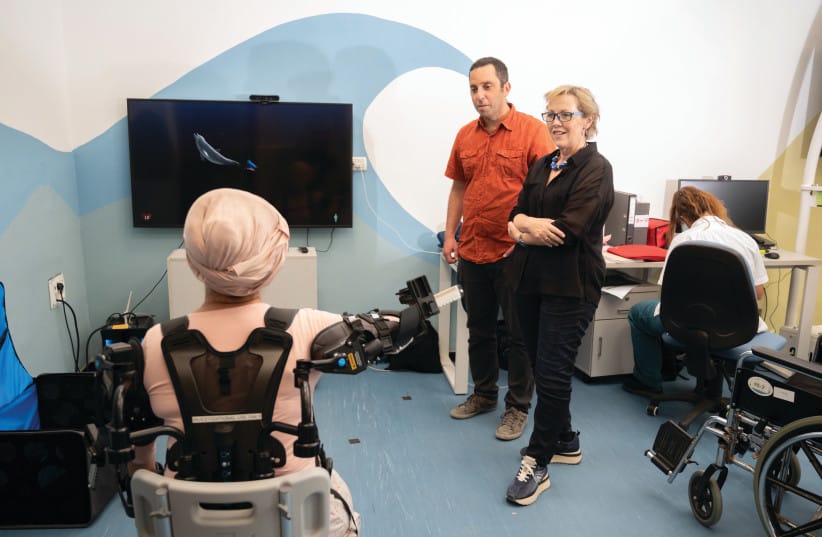
BGU’s( Ben-Gurion University) Negev Lab is bringing stroke rehab into the future

I can't find anything on chaos theory for stroke. All because we have fucking failures of stroke associations that can't even create a simple database of stroke research and protocols.

BGU’s( Ben-Gurion University) Negev Lab is bringing stroke rehab into the future

Stroke is tricky. While its effects are well known, the best course of rehabilitation to return to functionality is still very much a mystery. This rehab lab turns translational science for answers.

Sunday, July 18, 2021

Clinical Trials Coordinator (Fixed Term) - Stroke Research group, Department of Clinical Neurosciences, University of Cambridge

When you apply for this job you can explicitly lay out everything wrong in stroke research. Of course the interviewers will sputter and reject your arguments so be prepared for counter arguments, everything for a response is available in this blog.

Three main problems:

1. Not trying for 100% recovery solutions.

2. Researching recovery predictions.

3. Not doing the translation from research to EXACT REHAB PROTOCOLS.

Clinical Trials Coordinator (Fixed Term) - Stroke Research group, Department of Clinical Neurosciences, University of Cambridge

Clinical Trials Coordinator

Stroke Research group, Department of Clinical Neurosciences, University of Cambridge

We are looking for a Clinical Trials Coordinator to join an internationally renowned stroke research unit in the University of Cambridge and Cambridge University Hospitals NHS Foundation Trust. The successful application will coordinate and recruit to, and follow up, individuals in a variety of clinical stroke studies. They will work as part of a multidisciplinary team. We are looking for someone educated to a degree standard in a science specialty, with experience of working on clinical trials/studies and excellent interpersonal and organisational skills.

The post is funded by the NIHR Clinical Research Network until 1st April 2023. Further funding will be conditional on annual renewal of CRN funding.

Once an offer of employment has been accepted, the successful candidate will be required to undergo a standard Disclosure and Barring Service check. This appointment also requires a Research Passport application.

Click the 'Apply' button below to register an account with our recruitment system (if you have not already) and apply online.

Please ensure that you outline how you match the criteria for the post and why you are applying for this role on the online application form.

Please include details of your referees, including email address and phone number, one of which must be your most recent line manager.

Please quote reference ZE27237 on your application and in any correspondence about this vacancy.

The University actively supports equality, diversity and inclusion and encourages applications from all sections of society.

The University has a responsibility to ensure that all employees are eligible to live and work in the UK.

Further information

Apply online


Monday, June 7, 2021

Translational Block in Stroke: A Constructive and “Out-of-the-Box” Reappraisal

 This is so simple, you have NO LEADERSHIP AND NO STRATEGY. You are allowing researchers to willy nilly do whatever they think can get funded.

Translational Block in Stroke: A Constructive and “Out-of-the-Box” Reappraisal

Athanasios Lourbopoulos1,2,3*, Iordanis Mourouzis1, Christodoulos Xinaris4,5, Nefeli Zerva1, Konstantinos Filippakis1, Angelos Pavlopoulos1 and Constantinos Pantos1
  • 1Department of Pharmacology, Medical School, National and Kapodistrian University of Athens, Athens, Greece
  • 2Department of Neurointensive Care Unit, Schoen Klinik Bad Aibling, Bad Aibling, Germany
  • 3Institute for Stroke and Dementia Research, Klinikum der Universität München, Ludwig Maximilian University, Munich, Germany
  • 4IRCCS – Istituto di Ricerche Farmacologiche ‘Mario Negri’, Centro Anna Maria Astori, Bergamo, Italy
  • 5University of Nicosia Medical School, Nicosia, Cyprus

Why can we still not translate preclinical research to clinical treatments for acute strokes? Despite > 1000 successful preclinical studies, drugs, and concepts for acute stroke, only two have reached clinical translation. This is the translational block. Yet, we continue to routinely model strokes using almost the same concepts we have used for over 30 years. Methodological improvements and criteria from the last decade have shed some light but have not solved the problem. In this conceptual analysis, we review the current status and reappraise it by thinking “out-of-the-box” and over the edges. As such, we query why other scientific fields have also faced the same translational failures, to find common denominators. In parallel, we query how migraine, multiple sclerosis, and hypothermia in hypoxic encephalopathy have achieved significant translation successes. Should we view ischemic stroke as a “chronic, relapsing, vascular” disease, then secondary prevention strategies are also a successful translation. Finally, based on the lessons learned, we propose how stroke should be modeled, and how preclinical and clinical scientists, editors, grant reviewers, and industry should reconsider their routine way of conducting research. Translational success for stroke treatments may eventually require a bold change with solutions that are outside of the box.

Introduction – The Problem of Translational Failure in Stroke

Stroke remains the third leading cause of death in industrialized countries (Dirnagl et al., 1999). The literature is saturated by >1000 effective preclinical studies in acute stroke research (O’Collins et al., 2006), yet almost none are successfully transferred to the acute clinical routine. This is the well-known translational failure or block in stroke research (Endres et al., 2008).

The “basket” of stroke translational failure so far includes neuroprotective agents (O’Collins et al., 2006), stem cells (Borlongan, 2019), or even novel immunological treatments (Elkins et al., 2017), despite rigorous or/and large preclinical effect sizes. Yet we keep on modeling acute stroke and experimenting using, in most cases, the same concepts based on widely cited models. Is this the right way to continue and progress or do we simply need to critically reassess how we model ischaemic stroke?

The fact is that many pathophysiological principles of stroke were actually discovered in translation (Dirnagl and Endres, 2014). Failed clinical trials for acute stroke were probably based on rather weak preclinical evidence or inappropriate models (Drieu et al., 2020). If we consider stroke a “chronic, relapsing” disease, with multiple repeating small or large ischemic insults, then secondary prevention counts for several successes (Kernan et al., 2014). On the other hand, the differences between preclinical rodent modeling and clinical routine practice in human acute stroke are significant (Corbett et al., 2015). Nevertheless, preclinical research has several translational success stories, such as the case of experimental autoimmune encephalomyelitis (EAE) – multiple sclerosis (MS), migraine, and hypothermia in hypoxic-ischaemic encephalopathy (HIE). In addition, existing recommendation papers and consortiums [e.g., ARRIVE (Kilkenny et al., 2010), STAIR (Corbett et al., 2017), STEPS (Savitz et al., 2011)] have repeatedly proposed pathways to success. However, either few groups worldwide are implementing these guidelines or we are still missing some of the factors that are involved in failure.

Hence, we provide here a critical, interdisciplinary, and revisionary overview of stroke translational failure, taking into consideration lessons from “success stories” and “failed concepts” in neuro-research. We argue that translational failure is also the rule in ischaemia of other organs, such as myocardial infarction. Collectively, we believe that translational failure probably lies in fundamental components and “false” choices in the laboratory and clinical research. If we want to succeed, we need to improve not only the current technical hurdles in contemporary neurosciences, but also the way we put our question into perspective (Kola and Landis, 2004; Duda et al., 2014; Garner, 2014; Alteri and Guizzaro, 2018).

“We can’t solve problems by using the same kind of thinking we used when we created them.”

Albert Einstein (1879–1955)

More at link.