Changing stroke rehab and research worldwide now.Time is Brain! trillions and trillions of neurons that DIE each day because there are NO effective hyperacute therapies besides tPA(only 12% effective). I have 523 posts on hyperacute therapy, enough for researchers to spend decades proving them out. These are my personal ideas and blog on stroke rehabilitation and stroke research. Do not attempt any of these without checking with your medical provider. Unless you join me in agitating, when you need these therapies they won't be there.

What this blog is for:

My blog is not to help survivors recover, it is to have the 10 million yearly stroke survivors light fires underneath their doctors, stroke hospitals and stroke researchers to get stroke solved. 100% recovery. The stroke medical world is completely failing at that goal, they don't even have it as a goal. Shortly after getting out of the hospital and getting NO information on the process or protocols of stroke rehabilitation and recovery I started searching on the internet and found that no other survivor received useful information. This is an attempt to cover all stroke rehabilitation information that should be readily available to survivors so they can talk with informed knowledge to their medical staff. It lays out what needs to be done to get stroke survivors closer to 100% recovery. It's quite disgusting that this information is not available from every stroke association and doctors group.

Showing posts with label thinking outside the box. Show all posts

Friday, August 16, 2024

Out-of-the-box thinking from Justin from Ideapod - what about using it for stroke?

 I consider everyone in stroke too fucking hidebound to have any original ideas on how to solve stroke. I have ten thousands, they're sprinkled through my 28,553 posts. Every day I come up with more, that's how much stroke research is out there!

Send me hate mail on this: oc1dean@gmail.com. I'll print your complete statement with your name and my response in my blog. Or are you afraid to engage with my stroke-addled mind? I need an explanation of your incompetence on why you're not solving stroke.

out-of-the-box thinking from Justin from Ideapod

Hi there,

The scene: A psychology lab.

The year: 1945…

On the table in front of you: A candle, a box of thumbtacks, and some matches.

Your task? Fix the candle to the wall so it can burn without dripping wax on the table below.

On the surface, it seems simple. But this experiment by psychologist Karl Duncker didn't go well for most of its participants.

Most people failed.

They tried tacking the candle directly to the wall... the candle was too thick.

They tried melting the wax then pinning it... that didn't work either.

The solution was staring them in the face, but they couldn't see it.

Use the box. Tack it to the wall and place the candle inside.

Why am I telling you this story? Because this experiment is where the phrase "thinking outside the box" comes from.

And this phrase has come to shape how we’ve viewed creativity and problem-solving ever since.

The whole point of Duncker’s experiment was to demonstrate that we’re often so conditioned to think in a certain way that we can lose our ability to see obvious alternatives.

And to me, that’s profound.

It's certainly the case that MY greatest breakthroughs often come when I challenge my assumptions and embrace uncertainty.

Things go more smoothly when I don’t have to have all the answers.

And I get much better results when I’m willing to question everything about my decisions and processes.

The first step in thinking outside the box is becoming aware that you HAVE these mental boxes.

They tend to be the areas where you feel defensive or are afraid to be wrong.

Sometimes I have to take a big step back and examine my assumptions before I can see a different way of doing things.


Wednesday, February 8, 2023

Design and Test of E-Textiles for Stroke Rehabilitation

I like this out of the box thinking, now just add measurements in there that will objectively tell what the disabilities are. Then we could map the protocols that fix those disabilities and get survivors recovered. See how fucking simple this is?

 Design and Test of E-Textiles for Stroke Rehabilitation

1
Electronics and Computer Science, University of Southampton, Southampton SO17 IBJ, UK
2
Winchester School of Art, University of Southampton, Southampton SO23 8DL, UK
3
Odstock Medical Ltd., Salisbury SP2 8BJ, UK
*
Author to whom correspondence should be addressed.
Presented at the 4th International Conference on the Challenges, Opportunities, Innovations and Applications in Electronic Textiles, Nottingham, UK, 8–10 November 2022.
Eng. Proc. 2023, 30(1), 16; https://doi.org/10.3390/engproc2023030016
Published: 6 February 2023

Abstract

This work presents the design and test of an e-textile based functional electrical stimulation system for post-stroke upper limb rehabilitation. The prototype was tested on five stroke survivors to assess stimulation comfort, the stimulation intensity required to achieve hand opening, and ease of use. Wrist extension was measured using two inertial measurement units. The wearable e-textile prototype achieved similar stimulation comfort compared to high-quality hydrogel electrodes with a score difference of between 0 and 1. The stimulation intensity to achieve full hand opening was the same for the hydrogel electrodes and the e-textiles for all five participants. A second design based on a knitted sleeve has been assessed in terms of usability. Additional new designs have been proposed to improve the usability.

1. Introduction

Stroke occurs when there is a blockage or bleeding of the blood vessels affecting the supply of blood to the brain. There are 1.3 million stroke survivors in the UK [1] and stroke costs the UK National Health Service and wider society £26 billion per annum [2]. Over half of stroke survivors have weak arm/hand movement affecting their independence and quality of life. Functional Electrical Stimulation (FES) is a technology used for stroke rehabilitation. It applies a safe electrical impulse through electrodes placed on the skin to strengthen weak muscles and improve movement functions. FES has been used to exercise muscles and assist walking for people with mobility issues since the 1960s [3]. Systematic reviews with meta-analysis have concluded that FES improves the ability to perform activities [4,5,6]. Existing FES products are difficult to set-up by stroke survivors without help from their carers or healthcare professionals which significantly constrains usage. Our previous work has received positive feedback regarding wearable e-textile FES for home-based stroke rehabilitation [7]. This work presents the test results of a fabric electrode based wearable FES in terms of user comfort, stimulation intensity, and functional movement (wrist extension for hand opening) on five stroke survivors (ethics approval ID: University of Southampton ERGO 70296). Ease of use has been assessed. A second knitted design has been assessed and additional new designs to improve the usability have been proposed for future study.

2. Materials and Methods

2.1. Electrodes

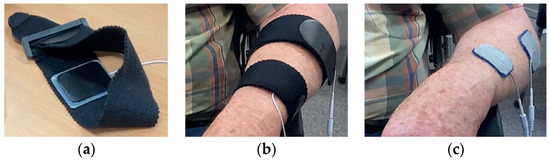
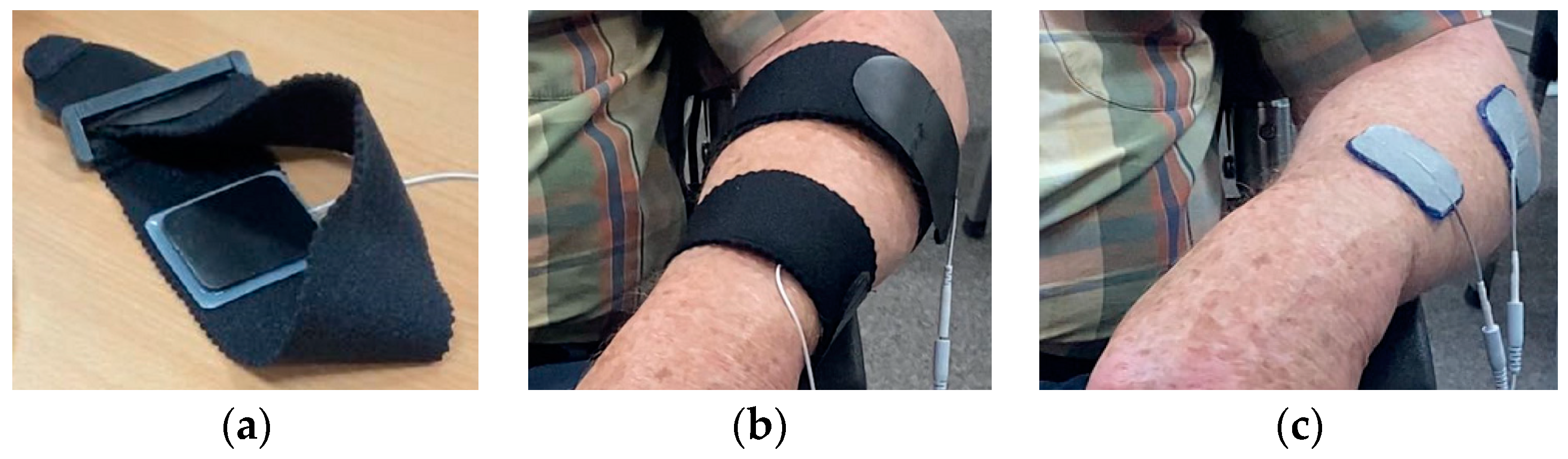
Wearable electrodes (5 cm × 5 cm) were fabricated by stacking in turn: a non-woven fabric, conductive wires leading to a connector, a conductive carbon film and a carbon rubber electrode layer. Encapsulating the edges holds the entire assembly together. The electrode was attached to a fabric arm band as shown in Figure 1. The wearable electrodes were compared with commercial high quality hydrogel electrodes (PALS, Axelgaard, Fallbrook, CA, USA).
Figure 1. (a) fabric electrode arm band. (b) fabric electrode arm bands being worn by a stroke survivor. (c) hydrogel electrodes being worn by a stroke survivor.

2.2. FES

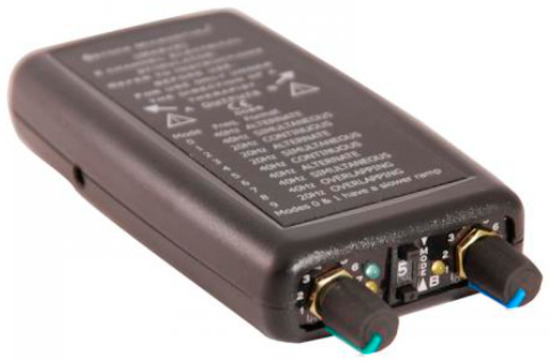
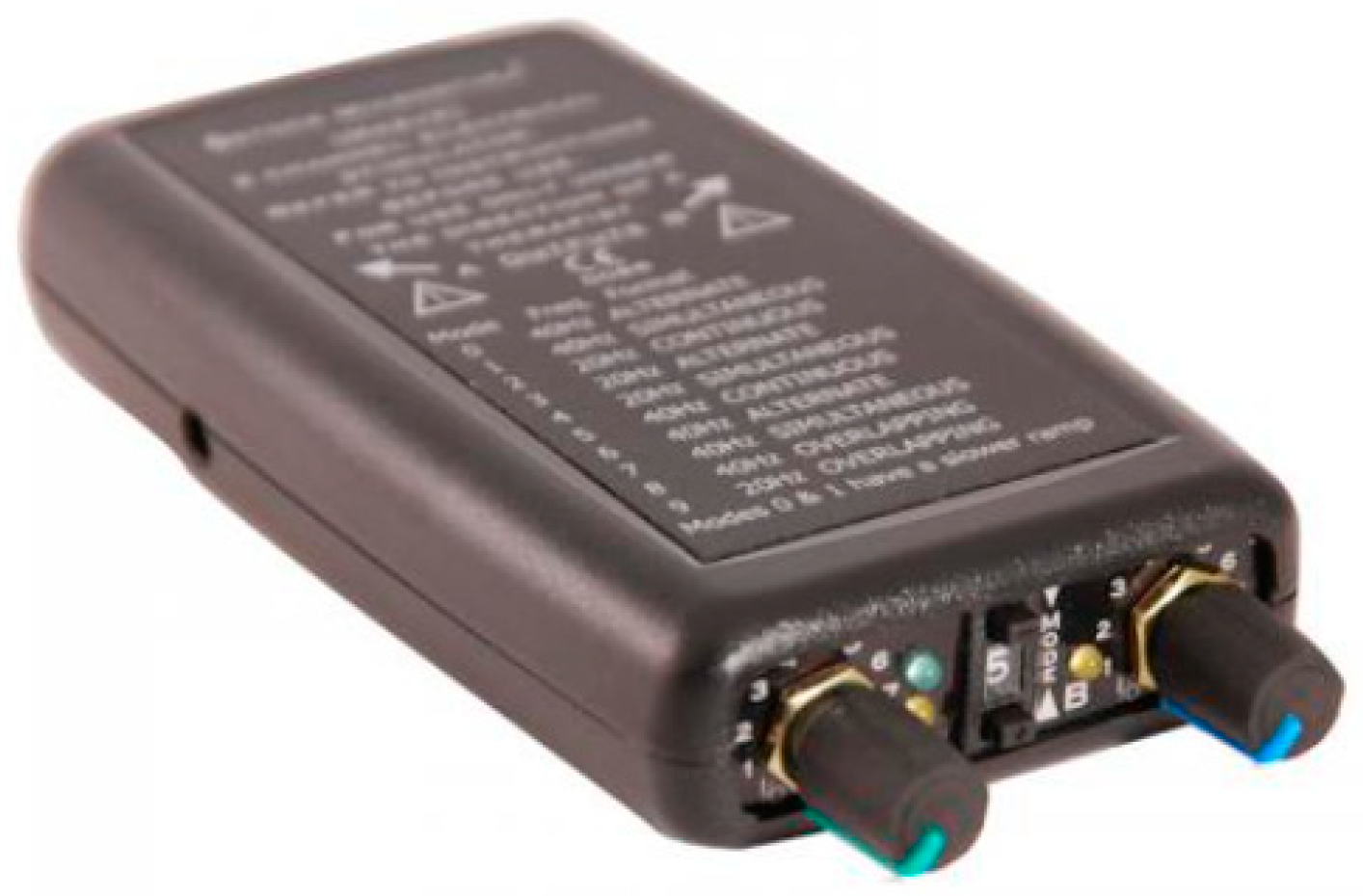
The OML Microstim 2V2 neuromuscular stimulator (Figure 2) was used in this study. Stimulation was set-up by a clinician to optimise the electrode positions and stimulation intensity. Water was sprayed on the electrodes and the skin before applying the fabric electrode to improve user comfort and stimulation effectiveness. Stimulation comfort was rated in a scale from 0 to 10 with 0 is the most comfortable and 10 being very painful. The stimulation intensity was recorded.
Figure 2. OML Microstim 2V2.

2.3. Inertial Measurement Unit (IMU) Sensors for Wrist Bending Measurement

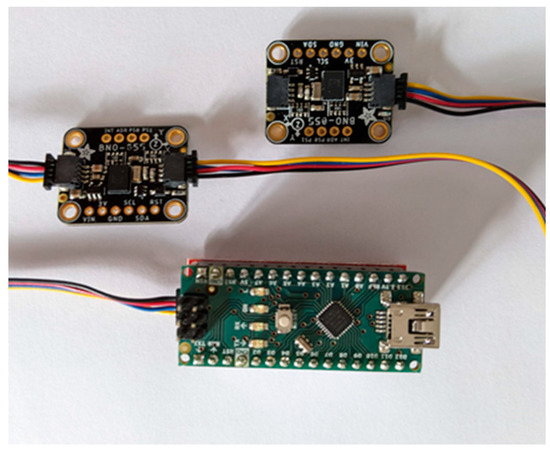
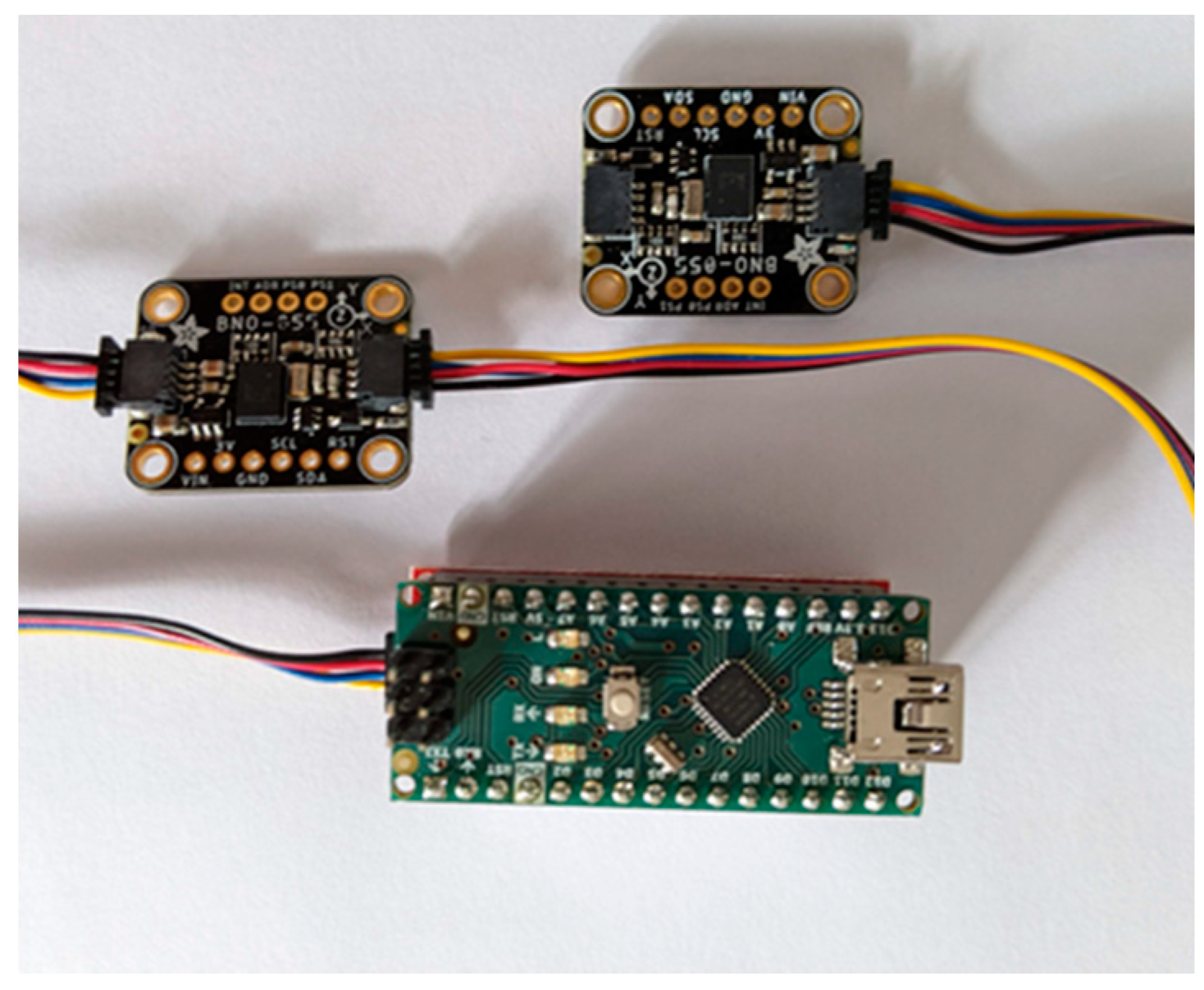
The wrist angle was measured using a pair of BNO055 IMU sensor breakouts from Adafruit (Figure 3) which reports the absolute angular position of the sensor. The IMUs were attached to the user by using Velcro straps with one attached to the hand and the other to the arm. An Arduino Micro was used to gather the data from the sensors and sent it to the computer recording the data. The computer then calculated the wrist angle by taking the difference between the two absolute positions from the sensors.
Figure 3. BNO055 IMU sensor.

2.4. Usability Test

Participants were asked to put on and take off both the hydrogel electrodes and fabric electrode arm bands to assess their capability of using the products independently.

3. Test Results and Discussion

Five participants were recruited for the testing. Age: 56–76, Years of stroke: 3–17 years. Genders: 1 female and 4 males.

3.1. Stimulation Comfort

All participants reported the same or similar stimulation comfort with only 0 to 1 score difference between the two electrode types as shown in Table 1. One participant (P1) reported the fabric electrode was more comfortable than the hydrogel electrodes. One participant (P4) reported the same comfort scale. The other three reported the hydrogel electrodes were more comfortable than fabric electrodes. No pain sensation was reported.
Table 1. Stimulation comfort scale results by participant.

3.2. Stimulation Intensity

There was no difference in the stimulation level required to achieve full hand opening between the two types of electrodes (Table 2). The required stimulation levels vary from 40 mA to 50 mA. This indicates the fabric electrodes were as effective as the hydrogel electrodes in generating a functional movement.
Table 2. Stimulation intensity required to achieve hand opening.

3.3. Wrist Bending Measurement

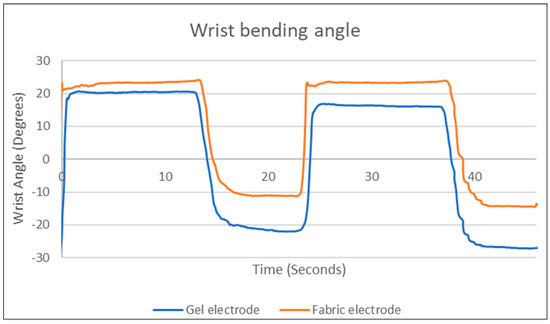
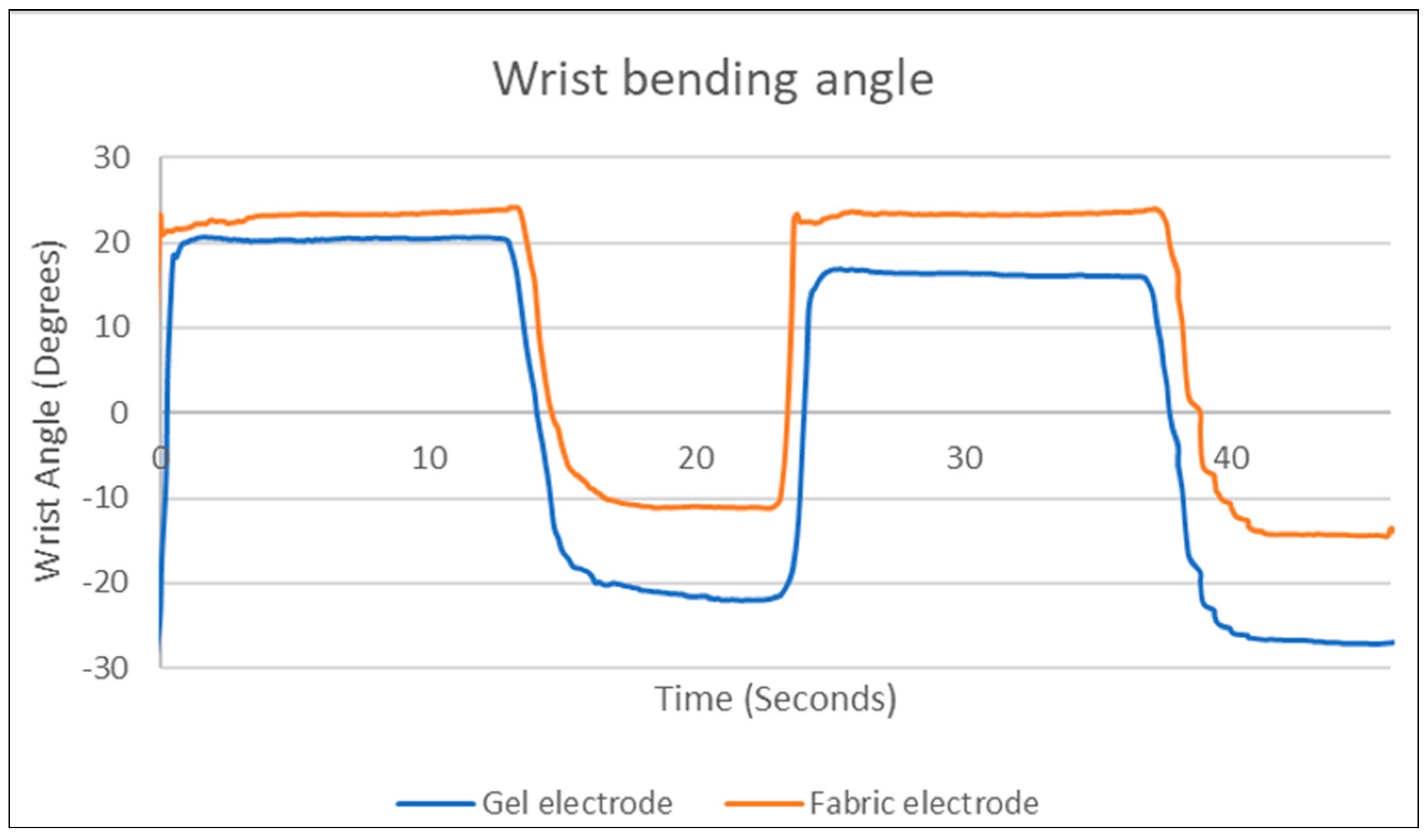
Wrist movement was measured during the stimulation. All participants achieved a similar movement for the two types of electrodes. Figure 4 is a representative example of the wrist bending angle for the two electrode types.
Figure 4. Wrist bending angle.

3.4. Usability

Researchers observed that it was a challenging task for participants to peel off the hydrogel electrodes from the protective plastic film because the hydrogel electrodes are very sticky. It was even more challenging for them to take out the electrodes from the sealed bag and put them back after use. With the electrode arm band, although all participants were able to put it on and take it off independently, they found it challenging to keep the electrode in place because it moved around before it was fastened and secured in place. In addition, it was challenging to put the Velcro hook fastener through a loop. All participants were able to spray water on the electrodes and the arm using a single hand.

3.5. Second Design: Knitted Sleeve

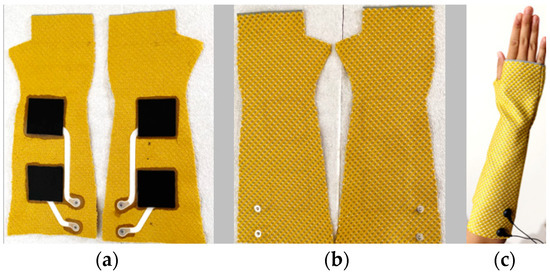
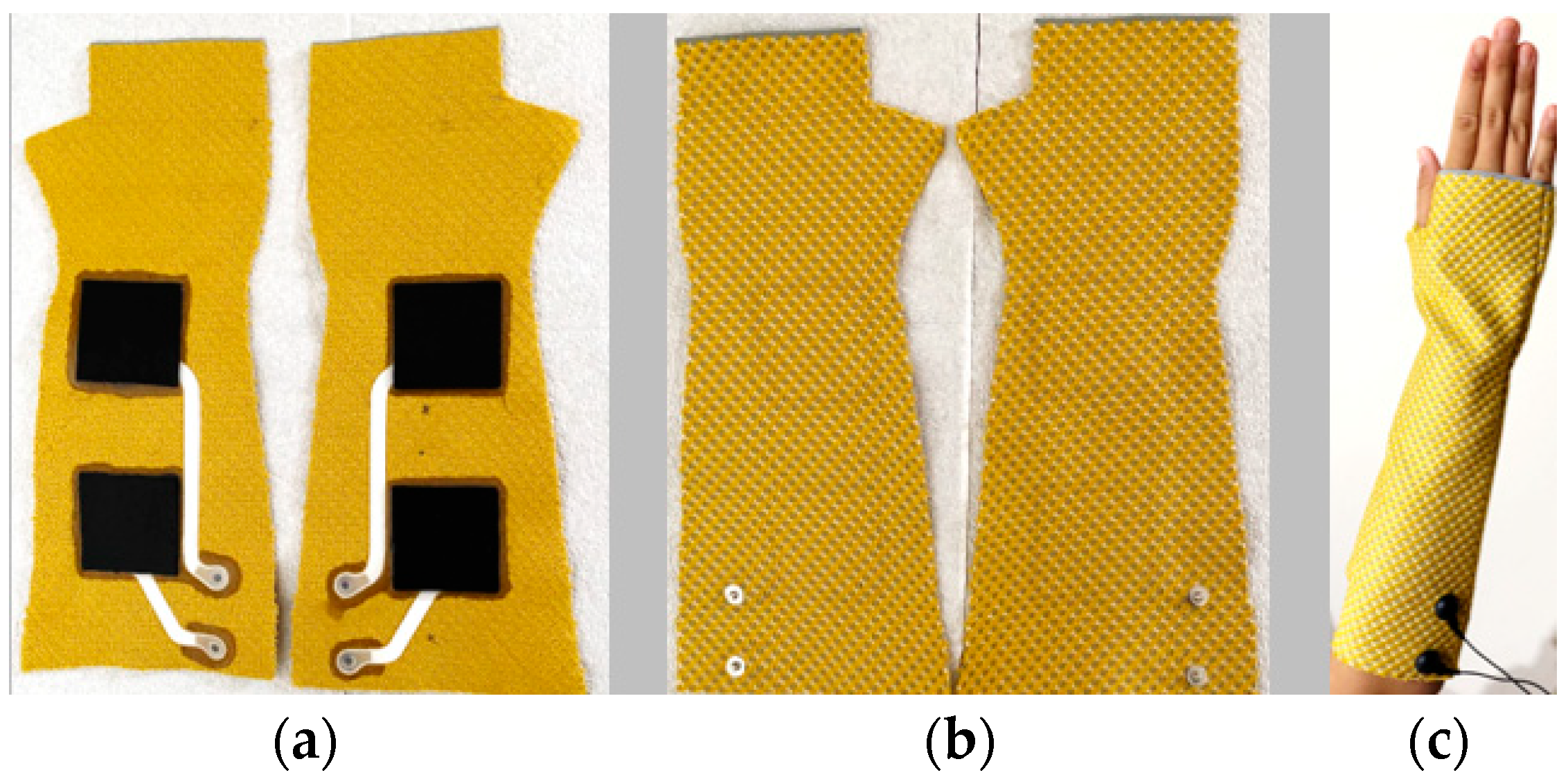
Two pairs of electrodes were printed on a knitted fabric made of wool and Lycra yarns to stimulate muscles for both hand extension and flexion (Figure 5). The electrode fabric was assembled to form a pull-on sleeve. It was noticed the electrode sleeve was difficult to put on or take off because of the strong friction between the electrodes inside the sleeve and the skin. Discussions with the stroke survivors have indicated that an open, or partially open structure, would allow the user to put on the electrode sleeve easily, then tighten the sleeve to ensure the electrodes and skin contact sufficiently.
Figure 5. (a) electrodes printed on knitted fabric. (b) electrode fabric with snap buttons. (c) electrode sleeve worn on an arm and connected to a stimulator via snap buttons.

4. Conclusions and Future Work

This work has demonstrated the stimulation comfort and functional movement delivered by a wearable e-textile activated with the OML FES stimulator Microstim 2V2. The fabric electrode achieved similar stimulation performance while providing the advantage of being suitable for wearable application and offering a long service life. All participants were able to put on and take off the fabric electrode arm bands independently, but it is time consuming and a better design is required. A new design with electrodes printed on a knitted stretchable sleeve was investigated but it was difficult to put on and take off due to the friction between the electrodes inside the sleeve and the skin. New designs, required to improve the ease of use, will be addressed in future work.

Author Contributions

Conceptualization, M.L., J.T. and K.Y.; methodology, M.L., T.W., O.K., P.T. and K.Y.; software, T.W.; validation, M.L., Y.Y., P.T. and K.Y.; formal analysis, T.W. and K.Y.; investigation, M.L. and K.Y.; resources, P.T. and K.Y; writing—original draft preparation, M.L. and K.Y.; review and editing, All; funding acquisition, J.T. and K.Y. All authors have read and agreed to the published version of the manuscript.

Funding

This research was funded by the SIAH HEIF Research Stimulus Fund at the University of Southampton and the Medical Research Council (MRC) under grant number MR/N027841/1.

Institutional Review Board Statement

The study was approved by the Faculty of Arts and Humanities Ethics Committee at the University of Southampton on 21/02/2022 with a submission ID of ERGO 70296.

Wednesday, April 27, 2022

Brain atrophy and endovascular treatment effect in acute ischemic stroke: a secondary analysis of the MR CLEAN trial

Useless, you tell us NOTHING on how to stop brain atrophy.  Stroke survivors just might want a solution for that. Will you think for once?

Brain atrophy and endovascular treatment effect in acute ischemic stroke: a secondary analysis of the MR CLEAN trial

BACKGROUND 

Brain atrophy is suggested to impair the potential for functional recovery after acute ischemic stroke. We assessed whether the effect of endovascular treatment is modified by brain atrophy in patients with acute ischemic stroke due to large vessel occlusion.

METHODS 

We used data from MR CLEAN, a multicenter trial including patients with acute ischemic stroke due to anterior circulation large vessel occlusion randomized to endovascular treatment plus medical care (intervention) versus medical care alone (control). We segmented total brain volume (TBV) and intracranial volume (ICV) on baseline non-contrast computed tomography (n = 410). Next, we determined the degree of atrophy as the proportion of brain volume in relation to head size (1 - TBV/ICV) × 100%, analyzed as continuous variable and in tertiles. The primary outcome was a shift towards better functional outcome on the modified Rankin Scale expressed as adjusted common odds ratio. Treatment effect modification was tested using an interaction term between brain atrophy (as continuous variable) and treatment allocation.

RESULTS 

We found that brain atrophy significantly modified the effect of endovascular treatment on functional outcome (P for interaction = 0.04). Endovascular treatment led to larger shifts towards better functional outcome in the higher compared to the lower range of atrophy (adjusted common odds ratio, 1.86 [95% CI: 0.97-3.56] in the lowest tertile vs. 1.97 [95% CI: 1.03-3.74]in the middle tertile vs. 3.15 [95% CI: 1.59-6.24] in the highest tertile).

CONCLUSION 

 Benefit of endovascular treatment is larger in the higher compared to the lower range of atrophy, demonstrating that advanced atrophy should not be used as an argument to withhold endovascular treatment.


Sunday, July 11, 2021

NCyborg Project: Robots to establish a stroke rehabilitation process

 Finally someone in stroke thinking outside the box. If it is BCI it would seem to assume your primary motor cortex controlling the hand is still working. So not useful to me. Unless it can be used in conjunction with switching control to my contralesional side.  Picture is wrong, reading right side brain would mean left hand control. Does no one in stroke have two functional brain cells to rub together?

NCyborg Project: Robots to establish a stroke rehabilitation process

A brand new stroke rehabilitation pattern that could improve the treatment effect of stroke survivors.

A stroke occurs when the part of the brain loses its blood supply and stops working. Stroke is the leading cause of death and disability in the adult population. 75% of the surviving patients will lose the ability to move independently.

Traditional stroke rehabilitation equipment allows patients to follow the movements of the equipment latently. Henceforth, the rehabilitation effect is poor, and the patient’s willingness to train is likewise low.

Now, Tongji Hospital and BrainCo have introduced NCyborg Project, a new stroke rehabilitation pattern based on brain-computer interface (BCI) and brain-inspired intelligent robots. The project will mainly focus on: 

  • An algorithm for analyzing the movement intention of stroke patients based on brain-machine interface technology.
  •  A motion control strategy for a rehabilitation robot based on brain-inspired motion perception.
  • The mechanism of stroke rehabilitation using brain-inspired intelligent robots.

The main aim of the NCyborg Project is to develop an easy-to-use, reliable and affordable stroke rehabilitation robot to improve the rehabilitation effect of stroke survivors, speed up the rehabilitation process, and reduce the costs.

The organization will start training the robot to support the rehabilitation of the hand. The robot is expected to recognize no less than eight hand movement intentions with a recognition accuracy of ≥ 90% and a response time ≤ of 300 ms.

Co-corresponding author, Jonh H. Zhang, explains: “The project’s goal is to develop an easy-to-use, reliable and affordable stroke rehabilitation robot that will improve the effect of rehabilitation for stroke survivors, speed up the rehabilitation process, and reduce the costs involved.”

Co-corresponding author, Bicheng Han, adds: “We hope that, within five years, millions of stroke patients will be using this product and see their lives improve.”

Co-corresponding author Zhouping Tang said, “the ‘N’ in the NCyborg Project name stands for ‘neural,’ while in fictional stories ‘cyborg’ is often an icon that is enhanced mentally and/or physically over and above the ‘norm’ with technology. In the real world, we believe that NCyborg Project will set up a brand-new stroke rehabilitation pattern which could qualitatively improve the treatment effect for stroke survivors.”

Journal Reference:
  1. Qi Huang et al. NCyborg Project – A new stroke rehabilitation pattern based on brain-computer interface. DOI: 10.1016/j.hest.2021.05.002
 

Wednesday, May 17, 2017

New study on elderly mice suggests cannabis could be a good treatment for dementia.

How many decades before your doctor suggests cannabis for its health benefits? NEVER?
I don't care that this was tested in mice, can't your doctor  think outside the box?  Does your doctor think at all? 

New study on elderly mice suggests cannabis could be a good treatment for dementia.


Cannabis reverses the brain ageing process, new research finds.
The study on elderly mice showed that their brains could be regressed to the state of two-month-olds.
They were given a low-dose treatment with a cannabis-active ingredient (THC).
THC could prove to be a good treatment for dementia eventually, the researchers think.
Professor Andreas Zimmer, who led the research, said:
“With increasing age, the quantity of the cannabinoids naturally formed in the brain reduces.
When the activity of the cannabinoid system declines, we find rapid ageing in the brain.
It looked as though the THC treatment turned back the molecular clock.”
The ‘elderly’ mice in the study were actually two-years-old.
Mice normally start to show cognitive deficits at around one-year-old.
However, a four week low-dose course of THC (the active ingredient in cannabis) reversed these cognitive deficits.
Professor Zimmer said:
“The treatment completely reversed the loss of performance in the old animals.”
The next stage is to conduct clinical trials in humans.
The study was published in the journal Nature Medicine (Bilkei-Gorzo et al., 2017).

Friday, September 23, 2016

FDA Warns Against ‘Stiff Bull’ Coffee with Viagra-Like Ingredient

Don't do this on your own, but see the possibilities of Viagra here:

14 posts on Viagra here.

None of this will ever be standard stroke rehab. The whole point of this post is to get people thinking about out-of-the-box possibilities.

FDA Warns Against ‘Stiff Bull’ Coffee with Viagra-Like Ingredient

Nothing kills the mood quite like a public health safety warning.
The U.S. Food and Drug Administration has issued an advisory regarding the consumption of not-so-delicately named Stiff Bull Herbal Coffee, a roasted coffee product containing an ingredient similar to the active ingredient in the erectile disfunction drug Viagra.
The FDA said it examined the coffee product through international mail shipments, finding desmethyl carbodenafil, an erectile disfunction alternative to the popular prescription drug sildenafil. Desmethyl carbodenafil is a chemical compound and unlisted ingredient that the FDA recently advised consumers not to use for the purpose of sexual enhancement.
This section of the FDA advisory regarding the Stiff Bull coffee reads a bit like a Viagra commercial. (Go ahead, picture a smiling, grey-haired man driving along a coast in a vintage rag-top or golfing with his buddies as you read this as a voiceover:)
This undeclared ingredient may interact with nitrates found in some prescription drugs such as nitroglycerin and may lower blood pressure to dangerous levels. Men with diabetes, high blood pressure, high cholesterol, or heart disease often take nitrates.
Stiff Bull, a company registered in Maryland that has distributors in nine states, according to the company’s website, says its coffee is augmented by a proprietary blend of tongkat ali, maca root, and guarana. The company’s slogan is “made for adults who want to maintain relationships.”
The FDA said the warning was part of a larger effort to educate consumers about the growing trend of dietary supplements or other food promoted as beneficial to sexual performance or health, despite the fact that they may contain “potentially harmful hidden ingredients.”