Showing posts with label therapist question. Show all posts
Showing posts with label therapist question. Show all posts
Tuesday, September 8, 2026


Tuesday, March 10, 2026
Tight Hips? This New Stretch Is a Biomechanical Upgrade by Super Age
Did your therapists even attempt to objectively determine this? I will need to start doing this.
Tight Hips? This New Stretch Is a Biomechanical Upgrade
Thursday, March 27, 2025
Rope Skipping may Boost Cardiorespiratory Fitness, suggests research
I can't jump at all, not even an inch off the ground. My left leg strength is considerable, so it seems quite bizarre I can't get further off the ground. I was able to leg press 100 lbs. with only my left leg. Trying to jump using only my right leg and holding my left foot up behind me resulted in getting off the ground 2-3 inches. So, what the hell is preventing me from getting off the ground using both legs? It's an ADL, so there has to be an answer in the stroke clinical world.
Ask your therapist to get you recovered enough to do this,
Rope Skipping may Boost Cardiorespiratory Fitness, suggests research
Tuesday, April 30, 2024
Effectiveness of Syrebo’s Glove Rehabilitation Program in a Patient With Middle Cerebral Artery Infarct: A Case Report
Which glove is your therapist already using on you? NONE? So you don't have a functioning therapist either along with your non-functioning doctor? With my spastic fingers this glove would require two other persons to get it on, so useless for me.
glove (101 posts to October 2011)
Effectiveness of Syrebo’s Glove Rehabilitation Program in a Patient With Middle Cerebral Artery Infarct: A Case Report
Published: April 29, 2024
DOI: 10.7759/cureus.59314
Peer-Reviewed
Cite this article as: Sharma V S, Sharath H, Sasun A R (April 29, 2024) Effectiveness of Syrebo’s Glove Rehabilitation Program in a Patient With Middle Cerebral Artery Infarct: A Case Report. Cureus 16(4): e59314. doi:10.7759/cureus.59314
Abstract
In India, stroke is a significant health concern, with an estimated prevalence of around 1.54% in adults over 20 years old. The incidence of stroke in India varies regionally but is generally high due to factors like hypertension and lifestyle changes. Ischemic strokes comprise the majority, particularly in the middle cerebral artery (MCA) territory. MCA stroke presents with diverse symptoms such as weakness, speech difficulties, and vision problems, emphasizing the need for comprehensive rehabilitation. Physiotherapy plays a vital role in addressing these challenges, focusing on strength, coordination, mobility, and independence through tailored interventions. Additionally, soft robotic gloves, such as Syrebo's rehabilitation, offer promising advancements in neurorehabilitation by enhancing motor recovery and functional abilities, particularly in improving grip strength and hand functionality, thus improving outcomes for stroke patients. This case describes a 66-year-old female presenting with sudden left-sided weakness, slurred speech, and facial deviation indicative of bilateral MCA territory infarct. After admission requiring ventilation and medication, imaging confirmed the diagnosis. Following stabilization, she underwent neurophysiotherapy for rehabilitation. Neurological examination revealed deficits in muscle tone, reflexes, cranial nerve function, language, and swallowing. Outcome measures indicated progress in rehabilitation. The case underscores the significance of timely diagnosis and personalized rehabilitation in optimizing outcomes for MCA territory stroke patients.
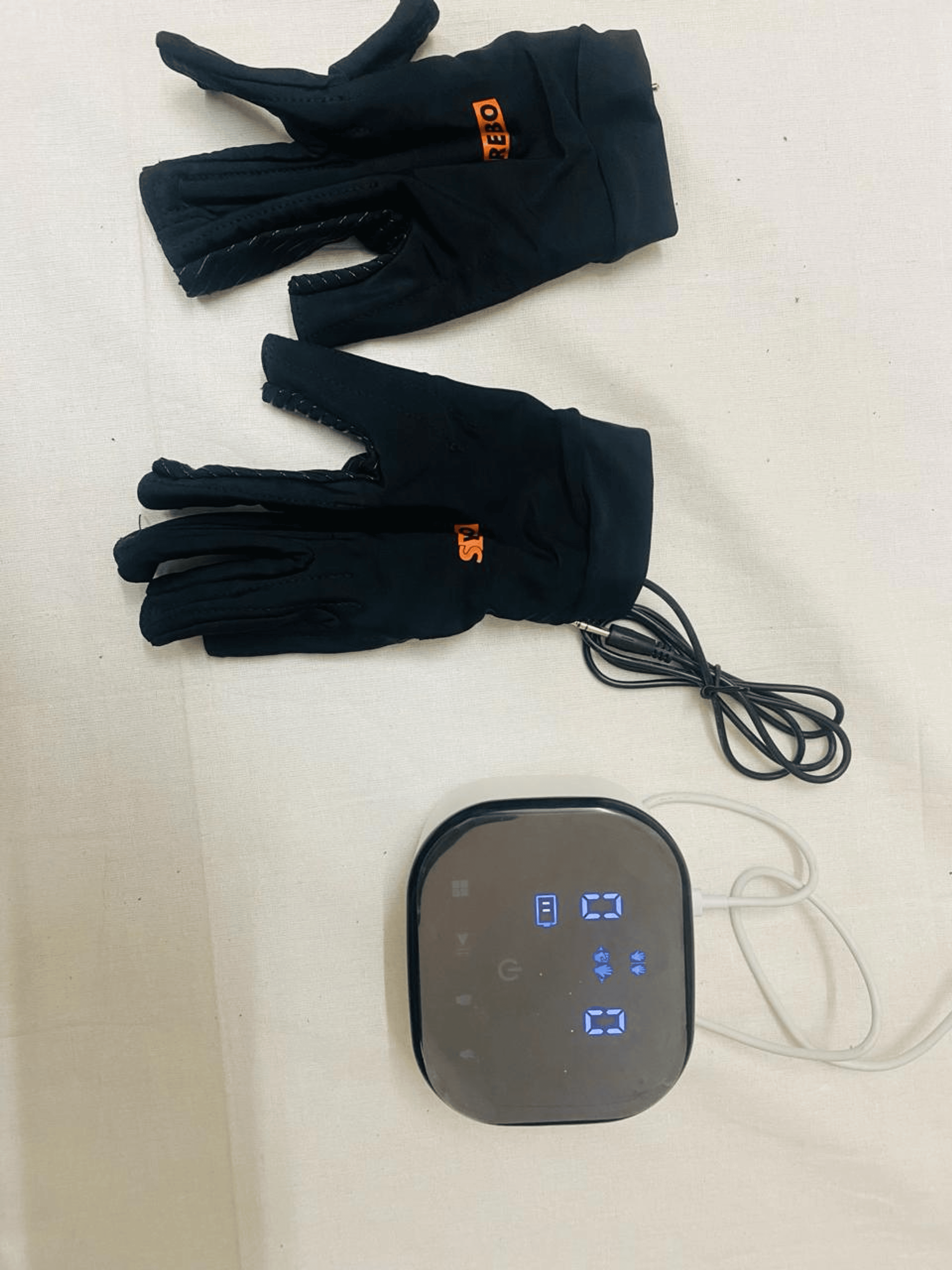
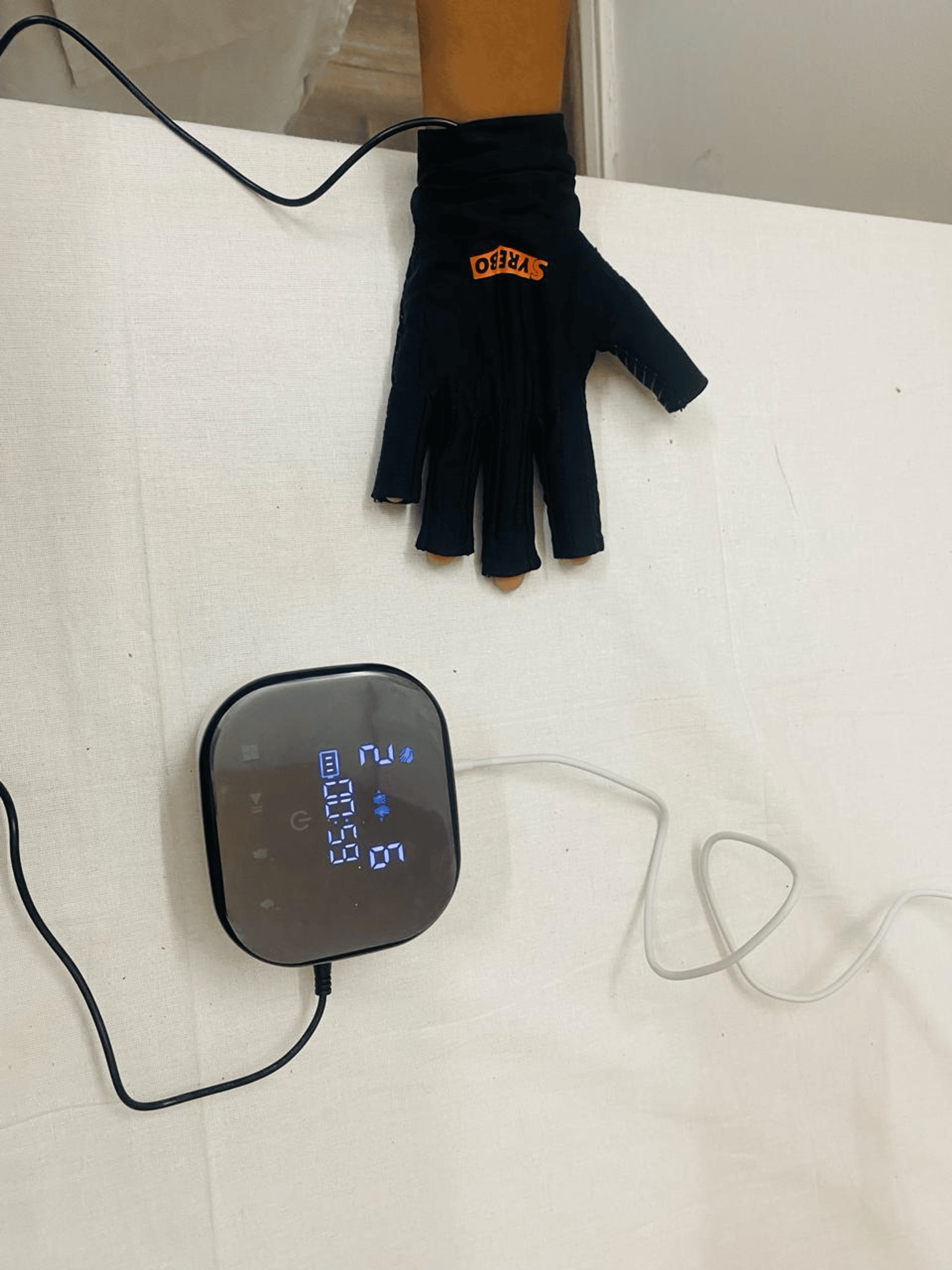
Figure 2 shows Syrebo's soft robotics glove equipment. Figure 3 shows the application of Syrebo's soft robotics gloves in patient hand.
Monday, February 12, 2024
10 Healthy Habits for Your Brain
10 Healthy Habits for Your Brain
Positive, everyday actions can make a difference in brain health,
even lowering the risk of cognitive decline and possibly Alzheimer's and
dementia. Incorporate some or all of these habits into your life to
help maintain a healthy brain.
Take charge of your brain health today — it's never too early or too late to start.
Challenge your mind
Keeping track of all the stroke research out there is challenging. Is your competent? doctor doing that? NO! Then you don't have a functioning stroke doctor.
Be curious! Put your brain to work and do something that is new for you. Learn a new skill. Try something artistic. Challenging your mind may have short- and long-term benefits for your brain.

Stay in school
Education reduces the risk of cognitive decline and dementia. Encourage youth to stay in school and pursue the highest level of training possible. Continue your own education by taking a class at a local library or college, or online.
Get moving
I do 6-8,000 steps 4-5 times a week.
Engage in regular exercise. This includes activities that raise your heart rate and increase blood flow to the brain and body. Find ways to build more movement into your day — walking, dancing, gardening — whatever works for you!
Protect your head
Yep, but had to buy a magnetic clasp for the bike helmet to be able to put it on one-handed. Did your therapist inform you of that possibility?
Help prevent an injury to your head. Wear a helmet for activities like biking, and wear a seatbelt. Protect yourself while playing sports. Do what you can to prevent falls, especially for older adults.
Be smoke-free
Nope, but a couple cigars when on international vacations.
Quitting smoking can lower the risk of cognitive decline back to levels similar to those who have not smoked. It's never too late to stop.
Control your blood pressure
Controlled, found out the problem when donating blood.
Medications can help lower high blood pressure. And healthy habits like eating right and physical activity can help, too. Work with a health care provider to control your blood pressure.
Manage diabetes
Nope, not even pre-diabetes.
Type 2 diabetes can be prevented or controlled by eating healthier, increasing physical activity and taking medication, if necessary.

Eat right
Better, but still needs work.
Eating healthier foods can help reduce your risk of cognitive decline. This includes more vegetables and leaner meats/proteins, along with foods that are less processed and lower in fat. Choose healthier meals and snacks that you enjoy and are available to you.
Maintain a healthy weight
Well, if my competent? doctor had bothered to tell me about metabolism slowing down past 50 and that because he fucking completely failed at getting me recovered I couldn't keep doing all the activities that burned massive amounts of calories!
Talk to your health care provider about the weight that is healthy for you. Other healthy habits on this list — eating right, exercising and sleeping well — can help with maintaining a healthy weight.
Sleep well
My doctor did nothing about getting me a sleep protocol and never found or tested for my sleep apnea.
Good quality sleep is important for brain health. Stay off screens before bed and make your sleep space as comfortable as possible. Do all you can to minimize disruptions. If you have any sleep-related problems, such as sleep apnea, talk to a health care provider.
Terms for understanding brain health
"Cognitive decline" refers to changes in the ability to think that
happen as people age. Some changes are a normal part of getting older,
but you can take steps to slow that decline. More significant decline or
severe changes are not normal and may be a sign of Alzheimer's disease or other dementia.
"Dementia" is a general term used to describe problems with thinking and
memory that are severe enough to interfere with a person's daily life.
Alzheimer's is the most common cause of dementia but there are several
kinds of dementia. Dementia is not a normal part of aging.
Tuesday, December 5, 2023
Haptic Nudging Using a Wearable Device to Promote Upper Limb Activity during Stroke Rehabilitation: Exploring Diurnal Variation, Repetition, and Duration of Effect
Does your doctor and therapists have haptics in use for your recovery? They've been out there for over a decade.
haptics (41 posts to May 2011)
HapticKnob (4 posts to June2022)
Haptic Nudging Using a Wearable Device to Promote Upper Limb Activity during Stroke Rehabilitation: Exploring Diurnal Variation, Repetition, and Duration of Effect
1
1
Health and Rehabilitation Research Institute, Auckland University of Technology, Private Bag 92006, Auckland 1142, New Zealand
2
Centre for Chiropractic Research, New Zealand College of Chiropractic, Auckland 1060, New Zealand
3
Department of Statistics, University of Auckland, 38 Princes Street, Auckland 1010, New Zealand
4
Callaghan Innovation, 5 Sheffield Crescent, Burnside, Christchurch 8053, New Zealand
*
Author to whom correspondence should be addressed.
Behav. Sci. 2023, 13(12), 995; https://doi.org/10.3390/bs13120995
Received: 12 October 2023
/
Revised: 15 November 2023
/
Accepted: 27 November 2023
/
Published: 2 December 2023
(This article belongs to the Section Experimental and Clinical Neurosciences)
Abstract
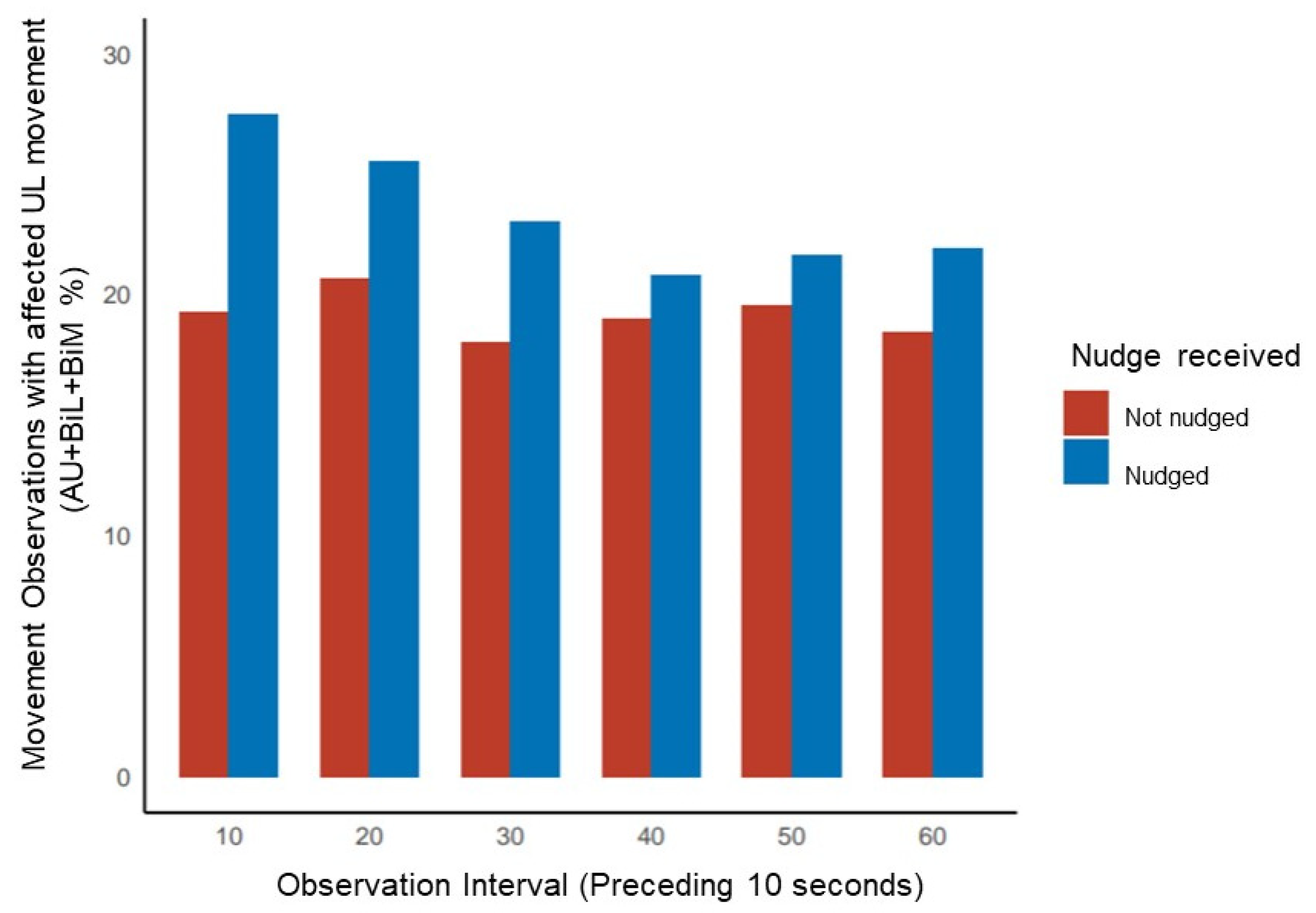
Haptic nudging via wearable devices promotes
physical activity and may increase upper limb movement in stroke
rehabilitation. This study investigated the optimal approach to haptic
nudging by examining diurnal variation, duration of effect, and repeated
nudging. The study analysed data from a multiple-period randomised
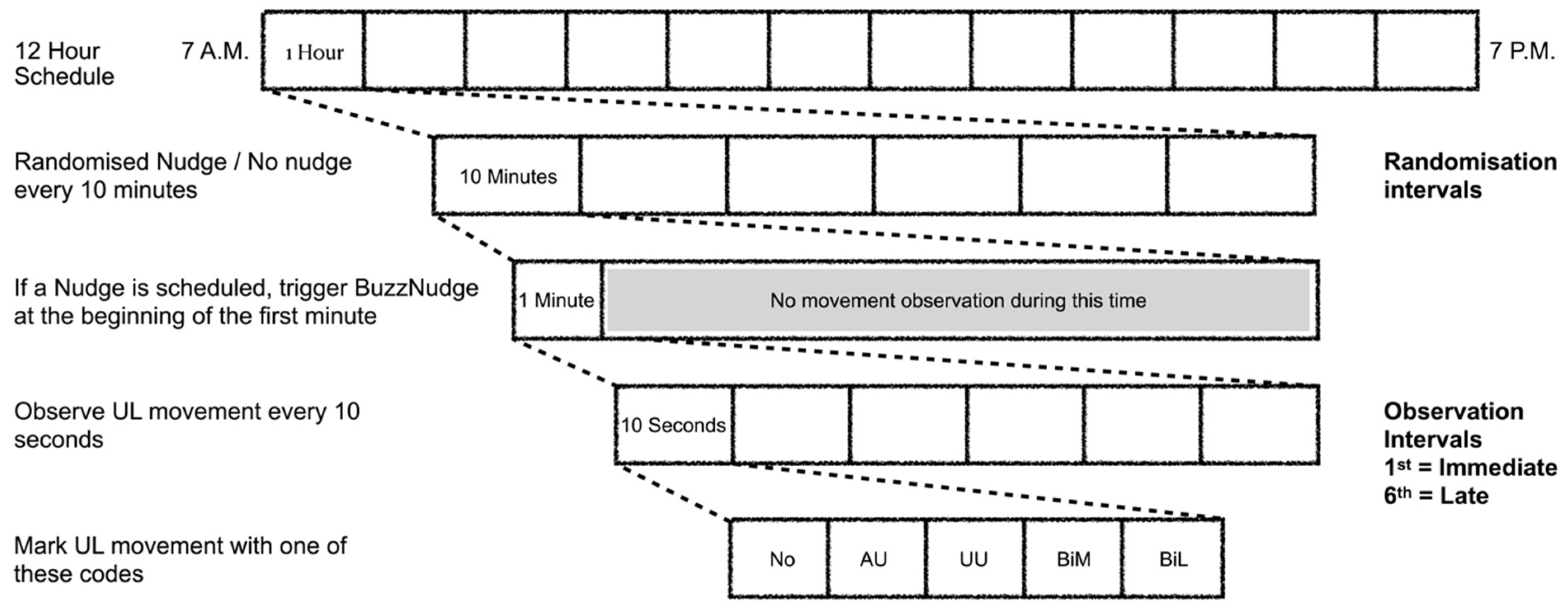
crossover study. A 12 h inpatient rehabilitation day was divided into 72
intervals in which participants with stroke (n = 20) randomly received
either a ‘nudge’ or ‘no nudge’. Upper limb movement was observed,
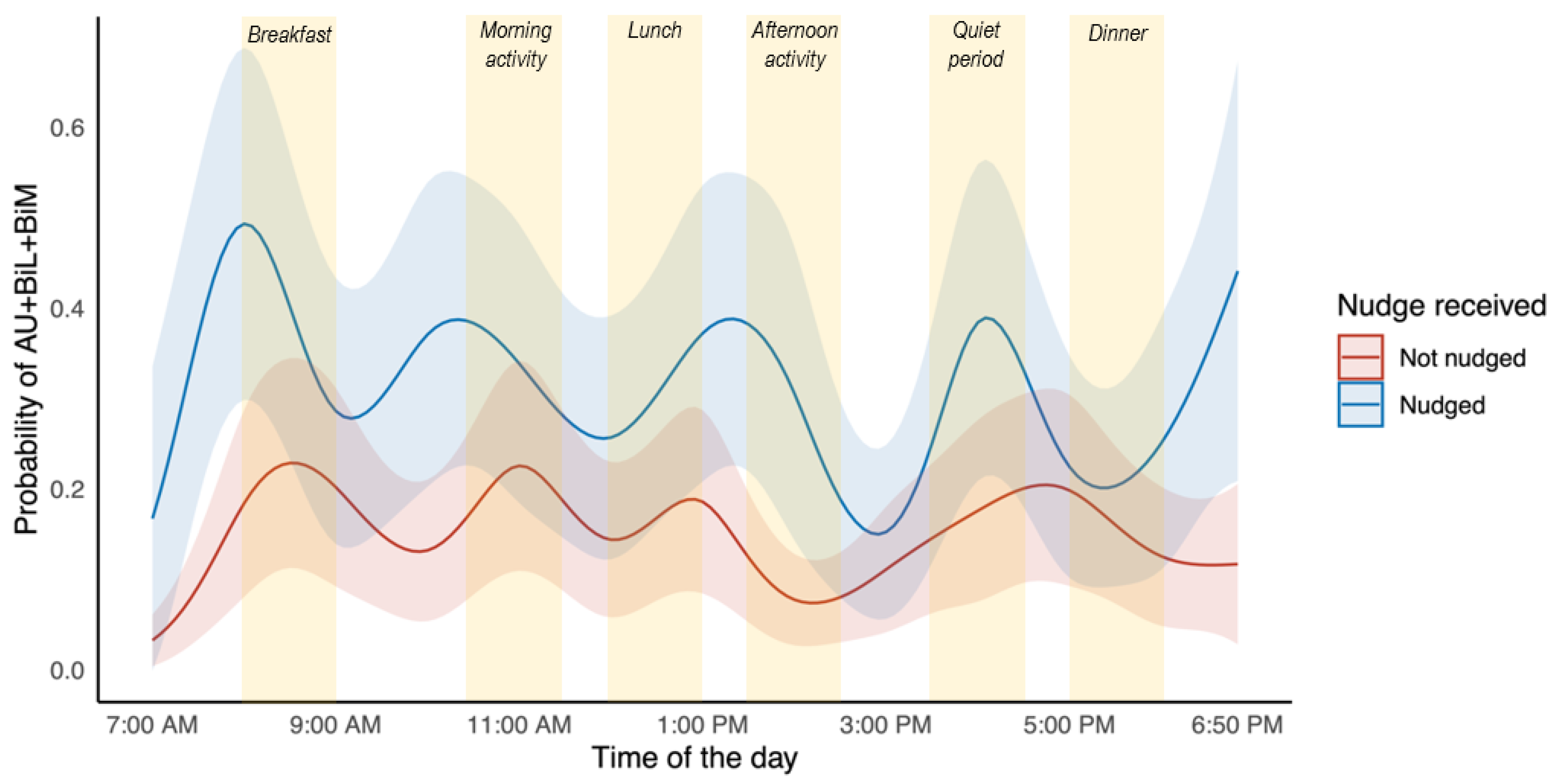
classified, and analysed using longitudinal mixed models. The odds of
affected upper limb movement following a nudge compared with no nudge
were significantly higher during active periods such as breakfast,
lunch, and morning and afternoon activities (odds ratios (ORs)
2.01–4.63, 95% CIs [1.27–2.67, 3.17–8.01]), but not dinner (OR 1.36, 95%
CI [0.86, 2.16]). The effect of nudging was no longer statistically
significant at 50–60 s post-nudge. Consecutive delays in nudging
significantly decreased the odds of moving when a nudge was eventually
delivered. Contrary to expectations, people with stroke appear more
responsive to haptic nudging during active periods rather than periods
of inactivity. By understanding the optimal timing and frequency of
haptic nudging, the design of wearable devices can be optimised to
maximise their therapeutic benefits.
1. Introduction
The
field of wearable technology has seen rapid development in recent
years, particularly with respect to its application in promoting
physical activity. Wearables are devices that integrate built-in sensors
into accessories or clothing [1], such as wristbands [2], shoes [3], and sleeves [4],
to monitor users’ movement and position. Sensor data are analysed to
provide feedback about physical activity either through the device or
via a mobile app on a smartphone or tablet [5]. When carried by the user, smartphones themselves can also act as wearable devices utilising their inbuilt sensors [6].
For
those who are proactive about their health, the use of wearables to
increase physical activity has become increasingly popular [7], with low- to moderate-quality evidence supporting their efficacy in healthy adults [5].
However, their potential to promote physical activity among those with
clinical and age-related conditions is an area that warrants further
investigation. Wearables offer a promising avenue for monitoring and
promoting physical activity both within and beyond healthcare settings [8].
As a leading cause of disability worldwide [9],
stroke is a clinical condition that could benefit from wearable
devices. Following stroke, rehabilitation incorporating high doses of
task-specific physical activity is recommended [10,11], yet people with stroke often receive limited rehabilitation and have very low levels of physical activity [12,13].
While wearables have been used to encourage physical activity after
stroke, and their potential to increase locomotor and upper limb
activity is recognised by both physical therapists and people with
stroke [14],
the evidence for their efficacy is limited. A 2018 Cochrane review
reported that wearables demonstrated no clear effect on locomotor
activity after stroke [15].
However, one randomised controlled trial in people with stroke
demonstrated that wearable step count monitoring increased physical
activity when combined with additional behavioural change strategies
such as an exercise calendar, goal setting, and praise for achievement [16].
The
combination of physical activity monitoring via wearables with
strategies that support behaviour change has been emphasised as an
approach that may improve their efficacy [5,17,18]. Such strategies might include feedback about progress and goal attainment, rewards, coaching, social support, and nudging [18,19]. Nudging refers to the concept of manipulating choice architecture to influence decision making and behaviour [20].
Nudging has been shown to be effective at promoting physical activity
in both healthy people and those with health conditions [21,22,23].
One nudging approach commonly used within wearable technologies to
prompt physical activity is haptic stimulation. Haptic nudging is
delivered using a small vibratory motor inside a wearable technology.
Users are encouraged to respond to haptic nudging by performing a
specific behaviour, for instance, completing rehabilitation exercises or
resuming physical activity [24].
Within stroke rehabilitation, where clinicians seek to promote active movement in the affected upper limb [12,25], observational and feasibility studies have explored the use of haptic nudging to prompt the use of the affected upper limb [26,27]. These studies have shown that haptic nudging is not only feasible in people with stroke [26] but can also significantly increase the likelihood the user will move their affected upper limb following haptic nudging [27].
Prior to conducting larger clinical trials to establish the efficacy of
wearable devices combined with behavioural change strategies to enhance
upper limb recovery, the optimal method of delivering haptic nudging to
promote physical activity in people with stroke should be explored. The
following study utilised the BuzzNudge wearable device, which is a
wrist-worn haptic nudge system that prompts users with stroke to move
their affected upper limbs. Using data from a single-day inpatient
stroke rehabilitation trial in which participants wore the BuzzNudge,
this study explored the following research questions: (i) Is there
diurnal variation in the effect of a haptic nudge? (ii) How long does
the effect of a haptic nudge last? (iii) Is the effect of a haptic nudge
dependent on the repetition of nudges?
Monday, June 26, 2023
Association between balance recovery during inpatient rehabilitation and gait without physical assistance in severe subacute post-stroke patients
FYI. What is your therapist's EXACT REHAB PROTOCOL for balance recovery? Mine was to do the most challenging walks where perturbations(rocks, roots, mud) were common. My therapist never challenged my walking, that was a mistake, leading to delayed recovery.
Association between balance recovery during inpatient rehabilitation and gait without physical assistance in severe subacute post-stroke patients
First published: 18 June 2023
Abstract
Background and Purpose
Studies that analyze gait without physical assistance recovery post-stroke are scarce. There are few of the studies that analyze longitudinally the recovery of balance during the subacute post-stroke inpatient rehabilitation. The aim of the study was to analyze the association between balance recovery during subacute stroke inpatient rehabilitation and gait without physical assistance achievement. Secondarily, to analyze the association between balance at admission of inpatient rehabilitation and gait without physical assistance achievement.
Methods
An observational, longitudinal, and retrospective cohort study was conducted. Subacute stroke subjects with an admission Berg Balance Scale below or equal to 4 points were included (n = 164). Two logistic regression models were developed. Model 1 analyzes the association between balance recovery during inpatient rehabilitation and gait without physical assistance at discharge. Model 2 analyzes the association between balance at the admission and gait without physical assistance at discharge.
Results
Of 164 severe post-stroke patients, 60 (36.5%) achieved gait without physical assistance. Although the two models developed a statistically significant association (p < 0.001), Model 1 evinced better discrimination performance (Model 1: area below the curve was of 0.987 -CI 95%: 0.975–0.998- vs. Model 2: area below the curve 2 was of 0.705 -CI 95%: 0.789–0.601-).
Discussion
Balance recovery during rehabilitation was strongly associated with gait without physical assistance achievement at the time of discharge in severe subacute post-stroke patients.
Implications for Physiotherapy Practice
The longitudinal analysis of motor recovery in severe subacute post-stroke patients may be helpful in the decision making process during inpatient rehabilitation.
Thursday, June 22, 2023
FREE Fesia Workshop. Thursday 13th July 2023, MOTIONrehab Leeds, 5pm-8pm - hand recovery
Which of your therapists is going to this to see if it could recover your hand? If you are elsewhere are you going to bring them to you? Why not?
Laziness? Incompetence? Or just don't care? No leadership? No strategy? Not my job? Not my Problem?
FREE Fesia Workshop. Thursday 13th July 2023, MOTIONrehab Leeds, 5pm-8pm
Video at link.
The workshop will be led by Fesia Technology with case studies from the UK with practical demonstrations of the Fesia Walk and Fesia Grasp.
By Ectron Limited
When and where
Date and time
Tue, 18 Jul 2023 17:00 - 20:00 BST
Location
MOTIONrehab, Asquith House Cliffe Park Cliffe Park Way Morley LS27 0RY United Kingdom
About this event
- Mobile eTicket
Ectron is pleased to announce a FREE Fesia Technology Workshop on Thursday 13th July 2023. The workshop will be led by Priscila Bonina, Clinical Applications Specialist, Fesia Technology with case studies from the UK along with practical demonstrations of the Fesia Walk and Fesia Grasp. There will also be drinks and nibbles provided at the start of the evening.
Date: Thursday 13th July 2023.
Time: 5pm-8:30pm
Venue: MOTIONrehab Intensive Neurological Rehabilitation Centre, Morley Leeds. LS27 0RY
Programme
5pm: - Registration, reception drinks/nibbles and networking
5:30pm: Start
Introduction to Ectron - Chris Morden - Director, Ectron
Fesia UK Case Study - Chris Morden - Director, Ectron
Introduction to Fesia Walk with practical demonstration - Priscila Bonina Silva, Clinical Applications Specialist, Fesia Technology
Introduction to Fesia Grasp with practical demonstration - Priscila Bonina Silva, Clinical Applications Specialist, Fesia Technology
8pm: Q&A, networking and drinks
8:30pm: Close
Saturday, February 25, 2023
Robot-assisted rehabilitation of hand function
Did your doctor, therapists and hospital do ANYTHING AT ALL with this from 13 years ago? Or do they not care about getting survivors recovered? That is my opinion, that they don't care enough to lift their little pinky. Solving stroke is hard work; why do anything when the failed status quo is paying me?
10% full recovery for normal rehab is an absolutely appalling failure rate! And you're paying for that?
Robot-assisted rehabilitation of hand function
Purpose of review
Initial work on robot-assisted neurorehabilitation for the upper extremity aimed primarily at training, reaching movements with the proximal sections of the upper extremity.However, recent years have seen a surge in devices dedicated to hand function. This review describes the state of the art and the promises of this novel therapeutic approach.
Recent findings
Numerous robotic devices for hand function with various levels of complexity and functionality have been developed over the last 10 years. These devices range from simple mechanisms that support single joint movements to mechanisms with as many as 18 degrees-of-freedom (DOF) that can support multijoint movements at the wrist and fingers.The results from clinical studies carried out with eight out of 30 reported devices indicate that robot-assisted hand rehabilitation reduces motor impairments of the affected hand and the arm, and improves the functional use of the affected hand.
Summary
The current evidence in support of the robot-assisted hand rehabilitation is preliminary but very promising, and provides a strong rationale for more systematic investigations in the future.
Keywords
hand impairments, robot-assisted rehabilitation, stroke
Curr Opin Neurol 23:000–000
2010 Wolters Kluwer Health | Lippincott Williams & Wilkins1350-7540
Initial work on robot-assisted neurorehabilitation for the upper extremity aimed primarily at training, reaching movements with the proximal sections of the upper extremity.However, recent years have seen a surge in devices dedicated to hand function. This review describes the state of the art and the promises of this novel therapeutic approach.
Recent findings
Numerous robotic devices for hand function with various levels of complexity and functionality have been developed over the last 10 years. These devices range from simple mechanisms that support single joint movements to mechanisms with as many as 18 degrees-of-freedom (DOF) that can support multijoint movements at the wrist and fingers.The results from clinical studies carried out with eight out of 30 reported devices indicate that robot-assisted hand rehabilitation reduces motor impairments of the affected hand and the arm, and improves the functional use of the affected hand.
Summary
The current evidence in support of the robot-assisted hand rehabilitation is preliminary but very promising, and provides a strong rationale for more systematic investigations in the future.
Keywords
hand impairments, robot-assisted rehabilitation, stroke
Curr Opin Neurol 23:000–000
2010 Wolters Kluwer Health | Lippincott Williams & Wilkins1350-7540
Tuesday, November 29, 2022
Bandaid removal failure
Got the Flu and Pneumonia shots. One in each upper arm with a Bandaid put on the sites. Left arm one was easy to remove, good right arm/hand can easily do the job. The right arm took me rubbing it against the sharp edge of my bathroom mirror to get it halfway off. Then had to continually rub it against a sharp edge of a door frame to get it further. Finally was able to use a long scissors in my right hand to get it removed. I blame my doctor for HAVING NOTHING TO RECOVER MY LEFT HAND. My therapist justified the hand recovery failure by quoting research that said that if you don't have movement at six weeks you're not likely to get it back. I didn't have the presence of mind back then to ask her what she was doing to change that failure to a success.
Every single failure in your stroke recovery should initiate a plan from your doctor, therapists and hospital to change that failure to recovery. If they are not doing that, they are sitting on the failures of the status quo and calling it good. Which means you don't have a functioning stroke doctor or hospital.
Wednesday, September 28, 2022
Shoulder and elbow muscle activity during fully supported trajectory tracking in people who have had a stroke
What have your doctors and therapists done with this in 13 years to help survivor recovery? NOTHING? Then why the fuck are you seeing and paying them? I expect my medical professionals to be professional, meaning up-to-date on all appropriate research. The massive number of research articles published every year is no excuse.
Shoulder and elbow muscle activity during fully supported trajectory tracking in people who have had a stroke
Received 19 February 2009
Received in revised form 4 August 2009
Accepted 6 August 2009
Sunday, August 14, 2022
A Gait Retraining Clinical Pearl for Young Athletes
Do you think there is even the minutest possibility that your doctor and therapists see this and exclaim; 'Wow, this might work for stroke rehab'? If not, why are you employing incompetent people? They are your employees, you can fire them and get someone better.
A Gait Retraining Clinical Pearl for Young Athletes
Written By: Paul Frizelle, PT, DPT, MS, OCS, MTC, CSCS, PES, CES
I’m going to be honest with everyone…. gait retraining is one of my least favorite parts of lower body rehab. Young athletes seem to present an even bigger challenge for me because they are often mentally two steps ahead of where they are physically. Teaching the intricacies of coordinated and efficient movement seems to take a back seat to “get me back to playing”. In the Unusual Cases in Rehab Series: Young Athlete Shoulder, Foot and Wrist course I have an example of an ankle injury who was able to pass through many benchmarks prior to returning to play. Her case was not without a little challenge, but she was a good example of teaching the nuances of gait training successfully.
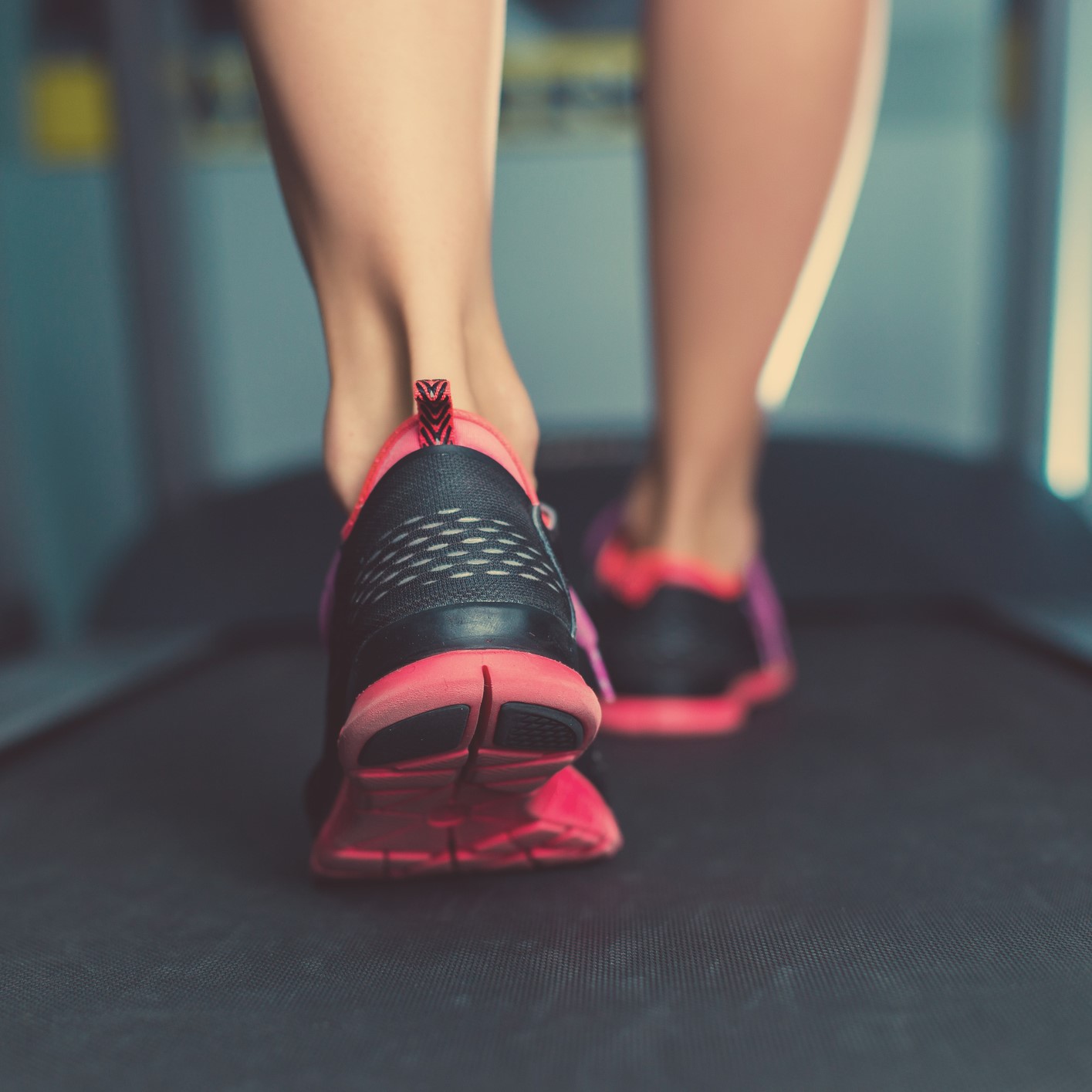
One of the tools that I like using the most is treadmill retropulsion to teach symmetrical stride length. It is a great example of a slightly higher movement coordination intervention that does not significantly increase loading or speed of movement. In fact, when compared to forward walking it is actually 30-50% slower. It is also an evidence-based intervention (Balasukumaran, Olivier & Ntsiea, 2019) that has been shown to be an effective tool for helping people with gait impairments. I have found one of the best ways to use it with young athletes is to use video recording during walking backwards on a treadmill. You can use the patient’s phone if there are any HIPPA concerns or if your clinic does not have recording equipment. This allows the rehab professional to use a low-speed intervention that is easily recorded (and HIPPA complaint) to quickly reveal stride length differences. My personal experience has been that once a young athlete sees the video, it becomes apparent the need to focus more on gait retraining. Also using the treadmill backwards keeps them engaged and moderately challenged, all at lower and safer speeds than walking forwards. In the initial phases of rehab, it may be used as gait training but as you get further into the rehab process it is a great tool to use as a therapeutic exercise for a dynamic warm-up prior to engaging in the full rehab program.
Above is a short video of a patient with whom I used this to help him understand why we needed to work on stride length before running. He was walking at about 1-1.4 mph in this video which really highlights how well the treadmill can accomplish early goals for improving stride length awareness and symmetry in the rehab process.
If you want to learn more, be sure to register for my September 10th webinar, Unusual Cases in Rehab Series: Knee, Cervical Spine, and Vestibular Dysfunction. Thanks for taking the time to read this blog and hope you get a chance to use this tool with your patients!
Friday, July 1, 2022
Real-time feedback control of split-belt ratio to induce targeted step length asymmetry
How long have your therapists been using a split-belt treadmill for your walking recovery?
split-belt treadmill (10 posts to May 2013)
Real-time feedback control of split-belt ratio to induce targeted step length asymmetry
Journal of NeuroEngineering and Rehabilitation volume 19, Article number: 65 (2022)
Abstract
Introduction
Split-belt treadmill training has been used to assist with gait rehabilitation following stroke. This method modifies a patient’s step length asymmetry by adjusting left and right tread speeds individually during training. However, current split-belt training approaches pay little attention to the individuality of patients by applying set tread speed ratios (e.g., 2:1 or 3:1). This generalization results in unpredictable step length adjustments between the legs. To customize the training, this study explores the capabilities of a live feedback system that modulates split-belt tread speeds based on real-time step length asymmetry.
Materials and methods
Fourteen healthy individuals participated in two 1.5-h gait training sessions scheduled 1 week apart. They were asked to walk on the Computer Assisted Rehabilitation Environment (CAREN) split-belt treadmill system with a boot on one foot to impose asymmetrical gait patterns. Each training session consisted of a 3-min baseline, 10-min baseline with boot, 10-min feedback with boot (6% asymmetry exaggeration in the first session and personalized in the second), 5-min post feedback with boot, and 3-min post feedback without boot. A proportional-integral (PI) controller was used to maintain a specified step-length asymmetry by changing the tread speed ratios during the 10-min feedback period. After the first session, a linear model between baseline asymmetry exaggeration and post-intervention asymmetry improvement was utilized to develop a relationship between target exaggeration and target post-intervention asymmetry. In the second session, this model predicted a necessary target asymmetry exaggeration to replace the original 6%. This prediction was intended to result in a highly symmetric post-intervention step length.
Results and discussion
Eleven out of 14 participants (78.6%) developed a successful relationship between asymmetry exaggeration and decreased asymmetry in the post-intervention period of the first session. Seven out of the 11 participants (63.6%) in this successful correlation group had second session post-intervention asymmetries of < 3.5%.
Conclusions
The use of a PI controller to modulate split-belt tread speeds demonstrated itself to be a viable method for individualizing split-belt treadmill training.
Introduction
Conventional split-belt treadmill training techniques often do not consider the individuality of participants due to the use of predefined tread speed ratios, where the speed of the left belt and the speed of the right belt are constant and not equal [7, 14, 16, 22]. These ratios are applied for a period of time (split-belt training) and then the belts are returned to the same speed (tied-belt). The gait behavior retains short-term after-effects when the treadmill is returned to tied-belt. Since split belt ratios affect different participants differently, set ratios do not allow for targeted after-effects. As participants’ responsiveness to training has considerable variation, the need for individualized training strategies has become pertinent.
This study investigates the use of a real-time feedback controller focused on maintaining a desired step length asymmetry. The primary purpose of this study is to evaluate the ability of the controller to achieve target asymmetries in gait by focusing on step length and adjusting split-belt speed ratios using real-time feedback control. Additionally, we developed a model for each participant to predict second session outcomes based on first session performance. Therefore, the second purpose of the study is to determine the validity of a model that predicts intervention outcomes and individualizes training to achieve post-intervention step length asymmetry values < 3.5%.
Split-belt treadmill training
Split-belt treadmill training is an approach taken to modify gait patterns, particularly step length asymmetries [1, 2, 5,6,7, 14, 16,17,18, 22]. The belts are set such that one is “fast” and the other is “slow.” The typical initial response to this perturbation is that the step length on the slow belt will be longer while the step length on the fast belt will be shorter [17, 20]. Upon a sudden return to a tied-belt state, the participant expresses more symmetric step lengths, opposite in direction of those induced by the split-belt intervention (i.e., after-effect) [17, 20, 22]. The after-effects imposed by various split-belt ratios between 1:1 and 1:3 have been investigated [2, 26]. These experiments demonstrated a correlation between the belt speed ratio used during the adaptation period and the severity of the step length asymmetry observed in the early adaptation period (split-belt training) and the post-adaptation period (tied-belt after-effect). In the case of post-stroke participants, the transfer of after-effects from split-belt treadmill training to ground have also been studied. The after-effect imposed by a 2:1 split-belt ratio in post-stroke participants was partially transferred from the treadmill to overground after a short-term training [19]. The limited transfer of the after-effect to overground was still observed even after a long-term (4 weeks) split-belt treadmill training [17].
The split-belt treadmill approach has also been modified to determine whether sudden or gradual deviation from tied-belt to split-belt has any effect on participant performance. Hinkel-Lipsker and Hahn [5] conducted an experiment where one group was brought from tied-belt (0.7 m/s) to 2:1 split-belt (1.4 m/s to 0.7 m/s) by an acceleration profile of 0.02 m/s2 every 20 strides and a second group by an acceleration profile of 10 m/s2. This experiment revealed a novel kinetic pattern at the hip joint of those trained with the gradual split belts. Specifically, the 10 m/s2 acceleration scenario resulted in decreased work at the slow hip joint. Conversely, the slower acceleration scenario resulted in little to no difference in work done between the fast and slow hip joint. This study indicates that adaptation occurs regardless of whether the treadmill belt ratio changes gradually or suddenly. The overall effects of these training approaches need to be further explored to determine their efficacy when compared to standard sudden split-belt training.
Split-belt treadmill studies have consistently aimed at revealing the relationship between gait parameters and the tread ratios used for training. They often incorporate the analysis of step length and several other spatiotemporal parameters as well as dynamic parameters, such as joint work [23]. This feedback study does not aim at understanding the effect of a new and targeted intervention on all spatiotemporal and dynamic gait parameters. Rather, it aims at determining whether a single spatial parameter (step length) can be controlled in a highly targeted manner. Confirmation of this approach will allow future investigators to determine the clinical capacity of this new intervention through analysis of its effects on more gait parameters.
More at link.
Thursday, June 23, 2022
Comparison of task- and impairment-oriented approaches for upper limb function and usage behavior among patients with upper extremity paralysis after cerebral infarction in the recovery phase
FYI. Do you think your therapist could implement this?
Comparison of task- and impairment-oriented approaches for upper limb function and usage behavior among patients with upper extremity paralysis after cerebral infarction in the recovery phase
回復期において脳梗塞後の上肢麻痺に対する 課題指向型アプローチと機能指向型アプローチの 上肢機能および使用行動に関する比較検討.
Japanese Occupational Therapy Research , Volume 39(2) , Pgs. 162-169.
NARIC Accession Number: I247505. What's this?
Author(s): Takashi TAKEBAYASHI; Hiroki Karato; Isao Sasaki; Kazuhiro Tokuda.
Publication Year: 2020.
NARIC Accession Number: I247505. What's this?
Author(s): Takashi TAKEBAYASHI; Hiroki Karato; Isao Sasaki; Kazuhiro Tokuda.
Publication Year: 2020.
Abstract:
The objective of this study was to compare the protocols of the
Task-oriented approach (TOA) and Transfer Package (TP) to the
Impairment-oriented approach (IOA) and TP for paralyzed hands after
stroke. Study participants were 13 patients: 7 in the TOA/TP group and 6
in the IOA/TP group. Upper extremity function (Fugl-Meyer Assessment -
FMA) and usage behavior of the paralyzed hand (Motor Activity Log - ,
MAL/AOU, QOM) were compared, and results indicated no significant change
in FMA (p=0.18), but MAL changed significantly in the TOA group
compared to the IOA group (MAL AOU: p=0.04, MAL QOM: p<0.01). These
results suggest that TOA could transfer the functions acquired in
real-life practice more efficiently even if the same TP is performed.
Descriptor Terms: Attitudes toward disabled, Operations research, Professional occupations, Treatment, Brain.
Language: Japanese
Geographic Location(s): Japan, East & Southeast Asia.
Can this document be ordered through NARIC's document delivery service*?: Request Information.
Get this Document: https://www.jstage.jst.go.jp/article/jotr/39/2/39_162/_pdf/-char/en.
Citation: Takashi TAKEBAYASHI, Hiroki Karato, Isao Sasaki, Kazuhiro Tokuda. (2020). Comparison of task- and impairment-oriented approaches for upper limb function and usage behavior among patients with upper extremity paralysis after cerebral infarction in the recovery phase. 回復期において脳梗塞後の上肢麻痺に対する 課題指向型アプローチと機能指向型アプローチの 上肢機能および使用行動に関する比較検討. Japanese Occupational Therapy Research , 39(2), Pgs. 162-169. Retrieved 6/23/2022, from REHABDATA database.
Descriptor Terms: Attitudes toward disabled, Operations research, Professional occupations, Treatment, Brain.
Language: Japanese
Geographic Location(s): Japan, East & Southeast Asia.
Can this document be ordered through NARIC's document delivery service*?: Request Information.
Get this Document: https://www.jstage.jst.go.jp/article/jotr/39/2/39_162/_pdf/-char/en.
Citation: Takashi TAKEBAYASHI, Hiroki Karato, Isao Sasaki, Kazuhiro Tokuda. (2020). Comparison of task- and impairment-oriented approaches for upper limb function and usage behavior among patients with upper extremity paralysis after cerebral infarction in the recovery phase. 回復期において脳梗塞後の上肢麻痺に対する 課題指向型アプローチと機能指向型アプローチの 上肢機能および使用行動に関する比較検討. Japanese Occupational Therapy Research , 39(2), Pgs. 162-169. Retrieved 6/23/2022, from REHABDATA database.
Saturday, June 18, 2022
Hand rehabilitation with sonification techniques in the subacute stage of stroke
You'll have to ask your doctor and therapists for sonification, it's only been out there for 10 years.
Sonification has been written about for 10 years. It is about time for our fucking failures of stroke associations to step up to the plate and write a stroke protocol on this. I can guarantee this won't occur.
sonification (11 posts to May 2012)
After a stroke event, most survivors suffer from arm paresis, poor motor control and other
disabilities that make activities of daily living difficult, severely affecting quality of life and personal
independence. This randomized controlled trial aimed at evaluating the efficacy of a music-based
sonification approach on upper limbs motor functions, quality of life and pain perceived during
rehabilitation. The study involved 65 subacute stroke individuals during inpatient rehabilitation
allocated into 2 groups which underwent usual care dayweek) respectively of standard upper
extremity motor rehabilitation or upper extremity treatment with sonification techniques. The FuglMeyer Upper Extremity Scale, Box and Block Test and the Modified Ashworth Scale were used to
perform motor assessment and the McGill Quality of Life-it and the Numerical Pain Rating Scale to
assess quality of life and pain. The assessment was performed at baseline, after 2 weeks, at the end of
treatment and at follow-up (1 month after the end of treatment). Total scores of the Fugl-Meyer Upper
Extremity Scale (primary outcome measure) and hand and wrist sub scores, manual dexterity scores
of the affected and unaffected limb in the Box and Block Test, pain scores of the Numerical Pain Rating
Scale (secondary outcomes measures) significantly improved in the sonification group compared to
the standard of care group (time*group interaction < 0.05). Our findings suggest that music-based
sonification sessions can be considered an effective standardized intervention for the upper limb in
subacute stroke rehabilitation.
After a stroke event, most survivors (80–90%) suffer from arm paresis, poor motor control and other disabilities,
which evolve in a chronic condition in about 30–40% of cases1,2
. Consequently, patients have difficulty in performing activities of daily living, a fact that severely affects their quality of life and independence3
. Task-oriented
sensory-motor training, which allows to transmit the sensory information of the feedback to the central nervous system during task execution, and movements adaptation, is recognized as significant in increasing poststroke arm function and dexterity2,4
. Beside other factors, such as patient’s compliance and subjective interest in
stimulus, the intensity of training and patient’s motivation have been indicated as key features for a successful
rehabilitation therapy5,6
.
The development of technologies for rehabilitation has made it possible to formulate new application paradigms obtained by integrating the current rehabilitation pathways with instrumental interventions7,8
. Sensory motor rehabilitation techniques, obtained through technological devices (such as virtual reality, robots, noninvasive stimulations , motion capture) and used in support of traditional rehabilitation techniques, seem to
provide objective parameters for patient evaluation, accelerate the process of motor recovery and improve motor
performance at discharge by means of a top-down approach9,10
.
Although the results obtained with the currently available devices are encouraging, we are only at an early
stage for the exploitation of these technologies. In fact, while technology-assisted rehabilitation of the upper limb
has demonstrated to have a significant impact on motor outcomes, especially at the proximal level (shoulder
14 pages at link.
Thursday, June 9, 2022
Impaired corrective responses to postural perturbations of the arm in individuals with subacute stroke
Are your therapists even perturbing anything in your rehab? Why not? I consider my walking thru a crowded bar getting bumped the best and fastest way to ensure your balance is up to snuff. I didn't up the ante and carry my drink at the same time. But don't listen to me, I'm not medically trained.
Impaired corrective responses to postural perturbations of the arm in individuals with subacute stroke
Journal of NeuroEngineering and Rehabilitation volume 12, Article number: 7 (2015)
Abstract
Background
Stroke is known to alter muscle stretch responses following a perturbation, but little is known about the behavioural consequences of these altered feedback responses. Characterizing impairments in people with stroke in their interactions with the external environment may lead to better long term outcomes. This information can inform therapists about rehabilitation targets and help subjects with stroke avoid injury when moving in the world.
Methods
In this study, we developed a postural perturbation task to quantity upper limb function of subjects with subacute stroke (n = 38) and non-disabled controls (n = 74) to make rapid corrective responses with the arm. Subjects were instructed to maintain their hand at a target before and after a mechanical load was applied to the limb. Visual feedback of the hand was removed for half of the trials at perturbation onset. A number of parameters quantified subject performance, and impairment in performance was defined as outside the 95th percentile performance of control subjects.
Results
Individual subjects with stroke showed increased postural instability (44%), delayed motor responses (79%), delayed returns towards the spatial target (79%), and greater endpoint errors (74%). Several subjects also showed impairments in the temporal coordination of the elbow and shoulder joints when responding to the perturbation (47%). Interestingly, impairments in task parameters were often found for both arms of individual subjects with stroke (up to 58% for return time). Visual feedback did not improve performance on task parameters except for decreasing endpoint error for all subjects. Significant correlations between task performance and clinical measures were dependent on the arm assessed.
Conclusions
This study used a simple postural perturbation task to highlight that subjects with stroke commonly have difficulties responding to mechanical disturbances that may have important implications for their ability to perform daily activities.
Background
When holding a drink in a crowded room and someone bumps your arm, you must rapidly respond to keep the drink from spilling. Recent studies highlight that the motor system is capable of generating intelligent corrective responses to unexpected forces applied to the body [1, 2]. For example, perturbation responses have been shown to account for subject intent [3–7], urgency to respond [8], properties of the limb [9] and properties of the goal and environment [10, 11]. These task-related responses can be observed in the long-latency time period, ~50 ms after perturbation onset, implying these responses are generated through a transcortical feedback pathway [12–14]. Historically, the transcortical feedback pathway is considered to involve primary motor and somatosensory cortices [15–17], but many other cortical and subcortical areas may contribute to these corrective responses [2].
Stroke can damage cortical and subcortical regions of the brain or spinal cord, leading to a wide range of sensory and/or motor impairments [18]. This damage often leads to patients having slow, jerky and uncoordinated movements post-stroke [19]. The impact of stroke on corrective responses in the upper limb has principally been explored by quantifying long latency stretch responses in muscles. In stroke, long-latency responses have been found to be delayed and/or absent in wrist muscles [20] and the biceps brachii [21]. Subjects with stroke do not modulate their long latency responses when their arms counter stiff versus compliant environments [10] and also display inappropriate coupling between different muscle groups [22].
Only a few of the aforementioned studies that quantified changes in long-latency stretch responses in the upper limb also examined behavioural responses to perturbations [14, 19]. Many perturbation studies were designed to assess spasticity and instructed subjects to relax and not intervene or react to the perturbation [14, 19, 23–25]. Other studies have instructed subjects to actively assist [26] or actively resist [27] the perturbation. In these paradigms the applied perturbation directly controlled limb motion so that the subject could not actively achieve the behavioural goal. Therefore, it is difficult to interpret the subjects’ behavioural impairments without an attainable goal [2].
Previous studies also highlight potential deficits in the ipsilesional arm post-stroke. For example, subjects with stroke have shown bilateral impairments in modulating long latency responses between stiff and compliant environments [10]. Marsden and colleagues also found that 5 out of 12 subjects with stroke had reduced long latency responses in the both arms [15]. Again, it is not clear how altered long-latency responses in the ispilesional limb are linked to behavioural impairments for these individuals.
Finally, vision plays an important role in voluntary motor control and could provide an important alternate source for correcting limb disturbances when somatosensory feedback is impaired. Bonan and colleagues found that visual feedback was critical for maintaining whole-body posture [28]. Piovesan and colleagues found arm stiffness was reduced during reaching when post-stroke subjects used visual feedback [29]. However, little is known on the relative contribution of visual and somatosensory feedback to counter limb perturbations [30]. Visual feedback is slower than limb somatosensory feedback. Thus it is predicted that impairments in somatosensory feedback can be compensated for by visual feedback except for a slight delay in the corrective response.
Our goal was to create a behavioural task to quantify the ability of subjects with stroke to actively correct for unexpected disturbances of the arm during a goal-directed motor action. Subjects had to maintain their hand at a spatial goal and a constant load was applied to the limb so that subjects must respond to the disturbance to achieve the behavioural goal [2]. Corrective responses were assessed in both the contra- and ipsilesional arms. As well, we examined corrective responses with and without vision to quantify whether impairments in the use of somatosensory feedback could be compensated for with vision. Subjects with stroke were often slower than controls in decelerating the arm in response to the imposed load, took longer to return to the goal or undershot the target. Endpoint error was the only parameter that showed improvement when visual feedback was provided to subjects. About half of subjects with stroke who showed task impairments with their more affected arm also showed impairments with their other arm. Thus, this robotic postural perturbation task quantifies post-stroke impairments in the use of limb afferent feedback to generate motor corrections.
More at link.
Subscribe to:
Posts (Atom)