WOW, admitting COMPLETE FUCKING INCOMPETENCE in how long
it took to bring vagus nerve stimulation into their stroke practice. And
you haven't fired the board of directors for incompetence yet?
vagus nerve (67 posts to July 2012) Why do a surgical implant when non-invasive ones exist? Everyone there is so incompetent they know nothing about stroke rehab?
First Nebraska patient receives new implant for stroke recovery
OMAHA, Neb. (WOWT) - Mark Wilson became the first patient in Nebraska to receive a Vivistim implant, a new treatment that could help stroke patients make a better recovery.
It’s been four years since Wilson woke up with his left side feeling strange. He thought he just slept on it wrong.
“That’s when I called a friend of mine. I asked him a couple of questions, and he said I’ll be over to pick you up and take you to the hospital,” Wilson said.
The stroke affected the use of his left arm, hand, leg and foot. He’s been in intensive rehab ever since.
Now he’s pairing it with a new kind of treatment.
How the device works
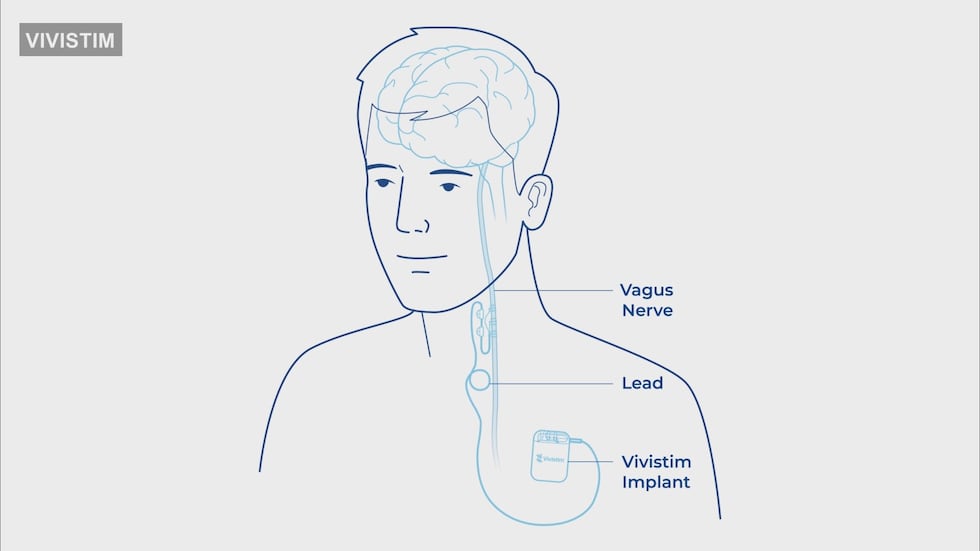
A few weeks ago, Wilson underwent surgery to get the Vivistim device, which is about the size of a pacemaker.
“The device is implanted into the chest and has a lead wire up to the vagus nerve, which helps to promote activation to the brain, and so they call it fertilizer for the brain,” said Stacy Reichmuth, an occupational therapist at Nebraska Medicine. “We pair the activation of the device with meaningful movements and purposeful movements.”
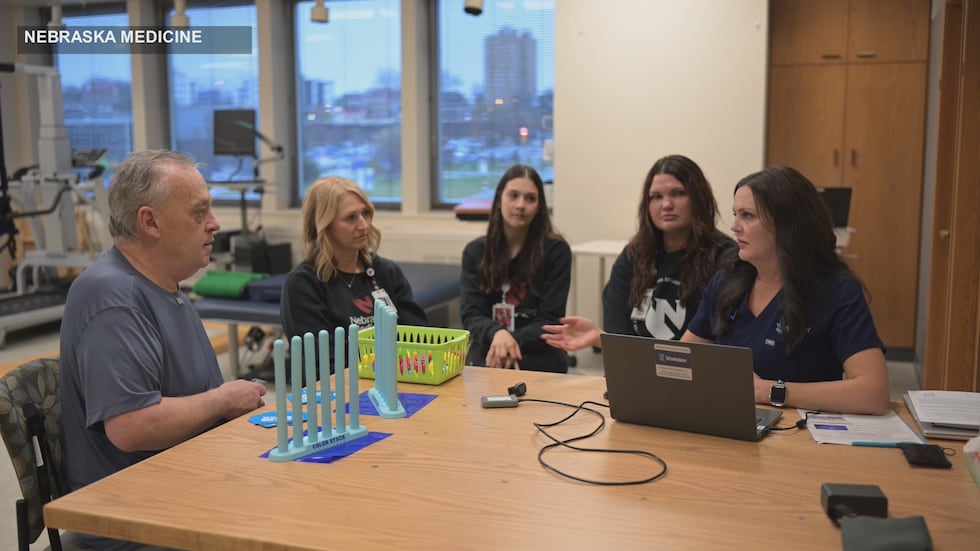
At a recent appointment, his occupational therapy team at Nebraska Medicine turned on the device for the first time.
During his exercises, the device boosts the brain’s ability to make new connections. The more repetitions, the better the potential results.
“So, the results come a lot faster and aren’t isolated to just arm movement. They can affect balance, walking, speaking, mood,” Reichmuth said.
Reichmuth has been doing stroke rehabilitation for about 25 years.
“This is just the most exciting thing that’s probably happened to stroke rehab,” she said.
Getting back on the green
Wilson has one particular goal in mind.
“I golfed probably four or five times a week and that’s the thing I miss tremendously, because not only was it a great physical activity, mentally it was good for me as well,” Wilson said. His therapy team is hoping to get him back on the green.
“We are incorporating a lot of activities that will help the left arm in hand, be able to hold the club, be able to place a tee and swing at the ball,” Reichmuth said.
For the next eight weeks, Wilson will have 90-minute sessions three days a week, plus a home exercise program. His two daughters are keeping him motivated.
“She asked me all sorts of questions and she thinks it’s awesome,” Wilson said of his daughter who is an occupational therapist. “Both of them are really strict and they’ll become, I think, a little bit more watchful over me to make sure I’m doing things right.” Wilson said he was grateful for the opportunity to try out this new technology.
“I don’t think I would like to be sitting here a year or two from now and not doing it and thinking to myself, boy I wish I would have, could have, or should have done that,” he said.
About 55,000 people in Nebraska had a stroke last year, according to Reichmuth. Since Wilson’s surgery, the stroke recovery team has referred 12 more patients to get the device.
Who qualifies for the implant
In order to qualify for an implant, patients must be:Six months post-stroke
- At least 22 years old
- Have had an ischemic (clotting) stroke
- Pass a movement test (Fugl-Meyer assessment)


No comments:
Post a Comment