Now our competent? doctors and researchers just need to tell us EXACTLY THE EXERCISE PROTOCOL THAT DOES THIS! Not lazy guidelines! I'd fire anyone pushing guidelines instead of protocols!
How exercise can protect against Alzheimer’s
At a Glance
- Researchers used a mouse model to gain insights into how exercise alters brain cells to protect them against Alzheimer’s disease.
- The findings hint at possible future treatment strategies.
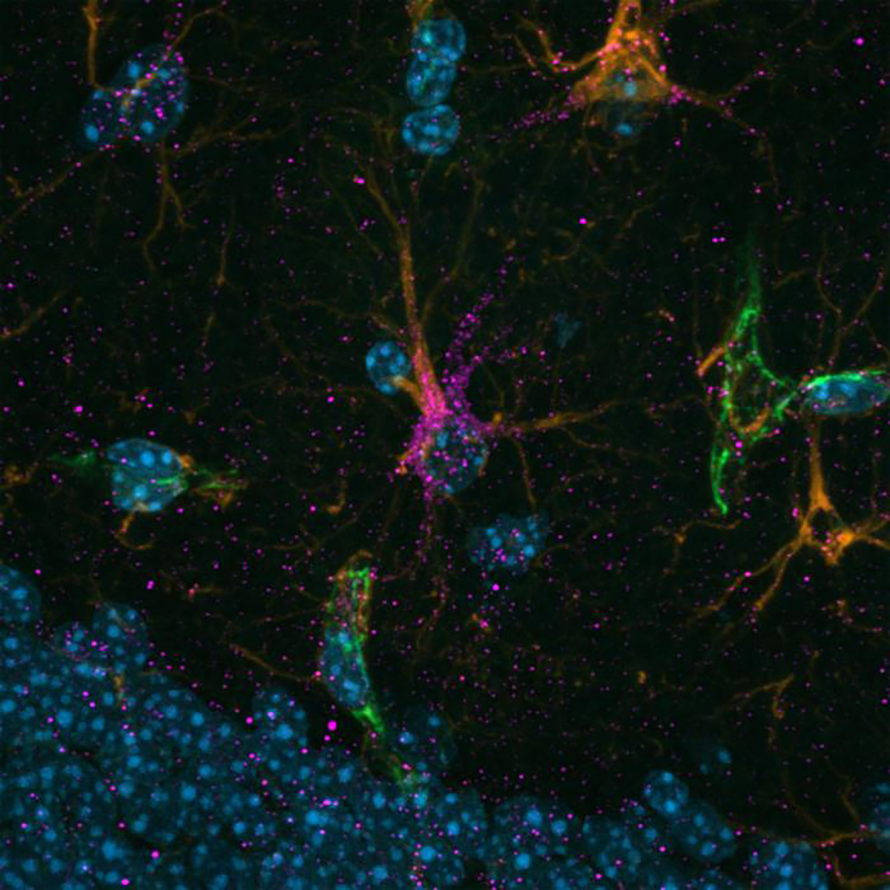
Exercise has well-known protective effects in Alzheimer’s disease (AD). More exercise is associated with lower risk of AD, better cognitive function, and less cognitive decline in people with AD. How exercise leads to these effects at the cellular level remains unclear. Knowing this could lead to novel ways to treat AD and other neurodegenerative diseases.
A research team led by Dr. Christiane Wrann at Massachusetts General Hospital looked for exercise-induced changes in gene activity in a mouse model of AD. They used a technique called single-nucleus RNA sequencing (snRNA-seq). This allows for analysis of gene activity at the single cell level. They focused on a region of the hippocampus called the dentate gyrus. The hippocampus is essential for memory and learning, and the dentate gyrus is where new hippocampal neurons form. Past studies have found it to be particularly susceptible to changes during both exercise and AD. Results of the study, which was funded in part by NIH, appeared in Nature Neuroscience on June 12, 2025.
For exercise, mice were allowed to run freely on a wheel over a 60-day period. As expected, the AD mice who exercised had better cognitive function than ones that were kept sedentary. Exercise led to changes in gene activity in both healthy mice and in the mouse model of AD. The genes affected, however, differed between healthy and AD mice.
Certain gene activity changes were specific to AD mice across various cell types. Exercise restored some of these genes’ activities to levels like those of healthy mice. Many of these recovered genes, the team noted, were found in immature neurons. This suggested that exercise has an impact on new neuron formation in the hippocampus. Further experiments showed that one exercise-recovered gene, Atpif1, was particularly important for neuron development and survival.
Exercise had a pronounced effect on gene activity in oligodendrocyte progenitor cells. These give rise to oligodendrocytes, which make the myelin sheath that insulates neurons. Exercise restored the activity of more than half of the genes in these cells that were affected in the AD mice.
The team also identified a subset of microglia, a type of immune cell found in the brain, that was only found in AD mice. These resembled disease-associated microglia, which are activated in response to AD and can reduce the damage caused by AD. Exercise, the researchers found, increased the activity of genes associated with these microglia.
The researchers identified a subset of astrocytes that were less abundant in AD mice. Astrocytes are cells that perform various support functions in the brain. These astrocytes were associated with blood vessels in the brain and had features consistent with a protective role. Exercise increased the activity of genes associated with these astrocytes in the AD mice.
Next, the team compared their findings in mice with snRNA-seq data from human AD and control brain tissue. Many of the genes with abnormal activity in the mouse AD model had similarly abnormal activity in people with a hereditary form of AD. This suggests that the findings in the mouse model may be applicable to AD in humans.
The study provides a comprehensive view of how exercise changes gene activity in the brain to protect against AD damage. The exercise-recovered genes that the team identified present potential targets for future therapies.
“While we’ve long known that exercise helps protect the brain, we didn’t fully understand which cells were responsible or how it worked at a molecular level,” Wrann says. “Now, we have a detailed map of how exercise impacts each major cell type in the memory center of the brain in Alzheimer’s disease.”
—by Brian Doctrow, Ph.D.


No comments:
Post a Comment