When will your competent? doctor get AN EXACT PROTOCOL ON THIS? Incompetent ones will answer that by doing nothing!
Oral Microbiota, the Oral–Brain Axis, and Neurodegeneration: Mechanisms and Dietary Modulationpp/
by  ,,,,,,,,,,, and
Justyna Godos
1,*,†,Giuseppe Caruso
2,3,†,Giuseppe Mainas
4,Agnieszka Micek
5,Andrea Di Mauro
1,Lucia Buccarello
2,3,Nohora Milena Martínez López
6,7,8,9,Evelyn Frias-Toral
10,Francesca Giampieri
6,11,12,Andrea Lehoczki
13,14,15,Gaetano Isola
16,Fabio Galvano
1,*,Zoltan Ungvari
13,17,José L. Quiles
18,Maurizio Battino
6,11,12 andGiuseppe Grosso
11
Department of Biomedical and Biotechnological Sciences, University of Catania, 95123 Catania, Italy
2
Departmental Faculty of Medicine, UniCamillus-Saint Camillus International University of Health Sciences, 00131 Rome, Italy
3
IRCCS San Camillo Hospital, 30126 Venice, Italy
4
Periodontology Unit, Centre for Host Microbiome Interactions, Faculty of Dentistry, Oral & Craniofacial Sciences, King’s College London, London SE1 9RT, UK
5
Statistical Laboratory, Jagiellonian University Medical College, 31-126 Kraków, Poland
6
Research Group on Food, Nutritional Biochemistry and Health, Universidad Europea del Atlántico, Isabel Torres 21, 39011 Santander, Spain
7
Universidad Internacional Iberoamericana, Campeche 24560, Mexico
8
Universidad Internacional Iberoamericana, Arecibo, PR 00613, USA
9
Fundación Universitaria Internacional de Colombia, Bogotá 111321, Colombia
10
Escuela de Medicina, Universidad Espíritu Santo, Samborondón 0901952, Ecuador
*
Authors to whom correspondence should be addressed.
†
These authors contributed equally to this work.
Antioxidants 2026, 15(8), 925; https://doi.org/10.3390/antiox15080925
Submission received: 5 June 2026 / Revised: 13 July 2026 / Accepted: 20 July 2026 / Published: 25 July 2026
(This article belongs to the Special Issue Interplay of Microbiome and Oxidative Stress)
Abstract
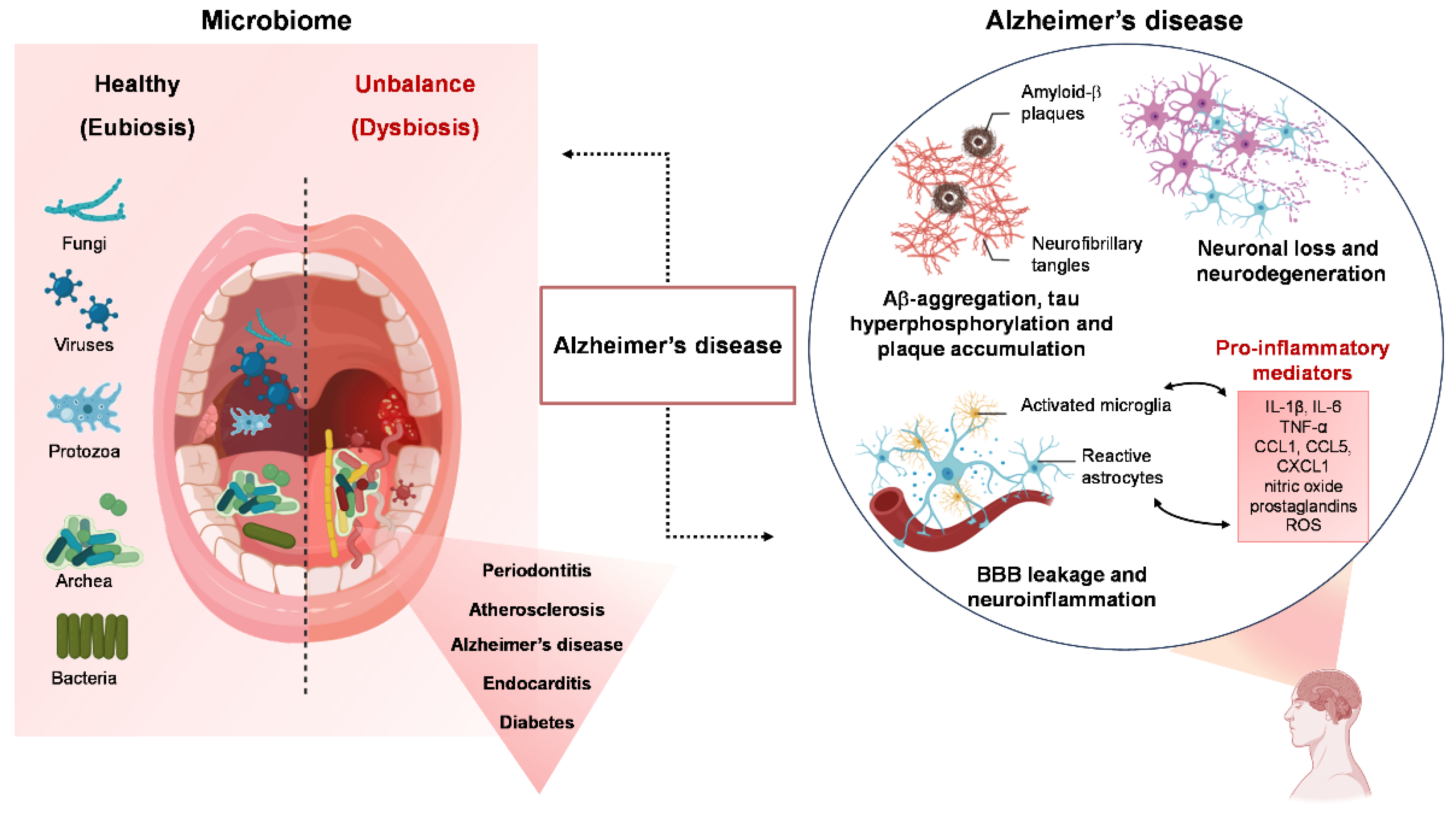
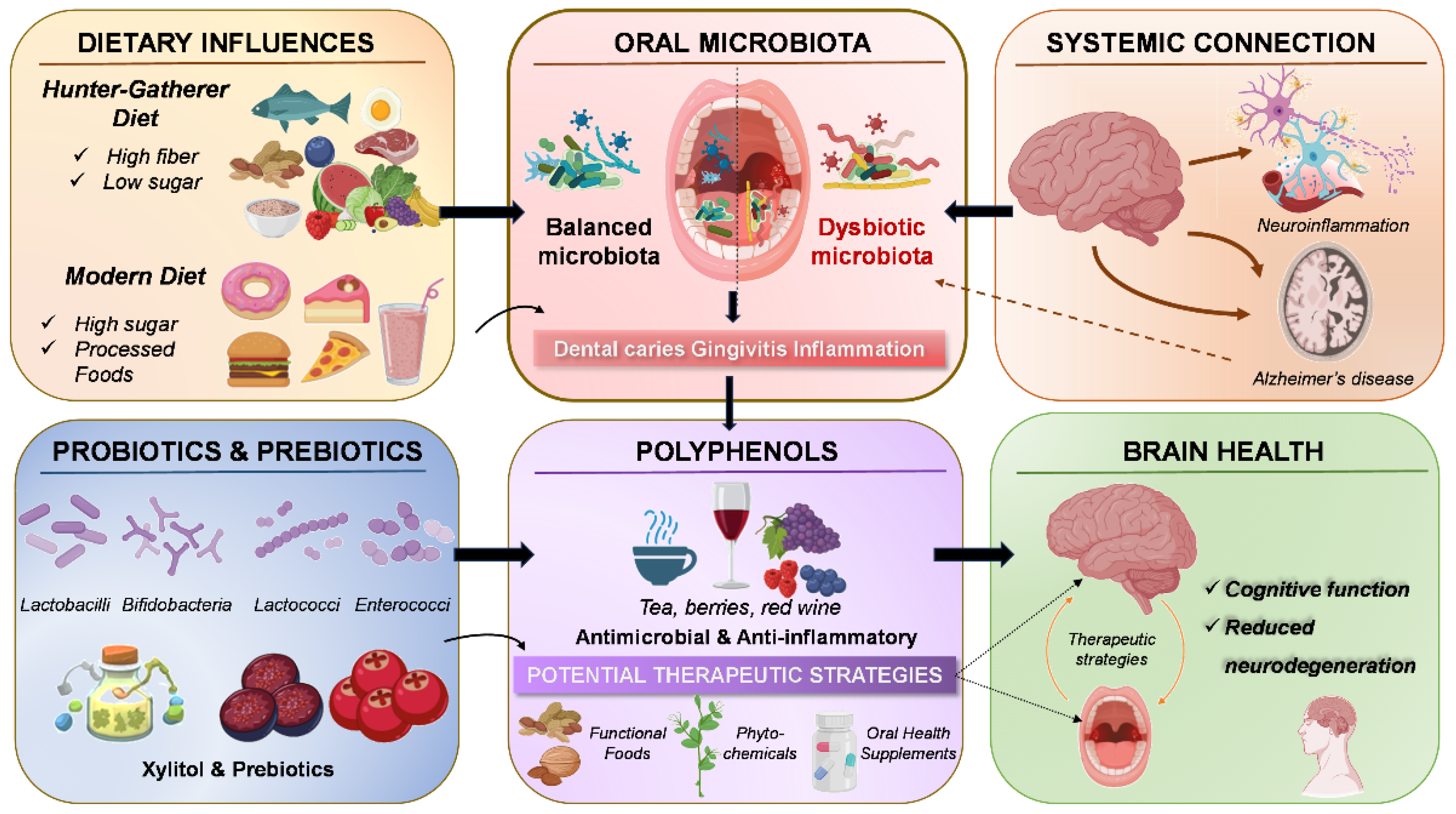
The oral microbiota represents a complex and dynamic microbial ecosystem that plays a critical role in preserving both oral and systemic homeostasis. Emerging evidence suggests that alterations in oral microbial milieu (dysbiosis) may contribute to the pathogenesis of neurodegenerative disorders, especially Alzheimer’s disease (AD), through the oral–brain axis. This review synthesizes current evidence on the pathways linking oral microbiota to cognitive decline, integrating microbial, immunological, and vascular perspectives. Oral pathogens may access the central nervous system via hematogenous dissemination or neural routes, including the trigeminal nerve, while simultaneously promoting systemic inflammation, immune activation, and blood–brain barrier disruption. These processes converge on key neurodegenerative mechanisms, including chronic neuroinflammation, amyloid-β accumulation, and tau pathology. In parallel, alterations in oral microbial composition have been linked to disease severity, supporting a potential role of dysbiosis in both initiation and progression of cognitive impairment. Diet emerges as a critical modifiable determinant of oral microbial ecology. Diets rich in refined sugars may promote dysbiosis and inflammatory signaling, whereas (poly)phenols, probiotics, and prebiotics may support microbial eubiosis and exert neuroprotective effects through modulation of host–microbe interactions. Although current evidence remains largely observational and mechanistic, the diet–oral microbiota–brain axis represents a promising target for preventive and therapeutic strategies aimed at mitigating cognitive decline and promoting healthy aging. Future longitudinal and interventional studies are required to establish causality and translate these insights into clinical practice.
Keywords:
oral microbiota; dysbiosis; periodontitis; neuroinflammation; cognition; brain; diet; polyphenols

No comments:
Post a Comment