Wow! The starting location of the clot has little bearing on the damage done, so this started with an incorrect basis! What is really needed is an EXACT 3D RENDERING of both white and gray matter(eg. Objective damage diagnosis)
Data-driven tool helps direct decision-making for stroke patients
Researchers at Ochsner Health have developed a tool that can help guide treatment choices after a patient’s carotid stroke.
Using eight years of data and blending the findings from three previous studies, physicians and researchers from Ochsner Health in New Orleans developed a predictive tool that helps inform medical decisions for patients who experience carotid stroke.
“Our goal is to precisely identify which patients presenting with a carotid-related stroke will benefit most from urgent intervention, minimizing risk and optimizing clinical outcomes through personalized, data-driven decisions,” said Hernan Bazan, MD, professor of surgery and cardiovascular innovation at Ochsner Health.
By examining four clinical factors—stroke severity, time to intervention, thrombolysis use and frailty risk(Time is the only objective measurement, so your model is almost totally fucking useless)—Ochsner Health physicians can now predict “functional neurologic independence” with 93% accuracy in patients undergoing urgent carotid interventions for acute stroke, according to a study published in the Journal of the American College of Surgeons (JACS).(Do you not understand, recovery prediction is useless for stroke survivors? It does nothing to get them recovered.)
“This advanced predictive model significantly improves clinical decision-making by accurately identifying patients most likely to benefit from timely carotid revascularization, ultimately enhancing patient outcomes and resource utilization,” Dr. Bazan said.
Ochsner Health is a member of the AMA Health System Program, which provides enterprise solutions to equip leadership, physicians and care teams with resources to help drive the future of medicine.
“Prehab” benefits frail patients
Stroke is the fifth-leading cause of death in the U.S., and carotid artery disease accounts for up to 20% of all ischemic strokes. For stroke patients, carotid endarterectomy and carotid artery stenting are widely used interventions to prevent more “ischemic events,” the JACS study says.(I would never do either, way too much risk!
I still don't understand why you would medically need to treat a carotid artery at all if the Circle of Willis is complete. (Unless the whole point is revenue and profit generation) It would seem to make more sense to just close it up and prevent problems from there. My right carotid artery was closed for 10 years and I cognitively functioned quite well with no episodes of fainting.
Before you go down either route ask your doctor to GUARANTEE NO STROKE from either procedure. If it was me I would ask my doctor to see if the Circle of Willis was complete; if yes, then have the doctor close up the offending artery. My right carotid artery completely closed up for 14 years before collaterals grew around it. I have had no dizziness or cognitive issues with only 3 arteries feeding the Circle of Willis.
Here is why your doctor needs to guarantee NO complications from endarterectomy or stenting!
Talk to your doctor about the dangers of stroke due to the endarterectomy procedure and why you would want to put inflexible metal stents in flexible arteries.
stenting (22 posts to May 2011)
carotid stenting (21 posts to May 2016)
carotid artery stenting (7 posts to November 2021)
While some stroke patients may benefit from immediate surgery, Dr. Bazan said most should wait at least 48 hours, while others may need to undergo “prehab” before surgery to gain strength and improve their chances for a positive outcome.
“Timing is critical—some patients benefit from immediate intervention, but most see better outcomes when surgery is deferred for at least 48 hours,” Dr. Bazan explained. “For frailer, higher-risk patients, targeted pre-habilitation may further optimize their chances for success.”
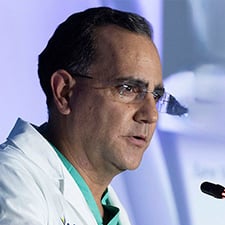
Guidelines recommend revascularization within 14 days of symptom onset for neurologically stable patients. But, with the establishment of regional stroke centers, “urgent” carotid interventions are increasingly performed during the initial hospitalization after an acute ischemic stroke.
Accurately predicting neurological functional outcomes in this high-risk group remains a significant clinical challenge, according to Dr. Bazan.
“Early intervention carries risks such as hemorrhage, making patient-specific timing crucial for safety and effectiveness,” Dr. Bazan noted. “As comprehensive stroke centers see growing numbers of these complex cases, clinically validated predictive tools will become essential in the future to enhancing decision-making and patient outcomes.”
Dr. Bazan and colleagues presented their findings on the importance of evaluating patient frailty in medical decision-making for stroke patients in an another study published by the Journal of Vascular Surgery in December 2024.
They used the Hospital Frailty Risk Score that is based on International Statistical Classification of Diseases and Related Health Problems, Tenth Revision (ICD-10) diagnostic codes and created stroke-specific risk categories based on the incidence of stroke, death and myocardial infarction.
The stroke patient-frailty calculator allows immediate evaluation of the patient’s condition.
“Integrating real-time frailty assessment into clinical decision-making addresses a significant unmet need, helping clinicians precisely determine which patients should undergo immediate intervention and who would benefit from prehabilitation,” explained Dr. Bazan.
“The strategic advantage is that the frailty-risk score is seamlessly integrated into our EMR system, making it instantly accessible and actionable at the point of care,” Dr. Bazan emphasized. “My clinical team actively uses it during daily rounds.”
From AI implementation to EHR adoption and usability, the AMA is fighting to make technology work for physicians, ensuring that it is an asset to doctors—not a burden.
Seeking functional independence
The first research paper by Dr. Bazan’s team looked at stroke severity and the use of tissue plasminogen activator (tPA), a thrombolysis—or blood-clot dissolving—drug. While patients with high stroke severity had worse functional outcomes, those with minor or moderate strokes were more likely to be discharged with neurological functional independence whether or not they received tPA.
Stroke severity “is predictive of discharge neurological functional autonomy and is not influenced by the use of thrombolysis,” the researchers concluded in a September 2023 study published in the Journal of Vascular Surgery.
Last June, Dr. Bazan and Ochsner biostatisticians Daniel Fort, PhD, and Jeffrey Burton, PhD, began tying together the studies, which included presenting clinical factors and neurological outcomes data from 302 patients who had emergency carotid endarterectomy or carotid artery stenting at Ochsner Health between 2015 to 2023.
“What I posited to them was: Look, we have so much data now with stroke where we looked at these things individually—stroke severity, thrombolysis use, time to intervention, frailty risk—what if we build a model where we make them interact and how predictive would that model be?” Dr. Bazan recalled.
“So we took all four things in a concerted fashion, and we made them interact,” he added.
The model they produced achieved 93% accuracy as to where patients would score on the neurologic modified ranking scale. The scale ranges from zero to six, with zero to two denoting a patient’s ability to maintain independent living without a caregiver.
Dr. Bazan noted that using this predictive tool aligns with the Centers for Medicare & Medicaid Services’ (CMS) initiative for age-friendly hospital inpatient care that seeks to address challenges seen in the delivery of complex care to older adults with multiple chronic conditions and is described in the 2025 Hospital Inpatient Prospective Payment Systems for Acute Care Hospitals payment schedule.
The initiative is organized around “4 M” elements: What Matters, Medication, Mentation or mental activity, and Mobility.
“Our goal is to enhance clinical utility by precisely tailoring stroke care decisions to each patient’s unique risk profile,” Dr. Bazan explained. “The timing is ideal, aligning closely with the 2025 CMS initiatives that emphasize value-based care and age-friendly health care measures.”
Plans to incorporate AI
The model was developed by the human mind and not augmented intelligence (AI), often referred to as “artificial intelligence.”
“This is strictly mathematics,” Dr. Bazan said. “It’s a lot of mathematics done by our senior author Jeff Burton.”
There are, however, plans to integrate augmented intelligence (AI)-powered diagnostic imaging into the model.
“We're going to use imaging and AI to read in an automated way how big the stroke infarct is and add that to the four factors,” Dr. Bazen explained. “That's the future—incorporating the anatomical stroke volume and then it will be even more patient specific.”
The predictive tool does not dismiss and cannot act as a substitute for a physician’s clinical acumen, because—like most aspects of medicine—there are no binary, “yes or no” answers, Dr. Bazan noted.
“This tool does not replace clinical judgment derived from experience; rather, it provides validated, real-time risk stratification to support and enhance individualized decision-making,” he explained.


No comments:
Post a Comment