And your competent? doctor has had protocols for all these for years already, right? OH NO; NOT! So, you DON'T have a functioning stroke doctor or hospital? And you haven't had everyone in that stroke hospital fired and blackballed from stroke forever? Because this is massively incompetent not creating protocols on all this!
- Human umbilical cord blood
(4 posts to April 2016)
- TMS(83 posts to December 2011)
- rTMS
(74 posts to January 2013)
- virtual reality
(102 posts to April 2013)
- virtual reality games
(7 posts to June 2016)
- virtual reality training
(13 posts to June 2013)
- 3D virtual environments
(4 posts to September 2016)
- virtual reality (102 posts to April 2013)
- virtual reality games (7 posts to June 2016)
- virtual reality training (13 posts to June 2013)
- 3D virtual environments (4 posts to September 2016)
Kim Min-young drives brain rehab in Korea with cord blood, VR, magnetic therapy
Cerebral palsy is a disorder in which damage to an immature brain before birth, during delivery, or shortly after birth causes abnormalities in motor function. Muscles weaken and the body cannot be controlled. For a long time, people believed the brain could not be restored once damaged. Kim Min-young (59), a professor of rehabilitation medicine at CHA University Bundang CHA Hospital, in 2013 became the first in the world to successfully treat cerebral palsy by injecting stem cells from cord blood (umbilical cord blood).
Stem cells are a kind of primitive cell that can grow into various cells in the human body. If stem cells are injected into tissue damaged by disease, they may be replaced by healthy cells. In particular, Kim treated patients with cord blood stem cells from other people. This opened the way to treat patients who did not store their own cord blood at birth, as long as immune compatibility was confirmed.
So far, Kim has provided cord blood treatment to more than 600 patients with cerebral palsy solely as clinical research for medical study, not as an approved therapy. It is by far the highest treatment count in the world. Babies who could not even hold themselves up received cord blood injections and crawled and sat up on their own. As motor and sensory neurons in the brain regenerated, not only motor skills but also cognitive abilities improved.
Recently, following cerebral palsy, treatment results were achieved for stroke, autism spectrum disorder (ASD), and dementia. Kim tried various methods to regain brain function. In addition to cell therapy such as cord blood, the team mobilized transcranial magnetic stimulation, which stimulates brain nerves with magnetic fields, and Virtual Reality (VR) digital therapy. Kim said, "If we can treat patients, the boundaries of technology are meaningless," adding, "Meeting patients every day and thinking about how to treat them led us to find various methods."
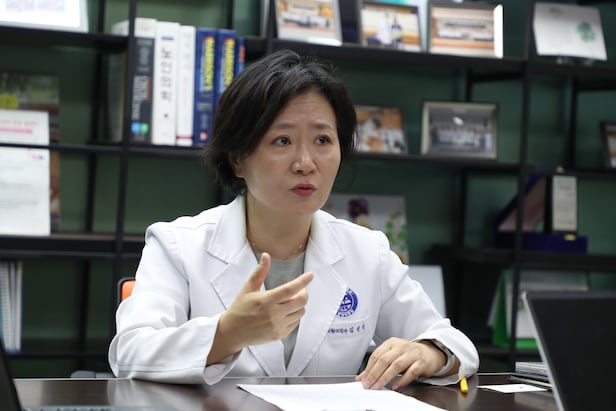
◇ "A damaged brain can change"
– People think rehabilitation means building muscle, but you protected and activated neurons with cord blood.
"It was believed that once the brain was damaged, it could never be restored, but in the late 1990s the theory of brain plasticity emerged, saying neural circuits can change. Now rehabilitation is not simply about building muscle; it is a process of regaining lost function by using the brain's plasticity."
– What is the principle of plasticity that restores brain function?
"First, repeated stimulation or training increases the connections (synapses) of neurons. There are also changes in the brain's network. A patient with poor memory may not answer properly if only asked verbally about a specific event, but if you show the music heard at the time, the people present, or the scenery seen together, the memory can be recalled more easily. The third is the neural function recovery effect of stem cells."
– What is the most effective means to restore brain function?
"In patients with cerebral palsy, combination therapy with cord blood cells and erythropoietin showed better results, but treatment effects were also achieved with cord blood cells alone. Continued research showed that improvement in motor function from cord blood therapy was due to an increase in innate immune responses and anti-inflammatory effects. The principle of treatment is precisely to suppress inflammation."
– We heard you are also focusing on controlling inflammation in treating other brain diseases.
"The more we studied, the more we found a common cause in cerebral palsy, stroke, dementia, and autism: inflammation in the brain. When brain nerves are damaged, chronic inflammation arises around them and hinders neural regeneration. If this is suppressed, other brain diseases can also be treated. The prevalence of cerebral palsy is only 0.2% to 0.3%, but autism spectrum disorder is reported up to 3%. Some of the children receiving rehabilitation turned out to have autism, which led us to conduct clinical research."
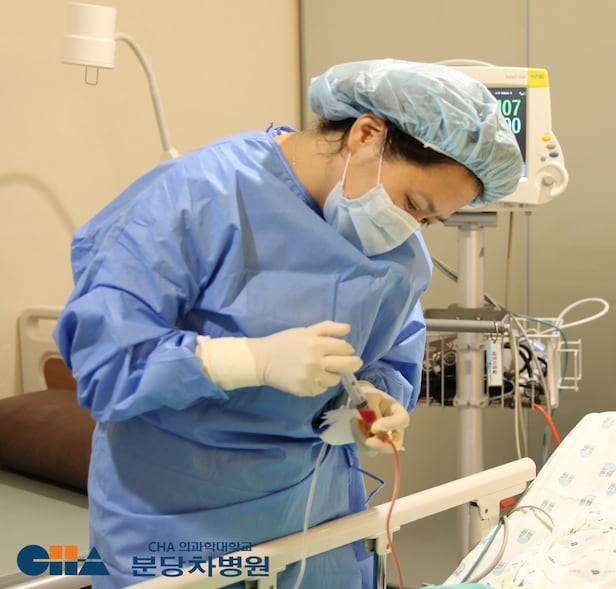
◇ A medical student who went to the Electronics and Telecommunications Research Institute
– You are a medical school professor, yet your three years at ETRI (Electronics and Telecommunications Research Institute) stand out. That is very unusual for a physician.
"From 2000 to 2003, I worked at ETRI as an invited researcher on the VR interface research team. At the time, women were rare among medical school professors. I chose to become a researcher rather than a professor, learned programming languages with help from Professor Kim Jae-hee of Yonsei University's Department of Electronic Engineering during my master's, and developed VR therapy technology for patients with hemiparesis at ETRI."
– That means you started what we now call digital therapeutics (DTx) early on.
"Only the name has changed; the essence is the same. Although digital therapeutics began in earnest in 2019, the concept of software as a medical device (SaMD) existed before that. VR is one form of it. Since attempting treatment for patients with hemiparesis back then, we have applied it to treating various patients with brain injuries to this day."
– Which patient is most memorable?
"A person with apraxia. As the name suggests, the patient could not carry out intended actions. The command system from the brain to the muscles was tangled, leaving the patient unsure how to use the hands. After a handshake, the hand could not be released and the patient had to use the other hand to straighten each finger. When we put VR goggles on this patient and asked them to catch fish in a virtual space, the hands moved naturally. It was a case proving that a 3D (stereoscopic) virtual world, which offers a sense of space more than a flat monitor, activates the brain's entire neural network far more powerfully."
"We thought older adults were not familiar with digital technology such as VR, but in reality they were not. We had them choose clothing according to the weather in a virtual world and scored them, and they liked it more than expected. We confirmed that older adults who used VR had better attention and memory than the control group who were simply shown a movie."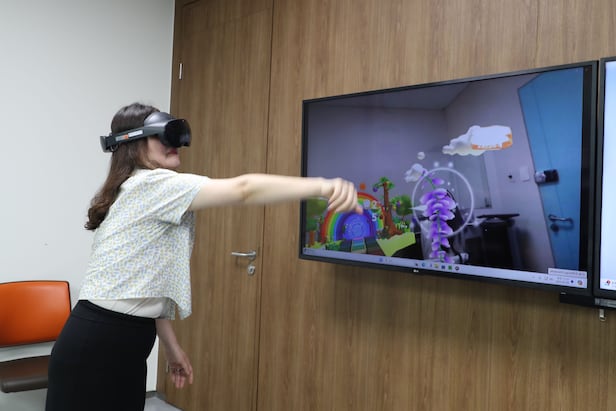
◇ Mobilizing transcranial magnetic stimulation and soft robots
– VR likely offers high immersion for patients. Why did you also try the lower-immersion AR (Augmented Reality)?"AR overlays virtual images on real objects. For the general public, VR is better for immersion, but for patients undergoing rehabilitation or for older adults, real visual information is obscured, so they may fall or get hurt in VR. Patients with risk factors must be able to feel the virtual world while also seeing reality to ensure safety."
– We heard you also tried treatment that stimulates the brain with magnetic fields.
"In patients with vascular dementia, transcranial magnetic stimulation, which stimulates specific brain nerves with magnetic fields, reduced inflammatory gene expression in peripheral blood, and this led to improved cognitive function. The correlation between improved cognitive scores and reduced inflammation was as high as 0.9. We are also pursuing studies that use VR and transcranial stimulation simultaneously."
– Are there any other innovative technologies useful for rehabilitation?
"I am paying attention to wearable soft robots that are not made of metal but are worn like clothing to build muscle strength. Conventional robotic rehabilitation devices are too large and heavy, but if thin, lightweight fibers themselves contract like muscles to assist force, patients could wear them like clothes and undergo rehabilitation 24 hours a day. The technological prototypes already exist. The problem is the speed of commercialization, and it is unfortunate that engineers develop separately without working together with physicians."
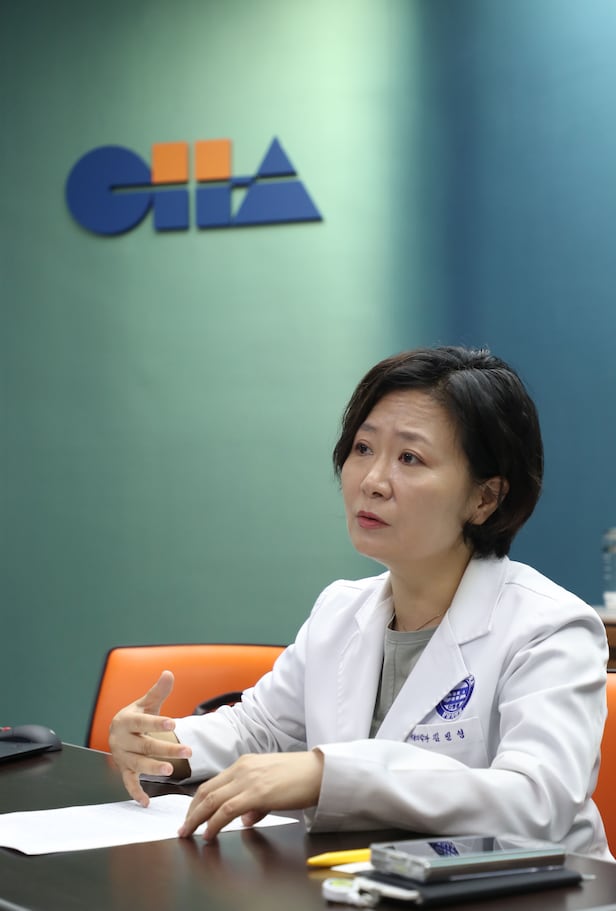 Professor Kim Min-young notes, "Regulations often fail to keep pace with medical technology and only hold it back," adding, "Recently, Korea has also opened the way for stem cell therapy, but we are far behind Japan."/Courtesy of Jeon Gi-byeong
◇ "There are no answers if you research without seeing patients"
Since 2011, Kim has published 86 papers in international journals, averaging six papers a year. Of those, 58 were as lead author. This was the result of reading and researching papers two to three hours every day amid a busy clinical schedule. Wouldn't there be more成果 if Kim did only research? Kim asserted, "If you leave the clinical field, you cannot conduct proper research."
– Physician-scientists who focus more on research than on clinical practice are drawing attention these days. But you stress that true physician-scientists must have clinical experience."As a medical student, I learned to hold children with autism tightly when they have a seizure. The seizures in children with autism result from proprioception, which recognizes the body's position and the existence of the limbs, working excessively. In hindsight, holding them was a stimulus to control the sensory problem. Without such clinical experience, physicians who do not know the limits patients face can do research for papers but cannot produce solutions for patients. I advise juniors to complete the residency and then pursue research or startups."
– Is that why you use various treatment methods to restore brain function?
"While advising on government-affiliated committees that review research and development projects, I often saw developers who did not know how technology is used in clinical settings and developed based only on their own assumptions and guesses. It was the same for both medical devices and advanced regenerative therapies. If a technology is to be used for patients, collaborating with physicians who have rich clinical experience is the shortcut to success. There is no royal road to treatment. Whether it is cell therapy or VR, everything is needed depending on the situation. Insisting only on what one knows harms patients."
– There must be many institutional shortcomings as well.
"With the enforcement of the Act on Advanced Regenerative Medicine and Advanced Biopharmaceuticals, the door to stem cell therapy has opened, but often the pace of scientific progress is still not matched by laws and regulations. In addition, there is a conservative culture in which specialists in related diseases do not actively adopt new treatments. Despite meaningful clinical research results for cord blood in cerebral palsy, pediatric patients still are not receiving treatment."
☞ Professor Kim Min-young
Kim graduated from Yonsei University College of Medicine and received master's and doctoral degrees from the same graduate school. From 2000 to 2003, Kim worked as an invited researcher on the VR interface research team at the Electronics and Telecommunications Research Institute (ETRI), pursuing convergence of medicine and engineering. Kim is currently a professor in the Department of Rehabilitation Medicine at CHA University Bundang CHA Hospital and head of the Center for Digital Innovative Medicine at CHA Advanced Research Institute. A world-renowned authority in cord blood cell therapy for cerebral palsy, Kim received the prime minister's commendation on Health Day in 2024 and the Seokjeon Shin Jeong-sun Academic Award in 2025. Kim is a full member of the National Academy of Medicine of Korea, served as policy director of the Korean Medical Association and chair of the Korean Society of Pediatric Rehabilitation and Developmental Medicine, and is now a director at the Korean Society for Stem Cell Research and the Korean Society of Digital Therapeutics.


No comments:
Post a Comment