A competent? stroke hospital will have 100% recovery protocols regardless of time presented. ANYTHING LESS IS PURE FUCKING INCOMPETENCE!
Send me personal hate mail on this: oc1dean@gmail.com. I'll print your complete statement with your name and my response in my blog. Or are you afraid to engage with my stroke-addled mind? No excuses are allowed! You're medically trained; it should be simple to precisely state EXACTLY WHY you aren't creating EXACT recovery protocols with NO EXCUSES! Your definition of competence in stroke is obviously much lower than stroke survivors' definition of your competence! Swearing at me is allowed, I'll return the favor. Don't even attempt to use the excuse that brain research is hard.
Aboyne man: ‘I can still barely walk because having stroke at 9pm meant I didn’t get proper treatment’
A stroke left Graham McGowan fighting to walk again - but the emergency treatment that could have helped wasn’t available after-hours.
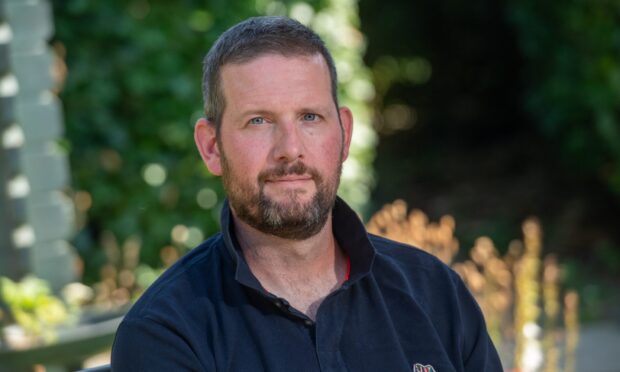

“It feels a little bit like you were killed on the last day of a war,” he says after a pause and a half-apology. “Like your plane crashed on the way back home.”
On May 20 2022, Graham – then 49 – was at his home in Aboyne gearing up for a trip to Northern Ireland.
The avid outdoorsman was planning a 20-mile run along the north coast with his brother-in-law to celebrate his upcoming 50th.
Instead, a small tear in his carotid artery sent a clot to his brain, triggering a stroke leaving his left hand numb.
His wife, Heather, immediately called an ambulance, and by the time Graham reached Aberdeen Royal Infirmary, it was about 9.30pm.
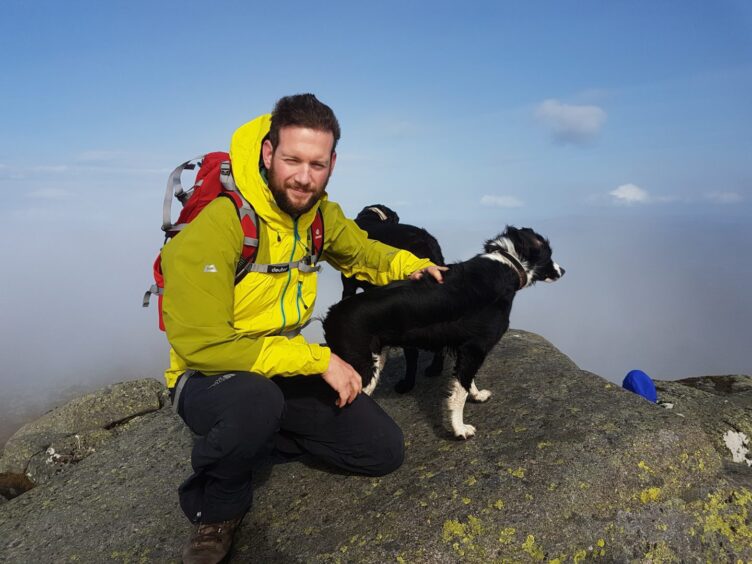
Graham didn’t realise it then, but the timing was significant.
It was outside the hours when Dundee’s Ninewells Hospital performs thrombectomies, a clot-removal procedure that can greatly reduce the risk of long-term disability when done quickly.
If he’d had his stroke earlier, say 3pm, he was told, he’d have been blue-lighted down the A92.
Instead, Graham stayed at ARI and was given thrombolysis — a clot-busting drug. When he woke up, he had no movement down his left side.
Three years on, his left arm remains almost entirely paralysed, and even walking short distances requires a brace, a stick and monumental effort.
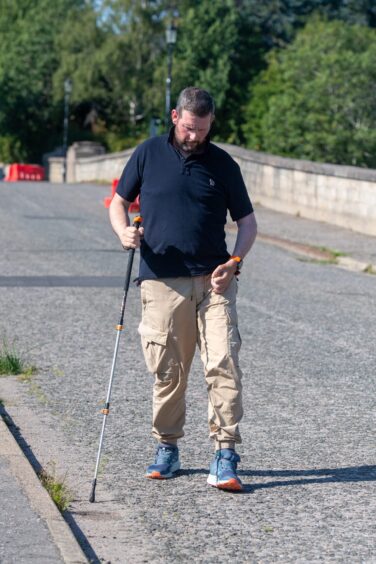
The long-term effects leave him with the question of what if. What if he’d been transferred to Dundee for a thrombectomy instead of given thrombolysis in Aberdeen? What if the timing had been different, or the service available around the clock?
“I do try not to think about it too much because I focus more on what I can do,” he says. “But it’s crazy, really crazy.”
A postcode lottery of care
Across Scotland, only three hospitals — in Dundee, Edinburgh and Glasgow — perform thrombectomies, and none operates a 24/7 service.
Stroke charities say this leaves patients at the mercy of the clock, with those who fall ill outside limited weekday hours missing out on treatment that could transform their recovery.
The Scottish Government, through Public Health Scotland, has committed itself to increasing access to thrombectomies but the care(Notice that godawful excuse of 'care'; NOT RECOVERY! Which just proves Public Health Scotland is fucking incompetent! Get everyone there fired!) gap continues.
According to new figures from Public Health Scotland, less than a fifth of eligible patients in Scotland get one, while a 2024 national stroke audit shows the thrombectomy rate elsewhere in the UK is more than double that in Scotland.
As one study puts it, thrombectomy access in the UK is a “considerable postcode lottery”.
In the north and north-east the situation is even more bleak: with only a six-hour treatment window, patients like Graham are often too far from the Central Belt hubs.
“He had his stroke in the wrong place, at the wrong time of day,” says John Watson, associate director for the Stroke Association in Scotland.
Why a thrombectomy can improve the odds
As for outcomes, research shows a thrombectomy can more than double the odds of a good stroke recovery compared with clot-busting drugs alone.
Around half of patients treated with the procedure are able to walk and live independently afterwards, compared with fewer than one in five given thrombolysis.
One story from two years ago illustrates just how stark that difference can be.
Ian Aitchison, from Aberdeen, had a stroke in August 2023, a year and three months after Graham.
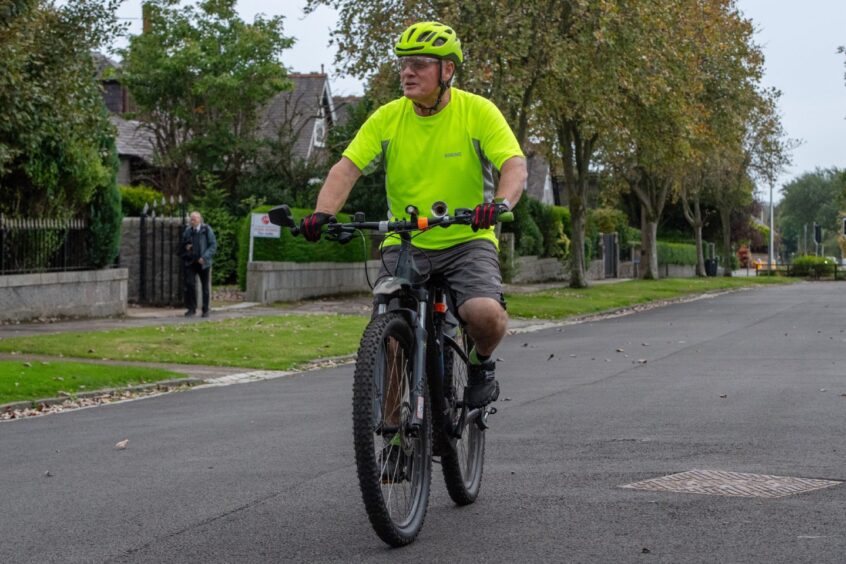
The 71-year-old was rushed to Ninewells for a thrombectomy and just weeks later was back on his bike — a recovery almost unthinkable without the clot-removal procedure.
For Graham, the implications of his out-of-office-hours stroke only sank in months later, while watching a YouTube clip of former athlete Michael Johnson.
Johnson, who had a mini-stroke in 2018 and was unable to walk, spoke to a fellow patient who’d had a thrombectomy — and ran out of hospital three days later.
“That brought it home to me quite hard,” Graham says.
Scottish Government responds
As stroke charities call for the Scottish Government to create a 24/7 national thrombectomy service, ministers point to improvements over the past few years.
Scotland’s Public Health Minister Jenni Minto told The P&J that between 2022 and 2024 the number of patients able to access thrombectomy treatment from NHS Scotland almost doubled.
However, she added: “There is more to do and we will continue to increase access to these procedures.
“We want to make sure people who have had a stroke receive the best possible care(NOT RECOVERY!) as quickly as possible to enable them to live longer, healthier and more independent lives.”
A spokesperson for NHS Grampian echoed the government response, highlighting the improvement in thrombectomy treatment across Scotland.
“We understand work continues to further improve access to this vital treatment, which we are fully in support of,” the spokesperson added.
What Graham’s life is like after his stroke
More than three years on from Graham’s stroke, and despite intensive rehabilitation work the former runner, skier and hillwalker still struggles with simple tasks.
“I sometimes think about this: how much effort is walking now in comparison to what it was before?” he asks. “And I think that number is probably at least somewhere between 10 times and 20 times harder now than it used to be.”
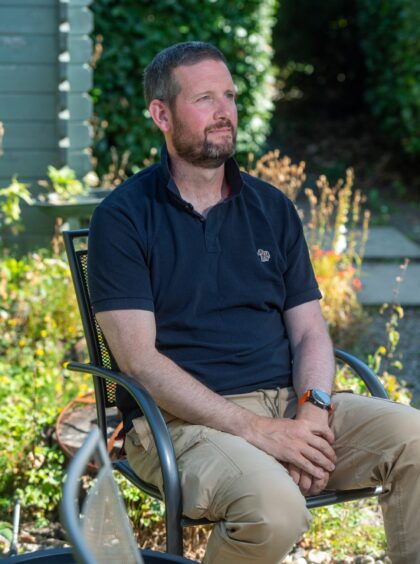
Graham always prided himself on standing on his own two feet. Now, he struggles with having to depend on others, unable to shake the feeling that he has become a burden.
And alongside independence comes the loss of another aspect of life many take for granted — spontaneity.
“I can’t decide on a weekend, ‘I’ll go down to Edinburgh to see my mates and go to the pub,’” he says. “I can’t walk onto a beach and put my feet in the sea. Those little spontaneous things in my life, I miss them enormously.”
‘It’s tiny little things, but you do notice them’
Graham has made good progress since the days following his stroke when his paralysis was so severe he had to be winched in and out of bed.
When Graham first returned home from hospital, he relied on a wheelchair and could barely manage a few steps without exhaustion.
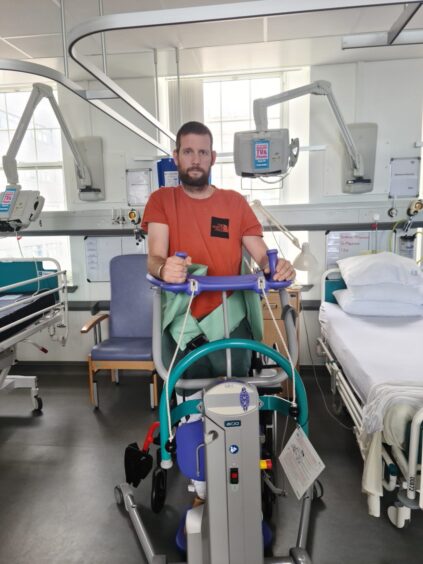
Now, though progress is slow, he can push himself to walk up to two-and-a-half miles.
“It’s tiny little things, but you do notice them,” he says. “You couldn’t do it six months ago, and now you can.”
Still, he adds, there’s no getting away from it: “The loss of what I had is huge.”
He continues: “I know that I may never fully recover. I know that I’ll never really get back to where I was. That’s quite apparent to me, and I may struggle for the rest of my life.”
Benefits of living in Aboyne
Meanwhile, he is aware he’s one of the lucky ones. He can no longer work but his previous well-paid contract job in oil and gas means he has a limited financial safety net that some stroke survivors lack.
Also, he can’t think of a better place to live than Aboyne, with Heather and their two dogs.
“It’s a beautiful part of the world, and we’ve got a nice little house in a nice area,” he says. “It’s just ideal.”
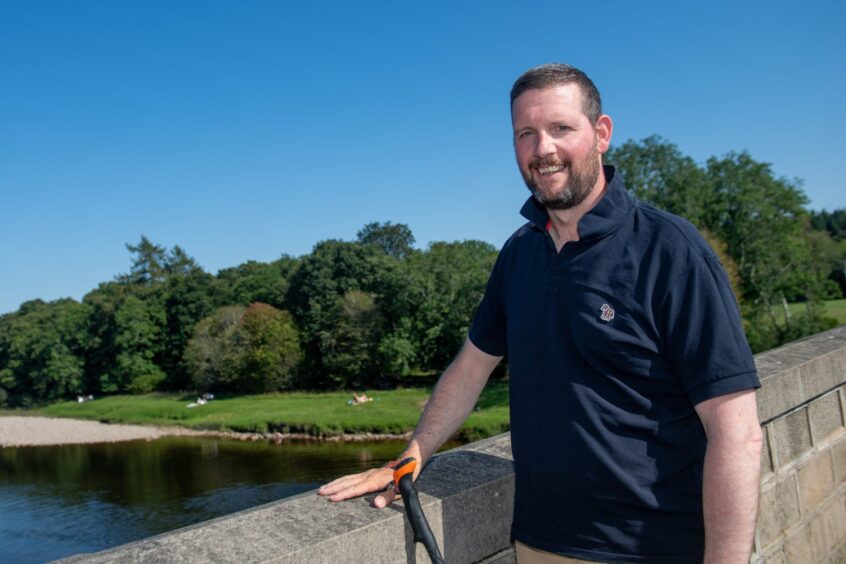
For the sake of others, however, people who will have the misfortune of having a stroke at the wrong time and in the wrong place, he has a clear wish.
“If somebody in the NHS who makes these decisions,” he says, “if they come and live with me, then they could see for themselves just how I live my life now.”
Anyone affected by stroke can find out more at www.stroke.org.uk/scotland. Or call the dedicated Stroke Support Helpline on 0303 3033 100.


No comments:
Post a Comment