Your competent? doctor followed up this earlier research, right? To solve for your 5 lost years of brain cognition due to your stroke?
Do you have ANY CONFIDENCE AT ALL that your stroke medical 'professionals' will get human testing going with an EXACT PROTOCOL DELIVERED?
Scientists Have Discovered a Protein That Reverses Brain Aging in The Lab
Our brains age along with the rest of our bodies, and as they do, they produce fewer new brain cells. Now, researchers have found a key mechanism through which the typical age-related decline in neuron production might be slowed.
In later life, the neural stem cells (NSCs) that turn into fully fledged neurons become more dormant – almost as if they're going into retirement after a long lifetime of service. As that happens, cognitive decline creeps in.
A major reason why NSC activity fades with age is the wear and tear on telomeres, the protective caps on the ends of DNA. Telomeres fray a little more each time a cell divides, and over time, this impairs cells' ability to grow and divide, leading to increasing cell death.
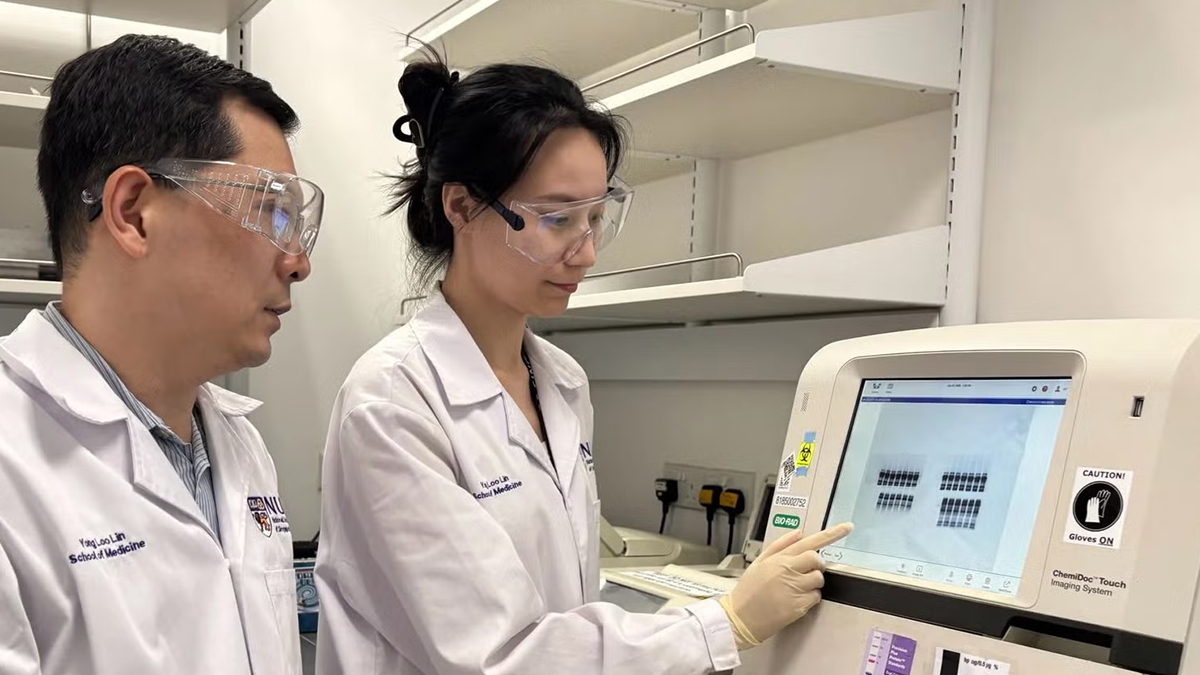
This latest study, led by a team from the National University of Singapore (NUS), took a closer look at the mechanisms involved to see if they could find a way to restore weary NSCs."Impaired neural stem cell regeneration has long been associated with neurological aging," says chemical biologist Derrick Sek Tong Ong, from NUS.
"Inadequate neural stem cell regeneration inhibits the formation of new cells needed to support learning and memory functions."
"While studies have found that defective neural stem cell regeneration can be partially restored, its underlying mechanisms remain poorly understood."
Through a combination of human NSC analysis in the lab and mouse model experiments, the researchers singled out a protein called cyclin D-binding myb-like transcription factor 1 (DMTF1). Transcription factors such as DMTF1 bind to DNA, to switch genes on or off.
DMTF1 isn't new, but its role in influencing NSCs is. The team found that it's more abundant in younger and healthier brains, and that adding more DMTF1 encouraged NSCs to grow and divide – potentially restoring the natural neuron production associated with a younger brain.While shorter telomeres seemed to contribute to a reduction in DMTF1 levels, when the amount of DMTF1 was artificially boosted in cells, telomere length remained unchanged – so the transcription factor seemed to find a workaround.
Specifically, DMTF1 activates two 'helper' genes called Arid2 and Ss18, which promote cell growth by switching on other genes that restore the biological cycle through which neurons are created.Understanding this process at such a fundamental level means we might eventually be able to control it – perhaps through treatments that encourage neuron growth in spite of age.
"Our findings suggest that DMTF1 can contribute to neural stem cell multiplication in neurological aging," says neuroscientist Liang Yajing, from NUS.
It's a significant discovery of a crucial process, but we shouldn't get ahead of ourselves: This study is based on lab experiments and mouse models, and any suggestion that neuron production could be boosted still needs to be proven.Now that this mechanism has been identified, however, future studies can build on this research. It's possible that manipulating DMTF1 could potentially reverse some of the aging that normally grips the brain, but that remains to be seen.
Next steps could include a more comprehensive analysis of how DMTF1 might be used to restore NSC activity and whether that could possibly lead to improvements in learning and memory. This would need to be carefully done, firstly in animal studies; DMTF1 is linked to cell growth, so too much duplication could lead to cancer tumors.
We can add this latest study to a growing body of research looking at how the brain ages, and how some of that aging might be slowed, stopped, or reversed.
Diet and exercise appear to help, yet the allure of therapies to rejuvenate aging brain cells remains strong, though a distant prospect.
Related: Stress-Sensitive Neurons May Have a Powerful Effect on Our Entire Brain
An older brain is one that's more susceptible to cognition problems, disease, and dementia. While this research didn't look at those issues specifically, it may go some way in helping us understand normal brain aging.
"Understanding the mechanisms for neural stem cell regeneration provides a stronger foundation for studying age-related cognitive decline," says Ong.
The research has been published in Science Advances.


No comments:
Post a Comment