Changing stroke rehab and research worldwide now.Time is Brain! trillions and trillions of neurons that DIE each day because there are NO effective hyperacute therapies besides tPA(only 12% effective). I have 523 posts on hyperacute therapy, enough for researchers to spend decades proving them out. These are my personal ideas and blog on stroke rehabilitation and stroke research. Do not attempt any of these without checking with your medical provider. Unless you join me in agitating, when you need these therapies they won't be there.

What this blog is for:

My blog is not to help survivors recover, it is to have the 10 million yearly stroke survivors light fires underneath their doctors, stroke hospitals and stroke researchers to get stroke solved. 100% recovery. The stroke medical world is completely failing at that goal, they don't even have it as a goal. Shortly after getting out of the hospital and getting NO information on the process or protocols of stroke rehabilitation and recovery I started searching on the internet and found that no other survivor received useful information. This is an attempt to cover all stroke rehabilitation information that should be readily available to survivors so they can talk with informed knowledge to their medical staff. It lays out what needs to be done to get stroke survivors closer to 100% recovery. It's quite disgusting that this information is not available from every stroke association and doctors group.

Showing posts with label wearable sensors. Show all posts

Thursday, June 18, 2026

Real-world gait study of Parkinson’s disease using wearable sensors: a systematic review

 Your INCOMPETENT? DOCTOR isn't smart enough to use this to objectively identify your gait problems so EXACT PROTOCOLS can be used to correct them!

And your board of directors is so incompetent they can't recognize incompetence in their hospital!

Real-world gait study of Parkinson’s disease using wearable sensors: a systematic review

    We are providing an unedited version of this manuscript to give early access to its findings. Before final publication, the manuscript will undergo further editing. Please note there may be errors present which affect the content, and all legal disclaimers apply.

    Abstract

    Background

    New technologies, such as wearable sensors, allow the quantitative assessment of gait alterations due to Parkinson’s disease (PD) through Digital Mobility Outcomes (DMOs). These DMOs have the potential to complement traditional clinical assessments but must be relevant, reliable, and representative of the patient’s overall condition. Real-world monitoring offers a valuable approach for this type of day-to-day evaluation of patients.

    Objective

    This systematic review has four primary aims: 1) To identify trends in protocol design for real-world gait monitoring using wearables in patients with PD. 2) To detail the analysis of inertial data and the computation of DMOs. 3) To summarize the clinical scales and symptoms studied. 4) To outline trends in the conclusions and limitations reported by authors in this field.

    Methods

    Three databases (MEDLINE via PubMed, Cochrane, and EMBASE) were systematically searched between September 1, 2013, and September 15, 2023. Eligibility criteria included studies involving adults with a PD diagnosis, the use of a wearable device with at least one accelerometer or gyroscope, and gait analysis conducted in real-world settings.

    Results and conclusion

    Sixty-three studies were selected. Overall, wearables successfully provide clinically meaningful information on gait impairment in patients with PD. Stride speed as a DMO is well-established and clinically meaningful, while other metrics, such as stride length, stride duration, and cadence, show great promise for routine clinical practice and research. However, the lack of consensus on the methods of investigation and the small sample sizes remain significant barriers that must be addressed to facilitate broader adoption in clinical practice and research.

    Monday, May 4, 2026

    Researchers Develop Wearable Sensor to Monitor Vitamin Levels Through Sweat

     How soon will your competent? doctor get this installed on you to verify correct levels? Oh NO, your doctor doesn't know about it!

    Do you prefer your doctor, hospital and board of director's incompetence NOT KNOWING? OR NOT DOING? Your choice; let them be incompetent or demand action!

    Researchers Develop Wearable Sensor to Monitor Vitamin Levels Through Sweat

    Friday, March 6, 2026

    Wearable sensors may detect early disability progression in multiple sclerosis

     With ANY BRAINS AT ALL your stroke medical 'professionals' would immediately use this to objectively diagnose gait abnormalities. And then objectively monitor the recovery. But nothing will occur, we have blithering idiots in stroke!

    Wearable sensors may detect early disability progression in multiple sclerosis

    A longitudinal study of people with multiple sclerosis (MS) found that declines in daytime physical activity detected through wearable accelerometers were associated with increased risk of disability progression and brain atrophy.

    The findings, published in Neurology, suggest continuous activity monitoring may serve as a sensitive, noninvasive biomarker for early disease worsening before clinical symptoms become apparent.

    “Timely identification of patients at risk for disease progression is essential to reduce long-term disability, but the current tests for measuring MS disability are not designed to detect small changes,” said Kathryn C. Fitzgerald, Johns Hopkins University, Baltimore, Maryland. “Using a relatively inexpensive and accessible device around the wrist may help us identify early changes in the disease.”

    The study enrolled 238 adults aged ≥40 years who underwent annual brain MRI scans and wore wrist-based accelerometers 24 hours per day for 2 straight weeks every 3 months, for up to 3 years. The devices captured several activity metrics, including total activity levels, sedentary time, circadian rhythm parameters, and activity during specific two-hour daytime windows.

    Participants had been living with MS for an average of 13 years. At the start of the study, they had an average disability level of 3 on the Expanded Disability Status Scale (EDSS).

    Over an average follow-up of 2.9 years, 120 participants experienced confirmed disability progression based on the composite EDSS-plus. Overall physical activity declined by an average of about 2% per year.

    Importantly, within-person decreases in daytime activity -- particularly between 8:00 AM and 2:00 PM -- were associated with a significantly higher risk of disability progression. A one-standard deviation decrease in morning or midday activity increased the risk of confirmed progression by roughly 20% to 24%.

    MRI analyses also showed that reductions in morning activity were linked to greater brain atrophy, including loss of whole-brain, deep Gray matter, and thalamic volume. While individuals with lower average moderate-to-vigorous activity had smaller brain volumes overall, these between-person differences were not associated with disability progression.

    “More research is needed to confirm these findings, but it’s exciting to think that using easily accessible devices could help us predict who is at risk of worsening disease and potentially prevent those changes,” said Ellen M. Mowry, Johns Hopkins University. “Detecting small changes could also help us speed up research on new treatments.”

    A limitation of the study is that people who did not have MS were not included, which would help researchers understand how activity levels may change as a part of normal aging. Also, the participants were relatively older and more disabled, so the results may not apply to younger people with MS and those with less disability.

    Reference: https://www.neurology.org/doi/10.1212/WNL.0000000000214678

    SOURCE: American Academy of Neurology

    Friday, November 28, 2025

    Automatic multi-IMU-based deep learning evaluation of intensity during static standing balance training exercises

     Oh, your incompetent? doctor and therapists haven't been using wearable sensors to objectively determine your balance and walking problems? So they can then provide EXACT REHAB PROTOCOLS THAT DELIVER RECOVERY! Oh, they incompetently haven't even attempted to figure out how to get you recovered, have they?

    Let's check how long INCOMPETENCE HAS REIGNED!

    Sensors and wearables have been out for years and obviously NOTHING HAS BEEN DONE. 

    Automatic multi-IMU-based deep learning evaluation of intensity during static standing balance training exercises

      We are providing an unedited version of this manuscript to give early access to its findings. Before final publication, the manuscript will undergo further editing. Please note there may be errors present which affect the content, and all legal disclaimers apply.

      Abstract

      Background

      Effective balance rehabilitation requires training at an appropriate level of exercise intensity given an individual’s needs and abilities. Typically balance intensity is assessed through in-clinic visual observation by physical therapists (PTs), which limits the ability to monitor and progress intensity during home-based components of training programs. The goal of this study was to train and evaluate machine learning models for estimating physical therapists’ perceived balance exercise intensity using data from full-body wearable sensors to support the development of home-based training exercise dosage monitoring.

      Methods

      Balance exercise participants (n = 47) participated in a single-day balance training session where they were filmed performing static standing exercises at various levels of intensity. Kinematic data from 13 full-body wearable inertial measurement units (IMUs) and self-ratings of balance intensity were also collected. An additional cohort of PT participants (n = 42) was recruited to watch the videos of the balance exercise participants and provide ratings of balance intensity. The mean PT rating for each video was used as a ground truth (GT) label of balance intensity. We trained and evaluated Convolutional Neural Networks (CNN)-based models to predict balance intensity based on performance as captured through the IMUs. Model performance was evaluated by calculating the root-mean-square error (RMSE) of predications. A sensitivity analysis was also performed to assess the effect of the number of IMUs used on model performance.

      Results

      Models trained on orientation derived from all 13 IMUs achieved good predictive performance as indicated by a RMSE of 0.66 [0.62, 0.69], which was within the threshold defined by typical inter-rater variabilities between PTs (RMSE of 0.74 [0.72, 0.76]). Sensitivity analysis indicated that model performance stabilized at four sensors with the best performance corresponding to sensors placed on both thighs and the lower and upper back.

      Conclusions

      Findings from this study indicated that balance intensity assessment can be achieved through wearable sensors and a CNN model, which could support the supervision and effectiveness of home-based balance rehabilitation.

      Saturday, April 12, 2025

      Artificial intelligence, wearable tech can improve safety in stroke rehab: study


      Sensors and wearables have been out for years and obviously NOTHING HAS BEEN DONE. 

    •  wearable (39 posts to April 2012)
    • wearable EMG (1 post to January 2024)
    • wearable arms (1 post to May 2013)
    • wearable computing (3 posts to August 2013)
    • wearable devices (38 posts to October 2015)
    • wearable electronic device (1 post to July 2020)
    • wearable exoskeletons (1 post to April 2022)
    • Wearable inertial measurement units (2 posts to June 2019)
    • wearable inertial sensor (2 posts to June 2023)
    • wearable motion-tracking (1 post to July 2023)
    • wearable robotics (1 post to July 2022)
    • wearable sensors (26 posts to January 2018)
      • The latest here: 

      Artificial intelligence, wearable tech can improve safety in stroke rehab: study

      Artificial intelligence combined with wearable technology has the potential to improve safety among people recovering from a stroke, suggests a study from researchers, including a team from Simon Fraser University in British Columbia.

      Gustavo Balbinot, an assistant professor in neurorehabilitation, said the research opens doors for the development of new technologies in stroke rehabilitation.

      The findings are also applicable for people at risk of falling due to balance challenges that aren’t related to stroke, such as vertigo or spinal injury, he said in an interview.

      The study published in the peer-reviewed journal Clinical Rehabilitation used sensors to monitor more than 50 stroke survivors as they performed mobility tasks.

      Researchers then used the data to generate movement patterns.

      “You can think about when you throw a rock into the river, you see those little waves,” Balbinot explained. “We can get those frequencies of the movement.”

      The analysis found those recovering from a stroke generally had smoother movements, suggesting a more cautious approach compared with a control group. Those healthy participants exhibited faster, more “jerky” movements, Balbinot said.

      Balbinot’s team has developed software that breaks the movement patterns down into three-second windows, allowing it to detect changes that could indicate a risk of falling – a potentially serious setback for someone recovering from stroke.

      “The software is the magic here,” said Balbinot, who leads the Movement Neurorehabilitation and Neurorepair laboratory at the B.C. university.

      “So, every three seconds, the software can detect, is it too wavy, is (it) oscillating a lot,” he said of a person’s movement pattern.

      The software is a step toward Balbinot’s goal of seeing it integrated into wearable technology, such as smart watches, to help people avoid dangerous falls.

      In the event the software detected a change, he said the user would then receive a warning informing them of potentially unstable or risky movement.

      “People may engage with dangerous movements, and they are not aware, and then eventually they fall,” Balbinot said.

      He said the real-time monitoring every three seconds is key to sending a message encouraging the user to perhaps slow down and avoid taking risks.

      “The software can say, ‘Hey, it’s dangerous what you’re doing here,’ so maybe it’s just sitting down for a while.”

      Balbinot said the predictions of fall risk would become more “assertive” as the software gathers data over time.

      “The algorithm learns with the person,” he said. “With machine learning, we can really make the software learn what’s good or bad for each person.”

      The sensors worn by participants monitor speed and orientation, said Balbinot, adding technology has advanced to the point that such monitoring tools may be embedded in the user’s clothing.

      The study notes clinicians would benefit from easy-to-interpret mobility data allowing them to help make informed decisions about patient care.

      “Incorporating machine learning algorithms could help personalize rehabilitation strategies by identifying individual movement patterns and predicting safety risks based on each patient’s unique needs,” the study concludes.

      “To bridge this gap, further studies focused on the long-term usability of these devices in clinical settings and their effectiveness in diverse patient populations will be essential,” it adds.

      This report by The Canadian Press was first published April 12, 2025.

      Brenna Owen, The Canadian Press

      Friday, March 7, 2025

      Breakthrough Sensor Technology Tracks Stroke After Effects

       Now if we had ANY COMPETENCE IN STROKE AT ALL, the followup research would be the creation of protocols that fix the problems that were discovered!

      Breakthrough Sensor Technology Tracks Stroke After Effects

      By HospiMedica International staff writers
      Posted on 06 Mar 2025

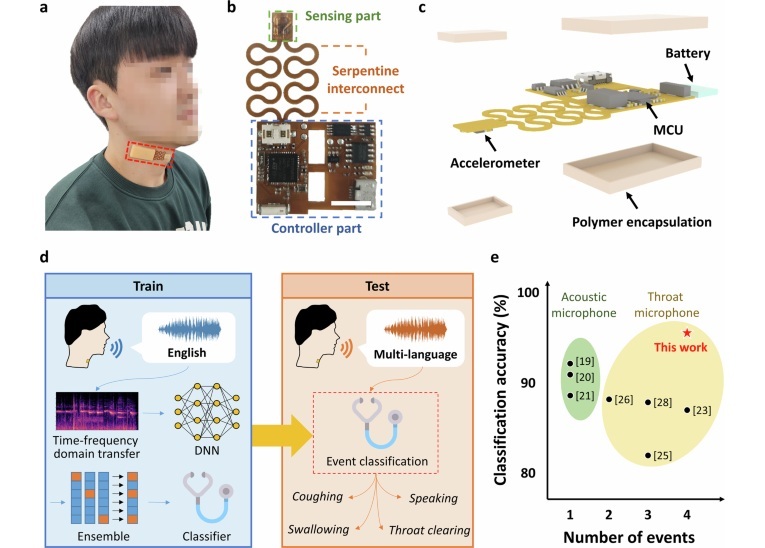
      Image: Overview of the soft skin-attachable throat vibration sensor system for classifying throat-related events (Photo courtesy of npj Digital Medicine (2025), DOI: 10.1038/s41746-024-01417-w)
      Image: Overview of the soft skin-attachable throat vibration sensor system for classifying throat-related events (Photo courtesy of npj Digital Medicine (2025), DOI: 10.1038/s41746-024-01417-w)

      Stroke is a severe condition that occurs when blood vessels in the brain are either blocked or rupture, endangering life and potentially leading to long-lasting effects such as dysphagia (difficulty swallowing) and dysarthria (slurred or indistinct speech). As the second leading cause of death globally, stroke results in significant complications and has a high recurrence rate, even after treatment. Traditionally, stroke sequelae are assessed through direct examinations by healthcare professionals at hospitals, which makes it challenging to monitor changes continuously in patients' day-to-day lives. Now, an international team of researchers has developed a new method for managing stroke sequelae using a wearable sensor system to track these effects in real time.

      A research team from Pohang University of Science and Technology (POSTECH, Pohang, South Korea), in collaboration with the Lucerne Institute (Vitznau, Switzerland), has developed a skin-mounted sensor system capable of continuously monitoring stroke sequelae. The system features a flexible skin-mounted neck vibration sensor (STVS) that closely adheres to the skin, unaffected by surrounding noise, and accurately detects signals related to stroke effects, such as speaking, swallowing, and coughing in daily activities. The sensor incorporates a wavy structure, allowing it to naturally fit the skin and respond to movement. It remains securely attached during physical activities like walking or running, ensuring continuous data measurement. Experimental findings demonstrated that this sensor achieved more than three times the signal-to-noise ratio (SNR) improvement compared to existing wearable devices.

      Moreover, the research team developed an 'ensemble classification model' based on artificial intelligence (AI) to automatically analyze the data collected by the sensor. This model allows for the precise measurement and differentiation of activities associated with stroke, such as swallowing, coughing, speaking, and throat clearing, without the need for specialized medical personnel. This feature enables a high-level medical evaluation. Clinical trials conducted at a Swiss stroke rehabilitation center, which included participants fluent in five languages—Korean, English, French, German, and Spanish—demonstrated that the sensor achieved over 96% accuracy in activity classification. These results were published in npj Digital Medicine.

      "We have proposed a new paradigm for monitoring stroke sequelae in daily life through the integration of wearable sensors and AI technology," said POSTECH Professor Jeong Yoon-young. "This technology, which has proven its high accuracy and stability in various languages and environments, will significantly contribute to the diagnosis and customized treatment of various neurological disorders in the future."

      Related Links:
      POSTECH
      Lucerne Institute

      Monday, December 23, 2024

      Cost-Efficient and Portable IoMT Solution for Post-Stroke Rehabilitation: Inferring Feet Pressures With Lower Limbs IMUs

       Didn't your competent? doctor put together a protocol on all this earlier research on these types of things? NO? So, you DON'T have a functioning stroke doctor, do you?

      The latest here:

      Cost-Efficient and Portable IoMT Solution for Post-Stroke Rehabilitation: Inferring Feet Pressures With Lower Limbs IMUs

      Publisher: IEEE

      Abstract:

      In recent years, the increase in the elderly population has placed significant burdens on post-rehabilitation schemes, resulting in high logistical costs and considerable social impacts due to hospitalization or frequent visits. These challenges call for a transformation in the traditional approach to physical patient care, which can be achieved by leveraging the Internet of Medical Things (IoMT), particularly through the use of pervasive wearable sensors. When attached to patients during treatment or therapy, these sensors can provide valuable supplementary information to healthcare professionals. When it comes to adopting IoMT technologies, cost efficiency, portability, and generalization are key factors. Specifically, this study aims to enhance the cost-effectiveness and versatility of wearable eHealth monitoring architectures that utilize foot pressure sensing hardware for the motor assessment of post-stroke and neurologically impaired patients. It leverages lower limb IMU sensory information and machine learning to mitigate the reliance on foot pressure sensing hardware. We demonstrate the potential of Artificial Intelligence (AI) in predicting fine-scale foot pressure using only inexpensive, off-the-shelf motion sensors. We propose a self-supervised, exercise-agnostic asynchronous foot pressure decoding model that does not require human annotation. The algorithm is thoroughly evaluated using appropriate performance metrics, and our experimental tests show promising results.
      Published in: IEEE Internet of Things Journal ( Early Access )
      Page(s): 1 - 1
      Date of Publication: 20 December 2024

      ISSN Information:

      Publisher: IEEE

      Saturday, May 4, 2024

      How Does the Integration of Wearable Sensor Technology into Upper Extremity Rehabilitation Impact Functional Outcomes in Stroke Patients?

       I don't see how wearable sensor technology helps recovery at all! Measurements DO NOTHING to get survivors recovered! Prove me wrong!

      Send me hate mail on this: oc1dean@gmail.com. I'll print your complete statement with your name and my response in my blog. Or are you afraid to engage with my stroke-addled mind?  Survivors would like to know why you are being so fucking incompetent!

      How Does the Integration of Wearable Sensor Technology into Upper Extremity Rehabilitation Impact Functional Outcomes in Stroke Patients?

      Date of Presentation

      5-2-2024 12:00 AM

      College

      Rowan-Virtua School of Osteopathic Medicine

      Poster Abstract

      A literature review was done to assess effectiveness of wearable sensors in stroke rehabilitation. There is a scarcity of clinical trials evaluating their effectiveness from a clinical standpoint. Wearable sensors present an opportunity to collect patient data objectively outside of clinical settings, allowing a more comprehensive analysis of patient rehabilitation in the future.

      A search of PUBMED and Scopus was conducted. Keywords “Stroke Rehabilitation”, “Wearable Sensor”, and “Upper Limb” were used to find articles. Inclusion criteria included peer-reviewed, and not limited to research within the U.S. Two independent reviewers completed the screening of articles, selecting articles that fit the criteria and discussed outcomes of trials/review.

      Wearable sensors' efficiency and the ability to quantify motor functions are poised to revolutionize rehabilitation. Allowing motor function data tracking outside clinical settings allows for a more holistic approach to rehabilitation. Due to the large number of strokes that ultimately result in motor impairment, it is crucial to understand the efficacy of various rehabilitation methods. This can be used to direct treatment modalities of stroke patients aimed at optimizing clinical outcomes.

      With there being a lack of data, the need for further research on the use of wearable sensors in stroke rehabilitation, highlighting an area for further clinical research and assessment of long-term outcomes in this population.

      Keywords

      Stroke rehabilitation, Wearable Sensor, Upper limb, Wearable Electronic Devices, Upper Extremity, Treatment Outcome

      Disciplines

      Health and Medical Administration | Medicine and Health Sciences | Occupational Therapy | Other Analytical, Diagnostic and Therapeutic Techniques and Equipment | Physical Therapy | Rehabilitation and Therapy

      Document Type

      Poster

      Rowan UniversityRowan University
      Rowan Digital WorksRowan Digital Works
      Rowan-Virtua Research Day 28th Annual Research Day
      May 2nd, 12:00 AM
      How Does the Integration of Wearable Sensor Technology intoHow Does the Integration of Wearable Sensor Technology into
      Upper Extremity Rehabilitation Impact Functional Outcomes inUpper Extremity Rehabilitation Impact Functional Outcomes in
      Stroke Patients?Stroke Patients?
      Kylon T. CoombsRowan University, coombs18@rowan.edu
      Shikhar ManchandaRowan University, mancha25@rowan.edu
      Cheryce DanielRowan University, daniel22@rowan.edu
      Follow this and additional works at: https://rdw.rowan.edu/stratford_research_day
      Part of the Health and Medical Administration Commons, Occupational Therapy Commons, Other
      Analytical, Diagnostic and Therapeutic Techniques and Equipment Commons, and the Physical Therapy
      Commons
      Let us know how access to this document benefits you - share your thoughts on our feedback
      form.
      Coombs, Kylon T.; Manchanda, Shikhar; and Daniel, Cheryce, "How Does the Integration of Wearable
      Sensor Technology into Upper Extremity Rehabilitation Impact Functional Outcomes in Stroke Patients?"
      (2024).
      Rowan-Virtua Research Day. 121.
      https://rdw.rowan.edu/stratford_research_day/2024/may2/121
      This Poster is brought to you for free and open access by the Conferences, Events, and Symposia at Rowan Digital
      Works. It has been accepted for inclusion in Rowan-Virtua Research Day by an authorized administrator of Rowan
      Digital Works.
      How Does the Integration of Wearable Sensor Technology into Upper Extremity Rehabilitation
      Impact Functional Outcomes in Stroke Patients?
      Kylon Coombs OMS-III, Shikhar Manchanda OMS-III, Cheryce Daniel OMS-III
      Rowan-Virtua School of Osteopathic Medicine
      Intro OR Objectives
      Methods
      - Peer-reviewed articles related to wearable sensor technology
      written in English
      - Research outside of the U.S was not excluded
      Results/Outcomes
      Discussion / Conclusion
      - However, transitioning from laboratory measurements to
      real-world situations poses challenges. The trials highlighted
      accelerometers and inertial measurement units (IMUs) as the
      commonly used sensors, with increasing interest in
      incorporating multiple sensor types, such as gyroscopes. 10,
      12 More research is needed consisting of clinical trials with
      larger sample sizes and outside laboratory settings.7, 9
      Limitations
      References
      - Stroke, defined by the World Health Organization (WHO), is
      marked by the sudden onset of clinical signs indicating
      disruptions in cerebral function, persisting over 24 hours or
      leading to death, with no evident cause except of vascular
      origin.3, 8
      - Strokes are a major cause of disability worldwide, with data
      from the Global Burden of Diseases, Injuries, and Risk Factors
      Study (GBD). About 70% of stroke survivors face motor
      impairments, and 80% deal with mobility issues, resulting in
      lasting disabilities.
      - This has led to an increased emphasis on rehabilitating stroke
      patients, with ongoing efforts to integrate technology into
      clinical practices, especially in the realm of stroke
      rehabilitation. 3,8, 10
      - While notable strides have been taken in wearable sensor
      technology, there's a scarcity of clinical trials evaluating their
      effectiveness, especially from a clinical standpoint. Wearable
      sensors present an opportunity to collect patient data outside
      clinical settings, which is particularly crucial for assessing
      their motor function. 1, 6, 7 Adapted from : Lemmens et al.
      Adapted from : Kwakkel et al.
      - The results obtained from measurements conducted in a
      controlled setting demonstrate the sensors' capability to
      distinguish specific activities from a range of activities. One
      clinical trial revealed successful identification of both
      unimanual and bimanual activities by utilizing data from
      sensors attached to the trunk, as well as the arms and hands.6
      Database
      Searched
      Date of
      Search
      Keyword
      String
      Number of
      Results
      Pubmed 11/28/23 “stroke
      rehabilitation”
      + “wearable
      sensor” +
      “upper limb”
      127
      Scopus 11/28/23 stroke
      rehabilitation”
      + “wearable
      sensor” +
      “upper limb”
      148
      - As seen in the figure’s, sensors' efficiency
      and the ability to quantify motor functions
      are poised to revolutionize rehabilitation.
      Exploring wearable sensor capabilities could
      offer clinicians a more comprehensive
      analysis of patient rehabilitation in the
      future. 6, 9
      - Most literature attributes insignificant findings in clinical
      trials to factors like low sample sizes, inadequate outcome data
      analysis, and varying stroke severity among participants.7 Stein
      et al. highlighted the underutilization of accelerometer sensors
      in assessing functional activities beyond labs, emphasizing the
      need to observe their efficiency in real-world situations, which
      applies to other types of sensors as well.
      - The understanding of how diverse rehabilitation approaches
      contribute to central nervous system restoration after a stroke
      remains incomplete.9 There is a need for further research on the
      use of wearable sensors in stroke rehabilitation, highlighting an
      area for further clinical research and assessment of long-term
      outcomes in this population.

      Tuesday, April 2, 2024

      Wearable sensor-based rehabilitation exercise assessment for post-stroke rehabilitation

       Your dissertation advisor should have told you assessments are almost completely worthless unless they point directly to the 100% recovery protocols. I see nothing here that suggests you go from the assessment to the chosen recovery protocol.

      Wearable sensor-based rehabilitation exercise assessment for post-stroke rehabilitation 

      Boukhennoufa, Issam (2024) Wearable sensor-based rehabilitation exercise assessment for post-stroke rehabilitation. Doctoral thesis, University of Essex.

      Abstract

      Friday, November 18, 2022

      Wearable Sensors for Stroke Rehabilitation

      We need this so we can get an objective diagnosis of our movement problems. Then we could map protocols that fix those problems to them and have repeatable recovery options. But no, no one in stroke seems be thinking like that at all. We get crapola guidelines instead, we seem to have no intelligence in the stroke medical world at all.


      Wearable Sensors for Stroke Rehabilitation

      • 3 Accesses

      Abstract

      In this chapter, we provide a review of the current applications of wearable sensors in the field of stroke rehabilitation. Four key points are discussed in this review. First, wearable sensors are a viable solution for monitoring movement during rehabilitation exercises and clinical assessments, but more work needs to be done to derive clinically relevant information from sensor data collected during unstructured activities. Second, wearable technologies provide critical information related to the performance of activities in daily life, information that is not necessarily captured during in-clinic assessments. Third, wearable technologies can provide feedback and motivation to increase movement in the home and community settings. Finally, technologies are rapidly emerging that can complement “traditional” wearable sensors and sometimes replace them as they provide less obtrusive means of monitoring motor function in stroke survivors. These developing technologies, as well as readily available wearable sensors, are transforming stroke rehabilitation, their development is progressing at a fast pace, and their use so far has allowed us to gather important information, that we would have not been able to collect otherwise, which has tremendous potential to further advance stroke rehabilitation.

      Monday, September 26, 2022

      Wearable sensors improve prediction of post- stroke walking function following inpatient rehabilitation

      You somehow think predicting failure to 100% recover walking ability is useful and comforting to your survivor? Will you stop with prediction research and just do research that provides recovery?

      Wearable sensors improve prediction of post-stroke walking function following inpatient rehabilitation 

      JTEHM-00086-2022 1

      Abstract:  

      Objective: A primary goal of acute stroke rehabilitation is to maximize functional recovery and help patients
      reintegrate safely in the home and community.(And this research does nothing for that) However, not all patients have the same potential for recovery, making it difficult
      to set realistic therapy goals(Yeah, using the tyranny of low expectations so you never have to explain why you can't get them 100% recovered) and to anticipate future needs for short- or long-term care. The objective of this study was to test the
      value of high-resolution data from wireless, wearable motion sensors to predict post-stroke ambulation function following inpatient stroke rehabilitation.  
      Method:  
      Supervised machine learning algorithms were trained to classify patients as either
      household or community ambulators at discharge based on information collected upon admission to the inpatient facility (N=33-35). Inertial measurement unit (IMU) sensor data recorded from the ankles and the pelvis during a brief walking bout at admission (10 meters, or 60 seconds walking) improved the prediction of discharge ambulation ability over a traditional prediction model based on patient demographics, clinical information, and performance on standardized clinical assessments.
      Results:  
      Models incorporating IMU data were more sensitive to patients who changed ambulation category, improving the recall of community ambulators at discharge from 85% to 89-93%. Conclusions: This approach demonstrates significant potential for the early prediction of post-rehabilitation walking outcomes in patients with stroke using small amounts of data from three wearable motion sensors. 
       Clinical Impact:  
      Accurately predicting a patient’s functional recovery early in the rehabilitation process
      would transform our ability to design personalized care strategies in the clinic and beyond. This work contributes to the development of low-cost, clinically-implementable prognostic tools for data-driven stroke treatment