Changing stroke rehab and research worldwide now.Time is Brain! trillions and trillions of neurons that DIE each day because there are NO effective hyperacute therapies besides tPA(only 12% effective). I have 523 posts on hyperacute therapy, enough for researchers to spend decades proving them out. These are my personal ideas and blog on stroke rehabilitation and stroke research. Do not attempt any of these without checking with your medical provider. Unless you join me in agitating, when you need these therapies they won't be there.

What this blog is for:

My blog is not to help survivors recover, it is to have the 10 million yearly stroke survivors light fires underneath their doctors, stroke hospitals and stroke researchers to get stroke solved. 100% recovery. The stroke medical world is completely failing at that goal, they don't even have it as a goal. Shortly after getting out of the hospital and getting NO information on the process or protocols of stroke rehabilitation and recovery I started searching on the internet and found that no other survivor received useful information. This is an attempt to cover all stroke rehabilitation information that should be readily available to survivors so they can talk with informed knowledge to their medical staff. It lays out what needs to be done to get stroke survivors closer to 100% recovery. It's quite disgusting that this information is not available from every stroke association and doctors group.

Showing posts with label world stroke congress. Show all posts

Thursday, October 26, 2023

See you at WSC(World Stroke Congress) 2024 in Abu Dhabi!

Notice the appallingly lazy word 'care' in their writeup. NOT RESULTS OR RECOVERY!

Anytime I see 'care' in any stroke press release I know the stroke medical world is not willing to disclose actual results because they are so fucking bad, it wouldn't look good, so misdirection is used. Don't fall for that misdirection!

Big fucking whoopee.


 But you tell us NOTHING ABOUT RESULTS. They remind us they 'care' about us  but never tell us how many 100% recovered.  You have to ask yourself why they are hiding their incompetency by not disclosing recovery results.  ARE THEY THAT FUCKING BAD?


Three measurements will tell me if the stroke medical world is possibly not completely incompetent; DO YOU MEASURE ANYTHING?  I would start cleaning the hospitals by firing the board of directors, you can't let incompetency continue for years at a time.

There is no quality here if you don't measure the right things.

  1. tPA full recovery? Better than 12%?
  2. 30 day deaths? Better than competitors?
  3. rehab full recovery? Better than 10%?


See you at WSC(World Stroke Congress)  2024 in Abu Dhabi!

Save the date for the upcoming 16th World Stroke Congress (WSC 2024), taking place from October 23-26, 2024 in Abu Dhabi, UAE!

WSC 2024 will assemble the international stroke community to work together to reduce the burden of stroke by delivering improvements in prevention, treatment and recovery. Join global professionals to discuss the latest science, clinical trials, breakthroughs, and guidelines for stroke prevention.
Connect to a global network committed to providing quality stroke care through skill-building and high-quality research and help us keep the stroke community united at WSC 2024!

Not discussing 100% recovery at all! That is how fucking incompetent the stroke medical world is!


Thursday, October 27, 2022

Philips highlights latest advances in stroke care at the 2022 World Stroke Congress

Notice the FUCKING WEASEL WORD 'CARE'  NOT RECOVERY OR RESULTS! This is why the WSO needs to be destroyed and run by survivors.  I'd fire anyone involved in such useless crapola. 24 references to 'care', 2 to recovery.Their whole goal and direction is completely wrong, survivors don't want 'CARE', they want recovery! Have you ever talked to survivors?

Philips highlights latest advances in stroke care at the 2022 World Stroke Congress


  • Philips showcases innovations in its end-to-end stroke care pathway solutions aimed at improving treatment and quality of life for stroke patients
  • Symposium hosted by Philips features leading clinical experts discussing early detection of stroke, new guidelines for reperfusion therapy, and the health economic impact of a novel stroke pathway: direct-to-angio-suite

Amsterdam, the Netherlands – Royal Philips (NYSE: PHG, AEX: PHIA), a global leader in health technology, today announced it will showcase the company’s latest advances to support the treatment of stroke patients at the 14th Annual World Stroke Congress (WSC 2022, October 26-29, Singapore). Philips’ end-to-end stroke care solutions help advance stroke care through early detection and an optimized workflow that reduces the time to treatment – a key factor in delivering the best stroke patient outcomes. To connect information, technologies, and people across the stroke care pathway, enabling care teams to work quickly and act decisively, Philips works closely with stroke care partners such as MedTech stroke care company Nicolab, who will join Philips at the 2022 World Stroke Congress.

Globally, one in four adults over the age of 25 will suffer a stroke in their lifetime [1], making it the leading cause of disability and the second leading cause of death worldwide [2]. The key to improving outcomes for stroke patients is to provide treatment as quickly as possible. Physicians in an emergency stroke setting are fighting the clock and under intense pressure to make optimal treatment decisions. Despite the imperative for speed, care teams currently lose valuable time due to gaps in communication, information, and access to stroke expertise.

This World Stroke Day we are committed to improving stroke care. At each vital step, from early detection to treatment and recovery, we are collaborating with caregivers to speed up the stroke care pathway, because every minute matters for stroke patients.

Angelique Balguid

Head of Marketing for Neurovascular Portfolio at Philips

"This World Stroke Day we are committed to improving stroke care,” said Angelique Balguid, Head of Marketing for Neurovascular Portfolio at Philips. “At each vital step, from early detection to treatment and recovery, we are collaborating with caregivers to speed up the stroke care pathway, because every minute matters for stroke patients. We aim to push the boundaries and set new standards, so that clinicians can act faster, improve outcomes, and grow access to care.” 

Challenging the status quo of stroke care

On Wednesday, October 26, from 12:00 to 13:00 in Hall Summit 2 at this year’s World Stroke Congress, Philips will host a satellite symposium with talks from leading clinical stroke care experts, featuring Drs. Rotem Sivan-Hoffman, Head of the Radiology Department at Meir Medical Center (Haifa, Israel) and founder and Chief Medical Officer at CVAid, Prof. dr. Wim H. Van Zwam, PhD, Interventional Radiologist at Maastricht University Medical Center (Maastricht, The Netherlands), and Dr. Marc Ribó, PhD, interventional neurologist at University Hospital Vall d'Hebron, (Barcelona,Spain). The discussion will be moderated by Philips’ Angelique Balguid and explore a range of topics, including the early detection of stroke, new guidelines for reperfusion therapy, and the health-economic impact of a novel stroke pathway: the direct-to-angio-suite approach.

To learn more about Philips’ in-booth demonstrations, immersive experiences, and the full schedule of events click here.

Solutions across the stroke care pathway

Philips’ comprehensive stroke suite includes solutions for stroke monitoring and communication in ambulances, tele-stroke patient assessment, diagnostic imaging and analysis, image-guided therapy, neurological monitoring and assessment, and more. These solutions are aimed at improving diagnostic confidence and time to treatment, and helping reduce the risk of a second stroke.
 

  • Philips Neuro suite is based on the company’s Image Guided Therapy System – Azurion. This suite is delivering the latest advances in interventional neuroradiology, such as the company’s industry-leading CT-like SmartCT 3D visualization and measurement tool, to assist interventional neuroradiologists with diagnosis and treatment.

  • Philips’ solutions leverage the advanced CT capabilities of the company’s Spectral CT 7500 spectral CT scanner to improve diagnostic capabilities for radiologists. The Spectral CT 7500 offers enhanced gray and white matter differentiation [3] and improved image quality for the detection of subtle hemorrhage [4] and may help in the detection of ischemic stroke through enhanced visualization of vascular anatomy.

  • Philips is also integrating cloud-based, end-to-end, artificial intelligence-based [5] stroke triage, communication, and management solutions through StrokeViewer, via its partnership with Nicolab, aiming to improve patient outcomes by connecting care teams to optimize the overall stroke workflow.

  • Supporting post-stroke remote telemetry, Philips Holter – ePatch – replaces the cumbersome setup of conventional Holter monitors with a small unobtrusive body sensor and patch adhered to the patient’s sternum for up to 14 days of continuous, high-quality electrocardiogram (ECG) recording for reliable diagnosis [6] of patients with atrial fibrillation (AF). Philips also provides an end-to-end service to support practices in the deployment of ePatch, enabling efficient workflows, enhancing the patient experience, and providing robust data analysis using cloud-based AI-enabled Philips Cardiologs software.

The future of stroke care

To learn more about Philips’ stroke care solutions and stroke management click here. A media backgrounder on how Philips is enabling the future of stroke care by connecting and integrating the patient journey can be found here.

Social responsibility

Earlier this week, the Philips Foundation announced it is exploring the possibilities of deploying Philips' expertise in stroke care in underserved settings, as well as supporting several projects designed to identify best practices and scalable initiatives to create a bedrock for better stroke care, such as the support of the development of a new online platform called Collavidence to increase stroke research funding.

Wednesday, June 8, 2022

14th World Stroke Congress

I saw nothing in here that even remotely suggests the stroke world is even working toward 100% recovery.  Useless crapola by supposedly smart people.

14th World Stroke Congress

he 14th World Stroke Congress will bring the latest science, clinical trials and guidelines to
stroke prevention, treatment, rehabilitation, and support, from every part of the globe.

Tuesday, January 25, 2022

The 13th World Stroke Congress (WSC) is accredited by the European Accreditation Council for Continuing Medical Education (EACCME) to provide the following CME activity for medical specialists.

You can easily see there is NOTHING on stroke rehab or protocols for 100% recovery! Since the WSO is useless, I guess the only thing to do is to not have a stroke.

So I guess Marc Fisher doesn't know what he is doing because he hasn't talked to enough stroke survivors. Maybe I should really blame the WSO board of directors for not setting correct goals; like solving stroke rather than press releases and training doctors.

Marc Fisher was elected President Elect of the World Stroke Organisation (WSO) in 2018 and took office in 2020.

The 13th World Stroke Congress (WSC) is accredited by the European Accreditation Council for Continuing Medical Education (EACCME) to provide the following CME activity for medical specialists.

Accreditation Statement and Credit Designation

European Accreditation Council for Continuing Medical Education (UEMS/EACCME)
The 13th World Stroke Congress (WSC) is accredited by the European Accreditation Council for Continuing Medical Education (EACCME) to provide the following CME activity for medical specialists. The EACCME is an institution of the European Union of Medical Specialists (UEMS): www.uems.net

The 13th World Stroke Congress (WSC) is designated for a maximum of, or up to, 22 European external CME credits. Each medical specialist should claim only those hours of credit that he/she actually spent in the educational activity.

American Medical Association (AMA)
Through an agreement between the European Union of Medical Specialists and the American Medical Association, physicians may convert EACCME credits to an equivalent number of AMA PRA Category 1 Credits™. Information on the process to convert EACCME credit to AMA credit can be found at https://www.ama-assn.org/education/ama-pra-credit-system/agreement-european-union-medical-specialties-uems

Royal College of Physicians and Surgeons of Canada
Live educational activities, occurring outside of Canada, recognized by the UEMS-EACCME for ECMEC credits are deemed to be Accredited Group Learning Activities (Section 1) as defined by the Maintenance of Certification Program of The Royal College of Physicians and Surgeons of Canada. For more information, visit: http://www.royalcollege.ca/rcsite/cpd/providers/international-accreditation-agreements-e

Credit Breakdown

Each participant should claim only those hours of credit that he/she actually spent in the educational activity.

Day

Maximum Credits

27.10.2021

8

28.10.2021

7

29.10.2021

7

Total Credits:

22


Educational Objectives

After attending this event, participants should be able to:

  • Explain the latest experimental and translational research in stroke
  • Describe the role of genetics in stroke
  • Discuss the epidemiology of stroke
  • Evaluate recent advances in the prevention of stroke
  • Review novel antithrombotic therapies and ongoing clinical trials
  • Describe recent advances in stroke imaging
  • Discuss subarachnoid hemorrhage, intracerebral hemorrhage and vascular malformations
  • Assess vascular cognitive impairment
  • Discuss stroke diagnosis, management, rehabilitation, outcomes and quality of care
  • Address individual needs in compliance with their Continuous Professional Development (CPD) plan


Target Audience

The World Stroke Congress is the global meeting place for experts, clinicians, researchers and policy makers in the field of stroke and its sub-​specialties such as neurology, neurosciences, internal medicine, neuroimaging, neurosurgery, geriatrics. Because of the diverse, clinically focused educational offering, participants are able to tailor the curriculum to meet the needs of international clinicians of all levels of experience.​

To Receive Your CME/CPD Certificate

The CME/CPD certificate will be available after completing the online evaluation and credit claiming procedure. The process takes about 5 minutes. We thank you for your feedback as it is an important part of CME/CPD accreditation and helps improve future educational offerings.

Before 29 January 2022:

  1. Access the online system via any of the following
  • Visit the following link
  • Please note that web browsers Mozilla Firefox 2.X or higher, or Google Chrome are recommended
  • Visit the CME/CPD Accreditation page on the event website
  • Follow the link in the email sent at the end of the event
  1. Complete the anonymous online evaluation
  2. Complete the credit claim form and submit
  3. The CME/CPD certificate will be available for download; retain for your personal records

 Kindly note that the WSC 2021 online evaluation​ will be active on the last day of the meeting. ​You will then be able to access it and claim your CME/CPD certificate.


Thursday, October 14, 2021

13th World Stroke Congress

I have SEEN NOTHING FROM THE WSO that even remotely suggests they know anything about getting to 100% recovery.

At #WSC2021 we believe in providing everyone with the opportunity to access the latest #stroke science! That is why nurses, students & young researchers can enjoy our advanced virtual educational experience for as little as €35: worldstrokecongress.org/register/ #neurotwitter #neurology


Sunday, October 21, 2018

Download the app for the 2018 World Stroke Congress here to access the content you want to see and don't miss a thing!

I'm not looking at this stuff, none of the previous seemed to provide any useful stroke rehab interventions. Your doctor should be vastly interested in this and conversant in all topics. But I bet your doctor knows nothing about this and does nothing with it.

Saturday, August 25, 2018

11th World Stroke Congress (WSC 2018) taking place in Montréal, Canada; 17-20 October, 2018

I saw absolutely nothing that came out of the 10th World Stroke Congress that helped survivors. This will be totally fucking worthless for survivors, nothing here will ever get into protocols that will solve all the problems in stroke.


11th World Stroke Congress


Abstracts for the 11th World Stroke Congress, 17-20 October, 2018

Abstract Submission Topics(NOT a single one on protocols, REHAB, results, hyperacute interventions or tPA replacement)


1.     Acute Neuroimaging  
2.     Acute Reperfusion Treatment  
3.     Acute Stroke Management 
4.     Acute Stroke: New Treatments Concepts  
5.     Aneurysm, Subarachnoid Haemorrhage and Vascular Malformations  
6.     Cerebrovascular Occlusive Disease 
7.     Complementary and Alternative Stroke Care
8.     Diagnosis 
9.     Epidemiology of Stroke  
10.   Experimental and Translational Neuroscience  
11.   Genetics  
12.   Heart and Brain
13.   Intracerebral Haemorrhage 
14.   Infections Diseases and Stroke 
15.   Randomized Clinical Trials  
16.   Multidisciplinary Clinical Rehabilitation
17.   Neurocritical Management
18.   Nursing
19.   On-going Clinical Trials
20.   Outcomes and Quality of Care
21.   Palliative Care/End of Life Care
22.   Paediatric Stroke
23.   Prevention of Stroke 
24.   Public Awareness/Advocacy 
25.   SSO – Stroke Support Organizations
26.   Stroke and Social Media
27.   Stroke Care Systems
28.   Stroke in the Region
29.   Stroke Registers and Audits
30.   Embolic Stroke of unknown Source
31.   Systematic Review and Meta-analysis
32.   Technology Innovations in Stroke
33.   TIA and Minor Stroke
34.   Uncommon Stroke Disorders / Difficult Cases
35.   Vascular Cognitive Impairment/ Vascular Dementia 
36.   Venous Diseases


Friday, March 2, 2018

Abstracts for the 11th World Stroke Congress, 17-20 October, 2018

I saw absolutely nothing that came out of the 10th World Stroke Congress that helped survivors. Maybe your doctor got something so ask them, I expect nothing from this one either. It is just 'happy talk' among 'stroke professionals'.  They all need to be read the riot act.

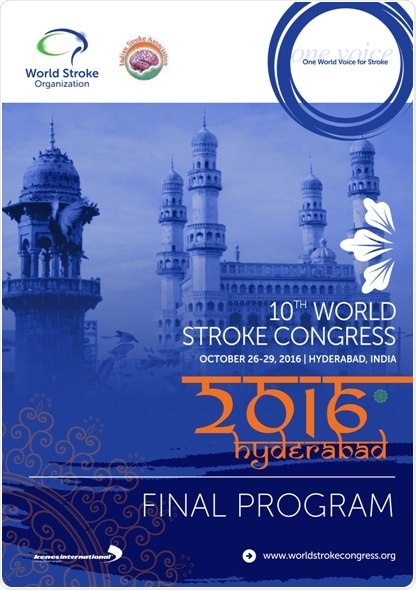
Experts meet at Hyderabad for four-day 10th World Stroke Congress


Abstracts for the 10th World Stroke Congress, 2016


Abstracts for the 10th World Stroke Congress, 2016International ...


Abstracts for the 11th World Stroke Congress, 17-20 October, 2018

Abstract Submission Topics(NOT a single one on protocols, results, hyperacute interventions or tPA replacement)


1.     Acute Neuroimaging  
2.     Acute Reperfusion Treatment  
3.     Acute Stroke Management 
4.     Acute Stroke: New Treatments Concepts  
5.     Aneurysm, Subarachnoid Haemorrhage and Vascular Malformations  
6.     Cerebrovascular Occlusive Disease 
7.     Complementary and Alternative Stroke Care
8.     Diagnosis 
9.     Epidemiology of Stroke  
10.   Experimental and Translational Neuroscience  
11.   Genetics  
12.   Heart and Brain
13.   Intracerebral Haemorrhage 
14.   Infections Diseases and Stroke 
15.   Randomized Clinical Trials  
16.   Multidisciplinary Clinical Rehabilitation
17.   Neurocritical Management
18.   Nursing
19.   On-going Clinical Trials
20.   Outcomes and Quality of Care
21.   Palliative Care/End of Life Care
22.   Paediatric Stroke
23.   Prevention of Stroke 
24.   Public Awareness/Advocacy 
25.   SSO – Stroke Support Organizations
26.   Stroke and Social Media
27.   Stroke Care Systems
28.   Stroke in the Region
29.   Stroke Registers and Audits
30.   Embolic Stroke of unknown Source
31.   Systematic Review and Meta-analysis
32.   Technology Innovations in Stroke
33.   TIA and Minor Stroke
34.   Uncommon Stroke Disorders / Difficult Cases
35.   Vascular Cognitive Impairment/ Vascular Dementia 
36.   Venous Diseases

Wednesday, November 2, 2016

'Experts' meet at Hyderabad for four-day World Stroke Congress

From what I've seem so far there are no 'experts' at the World Stroke Congress, only blithering idiots doing the 'happy talk'. I'd have everyone at the WSO fired for incompetence! They're DOING NOTHING FOR SURVIVORS!

'Experts' meet at Hyderabad for four-day World Stroke Congress

Stroke is devastating. Everyone can have a stroke.  For many people, the stroke happens suddenly and without warning. According to Stroke Association, when it happens, there is a little time to prepare. It can affect how one moves, feels and thinks.
Hyderabad is the host to World Stoke Congress.  Nearly 2200 stroke experts descended on the city to participate in a four-day conference.  The meeting begins just a few days before World Stroke Day, to be observed on October 29 every year.
What is a stroke? According to Dr. Jeyaraj Pandian, Co-Chair of the World Stoke Congress and a top stroke neurologist in India, a stroke is a brain attack.  It happens when the blood supply to part of the brain cuts off.
Blood carries essential nutrients and oxygen to the brain.  Without blood, brain cells can't work because of the damage.  They won't be able to perform their tasks.
The brain is a critical part of the body. It controls the entire body. A stroke can affect the way body functions.
The brain also controls how one thinks, learns, feels and communicates.
The blood flow to the brain can be cut off by two ways—due to Blockage or a Bleeding.  Because of which strokes occur, which are of two types—01. Blockage and 02. Bleeding.
In 85 per cent cases stroke happens by a Blockage and reaming 15 per cent cases by Bleeding.
According to Stroke Association, some of the things that increase the risk of stroke cannot be changed are Gender(in people under 75, Men have more strokes than women); Age(you are more likely to have a stroke if you are over the age of 65). Family History (If a close relative has had an attack, risk is likely to be higher) and Ethnic Background(South Asian or African-Caribbean origin are at an increased risk).
BP, High Cholesterol, Type 2 Diabetes, Atrial Fibrillation(irregular beating of the heart), Heart disease, Smoking are some of the medical problems that can increase a risk of having a stroke.
Smokers are twice as likely to have a stroke, and this risk will increase more with more smoking. Stopping smoking will reduce the danger of a stroke.
Drinking too much alcohol raises blood pressure, which in turn causes a stoke.
The common effects of stroke are weakness or paralysis; speech and language problems, unsteadiness, difficulty with swallowing, suffer from extreme tiredness, may have a problem with sensation and much more such problems.
According to experts at the ongoing World Stroke Congress, many strokes can be prevented.
The food that will help you save from stroke are fresh fruits, vegetables, and dried fruits and avoid junk food. But you don't give us a diet protocol you lazy fucking idiots.
Choose low-fat proteins.  Eat plenty of fiber such as cereals, porridge, brown rice, whole wheat bread and pasta or grains such as couscous.  Cut down on the intake of salt. Watch your weight.
Keep active.  Do exercises. Warm up before and after exercise.  Find someone to exercise with you.
Stroke is the leading cause of disability and the second leading cause of death globally.
Stroke devastates lives around the world.  Over 17 million people around the world suffer a stroke every year and 6.5 million deaths happen.  5 million are permanently disabled.  Nearly 26 million inhabitants survive a stroke??? every year. Doesn't anyone vet your statistics?
In India alone, 1.7 million new stroke cases occur every year. Stroke affects young people in India during their productive period of life.  The reasons for this are due to unorganized lifestyles and poor food habits. After stroke care significantly reduces the risk of death.
According to Dr, Jayaraj Pandian, the prevalence of the problem is 350 to 400 people per lakh population in India.
In Ludhiana, more youth are getting the stroke. Nearly 23 percent of the youth population is suffering from a stroke. That is due to unhealthy eating habits, stressful life.  Also, it is because today we have more youth population.
Stroke care infrastructure is developed mainly in private hospitals, but the vast majority of public hospitals are ill-equipped to treat stroke patients. The treatment expenses are borne by the patients and relatives and hence there is a huge economic burden on the family. The neighboring countries in South Asia also face a similar problem of a huge burden of stroke with an inadequate infrastructure to tackle the situation stated Dr. Jeyaraj Pandian the Congress Co-Chair from India.
Dr. C. Laxma Reddy, Minister for Health, Government of Telangana, while addressing the inauguration of World Stoke Congress, said TS Govt has established ICUs exclusively for stroke patients in all govt hospitals across Telangana state. We want government hospitals in the state to be stroke-ready hospitals he said.
The right care makes a difference, but many people are not getting the stroke treatment they need. According to World Stroke Campaign by the World Stroke Organisation, there are six key facts about stroke treatment
1.Early recognition makes a big difference.  Knowing the signs of stroke and getting treatment saves lives and improves recovery.
2.  1 in 10 people makes an excellent recovery when cared for in a specialized stroke unit.
90% failure of full recovery is totally appalling, and nothing about the 10% has anything to do with the specialized stroke unit.
3. Clot-busting drugs (tPA or thrombolysis) increase the chance of a good outcome by  30%.
But tPA only fully works 12% of the time. Don't promote that as a good outcome, that is complete failure. Clot-busting drugs break up blood clots. This treatment can be administered up to 4.5 hours of symptom onset in many patients with ischaemic stroke. The earlier it is given, the greater the effect.
4. Clot retrieval treatment increases the chance of a good outcome by more than 50%.  Clot retrieval treatment (mechanical thrombectomy) involves removing a blood clot  and can improve survival rates and reduce disability
5. Recovery is a critical step in the treatment process. Rehabilitation starts in the hospital as soon as possible following a stroke.
6. One in four survivors will have another stroke. Treatments that prevent another stroke include drugs to lower blood pressure and cholesterol, antiplatelet therapies, anticoagulation for atrial fibrillation, surgery or stenting for selected patients with severe carotid artery narrowing.
Lifestyle changes can also substantially reduce the risk of another stroke. Changes include eating well, being physically active, being tobacco-free, managing stress, and limiting alcohol consumption.
Stroke is treatable(Bullshit, quit lying!).  One must gain more awareness to save from devastating stroke effect.

Tuesday, November 1, 2016

Staff Time Spent on Bureaucracy Robs Stroke Patients of Therapy

What the hell difference does that staff time have when complete recovery from stroke is 10%? You are pointing out the wrong problem, The real problem is your head is buried so far up your ass you will never see daylight and all the fucking problems in stroke needing to be solved. What is worse is that attendees will nod their heads and agree with such fucking poor research conclusions. God, what a pile of blithering idiots supposedly working for stroke survivors.

Staff Time Spent on Bureaucracy Robs Stroke Patients of Therapy

HYDERABAD, INDIA — Work organizational factors and not patient factors were the major determinants influencing the frequency and intensity of the provision of therapy to acute stroke patients, a qualitative case study series involving UK stroke units finds.
"So in this study it was very striking. It wasn't about patients and their fatigue or their readiness or their ability [to participate in therapy]," David Clarke, PhD, lecturer in stroke care at the University of Leeds, United Kingdom, told delegates here at the World Stroke Congress (WSC) 2016. "It was work organizational factors" that were the major barriers to provision of care.
He said established working practices and professional cultures can be resistant to change but may be addressed through patient-focused work reorganization and staff development using methods of service improvement.
Studies have shown that increased frequency and intensity of therapies are associated with improved outcomes in the first 6 months after stroke. In the United Kingdom, the recommendation is for 45 minutes daily, 5 days a week, of occupational, physical, and speech-language therapy each. However, national audits consistently report that these targets are not being met. The Recommended Amount of Active Therapy (ReAcT) study set out to discover the reasons.
The investigators studied eight National Health Service stroke units in England, performing about 1000 hours of general observations and 434 patient-specific observations. They analyzed therapy records and performed semi-structured interviews with staff and patients/caregivers. Among the units observed, there were hyperacute, acute, and rehabilitation units, and a mixture of types, with the number of beds ranging from 24 to 68.
Audit ratings ranged from AAA to DDD, with a mix of in-between ratings based on number of daily minutes in which patients received each of the three kinds of therapy. Only two units achieved an AAA rating.
Among 77 patients typical of stroke unit residents, 49 were interviewed, as were 50 of 53 caregivers and 130 of 193 staff. Staff members were 16% male, and the group had a mean age of 35.6 years.
Staff Factors Biggest Impediments
The researchers found seven major factors affecting the provision of care to patients: organization of the therapists' working day, time spent in non–patient contact activity, patient factors, staffing levels and deployment, limited use of timetabling of therapy, limited knowledge of evidence for increased frequency and intensity of therapy, and influence of national audits.
The first two factors — both of a systemic, organizational nature — were the greatest impediments to providing care up to national standards. Across the eight stroke units, each staff member spent 1.3 to 8.6 hours per day in non–patient contact activities of information exchange among staff.
As one would expect, the minimum time spent in information exchange was reflected in the audit ratings. The worst-performing unit had a DDD rating, where workers were spending 8.6 hours per day in non–patient contact activities. Staff in the two units with AAA ratings spent 1.3 and 3.8 hours per day on such activities. Staff time not spent talking to each other left more time for patient therapy.

Exacerbating the problem, most units adhered to traditional 8-hour work days, with the time available for therapy further eroded by protected meal times, documenting therapy, and performing audit data entry. Actual time available for therapy was less than 5 hours per day for each staff member.
Staffing levels in general were inadequate. Seven of eight units had less than the number of recommended physical and occupational therapists, and all eight were deficient in speech-language therapists.
Dr Clarke said that there was limited evidence that the principle of "more therapy more frequently is associated with better outcomes" influenced the planning and delivery of therapy.
However, two units undertook service reorganizations. One reviewed and substantially reduced the time devoted to non–patient contact activities and also increased patient contact time by extending the work day with staggering of start and finish times. Both units simplified and standardized entry of audit data and used national audit performance ratings in business cases to target therapist staffing increases.
Only one unit used electronic records, which provided a substantial advantage in that paper-based units often required staff to enter the same information on different forms up to three times whereas electronic records could automatically repopulate the information.
Given the magnitude of the problem, "a shift in therapists' thinking and practice towards patient-centered rather than therapist-centered working in many UK stroke units is required," Dr Clarke advised.
Session chair Patrik Michel, MD, head of the stroke center at Lausanne University Hospital in Switzerland, noted that the units were slightly understaffed, but the main problem was that "the organization of their therapy needs can be improved" to reduce workers' time on bureaucracy and paperwork.
"Quality improvement is always both an internal and external process," requiring both internal quality improvement standards and systems as well as external audits, he told Medscape Medical News. "Of course, the improvement process itself is at risk of creating bureaucracy, so the internal audits should be both simple and be done without much bureaucratic efforts."
Professor Michel said another interesting finding of the study is that the professionally trained therapists seemed not to be aware of the scientific evidence that more intensive therapy leads to better outcomes. "So there is some work to be done as well on that level," he said.
The study had no commercial funding. Dr Clarke and Professor Michel have disclosed no relevant financial relationships.
World Stroke Congress (WSC) 2016. Presented October 28, 2016.

Monday, October 31, 2016

Experts meet at Hyderabad for four-day World Stroke Congress

From what I've seem so far there are no 'experts' at the World Stroke Congress, only blithering idiots doing the 'happy talk'. I'd have everyone at the WSO fired for incompetence! They're DOING NOTHING FOR SURVIVORS!

'Experts' meet at Hyderabad for four-day World Stroke Congress

Stroke is devastating. Everyone can have a stroke.  For many people, the stroke happens suddenly and without warning. According to Stroke Association, when it happens, there is a little time to prepare. It can affect how one moves, feels and thinks.
Hyderabad is the host to World Stoke Congress.  Nearly 2200 stroke experts descended on the city to participate in a four-day conference.  The meeting begins just a few days before World Stroke Day, to be observed on October 29 every year.
What is a stroke? According to Dr. Jeyaraj Pandian, Co-Chair of the World Stoke Congress and a top stroke neurologist in India, a stroke is a brain attack.  It happens when the blood supply to part of the brain cuts off.
Blood carries essential nutrients and oxygen to the brain.  Without blood, brain cells can't work because of the damage.  They won't be able to perform their tasks.
The brain is a critical part of the body. It controls the entire body. A stroke can affect the way body functions.
The brain also controls how one thinks, learns, feels and communicates.
The blood flow to the brain can be cut off by two ways—due to Blockage or a Bleeding.  Because of which strokes occur, which are of two types—01. Blockage and 02. Bleeding.
In 85 per cent cases stroke happens by a Blockage and reaming 15 per cent cases by Bleeding.
According to Stroke Association, some of the things that increase the risk of stroke cannot be changed are Gender(in people under 75, Men have more strokes than women); Age(you are more likely to have a stroke if you are over the age of 65). Family History (If a close relative has had an attack, risk is likely to be higher) and Ethnic Background(South Asian or African-Caribbean origin are at an increased risk).
BP, High Cholesterol, Type 2 Diabetes, Atrial Fibrillation(irregular beating of the heart), Heart disease, Smoking are some of the medical problems that can increase a risk of having a stroke.
Smokers are twice as likely to have a stroke, and this risk will increase more with more smoking. Stopping smoking will reduce the danger of a stroke.
Drinking too much alcohol raises blood pressure, which in turn causes a stoke.
The common effects of stroke are weakness or paralysis; speech and language problems, unsteadiness, difficulty with swallowing, suffer from extreme tiredness, may have a problem with sensation and much more such problems.
According to experts at the ongoing World Stroke Congress, many strokes can be prevented.
The food that will help you save from stroke are fresh fruits, vegetables, and dried fruits and avoid junk food. But you don't list a food protocol, just generalities.
Choose low-fat proteins.  Eat plenty of fiber such as cereals, porridge, brown rice, whole wheat bread and pasta or grains such as couscous.  Cut down on the intake of salt. Watch your weight.
Keep active.  Do exercises. Warm up before and after exercise.  Find someone to exercise with you.
Stroke is the leading cause of disability and the second leading cause of death globally.
Stroke devastates lives around the world.  Over 17 million people around the world suffer a stroke every year and 6.5 million deaths happen.  5 million are permanently disabled.  Nearly 26 million inhabitants survive a stroke every year. Doesn't anyone vet these numbers?
In India alone, 1.7 million new stroke cases occur every year. Stroke affects young people in India during their productive period of life.  The reasons for this are due to unorganized lifestyles and poor food habits. After stroke care significantly reduces the risk of death.
According to Dr, Jayaraj Pandian, the prevalence of the problem is 350 to 400 people per lakh population in India.
In Ludhiana, more youth are getting the stroke. Nearly 23 percent of the youth population is suffering from a stroke. That is due to unhealthy eating habits, stressful life.  Also, it is because today we have more youth population.
Stroke care infrastructure is developed mainly in private hospitals, but the vast majority of public hospitals are ill-equipped to treat stroke patients. The treatment expenses are borne by the patients and relatives and hence there is a huge economic burden on the family. The neighboring countries in South Asia also face a similar problem of a huge burden of stroke with an inadequate infrastructure to tackle the situation stated Dr. Jeyaraj Pandian the Congress Co-Chair from India.
Dr. C. Laxma Reddy, Minister for Health, Government of Telangana, while addressing the inauguration of World Stoke Congress, said TS Govt has established ICUs exclusively for stroke patients in all govt hospitals across Telangana state. We want government hospitals in the state to be stroke-ready hospitals he said.
The right care makes a difference, but many people are not getting the stroke treatment they need. According to World Stroke Campaign by the World Stroke Organisation, there are six key facts about stroke treatment
1.Early recognition makes a big difference.  Knowing the signs of stroke and getting treatment saves lives and improves recovery.
2.  1 in 10 people makes an excellent recovery when cared for in a specialized stroke unit. That is an incredible failure rate - 90% failure, it has nothing to do with the specialized stroke unit at all.
3. Clot-busting drugs (tPA or thrombolysis) increase the chance of a good outcome by  30%. (Bullshit, tPA only fully works 12% of the time)Clot-busting drugs break up blood clots. This treatment can be administered up to 4.5 hours of symptom onset in many patients with ischaemic stroke. The earlier it is given, the greater the effect.
4. Clot retrieval treatment increases the chance of a good outcome by more than 50%.  Clot retrieval treatment (mechanical thrombectomy) involves removing a blood clot  and can improve survival rates and reduce disability. Notice they never talk about results, just better chance.
5. Recovery is a critical step in the treatment process. Rehabilitation starts in the hospital as soon as possible following a stroke.
6. One in four survivors will have another stroke. Treatments that prevent another stroke include drugs to lower blood pressure and cholesterol, antiplatelet therapies, anticoagulation for atrial fibrillation, surgery or stenting for selected patients with severe carotid artery narrowing.
Lifestyle changes can also substantially reduce the risk of another stroke. Changes include eating well, being physically active, being tobacco-free, managing stress, and limiting alcohol consumption.
Stroke is treatable.  One must gain more awareness to save from devastating stroke effect.

Thursday, October 27, 2016

Abstracts for the 10th World Stroke Congress, 2016

49 references to protocol in the 285 pages. None of which seem to refer to anything about stroke rehab. TL:DR(Too long; didn't read)  This is what our fucking failures of stroke associations should be summarizing for what could be useful for stroke survivors. But that will never occur with those lazy bastards.
This just completely proves that the World Stroke Congress has no interest in helping stroke survivors. You are on your own. Deal with it.

Abstracts for the 10th World Stroke Congress, 2016