Use the labels in the right column to find what you want. Or you can go thru them one by one, there are only 34,148 posts. Searching is done in the search box in upper left corner. I blog on anything to do with stroke. DO NOT DO ANYTHING SUGGESTED HERE AS I AM NOT MEDICALLY TRAINED, YOUR DOCTOR IS, LISTEN TO THEM. BUT I BET THEY DON'T KNOW HOW TO GET YOU 100% RECOVERED. I DON'T EITHER BUT HAVE PLENTY OF QUESTIONS FOR YOUR DOCTOR TO ANSWER.
Changing stroke rehab and research worldwide now.Time is Brain!trillions and trillions of neuronsthatDIEeach day because there areNOeffective hyperacute therapies besides tPA(only 12% effective). I have 523 posts on hyperacute therapy, enough for researchers to spend decades proving them out. These are my personal ideas and blog on stroke rehabilitation and stroke research. Do not attempt any of these without checking with your medical provider. Unless you join me in agitating, when you need these therapies they won't be there.
What this blog is for:
My blog is not to help survivors recover, it is to have the 10 million yearly stroke survivors light fires underneath their doctors, stroke hospitals and stroke researchers to get stroke solved. 100% recovery. The stroke medical world is completely failing at that goal, they don't even have it as a goal. Shortly after getting out of the hospital and getting NO information on the process or protocols of stroke rehabilitation and recovery I started searching on the internet and found that no other survivor received useful information. This is an attempt to cover all stroke rehabilitation information that should be readily available to survivors so they can talk with informed knowledge to their medical staff. It lays out what needs to be done to get stroke survivors closer to 100% recovery. It's quite disgusting that this information is not available from every stroke association and doctors group.
We are providing an unedited version of this manuscript to give early access to its findings. Before final publication, the manuscript will undergo further editing. Please note there may be errors present which affect the content, and all legal disclaimers apply.
Abstract
Purpose
This study systematically compares the efficacy of robotic-assisted gait training (RAGT) with exoskeletons to traditional gait training (TGT) for lower limb rehabilitation after stroke, focusing on motor recovery, neuroplasticity, and muscle function.
Methods
A comprehensive systematic review was conducted across PubMed, Scopus, Web of Science, IEEE Xplore and Google Scholar for studies published between 2004 and 2024 following the PRISMA guidelines. A total of 86 studies were selected based on strict inclusion criteria, covering moderate to severe stroke patients undergoing RAGT, TGT, or combined interventions. Outcome metrics included gait symmetry, walking speed, neuroplasticity biomarkers (e.g., BDNF, fMRI), and muscle strength indicators. This systematic review was pre-registered with PROSPERO (ID: CRD420261333541).
Results
RAGT demonstrated superior improvements in gait symmetry index (+ 99.8% trajectory accuracy), walking speed (+ 20%), and muscle strength via high-intensity, repeatable training. TGT excelled in promoting active participation, cortical engagement, and functional independence, particularly in activities of daily living. Neuroplasticity analysis revealed RAGT enhanced spinal-brainstem rhythmic-ity, while TGT reinforced cortical-cerebellar motor planning. Muscle recovery was accelerated by RAGT through anti-gravitational support, though TGT better preserved natural movement patterns and coordination.
Conclusion
RAGT and TGT exhibit complementary strengths in stroke rehabilitation. Integrating RAGT’s high-intensity, objective training with TGT’s adaptive, patient-centered approach represents a promising direction for personalized, AI-enhanced neurorehabilitation strategies.
We are providing an unedited version of this manuscript to give early access to its findings. Before final publication, the manuscript will undergo further editing. Please note there may be errors present which affect the content, and all legal disclaimers apply.
Abstract
Powered lower limb exoskeletons were introduced to improve rehabilitation by increasing the quantity and quality of the therapy that a user receives. Fundamental principles targeting neuroplasticity, the driver of recovery, are delivered with exoskeletons, yet their use is not substitute for conventional rehabilitation. To deliver effective rehabilitation, exoskeletons must align with the needs of users. When devices reportedly achieve the same thing, how can one know which approach is best? Here we review 467 lower limb devices with the goal of discovering the breadth of the specification of devices and the implications these specifications have for users. Using a scoping search strategy, we reviewed exoskeletons and assistive devices looking at device type, usability, performance and specification. Only devices that fixate to the lower limbs and actively transmit forces/torques to at least one anatomic joint were considered. Like specifications were grouped and reported, and used as the basis for discussion, drawing on relevant literature in each case. Stationary devices are unlikely to ever be used in the home. To improve the uptake of ambulating devices outside the clinic, there should be renewed focus on degrees of freedom, bi- or uni-latera application, mass, donning/doffing and the control of devices. Unilateral conditions are still being treated with bilaterial devices, and providing passive/active non-sagittal (Degrees of Freedom) DOFs need to be carefully considered with respect to environmental negotiation, task variability, and device mass. Heavier devices are unlikely to be self-donned, and donning quickly may increase the time someone is engaged in their therapy and improve dosage. Control is central to usability and incorporating user intention is critical to boosting engagement and usage outcomes. When a patient can become a passenger in rehabilitation, this delivers poor outcomes, and we need to revisit the control systems and triggers so that they take meaningful and task related input from users. The exoskeleton field is relatively young and still full of promise. Improvements in rehabilitation outcomes will be delivered through properly accommodating the needs of patients and clinics, and improving usability by providing cheaper devices that can realistically be used at home and provide meaningful and engaging methods of control.
We are providing an unedited version of this manuscript to give early access to its findings. Before final publication, the manuscript will undergo further editing. Please note there may be errors present which affect the content, and all legal disclaimers apply.
Abstract
Due to their high power-to-weight ratio, modular and reconfigurable architectures, and inherent compliance, cable-driven rehabilitation robots (CDRRs) provide safe, lightweight, backdrivable solutions for gait and movement rehabilitation. However, they continue to face unique control challenges due to cable properties and user variability. Following the Preferred Reporting Items for Systematic Reviews and Meta-Analyses (PRISMA) guidelines, this systematic review explores control strategies for lower-limb CDRRs from the past decade. Out of the 968 studies initially identified, 70 met the selection criteria and were classified into six categories: position and velocity, force- and torque-based, compliance-based, model-based and optimal, learning-based and intention-informed, and hierarchical frameworks. Our analysis revealed a chronological evolution from traditional classical control toward more personalized, adaptive, learning-based, and intention-driven methods. Impedance and admittance control remain fundamental for ensuring safety, while newer approaches enable user-specific and environment-responsive assistance. This review proposes a unified hierarchical framework linking high-level intent detection to low-level actuation providing researchers and developers with a structured understanding of the control landscape for cable-driven lower-limb exoskeletons in healthcare and beyond. Control strategies were also linked to clinical outcomes to relate them to functional improvements across patient populations. Advancing CDRRs will require unified, multi-layer architectures that couple constraint-aware model-based control with adaptive and intention-driven learning to achieve safe, scalable, and clinically meaningful rehabilitation.
Ask your competent? doctor if this has proven better than all these previous exoskeletons! NO knowledge of them; FIRE THAT IDIOT!
No excuses are allowed, your doctor is supposed to know this stuff, and because s/he doesn't YOU
get to be the failure point of not recovering. My doctor knew nothing
of stroke rehab as completely proven by writing three prescriptions to
PT, OT, ST all saying the same thing(E.T- Evaluate and Treat) completely
proving NO knowledge of anything that will hep you recover! I could
train a chimpanzee to write that.
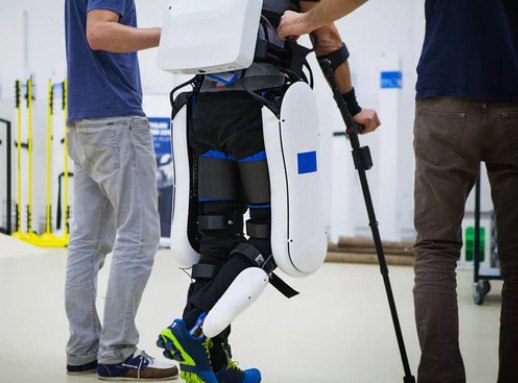
Ask your doctor which of these walking exoskeletons will get you 100% recovered, meaning walking without the exoskeleton.
There are many more exoskeletons out there. Which ones has your hospital tested?
LOPES
researchers hope to get the device into rehabilitation clinics by early
2012, with a mid-2012 target for introduction into the market. Is
it available and does your hospital know about it? Have they been
following this for the past 13 years? Or are they completely incompetent? But then it doesn't seem to work that well.
Researchers at Nazarbayev University have completed development and secured state registration for a medical exoskeleton designed to aid stroke rehabilitation. The device is now ready for clinical use and mass production, according to the university’s press service.
Named the Astana Gait Exoskeleton Assisted Rehabilitation (A.GEAR), the system is intended to help restore motor function in stroke survivors and individuals with musculoskeletal disorders. It received official certification following a positive evaluation from the National Center for Expertise of Medicines and Medical Devices. Nazarbayev University stated that this is one of the few high-tech medical solutions developed domestically that has received full clinical approval.
Cost efficiency is cited as A.GEAR’s main competitive advantage. According to project estimates, the exoskeleton is several times more affordable than foreign alternatives, reducing Kazakhstan’s reliance on imports and increasing accessibility to modern rehabilitation tools.
Professor Prashant Jamwal, the project lead, noted that it took just four years to progress from a lab concept to a certified medical product far shorter than the global average of 10 to 15 years. He added that the system could not only replace imported equipment but also reduce public expenditure on rehabilitation technologies.
The project began in late 2021 at the university’s Medical Robotics Competence Center. Clinical trials took place in Karaganda and Astana, involving stroke patients and adolescents with cerebral palsy. Following the successful trials, the team began negotiations for a long-term contract with SK-Pharmacy LLP and sought a commercial distributor.
Commercialization is being overseen by Robotics and Artificial Intelligence, led by Nazarbayev University graduate Shyngys Dauletbayev. In 2026, the university’s technopark aims to produce at least five exoskeleton units, with plans to scale production for distribution to medical institutions nationwide.
University President Professor Waqar Ahmad highlighted that Nazarbayev University researchers rank among the top 2% of scientists globally, based on a bibliometric analysis by Stanford University.
According to the Ministry of Health of Kazakhstan, approximately 40,000 people in the country suffer strokes annually, underlining a consistent demand for advanced rehabilitation solutions. As previously reported by The Times of Central Asia, Kazakhstan is also expanding the use of artificial intelligence for early diagnosis of strokes and cancer.
Ask your competent? doctor if this has proven better than all these previous exoskeletons! NO knowledge of them; FIRE THAT IDIOT!
No excuses are allowed, your doctor is supposed to know this stuff, and because s/he doesn't YOU get to be the failure point of not recovering. My doctor knew nothing of stroke rehab as completely proven by writing three prescriptions to PT, OT, ST all saying the same thing(E.T- Evaluate and Treat) completely proving NO knowledge of anthing that will hep you recover! I could train a chimpanzee to write that.
Ask your doctor which of these walking exoskeletons will get you 100% recovered, meaning walking without the exoskeleton.
There are many more exoskeletons out there. Which ones has your hospital tested?
LOPES
researchers hope to get the device into rehabilitation clinics by early
2012, with a mid-2012 target for introduction into the market. Is
it available and does your hospital know about it? Have they been
following this for the past 13 years? Or are they completely incompetent? But then it doesn't seem to work that well.
The Baltimore stroke-rehab startup has plans to build upper-extremity devices, too, CEO Bradley Hennessie said.
NextStep Robotics is located at the University of Maryland BioPark campus (Courtesy)This story was made possible through support from TEDCO, the Maryland Technology Development Corporation, which enhances economic empowerment growth through the fostering of an inclusive entrepreneurial innovation ecosystem. TEDCO identifies, invests in, and helps grow technology and life science-based companies in Maryland. Learn more at tedcomd.com.
Startup profile: NextStep Robotics
Founded by:Bradley Hennessie, Richard Macko, Larry Forrester, Anindo Roy
Year founded: 2017
Headquarters: Baltimore, MD
Sector: Biotech
Funding and valuation: $8 million raised at a $10 million valuation, according to the company
Key ecosystem partners: TEDCO, Abell Foundation, University of Maryland, Baltimore
A Baltimore startup could help stroke survivors improve how they move, even months after rehab ends.
NextStep Robotics’ AMBLE device targets foot drop, a condition that limits someone’s ability to lift the front of the foot while walking. The assistive tech is gathering another FDA authorization, with affordability front of mind, according to CEO Bradley Hennessie.
“Our clinical trial results show that it has much more benefit than just being helpful during exercise.”
Most rehabilitation happens in lower-budget clinics rather than resource-rich institutions, Hennessie said. AMBLE charges clinics a subscription fee for the device and software package, instead of an upfront fee, but costs can vary, Hennessie said.
The device is worn on the knee, paired with a sensor on the shoe that tracks a patient’s steps in real time. It helps lift the foot with robotic assistance, adjusting as the patient gets stronger.
AMBLE is currently FDA-cleared as an exercise device, which allows NextStep to sell it to clinics for use during gait therapy. But Hennessie said he hopes the next level of FDA clearance, called a De Novo submission, will expand its use.
The team completed its three-year, National Institutes of Health–funded clinical trials in 2024, after the onset of the COVID-19 pandemic delayed the study’s start. Conducted at the University of Maryland, Baltimore, the trials found that patients continued to improve in key walking measures for months after training ended, including follow-ups more than a year later.
Potential for spine, arm assistive tech
While AMBLE was initially developed to treat foot drop, the company sees broader potential for the technology.
Most recently, NextStep received approval from the Kennedy Krieger Institute to test the device with spinal cord injury patients. The team is planning to gather preliminary data from a small pool of patients before conducting a larger study, Hennessie said.
NextStep is also developing other devices.
The company is creating a standalone version of its shoe-based sensor that can track how someone walks without the exoskeleton, according to Hennessie. The sensor is designed to monitor changes in walking patterns and, over time, help identify patients at risk of falling.
NextStep is also developing an upper-extremity device, for the arm or hand, that uses the same “assist-as-needed” approach as AMBLE.
The company is finalizing its shoe sensor product. An initial prototype of its upper extremity device was developed and tested as a part of a Ph.D. project at the University of Maryland, Baltimore.
“We make sure that,” Hennessie said, “the user is making as much of the motion on their own [as possible].”
We are providing an unedited version of this manuscript to give early access to its findings. Before final publication, the manuscript will undergo further editing. Please note there may be errors present which affect the content, and all legal disclaimers apply.
Abstract
Background
Motor imagery (MI) has garnered significant interest as a novel rehabilitation method for stroke. Additionally, task-oriented robot training has been shown to enhance lower limb motor function in patients with early-stage stroke. However, the therapeutic effects of combining these two approaches remain unclear, and the underlying mechanisms are not yet understood. This study aims to investigate the effects of MI combined with task-oriented robot training on the lower limb motor function of post-stroke patients.
Methods
First-ever stroke patients meeting the inclusion criteria were recruited and randomly allocated eligible participants to the control group (n = 91) or the experimental group (n = 91). Based on routine conventional physical therapy, the experimental group received task-oriented robot training combined with MI training, whereas the control group received task-oriented robot training combined with muscle relaxation training. The outcome indicators are the Fugl-Meyer Assessment of Lower Extremity (FMA-LE), Berg Balance Scale (BBS), and spatio-temporal gait parameters, which reflect the patients’ lower limb motor function. (None of these are even remotely objective measurements AND THUS ARE COMPLETELY FUCKING USELESS! And you don't know that?)The functional connectivity between regions is measured by functional near-infrared spectroscopy (fNIRS).
Results
Significant improvements in FMA-LE and BBS were observed in the experimental group compared with the control group (p < 0.05). Although no significant differences were observed between groups post-treatment (p > 0.05), both groups demonstrated improved step frequency and gait speed scores and reduced gait cycle scores following intervention (p < 0.05). In addition, the experimental group showed significantly enhanced functional connectivity between the prefrontal cortex and motor-related regions compared to the control group (p < 0.05).
Conclusions
Combining MI training with task-oriented robotic training can enhance lower limb motor function and enhance the brain’s functional connectivity. Changes in functional connectivity within the prefrontal cortex (PFC) and motor-related cortex may serve as a potential therapeutic target for promoting motor recovery in stroke patients. Future studies should incorporate task-based functional Magnetic Resonance Imaging (fMRI) data to elucidate the directionality of information flow between these brain regions, thereby advancing our understanding of causal interactions underlying functional improvements in post-stroke gait rehabilitation.
Trial registration: It was retrospectively registered at the Chinese Clinical Trial Registry on 8 July 2025 (Registration No. ChiCTR2500105631).
Have your competent? doctor contact the corresponding author to see how to get this exoskeleton for your rehab, it should work even better if used immediately. Can your fuckingly incompetent doctor even manage to send an email? My definition of competence in stroke is 100% recovery protocols: NOTHING LESS!
Do you prefer your doctor, hospital and board of director's incompetence NOT KNOWING? OR NOT DOING?
We are providing an unedited version of this manuscript to give early access to its findings. Before final publication, the manuscript will undergo further editing. Please note there may be errors present which affect the content, and all legal disclaimers apply.
Abstract
Objective
This study aimed to observe the efficacy of unilateral lower limb exoskeleton robot training and its effect on neuroplasticity in hemiplegic patients with stroke by comparing it with conventional treatment.
Methods
Twenty-four patients with chronic stroke were randomly assigned to either the robot group (RG) or the control group (CG). The CG was treated with conventional rehabilitation, and the RG was treated with unilateral lower limb exoskeleton robot-assisted walking training based on conventional rehabilitation. The study’s primary outcome measures included gait analysis and plantar pressure testing before and after treatment. Secondary outcome measures included changes in lower limb Fugl-Meyer (FMA), Timed Up and Go Test (TUG), and Modified Barthel Index (MBI). In addition, we used functional near - infrared spectroscopy (fNIRS) to measure neural activity before and after the intervention.
Results
The robot group had significantly greater improvements in walking speed and stride length compared to the control group. The robot group showed greater improvements in FMA scores and reductions in TUG duration compared to the control group. Changes in plantar pressure and oxyhemoglobin (HbO) concentrations were observed only in the robot group.
Conclusion
Both conventional rehabilitation therapy and robot-assisted gait training improve walking function in patients with chronic stroke, but robot-assisted intervention shows more favorable outcomes.
Data availability
The data presented in this study are available on request from the corresponding author.
For FUCKING STUPIDITY'S SAKE! Predictions DO NOTHING FOR RECOVERY! Are you that blitheringly stupid? Real question, needing an answer!
Send
me personal hate mail on this: oc1dean@gmail.com. I'll print your complete
statement with your name and my response in my blog. Or are you afraid
to engage with my stroke-addled mind? No excuses are allowed! You're
medically trained; it should be simple to precisely state EXACTLY HOW predictions get you to 100% recovery with NO EXCUSES! Your definition of
competence in stroke is obviously much lower than stroke survivors'
definition of your competence! Swearing at me is allowed, I'll return
the favor.
Don't even attempt to use the excuse that brain research is hard.
You don't have a Frontiers account ? You can register here
ABSTRACT
Objective: Construct a predictive model for rehabilitation outcomes in ischemic stroke patients three months post-stroke using resting state functional magnetic resonance imaging(fMRI) images, as well as synchronized electroencephalography (EEG) and electromyography (EMG) time series data.
Methods: A total of 102 hemiplegic patients with ischemic stroke were recruited. Resting - state functional magnetic resonance imaging (fMRI) scans were carried out on all patients and 86 of them underwent simultaneous electroencephalogram (EEG) and electromyogram (EMG) examinations.After data preprocessing, we established prediction models based on time-series data and fMRI images separately.The predictions of the time - series model and the fMRI model were integrated using ensemble learning methods to create a multimodal fusion prediction model. The accuracy, recall, precision, F1 - score, and the area under the ROC curve(AUC) were calculated to evaluate the performance of the model.
Results: Compared to unimodal prediction models, multimodal fusion models demonstrated superior predictive performance. The ShuffleNet-LSTM model outperformed other multimodal fusion approaches. The area under the ROC curve was 0.8665, accuracy was 0.8031, F1-score was 0.7829, recall was 0.774, and precision was 0.833.
Conclusions:A deep learning-based rehabilitation prediction model utilizing multimodal signals was successfully developed. The ShuffleNet-LSTM model exhibited excellent performance among multimodal fusion models, effectively enhancing the accuracy of predicting lower-limb motor function recovery in stroke patients.
Keywords: Rehabilitation prediction model, ischemic stroke, deep learning, Model visualization, Motor dysfunction
* Correspondence: Yanlong Wang, The Second Affiliated Hospital of Harbin Medical University, Harbin, China Yanmei Zhu, The Second Affiliated Hospital of Harbin Medical University, Harbin, China Yulan Zhu, The Second Affiliated Hospital of Harbin Medical University, Harbin, China
Disclaimer: All claims expressed in this article are solely those of the authors and do not necessarily represent those of their affiliated organizations, or those of the publisher, the editors and the reviewers. Any product that may be evaluated in this article or claim that may be made by its manufacturer is not guaranteed or endorsed by the publisher.