Will your competent? doctor ensure the dietician gets this removed from everywhere in the hospital, including vending machines and the gift shop? And then gets EXACT DIET PROTOCOLS DELIEVERED so that will ensure this is not consumed post stroke!
Do you prefer your doctor and hospital incompetence NOT KNOWING? OR NOT DOING?
How processed red meat might drive neurodegenerative diseases
Scientists warn that while processed red meat may fuel harmful brain changes linked to Alzheimer’s, Parkinson’s, and ALS, the evidence is still evolving, and more studies are needed to uncover the actual risk.
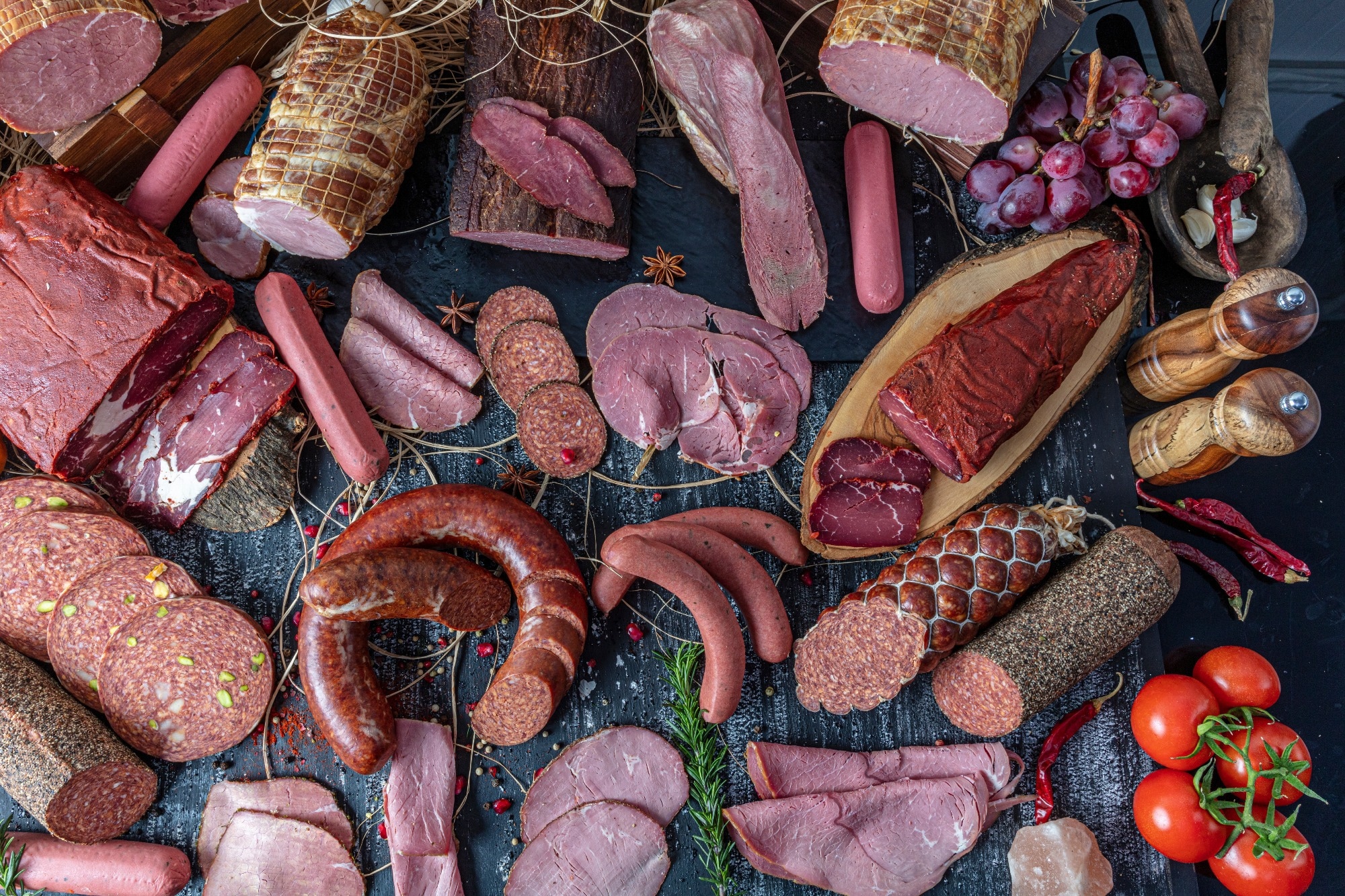 Study: Mini-review: Processed red meat intake and risk of neurodegenerative diseases. Image credit: Mehmet Cetin/Shutterstock.com
A review article published in Frontiers in Nutrition provides a detailed overview of the effect of processed red meat intake on the risk of neurodegenerative diseases.
Background
Neurodegenerative diseases are a group of age-related disorders characterized by progressive loss of nerve cells in specific brain regions. The most prevalent neurodegenerative diseases are Alzheimer’s disease (AD), Parkinson’s disease (PD), Huntington’s disease (HD), and Amyotrophic lateral sclerosis (ALS).
Recent advances in medical science have resulted in the development of several emerging and experimental approaches for managing these diseases, including gene therapy, aquatherapy (water-based therapy), brain energy rescue, nanoparticle therapy, and regenerative stem cell therapy.
Besides these treatments, some healthy dietary patterns, such as the Mediterranean diet, the Dietary Approaches to Stop Hypertension (DASH) diet, and the Mediterranean-DASH Intervention for Neurodegenerative Delay (MIND) diet, have shown protective efficacy against neurodegenerative diseases.
Processed red meat, including pork, beef, lamb, and other mammalian meat, has gained significant popularity globally, mainly because of convenience, affordability, and high palatability. However, many studies have linked these processed products to adverse health conditions, including diabetes, obesity, cardiovascular disease, and cancer.
This review aimed to comprehensively summarize existing evidence on the role of processed red meat intake in neurodegenerative diseases.
How neurodegenerative diseases develop
The pathogenesis of neurodegenerative disease is primarily associated with oxidative stress, mitochondrial dysfunction, inflammation, and impaired calcium signaling.
Oxidative stress is characterized by excessive free radical production, which can damage nerve cells' DNA, proteins, lipids, and other macromolecules, leading to necrosis and cell death. Mitochondrial dysfunction can significantly contribute to the imbalance between free radical production and elimination, further accelerating the process of oxidative stress-mediated nerve cell death. Impaired energy metabolism due to mitochondrial dysfunction may also contribute to the progression of neurodegenerative disease.
Neuroinflammation is a significant hallmark of neurodegenerative diseases. Excessive production of pro-inflammatory mediators in the brain can trigger the production and aggregation of neurotoxic proteins, resulting in nerve cell damage and death.

Calcium ions are essential in nerve cell growth and development and synapse formation. Excessive calcium ions in the brain can lead to the aggregation of Amyloid-β (Aβ) protein and the over-phosphorylation of Tau protein, two major pathogenic processes in AD. Excessive calcium can also trigger oxidative stress and increase nerve cell death.
Additional mechanisms relevant to disease progression include protein misfolding and aggregation, abnormal DNA repair, excitotoxicity, autophagy, pyroptosis, and ferroptosis.
Processed red meat intake and
risk of neurodegenerative diseases
Several ingredients of processed red meat, such as methionine, iron, sodium, nitrite and nitrate, and phosphatidylcholine, may potentially increase the risk of neurodegenerative diseases.
Processed red meat contains high amounts of methionine, an essential sulfur-containing amino acid involved in various biochemical processes. Toxic byproducts produced during methionine metabolism can induce oxidative stress, mitochondrial dysfunction, and inflammation, which collectively contribute to neurodegenerative disease pathogenesis.
Methionine-rich diets can also damage nerve cells and cause cognitive impairment by disrupting microvasculature, the blood-brain barrier, protein homeostasis, and functional connectivity between nerve cells.
Processed red meat is highly enriched with iron, an essential cofactor involved in neuronal development, synaptic plasticity, and myelination. However, excessive intake of processed red meat is associated with excessive iron accumulation, which can promote oxidative stress, lipid peroxidation, protein aggregation, and eventually nerve cell death.
Excessive iron deposits have been identified in the brain tissues of patients with neurodegenerative diseases, including AD, PD, ALS, and HD. At the same time, the review notes that heme in meat can bind Aβ peptide and potentially prevent its aggregation, suggesting possible protective and harmful roles. Other components, such as phosphatidylcholine, have also been investigated for potential protective effects in earlier studies, though findings remain mixed.
Processed red meat is a sodium-rich food, and excessive intake can impair sodium homeostasis, leading to synaptic dysfunction and neuronal loss. Attenuation of hippocampal hyperactivity is one of the earliest neuronal abnormalities observed in AD brains. These changes are partly associated with sodium channel dysfunction.
A sodium-rich diet can induce changes in cerebrovascular morphology by reducing vascular density. These changes are associated with cerebral hypoperfusion in AD. A sodium-rich diet can also trigger Aβ peptide accumulation and cognitive decline, which collectively increase the risk of AD.
Studies involving patients with HD have reported increased sodium concentrations in the entire brain, which may have a role in HD pathogenesis.
Nitrite is a preservative used in processed red meat products. It is a nitric oxide metabolite that can promote PD degeneration by triggering nitrosative stress in the brain. Significantly higher levels of nitrite and nitrate have been detected in the blood and cerebrospinal fluid of ALS patients.
Microglia, the resident macrophages in the brain, have been found to contribute to ALS pathogenesis by producing and releasing more nitrite and nitrate, and subsequently causing motor neuron injury and death.
Phosphatidylcholine is one of the most common fat components of processed red meat. Impaired lipid metabolism and accumulation have been linked to the pathogenesis of many neurodegenerative diseases, including AD, PD, and ALS.
Trimethylamine n-oxide (TMAO), a gut microbiota metabolite derived from phosphatidylcholine, can induce mitochondrial dysfunction, oxidative stress, neuroinflammation, and glial cell polarization in the brain. All these processes can potentially contribute to the pathogenesis of various neurodegenerative diseases.
Take-home message
By thoroughly analyzing existing literature, the authors of this review article conclude that excessive intake of processed red meat might increase the risk of neurodegenerative diseases. However, the studies analyzed here come with several limitations, including small sample size, non-standardized dosage, and lack of disease classification.
Furthermore, harmful substances of processed red meat that are believed to be associated with neurodegenerative disease pathogenesis may also be produced during the cooking of other foods. Some substances of processed red meat may also have protective roles in these diseases.
The review also stresses that confounding factors such as alcohol consumption, smoking, obesity, and stress may interact with diet, further complicating the picture. These factors make it difficult to conclude that processed red meat is the leading cause of neurodegenerative diseases.
Further studies are required to more conclusively explore the mode of action of processed red meat in neurodegenerative disease pathogenesis.


No comments:
Post a Comment