This is the whole problem in stroke enumerated in one word; 'care'; NOT RECOVERY!
If your hospital is touting 'care' it means they are a failure because they are delivering 'care'; NOT RECOVERY! I would never go to a failed hospital!
YOU have to get involved and change this failure mindset of 'care' to 100% RECOVERY! Survivors want RECOVERY, NOT 'CARE'!
I see nothing here that states going for 100% recovery! You need to create EXACT PROTOCOLS FOR THAT!
ASK SURVIVORS WHAT THEY WANT, THEY'LL NEVER RESPOND 'CARE'! This tyranny of low expectations has to be completely rooted out of any stroke conversation! I wouldn't go there because of such incompetency as not having 100% recovery protocols!
RECOVERY IS THE ONLY GOAL IN STROKE! GET THERE!
Mobile stroke treatment unit is just one way honoree has driven better care
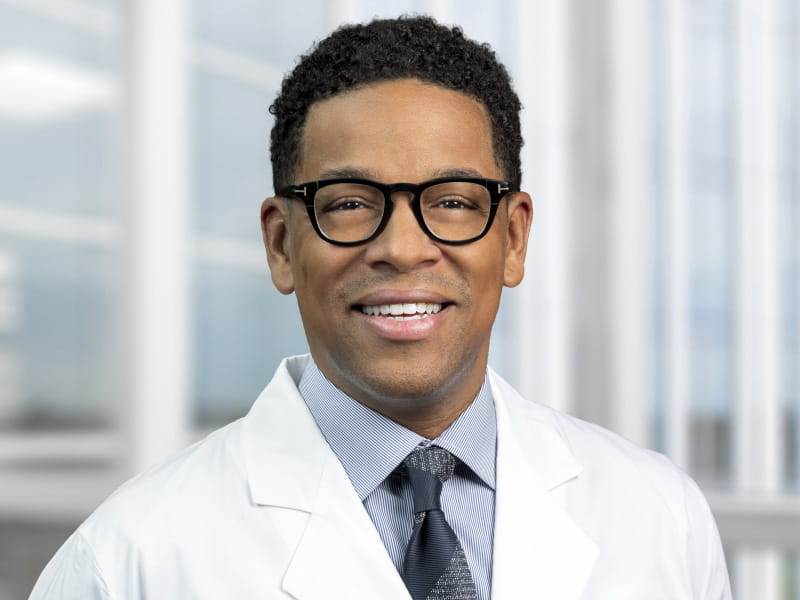
By the time treatment for a stroke begins, what's already happened matters a lot. If it's within 60 minutes since symptoms arose — the "golden hour" — odds of a better outcome improve.
To beat that clock, a prompt call to 911 is an essential first step. But many other time-consuming things must happen quickly, including evaluation of the person, basic care(NOT RECOVERY!), transport to the hospital, imaging and other tests, a definitive diagnosis, and handoff to specialists ready to start treatment.
In Columbus, Ohio, when 911 is called for someone with apparent stroke symptoms, one of two mobile stroke treatment units is dispatched, along with the usual emergency medical services. The specialized unit offers stroke patients much more than basic care(NOT RECOVERY!) and transit, said Dr. William "B.J." Hicks, who was instrumental in bringing mobile stroke care(NOT RECOVERY!) to his hometown.
"It provides a tight group with everything at their fingertips to rapidly assess the patient, identify the problem, look at the brain quickly, start an IV, start labs and then give medication — all from someone's doorstep," said Hicks, a vascular neurologist and vice president of neurosciences at OhioHealth. Once the patient arrives at the hospital, an expert team already informed about the case is lined up to provide further treatment.
For his leadership in stroke care(NOT RECOVERY!), including the three-plus-year effort to establish the first mobile stroke unit in Central Ohio, Hicks has been named the American Heart Association's 2025 Physician of the Year. The award will be presented June 17 at the association's National Volunteer Awards ceremony in Plano, Texas.
American Heart Association President Dr. Keith Churchwell said Hicks is a prime example of an AHA volunteer physician.
"He's a spectacular neurologist," Churchwell said. Besides caring for his patients, Hicks "works across multiple communities to reduce the risk of stroke through education and personal involvement, implementing innovative ideas on risk reduction."
In 2019, OhioHealth launched the first Central Ohio mobile stroke unit in partnership with the Columbus Division of Fire and two other local health systems with comprehensive stroke centers, The Ohio State University Wexner Medical Center and Mount Carmel Health System. A second unit was introduced last year.
A CT imaging specialist, an advanced practice provider and two paramedics trained in stroke staff the units. Onboard equipment includes a CT scanner, lab testing equipment and a telemedicine connection for consulting with a stroke neurologist.
If the neurologist sees that the most common type of stroke, caused by a blood vessel obstruction, has occurred, the ambulance crew can immediately begin giving intravenous clot-dissolving medicine on the way to a stroke center. The unit even has a gurney with a built-in scale, to ensure precision dosing.
By delivering crucial medicine to patients faster, such units are saving lives and patients' future functionality. A 2022 analysis comparing mobile stroke units with usual care(NOT RECOVERY!) suggested that mobile units could reduce the time from stroke onset to receipt of clot-busting medication by a half-hour and substantially increase the odds of an excellent patient outcome after 90 days.(Still not anywhere close to fast enough!
In this research in mice the needed time frame for tPA delivery is 3 minutes for full recovery. What is your plan to accomplish that? Or are you ignoring that need?
Electrical 'storms' and 'flash floods' drown the brain after a stroke)
"Magic happens," Hicks said, "because we get there so quickly."
Hicks, 45, is immersed in cardiovascular care and advocacy. He's been a member of the American Stroke Association Advisory Committee for three years and currently chairs its acute treatment subcommittee. He is immediate past president and current member of the 2024-25 AHA Midwest Region board of directors.
Previously he served on the Central Ohio AHA board of directors, including as its president. And in 2023, Hicks was named an American Stroke Association Stroke Equity Hero for his efforts to advance equitable health for all.
Hicks also helps improve the future of care(NOT RECOVERY!) through stroke research. Right now he's a local principal investigator for a trial called FASTEST, testing whether prompt administration of a novel medicine called Factor VII can cause beneficial clotting in patients having a bleeding stroke within the brain.
Hicks' home base of Columbus shares the same challenges in stroke as the rest of the U.S. Tobacco use, high blood pressure and high blood sugar are prominent risk factors.
Social factors that influence health, such as access to care(NOT RECOVERY!), healthy food and safe neighborhoods, amplify that risk, he said. "One's ZIP code plays a large part in one's vascular health and brain health, and therefore in one's stroke risk."
Mobile stroke units can help address that. "Although historically, certain communities have not had access to cutting-edge, best-in-class medical care(NOT RECOVERY!), the mobile unit brings that type of timely treatment to anyone, regardless of ZIP code," he said. "That is a revolutionary concept in health care."
Hicks also is active with the Franklin County Hypertension Network, which he helped create in 2018 to make blood pressure care a priority in health care settings throughout the area. Target:BP, a joint initiative of the American Heart Association and the American Medical Association, supports the effort.
Serving the community is woven into Hicks' DNA. His grandfather was a prominent pastor deeply connected in the Columbus area's Black community. His father, an oncologist, maintained those ties, working to counteract health disparities in the cancer realm.
"What he instilled in me was being unapologetic about excellence and having a drive toward achieving the goals that you set out, if you center the patient and you center the community," Hicks said. His mother, meanwhile, kept Hicks and his two siblings — now a dermatologist and a business executive — on track for well-rounded lives.
Today, Hicks counts on the support of his wife of 13 years, Nicci, an attorney who owns a local boutique. The couple have two children, 11-year-old Ella and 8-year-old William.
Hicks also credits a string of powerful mentors for guiding his career ambitions.
As an undergraduate at Morehouse College in Atlanta — which challenges its students to "strive to be tall enough to wear our crown of high expectations" — pre-med adviser Thomas Blocker evangelized about how to grow into that crown. "His words still carry me through," Hicks said.
At Howard University College of Medicine in Washington, D.C., surgeons Dr. Suryanarayana Siram and Dr. Ernest Myers "prepared themselves to be excellent every time they were in front of patients," no matter the hour or the situation's urgency, Hicks said. And Howard's Dr. Robert Williams, a family practitioner, demonstrated how powerful a physician's impact can be when focusing on equitable health.
Finally, as a vascular neurology fellow at the University of Texas Health Science Center in Houston, Hicks was inspired by Dr. Jim Grotta, a stroke neurologist he said had "an unquenchable desire to improve." During that time Grotta helped usher in the nation's first mobile stroke unit, planting seeds for the Columbus initiative.
Hicks' childhood role models also made a profound impression. "The adage that you can't be what you can't see — well, I saw it all the time," he said, referring to his father, his father's colleagues and family friends in the Black community. In college and med school, "I realized my upbringing was extremely rare. It was important because it made my career trajectory feel very normal."
Hicks volunteers in two AHA scholars programs, aimed at biomedical and health science students in historically Black colleges or universities and Hispanic-serving institutions. He also helps the programs' donors understand why it's crucial to foster a health care workforce that reflects the communities it serves. These efforts, he said, dovetail with his values "as a physician and a human."


No comments:
Post a Comment