Changing stroke rehab and research worldwide now.Time is Brain! trillions and trillions of neurons that DIE each day because there are NO effective hyperacute therapies besides tPA(only 12% effective). I have 523 posts on hyperacute therapy, enough for researchers to spend decades proving them out. These are my personal ideas and blog on stroke rehabilitation and stroke research. Do not attempt any of these without checking with your medical provider. Unless you join me in agitating, when you need these therapies they won't be there.

What this blog is for:

My blog is not to help survivors recover, it is to have the 10 million yearly stroke survivors light fires underneath their doctors, stroke hospitals and stroke researchers to get stroke solved. 100% recovery. The stroke medical world is completely failing at that goal, they don't even have it as a goal. Shortly after getting out of the hospital and getting NO information on the process or protocols of stroke rehabilitation and recovery I started searching on the internet and found that no other survivor received useful information. This is an attempt to cover all stroke rehabilitation information that should be readily available to survivors so they can talk with informed knowledge to their medical staff. It lays out what needs to be done to get stroke survivors closer to 100% recovery. It's quite disgusting that this information is not available from every stroke association and doctors group.

Showing posts with label mitochondria. Show all posts

Friday, August 21, 2026

Is Vitamin B12 the Muscle Nutrient You’ve Been Missing?

 Your competent? doctor has had this covered already in your diet protocol, right?

vitamin B12(4 posts to May 2026) 

Is Vitamin B12 the Muscle Nutrient You’ve Been Missing?

The mitochondria is the “powerhouse of the cell,” but B12 is what keeps the lights on. Here’s the latest science on how it affects your energy levels.

Protein powder, creatine, pre-workouts … There are more supplements than ever promising to elevate your performance in the gym. But if you walked into a supplement shop asking for vitamin B12 for muscle growth, you’d probably raise a few eyebrows.

B12 isn’t typically the go-to nutrient for muscle mass. But recent scientific evidence indicates the “energy vitamin,” may also play a role in powering your muscles. Here’s what we know, and how you can capitalize on it.

What You Should Know About B12 and Your Muscles

When we think of eating to fuel our muscles, you’ve probably heard about eating more protein and consuming enough calories. Physically active folks use their muscles more, so they need larger quantities of these major fuel sources.

But protein alone can’t do it all, and the research shows that other nutrients, like vitamin B12, may matter too. Vitamin B12 is essential for DNA synthesis, healthy nerve function, and red blood cell production — all of which help support normal muscle function. 

Particularly, vitamin B12 supports the mitochondria, also known as those famous cellular “power plants” that provide energy. 

It’s possible that insufficient vitamin B12 intake can depower your muscles’ capabilities. In fact, researchers believe age-related losses in muscle may have to do with mitochondrial dysfunction.

Are You at Risk of B12 Deficiency?

While the majority of B12 sources in our diet come from animal foods, only about half is effectively absorbed.

What’s more, deficiency is more common in some groups than others. Particularly, adults over 50, vegans and vegetarians, people with digestive conditions, and anyone who’s had stomach surgery may all be at an increased risk for low B12 levels. Plus, some medications may interfere with absorption as well.

There may be a connection between low vitamin B12 status and feeling strong, according to Caroline Thomason Bunn, RD. “Supplementing with vitamin B12 has been shown to improve strength and physical function in elderly adults who were deficient,” she shares.

Vitamin B12 deficiency goes beyond making you feel tired. It’s linked to anemia, nerve symptoms, muscle weakness, and even cognitive impairment in older people. It saps your muscles of an essential mechanistic puzzle piece, according to the latest research.

Going Deeper on the B12–Mitochondria Link

In 2026, scientists from Cornell University and the University of Alabama at Birmingham set out to determine how vitamin B12 deficiency affects skeletal muscle. Rodent subjects were split into two groups:

  • Young-adult male mice that were either genetically unable to use B12 properly or fed a B12-deficient diet for seven weeks.
  • Older mice (comparable to senior humans in age) that received weekly B12 injections for eight weeks.
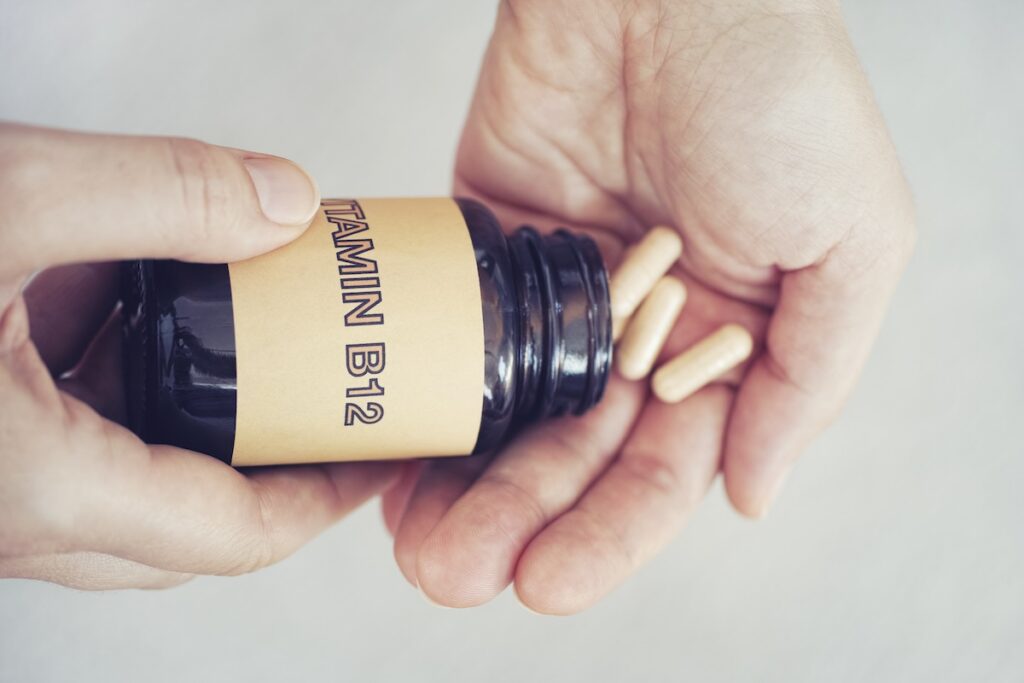
vitamin b12 supplements can help with muscle growth
Credit: iStock/Professor25

In the B12-deficient group, the researchers observed that the mitochondria were not functioning at optimal capacity — the mice muscles in this group generated and burned about 25 percent less energy.

But the more useful question is whether that translates to actual strength — and human research suggests it can. In a 2024 pilot study, older adults with mild B12 deficiency who supplemented for three months saw significant gains in muscle strength and quality, reaching about the same level as people whose B12 was already healthy.

Before we get practical, bear in mind the mouse study points to a mechanism rather than proof — and the human evidence, while encouraging, is still one small pilot in people who were already deficient.

The Takeaway

Vitamin B12 supplementation has been recommended by institutions like the Mayo Clinic for years, but when it comes to muscle health and functionality, other supplements tend to steal the spotlight.

Especially if you’re over 50. Incorporate vitamin B12-rich foods into your diet to ensure you meet the recommended daily intake. Some good sources of B12 to include in your diet are:

  • Clams
  • Beef liver
  • Tuna
  • Salmon
  • Eggs
  • Fortified nutritional yeast
  • Fortified breakfast cereals and other grains
And since B12 supports the mitochondria in your muscles, pairing it with enough protein and regular strength training may help you hold onto muscle function as you age.

Bottom Line

Here’s what we know: Getting adequate micronutrients, such as vitamins like B12, is just as important as hitting the big benchmarks — even if you don’t always feel the effects right away.

Feeling strong and energetic can make a massive difference in your overall quality of life, but requires you to pay attention to more than just calories or protein. If you’re feeling fatigued and are part of a cohort that tends to suffer from B12 deficiency, upping your intake might make a noticeable difference.

That said, the clearest human evidence so far is a small pilot where three months of B12 brought deficient older adults’ strength up to match non-deficient peers — promising, but larger trials are the next step, especially on whether B12 supplementation helps people who aren’t prone to deficiencies. In the meantime, there’s no harm in keeping your bases covered.

Experts Who Contributed

  • Jake Dickson (BS-EXS, NASM-CPT), wrote this article.
  • Lauren Keary, NASM-CNC, reviewed this article for accuracy.
  • Caroline Thomason Bunn, RD, CDCES, founder of Caroline Thomason Nutrition, reviewed this article for accuracy.

 supports the mitochondria, also known as those famous cellular “power plants” that provide energy. 

It’s possible that insufficient vitamin B12 intake can depower your muscles’ capabilities. In fact, researchers believe age-related losses in muscle may have to do with mitochondrial dysfunction.

Are You at Risk of B12 Deficiency?

While the majority of B12 sources in our diet come from animal foods, only about half is effectively absorbed.

What’s more, deficiency is more common in some groups than others. Particularly, adults over 50, vegans and vegetarians, people with digestive conditions, and anyone who’s had stomach surgery may all be at an increased risk for low B12 levels. Plus, some medications may interfere with absorption as well.

There may be a connection between low vitamin B12 status and feeling strong, according to Caroline Thomason Bunn, RD. “Supplementing with vitamin B12 has been shown to improve strength and physical function in elderly adults who were deficient,” she shares.

Vitamin B12 deficiency goes beyond making you feel tired. It’s linked to anemia, nerve symptoms, muscle weakness, and even cognitive impairment in older people. It saps your muscles of an essential mechanistic puzzle piece, according to the latest research.

Going Deeper on the B12–Mitochondria Link

In 2026, scientists from Cornell University and the University of Alabama at Birmingham set out to determine how vitamin B12 deficiency affects skeletal muscle. Rodent subjects were split into two groups:

  • Young-adult male mice that were either genetically unable to use B12 properly or fed a B12-deficient diet for seven weeks.
  • Older mice (comparable to senior humans in age) that received weekly B12 injections for eight weeks.
vitamin b12 supplements can help with muscle growth
Credit: iStock/Professor25

In the B12-deficient group, the researchers observed that the mitochondria were not functioning at optimal capacity — the mice muscles in this group generated and burned about 25 percent less energy.

But the more useful question is whether that translates to actual strength — and human research suggests it can. In a 2024 pilot study, older adults with mild B12 deficiency who supplemented for three months saw significant gains in muscle strength and quality, reaching about the same level as people whose B12 was already healthy.

Before we get practical, bear in mind the mouse study points to a mechanism rather than proof — and the human evidence, while encouraging, is still one small pilot in people who were already deficient.

The Takeaway

Vitamin B12 supplementation has been recommended by institutions like the Mayo Clinic for years, but when it comes to muscle health and functionality, other supplements tend to steal the spotlight.

Especially if you’re over 50. Incorporate vitamin B12-rich foods into your diet to ensure you meet the recommended daily intake. Some good sources of B12 to include in your diet are:

  • Clams
  • Beef liver
  • Tuna
  • Salmon
  • Eggs
  • Fortified nutritional yeast
  • Fortified breakfast cereals and other grains

And since B12 supports the mitochondria in your muscles, pairing it with enough protein and regular strength training may help you hold onto muscle function as you age.

Bottom Line

Here’s what we know: Getting adequate micronutrients, such as vitamins like B12, is just as important as hitting the big benchmarks — even if you don’t always feel the effects right away.

Feeling strong and energetic can make a massive difference in your overall quality of life, but requires you to pay attention to more than just calories or protein. If you’re feeling fatigued and are part of a cohort that tends to suffer from B12 deficiency, upping your intake might make a noticeable difference.

That said, the clearest human evidence so far is a small pilot where three months of B12 brought deficient older adults’ strength up to match non-deficient peers — promising, but larger trials are the next step, especially on whether B12 supplementation helps people who aren’t prone to deficiencies. In the meantime, there’s no harm in keeping your bases covered.

Experts Who Contributed

  • Jake Dickson (BS-EXS, NASM-CPT), wrote this article.
  • Lauren Keary, NASM-CNC, reviewed this article for accuracy.
  • Caroline Thomason Bunn, RD, CDCES, founder of Caroline Thomason Nutrition, reviewed this article for accuracy.

Thursday, August 13, 2026

Aging Is an Energy Story: What the Science Says You Can Do About It by Super Age

 what is your doctor's EXACT MITCHRONDIA PROTOCOL?  Doesn't have one and doesn't know of the need! PURE INCOMPETENCE!

How long your doctor has been incompetent! And your board of directors is so incompetent they don't recognize incompetence in their hospital!

mitochondria (23 posts to December 2015)

Aging Is an Energy Story: What the Science Says You Can Do About It

Saturday, August 1, 2026

Is Vitamin B12 the Muscle Nutrient You’ve Been Missing?

 Your competent? doctor already knows your absolute need for correct levels and has for years! IF COMPETENT AT ALL!

Is Vitamin B12 the Muscle Nutrient You’ve Been Missing?

The mitochondria is the “powerhouse of the cell,” but B12 is what keeps the lights on. Here’s the latest science on how it affects your energy levels.

Protein powder, creatine, pre-workouts … There are more supplements than ever promising to elevate your performance in the gym. But if you walked into a supplement shop asking for vitamin B12 for muscle growth, you’d probably raise a few eyebrows.

B12 isn’t typically the go-to nutrient for muscle mass. But recent scientific evidence indicates the “energy vitamin,” may also play a role in powering your muscles. Here’s what we know, and how you can capitalize on it.

What You Should Know About B12 and Your Muscles

When we think of eating to fuel our muscles, you’ve probably heard about eating more protein and consuming enough calories. Physically active folks use their muscles more, so they need larger quantities of these major fuel sources.

But protein alone can’t do it all, and the research shows that other nutrients, like vitamin B12, may matter too. Vitamin B12 is essential for DNA synthesis, healthy nerve function, and red blood cell production — all of which help support normal muscle function. 

Particularly, vitamin B12 supports the mitochondria, also known as those famous cellular “power plants” that provide energy. 

It’s possible that insufficient vitamin B12 intake can depower your muscles’ capabilities. In fact, researchers believe age-related losses in muscle may have to do with mitochondrial dysfunction.

Are You at Risk of B12 Deficiency?

While the majority of B12 sources in our diet come from animal foods, only about half is effectively absorbed.

What’s more, deficiency is more common in some groups than others. Particularly, adults over 50, vegans and vegetarians, people with digestive conditions, and anyone who’s had stomach surgery may all be at an increased risk for low B12 levels. Plus, some medications may interfere with absorption as well.

There may be a connection between low vitamin B12 status and feeling strong, according to Caroline Thomason Bunn, RD. “Supplementing with vitamin B12 has been shown to improve strength and physical function in elderly adults who were deficient,” she shares.

Vitamin B12 deficiency goes beyond making you feel tired. It’s linked to anemia, nerve symptoms, muscle weakness, and even cognitive impairment in older people. It saps your muscles of an essential mechanistic puzzle piece, according to the latest research.

Going Deeper on the B12–Mitochondria Link

In 2026, scientists from Cornell University and the University of Alabama at Birmingham set out to determine how vitamin B12 deficiency affects skeletal muscle. Rodent subjects were split into two groups:

Young-adult male mice that were either genetically unable to use B12 properly or fed a B12-deficient diet for seven weeks.

  • Older mice (comparable to senior humans in age) that received weekly B12 injections for eight weeks.
  • In the B12-deficient group, the researchers observed that the mitochondria were not functioning at optimal capacity — the mice muscles in this group generated and burned about 25 percent less energy.
  • But the more useful question is whether that translates to actual strength — and human research suggests it can. In a 2024 pilot study, older adults with mild B12 deficiency who supplemented for three months saw significant gains in muscle strength and quality, reaching about the same level as people whose B12 was already healthy.

Before we get practical, bear in mind the mouse study points to a mechanism rather than proof — and the human evidence, while encouraging, is still one small pilot in people who were already deficient.

The Takeaway

Vitamin B12 supplementation has been recommended by institutions like the Mayo Clinic for years, but when it comes to muscle health and functionality, other supplements tend to steal the spotlight.

Especially if you’re over 50. Incorporate vitamin B12-rich foods into your diet to ensure you meet the recommended daily intake. Some good sources of B12 to include in your diet are:

  • Clams
  • Beef liver
  • Tuna
  • Salmon
  • Eggs
  • Fortified nutritional yeast
  • Fortified breakfast cereals and other grains

And since B12 supports the mitochondria in your muscles, pairing it with enough protein and regular strength training may help you hold onto muscle function as you age.

Bottom Line

Here’s what we know: Getting adequate micronutrients, such as vitamins like B12, is just as important as hitting the big benchmarks — even if you don’t always feel the effects right away.

Feeling strong and energetic can make a massive difference in your overall quality of life, but requires you to pay attention to more than just calories or protein. If you’re feeling fatigued and are part of a cohort that tends to suffer from B12 deficiency, upping your intake might make a noticeable difference.

That said, the clearest human evidence so far is a small pilot where three months of B12 brought deficient older adults’ strength up to match non-deficient peers — promising, but larger trials are the next step, especially on whether B12 supplementation helps people who aren’t prone to deficiencies. In the meantime, there’s no harm in keeping your bases covered.

Friday, May 29, 2026

Can kinase trafficking to mitochondria unlock new targets in ischemic stroke?

 Ask your competent? doctor to translate this word salad to layperson terms. Will something from here get survivors to 100% recovery?

Can kinase trafficking to mitochondria unlock new targets in ischemic stroke?

Stroke is a major cause of death and permanent disability, which is described by abrupt loss of neuronal energy, oxidative injury, inflammation, and apoptosis, primarily mediated by mitochondrial dysfunction. Mitochondria are key regulators of stress responses, apoptosis, redox homeostasis, immune signaling and known as central signaling hubs, integrating pathways from multiple cellular compartments to maintain homeostasis. Among the major regulatory elements are protein kinase enzymes that modulate cell signaling by phosphorylating substrates. Several kinases, including members of the Akt, PKA, PKC, GSK-3β, PINK1, and MAPK families, dynamically translocate to mitochondria under physiological and pathological conditions. Once localized, they influence mitochondrial dynamics, bioenergetics, reactive oxygen species (ROS) production, and programmed cell death. Dysregulation of these functions has been implicated in impaired mitophagy, aberrant calcium signaling, and processes associated with the pathogenesis of various neurological disorders, particularly in those with acute brain injuries, such as acute ischemic stroke (AIS). Especially, mitochondrial kinase oxidative stress hallmarks of neuronal injury. In this review, we examine the role of mitochondrial-associated kinases in AIS, explore mechanisms of their translocation, downstream signaling effects, and their promise as druggable targets highlighting the importance of spatial dynamics of kinases and the need for precision therapies. Understanding these mechanisms may open new avenues for therapeutic intervention in neurological diseases with a focus on acute brain injury, by targeting mitochondrial signaling networks.

Tuesday, January 27, 2026

Mitochondria magic: Exercise’s value soars with this news


Great Catch-22 here; you need exercise to recover, but you really need 100% recovery to do the required exercises. Have your competent? doctor EXACTLY EXPLAIN HOW TO GET AROUND THAT PROBLEM!

I can almost guarantee your doctor and hospital will KNOW NOTHING AND DO NOTHING! 

No human research will occur; nothing will be done! That is how fucking incompetent the whole stroke medical world is. Hopefully comeuppance will hit them all with a stroke. And they can regret their incompetence in not solving stroke to 100% recovery!

Al this incompetence is a result of NO leadership firing the incompetent persons!

Mitochondria magic: Exercise’s value soars with this news

Japanese researchers found that exercise triggers muscle cells to send mitochondria through the bloodstream to protect and repair brain tissue after stroke
Mit
Photo credit: Shutterstock.com / LightField-Studios-2

Scientists at Juntendo University School of Medicine have uncovered a remarkable process that explains how exercise protects the brain from stroke damage. The research team discovered that physical activity triggers muscle cells to produce mitochondria that travel through the bloodstream and deliver healing benefits directly to injured brain tissue.

The study, published in the journal MedComm on Jan. 15, reveals that blood platelets act as tiny transport vehicles, carrying these cellular powerhouses from muscles to the brain. Once they arrive, the mitochondria help damaged neurons survive oxygen deprivation and support the repair of critical brain structures. The findings could eventually lead to new treatments for stroke patients who are too frail to exercise on their own.(Slight problem here, the penumbra resolves itself into dead brain in the first week, so you need this exercise immediately! HOW THE FUCK WILL YOUR DOCTOR ACCOMPLISH THAT?)


Research Assistant Professor Toshiki Inaba led the investigation alongside colleagues Nobukazu Miyamoto and Nobutaka Hattori at Juntendo’s Department of Neurology. The team conducted experiments using mouse models designed to replicate both stroke and dementia conditions, providing insights into how cellular communication might be harnessed for therapeutic purposes.

Watching mitochondria travel between cells

Miyamoto’s interest in mitochondrial migration began during a research fellowship at Massachusetts General Hospital and Harvard Medical School, where he first observed these cellular structures moving from one cell to another. That observation sparked the realization that mitochondrial transfer might offer treatment possibilities for various neurological conditions.


For the current study, researchers divided mice into groups and had some perform low-intensity treadmill exercise while others remained sedentary. The team then carefully tracked brain damage, movement abilities, memory function and changes in brain and muscle cells among both groups. They also measured mitochondrial levels and activity throughout the experiment.

The results showed clear advantages for the mice that exercised. These animals experienced less damage to white matter and myelin, the protective coating around nerve fibers. They also demonstrated better memory retention and movement capabilities compared to sedentary mice, while experiencing fewer complications following stroke events.

Mitochondria magic: Exercise's value soars with this news
Researchers have demonstrated how mitochondria, which are abundant in muscle, could aid in stroke recovery through exercise-induced migration.(Photo courtesy of Dr. Toshiki Inaba from Juntendo University School of Medicine, Japan)

Platelets serve as cellular delivery system

The research revealed that exercise significantly increased mitochondrial production in both muscle tissue and the bloodstream. Blood platelets, typically known for their role in clotting, took on an unexpected function by capturing mitochondria from muscle cells and transporting them to the brain.

Once in the brain, these traveling mitochondria didn’t just reach neurons. They also made their way to support cells including oligodendrocytes, which produce protective myelin, and astrocytes, star-shaped cells that help form the blood-brain barrier. The mitochondria provided crucial support to cells in the damaged area and the surrounding region called the penumbra, where brain tissue remains vulnerable but potentially salvageable.

Inside these brain cells, the delivered mitochondria helped them endure low-oxygen conditions that typically cause widespread cell death after stroke. They supported the repair of white matter, the brain’s communication infrastructure, and reduced the cascade of complications that often follow stroke events.

Limited options drive search for new approaches

Current stroke treatment relies heavily on clot removal or dissolution, but these interventions only work within a narrow window after symptoms begin. Once that critical time frame passes, patients face limited therapeutic options. Physical rehabilitation and symptom management become the primary focus, yet many stroke survivors continue struggling with walking difficulties, speech problems and memory decline.

Exercise has long been recognized as beneficial for both stroke prevention and recovery. However, many stroke patients are elderly and lack the physical stamina required to exercise intensively enough to gain those protective benefits. This reality makes the search for alternative approaches particularly urgent.

Inaba acknowledged that while the research team has identified several technical and biological challenges through additional experiments, the approach holds promise for reducing neurological problems after stroke. The applications might extend beyond stroke to include mitochondrial diseases and related neurodegenerative conditions where current treatment options remain limited.

From mice to potential human therapies

The pathway from laboratory findings to clinical treatments typically spans years and requires extensive testing for safety and effectiveness. If the mitochondrial transfer approach proves successful in human trials, it could potentially allow stroke patients to receive the benefits of exercise through transfusions of platelet preparations enriched with mitochondria.

Such a treatment would be particularly valuable for patients who cannot engage in physical rehabilitation due to age, frailty or the severity of their condition. The approach might also offer hope for preventing the progression of vascular dementia, a condition that currently has no established treatments.

The research team’s work builds on growing scientific understanding of how cells communicate and share resources. By revealing the specific mechanism through which exercise protects the brain, the scientists have opened a new avenue for developing therapies that could help millions of stroke survivors worldwide maintain better neurological function and quality of life.

SOURCE: juntendo