Showing posts with label dilation. Show all posts
Showing posts with label dilation. Show all posts
Sunday, July 13, 2025


Saturday, May 18, 2019
This 5-minute workout can save your life
Is this any different than the Kundalini Breath of Fire from 5 years ago which produces nitric oxide thus dilating your blood vessels? Which of course your doctor irresponsibly did nothing with. NO protocol, no knowledge of it. nothing.
This 5-minute workout can save your life
Melissa Sammy, MDLinx | May 16, 2019
Five minutes of Inspiratory Muscle Strength
Training (IMST) daily can improve cardiovascular health, enhance fitness
and sports performance, and sharpen cognitive function, according to preliminary clinical trial results from University of Colorado Boulder (CU Boulder) researchers.
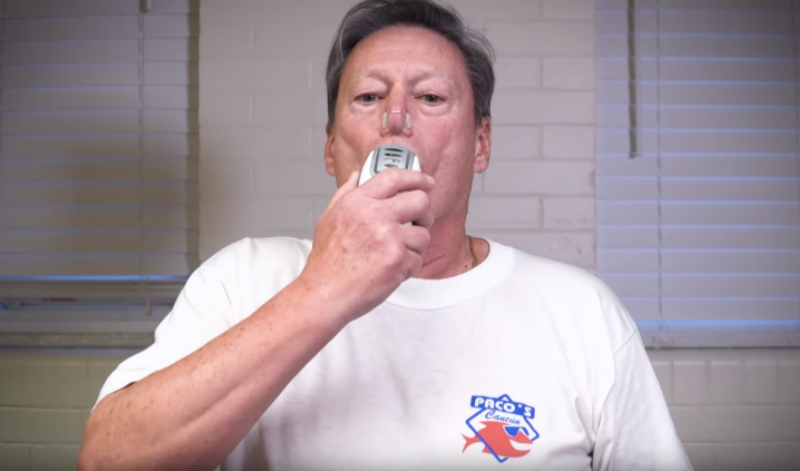 With IMST, just taking 30 deep
breaths daily (5 minutes) using the hand-held inspiratory muscle trainer
device can improve your cardiovascular health and boost your physical
and cognitive function. (Photo: CU Boulder)
With IMST, just taking 30 deep
breaths daily (5 minutes) using the hand-held inspiratory muscle trainer
device can improve your cardiovascular health and boost your physical
and cognitive function. (Photo: CU Boulder)
A simple workout, IMST involves vigorous
inhalation through a hand-held device called an inspiratory muscle
trainer that provides resistance.
“It’s basically strength-training for the muscles you breathe in with,” explained study lead Daniel Craighead, PhD, postdoctoral fellow, Integrative Physiology of Aging Laboratory, CU Boulder, Boulder, CO.
The technique was first developed in the 1980s as a non-pharmacological intervention for the improvement of respiratory symptoms in critically ill patients following mechanical ventilation cessation. However, IMST has also been assessed in other studies for the improvement of various respiratory conditions, notably chronic obstructive pulmonary disease, as well as lung capacity improvement in patients with lung diseases.
In a 6-week trial on the effects of IMST on obstructive sleep apnea, University of Arizona researchers found that 30 inhalations a day using a hand-held device resulted in more restful sleep, stronger inspiratory muscles, and lower systolic blood pressure levels (by about 12 mmHg) among participants.
Now roughly half-way through the study, the researchers have noted significant reductions in blood pressure levels and improvements in large-artery function among IMST intervention participants vs those in the control group. Furthermore, cognitive and treadmill test results were superior among participants in the intervention group vs participants in the control group. Specifically, the IMST group was able to run for longer and keep their heart rate and oxygen consumption low when asked to exercise to exhaustion.
“We suspect that as you improve the function of your respiratory muscles, they don’t need as much blood to work and that blood can be redistributed to your legs, so you exercise longer,” said Dr. Craighead.(If you think that you don't understand the creation of nitric oxide and what it does.)
The researchers hope that the ease of the technique coupled with the comfort of a home setting will encourage people to perform the 5-minute workout regularly and enjoy health benefits they might not otherwise receive.
With IMST, just taking 30 deep
breaths daily (5 minutes) using the hand-held inspiratory muscle trainer
device can improve your cardiovascular health and boost your physical
and cognitive function. (Photo: CU Boulder)“It’s basically strength-training for the muscles you breathe in with,” explained study lead Daniel Craighead, PhD, postdoctoral fellow, Integrative Physiology of Aging Laboratory, CU Boulder, Boulder, CO.
The technique was first developed in the 1980s as a non-pharmacological intervention for the improvement of respiratory symptoms in critically ill patients following mechanical ventilation cessation. However, IMST has also been assessed in other studies for the improvement of various respiratory conditions, notably chronic obstructive pulmonary disease, as well as lung capacity improvement in patients with lung diseases.
In a 6-week trial on the effects of IMST on obstructive sleep apnea, University of Arizona researchers found that 30 inhalations a day using a hand-held device resulted in more restful sleep, stronger inspiratory muscles, and lower systolic blood pressure levels (by about 12 mmHg) among participants.
- See Also: How to get fit without joining a gym
Now roughly half-way through the study, the researchers have noted significant reductions in blood pressure levels and improvements in large-artery function among IMST intervention participants vs those in the control group. Furthermore, cognitive and treadmill test results were superior among participants in the intervention group vs participants in the control group. Specifically, the IMST group was able to run for longer and keep their heart rate and oxygen consumption low when asked to exercise to exhaustion.
“We suspect that as you improve the function of your respiratory muscles, they don’t need as much blood to work and that blood can be redistributed to your legs, so you exercise longer,” said Dr. Craighead.(If you think that you don't understand the creation of nitric oxide and what it does.)
The researchers hope that the ease of the technique coupled with the comfort of a home setting will encourage people to perform the 5-minute workout regularly and enjoy health benefits they might not otherwise receive.
Wednesday, April 25, 2018
Protein That Dilates Blood Vessels Found
I could easily see this being used to deliver more blood to the brain post ischemic stroke as long as the criteria assuring safety and not causing brain bleeds is established. But that would assume we have some stroke leadership following through to see it to completion. We have NO stroke leadership so nothing will happen. Incompetence reigns in the stroke world until we get stroke survivors running things. The leaders and boards of directors of the ASA, NSA and WSO should either step down or be fired. I could see this possibly helping to stop pericytes from strangling capillaries post-stroke, but no one will follow that idea up.
The researchers put this machine to work testing a series of cell lines, some of which had mutations that led to an overexpression of proteins potentially linked to pressure sensing. The researchers then performed a screen, knocking down the expression of different candidate genes in each of the 384 wells, and tested if that gene is required for responding to the machine’s turbulent pressure.
The tests pointed the researchers to GPR68, which the authors showed works as a sensor of mechanical stimulation. Further experiments suggested that GPR68 is essential for FMD. “In a model organism, this protein is essential for sensing blood flow, and the proper functioning of the vascular system,” says Patapoutian.
When arterioles can’t dilate properly, the body has fewer options for lowering blood pressure in people with hypertension or getting blood through clogged vessels in cases of atherosclerosis.
“Future work will explore the role of GPR68 in clinically relevant cardiovascular diseases,” Patapoutian says. “We are also exploring the possibility of using small molecules to modulate the function of GPR68, as such molecules could be beneficial in the clinic.”
This article has been republished from materials provided by The Scripps. Note: material may have been edited for length and content. For further information, please contact the cited source.
Reference:
Xu, J., Mathur, J., Vessières, E., Hammack, S., Nonomura, K., Favre, J., . . . Patapoutian, A. (2018). GPR68 Senses Flow and Is Essential for Vascular Physiology. Cell, 173(3). doi:10.1016/j.cell.2018.03.076
Protein That Dilates Blood Vessels Found
Americans die of heart or cardiovascular disease at an alarming rate. In fact, heart attacks, strokes and related diseases will kill an estimated 610,000 Americans this year alone. Some medications help, but to better tackle this problem, researchers need to know exactly how the heart and blood vessels stay healthy in the first place.
Now, scientists at The Scripps Research Institute have identified a protein, called GPR68, that senses blood flow and tells small blood vessels called arterioles when to dilate. The researchers believe medications that activate GPR68 could one day be useful to treat medical conditions, including ischemic stroke.
“It has been known for decades that blood vessels sense changes in blood flow rate, and this information is crucial in regulating blood vessel dilation and controlling vascular tone,” says Ardem Patapoutian, PhD, Scripps Research professor, Howard Hughes Medical Institute investigator and senior author of the study published today in the journal Cell.
Indeed, flow-mediated dilation (FMD) is a non-invasive clinical test that informs doctors about the health of the vascular system. A compromised FMD is a precursor to a wide array of vascular diseases such as hypertension and atherosclerosis.
“Despite the importance of this process, the molecules involved within arteries to sense blood flow have remained unknown,” Patapoutian says.
Patapoutian and first author Jie Xu, PhD, a postdoctoral fellow in the lab, and now an independent scientist at the Genomics Institute of the Novartis Research Foundation (GNF), led the project to find GPR68 and determine how it works. The team started by designing a machine that uses turbulent movement of liquid to stand in for blood flow in blood vessels. This machine uses 384 pistons that move the fluid up and down over a bed of cells, placed in 384 wells on a plate. This motion simulates how blood would put pressure on those cells.
Now, scientists at The Scripps Research Institute have identified a protein, called GPR68, that senses blood flow and tells small blood vessels called arterioles when to dilate. The researchers believe medications that activate GPR68 could one day be useful to treat medical conditions, including ischemic stroke.
“It has been known for decades that blood vessels sense changes in blood flow rate, and this information is crucial in regulating blood vessel dilation and controlling vascular tone,” says Ardem Patapoutian, PhD, Scripps Research professor, Howard Hughes Medical Institute investigator and senior author of the study published today in the journal Cell.
Indeed, flow-mediated dilation (FMD) is a non-invasive clinical test that informs doctors about the health of the vascular system. A compromised FMD is a precursor to a wide array of vascular diseases such as hypertension and atherosclerosis.
“Despite the importance of this process, the molecules involved within arteries to sense blood flow have remained unknown,” Patapoutian says.
Patapoutian and first author Jie Xu, PhD, a postdoctoral fellow in the lab, and now an independent scientist at the Genomics Institute of the Novartis Research Foundation (GNF), led the project to find GPR68 and determine how it works. The team started by designing a machine that uses turbulent movement of liquid to stand in for blood flow in blood vessels. This machine uses 384 pistons that move the fluid up and down over a bed of cells, placed in 384 wells on a plate. This motion simulates how blood would put pressure on those cells.
To test how cells respond to sheer stress, the researchers designed a machine that uses turbulent movement of liquid to stand in for blood flow in blood vessels. (Photo from Ardem Patapoutian and Jie Xu)
The researchers put this machine to work testing a series of cell lines, some of which had mutations that led to an overexpression of proteins potentially linked to pressure sensing. The researchers then performed a screen, knocking down the expression of different candidate genes in each of the 384 wells, and tested if that gene is required for responding to the machine’s turbulent pressure.
The tests pointed the researchers to GPR68, which the authors showed works as a sensor of mechanical stimulation. Further experiments suggested that GPR68 is essential for FMD. “In a model organism, this protein is essential for sensing blood flow, and the proper functioning of the vascular system,” says Patapoutian.
When arterioles can’t dilate properly, the body has fewer options for lowering blood pressure in people with hypertension or getting blood through clogged vessels in cases of atherosclerosis.
“Future work will explore the role of GPR68 in clinically relevant cardiovascular diseases,” Patapoutian says. “We are also exploring the possibility of using small molecules to modulate the function of GPR68, as such molecules could be beneficial in the clinic.”
This article has been republished from materials provided by The Scripps. Note: material may have been edited for length and content. For further information, please contact the cited source.
Reference:
Xu, J., Mathur, J., Vessières, E., Hammack, S., Nonomura, K., Favre, J., . . . Patapoutian, A. (2018). GPR68 Senses Flow and Is Essential for Vascular Physiology. Cell, 173(3). doi:10.1016/j.cell.2018.03.076
Tuesday, December 13, 2016
Mediation of coffee-induced improvements in human vascular function by chlorogenic acids and its metabolites: Two randomized, controlled, crossover intervention trials
Coffee is a wonder drug. Why isn't it constantly available for stroke survivors? It would enhance movement, you would have to get fast to the bathroom numerous times during the day, as long as you weren't catheterized. That would drive your recovery even more. 364 posts on coffee so you can keep up with your 'doctors knowledge'. Why isn't there a 24 hour coffee station available to all survivors?
Mediation of coffee-induced improvements in human vascular function by chlorogenic acids and its metabolites: Two randomized, controlled, crossover intervention trials
Clinical Nutrition, 12/13/2016
Mills
CE, et al. – The researchers performed this work to inspect the effect
of coffee intake rich in chlorogenic acid on human vascular function and
whether chlorogenic acids (CGAs) are involved in potential effects. The
results of this study reveal that coffee intake acutely enhances human
vascular function, an effect, in part, mediated by 5–CQA and its
physiological metabolites.
Methods
- For the purpose of this study, two acute randomized, controlled, cross-over human intervention trials were conducted.
- The effect of coffee intake, matched for caffeine but differing in CGA content (89, and 310 mg) on flow-mediated dilation (FMD) was evaluated in 15 healthy male subjects.
- In a second intervention trial conducted with 24 healthy male subjects, the effect of pure 5-caffeoylquinic acid (5-CQA), the main CGA in coffee (5-CQA; 450 mg and 900 mg) on FMD was also examined.
Results
- Researchers observed a bi-phasic FMD response after low and high polyphenol, (89 mg and 310 mg CGA) intake, with increments at 1 (1.10 ± 0.43% and 1.34 ± 0.62%, respectively) and 5 (0.79% ± 0.32 and 1.52% ± 0.40, respectively) hours post coffee consumption.
- The results of this study showed that FMD responses to coffee intake was closely paralleled by the appearance of CGA metabolites in plasma, notably 3-, 4- and 5-CQA and ferulic-4'-O-sulfate at 1 h and isoferulic-4'-O-glucuronide and ferulic-4'-O-sulfate at 5 h.
- The findings demonstrated that intervention with purified 5-CQA (450 mg) also led to an improvement in FMD response relative to control (0.75 ± 1.31% at 1 h post intervention, p = 0.06) and concomitant appearance of plasma metabolites.
Friday, July 24, 2015
Want to Exercise Harder? Try Drinking Beet Juice
The effects of this would seem to be quite useful immediately post-stroke. And much easier to administer than HBOT. Don't do this dangerous drink on your own without your doctors prescription.
https://www.yahoo.com/health/want-to-exercise-harder-try-drinking-beet-juice-124844319703.html
https://www.yahoo.com/health/want-to-exercise-harder-try-drinking-beet-juice-124844319703.html
Want
to exercise longer without feeling wiped out? A new study suggests
adding beet juice to your diet. The research, published in the American Journal of Physiology-Regulatory, Integrative and Comparative Physiology,
zeros in on nitrate, which is found in beet juice and converted to
nitric oxide in the body; the molecule has the ability to more easily
dilate our blood vessels and increase blood flow.
A press release
on the study explains exercisers who consumed beet juice experienced
this effect both while doing a progressive cycling exercise and while at
rest. Blood pressure was lowered and the heart needed less oxygen
during the workout, which led researchers to conclude that beet juice is
“capable of enhancing O2 delivery and reducing work of the heart” so
exercise can be “performed at a given workload for a longer period of
time before the onset of fatigue."
Better
still, this bump can apparently be achieved in short order: The study’s
14 male participants drank beet juice for just 15 days.
The findings contrast those in a Penn State study
from January; researchers found the juice "had no effect on the
dilation of the brachial artery” among volunteers tasked with doing
handgrip exercises, though they did find an “artery de-stiffening
effect."
Researchers
did note some potential contributing factors: participants were very
young and healthy, for instance, so their "vascular endothelial
function” was in great shape to begin with. Second, they completed “a
relatively small range of forearm exercise intensities”; it’s possible
dilation would occur during a higher intensity workout. (Want to test it
out? Here’s how much beet juice you should try drinking.)
Saturday, August 16, 2014
NOX2-mediated artery dysfunction in smokers: acute effect of dark chocolate
I assume post-stroke we do want artery dilatation. So is this in your post-stroke hospital diet? Can your doctor use enough brains to see if this would work even in non-smokers? Do not do this without your doctors prescription. You know how damned dangerous dark chocolate is.
NOX2-mediated artery dysfunction in smokers: acute effect of dark chocolate
- Lorenzo Loffredo,
- Roberto Carnevale,
- Ludovica Perri,
- Elisa Catasca,
- Teresa Augelletti,
- Roberto Cangemi,
- Fabiana Albanese,
- Cristina Piccheri,
- Cristina Nocella,
- Pasquale Pignatelli,
- Francesco Violi
+ Author Affiliations
- Correspondence to Professor Francesco Violi, I Clinica Medica, Viale del Policlinico 155, Roma 00161, Italy; francesco.violi@uniroma1.it
-
Contributors Conception and design: FV, LL. Analysis and interpretation of data: FV, LL, RC, PP. Flow-mediated dilation analysis: LL. Patient enrolment: LP, EC, TA, RC, FA. Laboratory analysis: RC, CN, CP. Drafting the article: FV, LL.
- Accepted 30 June 2011
- Published Online First 31 July 2011
Abstract
Background Cocoa seems to exert artery dilatation via oxidative stress inhibition but the mechanism is still unclear.
Objectives To investigate whether in smokers, dark chocolate elicits artery dilatation(noun: dilatation
) via down-regulation of NOX2, the catalytic core
of NADPH oxidase.
Methods
Flow-mediated dilatation (FMD), oxidative stress (as assessed by urinary
isoprostanes excretion), nitric oxide generation
(as assessed by serum levels of
nitrite/nitrate (NOx)), NOX2 activity (as assessed by blood levels of
soluble NOX2 derived
peptide (sNOX2-dp)) and serum
epicatechin were studied in 20 smokers and 20 healthy subjects (HS) in a
crossover, single-blind
study. Patients were randomly
allocated to 40 g dark chocolate (>85% cocoa) or 40 g of milk
chocolate (≤35% cocoa). FMD, urinary
isoprostanes, NOx and sNOX2-dp were
assessed at baseline and 2 h after chocolate ingestion.
Results
Smokers had lower FMD and NOx and higher sNOX2-dp compared to HS. After
dark chocolate intake, urinary isoprostanes and sNOX2-dp
significantly decreased and FMD and
NOx significantly increased in smokers but not in HS. No changes of the
above variables
were observed after milk chocolate
intake. Multiple linear regression analysis showed that in smokers the
only independent
predictive variable associated with a
change in FMD was a change in sNOX2-dp. Serum epicatechin increased in
either group
only after dark chocolate intake,
reaching values higher than 0.1 μM. Platelets from smokers (n=5), but
not from HS (n=5),
showed lower p47phox translocation to platelet membrane and higher NOx when incubated with 0.1–10 μM epicatechin.
Conclusion Results suggest that in smokers, cocoa enhances artery dilatation by lowering of NOX2 activation.
Thursday, July 3, 2014
Dark Chocolate Enhances Artery Dilation
An explanation as to why it is good for you. Is this in your hospital diet? Wouldn't you want your brain arteries dilated to get that life-saving oxygen to your damaged neurons? But since I bet nothing is being done your doctor and hospital don't care enough to even understand the problem and fix it.
Dark Chocolate Enhances Artery Dilation
A couple of interesting paragraphs from here:
Dark Chocolate Enhances Artery Dilation
IC involves impaired blood flow to the limbs, especially during exercise.
"Endothelial dysfunction, reduced glucose oxidation, accumulation of toxic metabolites, impaired nitric oxide (NO) generation, and oxidative stress seem to play a role among the factors contributing to reduce blood flow in PAD," the researchers wrote.
In previous studies, these researchers and others have found that dark chocolate enhanced artery dilation by lowering NOX2, which is the catalytic subunit of nicotinamide-adenine dinucleotide phosphate (NADPH) oxidates, which exert vasoconstrictor activity in human and animal models.
The goal of the Loffredo group's latest work was to determine whether eating dark chocolate could improve walking autonomy in PAD patients with IC.
The single, blind, crossover study included 20 patients (14 males, 6 females) who routinely exhibited IC symptoms after walking less than 200 meters (Fontaine stage IIb) and who were in stable condition without abrupt changes in walking distance and ankle brachial index (ABI) in the month prior to entry.
The patients were randomized to "treatment" with 40 grams of dark chocolate (>85% cocoa) or milk chocolate (<35% cocoa) in a crossover, single-blind design, with at least 1 week of washout between the study's two phases.
Flow-mediated dilation (FMD), oxidative stress, serum levels of NOx and epicatechin (EC) were assessed at baseline, after 24 hours' abstinence from food rich in polyphenols, and 2 hours after ingestion of chocolate.
Fasting blood samples were drawn and analyzed early in the morning (8 a.m.) and ABI and FMD were also performed. At 9 a.m. a first treadmill test was performed and 2 minutes after maximal walking distance (MWD) and maximal walking time (MWT) were measured, ABI was measured again.
At 9:25 a.m. the participants were given the chocolate (40 grams), and they had 15 minutes to eat it. At 11:25 a.m. blood samples were again drawn to analyze oxidative stress and epicatechin levels. At 11:30 a.m. a second ABI at rest and FMD were performed, and at 11:50 a.m. the participants underwent a second treadmill test. Once again, ABI was performed 2 minutes after MWD and MWT were measured.
Subscribe to:
Posts (Atom)