Use the labels in the right column to find what you want. Or you can go thru them one by one, there are only 34,264 posts. Searching is done in the search box in upper left corner. I blog on anything to do with stroke. DO NOT DO ANYTHING SUGGESTED HERE AS I AM NOT MEDICALLY TRAINED, YOUR DOCTOR IS, LISTEN TO THEM. BUT I BET THEY DON'T KNOW HOW TO GET YOU 100% RECOVERED. I DON'T EITHER BUT HAVE PLENTY OF QUESTIONS FOR YOUR DOCTOR TO ANSWER.
What this blog is for:
My blog is not to help survivors recover, it is to have the 10 million yearly stroke survivors light fires underneath their doctors, stroke hospitals and stroke researchers to get stroke solved. 100% recovery. The stroke medical world is completely failing at that goal, they don't even have it as a goal. Shortly after getting out of the hospital and getting NO information on the process or protocols of stroke rehabilitation and recovery I started searching on the internet and found that no other survivor received useful information. This is an attempt to cover all stroke rehabilitation information that should be readily available to survivors so they can talk with informed knowledge to their medical staff. It lays out what needs to be done to get stroke survivors closer to 100% recovery. It's quite disgusting that this information is not available from every stroke association and doctors group.
Monday, August 10, 2026
Aging with Autonomy: Sensor-Based Smart Wheelchairs for Independent Living
Thursday, December 11, 2025
Monitoring wheelchair propulsion patterns: feasibility and validity of using wearable sensors
Your incompetent? doctor doesn't have you using the stupid manual wheelchairs to get around in the hospital, right? One handed and one legged driving is idiotic beyond belief. This is what you should be using; and you'll recover your hands and arms while doing it.
The reason legs recover faster is that in order to get around you have to use them, lever wheelchairs would provide the same results. Much better arm and hand recovery. Is your hospital so fucking blind they can't see that? Or are they so incompetent they don't know about it?
lever wheelchair (12 posts to May 2016)
rowing wheelchair (7 posts to May 2016)
Do you prefer your doctor, hospital and board of director's incompetence NOT KNOWING? OR NOT DOING?
The latest here:
Monitoring wheelchair propulsion patterns: feasibility and validity of using wearable sensors
We are providing an unedited version of this manuscript to give early access to its findings. Before final publication, the manuscript will undergo further editing. Please note there may be errors present which affect the content, and all legal disclaimers apply.
Abstract
Currently, there is a need to understand the characteristics of manual wheelchair propulsion patterns in the daily life of users and the impact of these patterns on repetitive strain injury of the shoulders. This study aimed to develop a method for remote and long-term monitoring of wheelchair propulsion techniques. We used a hand-mounted inertial measurement unit (IMU) to identify propulsion patterns in manual wheelchair users. IMU data was collected from 12 participants (7 males and 5 females), including 8 experienced and 4 inexperienced manual wheelchair users. We applied continuous wavelet transform (CWT) for feature extraction and used Support Vector Machine (SVM) and Multilayer Perceptron (MLP) Neural Network for pattern classification. SVM with a linear kernel achieved 89% accuracy, 78% F1-score, 78% precision, and 78% recall. SVM with a polynomial kernel achieved 94% accuracy, 88% F1-score, 88% precision, and 89% recall, while the MLP reached 95% accuracy, 89% F1-score, 89% precision, and 89% recall. Neither the participants’ wheelchair experience nor their gender significantly affected the performance of the classifiers. These findings suggest that the proposed IMU and propulsion patterns classification method can be used across different user profiles for remote and long-term monitoring of wheelchair propulsion patterns to better understand shoulder overuse risk in daily life.
Data availability
The datasets generated and analyzed during the current study are available from the corresponding author upon reasonable request.
Friday, July 22, 2022
Stroke Patients' Free-Time Activities and Spatial Preferences During Inpatient Recovery in Rehabilitation Centers
Hell, I was so blasted tired all the time I could do nothing, probably from the useless muscle relaxants I was given. And with no lever wheelchairs to move around in you can't visit others.
Stroke Patients' Free-Time Activities and Spatial Preferences During Inpatient Recovery in Rehabilitation Centers
Abstract
Thursday, June 23, 2022
A study on the effects of modified wheelchair skills program (WSP) for hemiplegic clients
With one useless arm and mostly one useless leg standard wheelchairs are idiotic for stroke survivors.
The reason legs recover faster is that in order to get around you have to use them, lever wheelchairs would provide the same results. Much better arm and hand recovery. Is your hospital so fucking blind they can't see that? Or are they so incompetent they don't know about it?
lever wheelchair (12 posts to May 2016)
rowing wheelchair (7 posts to May 2016)
Do you prefer your doctor and hospital incompetence NOT KNOWING? OR NOT DOING?
A study on the effects of modified wheelchair skills program (WSP) for hemiplegic clients
NARIC Accession Number: J88820. What's this?
ISSN: 1040-0435.
Author(s): Park, Je Mo; Jung, Hwa S..
Publication Year: 2022.
Number of Pages: 8.
Abstract:
Descriptor Terms: ASSISTIVE TECHNOLOGY, CLIENT SATISFACTION, DAILY LIVING, HEMIPLEGIA, INTERNATIONAL REHABILITATION, LEARNING, MOBILITY TRAINING, STROKE, TRAINING PROGRAMS, WHEELCHAIRS.
Can this document be ordered through NARIC's document delivery service*?: Y.
Citation: Park, Je Mo, Jung, Hwa S.. (2022). A study on the effects of modified wheelchair skills program (WSP) for hemiplegic clients. Assistive Technology , 34(1), Pgs. 26-33. Retrieved 6/23/2022, from REHABDATA database.
Saturday, March 19, 2022
A novel push–pull central-lever mechanism reduces peak forces and energy-cost compared to hand-rim wheelchair propulsion during a controlled lab-based experiment
I still think that levers for each wheel are more important,it would require the affected side to be more engaged. Your hospital should have installed lever wheelchairs ages ago. The reason legs recover faster is that in order to get around to have to use them, lever wheelchairs would provide the same results. Much better arm and hand recovery. Is your hospital so fucking blind they can't see that? Or are they so incompetent they don't know about it?
lever wheelchair (12 posts to May 2016)
rowing wheelchair (7 posts to May 2016)
Do you prefer your doctor and hospital incompetence NOT KNOWING? OR NOT DOING?
A novel push–pull central-lever mechanism reduces peak forces and energy-cost compared to hand-rim wheelchair propulsion during a controlled lab-based experiment
Journal of NeuroEngineering and Rehabilitation volume 19, Article number: 30 (2022) Cite this article
Abstract
Background
Hand-rim wheelchair propulsion is straining and mechanically inefficient, often leading to upper limb complaints. Previous push–pull lever propulsion mechanisms have shown to perform better or equal in efficiency and physiological strain. Propulsion biomechanics have not been evaluated thus far. A novel push–pull central-lever propulsion mechanism is compared to conventional hand-rim wheelchair propulsion, using both physiological and biomechanical outcomes under low-intensity steady-state conditions on a motor driven treadmill.
Methods
In this 5 day (distributed over a maximum of 21 days) between-group experiment, 30 able-bodied novices performed 60 min (5 × 3 × 4 min) of practice in either the push–pull central lever wheelchair (n = 15) or the hand-rim wheelchair (n = 15). At the first and final sessions cardiopulmonary strain, propulsion kinematics and force production were determined in both instrumented propulsion mechanisms. Repeated measures ANOVA evaluated between (propulsion mechanism type), within (over practice) and interaction effects.
Results
Over practice, both groups significantly improved on all outcome measures. After practice the peak forces during the push and pull phase of lever propulsion were considerably lower compared to those in the handrim push phase (42 ± 10 & 46 ± 10 vs 63 ± 21N). Concomitantly, energy expenditure was found to be lower as well (263 ± 45 vs 298 ± 59W), on the other hand gross mechanical efficiency (6.4 ± 1.5 vs 5.9 ± 1.3%), heart-rate (97 ± 10 vs 98 ± 10 bpm) and perceived exertion (9 ± 2 vs 10 ± 1) were not significantly different between modes.
Conclusion
The current study shows the potential benefits of the newly designed push–pull central-lever propulsion mechanism over regular hand rim wheelchair propulsion. The much lower forces and energy expenditure might help to reduce the strain on the upper extremities and thus prevent the development of overuse injury. This proof of concept in a controlled laboratory experiment warrants continued experimental research in wheelchair-users during daily life.
Introduction
Around 90% of manual wheelchairs users (MWUs) employ a hand-rim propelled wheelchairs (HRW) as primary mode of locomotion for daily living [1]. However, HRW propulsion is a straining and mechanically inefficient mode of transportation. The combination of daily hand-rim wheelchair propulsion and transfers into and out of the wheelchair are thought to be responsible for high upper-limb strains and consequent prevalence of musculoskeletal complaints, oftentimes leading to inactivity [2,3,4,5].
Conventional HRW propulsion has a relatively low gross mechanical efficiency (GME); GME varies somewhere between 3 and 12%, depending among others on environmental conditions, speed, power output, wheelchair design, wheeling experience and propulsion technique [6, 7]. Compared to regular cycling (18–23%) [8] and handcycling (8–20%) [9, 10], hand-rim propulsion is an inefficient mode of locomotion.
The hand-rim wheelchair propulsion cycle is bi-phasic: an active push phase (~ 30% cycle time) and an inactive recovery phase, necessitating a continuous coupling and de-coupling of the hands to the hand-rims. The low fraction of the time for power transfer creates peak levels of force and work [11]. Spatial orientation of the humerus and scapula during HRW propulsion as well as in transfers, increase the musculoskeletal strain and risk of shoulder complaints, especially when they are paired with continued high external loads in daily life (e.g. floor surface, slopes, curb negotiation) [12].
The abovementioned factors suggest that any improvements in the propulsion mechanism and interfacing, may aid in reducing upper-body strains and complaints, while eventually promoting a physically active lifestyle [1, 13,14,15,16,17]. Apart from handcycling [17], few alternative propulsion mechanisms successfully entered and stayed in the marketplace. With ups and downs, lever-propelled wheelchairs have been available over the past 70 years in several different lever propulsion designs. Although crank-lever mechanisms exist [16], the most common designs involve two different levers each propelling one of the rear wheels individually [13]. In such a design, a push to the levers is similar to a push to the hand-rim and the handles can be pulled back during the recovery phase of the propulsion cycle. When tested on physiological performances, these types of wheelchairs proved to be more energy-efficient and less straining than HRWs [14,15,16, 18].
While bi-lever propulsion systems have been experimentally evaluated [1, 13, 14, 18, 19], a bi-manually driven single push–pull lever propulsion mechanism (PPLM) has very scarcely been tested on its physiological and biomechanical merit. The only studies that featured a design with a single lever originated in the 1970s and 1980s [15, 20, 21]. These early crank lever designs were different from the current design, as they were connected to the rear wheels and their cycle frequency was directly fixed to the speed, compared to the freewheel of the current design.
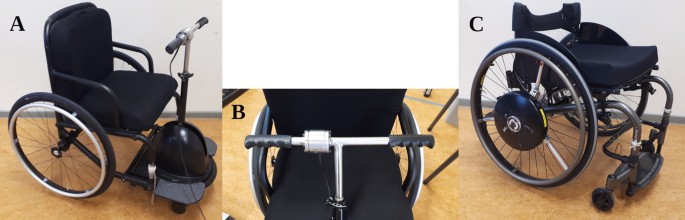
The current study evaluates a new single central-lever push–pull design (rotamobility.com, Fig. 1A). This particular wheelchair design features a gearing system and a free-wheel, with which power can be transferred into forward motion in both the push and pull phases of the propulsion cycle, while it allows steering through the central lever mechanism. Utilisation of both phases of the cycle increases the portion of the propulsion cycle that can be used to exert force, thus theoretically reducing peak strain and potentially energy expenditure (EE) [22,23,24]. Moreover, the different directions of force application allow different muscle groups to be recruited. Therefore, the work is also divided over a larger total muscle mass, reducing strain on individual muscles.
A The prototype of the push–pull single lever propulsion mechanism tested in the current study (RoChair; ROTA Mobility, California). B Close-up of the lever with the integrated unilateral force sensor at the right side. C The Küschall HRW with Smartwheel in the right rear wheel, which functioned as a control
Because of the novelty of the system, the current study does not yet compare experienced users of the PPLM to manual wheelchair users. Since early handrim wheelchair use is accompanied with motor learning processes [25, 26], it is assumed that the novel lever propulsion mechanism may require motor adaptation, skill acquisition and learning as well. Therefore, three research questions were addressed in this study. Firstly, does PPLM have physiological advantages over HRW, looking at EE, GME and HR? Secondly, are the peak forces needed to use an PPLM indeed lower than those needed for propelling a HRW? And finally, does practice change the outcomes of these questions with inexperienced users? These questions will be tested by comparing two inexperienced groups, either using the PPLM and a HRW before and after a practice intervention.
Based on previous studies on lever-propulsion [1, 13, 14, 18, 19], it was hypothesised that the PPLM will be less physiologically straining than a conventional HRW. This is expected to be shown in a higher GME and lower EE and HR. Also, forces that are applied on the lever of the PPLM are hypothesised to be lower than the forces applied on the handrim of the HRW, because the applied forces can be spread over a longer period of time of each full cycle and is divided in a push and pull action, involving different muscle sets. Therefore, equal power can be produced with lower peak forces.
These questions and hypotheses have been tested in a 5-day between-group experiment. In this experiment, 30 able-bodied novices performed 60 min of practice in either the push–pull central lever wheelchair (n = 15) or the hand-rim wheelchair (n = 15). At the first and final sessions cardiopulmonary stain, propulsion kinematics and force production were determined in both instrumented propulsion mechanisms.
More at link.
Thursday, December 30, 2021
Ten strategies to optimize early mobilization and rehabilitation in intensive care
YOU have to make sure you completely state your only preference is 100% recovery. You'll have to scream at your doctors because they incompetently have not been solving that problem for decades.
Ten strategies to optimize early mobilization and rehabilitation in intensive care
Critical Care volume 25, Article number: 324 (2021) Cite this article
Introduction
In the last decade, there have been more than 40 randomized trials evaluating early mobilization and rehabilitation in intensive care units (ICU) [1]. Such trials generally aim to reduce the incidence of ICU-acquired weakness (ICUAW) which is associated with poor long-term survival, physical functioning, and quality of life [2]. At least eight international guidelines have recommended ICU early mobilization and rehabilitation [3].
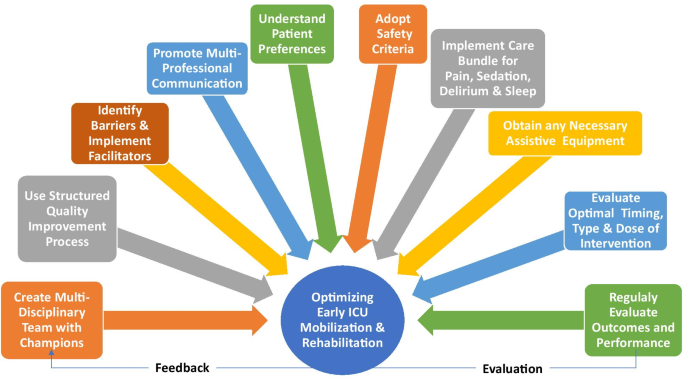
Despite supporting evidence and guidelines, implementation of ICU mobilization and rehabilitation is highly variable[4]. Hence, we report on 10 steps to help ICU clinicians in optimizing early mobilization and rehabilitation.
Create multidisciplinary team with designated champions
Early mobilization and rehabilitation is more successful in ICUs with a culture that prioritizes and values this intervention [5]. Mobility champions can help develop this culture using leadership and communication skills to educate, train, coordinate, and promote patient mobilization [3, 4, 6]. They support staff with an emphasis on safety and practical skills to improve the team’s confidence and capabilities [6].
Use structured quality improvement (QI) processes
A structured QI approach can greatly enhance successful implementation of early mobilization and rehabilitation [7]. One approach to QI includes four steps: (1) summarizing the evidence; (2) identifying barriers (e.g., sedation or lack of equipment); (3) establishing performance measures (e.g., sedation targets, frequency, and level of patient mobilization); and (4) ensuring all eligible patients receive the intervention (via appropriate engagement, education, execution, and evaluation) [6, 7].
Identify barriers and facilitators
A systematic review identified 28 unique barriers to early mobilization and rehabilitation, including patient-related barriers (e.g., physiological instability and medical devices), structural barriers (e.g., limited staff and equipment), procedural barriers (e.g., lack of coordination and delayed screening for eligibility), and cultural barriers (e.g., prior staff experience and ICU priorities for patient care) [4]. There are many strategies to effectively overcome barriers, including implementation of safety guidelines; use of mobility protocols; interprofessional training, education, and rounds; and inclusion of physician champions [4].
Promote multi-professional communication
The multi-professional team effort required for early mobilization and rehabilitation program depends on optimal communication. We recommend that interprofessional communication is facilitated using a structure adapted to the individual ICU that allows (algorithm-based) mobilization goals, including an opportunity for all team members to raise concerns and ensure flow of information regarding mobility goals and achievement across staff and over time [8].
Understand patient preferences
And the one and only preferences is 100% recovery. Don't allow your stroke staff to downgrade that goal because they haven't set up the proper protocols to get there.
ICU patients’ experience with early mobilization and rehabilitation is variable. It may be tiring, uncomfortable and difficult, while at other times be motivating and rewarding for patients [9]. With improving cognitive status, patients may be shocked by the severity of their muscle weakness. In the early stages of critical illness, patients may prefer to focus on short-time goals (e.g., sitting in a chair) set by the multidisciplinary team [9]. As patients progress, they may become more engaged in goal setting and longer-term rehabilitation planning (e.g., walking longer distances, sitting outside) (Fig. 1).
Adopt safety criteria
Meta-analyses have demonstrated the safety of in-bed and out-of-bed ICU mobilization, with rare occurrence of serious events [10]. One method of assessing safety is a traffic light system that provides specific criteria, across respiratory, hemodynamic, neurological, and other body systems, to be considered in mobilizing individual patients [11]. In this system, “red light” criteria indicate an increased potential for a serious safety event during mobilization requiring experienced decision-making, “yellow light” indicates potential risk that should be evaluated in terms of benefits versus risks, and “green light” indicates that mobilization is generally safe [11].
Implement care bundles for pain, sedation, delirium, and sleep
Patients’ sedation and delirium status is a common barrier to early mobilization and rehabilitation [4]. More broadly, pain, sedation, delirium, sleep, and early mobilization and rehabilitation are closely inter-related, as considered in clinical guidelines[3]. Assessment and management of these issues, via existing evidence-based practices (as synthesized in the guidelines), are important to maximize patients’ ability to participate in rehabilitation.
Obtain any necessary equipment
If this doesn't include lever or rowing wheelchairs you don't have the right equipment.
lever wheelchair (11 posts to May 2016)
rowing wheelchair (6 posts to May 2015)
Barriers to early mobilization and rehabilitation may include ICUAW, impaired physical functioning, traumatic injuries, and obesity [6]. Equipment can expand treatment options, increase patient mobility and activity levels, and reduce risk of injury to staff [12]. Selecting rehabilitation equipment may be challenging, with important considerations including the equipment cost/availability, ability to share equipment between units or patients (including infection control considerations), and the physical space available for patient mobilization and for convenient storage of equipment. Evidence supporting use of specific equipment is still evolving, including evaluation of neuromuscular electrical stimulation (NMES), in-bed cycle ergometry, tilt tables, and other devices [12, 13].
Evaluate optimal timing, type, and dose of intervention
Important knowledge gaps exist regarding exercise, including the timing, type, and dose of interventions. There is some evidence suggesting that starting rehabilitation within 2 or 3 days of ICU admission may be superior to later initiation [3]. Types of interventions to be considered include active functional mobilization, in-bed cycle ergometry, electrical muscle stimulation (with or without passive/active exercises), tilt tables, and use of various rehabilitation equipment. In addition, the intensity, duration, and frequency of each intervention type are important considerations [14]. Additional research is needed to further understand potential benefit or harm. Until that time, clinician judgement will play an important role and must be tailored to individual patients and to the dynamic nature of critical illness.
Assess outcomes and performance
Mobility and rehabilitation-related measures, appropriate to the ICU setting and integrated into clinical care, are needed to set patient goals and track their progress, allocate scarce rehabilitation resources to those patients who may benefit the most, and conduct evaluations of structured quality improvement programs [15]. Understanding patients’ functioning prior to critical illness, and their own goals, are also important considerations.
Conclusion
Evidence is still evolving about early mobilization in ICU with ongoing large, multi-center trials. Further research is needed to understand the optimal timing, type and dose of interventions, and their effect on long-term patient outcomes. These 10 strategies provide guidance for implementing early mobilization and rehabilitation in the ICU with the goal of optimizing safety and effectiveness to improve patients’ experiences and outcomes.
References at link,
Wednesday, December 8, 2021
Impact of distance on stroke inpatients’ mobility in rehabilitation clinics: a shadowing study
But the real solution to distance are lever powered wheelchairs which also would vastly increase arm rehabilitation.
lever wheelchair (10 posts to May 2016)
Impact of distance on stroke inpatients’ mobility inrehabilitation clinics: a shadowing study
Stroke inpatients in rehabilitation clinics are highly inactive in their free time and often depend on staff members to transport them to scheduled therapies. This study examines how distances between spaces in rehabilitation clinics impact patients’ mobility. Seventy patients were shadowed over the course of one ordinary day in rehabilitation. Shadowing was accompanied by patient and staff questionnaires. Both patients and staff members described the labyrinthine built environment with long corridors that all look similar. Patients covered substantial daily distances in the clinics, and longer distances were significantly related to encountering more mobility barriers and dependence on staff. Compact layouts with vertically separate wards and main therapy areas resulted in reduced travel distances compared to more complex building layouts. Patients’ mobility abilities were occasionally observed to change on different distances and even throughout the day. As distances result from the building's layout, greater attention needs to be paid to this aspect of the built environment in the early design stages. This is especially the case since other built-environment barriers were found to be intertwined with long distances. All patients may be independently mobile if distances between their most important areas (wards, therapy areas and dining spaces) are carefully planned.
Monday, October 19, 2020
Physiological and biomechanical comparison of overground, treadmill, and ergometer handrim wheelchair propulsion in able-bodied subjects under standardized conditions
IF WE HAD ANY STOKE LEADERSHIP AT ALL, there would be research on this for stroke survivors, proving once and for all that handrim wheelchair propulsion is completely stupid for survivors.
Maybe these and you get massive amounts of arm and hand exercises using them. Why is your stroke hospital so fucking incompetent they can't see the usefulness of them?
lever wheelchair (8 posts to May 2016)
rowing wheelchair (5 posts to May 2016)
The latest here:
Physiological and biomechanical comparison of overground, treadmill, and ergometer handrim wheelchair propulsion in able-bodied subjects under standardized conditions
- Rick de Klerk,
- Vera Velhorst,
- Dirkjan (H.E.J.) Veeger,
- Lucas H. V. van der Woude &
- Riemer J. K. Vegter
Journal of NeuroEngineering and Rehabilitation
volume 17, Article number: 136 (2020)
Cite this article
-
14 Accesses
-
3 Altmetric
-
Abstract
Background
Handrim
wheelchair propulsion is often assessed in the laboratory on treadmills
(TM) or ergometers (WE), under the assumption that they relate to
regular overground (OG) propulsion. However, little is known about the
agreement of data obtained from TM, WE, and OG propulsion under
standardized conditions. The current study aimed to standardize velocity
and power output among these three modalities to consequently compare
obtained physiological and biomechanical outcome parameters.
Methods
Seventeen
able-bodied participants performed two submaximal practice sessions
before taking part in a measurement session consisting of 3 × 4 min of
submaximal wheelchair propulsion in each of the different modalities.
Power output and speed for TM and WE propulsion were matched with OG
propulsion, making them (mechanically) as equal as possible.
Physiological data and propulsion kinetics were recorded with a
spirometer and a 3D measurement wheel, respectively.
Results
Agreement
among conditions was moderate to good for most outcome variables.
However, heart rate was significantly higher in OG propulsion than in
the TM condition. Push time and contact angle were smaller and fraction
of effective force was higher on the WE when compared to OG/TM
propulsion. Participants used a larger cycle time and more negative work
per cycle in the OG condition. A continuous analysis using statistical
parametric mapping showed a lower torque profile in the start of the
push phase for TM propulsion versus OG/WE propulsion. Total force was
higher during the start of the push phase for the OG conditions when
compared to TM/WE propulsion.
Conclusions
Physiological
and biomechanical outcomes in general are similar, but possible
differences between modalities exist, even after controlling for power
output using conventional techniques. Further efforts towards increasing
the ecological validity of lab-based equipment is advised and the
possible impact of these differences -if at all- in (clinical) practice
should be evaluated.
Background
The
repetitive and relatively high loads on the upper-extremities during
handrim wheelchair propulsion, associated with an increased risk of pain
and pathology [1,2,3], are a continued concern addressed in wheelchair research [4, 5].
Ideally, research would assess the user during overground testing in
the environment they are daily exposed to, as this has the highest
ecological validity [5].
During overground propulsion the power output necessary at a certain
velocity is dependent on a number of uncontrollable factors such as
floor-type, slope, cross-slope and air resistance, besides individual
factors of the wheelchair-combination as a whole like weight, frontal
area tire-pressure and internal frictional losses. Moreover, there are
effects of optical flow, and additional requirements such as braking and
cornering [6].
Therefore, experimental conditions overground are difficult to control
and it can be challenging to consistently collect enough consecutive
push cycles without a sufficiently spacious laboratory environment [7].
Various
other options for conducting studies on wheelchair propulsion exist,
such as, motorized treadmills or wheelchair ergometers with each having
their own advantages and disadvantages [8].
The advantage of these lab-based systems, in general, is the better
standardization and the ability to collect multiple subsequent push
cycles, increasing data reliability [9].
However, stationary systems offer no visual flow or meaningful context
which reduces task complexity and might confound data obtained from
these methods. In fact, ergometers mostly remove the need for steering
and balancing as task elements in handrim wheelchair propulsion, making
it the most abstract measurement modality [6].
Research in gait has shown that, while treadmills are mechanically valid [10], differences between overground and treadmill modalities exist [11,12,13,14,15,16,17,18,19], while others have argued that differences are minimal [14, 16, 20]. Similar studies for wheelchair propulsion, however, are lower in number and have also yielded mixed results [6, 21,22,23,24,25]. Stephens and Ensberg [25]
found that biomechanical outcome variables for overground propulsion
and treadmill propulsion were significantly different. Moreover, Chénier
et al. found that wheelchair users perceive speed differently on
treadmills compared to overground propulsion [23]. However, in different studies Kwarciak et al. [24] and Mason et al. [21]
found that physiological and biomechanical parameters in treadmill
propulsion highly correlate with overground propulsion at specific
treadmill settings. Koontz et al. [22]
also found correlations between overground and ergometer wheelchair
propulsion kinetics ranging from poor-good depending on the outcome
parameter.
A possible explanation of these mixed results could (in
part) be the lack of standardization for power output and/or speed in
those experiments. As of yet, there are no studies that compared
overground, treadmill, and ergometer wheelchair propulsion when power
output and speed are matched, even though the required methodology has
been well described and adopted in the research literature [5, 26] and is available to most labs [4]. Spatiotemporal variables are known to be dependent on factors influencing power output such as speed and slope [27]. Finally, only qualitative [22] and discrete quantitative [21, 22, 24]
comparisons have been made, whereas continuous analysis of handrim
biomechanics might also yield useful information as the biomechanical
context is immediately apparent [28].
The
goal of this study is therefore to compare the physiological,
spatiotemporal, and kinetic characteristics of wheelchair propulsion
between overground, treadmill, and ergometer handrim wheelchair
propulsion while controlling for power output and speed using available
standardization methods [26]. Results from this study can be used to better translate research to the field or to improve existing testing protocols.
More at link.
- Rick de Klerk,
- Vera Velhorst,
- Dirkjan (H.E.J.) Veeger,
- Lucas H. V. van der Woude &
- Riemer J. K. Vegter
Journal of NeuroEngineering and Rehabilitation volume 17, Article number: 136 (2020) Cite this article
-
14 Accesses
-
3 Altmetric
Abstract
Background
Handrim wheelchair propulsion is often assessed in the laboratory on treadmills (TM) or ergometers (WE), under the assumption that they relate to regular overground (OG) propulsion. However, little is known about the agreement of data obtained from TM, WE, and OG propulsion under standardized conditions. The current study aimed to standardize velocity and power output among these three modalities to consequently compare obtained physiological and biomechanical outcome parameters.
Methods
Seventeen able-bodied participants performed two submaximal practice sessions before taking part in a measurement session consisting of 3 × 4 min of submaximal wheelchair propulsion in each of the different modalities. Power output and speed for TM and WE propulsion were matched with OG propulsion, making them (mechanically) as equal as possible. Physiological data and propulsion kinetics were recorded with a spirometer and a 3D measurement wheel, respectively.
Results
Agreement among conditions was moderate to good for most outcome variables. However, heart rate was significantly higher in OG propulsion than in the TM condition. Push time and contact angle were smaller and fraction of effective force was higher on the WE when compared to OG/TM propulsion. Participants used a larger cycle time and more negative work per cycle in the OG condition. A continuous analysis using statistical parametric mapping showed a lower torque profile in the start of the push phase for TM propulsion versus OG/WE propulsion. Total force was higher during the start of the push phase for the OG conditions when compared to TM/WE propulsion.
Conclusions
Physiological and biomechanical outcomes in general are similar, but possible differences between modalities exist, even after controlling for power output using conventional techniques. Further efforts towards increasing the ecological validity of lab-based equipment is advised and the possible impact of these differences -if at all- in (clinical) practice should be evaluated.
Background
The repetitive and relatively high loads on the upper-extremities during handrim wheelchair propulsion, associated with an increased risk of pain and pathology [1,2,3], are a continued concern addressed in wheelchair research [4, 5]. Ideally, research would assess the user during overground testing in the environment they are daily exposed to, as this has the highest ecological validity [5]. During overground propulsion the power output necessary at a certain velocity is dependent on a number of uncontrollable factors such as floor-type, slope, cross-slope and air resistance, besides individual factors of the wheelchair-combination as a whole like weight, frontal area tire-pressure and internal frictional losses. Moreover, there are effects of optical flow, and additional requirements such as braking and cornering [6]. Therefore, experimental conditions overground are difficult to control and it can be challenging to consistently collect enough consecutive push cycles without a sufficiently spacious laboratory environment [7].
Various other options for conducting studies on wheelchair propulsion exist, such as, motorized treadmills or wheelchair ergometers with each having their own advantages and disadvantages [8]. The advantage of these lab-based systems, in general, is the better standardization and the ability to collect multiple subsequent push cycles, increasing data reliability [9]. However, stationary systems offer no visual flow or meaningful context which reduces task complexity and might confound data obtained from these methods. In fact, ergometers mostly remove the need for steering and balancing as task elements in handrim wheelchair propulsion, making it the most abstract measurement modality [6].
Research in gait has shown that, while treadmills are mechanically valid [10], differences between overground and treadmill modalities exist [11,12,13,14,15,16,17,18,19], while others have argued that differences are minimal [14, 16, 20]. Similar studies for wheelchair propulsion, however, are lower in number and have also yielded mixed results [6, 21,22,23,24,25]. Stephens and Ensberg [25] found that biomechanical outcome variables for overground propulsion and treadmill propulsion were significantly different. Moreover, Chénier et al. found that wheelchair users perceive speed differently on treadmills compared to overground propulsion [23]. However, in different studies Kwarciak et al. [24] and Mason et al. [21] found that physiological and biomechanical parameters in treadmill propulsion highly correlate with overground propulsion at specific treadmill settings. Koontz et al. [22] also found correlations between overground and ergometer wheelchair propulsion kinetics ranging from poor-good depending on the outcome parameter.
A possible explanation of these mixed results could (in part) be the lack of standardization for power output and/or speed in those experiments. As of yet, there are no studies that compared overground, treadmill, and ergometer wheelchair propulsion when power output and speed are matched, even though the required methodology has been well described and adopted in the research literature [5, 26] and is available to most labs [4]. Spatiotemporal variables are known to be dependent on factors influencing power output such as speed and slope [27]. Finally, only qualitative [22] and discrete quantitative [21, 22, 24] comparisons have been made, whereas continuous analysis of handrim biomechanics might also yield useful information as the biomechanical context is immediately apparent [28].
The goal of this study is therefore to compare the physiological, spatiotemporal, and kinetic characteristics of wheelchair propulsion between overground, treadmill, and ergometer handrim wheelchair propulsion while controlling for power output and speed using available standardization methods [26]. Results from this study can be used to better translate research to the field or to improve existing testing protocols.