Changing stroke rehab and research worldwide now.Time is Brain! trillions and trillions of neurons that DIE each day because there are NO effective hyperacute therapies besides tPA(only 12% effective). I have 523 posts on hyperacute therapy, enough for researchers to spend decades proving them out. These are my personal ideas and blog on stroke rehabilitation and stroke research. Do not attempt any of these without checking with your medical provider. Unless you join me in agitating, when you need these therapies they won't be there.

What this blog is for:

My blog is not to help survivors recover, it is to have the 10 million yearly stroke survivors light fires underneath their doctors, stroke hospitals and stroke researchers to get stroke solved. 100% recovery. The stroke medical world is completely failing at that goal, they don't even have it as a goal. Shortly after getting out of the hospital and getting NO information on the process or protocols of stroke rehabilitation and recovery I started searching on the internet and found that no other survivor received useful information. This is an attempt to cover all stroke rehabilitation information that should be readily available to survivors so they can talk with informed knowledge to their medical staff. It lays out what needs to be done to get stroke survivors closer to 100% recovery. It's quite disgusting that this information is not available from every stroke association and doctors group.

Showing posts with label laboratory rat. Show all posts

Tuesday, July 8, 2025

Patient Partnership in Stroke Care: A Scoping Review

 I think you're in denial about survivor involvement in stroke 'care'(NOT RECOVERY!)

If it existed, I'm sure one of my many readers would have commented on it.

Survivors are still considered laboratory rats. 

For the past five years Amy Farber has been battling not only her own disease but also the wall of resistance erected by those who believe that a patient can make about as much of a meaningful contribution to the process of scientific discovery as a laboratory rat

Patient Partnership in Stroke Care: A Scoping Review


Patient partnership is increasingly recognised as a core component of high-quality healthcare. This review aims to explore how patient partnership is implemented across the stroke pathway, where recovery trajectories are complex and multidimensional. It will also show how medical education can shift student learning from a transactional process to one of partnership and collaboration. A literature search was conducted across Cochrane Library, Embase, and PubMed, in accordance with the Preferred Reporting Items for Systematic Reviews and Meta-Analyses Extension for Scoping Reviews (PRISMA-ScR) guidelines. Studies were screened by title, abstract, and full text against eligibility criteria. Eleven articles were included in the review. Each article underwent quality appraisal using the Critical Appraisal Skills Programme (CASP) tool. Thematic synthesis was used, mapping findings onto three key stages of the Stroke RightCare Pathway: hyperacute, the stroke unit and early supported discharge, and long-term rehabilitation. This review found that the role of the patient and clinician has changed in modern-day healthcare from paternalistic to one that aims to actively bring clinicians and patients together to form a collaborative partnership. Tailoring this partnership in each stage of stroke care is vital. In the hyperacute stroke setting, clinician-led decisions were found to be most beneficial for the patient due to the short time window to initiate treatment. During the acute phase, educating patients to understand their condition can allow for meaningful and collaborative goal-setting to take place, which has demonstrated improved patient outcomes. In medical education, introducing patient partnership early in a student’s training is essential for creating a lasting impact on healthcare. Patient partnership must be tailored across the stroke pathway, and embedding these principles in medical education is important in shaping future clinicians' attitudes and practices. Future research should explore formal patient partnership training strategies for both students and clinicians. It should also assess whether clinicians find this approach appropriate across different medical conditions and clinical settings.

Introduction & Background

Patient partnership in healthcare is increasingly recognized as essential for improving patient outcomes and experiences. The King’s Fund defines patient partnership as a collaborative relationship where power is shared between clinicians and patients, moving beyond traditional hierarchical dynamics [1]. Patient experience, a key component of quality healthcare, is defined as ‘what the process of receiving care feels like for the patient, their family and carers’ [2]. Across global healthcare systems, the most effective healthcare experiences are shaped through strong patient-clinician relationships that emphasize respect, autonomy, continuity, and education [3].

Historically, healthcare models positioned clinicians as the sole decision-makers, reinforcing the misconception that only medical professionals hold the knowledge to guide treatment. However, since the 2014 NHS Five-Year Forward View, patient partnership has become the central focus of the NHS [4]. This shift represents a significant transformation in the role of patients in decision-making and care delivery. While many theoretical models of patient partnership have been developed, research on the practical application, particularly in improving patient experience, remains limited. This review will unpack the definition of patient partnership within the context of stroke care and explore how medical education, particularly at the undergraduate level, can transition from a transactional process to one that promotes partnership and shared decision-making with patients.

Why focus on stroke care?

Stroke is one of the leading causes of death and disability in the UK, with over 113,000 strokes occurring annually [5,6]. Although approximately 80% of stroke patients survive their hospital stay, many continue to experience long-term challenges [7,8]. With over 1.3 million stroke survivors in the UK, this number is expected to rise as the population ages and treatment methods develop [7,9]. Despite extensive research into the pharmacological and surgical management of stroke, the role of patient partnership in stroke recovery and long-term care remains underexplored.

Many stroke survivors report unmet long-term needs, particularly in activities of daily living (ADLs), home adaptations, and financial support [10]. A recent study found that nearly half of the stroke survivors in the UK had at least one unmet need following their stroke [10]. Addressing these gaps requires a patient partnership approach, ensuring survivors are actively engaged in their recovery and rehabilitation.

The Stroke Association recognises patient involvement as critical in improving stroke outcomes [11]. One of the top five research priorities in stroke care is delivering evidence-based treatment to improve survival and quality of life [10,12]. Studies suggest that patient engagement improves treatment adherence, functional outcomes, and overall satisfaction with care [13]. Given the increasing number of stroke survivors, integrating patient partnership within stroke care is not only beneficial but necessary to optimise recovery and long-term well-being.

The patient partnership model

The patient partnership model has four stages: motivation, readiness, involvement, and evaluation [14], as summarised in Figure 1. Motivation involves the clinician and patient recognising the condition and the importance of active engagement [14]. Readiness focuses on preparing the patient with knowledge, allowing for active participation [14]. Involvement ensures continued collaboration to enhance health outcomes and quality of life [14]. Finally, regular evaluation assesses and strengthens the partnership for sustained and optimal outcomes [14].
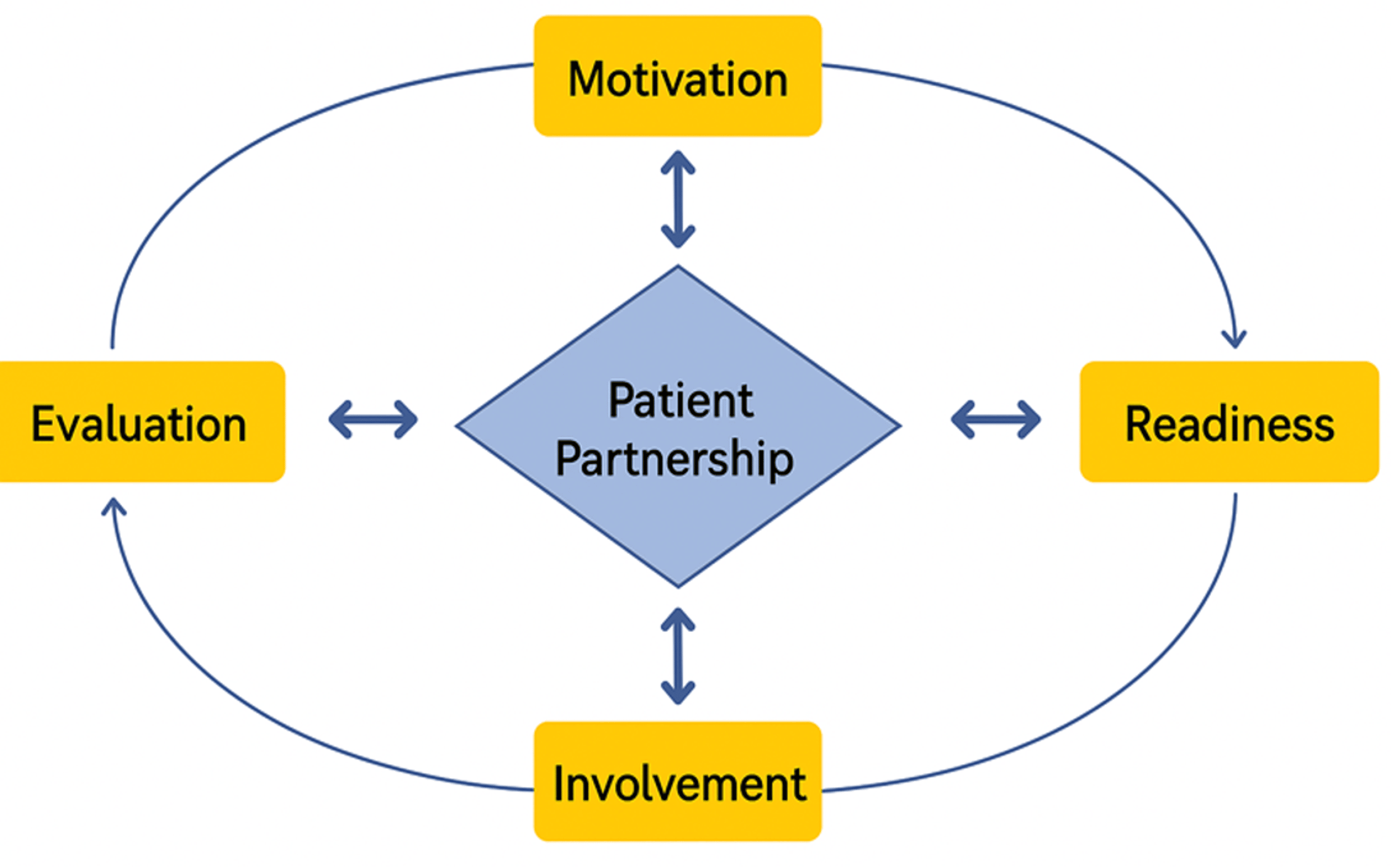
The-patient-partnership-model.

Patient partnership: A life-long journey

Collaboration between healthcare professionals and patients with stroke is a lifelong process. Understanding key interactions throughout the patient’s journey is essential for developing long-term engagement. This review will explore the role of patient partnership at each stage of the Stroke RightCare Pathway as summarised in Figure 2 [15]. This pathway is a national framework designed to improve stroke care in the UK through collaborative approaches [15]. By using the Stroke RightCare Pathway as the foundation of this review, we aim to demonstrate a holistic approach to integrating patient partnership and its impact on the stroke patient’s journey.
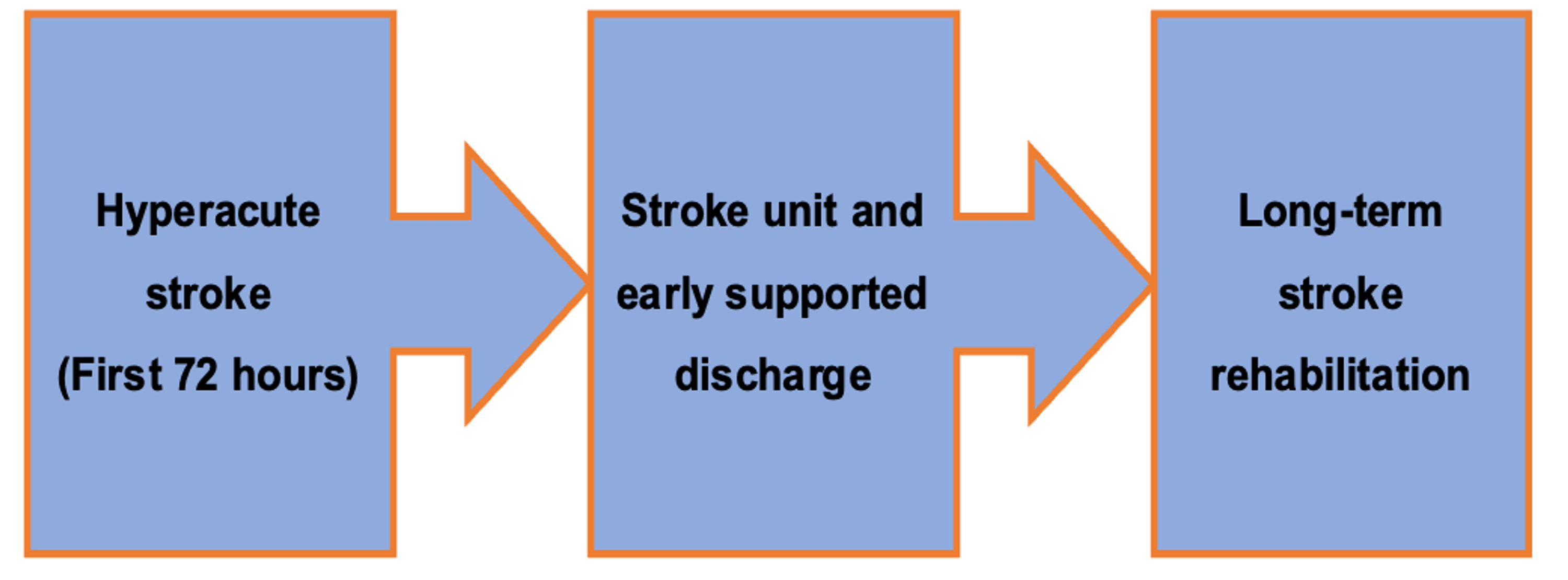
The-Stroke-RightCare-Pathway.

Review

Methodology

A comprehensive scoping review was performed following the Preferred Reporting Items for Systematic Reviews and Meta-Analyses (PRISMA) guidelines [16], as illustrated in Figure 3. The search was conducted using three databases: the Cochrane Library, Embase, and PubMed. The search strategy was designed to identify studies that explored patient partnership in stroke care, as well as the role of medical education in embedding these principles into clinical practice. The search terms are summarised in Table 1.

Tuesday, June 10, 2025

Why Patient Leaders With Certification Are Being Taken More Seriously

I've been writing about how to solve stroke for 15 years. Never once in those years have I been contacted by any stroke association or stroke medical 'professional'. It is precisely as Amy Farber says: 'laboratory rat'.

We have to get past what Amy Farber had to say, For the past five years Amy Farber  has been battling not only her own disease but also the wall of resistance erected by those who believe that a patient can make about as much of a meaningful contribution to the process of scientific discovery as a laboratory rat. LAM, lymph-angiolio-myomatosis. She co-invented a revoluntionary web service with MIT Media Lab that enables patients to participate in the search for their own cures.
 

Very obviously nothing I've done in the past 15 years has made a bit of difference in stroke, but I'm persistent.  Hell, I'm worth more than any stroke association leader out there, they do nothing to solve stroke! Contact me at oc1dean@gmail.com if you're willing to listen to a survivor.  Not sure I want to do this, I have a life to live since I'm retired.

Why Patient Leaders With Certification Are Being Taken More Seriously

Monday, February 15, 2021

Involving stroke survivors in research relating to life after stroke: methods and impact of involvement

But it is obvious that stroke survivors know nothing that could help stroke research. Survivors are not asked to present at any stroke conference.

I'm even less than a laboratory rat as Amy Farber puts it, not a single stroke person has ever contacted me. This just proves once again what Amy Farber has to say. For the past five years Farber has been battling not only her own disease but also the wall of resistance erected by those who believe that a patient can make about as much of a meaningful contribution to the process of scientific discovery as a laboratory rat.

Involving stroke survivors in research relating to life after stroke: methods and impact of involvement


School of Health and Life Sciences

Dr Bridget Davis , Dr A Pollock Monday, February 22, 2021 Competition Funded PhD Project (Students Worldwide)
Glasgow United Kingdom Neurology Neuroscience

About the Project

Reference: SHLS20063

This PhD project will co-produce, implement and evaluate a model for engagement of stroke survivors in research relating to life after stroke.

It is now widely accepted(Really! Where the hell did you get that idea?) that the active involvement of people with a healthcare condition, their families, friends and carers, is beneficial to the quality, relevance and impact of health research. Accordingly, many funding bodies now mandate that researchers actively involve patients and the public in their research. However, there is a lack of consensus about best ways to involve people, and how to capture the impact of involvement. Involvement of people in research is a rapidly evolving area, with active developments in fields such as research co-production and citizen science.

Stroke is the most common cause of severe disability in the world. Research relating to stroke is a priority, and consequently involving stroke survivors in research is important. However, people with stroke often have a wide range of impairments and disabilities, including aphasia, visual impairment, cognitive and mobility problems, which can create barriers to participation. There are therefore many challenges to ensuring effective involvement of stroke survivors in research relating to life after stroke, and questions about the best ways to do this.

This PhD aims to:

1) Explore:

- the ways in which stroke survivors have been involved in research relating to life after stroke, and the reporting and impact of this

- stroke survivors’ experiences of involvement in research, including barriers and facilitators

- models of involvement in research, including PPI, co-production and citizen science

- stroke survivors’ views on different models of involvement

2) Co-produce, implement and evaluate key aspects of a strategy for engagement of stroke survivors in research

Candidates are requested to submit a more detailed proposal (of a maximum of 2000 words) on the project area as part of the application.

How to Apply

This project is available as a 3 years full-time or 6 years part-time PhD study programme with expected start date of 1 October 2021

Candidates are encouraged to contact the research supervisors for the project before applying. 

For full-time study of this project, apply here

For part-time study of this project, apply here

Applicants shortlisted for the PhD project will be contacted for an interview within four weeks from the closing date.

Sunday, August 25, 2019

Neuroscientists publish a ‘parts list’ for the brain, detailing differences between mice and humans

Based on this ask your doctor to explain EXACTLY why these referenced trials failed and what is being done to fix them. I most certainly am not doing a damn thing with this, I'm not employed in the area and not medically trained for any of this.  I'm even less than a laboratory rat as Amy Farber puts it. This just proves once again what Amy Farber has to say.
For the past five years Farber has been battling not only her own disease but also the wall of resistance erected by those who believe that a patient can make about as much of a meaningful contribution to the process of scientific discovery as a laboratory rat.

Well, years ago Dr. Michael Tymianski of the Toronto Western Hospital Research Institute in Canada referenced 1000+ failed neuroprotective clinical trials. Of course I don't know what they are, but your doctor should know every one of those failed trials.

Alan Boyle,GeekWire Wed, Aug 21 1:00 PM EDT

Wednesday, September 14, 2016

Expanding the Science of Patient Input: Pain Points and Potential

Hell this should have been widely distributed back in 2013. This just proves once again what Amy Farber has to say.
For the past five years Farber has been battling not only her own disease but also the wall of resistance erected by those who believe that a patient can make about as much of a meaningful contribution to the process of scientific discovery as a laboratory rat.

Expanding the Science of Patient Input: Pain Points and Potential

Patient engagement has been called the “blockbuster drug of the 21st century.” Indeed, studies find that the more engaged and involved patients are with their health and health care, the better the outcomes. There is now growing interest in engaging patients in another aspect of health care: drug and device development. Borrowing methods from the fields of health economics, outcomes research, epidemiology, social sciences and marketing sciences, a new science of patient input has emerged, embracing data as a means for measuring patient-centered outcomes and quantifying patient preferences.
ENGAGING PATIENTS IN RESEARCH ISN’T JUST A GOODWILL GESTURE: IT CAN MAKE RESEARCH BETTER. Patient engagement can influence plans and policies that shape how medical products move from microscope to marketplace, as well as deepen researchers’ understanding of the experience of living with a disease or condition. Together, this can inform research priorities and resource allocation. More importantly, patient engagement can lead to better, safer treatments that target what patients really need and want.
Several factors are driving this paradigm shift from patients as subjects in clinical research to patients as partners in research. They include patients themselves who are challenging the traditionally paternalistic health-care system; regulatory agencies such as the Food and Drug Administration (FDA); government policy initiatives, including the 21st Century Cures Act; the creation of the Patient-Centered Outcomes Research Institute (PCORI); and nonprofits like FasterCures, which are dedicated to integrating patient perspectives in medical product development to speed treatments of high value to patients.
We are at the beginning of this effort, however, with numerous unanswered questions. To explore current and future challenges, FasterCures hosted an all-day workshop on Feb. 17, 2016, as part of its Patient Count: The Science of Patient Input program.
Patients Count workshop goals
More than 50 representatives from patient advocacy organizations and other nonprofits, biopharmaceutical and medical device companies, academia and government agencies participated. Reflecting the multi-disciplinary nature of the growing science of patient input, participants were invited to ensure representation from several functional areas and backgrounds, including health economics, regulatory science, patient advocacy, benefit-risk assessment, medical affairs, public policy, communications, public affairs, outcomes measurement and alliance development. Patient group representatives brought experience from diverse communities, including rare and prevalent conditions, diseases with multiple therapies and those with no FDA-approved medical products, and highly engaged patient populations and communities that are not well formed yet. Several participants have had professional experience working in one or more sectors, adding further dimension to their viewpoints and the discussion.

Table of Contents

Introduction
Key Takeaways
Signs of Success
Science of Patient Input: The Need for a Common Language
The Continuum of Patient Engagement
Building Alliances with Academic Researchers
The FDA: Where Are We? Where Are We Going?
The Industry Perspective
Measuring ROI on Engagement: An Update from PCORI
Priorities for Future Collaboration
Moving to Action
Participants
Endnotes