Changing stroke rehab and research worldwide now.Time is Brain! trillions and trillions of neurons that DIE each day because there are NO effective hyperacute therapies besides tPA(only 12% effective). I have 523 posts on hyperacute therapy, enough for researchers to spend decades proving them out. These are my personal ideas and blog on stroke rehabilitation and stroke research. Do not attempt any of these without checking with your medical provider. Unless you join me in agitating, when you need these therapies they won't be there.

What this blog is for:

My blog is not to help survivors recover, it is to have the 10 million yearly stroke survivors light fires underneath their doctors, stroke hospitals and stroke researchers to get stroke solved. 100% recovery. The stroke medical world is completely failing at that goal, they don't even have it as a goal. Shortly after getting out of the hospital and getting NO information on the process or protocols of stroke rehabilitation and recovery I started searching on the internet and found that no other survivor received useful information. This is an attempt to cover all stroke rehabilitation information that should be readily available to survivors so they can talk with informed knowledge to their medical staff. It lays out what needs to be done to get stroke survivors closer to 100% recovery. It's quite disgusting that this information is not available from every stroke association and doctors group.

Showing posts with label arm recovery. Show all posts

Monday, August 24, 2026

I'm a trainer and these are the 5 exercises men over 55 need to do each morning to rebuild arm muscle

 Have your competent? doctor EXPLAIN EXACTLY HOW YOU'LL RECOVER ARM MUSCLE POST STROKE! Can't do that; COMPLTELY FUCKING INCOMPETENT!

Maybe these:

I'm a trainer and these are the 5 exercises men over 55 need to do each morning to rebuild arm muscle

Men over 55, listen up! You may not know this, but in this stage of life, arm strength naturally declines due to sarcopenia (the loss of muscle and strength), lower hormone levels, and a more sedentary lifestyle. It's something to be mindful of and proactive about. Strong arms are more essential now than ever before. After all, without strength, you place yourself at risk of being less independent. The little things in life—like carrying a golf club or picking up groceries—involve solid arm strength.

We spoke with Rob Moal, CPT with Train Like Rob, who's based in Vancouver, BC, and has over 20 years of experience helping clients build strength, shed fat, and move without pain, to learn how you can improve this strength. Moal holds certifications in personal training, nutrition, TRX, FMS, CAFS (Grey Institute), kettlebell training, corrective exercise, Twist Conditioning, and CrossFit, specializing in strength, mobility, and recovery for individuals over 35.

Moal encourages you to focus on your grip and forearms first. After all, they decline the quickest after 55. As he puts it, your curl is only as strong as your grip strength.

"Triceps second. They make up roughly two-thirds of the arm and are the most visually impactful, but most men underwork them because pushing activity naturally decreases with age," Moal adds. "The rear delt and rotator cuff are the most important for shoulder longevity. Build those, and the whole arm functions better. Biceps hold on longer than most because daily tasks keep them somewhat stimulated passively. They still need direct work, but they're not the priority most guys treat them as."

Below, Moal shares five exercises men over 55 should do each morning to build arm muscle. They're easy to add to your routine, and this small commitment will go a long way in living an active, independent lifestyle.

1. Rope Cable Tricep Pushdowns

"The rope cable pushdown keeps the shoulder in a neutral position with no overhead stress. By 55, most guys have some shoulder history and skull crushers and overhead extensions aren't worth the risk," Moal tells us.

  1. Attach a rope to a cable machine's high pulley.
  2. Stand facing the cable machine with your feet shoulder-distance apart, and take hold of the rope using a neutral grip—palms facing each other.
  3. Keep your elbows close to the sides of your body and begin with your forearms bent to roughly 90 degrees.
  4. Press the rope downward by extending your elbows until your arms are completely straight, separating the rope ends at the bottom of the movement to promote further tricep engagement.
  5. Hold at the bottom for a moment before using the control to return to the start position.

RELATED: If Your Body Can Handle These 6 Tests, You're Aging Like a Pro

2. Farmer's Carry

"The farmer carry is there because grip and forearm strength decline the fastest with age, and it's the most functional thing you can do for overall arm strength and longevity," Moal points out.

  1. Hold a heavy dumbbell or kettlebell—50% of your body weight—in each hand at your sides.
  2. Start walking forward, keeping your torso still.
  3. Continue to walk for the prescribed distance or time.

RELATED: 3 Daily Movements That Keep Your Body 10 Years Younger After 44

3. Zottman Curls
© Shutterstock

"The Zottman curl hits the biceps, brachialis, and forearms in one movement with a slow eccentric that builds muscle without a heavy load," Moal says.

  1. Begin standing tall with your feet hip-width apart, holding a dumbbell in each hand by your sides with your palms facing forward.
  2. Activate your core and keep your elbows close to your sides.
  3. Curl the dumbbells up toward your shoulders.
  4. At the top of the movement, rotate your wrists so your palms face down.
  5. Slowly lower the dumbbells.
  6. At the bottom, rotate your wrists so your palms face up.

RELATED: These 5 Daily Moves Reverse Muscle Loss Faster Than Gym Workouts After 45

4. Lying Side Lateral Raises

"The lying side lateral raise eliminates momentum and removes the impingement risk of standing variations," Moal explains.

  1. Begin by lying on your side on a mat, with your bottom arm supporting your head.
  2. Hold a lightweight dumbbell in your top hand, with your arm resting along your side.
  3. Stack your shoulders and hips.
  4. Lift your top arm up toward the sky in a lateral motion, maintaining a slight bend in that elbow.
  5. Hold at the top for a moment.
  6. Use control to lower.
  7. Repeat on the other side.

RELATED: 5 Easy Bodyweight Tests That Show Your Real Fitness After 45

5. Rear Delt Machine Fly With Protraction

"The rear delt machine fly with protraction at the end of the movement activates the rear delt fully through a fixed path. The rear delt and rotator cuff atrophy fast after 55, and most people never train them directly," Moal notes.

  1. Begin sitting tall, facing the machine with your chest against the pad.
  2. Make sure the handles are set so your arms begin slightly ahead of your chest with a soft bend in the elbows.
  3. Press your arms slightly forward, gently rounding your upper back as you do so.
  4. Once you achieve the forward reach, use control to sweep your arms out wide in a reverse fly motion, squeezing your shoulder blades.
  5. Gradually return forward.

Read the original article on Eat This Not That.

Monday, August 10, 2026

Aging with Autonomy: Sensor-Based Smart Wheelchairs for Independent Living

In the hospital you'll want lever powered wheelchairs so you'll force your arms to recover at the same rate as your legs when you are forced to walk.

Did see a smart wheelchair in the airport although when two approached each other, both shut down.


 Aging with Autonomy: Sensor-Based SmartWheelchairs for Independent Living

Hager Khalil1, Jesslyin Dunn2, Diego Felipe Paez Granados3, Nigel Lovell4, Richard Robin Fletcher5,6, and Mohamed Elgendi1,7,* 1Department of Biomedical Engineering and Biotechnology, Khalifa University, Abu Dhabi, United Arab Emirates 2Department of Biomedical Engineering, Duke University, Durham, North Carolina, United States of America 3Department of Health Sciences and Technology, ETH Z¨urich, Gloriastrasse 37/39, 8092 Z¨urich, Switzerland 4Graduate School of Biomedical Engineering, University of New South Wales, Sydney NSW 2052, Australia 5Department of Mechanical Engineering, Massachusetts Institute of Technology, Cambridge, USA 6Recovery Research Institute, Center for Addiction Medicine, Massachusetts General Hospital, 151 Merrimac St. 4th Floor, Boston, MA, 02114, USA 7Healthcare Engineering Innovation Group (HEIG), Khalifa University, Abu Dhabi, United Arab Emirates *Corresponding author: mohamed.elgendi@ku.ac.ae 

ABSTRACT 


Smart wheelchairs enhance mobility and independence for individuals with physical impairments, including older adults. However, challenges remain in sensor reliability, affordability, and real-world applicability. This systematic review (PROSPERO ID: CRD420250642191) analyzed 57 studies (Jan 2016–Jan 2026) from IEEE Xplore, Scopus, PubMed, Embase, and ScienceDirect, following PRISMA guidelines. We examined control modalities (e.g., brain–computer interfaces, eye tracking, voice, gesture, and multimodal), sensor integration (e.g., cameras, LiDAR, ultrasonic, IMU, and EEG), computational platforms, and safety mechanisms. Most studies (45.6%) focused on non-autonomous designs, with fewer on semi- (45.6%) or fully autonomous (8.8%) systems. While healthy participants were commonly used for validation, few studies included individuals with mobility impairments. Evidence indicates smart wheelchairs can reduce user effort, improve safety, and support daily activities, yet adoption is limited by sensor fragility, high costs, lack of standardization, and limited long-term evaluation. Future research should focus on developing robust, interoperable sensors; integrating smart homes and tele-rehabilitation; conducting inclusive testing; fostering cross-disciplinary collaboration; and securing regulatory support to enable scalable, user-centered mobility solutions.

Thursday, June 25, 2026

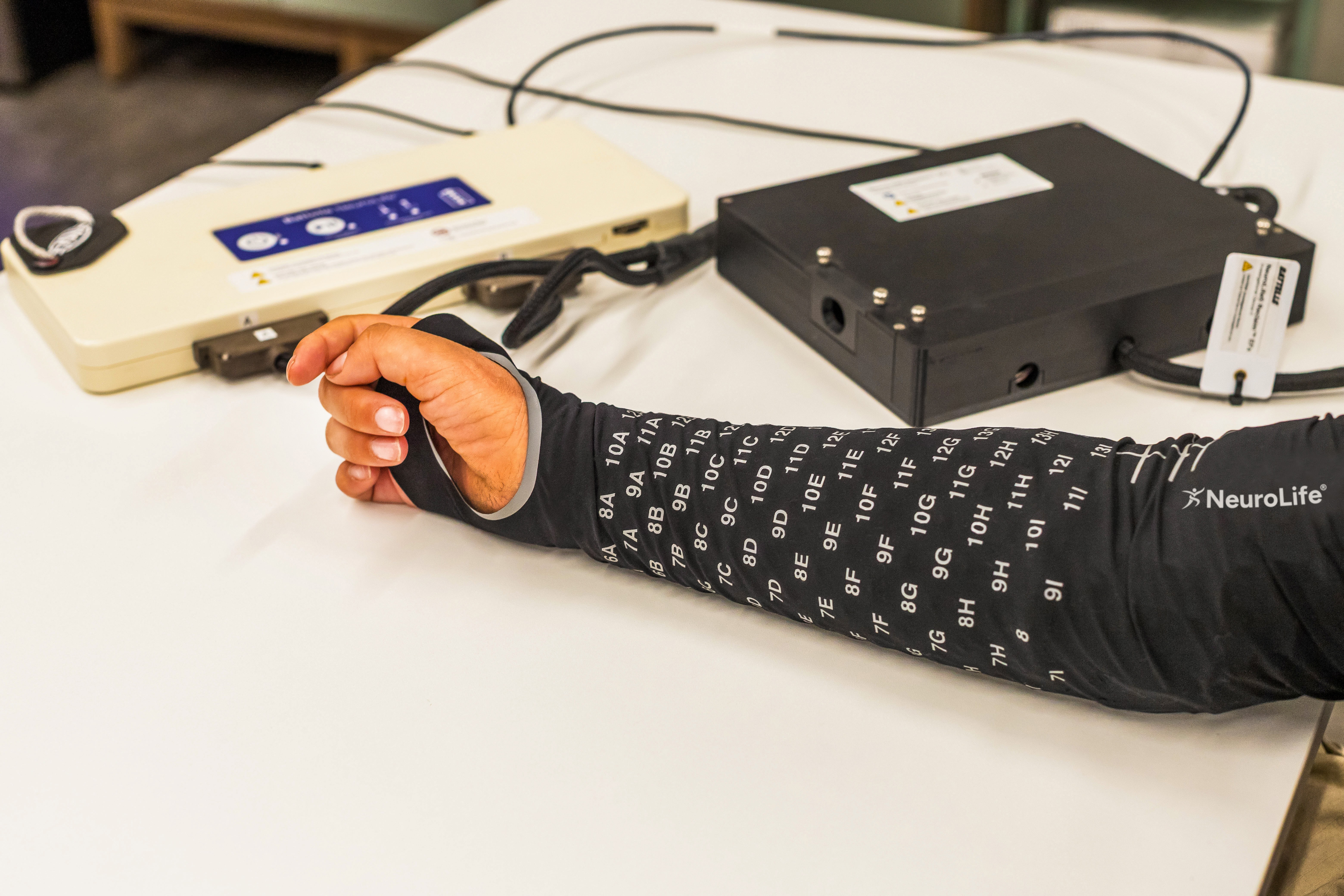
NeuroLife® Launch Brings Non-Invasive Technology Aimed at Restoring Hand and Arm Movement After Stroke and Spinal Cord Injury

You'll have to ask your competent? doctor for THE EXACT RESEARCH PROVING THIS WORKS! Doesn't know about it; PURE INCOMPETENCE!

Ask how they are using this to jam the spasticity signals coming from the spinal cord, no planning of that solution; blithering stupidity!

Launch Brings Non-Invasive Technology Aimed at Restoring Hand and Arm Movement After Stroke and Spinal Cord Injury

The NeuroLife company closes $2.9 million seed round with founding partners Battelle and The NeuroTech Institute to advance wearable neurotechnology toward clinical validation

COLUMBUS, Ohio--(BUSINESS WIRE)--NeuroLife today launched as a non-invasive neurotechnology company developing wearable solutions to support rehabilitation for people affected by stroke or spinal cord injury. NeuroLife is the market-facing brand of ActivateNeuro, Inc. and is established through a strategic partnership between Battelle and The NeuroTech Institute (NTI).

"Our goal is to develop a non-invasive platform that supports functional hand and arm use by making therapy more personalized, responsive and aligned with how the body naturally moves," said Jon Snyder, CEO of NeuroLife.

Share

In the United States, stroke and spinal cord injury affect millions of people, including approximately 7.8 million stroke survivors, representing a significant and growing global rehabilitation market (Centers for Disease Control and Prevention). Despite significant need, access to personalized, high-intensity therapy remains limited for many patients.

NeuroLife technology addresses this gap with a wearable sleeve that reads electrical signals from muscles and nerves, interprets movement intent and delivers targeted stimulation to support functional hand and arm recovery during guided therapy. The platform integrates high-density neuromuscular sensing, intelligent decoding and adaptive stimulation translating neuromuscular signals into real-time feedback to support personalized, signal-driven rehabilitation.

"NeuroLife represents a focused step forward in how rehabilitation can evolve," said Jon Snyder, CEO of NeuroLife. "Our goal is to develop a non-invasive platform that supports functional hand and arm use by making therapy more personalized, responsive and aligned with how the body naturally moves."

"Battelle has a long history of translating scientific innovation into real-world impact," said Matt McFarland, Vice President of Commercial Strategy at Battelle. "Our collaboration with NTI and the formation of NeuroLife advances neurotechnology from foundational research into clinical and commercial development. NeuroLife brings the rigor of Battelle's research capabilities into a platform built for clinical environments and patient impact."

Built as a flexible system, the platform is designed to support applications across rehabilitation, neuromuscular analytics and future neuro-enabled solutions. Its wearable, non-invasive design is intended to support accessibility, ease of use and integration into clinical workflows.

NeuroLife has completed a $2.9 million seed round with founding partners Battelle and NTI providing foundational capital, including licensing of Battelle’s NeuroLife platform technology. The company is pursuing FDA clearance for its wearable platform and has established a development roadmap focused on clinical validation, regulatory progression and commercial scalability.

NeuroLife is actively engaging partners across medtech, digital health and clinical research to accelerate development. Organizations interested in co-development opportunities, clinical pilot programs or strategic investment are encouraged to contact the company directly.

About NeuroLife

NeuroLife is the market-facing brand of ActivateNeuro, Inc., formed through a strategic partnership between Battelle and The NeuroTech Institute (NTI). The company is advancing non-invasive neurotechnology to support personalized, data-driven rehabilitation for people recovering from stroke or spinal cord injury. NeuroLife® technology is designed to support applications across rehabilitation, neuromuscular analytics and future neuro-enabled solutions. Learn more at www.neurolifetech.com.

About Battelle

Every day, the people of Battelle apply science and technology to solving what matters most. At major technology centers and national laboratories around the world, Battelle conducts research and development, designs and manufactures products, and delivers critical services for government and commercial customers. Headquartered in Columbus, Ohio since its founding in 1929, Battelle serves the national security, health and life sciences, and energy and environmental industries. For more information, visit www.battelle.org.

About The NeuroTech Institute

The NeuroTech Institute (NTI) was launched in October 2022 in partnership with The Ohio State University, a leading academic medical center, to advance neurological research and treatments for patients with neurological disorders. www.neurotechinstitute.org.

Contacts

Jon J. Snyder, CEO, NeuroLife at (440) 487-7515 | jsnyder@neurolifetech.com, or Katy Delaney, Battelle (614) 424-7208 | delaneyk@battelle.org, or Amanda Ensinger at (419) 979-4334 or ensinger@battelle.org.

Friday, November 28, 2025

The Powered Rehab Skateboard for arm rehabilitation

 I don't understand either! Ask your doctor to explain this.

The Powered Rehab Skateboard for arm rehabilitation

November 27th, 2025
Powered Rehab Skateboard for arm rehabilitation
Powered Rehab Skateboard for arm rehabilitation. Credit: polyu

Stroke often results in significant upper limb impairment, affecting patients' ability to perform daily activities. Robotic therapy for individuals after stroke has been proven as evidence-based practice in rehabilitation because it allows high frequency and intensity of training for the individual with guided movement and standardized behavioral protocols. However, current rehabilitation methods are often limited by access to clinical facilities and high cost of robotic therapies.

The Powered Rehab Skateboard is a training robot designed for home-based rehabilitation aimed at promoting motor recovery in stroke patients with hemiparetic upper extremities. Developed by Prof. Kenneth Fong, Associate Dean of the Graduate School and Associate Head of the Department of Rehabilitation Sciences, the portable and cost-effective robotic system enables patients to engage in effective rehabilitation in the comfort of their homes. It is also recognized as CES Innovation Awards 2026 Honoree, showcasing PolyU's breakthroughs in assistive technology for elderly care and rehabilitation.

The Powered Rehab Skateboard facilitates motor learning by guiding patients through precise movements and offering personalized therapy that adapts to individual needs through multiple operational modes, including passive, assistive, and resistive. Integrated with a torque sensor, it detects the user's active force in real time and automatically adjusts the level of assistance to ensure optimal support.

The system is designed to accommodate different stages of recovery, enabling customized rehabilitation plans that evolve with patient progress. Its portable design provides a convenient solution for home-based therapy, reducing reliance on frequent clinical visits and improving accessibility.

For enhanced safety, the device is equipped with a micro edge detection sensor that immediately triggers an alarm and suspends operation if an edge beyond the table is detected, preventing accidents and ensuring secure use.

Provided by Hong Kong Polytechnic University

Saturday, July 12, 2025

A biomechanical analysis of the effectiveness of the Graded Repetitive Arm Supplementary Program (GRASP) for chronic stroke rehabilitation

Is your doctor, hospital and therapists that fucking incompetent that in 14 years they haven't implemented this program for stroke survivors?  I wrote about this in March, 2011.

GRASP PROGRAM FOR HAND AND ARM THERAPY  March, 2011 

GRASP (6 posts to March 2011)


 A biomechanical analysis of the effectiveness of the Graded Repetitive Arm Supplementary Program (GRASP) for chronic stroke rehabilitation

Madeleine A. Grealy, Luke Meneilly, Lesley-Anne Rollins & William J. McGeown To cite this article: Madeleine A. Grealy, Luke Meneilly, Lesley-Anne Rollins & William J. McGeown (05 Jul 2025): A biomechanical analysis of the effectiveness of the Graded Repetitive Arm Supplementary Program (GRASP) for chronic stroke rehabilitation, Disability and Rehabilitation, DOI: 10.1080/09638288.2025.2530158 To link to this article: https://doi.org/10.1080/09638288.2025.2530158 © 2025 The Author(s). Published by Informa UK Limited, trading as Taylor & Francis Group Published online: 05 Jul 2025. https://doi.org/10.1080/09638288.2025.2530158 
 RESEARCH ARTICLE Madeleine A. Grealy , Luke Meneilly, Lesley-Anne Rollins and William J. McGeown Department of Psychological Sciences and health, University of Strathclyde, Glasgow, Uk 

 ABSTRACT 

 Purpose: 
The Graded Repetitive Arm Supplementary Program (GRASP) is used widely to reduce arm impairment from stroke. Evidence for its effectiveness in chronic stroke survivors is based on studies that used clinical measures and different treatment lengths. This study aimed to examine whether GRASP changes movement quality by conducting a biomechanical analysis of chronic stroke survivors’ movements prior to, during and after GRASP; assess whether changes in kinematic and clinical measures are associated and an intervention duration shorter eight-weeks could be similarly effective. 
 
Materials and methods: 

Chronic stroke survivors (n = 27) completed the baseline measures, GRASP for eight weeks and post-measures. They practiced one-hour daily at home for six days/week and visited the University weekly, where arm movements were recorded. 

 Results: 

There were significant GRASP related improvements in movement duration and smoothness in the affected arm. Significant improvements in arm function, self-efficacy and quality of life were also observed, but these did not consistently significantly correlate with kinematic changes. There was no evidence to support shortening the program. 

 Conclusion: 

Kinematic changes in movement patterns were evident across the GRASP program as were benefits on clinical measures, but additional research is needed to determine the benefits of GRASP for chronic stroke rehabilitation.  

KEYWORDS 

 Stroke; chronic; GRASP; rehabilitation; kinematics; biomechanics 
 • The Graded Repetitive Arm Supplementary Program (GRASP) is an effective therapy for stroke survivors in the chronic stage of recovery. 
 • GRASP resulted in faster and smoother movements of the affected arm whilst performing an everyday task. 
 • GRASP should be practiced for at least eight weeks. 
 • GRASP is not suitable for chronic stroke survivors living with severe arm and hand disability. 
 • It is currently not clear whether GRASP is more effective than other therapies for the rehabilitation of arm and hand function in chronic stroke survivors. 
 Introduction 

 Stroke is a leading cause of long-term disability worldwide [1] with many experiencing deficits in sen sation, movement and co-ordination of the arm and hand contributing to a loss of independence and a reduction in health-related quality of life [2,3]. Evidence indicates that intensive rehabilitation can significantly improve arm function [4–6], however, the costs associated with intensive therapy are often prohibitive. This has led to an increase in demand for home-based, low-cost interventions that are largely self-directed or require minimal professional supervision. One such freely available home-based intervention is the Graded Repetitive Arm Supplementary Program (GRASP) which targets arm impairment with intensive exercise and encourages the use of the affected arm in daily tasks. CONTACT madeleine A. Grealy George Street, GlasgowG1 1Qe, Uk m.grealy@strath.ac.uk Department of Psychological Sciences and health, University of Strathclyde, 40 © 2025 the Author(s). Published by informa Uk Limited, trading as taylor & Francis Group this is an open Access article distributed under the terms of the creative commons Attribution-noncommercial-noDerivatives License (http://creativecommons. org/licenses/by-nc-nd/4.0/), which permits non-commercial re-use, distribution, and reproduction in any medium, provided the original work is properly cited, and is not altered, transformed, or built upon in any way. the terms on which this article has been published allow the posting of the Accepted manuscript in a repository by the author(s) or with their consent. 2 M. A. GREALY ET AL. GRASP is a manual based exercise program that comprises range of motion, strengthening and weight-bearing exercises along with functional tasks and fine motor skills. It has three levels of diffi culty, and it uses a variety of objects that are inexpensive and easily sourced. Participants are advised to practice daily for one hour and to progressively increase the difficulty and number of repetitions of each exercise. GRASP was originally designed for acute stroke patients to augment their regular hos pital therapy without the need for additional supervision from physio- or occupational therapists [7] but it has since been adapted for home use. The randomised control trial (RCT) conducted by Harris et al. in 2009 [7] assessed acute stroke survivors in rehabilitation centres self-administering GRASP, and showed positive outcomes after 4 weeks on the Chedoke Arm and Hand Activity Inventory which assesses functional recovery on tasks such as opening a jar and pouring. Since then, GRASP has been widely adopted in rehabilitation facilities in a number of countries [8], however, there have been relatively few additional studies, particularly on the use of GRASP in community settings with people in the chronic stages of stroke recovery. A recent systematic review [9] found eight studies published prior to December 2022 where GRASP had been used in a variety of clinical and non-clinical settings and included patients in acute care through to people several years post-stroke. All these studies demonstrated improvements, but as a variety of outcome measures were used, mainly clinical tests, it was not possible to conduct a meta-analysis. Additionally, the validity and sensitivity of the standardised clinical tests used as outcome measures in stroke intervention trials has recently been ques tioned as they do not directly measure movement quality, making it difficult to determine whether an improved score reflects a shift towards “normal” motor control or the adoption of compensatory, and potentially maladaptive movements to achieve the task. The use of biomechanical analysis, derived from 3D motion capture, where changes in kinematic measurements are tracked over time, would allow us to assess whether GRASP related changes are predominantly compensatory or restorative. The use of kinematic analysis in rehabilitation research has increased in recent years [10] and there is evidence to suggest that kinematic measures show different patterns of recovery when compared to functional tests. For example, Cortes et al. [11] used kinematic analysis to assess recovery of arm motor control in people who had recently experienced a stroke. Their analyses showed that performance on the kinematic measures plateaued after five weeks, however, improvements on the Fugl-Meyer Assessment of the Upper Extremity (FMA-UE) and the Action Research Arm Test (ARAT) continued over 54 weeks. This suggested that these tests assess different aspects of recovery that have different time courses. Further comparisons of clinical and kinematic measures indicate that they may differ in sensitivity. For example, the meta-analysis by Villepinte et al. [12] compared changes on clinical and kinematic measures of con straint induced movement, trunk restraint and bilateral arm therapies, and found that the Motor Activity Log, Fugl-Meyer Assessment and Wolf Motor Function Test showed greater improvements than kinematic measures of smoothness, duration, efficiency and peak velocity. It may therefore be the case that some tests, particularly those that are more subjective, might over-estimate the effect of an intervention. Whilst positive changes in movement kinematics associated with constraint induced movement therapy (CIMT), bilateral arm training and mirror therapy have been demonstrated using RCTs, this has not been established for the effectiveness of GRASP in a chronic stroke population. The first aim of this study was to conduct a biomechanical analysis to examine whether changes in movement quality are evident in chronic stroke survivors who complete GRASP at home. If GRASP does improve motor control during the chronic phase of stroke recovery, we would expect to see similar patterns of improvement in both movement kinematics and functional tests such as the ARAT. Moreover, if these changes are substantial and meaning ful then improvements in quality of life and the person’s beliefs about their capabilities may also be evi dent. Conversely, if GRASP primarily promotes compensatory behaviours in chronic strokes survivors, little improvement in movement quality would be expected, although changes on functional tests may still occur. Therefore, the second aim was to examine whether there were intervention related improvements on the ARAT and its four subscales, and to see if these correlated with changes on the kinematic measures. Similarly, we looked to see if there were more general improvements in self-reported measures of quality of life and self-beliefs, and whether these were related to changes in movement kinematics. The most prevalent deficits in movement kinematics associated with stroke are longer movement times, lower peak velocities, more curved and less smooth movements [13]. However, there are many ways in which movement quality can, and has, been assessed. A systematic review of studies that used GRASP bIOMECHAnICS In STROKE 3 kinematic assessments of upper limb movements after stroke [10] identified 225 studies that used a variety of tasks resulting in 151 different metrics. Similarly, there are numerous clinical, observational and self-reported stroke measures. For the purpose of this study, we chose the ARAT test, a widely used observational measure of functional performance used by physiotherapists and occupational therapists. We picked one functional task from the ARAT, lifting a block and placing it on a shelf, for the biome chanical analysis. We recorded arm movements before, during and after the eight-week GRASP program and we measured both arms so we could account for learning effects and meaningful change in the affected arm. We assessed the person’s belief in their ability and overall quality of life, more generally, using the self-report measures detailed below. The final aim of this study was to examine changes in the kinematic variables over the eight-week program to assess whether performance improvements were evident throughout, or whether these pla teaued prior to the end. Currently, there is no recommended duration for this program and previous studies have used different treatment lengths, some at four weeks [7,14,15], eight weeks [16] and ten weeks [17,18]. Most have used designs comparing pre- and post-intervention scores and have not col lected data during the intervention. As GRASP requires one hour of daily practice it can be burdensome over eight or ten weeks, it is worth examining whether shortening the program could be achieved with out reducing the effectiveness of the intervention.

More at link

Sunday, February 16, 2025

Arm function after stroke

 AI-generated Abstract. Not going to read since research supporting 100% arm recovery doesn't exist, thus this will just regurgitate guidelines which will NOT GUANTEE RECOVERY!

Arm function after stroke

Saturday, February 1, 2025

Evidence of a logarithmic relationship between motor capacity and actual performance in daily life of the paretic arm following stroke

 I don't see how anything here gets survivors recovered!

Evidence of a logarithmic relationship between motor capacity and actual performance in daily life of the paretic arm following stroke

Affiliations
Free article
. 2009 Apr;41(5):327-31.
doi: 10.2340/16501977-0351..

Abstract

Objective: To examine the associations between actual performance in daily life and function, capacity and self-perceived performance of the paretic upper limb following stroke.

Population: Seventeen individuals with stroke.

Outcome measures: Correlation coefficients between actual performance (measured with the Stroke-Upper Limb Activity Monitor), function (Fugl-Meyer Assessment), capacity (Action Research Arm test) and self-perceived performance (ABILHAND questionnaire).

Results: High correlations were found between actual performance and function (r = 0.75; 95% confidence interval (CI): 0.42-0.90), and capacity (r =0.71; 95% CI: 0.35-0.89), whereas a moderate correlation was found between actual performance and self-perceived performance (r = 0.64; 95% CI: 0.21-0.86). For the relationship between actual performance and both function and capacity, logarithmic regression explained more variance than did linear regression.

Conclusion: The present study provides first evidence of the existence of a non-linear relationship between actual performance, function and capacity of the paretic upper limb following stroke. The results indicate that function and capacity need to reach a certain threshold-level before actual performance also starts to increase. Because of the small sample size of the present study caution is needed when generalizing these results.


Thursday, January 2, 2025

Effects of Intensive Impairment-Oriented Arm Rehabilitation for Chronic Stroke Survivors: An Observational Cohort Study

 Wrong objective: it should have been; Create protocols based on this study.  This is useless.

Effects of Intensive Impairment-Oriented Arm Rehabilitation for Chronic Stroke Survivors: An Observational Cohort Study

 3
1
Neurorehabilitation Research Group, University Medical Centre, 17475 Greifswald, Germany
2
BDH-Klinik Greifswald, Institute for Neurorehabilitation and Evidence-Based Practice, “An-Institut”, University of Greifswald, 17491 Greifswald, Germany
3
Hand and Occupational Therapy Outpatient Service Laborn, 80802 München, Germany
*
Author to whom correspondence should be addressed.
J. Clin. Med. 2025, 14(1), 176; https://doi.org/10.3390/jcm14010176
Submission received: 28 November 2024 / Revised: 15 December 2024 / Accepted: 21 December 2024 / Published: 31 December 2024
(This article belongs to the Special Issue Rehabilitation and Management of Stroke)

Abstract

Objective

To assess(Meaning, do nothing!) the effects of a two-week course of intensive impairment-oriented arm rehabilitation for chronic stroke survivors on motor function. 

Methods

An observational cohort study that enrolled chronic stroke survivors (≥6 months after stroke) with mild to severe arm paresis, who received a two-week course of impairment-oriented and technology-supported arm rehabilitation (1:1 participant–therapist setting), which was carried out daily (five days a week) for four hours. The outcome measures were as follows: the primary outcome was the arm motor function of the affected arm (mild paresis: BBT, NHPT; severe paresis: Fugl-Meyer arm motor score). The secondary outcomes were measures of finger strength, active ROM, spasticity, joint mobility/pain, somatosensation, emotional distress, quality of life, acceptability, and adverse events. 

Results

 One hundred chronic stroke survivors (≥6 months after stroke) with mild to severe arm paresis were recruited. The training was acceptable (drop-out rate 3%; 3/100). The clinical assessment indicated improved motor function (SMD 0.42, 95% CI 0.36–0.49; n = 97), reduced spasticity/resistance to passive movement, and slightly improved joint mobility/pain and somatosensation. The technology-based objective measures corroborated the improved active range of motion for arm and finger joints, reduced finger spasticity/resistance to passive movement, and the increased amount of use in daily life, but there was no effect on finger strength. The patient’s emotional well-being and quality of life were positively influenced. Adverse events were reported by the majority of participants (51%, 49/97) and were mild. 

Conclusions

 Structured intensive impairment-oriented and technology-supported arm rehabilitation can promote(NOT GOOD ENOUGH! Exact protocols need to be created to get survivors recovered! This would be cause for firing in the business world! Namby-pamby shit like this would never fly!) motor function among chronic stroke survivors with mild to severe arm paresis and is an acceptable and tolerable form of treatment when supervised and adjusted by therapists.

1. Introduction

Stroke is the third leading cause of death and disability, combined, in the world, and the burden it places on the healthcare system has increased substantially over the last few decades [1]. As a major cause of chronic impaired arm function, it frequently affects many activities of daily living. Between forty to seventy percent of those affected by stroke suffer from arm paresis initially [2,3]. Among those, two thirds have severe arm paresis [3]. Six months after stroke, the affected arm of approximately half of all stroke survivors, who initially had severe arm paresis, still remains without function [4]. Different training- and technology-based interventions have been shown to improve arm function after stroke [5,6] and are recommended for stroke rehabilitation [7]. Most spontaneous recovery and the best course of treatment in terms of improvements can be expected early after stroke, i.e., within the first three months, and when arm paresis is not severe [8,9]. And, while there is the potential for stroke survivors in the chronic phase to improve their motor function [10], it remains controversial how improvements to arm motor function can still be gained through training and whether improvements at this stage are related to the recovery of function, the enhancement of compensatory strategies, or a reversal of learnt non-use (only) [11].
This study followed the rationale (and hypothesis) that motor recovery, i.e., the improvement of motor control, such as selective movement control (rather than improved function due to compensatory behaviour), is still achievable by stroke survivors in the chronic stage when therapy offers training that explicitly, specifically, intensively, and comprehensively addresses the motor control to be regained, i.e., the ability to move the arm in regard to its various segments selectively for stroke survivors with moderate to severe arm paresis, or the level of performance related to different sensorimotor abilities for stroke survivors with mild arm paresis [12].
This cohort study aimed to investigate whether stroke survivors in the chronic stage of their condition (i.e., ≥6 months post-stroke) with various degrees of arm paresis, i.e., from mild to severe, could benefit from a two-week course of intensive impairment-oriented arm rehabilitation. For this purpose, the participants received daily therapy as either Arm Basis Training (moderate to severe arm paresis) or Arm Ability Training (mild arm paresis) [12], combined with individually selected technology-based arm rehabilitation, for a total of 4 h per weekday, for two consecutive weeks (ten sessions). Both standardised clinical assessments and technology-based measures were used to evaluate to what degree the patient’s motor function improved and whether other body functions (strength, spasticity/resistance to passive movement, somatosensation, or passive joint mobility) were affected in parallel, whether more use of the affected limb in the community was promoted, and whether the patient-reported emotional well-being and quality of life changed. In addition, acceptability in terms of the drop-out rate and safety, based on documented adverse events, were addressed.

More at link.