Showing posts with label kundalini. Show all posts
Showing posts with label kundalini. Show all posts
Saturday, September 4, 2021
Slow Breathing Is the Fastest Way To Calm Your Brain and Body for anxiety by Debbie Hampton
Which is more important? Your doctor should know the answer.
Slow Breathing Is the Fastest Way To Calm Your Brain and Body for anxiety by Debbie Hampton


Saturday, May 18, 2019
This 5-minute workout can save your life
Is this any different than the Kundalini Breath of Fire from 5 years ago which produces nitric oxide thus dilating your blood vessels? Which of course your doctor irresponsibly did nothing with. NO protocol, no knowledge of it. nothing.
This 5-minute workout can save your life
Melissa Sammy, MDLinx | May 16, 2019
Five minutes of Inspiratory Muscle Strength
Training (IMST) daily can improve cardiovascular health, enhance fitness
and sports performance, and sharpen cognitive function, according to preliminary clinical trial results from University of Colorado Boulder (CU Boulder) researchers.
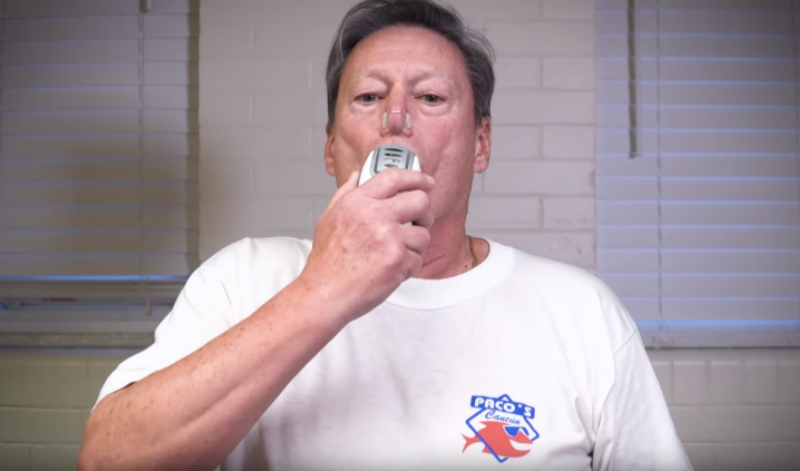 With IMST, just taking 30 deep
breaths daily (5 minutes) using the hand-held inspiratory muscle trainer
device can improve your cardiovascular health and boost your physical
and cognitive function. (Photo: CU Boulder)
With IMST, just taking 30 deep
breaths daily (5 minutes) using the hand-held inspiratory muscle trainer
device can improve your cardiovascular health and boost your physical
and cognitive function. (Photo: CU Boulder)
A simple workout, IMST involves vigorous
inhalation through a hand-held device called an inspiratory muscle
trainer that provides resistance.
“It’s basically strength-training for the muscles you breathe in with,” explained study lead Daniel Craighead, PhD, postdoctoral fellow, Integrative Physiology of Aging Laboratory, CU Boulder, Boulder, CO.
The technique was first developed in the 1980s as a non-pharmacological intervention for the improvement of respiratory symptoms in critically ill patients following mechanical ventilation cessation. However, IMST has also been assessed in other studies for the improvement of various respiratory conditions, notably chronic obstructive pulmonary disease, as well as lung capacity improvement in patients with lung diseases.
In a 6-week trial on the effects of IMST on obstructive sleep apnea, University of Arizona researchers found that 30 inhalations a day using a hand-held device resulted in more restful sleep, stronger inspiratory muscles, and lower systolic blood pressure levels (by about 12 mmHg) among participants.
Now roughly half-way through the study, the researchers have noted significant reductions in blood pressure levels and improvements in large-artery function among IMST intervention participants vs those in the control group. Furthermore, cognitive and treadmill test results were superior among participants in the intervention group vs participants in the control group. Specifically, the IMST group was able to run for longer and keep their heart rate and oxygen consumption low when asked to exercise to exhaustion.
“We suspect that as you improve the function of your respiratory muscles, they don’t need as much blood to work and that blood can be redistributed to your legs, so you exercise longer,” said Dr. Craighead.(If you think that you don't understand the creation of nitric oxide and what it does.)
The researchers hope that the ease of the technique coupled with the comfort of a home setting will encourage people to perform the 5-minute workout regularly and enjoy health benefits they might not otherwise receive.
With IMST, just taking 30 deep
breaths daily (5 minutes) using the hand-held inspiratory muscle trainer
device can improve your cardiovascular health and boost your physical
and cognitive function. (Photo: CU Boulder)“It’s basically strength-training for the muscles you breathe in with,” explained study lead Daniel Craighead, PhD, postdoctoral fellow, Integrative Physiology of Aging Laboratory, CU Boulder, Boulder, CO.
The technique was first developed in the 1980s as a non-pharmacological intervention for the improvement of respiratory symptoms in critically ill patients following mechanical ventilation cessation. However, IMST has also been assessed in other studies for the improvement of various respiratory conditions, notably chronic obstructive pulmonary disease, as well as lung capacity improvement in patients with lung diseases.
In a 6-week trial on the effects of IMST on obstructive sleep apnea, University of Arizona researchers found that 30 inhalations a day using a hand-held device resulted in more restful sleep, stronger inspiratory muscles, and lower systolic blood pressure levels (by about 12 mmHg) among participants.
- See Also: How to get fit without joining a gym
Now roughly half-way through the study, the researchers have noted significant reductions in blood pressure levels and improvements in large-artery function among IMST intervention participants vs those in the control group. Furthermore, cognitive and treadmill test results were superior among participants in the intervention group vs participants in the control group. Specifically, the IMST group was able to run for longer and keep their heart rate and oxygen consumption low when asked to exercise to exhaustion.
“We suspect that as you improve the function of your respiratory muscles, they don’t need as much blood to work and that blood can be redistributed to your legs, so you exercise longer,” said Dr. Craighead.(If you think that you don't understand the creation of nitric oxide and what it does.)
The researchers hope that the ease of the technique coupled with the comfort of a home setting will encourage people to perform the 5-minute workout regularly and enjoy health benefits they might not otherwise receive.
Monday, April 15, 2019
5-minute Breathing Exercise Slashes Blood Pressure and Could Improve Cognitive Function
Is this any different than the Kundalini Breath of Fire from 5 years ago which produces nitric oxide thus dilating your blood vessels? Which of course your doctor irresponsibly did nothing with. NO protocol, no knowledge of it. nothing.
5-minute Breathing Exercise Slashes Blood Pressure and Could Improve Cognitive Function
News Apr 10, 2019 | Original story from University of Colorado Boulder
 A volunteer demonstrates Inspiratory Muscle Strength Training at the University of Colorado Boulder. Credit: CU Boulder
Could working out five minutes a day,
without lifting a single weight or jogging a single step, reduce your
heart attack risk, help you think more clearly and boost your sports
performance?
Preliminary evidence suggests yes.
Now, with a new grant from the National Institute on Aging, CU Boulder researchers have launched a clinical trial to learn more about the ultra-time-efficient exercise known as Inspiratory Muscle Strength Training (IMST).
“It’s basically strength-training for the muscles you breathe in with,” explains Daniel Craighead, a postdoctoral researcher in the Integrative Physiology department. “It’s something you can do quickly in your home or office, without having to change your clothes, and so far it looks like it is very beneficial to lower blood pressure and possibly boost cognitive and physical performance.”
Developed in the 1980s as a means to wean critically ill people off ventilators, IMST involves breathing in vigorously through a hand-held device—an inspiratory muscle trainer—which provides resistance. Imagine sucking hard through a straw which sucks back.
During early use in patients with lung diseases, patients performed a 30-minute, low-resistance regimen daily to boost their lung capacity.
But in 2016, University of Arizona researchers published results from a trial to see if just 30 inhalations per day with greater resistance might help sufferers of obstructive sleep apnea, who tend to have weak breathing muscles, rest better.
In addition to more restful sleep and developing a stronger diaphragm and other inspiratory muscles, subjects showed an unexpected side effect after six weeks: Their systolic blood pressure plummeted by 12 millimeters of mercury. That’s about twice as much of a decrease as aerobic exercise can yield and more than many medications deliver.
“That’s when we got interested,” said Professor Doug Seals, director of the Integrative Physiology of Aging Laboratory.
Seals notes that systolic blood pressure, which signifies the pressure in your vessels when your heart beats, naturally creeps up as arteries stiffen with age, leading to damage of blood-starved tissues and higher risk of heart attack, cognitive decline and kidney damage.
While 30 minutes per day of aerobic exercise has clearly been shown to lower blood pressure, only about 5 percent of adults meet that minimum, government estimates show. Meanwhile, 65 percent of mid-life adults have high systolic blood pressure.
“Our goal is to develop time-efficient, evidence-based interventions that those busy mid-life adults will actually perform,” said Seals, who was recently awarded a $450,000 NIA grant to fund a small clinical trial of IMST involving about 50 subjects. “The preliminary data are quite exciting.”
With about half of the tests done, the researchers have found significant drops in blood pressure and improvements in large-artery function among those who performed IMST with no changes in those who used a sham breathing device that delivered low-resistance.
So far, the IMST group is also performing better on certain cognitive and memory tests.
When asked to exercise to exhaustion, they were also able to stay on the treadmill longer and keep their heart rate and oxygen consumption lower during exercise.
“We suspect that as you improve the function of your respiratory muscles, they don’t need as much blood to work and that blood can be redistributed to your legs so you exercise longer,” said Craighead.
Some cyclists and runners have already begun to use commercially-available inspiratory muscle trainers to gain a competitive edge.
But Seals and Craighead stress that their findings are preliminary, more research is necessary and curious individuals should ask their doctor before considering IMST.
That said, with a high compliance rate (fewer than 10 percent of study participants drop out) and no real side-effects, they’re optimistic.
“High blood pressure is a major risk factor for cardiovascular disease, which is the number one cause of death in America,” said Craighead. “Having another option in the toolbox to help prevent it would be a real victory.”
This article has been republished from materials provided by University of Colorado Boulder. Note: material may have been edited for length and content. For further information, please contact the cited source.
Reference: Heinbockel, T. C., Rossman, M. J., Jankowski, L. R., Jackman, R. A., Bailey, E. F., Chonchol, M. B., … Craighead, D. H. (2019). Effects of Inspiratory Muscle Strength Training on Cardiorespiratory Fitness in Middle-Aged to Older Adults. The FASEB Journal, 33(1_supplement), 695.4-695.4. https://doi.org/10.1096/fasebj.2019.33.1_supplement.695.4
Preliminary evidence suggests yes.
Now, with a new grant from the National Institute on Aging, CU Boulder researchers have launched a clinical trial to learn more about the ultra-time-efficient exercise known as Inspiratory Muscle Strength Training (IMST).
“It’s basically strength-training for the muscles you breathe in with,” explains Daniel Craighead, a postdoctoral researcher in the Integrative Physiology department. “It’s something you can do quickly in your home or office, without having to change your clothes, and so far it looks like it is very beneficial to lower blood pressure and possibly boost cognitive and physical performance.”
Developed in the 1980s as a means to wean critically ill people off ventilators, IMST involves breathing in vigorously through a hand-held device—an inspiratory muscle trainer—which provides resistance. Imagine sucking hard through a straw which sucks back.
During early use in patients with lung diseases, patients performed a 30-minute, low-resistance regimen daily to boost their lung capacity.
But in 2016, University of Arizona researchers published results from a trial to see if just 30 inhalations per day with greater resistance might help sufferers of obstructive sleep apnea, who tend to have weak breathing muscles, rest better.
In addition to more restful sleep and developing a stronger diaphragm and other inspiratory muscles, subjects showed an unexpected side effect after six weeks: Their systolic blood pressure plummeted by 12 millimeters of mercury. That’s about twice as much of a decrease as aerobic exercise can yield and more than many medications deliver.
“That’s when we got interested,” said Professor Doug Seals, director of the Integrative Physiology of Aging Laboratory.
Seals notes that systolic blood pressure, which signifies the pressure in your vessels when your heart beats, naturally creeps up as arteries stiffen with age, leading to damage of blood-starved tissues and higher risk of heart attack, cognitive decline and kidney damage.
While 30 minutes per day of aerobic exercise has clearly been shown to lower blood pressure, only about 5 percent of adults meet that minimum, government estimates show. Meanwhile, 65 percent of mid-life adults have high systolic blood pressure.
“Our goal is to develop time-efficient, evidence-based interventions that those busy mid-life adults will actually perform,” said Seals, who was recently awarded a $450,000 NIA grant to fund a small clinical trial of IMST involving about 50 subjects. “The preliminary data are quite exciting.”
With about half of the tests done, the researchers have found significant drops in blood pressure and improvements in large-artery function among those who performed IMST with no changes in those who used a sham breathing device that delivered low-resistance.
So far, the IMST group is also performing better on certain cognitive and memory tests.
When asked to exercise to exhaustion, they were also able to stay on the treadmill longer and keep their heart rate and oxygen consumption lower during exercise.
“We suspect that as you improve the function of your respiratory muscles, they don’t need as much blood to work and that blood can be redistributed to your legs so you exercise longer,” said Craighead.
Some cyclists and runners have already begun to use commercially-available inspiratory muscle trainers to gain a competitive edge.
But Seals and Craighead stress that their findings are preliminary, more research is necessary and curious individuals should ask their doctor before considering IMST.
That said, with a high compliance rate (fewer than 10 percent of study participants drop out) and no real side-effects, they’re optimistic.
“High blood pressure is a major risk factor for cardiovascular disease, which is the number one cause of death in America,” said Craighead. “Having another option in the toolbox to help prevent it would be a real victory.”
This article has been republished from materials provided by University of Colorado Boulder. Note: material may have been edited for length and content. For further information, please contact the cited source.
Reference: Heinbockel, T. C., Rossman, M. J., Jankowski, L. R., Jackman, R. A., Bailey, E. F., Chonchol, M. B., … Craighead, D. H. (2019). Effects of Inspiratory Muscle Strength Training on Cardiorespiratory Fitness in Middle-Aged to Older Adults. The FASEB Journal, 33(1_supplement), 695.4-695.4. https://doi.org/10.1096/fasebj.2019.33.1_supplement.695.4
Saturday, December 3, 2016
The Breathing Technique That Helps Fight Major Depression
Why not the Kundalini Breath of Fire? That also produces nitric oxide.
The Breathing Technique That Helps Fight Major Depression
Breathing technique can reduce the stress hormones in the central nervous system.
Controlled yogic breathing helps alleviate severe depression, new research finds.Dr Anup Sharma, the lead author of this study, said:
“With such a large portion of patients who do not fully respond to antidepressants, it’s important we find new avenues that work best for each person to beat their depression.The study compared the effects of learning the breathing technique over two months with a control group.
Here, we have a promising, lower-cost therapy that could potentially serve as an effective, non-drug approach for patients battling this disease.”
The results showed that those in the yoga group had lower depression and anxiety.
The control group showed no improvement.
Yoga breathing technique
The breathing technique was practised in groups and at home.The technique involves a series of rhythmic breathing exercises designed to put people in a calm and meditative state.
Slow and calm breaths are alternated with fast and stimulating breaths.
The video below gives you an idea of what is involved in “Sudarshan Kriya yoga”, the breathing technique used in the study.
Along with learning this breathing technique, people practised yoga postures, sitting meditation and received stress education.
Dr Sharma said:
“Sudarshan Kriya yoga gives people an active method to experience a deep meditative state that’s easy to learn and incorporate in diverse settings.”Sudarshan Kriya yoga has already been linked to benefits in milder forms of depression.
These studies suggest that yoga reduces levels of stress hormones in the central nervous system.
Dr Sharma said:
“The next step in this research is to conduct a larger study evaluating how this intervention impacts brain structure and function in patients who have major depression.”The study was published in the Journal of Clinical Psychiatry (Sharma et al., 2106).
Saturday, February 8, 2014
Research Focuses on Beet Juice After Stroke
Is this enough for your hospital to start serving beet juice? How much? Who is going to do the translational work to make this into a stroke protocol and then disseminate this to all the hospitals around the world?
Or maybe you just want to do Breath of Fire Kundalini breathing to get your nitric oxide. Your doctor will know absolutely nothing about either one so why the hell are you paying them?
Research Focuses on Beet Juice After Stroke
Research often works with one scientist building off anothers work.
It
has been with a groundbreaking 2003 study about how the chemical
nitrite is converted into nitric oxide in the human body to regulate
blood flow and blood pressure. The study was conducted by Wake Forest
University physics professor Daniel Kim-Shapiro, PhD, director of the
Translational Science Center, in collaboration with lead investigator
Mark Gladwin, MD, chief of the division of Pulmonary, Allergy and
Critical Care Medicine and director of the Vascular Medicine Institute
at the University of Pittsburgh School of Medicine.
In time, the work of Gladwin and Kim-Shapiro gave Cheryl Bushnell, MD, director of Wake Forest Baptist Health's Comprehensive Stroke Center, an idea.
Benefits of High Nitrate Diet
The work of Gladwin and Kim-Shapiro, as well as others, grew after 2003; for example, studies showed that nitric oxide derived from nitrite could improve outcomes in heart attack and pulmonary hypertension.Bushnell was particularly interested in a 2010 follow-up study by Kim-Shapiro's multidisciplinary team from Wake Forest University and a Wake Forest School of Medicine team that included Jonathan Burdette (Radiology) and Gary Miller (Health and Exercise Science). That study showed that a high nitrate diet resulted in increased blood flow in parts of the brain for healthy elderly people.
Some study participants had been given beet juice, a high nitrate product that is converted in the mouth to nitrite and eventually to nitric oxide in places in the body where it is needed. The nitric oxide is a vasodilator, meaning it expands blood vessels, and largely targets areas in the body that are low in oxygen.
"We showed that there's increased cerebral blood flow in areas associated with cognitive decline in older adults after they drank beet juice,'' Kim-Shapiro says.
Building off that idea, Bushnell is leading a new clinical trial that offers stroke patients the potential benefits of beet juice in their recovery.
After a stroke, which kills brain cells, a certain amount of new cells form in the brain. Bushnell says she is hopeful that drinking beet juice will "actually enhance patients' recovery'' because of the way nitric oxide promotes cell growth.
Beet juice taking off?
In recent years, beet juice has gained traction for its restorative qualities. Scientists around the world have been studying the efficacy of beet juice in everything from reducing blood pressure levels to improving athletic performance. At the Summer Olympics last year in London, numerous athletes were seen drinking beet juice to promote increased blood flow.Kim-Shapiro says beet juice seems to increase respiratory efficiency at the cellular level, which could increase exercise efficiency. Studies are ongoing.
The clinical trial for stroke that Bushnell is leading will involve 80 patients and should be completed in two years. After that, Bushnell says, the goal would be to pursue a multi-center trial.
Bushnell says she has not lacked for interest in people willing to try a small portion of beet juice daily for 30 days after suffering a stroke.
"So far, people want to do something that would potentially help them recover,'' she says. "The enthusiasm is there.''
Marketing Beet Juice
Although it could be years before beet juice is approved by the Food and Drug Administration as a product to enhance recovery from the effects of stroke, Wake Forest University has worked with a company in Florida to make bottled beet juice.The drink has been in the works for more than three years thanks to the efforts of Wake Forest Innovations, the division that helps to commercialize and market the work of scientists and researchers. Bottles of the sweet-tasting juice, a formula developed to counter the natural bitterness of beet juice, are already available for use by Kim-Shapiro's research team. The juice is expected to be available to consumers this year.
Kim-Shapiro says people essentially see beet juice as a new type of energy drink.
Last year, he says, he gave some beet juice samples to his students in advance of exams to gauge their reaction and see if it would give them an energy boost.
They were so enthusiastic, he says, that some would come up to him and ask, "Can I have another bottle? I have another final."
Tuesday, February 4, 2014
Creation of nitric oxide via Breath of Fire
Amy's Kundalini yoga is great. The Breath of Fire breathing creates nitric oxide. No mouth breathing - nostril only. Good for these reasons.
And I'm sure your doctor knows nothing about this.
Subscribe to:
Posts (Atom)