In case you want to go down the completely opposite direction of most scientists.
This might apply to the naysayers:
“All truth passes through three stages. First, it is ridiculed. Second, it is violently opposed. Third, it is accepted as being self-evident.”
- Arthur Schopenhauer, Philosopher
Alzheimer's: The heretical and hopeful role of infection
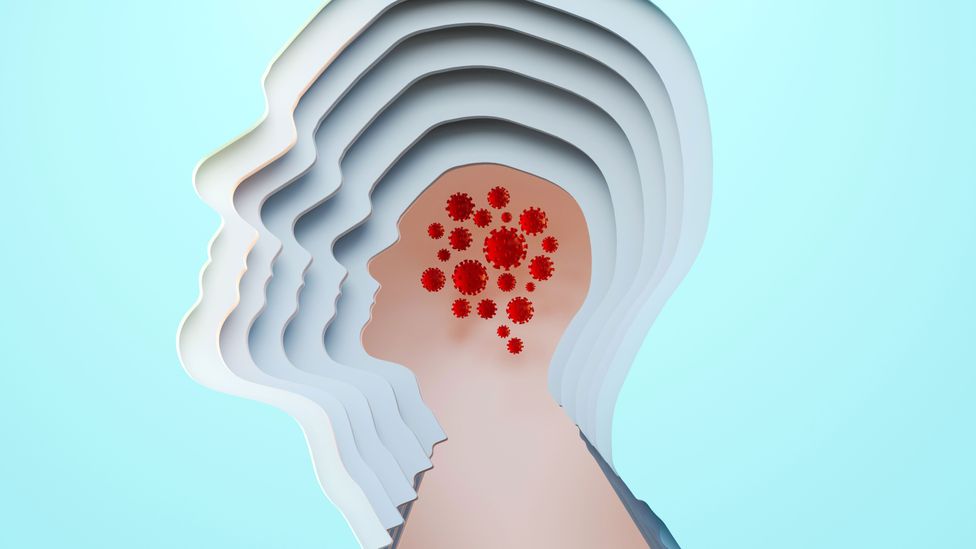
It is more than 150 years since scientists proved that invisible germs could cause contagious illnesses such as cholera, typhoid, and tuberculosis. The role of microbes in these diseases was soon widely accepted, but "Germ Theory" has continued to surprise ever since – with huge implications for many apparently unrelated areas of medicine.
It was only in the 1980s, after all, that two Australian scientists found that Helicobacter Pylori triggers stomach ulcers. Before that, doctors had blamed the condition on stress, cigarettes and booze. Contemporary scientists considered the idea to be "preposterous", yet it eventually earned the Nobel Prize for Physiology or Medicine in 2005.
The discovery that the human papillomavirus can cause cervical cancer proved to be similarly controversial, but vaccines against the infection are now saving thousands of lives. Scientists today estimate that around 12% of all human cancers are caused by viruses.
We may be witnessing a similar revolution in our understanding of Alzheimer's disease. Lifestyle and genetic factors certainly play a role in the development of the illness. But it looks increasingly possible that some common viruses and bacteria – the kinds that give us cold sores and gum disease – may, over the long term, trigger the death of neural tissue and a steady cognitive decline. If so, infections may be one of the leading causes of the dementia.
Like the germ theories of ulcers and cancers, this hypothesis was once considered a kind of heresy – yet a string of compelling findings has sparked renewed interest in microbes' contributions to dementia. "There's a huge amount of work being done now, compared to even five years ago," says Ruth Itzhaki, an emeritus professor at the University of Manchester in the UK, who has spent three decades investigating the role of infection in Alzheimer's.
The hypothesis has inspired a clinical trial of a drug that could target the infection before it decimates the brain, radically reducing the risk of senility in old age. And there may soon be many other exciting new treatments in the pipeline.
A new understanding of Alzheimer's disease could not come soon enough. While there are many forms of dementia, Alzheimer's causes around 60-70% of cases. Globally, that amounts to around seven million people who have been newly diagnosed every year, who desperately need new treatments to slow their decline.
The disease takes its name from the German doctor Alois Alzheimer. In 1906, he noted the build-up of plaques in the brain of a 55-year-old woman, Auguste Deter, who had been suffering from memory decline, language problems and unpredictable behaviour. We now know that these plaques are made from a protein called amyloid beta, and they are thought to be toxic to brain cells and impair the synaptic connections that are important for neural signalling. The accumulation of amyloid beta plaques may also cause tangles of another protein, tau, to build within cells, which can itself lead to neuronal death, and it appears to be accompanied by widespread inflammation in the brain, which adds to the damage.
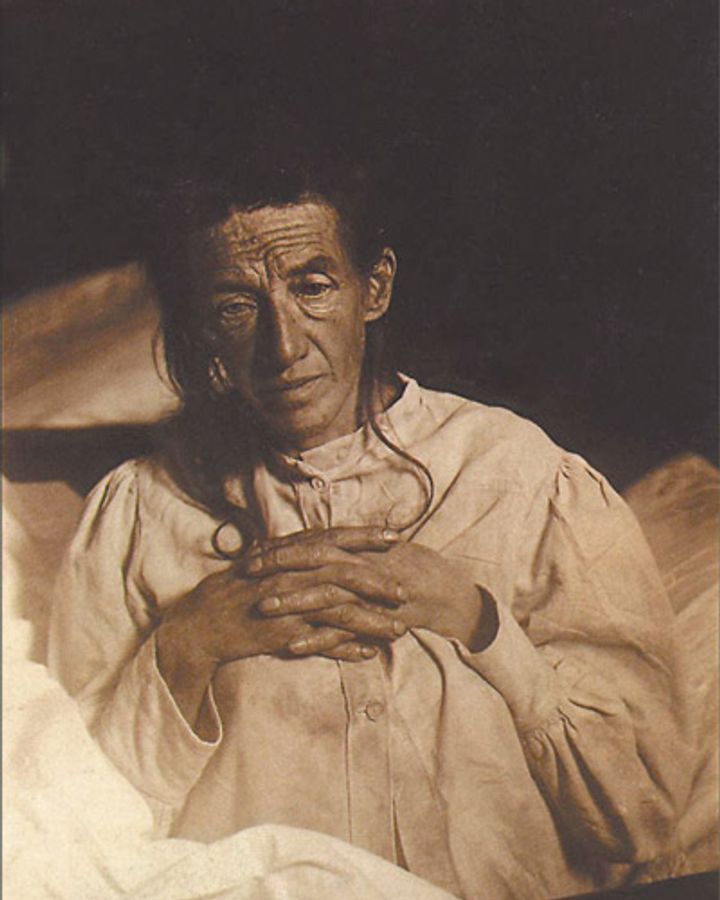
In the early 1900s, Auguste Deter was the first person to be diagnosed with Alzheimer's (Credit: Wikipedia)
The "amyloid beta hypothesis" has inspired countless trials of drugs that aimed to break up these toxic plaques. Yet this research has ended in many disappointments, without producing the desired improvements in patients' prognosis. This has led some to wonder whether the amyloid beta hypothesis may be missing an important part of the story. "The plaques that Alzheimer observed are the manifestation of the disease, not the cause," says geriatrics scientist Tamas Fulop at the University of Sherbrooke in Canada.
Scientists studying Alzheimer's have also struggled to explain why some people develop the disease while others don't. Genetic studies show that the presence of a gene variant – APOE4 – can vastly increase someone's chances of building the amyloid plaques and developing the disease. But the gene variant does not seal someone's fate as many people carry APOE4 but don't suffer from serious neurodegeneration. Some environmental factors must be necessary to set off the genetic time bomb, prompting the build-up of the toxic plaques and protein tangles.
Early evidence
Could certain microbes act as a trigger? That's the central premise of the infection hypothesis.
Itzhaki has led the way with her examinations into the role of the herpes simplex virus (HSV1), which is most famous for causing cold sores on the skin around the mouth. Importantly, the virus is known to lie dormant for years, until times of stress or ill health, when it can become reactivated – leading to a new outbreak of the characteristic blisters.
Could certain microbes act as a trigger? That's the central premise of the infection hypothesis
While it had long been known that the virus could infect the brain – leading to a dangerous swelling called encephalitis that required immediate treatment – this was thought to be a very rare event. In the early 1990s, however, Itzhaki's examinations of post-mortem tissue revealed that a surprising number of people showed signs of HSV1 in their neural tissue, without having suffered from encephalitis.
Importantly, the virus didn't seem to be a risk for the people without the APOE4 gene variant, most of whom did not develop dementia. Nor did the presence of APOE4 make much difference to the risk of people without the infection. Instead, it was the combination of the two that proved to be important. Overall, Itzhaki estimates that the two risk factors make it 12 times more likely that someone will develop Alzheimer's, compared to people without the gene variant or the latent infection in their brain.
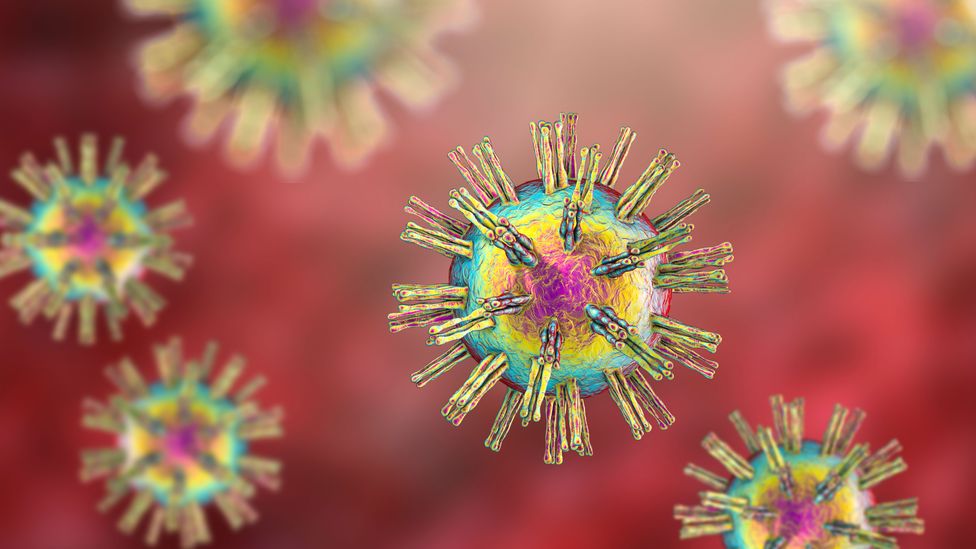
As far back as the 1990s, a surprising number of people showed signs of HSV1 in their neural tissue (Credit: Getty Images)
Itzhaki hypothesised that this was due to repeated reactivation of the latent virus – which, during each bout, invades the brain and somehow triggers the production of amyloid beta, until eventually, people start to show the cognitive decline that marks the onset of dementia. "I think there has to be repeated activation and accumulated damage to explain the long-term course of the disease."
Itzhaki says that her findings were met with a high degree of scepticism by other scientists. "We had the most awful trouble getting it published." Many assumed that the experiments were somehow contaminated, she says, leading to an illusory result. Yet she had been careful to avoid this possibility, and the apparent link between HSV1 infection and Alzheimer's disease has now been replicated in many different populations.
One paper, published earlier this year, examined cohorts from Bordeaux, Dijon, Montpellier and rural France. By tracking certain antibodies, they were able to detect who had been infected with the herpes simplex virus. The researchers found that the infection roughly tripled the risk of developing Alzheimer's in APOE4 carriers over a seven-year follow-up period – but had no effect in people who were not carrying the gene. "The herpes virus was only able to have a deleterious effect if there was APOE4," says Catherine Helmer at the University of Bordeaux in France, who conducted the research.
To date, the most compelling evidence for the infection hypothesis comes from a large study in Taiwan, published in 2018, which looked at the progress of 8,362 people carrying a herpes simplex virus. Crucially, some of the participants were given antiviral drugs to treat the infection. As the infection hypothesis predicted, this reduced the risk of dementia. Overall, those taking a long course of medication were around 90% less likely to develop dementia over the 10-year study period than the participants who had not received any treatment for their infection.

A particularly large study in Taiwan showed promise for the prevention of Alzheimer's through antiviral drugs (Credit: Getty Images)
"It's a result that is so striking, it's hard to believe," says Anthony Komaroff, a professor at Harvard Medical School and a senior physician at Brigham and Women's Hospital in Boston, who recently reviewed the current state of the research into the infection hypothesis for the Journal of the American Medical Association. Although he remains cautious about lending too much confidence to any single study, he is now convinced that the idea demands more attention. "It's such a dramatic result that it must be taken seriously," he says.
Komaroff knows of no theoretical objections to the theory. "I haven't heard anyone, even world-class Alzheimer's experts who are dubious about the infection hypothesis, give a good reason why it has to be bunkum," he adds. We simply need more studies providing direct evidence for the link, he says, to be able to convince the sceptics.
It's a result that is so striking, it's hard to believe
As interest in the infection hypothesis has grown, scientists have started to investigate whether any other pathogens may trigger a similar response – with some intriguing conclusions. A 2017 study suggested that the virus behind shingles and chickenpox can moderately increase the risk of Alzheimer's disease. There is also evidence that Porphyromonas gingivalis, the bacterium behind gum disease, can trigger the accumulation of amyloid beta, which may explain why poor dental health predicts people's cognitive decline in old age. Certain fungi may even penetrate the brain and trigger neurodegeneration. If the causal role of these microbes is confirmed, then each finding could inspire new treatments for the disease.
Scientists studying the infection hypothesis have also started making some headway in explaining the physiological mechanisms.
Their explanation centres on the surprising discovery that amyloid beta can act as a kind of microbicide that fights pathogens in the brain. Studies by Fulop and others, for instance, show that the protein can bind to the surface of the herpes simplex virus. This seems to entrap the pathogen with a web of tiny fibres and prevents it from attaching to cells.
In the short term, this could be highly advantageous, preventing the infection from spiralling out of control so that it poses an immediate danger to someone's life. But if the pathogen is repeatedly reactivated during times of stress, the amyloid beta could accumulate in the toxic plaques, harming the cells it is meant to be protecting.
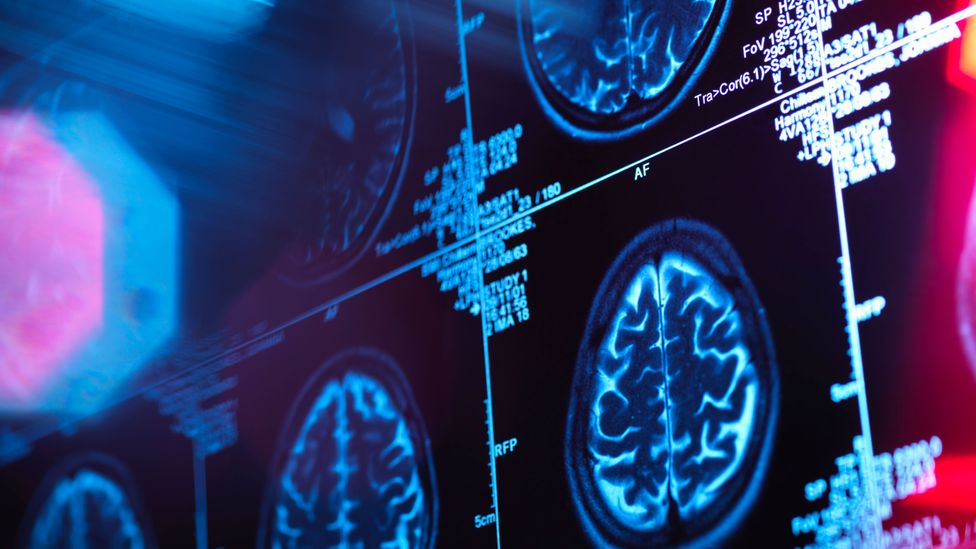
Amyloid beta can act as a kind of microbicide that fights pathogens in the brain (Credit: Getty Images)
How the APOE4 gene variant fits into this process remains to be discovered. Perhaps it changes our cells' susceptibility to an infection. Or perhaps it impairs the clean-up and repair of the neural damage after the pathogen has been deactivated. Either way, the consequence would be increased neural degeneration.
It may seem strange that humans would have evolved a defence system that could backfire in this way. But the risk of developing Alzheimer's later in life – after we've already had a chance to reproduce – would have been far less important for the survival of our species than the immediate risk of a full-blown brain infection during our youth. "If amyloid beta is evolutionarily conserved, it probably has some function that's good for the preservation of the species – and protecting against infections in the brain would certainly qualify as such a function," says Komaroff. We may now be living with the consequences of a trade-off between the immediate, short-term protection and the long-term risk of chronic illness.
Double threat
During the current pandemic, some scientists have started to worry that the coronavirus could increase the risk of dementia. As scientists from Mount Sinai School of Medicine, New York warned in the Journal of Alzheimer's Disease last year: "It is possible that there may be an existing population who have become unknowingly predisposed to neurodegeneration through silent viral entry into the brain."
So far there are some signs that Covid infections can bring about neural damage. Researchers at a recent meeting of the Alzheimer's Association, for example, presented an analysis of blood samples taken from otherwise healthy patients recovering from Covid. They found elevated levels of signature chemicals that often accompany the onset of Alzheimer's disease.
Eventually, doctors may be able to screen people according to the many different microbes they may be carrying in their brains
This could just be another consequence of the overall assault on the body, including the increased inflammation that comes with the disease. But some animal studies and analyses of human autopsies suggest that the coronavirus can invade the brain. And laboratory experiments suggest that this infection may, in turn, trigger neural damage. In one striking study, Jay Gopalakrishnan at Heinrich-Heine-University in Dusseldorf and colleagues created a series of "cerebral organoids" – miniature, lab-grown brain tissue – and then exposed them to the virus. They saw some marked changes in the tau proteins that are associated with Alzheimer's, and increased neural death, after infection from the virus.
Such findings ring alarm bells for Fulop. "Sars-Cov-2 may act exactly as HSV-1," he proposes. Others – including Gopalakrishnan – are more cautious, however. "We have demonstrated that the virus can infect human neurons, and it can cause some sort of neuronal stress," he says. "And this may have some unexpected effects." Much more research will be necessary to assess any long-term risks for neurological disease.
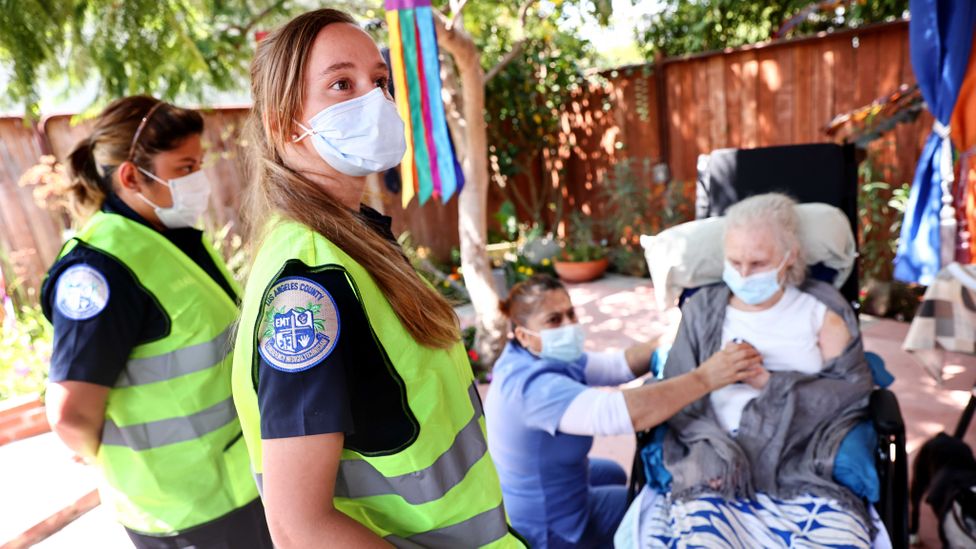
An elderly women with dementia is vaccinated against Covid-19 by a team of volunteers (Credit: Getty Images)
Three decades after her initial investigations, Itzhaki hopes we will now see the development of more clinical trials testing new treatments, in a bid to replicate the observations of the HSV1 patients receiving antiviral medication in Taiwan.
One study in New York is already investigating the use of the anti-herpetic medication valacyclovir on patients with mild Alzheimer's disease. The participants are set to undergo a series of cognitive tests after 52 and 78 weeks. If those receiving the drug experience a slower decline in performance than those receiving a placebo, it will provide some compelling evidence for the efficacy of the treatment – and the infection hypothesis more generally. "It's the first trial of its kind," says Itzhaki.
If antiviral drugs do prove to be effective, they could offer protection to an enormous number of people. Itzhaki calculates that around 18% of people aged 30-40 have the APOE4 gene variant, and also carry a latent HSV1 infection, putting them at the much-heightened risk of Alzheimer's in the decades ahead.
The success of anti-herpetic drugs could also spur efforts to treat the many other kinds of infections that may also contribute to Alzheimer's risk in certain patients. Eventually, doctors may be able to screen people according to the many different microbes they may be carrying in their brains – and control the infections before they have time to cause serious damage.
During our conversation, Itzhaki repeatedly expresses her frustration that progress hasn't come sooner. If these treatments help a fraction of the seven million people developing Alzheimer's disease every year, they would have an enormous impact on world health.
"After these 30 years of difficulties getting funding and getting published, it strikes me very often how many people might have benefited if these treatments had been tested earlier," she says. "I feel so strongly about that."
*David Robson is a science writer and author based in London, UK. His next book, The Expectation Effect: How Your Mindset Can Transform Your Life will be published by Canongate and Henry Holt in early 2022. He is @d_a_robson on Twitter.


