So rather than preventing neuron death and damage by stopping the
neuronal cascade of death this 'expert' focuses on maybe making your recovery a little better. That way only you have to do something, your doctor needs to do nothing. These people need to be slapped upside the head.
I need some stroke expert to tell me exactly why I am wrong about this, because I don't understand how everyone in the stroke world can be so stupid.
http://my.americanheart.org/professional/ScienceNews/Recovering-from-a-Stroke-The-Role-of-Exercise_UCM_463546_Article.jsp
| Disclosure: | Dr. Chantler has a significant research grant funded by the American Heart Association. |
| Pub Date: | Wednesday, May 20, 2014 |
| Authors: | Paul D. Chantler, PhD |
| Affiliation: | West Virginia University School of Medicine, Division of Exercise Physiology |
Citation
Billinger
SA, Arena R, Bernhardt J, Eng JJ, Franklin BA, Johnson CM, MacKay-Lyons
M, Macko RF, Mead GE, Roth EJ, Shaughnessy M, Tang A; on behalf of the
American Heart Association Stroke Council, Council on Cardiovascular and
Stroke Nursing, Council on Lifestyle and Cardiometabolic Health,
Council on Epidemiology and Prevention, and Council on Clinical
Cardiology. Physical activity and exercise recommendations for stroke
survivors: a statement for healthcare professionals from the American
Heart Association/American Stroke Association [published online ahead of
print May 20, 2014]. Stroke. doi: 10.1161/STR.0000000000000022.
http://stroke.ahajournals.org/lookup/doi/10.1161/STR.0000000000000022
Article Text
An estimated 7 million American adults are living with a stroke.
1
It is projected that an additional 4 million will have a stroke by
2030, which is almost a 25% increase in prevalence from 2010.
2 Unfortunately, stroke remains a leading cause of long-term disability in the United States.
1
Consequently, stroke survivors are often deconditioned and predisposed
to a sedentary lifestyle that adversely impacts performance of
activities of daily living, increases the risk for falls, and may
contribute to a heightened risk for recurrent stroke and other
cardiovascular (CV) diseases. These staggering statistics highlight the
critical need to identify effective approaches to improve the quality of
life of stroke patients. In particular, regular exercise (defined as
physical activity that is planned, structured, and repetitive for the
purpose of conditioning any part of the body) or physical activity
(defined as any bodily movement produced by skeletal muscles that
results in energy expenditure beyond resting expenditure) is one such
approach, reflected by the inverse relationship between CV health and
physical activity.
3 Unfortunately, most healthcare
professionals have limited experience and guidance in exercise
programming for this diverse and escalating patient population.
In
this paper, Billinger and colleagues provide an up-to-date guide for
practitioners to gain a better understanding of the benefits of physical
activity, including recommendations for prescribing exercise for stroke
survivors across all stages of recovery.
4 Initially, the
committee describes in detail the functional and physiological
consequences of a stroke. Notably there is a reduced ability to perform
daily tasks and self-care, and after 6-12 months post-stroke there is a
substantial decrease in cardiorespiratory fitness, muscle wasting, and
an increase in intramuscular fat. There is also a switch from slow
twitch towards fast twitch “fatigable” muscle fibers, increase in
pro-inflammatory markers, abnormal glucose and insulin metabolism,
impaired autonomic control, and respiratory dysfunction. Ultimately this
increases the energy costs of walking and premature fatigue.
Unfortunately, these post-stroke---related co-conditions likely reflect a
response to the chronic sedentary lifestyle that is evident in stroke
patients. Importantly, despite the physical limitations, many of these
stroke survivors have the ability to undertake higher levels of physical
activity but choose not to do so.
5 The writing group
indicates that the likely reasons for limited exercise participation by
stroke patients include a lack of 1) awareness that exercise is feasible
or desirable, 2) access to resources to support exercise, and 3)
structured exercise sessions whereby exercises could be demonstrated by a
rehabilitation specialist or exercise leader.
4,6
Importantly,
from the point of view of the stroke patients, and their healthcare
providers, implementation of exercise after a stroke can improve CV
fitness, walking ability, upper extremity muscle strength, symptoms of
depression, some aspects of executive functioning and memory, and
health-related quality of life. Integrating exercise into a
comprehensive plan of care including diet modification, taking
cholesterol-lowering medications, antihypertensive medications, and
aspirin could lower the risk of a second stroke by 80%.
7 Yet,
future research should directly address this and identify whether
regular physical activity and exercise in stroke survivors translate
into a reduced risk for recurrent stroke and cardiac events.
Although
the primary objectives of comprehensive care following stroke are to 1)
reverse the deficits caused by the stroke and minimize their impact; 2)
prevent, recognize, and manage secondary medical conditions, including
recurrent stroke; 3) maximize independence in ability to perform
activities of daily living; 4) facilitate psychological and social
adaptation and coping by the patient and family; 5) optimize the
resumption of prior life-roles and reintegration into the community; and
6) enhance quality of life.
8 Prevention of secondary
conditions such as subsequent stroke and other CV events also
constitutes important functions for stroke care professionals. The
question is how can practitioners incorporate exercise into the stroke
patient’s rehabilitation? The authors provide excellent evidence that
exercise can be implemented even in the acute-stroke phase. Importantly,
the physical activity goals and exercise prescription for the stroke
patient need to be customized to the tolerance of the patient, stage of
recovery, environment, available social support, physical activity
preferences, as well as their specific impairments, activity
limitations, and participation restrictions. As highlighted by the
committee, the first goals during the acute post-stroke rehabilitation
phase are to implement physical activity/exercise aimed at preventing
complications of prolonged inactivity, regaining voluntary movement, and
recovering basic activities of daily living (ADLs). Thus, during acute
and inpatient rehabilitation, minimizing bed rest is critical. Simple
exposure to orthostatic or gravitational stress (i.e., intermittent
sitting or standing) has been shown to obviate much of the deterioration
in exercise tolerance that normally follows an acute hospital stay.
Once
the patient is medically stable, the authors suggest that the next goal
is to initiate an exercise training regimen designed to regain (or
exceed) pre-stroke levels of activity as early and as much as possible.
Physical and occupational therapy are initiated to improve motor
recovery (i.e., gait, upper extremity, balance, and muscle strength),
motor skills, efficiency in self-care, and occupational and leisure-time
activities. Emphasis is on progressive task difficulty, repetition, and
functional practice. It is recommended that interventions for motor
recovery include CV and strengthening exercises. It is in this
supportive environment that patients (with their families and
caregivers) can also learn to self-monitor their exertion and track
physical activity in hospital, home, or community settings. It is
critical for the patient to develop the skills and confidence for
eventual self-management of physical activity and an exercise training
program.
The third set of goals after stroke rehabilitation is to
facilitate the stroke survivor to develop and maintain an active
lifestyle that meets recommended stroke physical activity and exercise
guidelines for prevention of recurrent stroke and cardiac events, and to
maintain or improve physical function. The type of physical activity
prescribed must take into account the stroke patient’s functional
limitations and co-morbidities, as well as the patient’s personal
preferences, environment, and resources, and could range from an
exercise program at home to an appropriate community or sport program.
The
authors emphasize that before embarking on a physical conditioning
regimen after stroke, all participants should undergo a complete medical
history evaluation and a physical examination aimed at the
identification of neurological complications, medical co-morbidities
that require special consideration or constitute a contraindication to
exercise, which may include a graded exercise testing with
electrocardiograph. Generally, graded exercise testing after stroke
should be conducted in accordance with contemporary guidelines as
detailed elsewhere.
9
When should physical activity
begin after stroke? The consensus view is that physical activity should
begin early after stroke. However, how early remains controversial, and
there are no specific protocols to guide the frequency, intensity, time,
or type of physical activity in this time frame. Results from a pilot
study (AVERT) assessing the feasibility and safety of a frequent
mobilization program commencing within 24 hours post-stroke show no
significant difference in the amount of deaths or secondary safety
measures (falls and early neurological deterioration) between the
standard of care versus a very early mobilization group.
10
Further evidence from the AVERT trial indicates that earlier and more
intensive mobilization after stroke may fast-track return to unassisted
walking and improve functional recovery.
11 This would suggest
that early mobilization within 24 hours of acute stroke appears to be
safe and feasible, and would improve functional recovery.
Specific post-stroke exercise goals outlined by the committee are shown below:
| Immediately after an acute stroke |
| |
- Low-level
walking, self-care activities, intermittent sitting or standing, seated
activities, range of motion activities, motor challenges. At
intensities that are ~ 10-20 beats/min increases in resting heart rate;
rating of perceived exertion ≤11 (6-20 scale); frequency and duration as
tolerated, using an interval or work:rest approach. Such activities are
aimed at preventing deconditioning, hypostatic pneumonia, orthostatic
intolerance, depression, and stimulating balance and coordination.
|
| In- and Outpatient Exercise Therapy OR “Rehabilitation” |
| |
- Aerobic
exercises that include large-muscle activities (e.g., walking, graded
walking, stationary cycle ergometry, arm ergometry, arm-leg ergometry,
functional activities seated exercises) if appropriate. At intensities
that are ~40-70% oxygen uptake reserve or heart rate reserve; 55-80%
heart rate max; rating of perceived exertion 11-14 (6-20 scale), for 3-5
days/week, 20-60 min/session (or multiple 10-min sessions), that
includes a 5-10 min of warm-up and cool-down activities. Such activities
are aimed at increasing walking speed and efficiency, improving
exercise tolerance (functional capacity), increasing independence in
activities of daily living, reducing motor impairment and improving
cognition, and improving vascular health and inducing other
cardio-protective benefits.
- Muscular Strength/Endurance
activities include resistance training of upper and lower extremities,
trunk using free weights, weight-bearing or partial weight-bearing
activities, elastic bands, spring coils, pulleys, circuit training, and
functional mobility. At intensities that correspond to 1 to 3 sets of
10-15 repetitions of 8-10 exercises involving the major muscle groups at
50-80% of 1 repetition max, for 2-3 days/week, with gradually
increasing resistance over time as tolerance permits. Such activities
are aimed at increasing muscle strength and endurance, increasing
ability to perform leisure-time and occupational activities and
activities of daily living, and reducing cardiac demands during lifting
or carrying objects by increasing muscular strength.
- Flexibility
should also be a focus that involves static stretching of the trunk and
upper- and lower extremities. Holding each stretch for 10-30 seconds,
with the stretches performed 2-3 days/week (before or after aerobic or
strength training). These activities increase range of motion of
involved segments, help to prevent contractures, decrease risk of
injury, and increase activities of daily living.
- Neuromuscular
activities such as balance and coordination activities, Tai Chi, Yoga,
recreational activities (paddles/sport balls to challenge hand-eye
coordination), and active-play video gaming and interactive computer
games. Employ 2-3 days/week as a complement to aerobic, muscular
strength/endurance training, and stretching activities. These activities
improve balance, skill reacquisition, quality of life, and mobility;
decrease fear of falling; and improve level of safety during activities
of daily living.
|
Future Directions
Although
the authors provided an excellent review of the current evidence
supporting the incorporation of physical activity/exercise into
post-stroke recovery programs,4 a considerable amount of gaps in the
literature need to be addressed. As highlighted by the authors, the
critical elements (i.e., number of sessions, mode of delivery, and type
of follow-up and monitoring) of a successful physical activity
counseling intervention have not been definitively identified.
Well-designed trials are needed to clarify optimal exercise programming
and long-term outcomes of physical conditioning in this patient
population, including morbidity, mortality, dependence, and disability.
Whether initiating exercise early after stroke can prevent the loss of
bone mineral density and deterioration of bone structure commonly seen
after stroke, or reduce fracture risk, is currently unknown. Another
important future direction lies with the ability to translate the
exercise/physical activity findings from carefully-controlled
efficacy-focused trials to real world settings. Unfortunately, although
physical activity is clearly recognized as a means to reduce the risk of
stroke and other CV diseases, sedentary behaviors remain a persistent
and significant problem, and even more so for chronic disease
populations including stroke. As suggested by the authors, healthcare
professionals should understand the barriers and motivators to physical
activity post-stroke, and consider ways of educating stroke survivors
and caregivers on the importance of CV risk reduction and helping set
goals for continued participation in physical activity and exercise.
In
summary, the committee provides data that clearly support the use of
exercise training (both aerobic and strength training) for stroke
survivors. Exercise training improves functional capacity, improves the
patient’s ability to perform activities of daily living and quality of
life, and reduces the risk for subsequent CV events. Healthcare
professionals should develop exercise/physical activity programs to help
improve the outcome of their stroke patients.
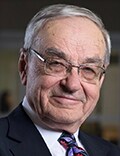 "The evidence by now is overwhelming and incontestable"
that stroke doubles the chances of developing dementia, Vladimir
Hachinski, MD, professor of neurology and epidemiology at Western
University in Canada and Vice President of the World Stroke
Organization, told Medscape Medical News.
"The evidence by now is overwhelming and incontestable"
that stroke doubles the chances of developing dementia, Vladimir
Hachinski, MD, professor of neurology and epidemiology at Western
University in Canada and Vice President of the World Stroke
Organization, told Medscape Medical News.