Changing stroke rehab and research worldwide now.Time is Brain! trillions and trillions of neurons that DIE each day because there are NO effective hyperacute therapies besides tPA(only 12% effective). I have 523 posts on hyperacute therapy, enough for researchers to spend decades proving them out. These are my personal ideas and blog on stroke rehabilitation and stroke research. Do not attempt any of these without checking with your medical provider. Unless you join me in agitating, when you need these therapies they won't be there.

What this blog is for:

My blog is not to help survivors recover, it is to have the 10 million yearly stroke survivors light fires underneath their doctors, stroke hospitals and stroke researchers to get stroke solved. 100% recovery. The stroke medical world is completely failing at that goal, they don't even have it as a goal. Shortly after getting out of the hospital and getting NO information on the process or protocols of stroke rehabilitation and recovery I started searching on the internet and found that no other survivor received useful information. This is an attempt to cover all stroke rehabilitation information that should be readily available to survivors so they can talk with informed knowledge to their medical staff. It lays out what needs to be done to get stroke survivors closer to 100% recovery. It's quite disgusting that this information is not available from every stroke association and doctors group.

Showing posts with label 'Stroke is Treatable'. Show all posts

Wednesday, April 16, 2025

New Coalition Calls for Urgent Action to Address Rising Stroke Crisis

 So, the WSO is finally acknowledging their incompetence at getting stroke solved. If survivors were running it, we would get stroke solved. Incompetence is working on 'care'; NOT RECOVERY!

 New Coalition Calls for Urgent Action to Address Rising Stroke Crisis

World Stroke Organization launches first multisector movement to speed stroke care(NOT RECOVERY!) to patients around globe.
Global Stroke Action Coalition

On April 9, 2025, the world’s first multisector advocacy movement dedicated to stroke — the Global Stroke Action Coalition — issued an urgent call to action to address growing inequities in stroke. Already a leading cause of death and disability, without intervention, the global burden of stroke is projected to rise by a further 50% over the next 25 years, claiming 100 million lives and costing US$1.6 trillion each year.  

At this afternoon’s launch, health and economic policy specialists, clinical experts and people with lived experience of stroke, will highlight key data and recommendations for action to address human and financial impact of stroke. Drawing on both data and the lived experiences of people affected by stroke, the Coalition will share their inaugural policy document Stroke Action Now which sets out evidence-based examples of interventions that can significantly advance progress on a disease that is largely:

  • Preventable: 80% of the current stroke burden is linked to 10 modifiable risk factors. Identifying and managing hypertension alone could cut the rate of stroke in half.
  • Treatable: Advances in clot removal and clot-busting technologies (thrombectomy and thrombolysis) can dramatically improve patient health outcomes, minimizing disability and reducing the economic impact of stroke.
  • (NO, it's not, you have zero evidence for that statement! Treatable to a survivor is 100% recovery)
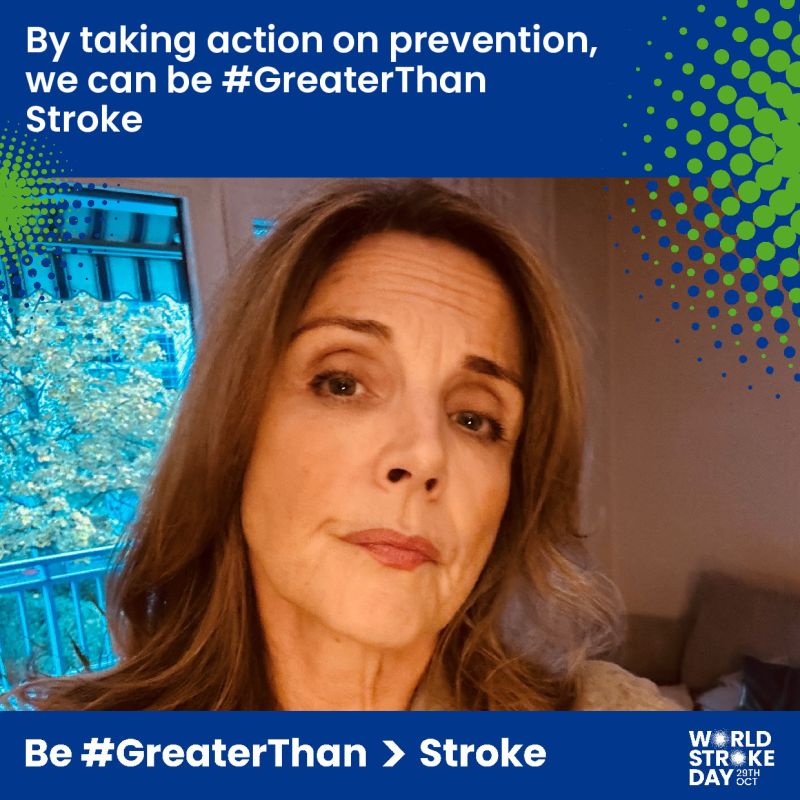
  • I don't need to hear any lies about this meme from World Stroke Day a couple of years ago.

    What a lying piece of shit.


  • Recoverable: Access to rehabilitation helps people regain independence and reduces the risk —and cost— of long-term disability. 

    WHAT ABSOLUTE FUCKING BULLSHIT! 'ACCESS' has almost nothing to do with recovery! ARE YOU THAT BLITHERINGLY STUPID?

Despite the clear opportunities, prevention, treatment and rehabilitation services are only available to a fraction of stroke patients. For example, only 3% of medically eligible patients currently receive thrombectomy, with 20-40% of healthcare settings worldwide yet to implement basic stroke rehabilitation services.

“The global burden of stroke has doubled in the past 30 years,” explains Coalition co- Chair, Professor Bo Norrving. “During that same period huge advances have been made across the care(NOT RECOVERY!) pathway that offer us an incredible opportunity to reduce inequitable health outcomes and make significant progress towards global health and development targets. Committing to the development of National Stroke Plans should be a key priority for governments as part of their forward strategy for prevention and control of NCDs. We can’t afford to wait another 30 years to turn this around. Millions of lives depend on governments taking action now.”

Coalition leaders are calling on governments attending the 4th High-Level UN Meeting on NCDs in September this year, to commit to five actions:

  1. Making stroke a priority in NCD prevention and control strategies so that it becomes an explicit and integral part of national and internal health agendas.
  2. Developing National Stroke Action Plans that address the entire care(NOT RECOVERY!) pathway and include measurable targets that respond to in-country needs.
  3. Committing to funding evidence-based interventions and exploring innovative financing models, such as taxing harmful substances, to build domestic resources.
  4. Implementing robust stroke monitoring systems that measure changes in the stroke burden and the provision and outcomes of stroke care(NOT RECOVERY!).
  5. Including stroke survivors and caregivers in policy development and prioritize meaningful representation at all levels of decision-making.

The Coalition’s call comes at a defining moment. The upcoming UN High-Level Meeting is a rare opportunity for world leaders to shape the next 25 year’s of action on NCDs. Stroke must not be overlooked. The Coalition urges governments to seize this moment and ensure that stroke is recognized, prioritized, and acted upon.

Thursday, April 10, 2025

“We can’t afford to wait”—new coalition calls for urgent action to address stroke crisis

 What brazenness, calling for action just because THEY ARE A COMPLETE FUCKING FAILURES AT SOLVING STROKE!  Let survivors run the show, all the stroke medical 'professionals' ARE COMPLETELY INCOMPETENT AT GETTING STROKE SOLVED!

“We can’t afford to wait”—new coalition calls for urgent action to address stroke

The “world’s first” multisector advocacy movement dedicated to stroke—the Global Stroke Action Coalition—is launching today, and has issued an urgent call to action to address growing inequities in stroke. A press release notes that stroke is already a leading cause of death and disability—and, without intervention, the global burden of the disease is projected to rise by a further 50% over the next 25 years, claiming 100 million lives and costing US$1.6 trillion each year.

At today’s launch, health and economic policy specialists, clinical experts, and people with lived experience of stroke, will highlight key data and recommendations for action to address human and financial impacts of stroke.

Drawing on both data and stroke patients’ experiences, the coalition will share its inaugural policy document, ‘Stroke Action Now’, which sets out evidence-based examples of interventions that can significantly advance progress on a disease that is largely “preventable, treatable, and recoverable”.

  • (NO, it's not, you have zero evidence for that statement! Treatable to a survivor is 100% recovery)
  • I don't need to hear any lies about this meme from World Stroke Day a couple of years ago.

    What a lying piece of shit.

  • On these three points, the release details that:

    • Some 80% of the current stroke burden is linked to 10 modifiable risk factors—and identifying and managing hypertension alone could cut the rate of stroke in half
    • Advances in clot removal and clot-busting technologies—thrombectomy and thrombolysis—can dramatically improve patient health outcomes, minimising disability and reducing the economic impact of stroke
    • Access to rehabilitation helps people regain independence, and reduces the risk and cost of long-term disability

    Despite these “clear opportunities”, the release goes on to state that prevention, treatment and rehabilitation services are only available to a fraction of stroke patients. For example, just 3% of medically eligible patients currently receive thrombectomy, and 20–40% of healthcare settings worldwide are yet to implement basic stroke rehabilitation services.

    “The global burden of stroke has doubled in the past 30 years,” said coalition co-chair Bo Norrving (Lund University, Lund, Sweden). “During that same period, huge advances have been made across the care pathway that offer us an incredible opportunity to reduce inequitable health outcomes, and make significant progress towards global health and development targets. Committing to the development of national stroke plans should be a key priority for governments as part of their forward strategy for prevention and control of NCDs [non-communicable diseases]. We can’t afford to wait another 30 years to turn this around. Millions of lives depend on governments taking action now.”

    Coalition leaders are calling on governments attending the fourth high-level United Nations (UN) meeting on NCDs in September 2025 to commit to five actions:

    1. Making stroke a priority in NCD prevention and control strategies so that it becomes an explicit—and integral—part of national and internal health agendas
    2. Developing national stroke action plans that address the entire care(NOT RECOVERY!) pathway and include measurable targets that respond to in-country needs
    3. Committing to funding evidence-based interventions and exploring innovative financing models, such as taxing harmful substances, to build domestic resources
    4. Implementing robust stroke monitoring systems that measure changes in stroke burden, and the provision and outcomes of stroke care(NOT RECOVERY!)
    5. Including stroke survivors and caregivers in policy development, and prioritising meaningful representation at all levels of decision-making

    The coalition’s call comes at a “defining moment”, the release continues, as the upcoming UN high-level meeting is a “rare opportunity” for world leaders to shape the next 25 years of action on NCDs. The coalition’s view is that stroke “must not be overlooked”, and it is urging governments to seize this moment and ensure that stroke is “recognised, prioritised, and acted upon”.

    Key members of the coalition include the American Stroke Association, Asia Pacific Stroke Organization, Bayer, Boehringer Ingelheim, European Stroke Organisation, Heart & Stroke Foundation South Africa, Ipsen, March of Dimes Canada, Medtronic, Philips, Stroke Association UK, and Society of Vascular and Interventional Neurology.

    Wednesday, April 9, 2025

    New Coalition Calls for Urgent Action to Address Rising Stroke Crisis

     A lot of members are already the fucking failures of stroke associations, so this is already a failure! None of them are working on 100% recovery!  You have to get survivors in charge, the existing stroke medical world is a complete shitshow! As proven by 'care'(NOT RECOVERY!) in their recommendations.

    New Coalition Calls for Urgent Action to Address Rising Stroke Crisis

    GENEVA--(BUSINESS WIRE)--Launching today, the world’s first multisector advocacy movement dedicated to stroke - the Global Stroke Action Coalition - has issued an urgent call to action to address growing inequities in stroke. Already a leading cause of death and disability, without intervention, the global burden of stroke is projected to rise by a further 50% over the next 25 years, claiming 100 million lives and costing US$1.6 trillion each year.

    Despite the clear opportunities, prevention, treatment and rehabilitation services are only available to a fraction of stroke patients.

    Share

    At this afternoon’s launch, health and economic policy specialists, clinical experts and people with lived experience of stroke, will highlight key data and recommendations for action to address human and financial impact of stroke. Drawing on both data and the lived experiences of people affected by stroke, the Coalition will share their inaugural policy document Stroke Action Now which sets out evidence-based examples of interventions that can significantly advance progress on a disease that is largely:

    • Preventable: 80% of the current stroke burden is linked to 10 modifiable risk factors. Identifying and managing hypertension alone could cut the rate of stroke in half.
    • Treatable: Advances in clot removal and clot-busting technologies (thrombectomy and thrombolysis) can dramatically improve patient health outcomes, minimizing disability and reducing the economic impact of stroke.(NO, it's not, you have zero evidence for that statement! Treatable to a survivor is 100% recovery)
    • I don't need to hear any lies about this meme from World Stroke Day a couple of years ago.

      What a lying piece of shit.


    • Recoverable: Access to rehabilitation helps people regain independence and reduces the risk —and cost— of long-term disability.

    Despite the clear opportunities, prevention, treatment and rehabilitation services are only available to a fraction of stroke patients. For example, only 3% of medically eligible patients currently receive thrombectomy, with 20-40% of healthcare settings worldwide yet to implement basic stroke rehabilitation services.

    “The global burden of stroke has doubled in the past 30 years,” explains Coalition co- Chair, Professor Bo Norrving. “During that same period huge advances have been made across the care(NOT RECOVERY!) pathway that offer us an incredible opportunity to reduce inequitable health outcomes and make significant progress towards global health and development targets. Committing to the development of National Stroke Plans should be a key priority for governments as part of their forward strategy for prevention and control of NCDs. We can’t afford to wait another 30 years to turn this around. Millions of lives depend on governments taking action now.”

    Coalition leaders are calling on governments attending the 4th High-Level UN Meeting on NCDs in September this year, to commit to five actions:

    1. Making stroke a priority in NCD prevention and control strategies so that it becomes an explicit and integral part of national and internal health agendas.
    2. Developing National Stroke Action Plans that address the entire care(NOT RECOVERY!) pathway and include measurable targets that respond to in-country needs.
    3. Committing to funding evidence-based interventions and exploring innovative financing models, such as taxing harmful substances, to build domestic resources.
    4. Implementing robust stroke monitoring systems that measure changes in the stroke burden and the provision and outcomes of stroke care(NOT RECOVERY!)

    .
    5. Including stroke survivors and caregivers in policy development and prioritize meaningful representation at all levels of decision-making.(They should be in charge, all your members have proven to be failures in solving stroke! Why are they even included?)

    The Coalition’s call comes at a defining moment. The upcoming UN High-Level Meeting is a rare opportunity for world leaders to shape the next 25 years of action on NCDs. Stroke must not be overlooked. The Coalition urges governments to seize this moment and ensure that stroke is recognized, prioritized, and acted upon.
    Notes

    Members of the Coalition include the World Stroke Organization, American Stroke Association, Asia Pacific Stroke Organization, Bayer, Boehringer Ingelheim, European Stroke Organisation, Heart & Stroke Foundation South Africa, Ipsen, March of Dimes Canada, Medtronic, Philips, Stroke Association UK and Society of Vascular and Interventional Neurology.  

    Friday, November 1, 2024

    Stroke is a treatable disease and telehealth can support patients, say Neurologist Sheila Martins & Carla Goulart Peron, Chief Medical Officer at Philips

    Your tyranny of low expectations is showing and SURVIVORS WANT 100% RECOVERY! GET THERE! 'Care' is NOT what survivors want, so first you have to set the right goals for the WSO!

     Stroke is a treatable disease and telehealth can support patients, say Neurologist Sheila Martins & Carla Goulart Peron, Chief Medical Officer at Philips

    Ischemic strokes are caused by a blocked blood vessel and they are treatable, even reversed if treatment is immediate(YEAH IF TREATMENT IS WITHIN 3 MINUTES IN RESEARCH IN MICE. Think your hospital can do that? So by definition you are wrong, stroke is NOT treatable to 100% recovery; lesser goals than that are not supported by survivors!)

     The 3 minute research here:

    Electrical 'storms' and 'flash floods' drown the brain after a stroke


    Strokes are sometimes seen as a consequence of unhealthy lifestyles which can be tackled by prevention. But that's not the only option - patients deserve preventive care as well as treatment, because a stroke is a curable disease. 

    Despite the latest guidance from the World Health Organization (WHO), this is not yet the norm in the global healthcare sector. 

    Sheila Martins, neurologist and outgoing President of the World Stroke Organization (WSO) and Carla Goulart Peron, Chief Medical Officer at Philips, want to ensure that the voices of stroke patients are heard.(Hey, contact me at oc1dean@gmail.com You'll get an earful) Here they discuss the investment required to facilitate access to treatments that can cure it.

    Carla Goulart Peron, Phillips’ Chief Medical Officer

    Philips advocates for advanced stroke treatments worldwide

    Carla and Sheila have been working together for years to improve healthcare for stoke patients. Previously, Carla was assigned to support one of Sheila’s studies to prove that better stroke care(NOT RECOVERY!) could be delivered in the country’s public health service. 

    “During that period, the standard treatment for most stroke patients in small towns or rural areas was taking an aspirin once a day,” she reflects. “I remember thinking to myself that it would be quite a leap from that situation to build the required expertise and infrastructures to offer thrombolysis. But thanks to her determination, Sheila made important steps towards making stroke a very treatable disease in Brazil.”

    It took years from one aspirin a day to the use of thrombolysis in stroke care(NOT RECOVERY!). Now, limited investment in stroke care means it is only offered to 3% of the world’s stroke patients that meet the eligibility requirements.Youtube Placeholder

    The World Health Organization has said that the treatment is available for just 41% of countries. Sheila fears that we may be at risk of allowing a similar situation to arise for another game-changing procedure, mechanical thrombectomy, a minimally invasive procedure which removes blood clots via a catheter inserted through the patient’s arteries.

    “I recently spoke to a representative from Indonesia’s Ministry of Health, who told me he had 16,000 islands under his administration. If telehealth and AI could help to decide where to send the helicopter to pick up the patients most in need, that would make the job a whole lot easier,” added Carla.

    For Sheila, it is strong partnerships and a coordinated advocacy programme which will bring stroke to the front of global healthcare concern.

    Sheila Martins, neurologist and outgoing President of the World Stroke Organization

    Telehealth is fundamental to advancing stroke care(NOT RECOVERY!) 

    According to Sheila, there is insufficient focus on research funding and healthcare expenditure to really advance acute stroke care(NOT RECOVERY!)

    “Stroke is the leading cause of disability and is increasingly affecting younger people. Investing in acute stroke treatments provides governments with an unmissable opportunity to reduce the burden of stroke on individuals and society and deliver on their commitment to provide health and well-being for all,” she says. “The payback in terms of increased GDP productivity and reduced long-term care costs far outweighs the initial investment.”

    Acute stroke care(NOT RECOVERY!) requires two things: diagnostic imaging for precision diagnosis and a highly skilled healthcare workforce. Sheila believes that technologies like telehealth and AI can help to reduce costs, as well as increase diagnostic accuracy.

    “Telehealth is fundamental to advancing stroke care(NOT RECOVERY!), allowing specialists to advise less experienced staff how to treat each patient,” she says. “Artificial intelligence to rapidly identify ischemic stroke, hemorrhagic stroke or large vessel occlusions, or assist in deciding which patients need to be transferred to a comprehensive stroke centre will also play a part.”


    Wednesday, October 30, 2024

    World Stroke Organization Launches Global Coalition to Drive Policy Action on Stroke Care

     This is how fucking godawful the WSO is. Ignoring what survivors want; 100% recovery and talking about 'care'! Comeuppance should hit everyone in the WSO  when they become the 1 in 4 per WHO that has a stroke and they start complaining about not getting recovered. I don't even know why they have stroke in their name, they DO NOTHING FOR SURVIVORS!

    World Stroke Organization Launches Global Coalition to Drive Policy Action on Stroke Care

     On World Stroke Day, October 29, the World Stroke Organization (WSO) announces the launch of a global coalition aimed at accelerating policy action on stroke—now the second leading cause of death and the third leading cause of disability worldwide.

    Over the past three decades, the global burden of stroke has doubled. Stroke's impact is expected to increase by one-third by 2050. This rise could result in 9.7 million annual deaths and a significant increase in those affected by stroke-related disabilities. Beyond the immense human toll, stroke is projected to cost the global economy over USD 1.6 trillion annually by 2050.

    “There is a clear misperception of stroke as an unavoidable, age-related condition with limited treatment options,” said WSO President, Professor Jeyaraj Pandian. “Evidence shows that stroke is increasingly affecting younger populations, with 80% of all cases preventable. Expanding access to acute treatments - which only 5% of eligible patients currently access - can transform patient outcomes, while specialist rehabilitation can enhance recovery and social reintegration. Not only is stroke largely preventable, it is treatable and beatable.”(NO, it's not, you have zero evidence for that statement!)

    In September 2025, Heads of State, Ministers of Health and Finance, and development stakeholders will convene in New York for the fourth UN High-Level Meeting on Non-Communicable Diseases (NCDs). With only five years remaining to SDG 3.4 on reducing premature mortality from NCDs, this gathering presents a critical opportunity to drive commitment to policy interventions and investment in stroke.

    “Around the world we can see the huge gaps in stroke care(NOT RECOVERY!) at every stage in the patient care(NOT RECOVERY!) pathway. Each of these gaps represents enormous potential for progress. Action on stroke really is the key to accelerating progress on health and development goals,” said Prof Sheila Martins, co-Chair of the Coalition. “WSO’s network of global and national experts stand ready to support governments develop and implement stroke care(NOT RECOVERY!) systems that will help reduce their burden of disease.”

    The stroke advocacy coalition, comprising health and scientific, patient organizations, and industry leaders, is united in its mission to drive engagement with decision-makers at all levels ahead of the 2025 UN meeting. For details of current members visit https://tinyurl.com/44wbp8pb

    Notes for editors

    1 The World Stroke Organization is the world’s only global NGO with a sole focus on stroke and in official relations with the UN. It is committed to reducing the global burden of stroke through advancing access to effective prevention, treatment, rehabilitation, and support. WSO is a membership organization and represents over 50,000 stroke experts in every global region. WSO’s 100 Society Members represent international, regional and national scientific, medical and patient organizations.

    2 More information on stroke burden and recommendations for policy makers can be found in The Lancet Neurology – WSO Commission on Stroke https://www.thelancet.com/commissions/global-burden-stroke

    3 WSO policy recommendations for implementation of effective acute stroke treatment can be found in Time for a Revolution in Stroke Care(NOT RECOVERY!)

    For more information, contact the WSO Campaign Manager awiseman@world-stroke.org +44 7940 029444 

    Tuesday, September 10, 2024

    The American Stroke Association launches uniique website to raise stroke awareness

    Yep, as long as you're promoting awareness that everything in stroke is a failed shitshow! The ASA is one of those fucking failures of stroke associations DOING NOTHING to get survivors to 100% recovery!

    tPA full recovery? Only 12%!

    rehab full recovery? Only 10%!

    No stroke protocols for any rehab!

    Nothing being done to save million/billions of neurons during the neuronal cascade of death in the first week!

     I don't need to hear any lies about this meme from World Stroke Day a couple of years ago.

    What a lying piece of shit.


     The American Stroke Association launches uniique website to raise stroke awareness

    Sunday, May 5, 2024

    Stroke Awareness Month: Let the Brain Lead the Way

     Yep, as long as you're promoting awareness that everything in stroke is a failed shitshow!

    tPA full recovery? Only 12%!

    rehab full recovery? Only 10%!

    No stroke protocols for any rehab!

    Nothing being done to save million/billions of neurons during the neuronal cascade of death in the first week!

     I don't need to hear any lies about this meme from World Stroke Day a couple of years ago.

    What a lying piece of shit.


    Stroke Awareness Month: Let the Brain Lead the Way

    Written By: Toni Patt, PT, DPT, NCS, GCS


    May is Stroke Awareness Month where we take time to raise awareness along with its risk factors and rehabilitation efforts. One of the hardest challenges when working with stroke patients is facilitating neuroplasticity to recover lost motor pathways. Each year in America, hundreds of thousands of individuals experience strokes, with estimates reaching nearly 800,000 cases, rendering it a leading cause of long-term disability and mortality, prompting a critical need for heightened awareness, prevention strategies, and effective medical interventions to mitigate its devastating impact on individuals, families, and healthcare systems. As therapists, we give commands, demonstrations, and encouragement. We give feedback on performance. We try to entice the stroke patient brain to complete the task. I’ve found instead of telling the brain how to do something, it’s better to tell it what to do and then let the brain figure it out.

    Telling the brain what to do forces it to solve the problem. In doing so the brain activates automatic intrinsic pathways creating greater activation overall. The brain activates what it needs, or at least tries, resulting in a greater motor response. Those subcortical intrinsic pathways improve movement.

    I’ve also found it matters what the task is. Brains must care about what they’re doing. Let the patient pick the task. I give choices. Ask them what they want to do. I’ve helped men stand in front of mirrors to shave. I have sat next to a lady on her bed to maintain balance while she Facetimed with her grandson in the Army. I brought my horse to work so patients could stand while feeding him treats. He loved going to work with me.

    Feedback matters. I found defining good really helps. Since stroke patients base outcomes on pre-stroke levels, in their minds, they never do well. Defining a good transfer as not hitting the floor changes the discussion and opens the opportunity to provide feedback. Good can always be improved upon.

    It’s important to let them struggle a little. The cerebellum will only correct movement when it senses a problem. If something is too easy or too hard the cerebellum doesn’t help. If someone is struggling it cues the cerebellum to join in. We learn from mistakes. We have to let our patients make mistakes to allow that to happen.


    Saturday, May 4, 2024

    May is National Stroke Awareness Month

     Yep, as long as you're promoting awareness that everything in stroke is a failed shitshow!

    tPA full recovery? Only 12%!

    rehab full recovery? Only 10%!

    No stroke protocols for any rehab!

    Nothing being done to save million/billions of neurons during the neuronal cascade of death in the first week!

     I don't need to hear any lies about this meme from World Stroke Day a couple of years ago.

    What a lying piece of shit.


    May is National Stroke Awareness Month

    The month of May is National Stroke Awareness Month.

    The American Stroke Association says you can use the letters in FAST to spot a stroke.

    F stands for Face Drooping.  A is for Arm Weakness. S stands for Speech Difficulty and T is for time to call 9-1-1.

    A stroke is an emergency, and every minute counts, so call 9-1-1 immediately and note the time when any of the symptoms first appeared.

    Friday, April 26, 2024

    World Stroke Academy: Let’s keep enhancing stroke care together🧠 We are delighted to announce our new #eLearning module:

     THIS IS WHY STROKE NEVER GETS SOLVED! The WSO only works on 'care'. They need to be completely destroyed and run by survivors! Survivors would produce recovery and results instead of this lazy crapola. And for proof there is this shit:

    I don't need to hear any lies about this meme from World Stroke Day a couple of years ago.

    What a lying piece of shit.


    Saturday, April 20, 2024

    NCA heroes promote Stroke Awareness Month

    Yep, as long as you're promoting awareness that everything in stroke is a failed shitshow!

    tPA full recovery? Only 12%!

    rehab full recovery? Only 10%!

    No stroke protocols for any rehab!

    Nothing being done to save million/billions of neurons during the neuronal cascade of death in the first week!

     I don't need to hear any lies about this meme from World Stroke Day a couple of years ago.

    What a lying piece of shit.


    NCA heroes promote Stroke Awareness Month

    Print

    POLOKWANE – Heroes do not always wear capes like Batman, Superman and Spiderman, and they do not always live in fairy tales.

    Sometimes a hero is an ordinary person doing his daily job beyond what is expected.

    Staff at Northview Christian Academy recently taught learners about heroism and what they can do to be a hero.

    “We kicked off Stroke Awareness Month by teaming up with Fast Heroes and the Angels initiative. This initiative is endorsed by the World Stroke Organization,” said Candice Janse van Rensburg, vice-principal at NCA.

    According to the World Health Organization (WHO), one in four people will experience a stroke in their lifetime.

    With a programme that was developed by the Department of Education of the University of Macedonia, supported by the Angels Initiative, the learners will learn more about strokes, the signs and who to call in case of emergency.

    They will embark on a thrilling adventure alongside retired superheroes, who will guide them every step of the way.

    The retired Fast Heroes are Franc the Face, Armando the Arms and Sophia the Singer. They each have a superpower to help children remember the most common signs of a stroke and the number to call an ambulance.

    All superheroes have a villain and this time the villain’s name is The Clot.

    Franc the Face teaches children to notice a drooping face as one of the first signs of a stroke. Armando the Arms’s superpower is strength, but he may lose this power if a clot strikes him. Lastly, Sophia the singer has a voice like an angel, but even this can be affected by a stroke.

    NCA is the first school in Polokwane and Limpopo to run the programme.

    Wednesday, October 25, 2023

    World Stroke Day - Oct. 29


    Actually it is more important to know that everything in stroke is a complete fucking failure and unless YOU get involved and take over all the stroke associations when YOU are the 1 in 4 per WHO that has a stroke maybe stroke will finally be treatable(100% recovery). As compared to this fucking lie from World Stroke Day a couple of years ago.

    What a lying piece of shit.


    The latest press release is the stupid:  being #GreaterThan stroke. You can't be greater than stroke until you get to 100% recovery.

    Image

    Thursday, November 17, 2022

    The global impact of stroke in 2022

    It's plain as day the WSO has no intention of solving stroke to 100% recovery. They've reached for the bottom of the barrel in just raising awareness. They need to be destroyed and run by survivors.

    You'll have to tell your children and grandchildren to never have a stroke since they are effectively untreatable(True treatment is 100% recovery, NOTHING LESS), contrary to this lie from World Stroke Day a few years ago. 

    What a lying piece of shit.


    The global impact of stroke in 2022


  • PDF / ePub
  • Free access


  • Restricted access
    Each year, the November issue of the International Journal of Stroke (IJS) coincides with World Stroke Day, which this year is on Saturday 29 October. World Stroke Day is coordinated by the World Stroke Organization (WSO) and is an opportunity for us all to highlight the enormous global burden of stroke and to promote campaigns to reduce its incidence and impact. In this month’s issue, to coincide with World Stroke Day 2022, we publish the important Global Stroke Statistics 2022.1 This initiative regularly reviews stroke incidence, case-fatality, and mortality across the world. It provides key data for health providers, clinicians, and researchers. Once again, it demonstrates evidence of major global disparities in stroke incidence and mortality, with a particular burden in low- and middle-income countries (LMICs). A shorter summary of key stroke facts is also is available in our 2022 global stroke factsheet.2
    In view of the lack of high-quality epidemiological data from many regions worldwide, as highlighted by the Global Stroke Statistics paper, we are particularly pleased to also publish in this issue a population-based study on stroke incidence from the Qom area in central Iran.3 This shows a high incidence of stroke, with an age of onset earlier than the global average. Epidemiological data also provide the opportunity to identify trends in stroke incidence in specific regions, and in particular whether health interventions and better control of risk factors are reducing incidence. A further paper in this month’s issue analyzed the incidence and mortality of cerebrovascular disease in Spain from 2001 to 2015.4 Reassuringly, it was found that stroke mortality reduced by half in Spain over this period, consistent with many studies from other high-income countries.5 These show that a combination of public health measures, and better primary prevention, can reduce incidence of stroke and cardiovascular disease and emphasises the importance of developing such approaches globally, including in LMIC.
    An important step to improving care in LMIC is documenting the current state of stroke services. This is addressed by a collaborative paper from authors across Africa, also in this month’s issue.6 The authors highlight how stroke used to be viewed as a rare disease in Africa, but that it is now considered one of the common noncommunicable diseases with a reported annual incidence in some African countries ranging from 250 to 316 per 100,000, and prevalence rates of 560 to 1460 per 100,000.6 Moreover, stroke has become one of the leading causes of morbidity and mortality, with a 3-year fatality rate as high as 84%. Despite this heavy burden, the results of the survey reveal an inadequacy of well-structured primary stroke prevention and public awareness programs in many African countries. Similarly, acute stroke management is inadequate, with only five stroke units and two centers among the 17 studied countries, and a low percentage of recanalization therapy, whether thrombolysis or thrombectomy, being provided in less than 5% of all acute cases. In addition, thrombectomy is available only in 35% of the participating countries.
    A major emerging factor in stroke risk worldwide is air pollution. Increasing studies suggest air quality is an important determinant of cardiovascular health, including both ischaemic heart disease and stroke.79 Further evidence of this association is provided in a paper by Ho et al. in this issue.10 They performed a nationwide population-based analysis of all ischaemic stroke cases reported to the Singapore Stroke Registry between 2009 and 2018. Using this, they estimated the incidence rate ratio of ischaemic stroke across different concentrations of different pollutants. Ozone and carbon monoxide were positively associated with ischaemic stroke incidence, and this increased risk persisted for 5 days after exposure. Interestingly, individuals with atrial fibrillation were more susceptible to exposure from pollutants. This, and other data, emphasises the importance of public health measures to improve air quality worldwide.
    Cardiovascular risk factors also play an important role in stroke risk. A study by Joundi et al. using the Canadian Community Health Survey, looked at the contribution of four common risk factors (diabetes, hypertension, obesity, and diabetes) to stroke risk across different age ranges.11 Almost 500,000 people were included in an analysis, with 8865 stroke events. Associations of diabetes, hypertension, and obesity with stroke risk were stronger at younger age and progressively reduced with increasing age. These data emphasise the importance of attending to cardiovascular risk in early life, rather than waiting until middle or late age. The authors suggest it also provides important information to address stroke risk in the young which is not decreasing in high-income countries in the same way in which we are seeing reductions in overall stroke incidence.
    One test we sometimes ask for in cryptogenic stroke is syphilis. However, how important syphilis really is in stroke risk, particularly with the more widespread use of antibiotics, remains unclear. To to answer this question Chang et al. from Taiwan conducted a long-term population-based study to determine the risk of new ischaemic stroke after syphilis infection.12 In 1585 patients with syphilis, 3.8% developed new onset ischaemic stroke, and compared to controls syphilis was associated with a higher risk of ischaemic stroke with a hazard ratio of 1.35 (1.01–1.80).
    We are delighted to include the latest Japanese Stroke Guidelines in this issue.13 These important guidelines are published in full in Japanese but a summary of the important recommendations are presented in an English version in this issue.
    Finally release of this issue is coinciding with the Word Stroke Congress, the WSO’s now annual conference, between October 26th and 29th in Singapore. It’s a very exciting program, and we hope to see many of you there. (https://worldstrokecongress.org). All delegates will have free access to this issue of the IJS.
    Hugh S Markus
    University of Cambridge
    Email: hsm32@medschl.cam.ac.uk

    Thursday, October 27, 2022

    World Stroke Day October 29 is a good time to learn warning signs of stroke

    Actually it is more important to know that everything in stroke is a complete fucking failure and unless YOU get involved and take over all the stroke associations when YOU are the 1 in 4 per WHO that has a stroke maybe stroke will finally be treatable(100% recovery). As compared to this fucking lie from World Stroke Day a couple of years ago.

    What a lying piece of shit.


    World Stroke Day October 29 is a good time to learn warning signs of stroke

    Did you know that stroke is the sixth leading cause of death in Minnesota? However, with quick access to care, more lives can be saved. This World Stroke Day, let’s celebrate our hard working partners on the increase in access to timely, life-saving care: Stroke care access improved across state. As of 2022, 92% of Minnesotans live within a 30-minute drive of a designated Stroke System Hospital. Visit Minnesota Stroke System Designated Hospitals for more information.

    How can you do your part? Share the emergency warning signs of stroke. Remember, if you suspect stroke, don't wait, call 911 right away! Timely treatment can save lives. Visit About Stroke to learn the warning signs.

    Thursday, October 20, 2022

    World Stroke Day 2022: History, Significance and Theme - October 29


    It's plain as day the WSO has no intention of solving stroke to 100% recovery. They've reached for the bottom of the barrel in just raising awareness. They need to be destroyed and run by survivors.

    You'll have to tell your children and grandchildren to never have a stroke since they are effectively untreatable, contrary to this lie from World Stroke Day a few years ago. 

    What a lying piece of shit.


    World Stroke Day 2022: History, Significance and Theme


    In simple words, a stroke happens when the blood supply to your brain is cut off, resulting in temporary or permanent damage to your brain cells. A person can recover from a stroke, but those who do not recover either suffer from one disability or more or, in the worst case scenario, they die.

    World Stroke Day reinforces the idea of stroke being preventable. Stroke is the number one cause of disabilities, and it is also the second-highest reason behind people dying from a disease and that's why it is a very serious issue which needs to be addressed. 

    Event World Stroke Day
    Date October 29, 2022
    Day Saturday
    Significance The day raises awareness and encourages action on stroke all over the world.
    Observed by World wide


    World Stroke Day History: 

    Episodes of stroke and familial stroke have been reported from the 2nd millennium BC onward in ancient Mesopotamia and Persia. Hippocrates (460 to 370 BC) was first to describe the phenomenon of sudden paralysis that is often associated with ischemia. The word stroke was used as a synonym for apoplectic seizure as early as 1599, and is a fairly literal translation of the Greek term. The term apoplectic stroke is an archaic, nonspecific term, for a cerebrovascular accident accompanied by haemorrhage or haemorrhagic stroke. Martin Luther was described as having an apoplectic stroke that deprived him of his speech shortly before his death in 1546. 

    In 1658, in his Apoplexia, Johann Jacob Wepfer (1620–1695) identified the cause of hemorrhagic stroke when he suggested that people who had died of apoplexy had bleeding in their brains. Wepfer also identified the main arteries supplying the brain, the vertebral and carotid arteries, and identified the cause of a type of ischemic stroke known as a cerebral infarction when he suggested that apoplexy might be caused by a blockage to those vessels. The term cerebrovascular accident was introduced in 1927, reflecting a "growing awareness and acceptance of vascular theories and (...) recognition of the consequences of a sudden disruption in the vascular supply of the brain." 


    Stroke has been and continues to be a widespread disease worldwide, it is currently the single largest cause of disability and the second largest cause of death globally. In 2016 alone, stroke was responsible for 116 million days of life lost to death and disability. The individual lifetime risk of stroke is currently 1 in every 4 people. The idea to create a day of awareness began in the 1990s with the European Stroke Initiative. Due to financial limitations, however, the effort was limited only to Europe.

    World Stroke Day was established on 29th October in 2004 at the World Stroke Congress in Vancouver, Canada. Under the direction of Dr. Vladimir Hachinski, a working group was formed, which was incorporated into a World Stroke Proclamation in October 2006..Around the same time, the International Stroke Society and the World Stroke Federation merged to form the World Stroke Organization, which took over the management of World Stroke Day and since then the event is celebrated every year. 


    World Stroke Day Significance: 

    A stroke is a medical condition in which poor blood flow to the brain causes cell death. There are two main types of stroke: ischemic, due to lack of blood flow, and hemorrhagic, due to bleeding. Both cause parts of the brain to stop functioning properly. Signs and symptoms of a stroke may include an inability to move or feel on one side of the body, problems understanding or speaking, dizziness, or loss of vision to one side. Signs and symptoms often appear soon after the stroke has occurred. occurred. If symptoms last less than one or two hours, the stroke is a transient ischemic attack (TIA), also called a mini-stroke. A hemorrhagic stroke may also be associated with a severe headache. 

    The main risk factor for stroke is high blood pressure. Other risk factors include high blood cholesterol, tobacco smoking, obesity, diabetes mellitus, a previous TIA, end-stage kidney disease, and atrial fibrillation. An ischemic stroke is typically caused by blockage of a blood vessel, though there are also less common causes. A hemorrhagic stroke is caused by either bleeding directly into the brain or into the space between the brain's membranes. Bleeding may occur due to a ruptured brain aneurysm. 

    Prevention includes decreasing risk factors, surgery to open up the arteries to the brain in those with problematic carotid narrowing, and warfarin in people with atrial fibrillation. Aspirin or statins may be recommended by physicians for prevention. A stroke or TIA often requires emergency care. An ischemic stroke, if detected within three to four and half hours, may be treatable with a medication that can break down the clot. Some hemorrhagic strokes benefit from surgery. Treatment to attempt recovery of lost function is called stroke rehabilitation, and ideally takes place in a stroke unit; however, these are not available in much of the world. 

    Strokes can be very dangerous if not prevented or left untreated within certain time. Even a slight delay in getting the right treatment can result in catastrophic changes to a person's life. Such changes, which would usually impact their socio-economic situations, will also have an impact on their families. Thus, it is important to learn about strokes and ways we could stop them from happening. Hence this day plays a very important role in spreading that message all around the world and it is also supported by the campaign which is simultaneously organized by the World Stroke Organization(WSO). 


    World Stroke Day Theme: 

    The theme of World Stroke Day 2022 decided by the World Stroke Organization through its campaign is #Precioustime. This theme is set up by WSO for both 2021 and 2022 campaign which will be focused on raising awareness of the signs of stroke and the need for timely access to quality stroke treatment.

    When somebody has a stroke, every second that goes by is crucial. As brain tissue and millions of neurons begin to fade away, time could not be more precious. So this #Precioustime campaign aims to raise awareness of stroke signs and the benefits of timely access to emergency medical care.

    So we can see that timely action is very important when it comes to stroke and with timely action people also must be aware of the right action to perform at the right moment and this is not a small thing as while doing it you can save many lives or give them a chance to survive for some more time in their life so it will be very useful for people to learn about the best ways to deal with stroke with a timely action.