Use the labels in the right column to find what you want. Or you can go thru them one by one, there are only 33,991 posts. Searching is done in the search box in upper left corner. I blog on anything to do with stroke. DO NOT DO ANYTHING SUGGESTED HERE AS I AM NOT MEDICALLY TRAINED, YOUR DOCTOR IS, LISTEN TO THEM. BUT I BET THEY DON'T KNOW HOW TO GET YOU 100% RECOVERED. I DON'T EITHER BUT HAVE PLENTY OF QUESTIONS FOR YOUR DOCTOR TO ANSWER.
What this blog is for:
My blog is not to help survivors recover, it is to have the 10 million yearly stroke survivors light fires underneath their doctors, stroke hospitals and stroke researchers to get stroke solved. 100% recovery. The stroke medical world is completely failing at that goal, they don't even have it as a goal. Shortly after getting out of the hospital and getting NO information on the process or protocols of stroke rehabilitation and recovery I started searching on the internet and found that no other survivor received useful information. This is an attempt to cover all stroke rehabilitation information that should be readily available to survivors so they can talk with informed knowledge to their medical staff. It lays out what needs to be done to get stroke survivors closer to 100% recovery. It's quite disgusting that this information is not available from every stroke association and doctors group.
Thursday, March 19, 2026
Multivitamins may slow biological aging in older adults, study finds
Monday, February 9, 2026
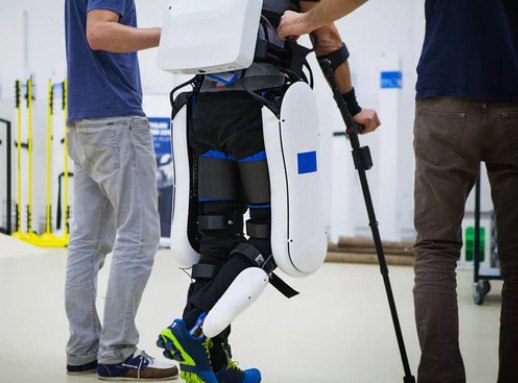
Kazakh Scientists Launch Medical Exoskeleton for Stroke Rehabilitation
Ask your competent? doctor if this has proven better than all these previous exoskeletons! NO knowledge of them; FIRE THAT IDIOT!
No excuses are allowed, your doctor is supposed to know this stuff, and because s/he doesn't YOU get to be the failure point of not recovering. My doctor knew nothing of stroke rehab as completely proven by writing three prescriptions to PT, OT, ST all saying the same thing(E.T- Evaluate and Treat) completely proving NO knowledge of anything that will hep you recover! I could train a chimpanzee to write that.
Ask your doctor which of these walking exoskeletons will get you 100% recovered, meaning walking without the exoskeleton.
There are many more exoskeletons out there. Which ones has your hospital tested?
Maybe these?
5-Link model based gait trajectory adaption control strategies of the gait rehabilitation exoskeleton for post-stroke patients August 2020
A Control Framework of Lower Extremity Rehabilitation Exoskeleton based on Neuro-Muscular-Skeletal Model.pdf August 2020
Passive-elastic knee-ankle exoskeleton reduces the metabolic cost of walking July 2020
Effects of a wearable exoskeleton stride management assist system (SMA®) on spatiotemporal gait characteristics in individuals after stroke: a randomized controlled trial June 2020
The H2 robotic exoskeleton for gait rehabilitation after stroke: early findings from a clinical study May 2020
Gait training early after stroke with a new exoskeleton--the hybrid assistive limb: a study of safety and feasibility April 2020
Gait training early after stroke with a new exoskeleton--the hybrid assistive limb: a study of safety and feasibility January 2020
I gave up listing them all, it is your doctor's job to know this.
Your doctor can analyze the intersection of these multiple sets of data.
No knowledge of ALL OF THESE IS COMPLETE FUCKING INCOMPETENCE!
LOPES was first written up in Sept. 2007.
LOPES researchers hope to get the device into rehabilitation clinics by early 2012, with a mid-2012 target for introduction into the market. Is it available and does your hospital know about it? Have they been following this for the past 13 years? Or are they completely incompetent? But then it doesn't seem to work that well.
The latest here:
Kazakh Scientists Launch Medical Exoskeleton for Stroke Rehabilitation

@depositphotos
Researchers at Nazarbayev University have completed development and secured state registration for a medical exoskeleton designed to aid stroke rehabilitation. The device is now ready for clinical use and mass production, according to the university’s press service.
Named the Astana Gait Exoskeleton Assisted Rehabilitation (A.GEAR), the system is intended to help restore motor function in stroke survivors and individuals with musculoskeletal disorders. It received official certification following a positive evaluation from the National Center for Expertise of Medicines and Medical Devices. Nazarbayev University stated that this is one of the few high-tech medical solutions developed domestically that has received full clinical approval.
Cost efficiency is cited as A.GEAR’s main competitive advantage. According to project estimates, the exoskeleton is several times more affordable than foreign alternatives, reducing Kazakhstan’s reliance on imports and increasing accessibility to modern rehabilitation tools.
Professor Prashant Jamwal, the project lead, noted that it took just four years to progress from a lab concept to a certified medical product far shorter than the global average of 10 to 15 years. He added that the system could not only replace imported equipment but also reduce public expenditure on rehabilitation technologies.
The project began in late 2021 at the university’s Medical Robotics Competence Center. Clinical trials took place in Karaganda and Astana, involving stroke patients and adolescents with cerebral palsy. Following the successful trials, the team began negotiations for a long-term contract with SK-Pharmacy LLP and sought a commercial distributor.
Commercialization is being overseen by Robotics and Artificial Intelligence, led by Nazarbayev University graduate Shyngys Dauletbayev. In 2026, the university’s technopark aims to produce at least five exoskeleton units, with plans to scale production for distribution to medical institutions nationwide.
University President Professor Waqar Ahmad highlighted that Nazarbayev University researchers rank among the top 2% of scientists globally, based on a bibliometric analysis by Stanford University.
According to the Ministry of Health of Kazakhstan, approximately 40,000 people in the country suffer strokes annually, underlining a consistent demand for advanced rehabilitation solutions. As previously reported by The Times of Central Asia, Kazakhstan is also expanding the use of artificial intelligence for early diagnosis of strokes and cancer.
Wednesday, January 28, 2026
NextStep Robotics seeks FDA authorization to use its lower body exoskeleton for more than just exercise
Ask your competent? doctor if this has proven better than all these previous exoskeletons! NO knowledge of them; FIRE THAT IDIOT!
No excuses are allowed, your doctor is supposed to know this stuff, and because s/he doesn't YOU get to be the failure point of not recovering. My doctor knew nothing of stroke rehab as completely proven by writing three prescriptions to PT, OT, ST all saying the same thing(E.T- Evaluate and Treat) completely proving NO knowledge of anthing that will hep you recover! I could train a chimpanzee to write that.
Ask your doctor which of these walking exoskeletons will get you 100% recovered, meaning walking without the exoskeleton.
There are many more exoskeletons out there. Which ones has your hospital tested?
Maybe these?
5-Link model based gait trajectory adaption control strategies of the gait rehabilitation exoskeleton for post-stroke patients August 2020
A Control Framework of Lower Extremity Rehabilitation Exoskeleton based on Neuro-Muscular-Skeletal Model.pdf August 2020
Passive-elastic knee-ankle exoskeleton reduces the metabolic cost of walking July 2020
Effects of a wearable exoskeleton stride management assist system (SMA®) on spatiotemporal gait characteristics in individuals after stroke: a randomized controlled trial June 2020
The H2 robotic exoskeleton for gait rehabilitation after stroke: early findings from a clinical study May 2020
Gait training early after stroke with a new exoskeleton--the hybrid assistive limb: a study of safety and feasibility April 2020
Gait training early after stroke with a new exoskeleton--the hybrid assistive limb: a study of safety and feasibility January 2020
I gave up listing them all, it is your doctor's job to know this.
Your doctor can analyze the intersection of these multiple sets of data.
No knowledge of ALL OF THESE IS COMPLETE FUCKING INCOMPETENCE!
LOPES was first written up in Sept. 2007.
LOPES researchers hope to get the device into rehabilitation clinics by early 2012, with a mid-2012 target for introduction into the market. Is it available and does your hospital know about it? Have they been following this for the past 13 years? Or are they completely incompetent? But then it doesn't seem to work that well.
The latest here:
NextStep Robotics seeks FDA authorization to use its lower body exoskeleton for more than just exercise
- Founded by: Bradley Hennessie, Richard Macko, Larry Forrester, Anindo Roy
- Year founded: 2017
- Headquarters: Baltimore, MD
- Sector: Biotech
- Funding and valuation: $8 million raised at a $10 million valuation, according to the company
- Key ecosystem partners: TEDCO, Abell Foundation, University of Maryland, Baltimore
A Baltimore startup could help stroke survivors improve how they move, even months after rehab ends.
NextStep Robotics’ AMBLE device targets foot drop, a condition that limits someone’s ability to lift the front of the foot while walking. The assistive tech is gathering another FDA authorization, with affordability front of mind, according to CEO Bradley Hennessie.
“Our clinical trial results show that it has much more benefit than just being helpful during exercise.”
Bradley Hennessie, NextStep Robotics
“Most small community-based clinics can’t afford a $120,000 exoskeleton system,” Hennessie told Technical.ly.
Most rehabilitation happens in lower-budget clinics rather than resource-rich institutions, Hennessie said. AMBLE charges clinics a subscription fee for the device and software package, instead of an upfront fee, but costs can vary, Hennessie said.
The device is worn on the knee, paired with a sensor on the shoe that tracks a patient’s steps in real time. It helps lift the foot with robotic assistance, adjusting as the patient gets stronger.
AMBLE is currently FDA-cleared as an exercise device, which allows NextStep to sell it to clinics for use during gait therapy. But Hennessie said he hopes the next level of FDA clearance, called a De Novo submission, will expand its use.
The team completed its three-year, National Institutes of Health–funded clinical trials in 2024, after the onset of the COVID-19 pandemic delayed the study’s start. Conducted at the University of Maryland, Baltimore, the trials found that patients continued to improve in key walking measures for months after training ended, including follow-ups more than a year later.
Potential for spine, arm assistive tech
While AMBLE was initially developed to treat foot drop, the company sees broader potential for the technology.
Most recently, NextStep received approval from the Kennedy Krieger Institute to test the device with spinal cord injury patients. The team is planning to gather preliminary data from a small pool of patients before conducting a larger study, Hennessie said.
NextStep is also developing other devices.
The company is creating a standalone version of its shoe-based sensor that can track how someone walks without the exoskeleton, according to Hennessie. The sensor is designed to monitor changes in walking patterns and, over time, help identify patients at risk of falling.
NextStep is also developing an upper-extremity device, for the arm or hand, that uses the same “assist-as-needed” approach as AMBLE.
The company is finalizing its shoe sensor product. An initial prototype of its upper extremity device was developed and tested as a part of a Ph.D. project at the University of Maryland, Baltimore.
“We make sure that,” Hennessie said, “the user is making as much of the motion on their own [as possible].”
Wednesday, September 30, 2020
Robotics in shoulder rehabilitation
Ask your doctor what is the present status of robotic technologies? No knowledge, have everyone in that stroke hospital fired.
Robotics in shoulder rehabilitation
2014, Muscles, Ligaments and Tendons Journal
D. Cervesi Hospital, Cattolica, Italy
Corresponding author:
Giovanni Merolla
Unit of Shoulder and Elbow Surgery
Biomechanics Laboratory “Marco Simoncelli”
D. Cervesi Hospital, AUSL della Romagna Ambito
Territoriale di Rimini
L.V. Beethoven, 5
47841 Cattolica (RN), Italy
phone: +39 0541 966382
fax: +39 0541 966312
E-mail: giovannimerolla@hotmail.com;
giovanni.merolla@auslrn.net
Summary
In the last few decades, several researches have been conducted in the field of robotic rehabilitation to meet the intensive, repetitive and task-oriented training, with the goal to recover the motor function. Up to now, robotic rehabilitation studies of the upper extremity have generally focused on stroke survivors leaving less explored the field of orthopaedic shoulder rehabilitation. In this review we analyse the present status of robotic technologies, in order to understand which are the current indications and which may be the future perspective for their application in both neurological and orthopaedic shoulder rehabilitation.Introduction
The aim of conventional rehabilitation is to recover the motor function using therapeutic exercises guided by a therapist who moves the patient’s body. An early and repetitive rehabilitation can substantially improve the long-term mobility of the shoulder in both neurological and orthopaedic patients1,2; furthermore, longer and more frequent training sessions have been shown tohave beneficial effect in the short term3-5. Traditional rehabilitation techniques rely on well-established standard exercises, carried out by a therapist during in-patient hospital care and continued at home. As the rehabilitation sessions require involvement of a therapist for each patient this entails human and financial resources. In the last decades, in order to meet the intensive, repetitive and task-oriented rehabilitation, numerous and extensive research programs have been conducted in the field of robotic rehabilitation1-4. These systems can provide external assistive support to the human body, helping patients to experience pre-programmed limb movements and to improve related sensory-motor functions through repetitive practices. This may allow the patient to extend their training sessions providing an objective measure of the repeatability that it is hard to achieve with conventional physiotherapy. Up to date, robotic rehabilitation of the upper extremity have focused on stroke survivors studies1,2,5 without significant applications in orthopaedics. Motor disorders of the upper extremities, following orthopaedic or neurological injuries, include joint and muscular stiffness, muscle weakness, spasms, disturbed muscle timing and reduced ability to selectively activate muscles with abnormal synergistic movement patterns of arm and shoulder girdle. In the rehabilitation field, disabilities, residual motor function and efficacy of treatment cannot be quantified reliably as semi-quantitative evaluation scales are the only established methods to assess motor functions and its changes. Robots could allow quantitative measures of physical properties in a wide range of variation with
levels of speed, accuracy, power and endurance over time that are unachievable by humans. Anyway, robots lack flexibility and adaptability, code-independent communication, high level information processing, detection and responsiveness to weak and otherwise undetected significant sensory inputs that characterize humans6-9. In the current study we describe the modern robotic systems for shoulder rehabilitation, focusing on the indications and other potential technologies that combined with robots can increase the benefits of rehabilitation to restore shoulder function.
Sunday, July 26, 2020
Inpatient rehabilitation facilities’ hospital readmission rates for medicare beneficiaries treated following a stroke
Ask your hospital what is their 100% recovery rate and their readmission rate. No knowledge, fire the board of directors. The heads up asses must be pulled out.
Inpatient rehabilitation facilities’ hospital readmission rates for medicare beneficiaries treated following a stroke
Thursday, July 16, 2020
Brilinta Boosts Secondary Stroke Prevention
For discussion with your doctor and while you are at it ask what the 30-day death rate is at their hospital. No knowledge, fire them, because it means they don't care about or know what the fuck they are doing.
DO YOU MEASURE ANYTHING?
- tPA full recovery? Better than 12%?
- 30 day deaths? Better than competitors?
- rehab full recovery? Better than 10%?
Brilinta Boosts Secondary Stroke Prevention
— THALES trial supports addition to aspirin but comparison with clopidogrel now needed
In people with mild-to-moderate acute ischemic stroke or transient ischemic attack (TIA), the composite outcome of stroke or death in the 30 days after randomization favored a 30-day regimen of ticagrelor plus aspirin over aspirin alone (5.5% vs 6.6%, HR 0.83, 95% CI 0.71-0.96).
This was driven by fewer ischemic strokes (5.0% vs 6.3%, HR 0.79, 95% CI 0.68-0.93), with no significant difference in mortality rates between groups (0.7% vs 0.5%, HR 1.33, 95% CI 0.81-2.19). Disability rates didn't differ significantly.
The dual antiplatelet group experienced more severe bleeding by GUSTO criteria (0.5% vs 0.1%, HR 3.99, 95% CI 1.74-9.14) and more intracranial hemorrhage (0.4% vs 0.1%, HR 3.33, 95% CI 1.34-8.28), reported the investigators, led by S. Claiborne Johnston, MD, PhD, of Dell Medical School of the University of Texas at Austin.
A full manuscript of the study was published in the July 16 issue of the New England Journal of Medicine. Topline data were previously announced by trial sponsor AstraZeneca.
"The benefit from treatment with ticagrelor-aspirin as compared with aspirin alone would be expected to result in a number needed to treat of 92 to prevent one primary-outcome event and a number needed to harm of 263 for severe bleeding," the researchers concluded.
"Based on these results, plus the higher severe bleeding with ticagrelor, and greater expense, I don't think ticagrelor will replace clopidogrel [Plavix] as part of the dual antiplatelet regimen used after high risk TIA or minor stroke," commented James Grotta, MD, of Memorial Hermann-Texas Medical Center in Houston.
The CHANCE-2 trial directly comparing ticagrelor against clopidogrel as the add-on to aspirin is ongoing. Until then, it is "hard to compare" these drugs without a head-to-head comparison, Grotta said.
Nevertheless, the POINT and CHANCE studies suggested larger relative reductions in the risk of recurrent ischemic stroke with clopidogrel-aspirin compared to THALES' ticagrelor-aspirin, according to Peter Rothwell, MD, PhD, of University of Oxford, England, writing in an editorial.
Moreover, the risk in major bleeding was increased to a greater extent with the ticagrelor combination than the clopidogrel one, particularly with respect to intracranial hemorrhage, Rothwell continued.
Finally, clopidogrel-aspirin resulted in a significant reduction in risk of disabling or fatal stroke versus aspirin alone in a pooled analysis of the POINT and CHANCE trials, whereas ticagrelor-aspirin did not achieve the same in THALES, he noted.
Grotta said he would have expected the ticagrelor-aspirin combination to have produced greater benefit over aspirin than what was seen with clopidogrel-aspirin given the genetic polymorphism for clopidogrel response.
"Regardless of which combination of antiplatelet drugs is favored for the high-risk minority, all patients should receive aspirin immediately after TIA unless aspirin is contraindicated. Too many patients are sent home from emergency departments without this simple treatment that substantially reduces the risk and severity of early recurrent stroke," Rothwell urged.
THALES included 11,016 participants who presented with acute ischemic stroke (NIH Stroke Scale score 5 or less) or high-risk TIA at 414 sites in 28 countries who were not undergoing thrombolysis or thrombectomy.
People were randomized within 24 hours after symptom onset. They either received a 30-day regimen of ticagrelor (180-mg loading dose, followed by 90 mg twice daily) plus aspirin (300-325 mg on the first day, followed by 75-100 mg daily) or matching placebo plus aspirin.
Baseline characteristics were similar between study arms. Mean age was 65 years, and 39% of the participants were women.
People already on aspirin before their index stroke or TIA accounted for 13% of the group.
Johnston and colleagues noted the limited generalizability of THALES to excluded populations, namely those with more severe strokes, cardioembolic strokes, and people who had treatment initiated more than 24 hours after symptom onset. Patients with a history of atrial fibrillation were also excluded.
"The bleeding risk associated with ticagrelor and aspirin might exceed the benefit among lower-risk patients who make up the majority in practice, and so the current trial results should not be overgeneralized," Rothwell cautioned.
Ticagrelor was first approved by the FDA in 2011 for the indication of thrombotic event risk reduction in people with acute coronary syndrome.
Last month, the P2Y12 inhibitor won an expanded indication to reduce risk of a first heart attack or stroke in high-risk patients with coronary artery disease.
-
Nicole Lou is a reporter for MedPage Today, where she covers cardiology news and other developments in medicine. Follow
Johnston reported receiving an institutional grant from AstraZeneca.
Rothwell disclosed receiving personal fees from Bayer and BMS.
Thursday, May 16, 2019
Experimental antiplatelet compound for acute stroke shows promise
Well, further research needed since this was done on healthy volunteers not persons who might need the drug. This does make the assumption you know what those anticlotting therapies this may replace. So ask your doctor about this, it has only been out a month. No knowledge then your doctor is out-of-date, why are you seeing them? It also means your stroke hospital doesn't have a system to keep their stroke medical professionals up-to-date on stroke research. So the hospital is incompetent also, along with the president and the board of directors. We have to clean out a lot of dead wood in stroke.
Experimental antiplatelet compound for acute stroke shows promise
"There is a clear need for a novel antiplatelet agent that resolves platelet aggregation and clot formation without raising the risk for bleeding. Such a therapy would considerably improve and expand our current therapeutic arsenal for the treatment of acute stroke," said Martine Jandrot-Perrus, MD, PhD, study senior author and scientist at France's National Institute of Health and Medical Research (INSERM) and a consultant for Acticor-Biotech, the company that developed the compound and funded the trial.
The drug is an antibody-based compound that inhibits blood platelet aggregation (or clumping) and clot formation by precisely targeting a protein called platelet glycoprotein VI (GPVI) found in platelets. This protein is critical for clot formation—a process marked by the clumping of platelets— but it does not play a role in regulating bleeding. This feature renders the GPVI protein an ideal target for a drug that inhibits the clumping of platelets but does so without increasing the risk for bleeding.
The trial involved 36 healthy volunteers (23 women and 13 men), ages 22 to 65, divided into six groups. In each group, six participants received intravenous infusions over 6 hours with various doses of the drug (ranging from 62.5 mg to 2,000 mg).
The drug was well-tolerated at all doses, without serious side effects. Notably, the compound did not appreciably prolong bleeding time, a marker indicating increased risk for dangerous bleeds. The study also showed that the extent and duration of the therapeutic effect was dose-dependent, reaching maximum effectiveness and duration at 2,000 mg. The most common side effects were mild to moderate headache and head discomfort, which resolved during the study.
"Our results are quite encouraging because they show the candidate compound is well-tolerated at doses even twice as high as the ones targeted for a future treatment and without any signs of bleeding," Jandrot-Perrus said. "Another encouraging finding is the fact that the drug's action on platelets is rapid, specific, and largely reversible within 24 hours."