Changing stroke rehab and research worldwide now.Time is Brain! trillions and trillions of neurons that DIE each day because there are NO effective hyperacute therapies besides tPA(only 12% effective). I have 523 posts on hyperacute therapy, enough for researchers to spend decades proving them out. These are my personal ideas and blog on stroke rehabilitation and stroke research. Do not attempt any of these without checking with your medical provider. Unless you join me in agitating, when you need these therapies they won't be there.

What this blog is for:

My blog is not to help survivors recover, it is to have the 10 million yearly stroke survivors light fires underneath their doctors, stroke hospitals and stroke researchers to get stroke solved. 100% recovery. The stroke medical world is completely failing at that goal, they don't even have it as a goal. Shortly after getting out of the hospital and getting NO information on the process or protocols of stroke rehabilitation and recovery I started searching on the internet and found that no other survivor received useful information. This is an attempt to cover all stroke rehabilitation information that should be readily available to survivors so they can talk with informed knowledge to their medical staff. It lays out what needs to be done to get stroke survivors closer to 100% recovery. It's quite disgusting that this information is not available from every stroke association and doctors group.

Showing posts with label heat shock proteins. Show all posts

Sunday, August 16, 2026

Seven lifestyle changes that are more effective than longevity treatments

 With all this research on longevity, healthspan and lifespan; SHOULDN'T YOUR COMPETENT? DOCTOR ALREADY HAVE PROTOCOLS PREPARED? NO? So, PURE INCOMPETENCE! 

And your board of directors is so incompetent they don't recognize incompetence in their hospital! YOU better start running that hospital!

Seven lifestyle changes that are more effective than longevity treatments

Dr Clare Nieland, 51, is a general practitioner with more than 20 years of experience working in the NHS and private sector at Hooke Clinic in London and the Windsor Wellness Clinic. She believes strongly in the power of nutrition and healthy lifestyle choices for achieving optimum wellbeing.

Longevity is a real buzzword nowadays. It is particularly rife on social media, where numerous brands and influencers claim they hold the secret to living past 100.

Whilst it is great that many of us are striving to live longer, the obsession with longevity misses a crucial point – we need to ensure those extra years are spent in good health. I help my patients improve their “healthspans”, to keep them independent, mobile and mentally sharp for as long as possible.

There is no use in buying “anti-ageing” supplements or spending thousands of pounds on therapies that claim to reverse biological ageing if you are not mastering the basics of a healthy lifestyle – nutrition, physical activity, sleep and stress management. You cannot out-run a bad diet or cure chronic stress with a single supplement.

In my NHS and private practices, I apply a combination of conventional and lifestyle medicine as both methods are important. Conventional medicine trains doctors to treat the disease, whilst the world of lifestyle medicine is markedly different – we are taught the fundamentals of good health and how to prevent issues from occurring in the first place.

A larger focus on preventative medicine is in the NHS 10-year-plan, and I would love to see this become a reality. When I trained as a doctor, we were not taught about the power of nutrition or physical activity in creating good health and preventing disease. Nowadays, though, it is encouraging to see some medical schools introducing lifestyle medicine into the curriculum. Hopefully this momentum continues.

Related video: Research reveals the habits scientifically proven to add a decade to your lifespan (Talking With Docs)
AtHooke Clinic, we offer extensive health testing and strive to prevent lifestyle-related diseases such as type 2 diabetes, fatty liver disease and obesity. Our tests investigate over 120 biomarkers, and include nutritional and physical assessments, a three-part MRI scan and investigating electrical activity in the brain. Our patients are empowered with a panel of results, goals and experts to help them make informed choices about their health.

However, it goes without saying that not everyone can afford such testing. Luckily, there are all sorts of habits you can adopt in your daily life to improve your healthspan. As a proponent of the lifestyle-first approach, I try my best to practise what I preach – these are my top tips for ageing well.

1. Cook from scratch with your friends and family

I live in Windsor with my husband Nick, a former Olympian, our three rugby-obsessed teenage boys, and our gorgeous black labrador Bella. Life is always busy, and certainly never boring, so I try my best to optimise the fundamentals of eating well, getting enough sleep, regularly moving, and connecting with others.

strong relationships as we age. In fact, a wealth of research links social isolation to a heightened risk of disease and early death.

It is important to me that my boys can cook, are self-sufficient and feel comfortable in the kitchen. Sadly, I think we are failing the future generation with our over-reliance on ultra-processed foods (UPFs) at the expense of cooking with fresh, healthy ingredients. We know that UPFs are incredibly bad for us, with a range of studies linking them to adverse health outcomes including obesity, type 2 diabetes and cardiovascular diseases.

(Not for me, cooking one-handed is just waiting for me to cut myself, I buy meal kits from Home Chef.)

2. Keep your cupboards stocked with beans and brown rice

I inherited good genes, but there is a mild family history of pre-diabetes and cardiovascular disease, so I try to stick to the Mediterranean diet pattern, as it is consistently linked with a reduced risk of chronic disease.

My cupboards are always stocked with lentils, tinned tomatoes, beans, chickpeas and brown rice, as well as onions and garlic, plus a full spice rack. These are great (and cheap) staple ingredients and have a range of powerful health benefits.

Research suggests that swapping white rice for brown rice improves blood sugar levels and can help with weight control. Meanwhile, lentils are a rich source of protein, fibre, essential amino acids and minerals. Plus, they are packed with polyphenols – anti-inflammatory and antioxidant compounds – which help to prevent chronic diseases like diabetes and obesity.

Each week, I stock my fridge with fresh meat from the local farm shop. As I live with four active men, I try to ensure our meals are high in quality protein, which is important for muscle growth, bone density and satiety. I love batch-cooking a rich and meaty ragu at the weekend, which keeps us going for a few days. Planning and batch-cooking for the week ahead, incorporating cheap cupboard staples with fresh sources of protein and vegetables – instead of stocking up on ready meals – is a great way to cut back on UPFs.

3. Practise balancing while brushing your teeth

As our balance naturally declines with age, our risk of falling increases, which also increases fracture risk. However, there are simple measures we can take to improve it. At my NHS practice, I work closely with a health coach who advises patients to incorporate balancing into their daily routine – whether that is standing on one leg while brushing your teeth or squatting as you wait for the kettle to boil. At Hooke, we measure your balance as a baseline and it is a trainable skill.

Improved balance means you are less susceptible to falls and hip fractures – both of which are linked to an increased risk of early mortality in older adults. It will also result in better co-ordination, increased stability and stronger muscles. Even if you do fall, the extra padding from your muscles and improved bone strength means you are less likely to have a fracture.

One study published in the British Journal of Sports Medicine found that people in middle to later life who could not stand on one leg for 10 seconds had almost double the risk of premature death.

On my good leg I can do this, my bad leg not even close. Since I haven't been able to do this since my stroke at age 50 I guess I should have died sometime in the ensuing 20 years. I thought the Berg Balance Scale testing  that was common, was totally worthless since there never was any specific therapy given to address the failure points I had in that test. So 20 years of failure already and my next 30 years will be no better, totally useless for me!

Balance is therefore a powerful predictor of ageing and longevity, as is grip strength. If your muscles are strong, so is your grip. One influential study, published in 2015, followed more than 140,000 adults across 17 countries and found that grip strength predicted mortality and cardiovascular events more strongly than systolic blood pressure.

You can test your grip strength simply by squeezing a foam ball in your hand. Squeeze it for as long as you can before your grip fatigues and continue to practise this regularly, whilst improving your overall body strength with resistance exercises. Over time, you should be able to grip the ball for a longer period, suggesting your muscles have strengthened.

My doctor and therapists COMPLETELY FAILED AT RECOVERING MY LEFT HAND! So this really has no basis for me, but my right hand is stronger than ever. 

4. Prioritise morning sunlight

I try to get outside for a walk with Bella within an hour of waking, even if it is just for 10 minutes. Morning sunlight improves sleep quality by stimulating the release of melatonin, the sleep hormone. It also supports long-term cardiometabolic health, by helping to regulate our circadian rhythm and promoting vitamin D synthesis.

the sunlight is a simple habit to reduce stress, with a wealth of research suggesting that it helps to reduce levels of cortisol, the stress hormone.

Not everyone can get outside first thing – plus, you might not want to during the dreary winter months. A good alternative is to buy a seasonal affective disorder (SAD) lamp, as they emit bright light that mimics natural sunlight, and can improve alertness, mood and sleep-wake timing. It may even reduce symptoms of SAD, but it is important to note that you don’t produce vitamin D this way.

Even having a brisk lunchtime walk helps, although be aware that the later you get outside, the later your brain will signal that it is time to sleep in the evening.

5. Give creatine a try – and have your vitamin D levels tested

In an ideal world, you would have a bespoke supplement created for you that addresses your various needs and deficiencies. Some people can afford such a luxury, that is not the reality for many. Whilst I am against wasting money on pills and potions that have no significant evidence base, I believe creatine and vitamin D are worth taking.

Creatine is one of the most extensively studied supplements. It is proven to boost strength and power in resistance training, while a meta-analysis by Oxford University found that creatine supplementation enhanced measures of memory performance in healthy individuals, especially in those aged 66-76.

The standard dose of creatine is 3-5g per day, although emerging evidence suggests 10-15g may be better to reap the cognitive benefits. This is safe for most healthy adults, but I would advise sticking to the 3-5g dose for now, as research continues to develop. When buying creatine, make sure it is pure, with nothing added (I use Bulk Powders “Pure Creatine”, which is very affordable).

The NHS recommends that everyone take a daily vitamin D tablet in the winter months, with recent data suggesting that almost half of UK adults have lower than “optimal” levels. The standard guidance is 400 international units (or 10 micrograms) of vitamin D per day, but in reality we need so much more.

I advise my patients to have their vitamin D levels tested on the NHS or privately, and then to start taking a daily supplement containing 2,000-3,000 international units, or a tailored amount according to results. Yes, that is a much higher dosage, but vitamin D is crucial for the immune system, bone health, muscle function and brain.

6. Get creative with resistance training

I lift heavy weights three times a week and take pride in having muscles – they are a longevity organ. Just two to three short resistance sessions a week can reduce frailty, insulin resistance and cognitive decline more than cardio alone.

Lots of women worry that strength training will make them bulky, but it simply won’t happen because there is not enough testosterone floating around in our bloodstreams. After 40, we start to experience muscle loss (sarcopenia), which means we actively need to build or maintain muscle mass. The same is true for bone density – as our hormones start to decline, our bones weaken and we are more likely to develop osteopenia or osteoporosis. This can lead to bone fractures, even from minor falls or strains.

Strength training can help you to avoid these fates. Whilst joining a gym is a great way to meet new people and strengthen social connections, you can also get creative at home. Start small – whether that is raising tins of beans above your head or practising chair squats. It is never too late to start!

7. Experiment with hot and cold therapy

There are plenty of fads and quick fixes in the world of biohacking (the process of implementing scientifically-backed lifestyle interventions to optimise health) that lack solid evidence and are not worth your money. I would urge you to master the basics before trying anything which claims to be the key to longevity – there is no use spending hundreds of pounds on cryotherapy, which uses extreme cold to enhance recovery and reduce inflammation, if you spend your weekends binge drinking alcohol and don’t exercise.

However, I would recommend hot and cold therapy. If you have access to a gym or spa, this involves alternating between a sauna and ice bath; or you could simply start with a cold shower.(I just bought a personal sauna, will use the cold shower instead of an ice bath. Not sure I could get out of an ice bath with only one useable arm/hand)

The alternate temperatures help to boost circulation by causing blood vessels to rapidly expand and restrict, creating a “vascular pump” that improves blood flow, oxygen delivery and nutrient transport. It also creates hormesis – the “good” type of stress, which helps your body to adapt and strengthen.

Evidence suggests that regular sauna use could reduce dementia risk and, now, there are lots of affordable options for in-home saunas. You don’t need to spend a fortune on a fancy spa membership!

Yeah, your FUCKINGLY INCOMPETENT? DOCTOR hasn't told you about heat and cold shock proteins, right?

As told to Ella Nunn. You can find Dr Clare on Instagram @windsorwellnessdoctor

Recommended

I'm 55 with the biological age of a 20-year-old. These are my cheapest and easiest health tips

Read more

Sign up to the Front Page newsletter for free: Your essential guide to the day's agenda from The Telegraph - direct to your inbox seven days a week.

Monday, May 4, 2026

What Happens To Your Immune System After One Sauna Session by mindbodygreen


I'm just got a personal sauna from NuRecover but will use a cold shower instead of a chiller bucket for the cold shock proteins. Still to be put together.

What Happens To Your Immune System After One Sauna Session

 There’s a reason sauna use keeps showing up in longevity research. Regular exposure has been associated with lower risks of cardiovascular disease1 ,respiratory illness2,dementia3, and even overall mortality4 .But those outcomes don’t tell us much about the immediate effects. What actually changes in the body during a single session? And how quickly do those changes happen? A new study5set out to answer that by tracking immune responses before, during, and after a 30-minute sauna session, offering a closer look at the body’s short-term reaction to heat. 

What happens to your immune system during a 30-minute sauna

Researchers studied 51 adults, both men and women, during a standard Finnish sauna session set to about 73°C (roughly 163°F). Each participant spent 30 minutes in the sauna, with blood samples taken before, immediately after, and 30 minutes post-session. The goal was to track how immune cells and inflammatory signals changed in response to heat stress. Participants were allowed to drink water throughout, which helped control for dehydration and made the setup closer to a typical real-world sauna experience. Instead of just looking at overall immune activity, the researchers zoomed in on specific white blood cells and a wide range of cytokines, which are signaling molecules involved in inflammation and immune response. This gave a more detailed picture of how the body reacts in the short term. 

Sauna’s immediate effect on immune cells

The biggest shift came down to your white blood cells, which are a key part of your immune system. After the sauna session, those levels went up, including important types like neutrophils and lymphocytes. These are the cells that help your body spot and respond to anything that doesn’t belong, whether that’s a virus or another kind of threat. What stands out is how quickly this happens. The increase shows up right after the sauna, then goes back down within about 30 minutes. So this isn’t a long-lasting spike; it’s more like a short window where your immune system is a bit more alert. This pattern mirrors what happens during exercise. When you work out, immune cells move out of tissues and into your bloodstream, where they’re more ready to respond if needed. A sauna seems to trigger a comparable response, just through heat instead of movement. 

What about inflammation & body temperature?

One thing the researchers looked at closely was inflammation, since that’s often what people think of when they hear the body is under “stress.” But in this case, there weren’t big changes across most inflammatory markers. Out of dozens of signals they measured, only a few shifted in a meaningful way. That suggests your body isn’t going into a full inflammatory response during a sauna. Instead, the response seems more about mobilization than inflammation. Your immune cells are being redistributed and activated, not necessarily pushed into an inflammatory state. Body temperature did play a role, though. On average, people’s temperature rose by about 2°C (roughly 3.6°F) during the session. And the more it increased, the more certain immune-related signals shifted alongside it. 

Adding sauna use to your routine

 So what does this mean for your day-to-day routine? It doesn’t mean a single sauna session will prevent illness or replace other foundational habits. But it does suggest that sauna use can act as a short-term stimulus for your immune system, similar to a workout.If you already use a sauna, this adds another layer of context. That post-sauna feeling isn’t just relaxation. Your body is actively responding, mobilizing immune cells in a way that may support overall immune surveillance over time. 
If you’re considering adding it in, consistency matters more than intensity. This study looked at one session, but previous research has linked regular sauna use to broader health benefits, including a lower risk of certain chronic conditions.

It’s also worth paying attention to how you personally respond. Hydration, heat tolerance, and recovery all play a role in how beneficial the experience feels.

The takeaway

This study doesn’t suggest that sauna use is a cure-all. But it does offer a clearer picture of what’s happening in the body during a session. Your immune system isn’t passive in that environment. It’s responding, adapting, and briefly shifting into a more active state.

Friday, April 24, 2026

A single sauna session boosts immune cells within minutes

I'm getting a personal sauna from NuRecover but will use a cold shower instead of a chiller bucket for the cold shock proteins.

A single sauna session boosts immune cells within minutes

New research reveals how a brief Finnish sauna session mobilizes immune defenses within minutes, offering fresh clues into how heat exposure may influence human health.

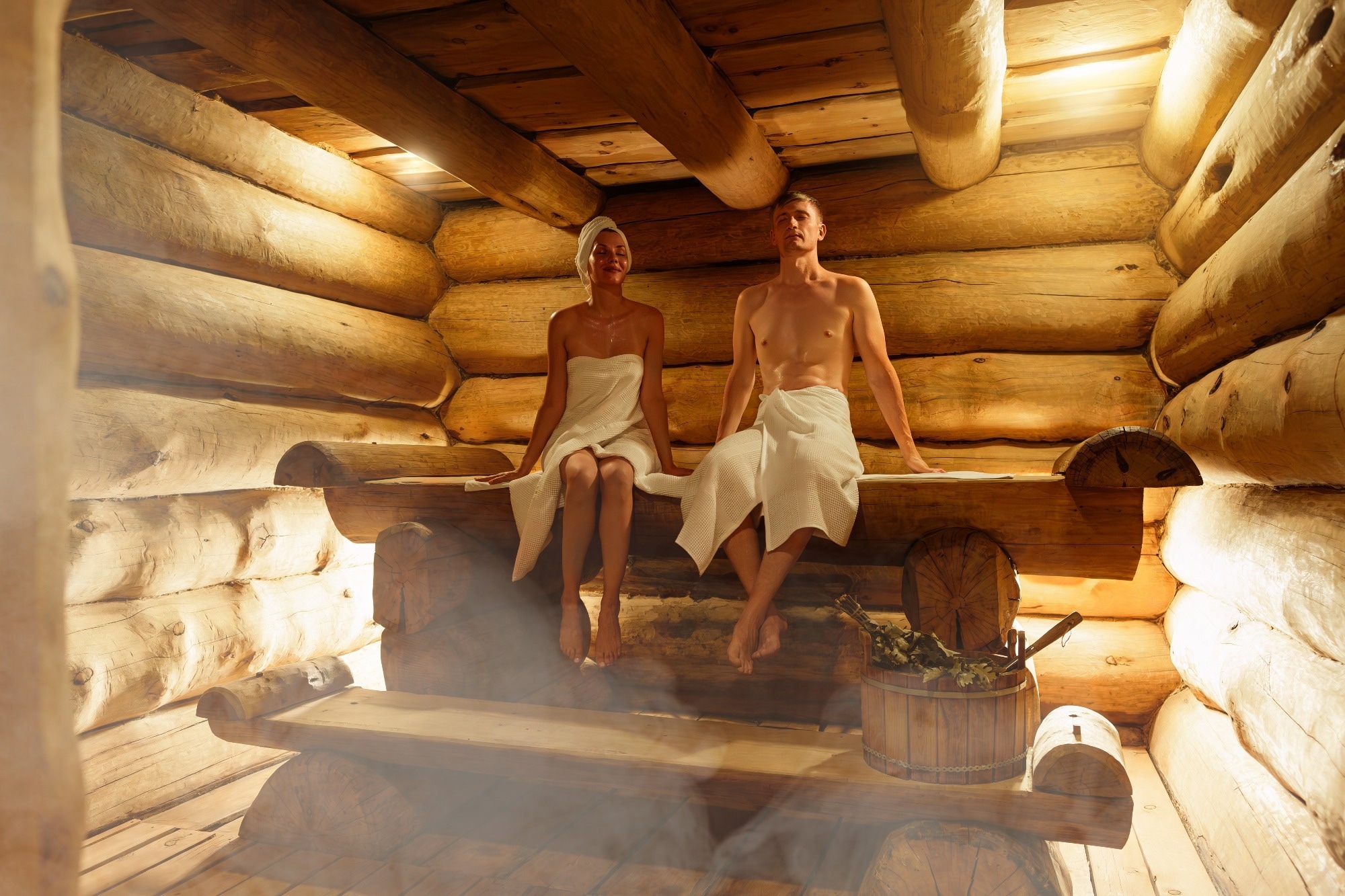
Young couple relaxing and sweating in hot sauna wrapped in towel. Woman and man In Sauna. Interior of Finnish sauna, classic wooden steam room with hot steam. Russian bathroom. Relax in hot Bathhouse.Study: Acute Finnish sauna heat exposure induces stronger immune cell than cytokine responses. Image credit: Mr. Tempter/Shutterstock.com

Heat exposure is harmful but can sometimes have beneficial effects. Finnish sauna bathing (FSB) is an example of controlled acute heat stress that may influence immune function by altering immune cells and cytokines. A 30-minute Finnish sauna session rapidly increases circulating immune cells while leaving most cytokine levels unchanged, according to a study published in the journal Temperature.

How Finnish sauna bathing 

became a global health habit

FSB involves exposing people to relatively dry air at 70–100 °C for 10-30 minutes per session. It is part of Finnish culture and is shown to offer multiple health benefits. Existing literature reports lower risks of cardiovascular disease, dementia, psychosis, and some respiratory conditions. FSB is also associated with fewer adverse outcomes in disadvantaged socioeconomic settings and with better physical fitness.

Acute heat stress may reshape 

immune and inflammatory responses

Prior research suggests that regular FSB is associated with lower levels of systemic inflammation. The current study examined how heat stress associated with FSB manifests as acute changes in white blood cells and cytokines up to 30 minutes after the sauna.

Single sauna session 

triggers rapid immune cell mobilisation

Participants were free of known cardiovascular disease (CVD) but had one or more risk factors, such as smoking, hypertension, or obesity. The study included 51 middle-aged adults who were regular sauna users. During the 30-minute sauna session, body temperature, measured at the ear, increased steadily, reflecting the heat stress exposure, while plasma volume remained unchanged on average.

Among women, hemoglobin and hematocrit levels were lower, while platelet counts were higher than in men. In both sexes, all these factors increased with FSB. White cells also rose in women, and remained slightly higher at 30 minutes post-sauna.

Among white cells, neutrophils and lymphocytes returned to baseline at 30 minutes, unlike the persistent elevation seen with the combined MXD cell category (monocytes, eosinophils, and basophils). Overall, white cell proportions were preserved.

Only two cytokines changed significantly after FSB, and both decreased, while one additional marker showed a borderline increase. Immediately after FSB exposure, body temperature was correlated with circulating cytokine levels, though not with white cell counts. These included several interferons and interleukins, which were positively associated with raised ear temperature. Conversely, two cytokines were inversely correlated with ear temperature. These changes were independent of the frequency of sauna use across the week.

These findings suggest that white cells are mobilized in association with FSB exposure, but there was no direct correlation with increased temperature. Significant associations were observed for only a few cytokines, whereas a larger number showed correlations with temperature change in the immediate post-sauna period. The associations between temperature change and cytokines were largely unchanged after adjustment for sex or body mass index.

The authors propose that physiological challenge caused by FSB-induced heat stress may underlie these changes. The increase in hemoglobin concentration and hematocrit suggests a possible loss of plasma volume in the hot, dry FSB conditions, although average plasma volume did not change, and results were adjusted for individual variation.

The increase in neutrophil and lymphocyte counts could be due to immune cell mobilization in response to heat stress. The generalized nature of the response is suggested by the overall preservation of the differential count.

Apparently, a large temperature change is not required for such mobilization, as no correlation was found between temperature change and white cell count. Conversely, the former was associated with cytokine changes in the immediate post-sauna period, suggesting a heat-stress response.

The authors report that to the best of their knowledge, few prior studies have explored both immune cells and cytokines in relation to FSB-induced heat stress. The sauna use pattern in this study closely resembled that in real life and in some earlier research.

A few other studies have shown changes in some interleukins using different sauna protocols. This highlights the need for further research to distinguish sauna-induced responses in habitual sauna users (who are likely heat-adapted) from those in individuals who seldom or never use it.

Limited immune profiling 

leaves key cell responses unclear

The authors measured three main white cell categories (neutrophils, lymphocytes, and the combined MXD group), but did not assess monocytes, eosinophils, and basophils separately. A more detailed lymphocyte assessment could have better assessed the heat-stress response to the FSB.

The physiological effects of cytokines correlated with temperature change following FSB remain unknown. The origin of the possibly mobilized white cells is unclear. The possibility of low plasma volume remains relevant, but was not factored into the analysis. Moreover, the study measured only the acute physiological response rather than chronic resting conditions.

Future directions should include research on the relevance of intermittent heat and cold stress exposure and whether these acute responses translate into long-term health effects.

Download your PDF copy by clicking here.

Journal reference:

Monday, April 13, 2026

What 20 Years of Finnish Research Says About Sauna and Living Longer by Super Age


Well shit, your competent? doctor knew all about sauna benefits and made damn sure you had some immediately post stroke! Oh NO, nothing happened because your doctor is so fucking incompetent!

And your doctor required cold showers in the hospital to get those beneficial cold shock proteins, right!

I just bought a personal sauna, didn't get the corresponding ice chiller bucket because a friend suggested that getting out of the bucket would be extremely difficult for me. He suggested I just get into a cold shower, and that's what I'll do.

  • sauna (16 posts to January 2015)

What 20 Years of Finnish Research Says About Sauna and Living Longer


Saturday, April 11, 2026

Sauna bathing may boost immune responses, suggests study


Well shit, your competent? doctor knew all about sauna benefits and made damn sure you had some immediately post stroke! Oh NO, nothing happened because your doctor is so fucking incompetent!

I just bought a personal sauna, didn't get the corresponding ice chiller bucket because a friend suggested that getting out of the bucket would be extremely difficult for me. He suggested I just get into a cold shower, and that's what I'll do.

  • sauna (16 posts to January 2015)

Sauna bathing may boost immune responses, suggests study

Tuesday, March 10, 2026

Scientists are discovering that sauna's health benefits aren't all hot air


Well shit, your competent? doctor knew that a long time ago and made damn sure you had some immediately post stroke! Oh NO, nothing happened because your doctor is so fucking incompetent!

  • sauna (16 posts to January 2015)

Scientists are discovering that sauna's health benefits aren't all hot air

 Saunas have captured the wellness zeitgeist, attracting a new generation of followers eager to tap into the benefits of the age-old practice. The upswell of public interest has fed a growing industry dedicated to offering the sauna experience, and inspired festivals in cities like New York, Minneapolis and Seattle."It is my mental reset – my control, alt, delete," says Ana Hernandez, who launched a mobile sauna business after the pandemic and organized Seattle's first ever sauna festival this past fall.Turnout for the two-day event ended up being three times what they'd anticipated. Attendees milled around a makeshift sauna village, assembled outside the Nordic Museum in Seattle, sampling different styles of sauna, and occasionally dipping in an ice cold tub or shower. "The crowd is very mixed," she says, "People come for their physical and mental wellness."  Sauna challenges the body in ways that are similar to exercise, researchers say. Confronted with the sudden increase in heat, your cardiovascular system is put to the test – blood vessels dilate, heart rate increases and blood gets pushed to your skin, where it can be cooled more easily by sweat.JJ Meston, right, and Chris Shotwell, both from Seattle, exit a sauna after a session during the Seattle Sauna Festival. Heat can boost the cardiovascular system in similar ways to exercise, research finds. "There's very good evidence now that repeated use of heat is healthy for humans," says Christopher Minson, a human physiologist at the University of Oregon who focuses on thermoregulation and health. "We have this incredible ability to adapt to heat that's really helped shape human evolution much more than our ability to adapt to cold," he says. A boost for cardiovascular health The most compelling data come from large population studies out of Finland, a country of about 5 million that famously boasts more than 3 million saunas. A 2015 study, published in JAMA Internal Medicine, that followed more than 2,300 Finnish men for about 20 years has received considerable attention. That showed using a sauna four to seven times per week was associated with a 40% to 60% lower risk of cardiovascular disease and death, compared to those who only went once a week. Subsequent studies have bolstered those findings on cardiovascular health, showing improvements in blood pressure, cholesterol, arterial stiffness and other markers of cardiometabolic health."The evidence is robust, it's consistent," says Dr. Setor Kunutsor, a cardiologist at the University of Manitoba, in Canada, who has been involved in much of the research in Finland. "We know temperature has an effect on disease, but we were surprised by the magnitude of the effect," he says. Amanda Morrow, of Seattle, ladles water onto sauna rocks inside a vintage camper trailer-converted sauna during the festival.Mike Kane for NPR Traditional Finnish saunas are generally kept anywhere from 180 to more than 200 degrees Fahrenheit. Stepping into a room that hot triggers an immediate stress reaction, activating the sympathetic arm of the nervous system, the fight-or-flight response."We see an increase in blood pressure and heart rate" comparable to physical activities like light jogging, says Sascha Ketelhut, an exercise scientist at the University of Bern in Switzerland who has done work in this area.

As with exercise, this "acute stressor" is then followed by improvements in these markers of cardiovascular health and a calming of the nervous system during the recovery period, he says.

The role of inflammation

While cardiovascular health has the most supporting data, large-scale studies have also linked sauna use to lower rates of respiratory illness and even some neurodegenerative conditions like dementia and Alzheimer's.

There are a number of mechanisms that could explain the decreased risk of chronic disease, among them the effects on systemic inflammation and oxidative stress. In a 2018 study, Kunutsor and his colleagues showed that Finns who frequently sauna have lower levels of inflammatory markers. Experiments have revealed that sauna and other forms of heat therapy also cause the secretion of various hormones and boost immune cells, at least in the short-term. The role of heat shock proteins is of particular interest. Sauna enthusiasts sit inside a barrel sauna during the Seattle Sauna Festival. According to Christopher Minson, a human physiologist at the University of Oregon, growing evidence shows that regular sauna use can combat inflammation. Mike Kane for NPR Minson says these help combat harmful molecules called reactive oxygen species that can build up inside of us and trigger a cascade of inflammation.

The evidence base has grown considerably in the last decade. But Kunutsor says there's still a need for large, well-controlled trials, particularly in populations that are "sauna naive," to tease out the effects. He thinks more evidence may lead medical societies to consider incorporating sauna use into official health guidelines.

A mental health boost

For many sauna enthusiasts, the biggest draw is how it makes them feel.

As with the cold plunging craze, saunas increasingly serve as a kind of social lubricant, a place where people can find connection and a brief reprieve from their phones.

However, the link to mental health also has a physiological basis that researchers like Dr. Charles Raison are trying to understand.

"High heat administered for a time-limited period is an antidepressant and a pretty good one," says Raison, a professor of psychiatry and human ecology at the University of Wisconsin-Madison.

This research spans various forms of heat therapy, not just traditional Finnish saunas.

For example, Raison's group uses a special hyperthermia machine so participants can reach a core body temperature of 101.3 Fahrenheit – hotter than you could typically achieve in a sauna. Their heads, cooled with ice packs, stick out of the machine.

The data gathered so far suggest a linear relationship: The hotter a person gets, up to a certain point, the less depressed they feel in the following days and weeks.

"These studies are small, but the signal is pretty clear," he says.

For example, a randomized-controlled trial of about 30 people, published in 2016, found significant reductions in symptoms of depression after just one session of whole body hyperthermia, compared to a group that received a sham treatment.

"The pathways in the brain and body that mediate thermoregulation overlap spectacularly with the pathways that mediate mood, desire, the state of emotions," Raison says.

An intriguing finding from this research relates to an immune-signaling molecule called Interleukin-6, or IL-6. An acute spike in IL-6 following heat exposure appears to correlate with how much depressive symptoms improve.

More broadly, scientists interested in leveraging heat for mental health have noticed a link to body temperature, specifically that people with depression tend to run hotter, according to a 2024 study of more than 20,000 adults.

"What that shows is people with depression may have some thermoregulatory challenges such that they're not able to cool down so well," says Ashley Mason, a researcher at the University of California San Francisco Osher Center for Integrative Health, whose lab published those findings and is running several trials on heat exposure and sauna.

Given that pattern, it may seem counterintuitive to then expose someone to high heat, but in reality, data suggest this can actually improve a person's ability to thermoregulate, she says.

If you try it

If you don't have a sauna available, the researchers who spoke with NPR said the health benefits of sauna bathing extend to other forms of passive heat therapy, including steam rooms and hot tubs, provided they're hot enough.

There aren't large, well-controlled trials that have compared how outcomes differ based on the amount of time you spend in a sauna week-to-week or the precise temperature.

The Finnish data suggest you need at least three to four sauna visits a week, with each session lasting a minimum of 15 minutes to get the "optimal benefits," says Kunutsor at the University of Manitoba.

While it can be a similar stimulus as light exercise, he stresses sauna is by no means a substitute — and his research shows you stand to gain the most by doing both.

Minson, who advises professional athletes on using heat to improve performance, recommends aiming for about 20 to 30 minutes in the sauna immediately after a workout.

"If you're doing that smartly, then you're getting the best benefits of exercise training and potentially increasing some of the oxygen-carrying capacity of your blood," he says.

But proceed with caution, particularly if you're a newcomer or have an underlying health condition. Heat-related illness like heat exhaustion is a risk — symptoms tend to crop up when people are already vulnerable because they're fighting a cold or some underlying infection.

The notion that you can "sweat out the toxins" — whether that's due to a bug or last night's round of shots — is "simply not true," says Minson.

And like exercise, even the experienced sauna-goer can overdo it.

On a scale of 1 to 10 – where 10 feels like you're on the surface of the sun – he suggests aiming for about a 6 or 7.

"You don't want to feel uncomfortably hot," he says, "You can push that for a little while, but if you go for too long, there's no real added benefit."