Changing stroke rehab and research worldwide now.Time is Brain! trillions and trillions of neurons that DIE each day because there are NO effective hyperacute therapies besides tPA(only 12% effective). I have 523 posts on hyperacute therapy, enough for researchers to spend decades proving them out. These are my personal ideas and blog on stroke rehabilitation and stroke research. Do not attempt any of these without checking with your medical provider. Unless you join me in agitating, when you need these therapies they won't be there.

What this blog is for:

My blog is not to help survivors recover, it is to have the 10 million yearly stroke survivors light fires underneath their doctors, stroke hospitals and stroke researchers to get stroke solved. 100% recovery. The stroke medical world is completely failing at that goal, they don't even have it as a goal. Shortly after getting out of the hospital and getting NO information on the process or protocols of stroke rehabilitation and recovery I started searching on the internet and found that no other survivor received useful information. This is an attempt to cover all stroke rehabilitation information that should be readily available to survivors so they can talk with informed knowledge to their medical staff. It lays out what needs to be done to get stroke survivors closer to 100% recovery. It's quite disgusting that this information is not available from every stroke association and doctors group.

Showing posts with label neurons. Show all posts

Monday, April 28, 2014

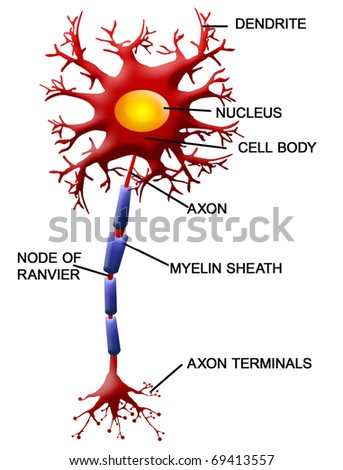
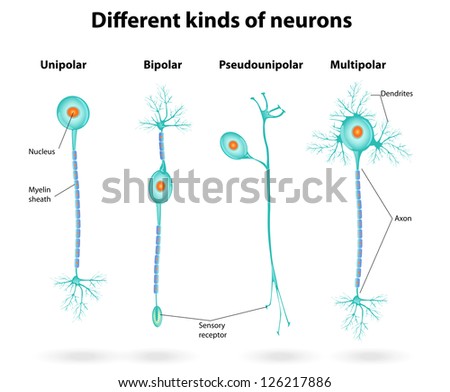
Different kinds of neurons. Vector scheme structure of a typical neuron

Which one of these was damaged in your stroke? How is your doctor directing their recovery and the relocation of functions
from dead areas?
 Different kinds of neurons. Vector scheme structure of a typical neuron - stock vector


Structure of a motor neuron, vector illustration - stock vector


Tuesday, June 11, 2013

Research Shows Tocomin® May Improve Stroke Outcome - alpha-tocotrienol

Ok, but the mouse inflammation model does not match the human model. Everyone in stroke research should know that. And it's concerning that they are testing a commercial product. The previous studies showed that you had to have a certain level of this in your system prior to your stroke to help.


Research Shows Tocomin® May Improve Stroke Outcome - alpha-tocotrienol

New findings show alpha-tocotrienol may lead to improved stroke outcome by protecting neurons from cell death, according to a study published in the Journal of Cerebral Blood Flow and Metabolism.
Tocomin® from Carotech, the alpha-tocotrienol used in the study, is a 12-Lox inhibitor that acts to confer neuroprotection post-stroke. A team of researchers at The Ohio State University Wexner Medical Center elucidated the mechanisms of microRNA precursor (miR29) in stroke-induced neuronal injuries. They showed that alpha-tocotrienol prevented miR29 loss at the infarct site during stroke.
 “Micro RNAs (miR) are small non-coding RNA molecules that play important role in regulating gene expression at the translation level, and miR29 is the micro RNA in the study of stroke etiology and in many other neurodegenerative disorders including Alzheimer’s Disease," said Savita Khanna, co-researcher of the study.
The miR29 family of genes, miR29a, miR29b1, miR29b2 (collectively miR29b) and miR29c, plays an important role in regulating gene expression. MiR29b is recognized as a neuronal survival factor. Specific loss of miR-29b at the infarct site after stroke leads to neuronal cell death. Prevention of such stroke-induced loss of miR-29b significantly improves stroke outcomes.
Researchers used the mouse stroke model, where mice were subjected to temporary middle-cerebral artery occlusion (MCAO), to induce stroke. At 48 hours after MCAO, there was a significant loss of miR29b at the infarct site.
Re-introducing miR29b at the infarct site decreased stroke-induced brain lesion by half compared to the control. In addition, the miR29b significantly improved post-stroke sensorimotor functions, where the cohort receiving miR29b had better agility and movement 48 hours post-stroke compared to control.
Then, researchers tested the efficacy of alpha-tocotrienol in the same mouse stroke model. Test mice were given 50 mg/kg body weight of alpha-tocotrienol and control mice were given vitamin E-stripped corn oil for 10 weeks before subjecting them to MCAO. The results showed that stroke-induced loss of miR29b was completely spared in the tocotrienol supplemented group, which resulted in smaller lesion size.
“I am excited with this new fifth checkpoint of tocotrienol in preventing stroke-induced injuries," said WH Leong, vice president of Carotech."It further strengthens the science of Tocomin® for neuroprotection. In a stroke event, neuroprotective miR29b is loss due to the downstream product of 12-Lipoxygenase (12-Lox) called 12HETE, which leads to neuronal cell death. Tocomin® is able to rescue miR29b by inhibiting 12-Lox."

Thursday, December 20, 2012

Synapses, Neurons and Brains - free college course

I'm sure your doctors know all this stuff so they won't be surprised when you start asking questions of them on how to apply this to your recovery. There's lots more courses I plan to take for fun/therapy - Cognitive stimulation you know, exercise those brain neurons. Don't go for the easy courses. I just signed up for nanotechnology whenever it starts, I'm going to be able to tell how to deliver drugs to the brain, something I've been posting about for 2 years now.  Remember you need to challenge those neurons, I suggest
Calculus,
Pre-calculus,
Exploring Quantum Physics,
Computational Neuroscience,
Coding the Matrix: Linear Algebra through Computer Science Applications,
Epigenetic Control of Gene Expression,
Drugs and the Brain
https://www.coursera.org/course/bluebrain
Next Session:
March 2013 (9 weeks long)Sign Up

About the Course

Probably the greatest challenge of the “21st century of the brain” is to understand how subcellular and cellular neuronal processes give rise to behavior – movement, perception, emotions, memory and creativity. This course will discuss, step-by-step, how modern molecular, optical, electrical, anatomical and theoretical methods have provided fascinating insights into the operation of the elementary building blocks of brains and, most importantly, how neuronal mechanisms underlie memory and learning processes. We will next discuss why computer simulations are so essential for understanding both neuronal “life ware” and the emergence of networks dynamics (e.g., as in the “Blue Brain Project”).
The course will start by highlighting a few recent brain-excitements, including treating the sick brain via electrical stimulation, recent attempts at “reading the brain code” for brain-machine interfaces, new neuro-anatomical techniques (“Brainbow” and connectomics) and physiological methods (optogenetics) that enables us to record/activate the living, behaving brain at single cell resolution. We will end by discussing emerging frontiers in brain research, including the interaction between brain research and the arts. As an added bonus, several lectures will be taught by acclaimed neuroscientists who are experts in their respective field.

About the Instructor(s)


Prof. Idan Segev is the David & Inez Myers Professor in Computational Neuroscience and former director of the Interdisciplinary Center for Neural
Computation (ICNC) at the Hebrew University of Jerusalem, where he received his B.Sc. in Math, and Ph.D. in experimental and theoretical neurobiology. His work  has been published in top journals such as Science, Nature, PNAS and he has received several awards including “best teacher” in international brain-courses, including the “EU advance course in computational neuroscience”). His research team utilizes computational and theoretical tools to study how neurons, the elementary microchips of the brain, compute and dynamically adapt to our ever-changing environment. In recent years, his group has worked jointly with several experimental groups worldwide in an endeavor to model a whole piece of the mammalian cortex with the ultimate goal of unraveling how local fine variations within the cortical network underlie specific behavioral function and may give rise to certain brain diseases or to healthy and “individual” brains. Segev takes a keen interest in the connection between art and the brain, and recently co-edited an “Artists Book” with original etchings by ten top Israeli artists, which were prompted by an encounter with ICNC researchers.

Recommended Background

No background is required.

Suggested Readings

From Neuron to Brain John G. Nicholls et al., Fifth Edition Sinauer Associates, Inc (2011).

Course Format

This is a nine-week class with a 90-minute lecture each week. Each lecture is parceled into 8-12 minute videos, and ends with ten integrated questions. There is a final exam at the end of the course.
Saturday, May 26, 2012

Neuron signalling and cockroaches

By dissecting a cockroach ... yes, live on stage ... TED Fellow and neuroscientist Greg Gage shows how brains receive and deliver electric impulses -- and how legs can respond.

Neuron signalling and cockroaches


Friday, April 27, 2012

Neural plasticity after spinal cord injury**

It also applies to stroke.
Full article here: 

Neural plasticity after spinal cord injury**


INTRODUCTION
Over the past 30 years, the concepts of the central nervous system (CNS) have changed. The CNS is an organ with plasticity and has the ability to regulate and adapt after environmental transition or injury. Specifically, the uninjured neurons and axon lateral branches can grow in denervated regions to reconstruct neural circuits to compensate for impaired sensory and motor function[1]. Because the axonal lateral branch connection forms distal to the injury site, it avoids limitations to axonal growth and elongation due to an inhibitive environment in the injury site. However, the ability of axonal regeneration and elongation is limited in adult humans and other animals. Thus, improving neural plasticity is critical for repair of CNS injury. Increasing numbers of studies have confirmed that functional exercise targeting the denervated region, neurotrophic factor and transplantation of tissues and cells can effectively improve neural plasticity.
Retrieval strategy regarding articles included in this review is shown as follows.
Inclusion criteria: studies discussing advances in neural plasticity after spinal cord injury (SCI).
Exclusion criteria: outdated and repetitive studies were excluded.
Article inclusion: 231 articles were first collected, which were all published in English. The titles and abstracts were read, and 146 were excluded, including 35 repetitive studies. The remaining 52 English articles comprising 41 basic studies and animal experiments, and nine review articles were used for further analysis. These articles analyzed conditions for modulation of neural plasticity and reconstruction of the neural circuit and summarized methods for improving neural plasticity changes.
CONDITIONS FOR MODULATION OF NEURAL PLASTICITY AND RECONSTRUCTION OF NEURAL CIRCUITS
Due to the limitation of axonal regeneration in the adult injured CNS, spontaneous sensory and motor functional recovery after SCI has been regarded as reconstruction of neural circuits by axonal or dendritic elongation connections[2]. The reconstruction of neural circuits is generated in the spinal cord, brain stem, thalamus, and sensorimotor cortex[3], and is mainly comprised of synaptic reorganization, axonal sprouting, and neurogenesis.
Cool picture on the 3rd page.

Saturday, January 21, 2012

Nanowire Tetrodes

This would be great to use to find out exactly how neuroplasticity recruits new neurons and how axonal growth connects up neurons.
I emailed the professor letting him know what this could solve on neuroplasticity and neurogenesis.
http://www.startribune.com/business/137802613.html
picture from the url

The tip of an electrode, one-tenth the width of a human hair, with 18 nanowires drawn off from it. Each nanowire is one micron long and 60 nanometers wide (six-thousandths as wide as a human hair).
The project appears blandly nondescript. "Nanowire Tetrodes."
But what it seeks to do -- develop a wire so thin it can harmlessly penetrate the cell of a neuron to listen to what happens when a rat makes a decision -- could make a lot of noise if successful. Such knowledge could form the foundation for all kinds of therapies.