Changing stroke rehab and research worldwide now.Time is Brain! trillions and trillions of neurons that DIE each day because there are NO effective hyperacute therapies besides tPA(only 12% effective). I have 523 posts on hyperacute therapy, enough for researchers to spend decades proving them out. These are my personal ideas and blog on stroke rehabilitation and stroke research. Do not attempt any of these without checking with your medical provider. Unless you join me in agitating, when you need these therapies they won't be there.

What this blog is for:

My blog is not to help survivors recover, it is to have the 10 million yearly stroke survivors light fires underneath their doctors, stroke hospitals and stroke researchers to get stroke solved. 100% recovery. The stroke medical world is completely failing at that goal, they don't even have it as a goal. Shortly after getting out of the hospital and getting NO information on the process or protocols of stroke rehabilitation and recovery I started searching on the internet and found that no other survivor received useful information. This is an attempt to cover all stroke rehabilitation information that should be readily available to survivors so they can talk with informed knowledge to their medical staff. It lays out what needs to be done to get stroke survivors closer to 100% recovery. It's quite disgusting that this information is not available from every stroke association and doctors group.

Showing posts with label lazy. Show all posts

Wednesday, July 15, 2026

Study reveals the simple changes that could cut your dementia risk

Guidelines NOT protocols! Screaming at your doctor for EXACT PREVENTION PROTOCOLS may be required! And we're supposed to be grateful for lazy crapola like this?

Study reveals the simple changes that could cut your dementia risk

A new study suggests that a structured programme of regular exercise and a brain-healthy diet could improve memory and thinking in older people at risk of dementia.

The trial, conducted across 12 countries in Latin America, included more than 1,000 patients aged 60 to 77.

They were deemed at risk of developing dementia due to age or factors such as high blood pressure, high cholesterol, and whether they smoked.

Around half of these participants were assigned to a two-year programme. This involved supervised exercise sessions four days a week and personalised dietary advice, focusing on brain-healthy foods like green leafy vegetables, whole grains, berries, fish, nuts, and beans.

Activities were tailored to local culture, including salsa dancing, with researchers ensuring diets were affordable and easy to source locally.

Patients also met in small groups to socialise, took part in computer-based brain training, and regularly had their blood pressure, weight, and blood sugar recorded.

The second group were given general health advice and attended four one-hour meetings over the two years.

The study found that cognition, episodic memory, executive function and procession speed were all better among those following the structured programme.

Researchers said that the findings, published in The Lancet, suggest that “harmonised, non-pharmacological interventions can be implemented across diverse sociocultural settings while maintaining standardisation and producing measurable cognitive benefits in older adults”.

Alzheimer’s Society estimates that about a million people in the UK have dementia, a number likely to rise to 1.4 million by 2040.

The Independent is the world’s most free-thinking news brand, providing global news, commentary and analysis for the independently-minded. We have grown a huge, global readership of independently minded individuals, who value our trusted voice and commitment to positive change. Our mission, making change happen, has never been as important as it is today.

Friday, May 15, 2026

Single dose of magic mushroom psychedelic can cause anatomical brain changes, study finds

 Have your competent? doctor and hospital get research going on possible benefits to stroke recovery! Of course, they being up-to-date on all things stroke already have stuff in the works for over a decade, right? 

Oh NO, NOTHING WAS DONE! WHY?

Laziness? Incompetence? Or just don't care? NO leadership? NO strategy? Not my job? Not my Problem!

magic mushrooms (40 posts to October 2014) 

psilocybin (54 posts to May 2014)

Single dose of magic mushroom psychedelic can cause anatomical brain changes, study finds

Friday, May 8, 2026

What Your Naps Might Be Saying About Your Health as You Age by mindbodygreen

 Your competent? doctor better have a more nuanced view of napping other than it leads to higher mortality risk! Like solving why it is occurring rather than just spouting lazy crapola!

What Your Naps Might Be Saying About Your Health as You Age

Saturday, November 29, 2025

Stroke Rehabilitation: Which is the Main Functional Outcome to Reach?

 You just proved your complete fucking stupidity by asking the question! The only goal in stroke is 100% recovery; survivors demand that; why the fuck aren't you providing it? I'd fire all of you for not understanding stroke survivor needs at all.

Why isn't your 'professional' solving stroke?

Laziness? Incompetence? Or just don't care? NO leadership? NO strategy? Not my job? Not my Problem!

Stroke Rehabilitation: Which is the Main Functional Outcome to Reach?

Loredana Cavalli*, Andrea Guazzini, Bruno Rossi and Carmelo Chisari University of Florence, Italy 

 Abstract 

 Background: 

Stroke rehabilitation targets range from treatment of spasticity to pain reduction, gait speed gain, or autonomy amelioration. A correct evaluation of individual residual capabilities is essential to select the most appropriate rehabilitative programme; furthermore the observation of rehabilitative outcomes can provide information about gait training effects and possible compensation mechanisms. 
 
Aim: 

To investigate the main outcome to reach in stroke rehabilitation. 

 Methods: 

We examined retrospectively a heterogeneous sample of 119 subjects recovered for the treatment of stroke outcomes. Functional parameters were assessed before and after rehabilitative treatment, such as upper limbs motility impairment, lower limb sensitiveness, muscle trophism or tone, necessity of auxilium, Berg and Fugl-Meyer scale. 

 Results: 

A consistent improvement of standing equilibrium was reported, regardless of gender, stroke nature, hemiparetic side, type of rehabilitation performed, botulin toxin use and initial conditions, with an average increase of Berg and Fugl-Meyer scales score of 14% and 21%, respectively. The variation of equilibrium and motility across treatment resulted directly proportional and negatively correlated to lower limbs sensitivity impairment. On the contrary, initial equilibrium resulted inversely correlated with the variation of motility and vice versa. Interestingly, older subjects seem to better increase equilibrium and sensitivity as measured by Fugl-Meyer scale. 

 Conclusion: 

In stroke subjects any type of rehabilitation leads to a consistent improvement of standing balance. While proportional to motility and sensitivity increase, this result is inversely correlated to initial motility score, suggesting that an appropriate evaluation of the stroke patient’s functional parameters at admission contributes to select the main rehabilitation targets and the best therapeutic strategy. (You're so fucking wrapped up in justifying your tyranny of low expectations you're totally missing what survivors want; 100% recovery!)

Wednesday, July 2, 2025

Kyrgyzstan joins the fight against stroke by signing the Stroke Action Plan for Europe declaration

 What a fucking pile of lazy shit. NOTHING to address these many problems in stroke. 
And these are our stroke 'leaders'?

1. Only 10% of patients get to full recovery.
2. tPA only fully works to reverse the stroke 12% of the time. Known since 1996.
3. No protocols to prevent your 33% dementia chance post-stroke from an Australian study.
4. Nothing to alleviate your fatigue.
5. Nothing that will cure your spasticity.
6. Nothing on cognitive training unless you find this yourself.
7. No published stroke protocols.
8. No way to compare your stroke hospital results vs. other stroke hospitals.

Kyrgyzstan joins the fight against stroke by signing the Stroke Action Plan for Europe declaration

Congratulations!

Kyrgyzstan is now the 15th country to endorse the Declaration for Action on Stroke, marking a significant step towards improving stroke care, prevention and recovery services for its population.

By signing this declaration, Kyrgyzstan’s government demonstrates its commitment to recognising stroke and other cerebrovascular diseases as leading causes of premature death, long-term disability and cognitive decline among adults. The declaration emphasises that many strokes are both preventable and treatable through evidence-based, cost-effective interventions.

With this endorsement, Kyrgyzstan pledges to fully support the implementation of the Stroke Action Plan for Europe, aligning with its four key targets for 2030 and the broader goals of the WHO Global Action Plan for the Prevention and Control of Noncommunicable Diseases.

Read more here.

Monday, June 30, 2025

Research progress in the use of botulinum toxin type a for post-stroke spasticity rehabilitation: a narrative review

Let's examine how useless this is! NOTHING ON CURING SPASTICITY! Survivors want it cured, not reduced! Why the fuck can't you solve that problem? Are you too lazy to even try to solve the problem? Too hard for you?

 Research progress in the use of botulinum toxin type a for post-stroke spasticity rehabilitation: a narrative review


Qianwen Xu, Ya Wang Article: 2521427 Received 26 Oct 2024 Accepted 27 May 2025 Published online: 23 Jun 2025 Cite this article https://doi.org/10.1080/07853890.2025.2521427Additional information

Abstract

Stroke is a leading cause of long-term disability and death worldwide. Spasticity after stroke seriously affects patients’ quality of life. If this state persists for a long time, it will lead to severe joint atrophy, reduced motor coordination, and even permanent disability. Therefore, clinical research has focused on the treatment of spasticity and the recovery of motor function after stroke.

Aim

The aim of this paper is to explore the use of botulinum toxin type A in the rehabilitation of spasticity after stroke and to provide a theoretical basis for optimizing rehabilitation strategies, highlighting its potential value in reducing spasticity and improving motor function.

Method

This article reviews the latest research progress on the application of BTX-A in spasticity after stroke, discusses the potential and challenges of BTX-A in reducing spasticity and improving motor function in patients with stroke.

Result

Botulinum toxin type A (BTX-A) is a local muscle paralytic agent that has received extensive attention in recent years for its application in reducing muscle spasticity and promoting post-stroke rehabilitation.This article confirms that botulinum toxin type A has a significant clinical effect in treating muscle spasticity after stroke and also helps improve motor function restoration in patients. Studies have shown that botulinum toxin type A injections are effective in reducing spasticity and, when combined with rehabilitation training, can facilitate the recovery of motor function in post-stroke patients. Therefore, botulinum toxin type A has a broad application prospect in the rehabilitation of post-stroke spasticity.

KEY MESSAGES

The application of botulinum toxin type A (BTX-A) in post-stroke rehabilitation primarily focuses on reducing muscle spasticity and improving motor function.Spasticity is a common clinical manifestation of damage to the upper motor neurons. It is caused by the increased excitability of gamma motor neurons and manifests as excessive involuntary muscle contraction. Its causes include cerebral palsy, stroke, traumatic brain injury, multiple sclerosis, brain or spinal cord tumours, and spinal cord injuries

Thursday, March 27, 2025

This Slow Movement Grows New Neurons and Repairs Old Ones

Your incompetent doctor has done nothing with BDNF, Qigong or Tai Chi I bet!

Years of incompetence and you're the recipient of that lazy crapola! Maybe you should call the president and ask when competent stroke medical 'professionals' will be hired!  Competence is having EXACT PROTOCOLS FOR RECOVERY! No excuses are allowed!

  • BDNF (181 posts to April 2011)
  • Qigong (4 posts to October 2020)
  • tai chi (18 posts to April 2013)
  • This Slow Movement Grows New Neurons and Repairs Old Ones

    You’ve probably heard that traditional Chinese exercises like Tai Chi and Qigong are good for you. They’re slow, graceful, and kind of meditative, sure, but maybe you’ve wondered if they really do anything beyond helping you feel a little calmer or more flexible.

    Turns out something is happening deep under the hood.

    A new meta-analysis in the Journal of Exercise Science & Fitness pulled together data from 11 randomized controlled trials and found that traditional Chinese exercises (TCEs, for short) significantly increase brain-derived neurotrophic factor (BDNF) in middle-aged and older adults. Why does that matter? Because BDNF is like Miracle-Gro for your brain. It helps grow new neurons, repair old ones, and keep your cognitive functions sharp as you age.

    BDNF is closely linked to learning, memory, and neuroplasticity, your brain’s ability to adapt and change. Low levels have been associated with Alzheimer’s, depression, and cognitive decline. So the fact that something as low-impact and accessible as Tai Chi can help boost it? That’s kind of major.

    The Trifecta For Brain Health

    Traditional Chinese exercises like Tai Chi and Qigong integrate breathing, intentional movement, and mental focus. This trifecta seems to activate the body’s parasympathetic nervous system (the “rest and restore” mode), while subtly challenging balance, coordination, and attention. The result is a kind of moving mindfulness that appears to shift brain chemistry in your favor.

    What makes this study especially compelling is the population: healthy adults over 45. So we’re not just talking about people recovering from illness or already in cognitive decline—this is about prevention and optimization in the prime of life.

    This isn’t the first time TCEs have shown promising brain benefits. Other studies have linked Tai Chi to:

    1. Improved Working Memory and Executive Function:

    2. Reduced Inflammation Markers Impacting Brain Health:

    3. Better Sleep, Supporting BDNF Production and Memory Consolidation:

    • Regular exercise, including practices like Tai Chi, can indirectly boost memory and thinking skills by improving mood and sleep, and by reducing stress and anxiety.

    Even the Mayo Clinic has called Tai Chi “meditation in motion,” noting its role in reducing stress and improving mood.

    Tai Chi For Beginners

    These ancient practices aren’t just about “balance” in the philosophical sense—they’re turning out to be legit tools for brain longevity. And for those of us who want to stay sharp, curious, and vibrant deep into our later decades, that’s a serious win. Here’s an overview of the top Tai Chi moves for beginners. Your move.

    Type image caption here (optional)
    ‍


    The best part? You don’t need to train for a marathon or even break a sweat. Just 20 to 40 minutes a few times a week seems to be enough to see benefits. Bonus points if you practice outside—sunshine, nature, and gentle movement make an excellent neuroprotective cocktail.

    ‍

    Saturday, November 30, 2024

    Exploring Music-Based Interventions for Executive Functioning and Emotional Well-Being in Stroke Rehabilitation: A Scoping Review

     You blithering idiots need to create a protocol based on all previous music research, rather than this useless crapola review. I'd have you all fired!

    Exploring Music-Based Interventions for Executive Functioning and Emotional Well-Being in Stroke Rehabilitation: A Scoping Review 

                                     by 1,2,*, 3, 3, 3, 4, 5, 6, 7, 8 and 9
    1
    Music Therapy Department, ArtEZ Academy of Music, ArtEZ University of the Arts, PN7511 Enschede, The Netherlands
    2
    Facultad de Humanidades, Ciencias Sociales y Empresariales, Universidad Maimónides, Buenos Aires C1405, Argentina
    3
    Music Therapy, Boyer College of Music and Dance, Temple University, Philadelphia, PA 19122, USA
    4
    Music and Health Science Research Collaboratory, Faculty of Music, University of Toronto, Toronto, ON M5S 1K6, Canada
    5
    Hospital Universitario Austral, Pilar B1629, Buenos Aires, Argentina
    6
    Servicio Neurología Cognitiva, Neuropsicología y Neuropsiquiatría, Centro de Rehabilitación, CR, Departamento de Rehabilitación, Fleni, Buenos Aires C1428AQK, Argentina
    7
    Servicio de Rehabilitación y Cuidados Continuos, Centro Hirsch, Buenos Aires B1663FDC, Argentina
    8
    Independent Researcher, Buenos Aires C1428, Argentina
    9
    Instituto de Neurociencias (INEU) Fleni Consejo Nacional de Investigaciones en Científicas y Técnicas (CONICET), Buenos Aires C1060AAF, Argentina
    *
    Author to whom correspondence should be addressed.
    NeuroSci 2024, 5(4), 565-599; https://doi.org/10.3390/neurosci5040041
    Submission received: 16 October 2024 / Revised: 8 November 2024 / Accepted: 13 November 2024 / Published: 27 November 2024

    Abstract

    Purpose: 

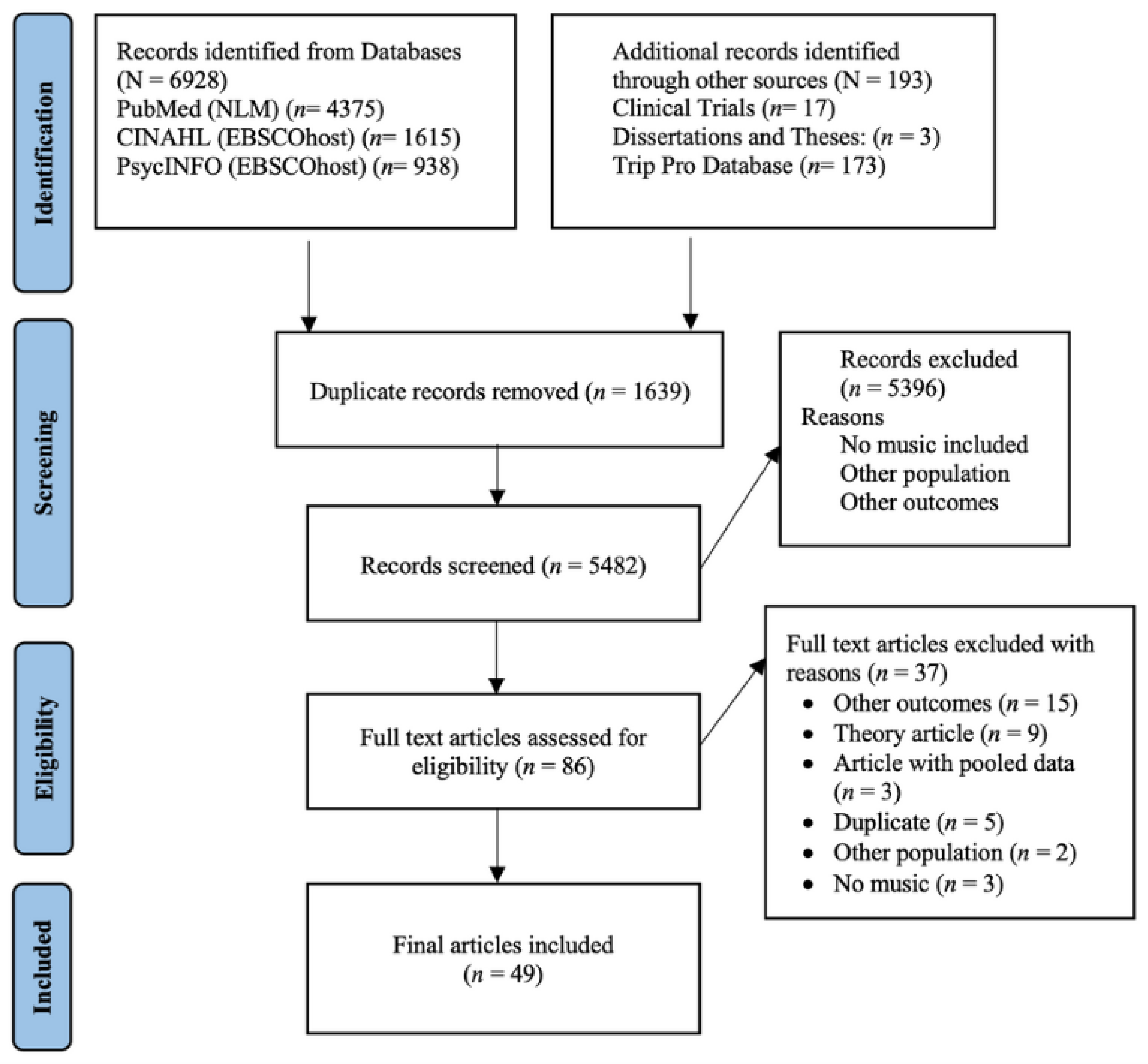
    Stroke is one of the leading causes of disability with life-long implications requiring assessment and treatment of several functional domains. This review identifies the results from research into music-based interventions (MBIs), including music therapy (MT), for executive functions (EFs) and emotional well-being (EWB) in adults with stroke and highlights opportunities for clinical practice and future research. Methods: APA PsycInfo (EBSCOhost), and CINAHL (EBSCOhost) were searched, in addition to grey literature. 

    Results: 

    A total of 49 studies were included and encompassed experimental, analytic, and descriptive observational studies, and case reports, involving a total of 1663 participants. In total, 32 studies included MT interventions, and 17 were MBIs. EFs were an outcome in 20.41%, and EWB in 61.22% of studies, for which active interventions were the most utilized. Overall, 73.47% of the studies reported positive results. 

    Conclusions: 

    This scoping review indicates that music interventions can be beneficial for the improvement of different aspects of EFs and EWB at different stages of stroke recovery. Further research may benefit clinical practice by including standardized protocols,(AND WHY THE FUCK DIDN'T YOU CREATE THESE PROTOCOLS? LAZINESS? NOT MY JOB?) outcome and self-reported measures, and brain imaging data to determine the effects of interventions and support evidence-based decisions for treatment policies for stroke survivors.

    1. Introduction

    Stroke is a major health concern with a high incidence worldwide, affecting millions of people annually [1]. Stroke is clinically defined as a vascular injury of the central nervous system that can be caused by a wide range of risk factors and disease processes. It can impact any brain region to different extents and its sequelae will depend, among other factors, on the size and location of the vascular lesion [2]. As one of the leading causes of death and disability around the world, it commonly causes cognitive, motor, sensory, and mood dysfunctions that can be either transient or permanent [2,3]. Current evidence suggests that cognitive impairments are prevalent after stroke and often remain present over time [4,5]. Specifically, executive functions (EFs) play an important role in functional recovery as they encompass a set of interrelated cognitive processes of learning and applying knowledge to behavior, which involve attention control, planning, working memory, cognitive flexibility, problem-solving, decision-making, and goal-oriented behavior. These processes often work interdependently with one another to accomplish goal-driven tasks, concentrate, or solve unexpected challenges [6,7,8]. Behaviors characterized as “dysexecutive” are common to stroke and can entail diminished mental flexibility, speed of processing, attention control, and a lack of inhibition control that can potentially lead to risky decisions in harmful situations [4,9]. Early treatment is necessary to prevent these behaviors from becoming chronic [3,10]. Together with post-stroke depression, executive functioning is a strong predictor of a person’s functional status after rehabilitation [11] and can seriously compromise their return to independent work and social life. As executive and emotional disorders frequently co-occur in stroke survivors [12,13], there are some indications that cognitive functioning is influenced by the person’s emotional state [14].
    Emotional well-being (EWB) encompasses a variety of components and is broader than the relative absence of negative emotional states such as depressive or anxious feelings. EWB entails the perception of positive functioning, life satisfaction, positive social relationships, a feeling of life balance, and a sense of purpose [15]. According to the working definition developed by the National Institute of Health (NIH), EWB is a multidimensional construct that describes “how positive an individual feels generally and about life overall. It includes both experiential features (emotional quality …) and reflective features (judgments about life satisfaction, sense of meaning, and ability to pursue goals …). These features occur in the context of culture, life circumstances, resources, and life course” [16], p. 16. EWB is also linked to psychopathology and health outcomes with a consensus that they are on a continuum; a positive perception of EWB has been shown to reduce the risk of death by nearly 20% [17]. Stroke survivors commonly face some type of emotional and mood disorders (e.g., fatigue, depression, lack of initiative, emotional incontinence, anxiety, feelings of loneliness, apathy) and experience a diminished quality of life [18,19,20,21,22,23]. This implies that after a stroke, people may have limited opportunities for experiencing EWB. Consequently, rehabilitation treatment continues seeking effective and meaningful interventions that contribute to functional and emotional recovery.
    Music has long been applied in different forms to treat stroke sequelae, for instance, through music listening, group singing, exercising with pre-recorded music, or longer music therapeutic processes [24,25,26]. Overall, music holds a high potential for promoting health [27,28]. MT utilizes evidence-based interventions that aim to accomplish personalized goals and are carried out by credentialed music therapy professionals [29]. MT is usually a process that includes assessment, treatment, and evaluation of the client’s progress over time [30]. Other MBIs are protocols that study the therapeutic effects of music, which can be delivered by other caregivers, do not take place in a therapeutic relationship typical for MT, and may be prescribed or delivered in a single contact without evaluation or follow-up [30,31]. Accordingly, this review utilized the term music therapy for studies in which music therapists were involved in the delivery of the intervention, and music-based interventions for those in which no music therapists were involved. The latest Cochrane review on MBIs for persons with acquired brain injuries found that music interventions are beneficial to motor recovery, communication, and quality of life in stroke survivors. However, no strong evidence could be found on the benefits of music on cognitive and emotional outcomes and further research was recommended [27]. A growing body of studies investigated the effects of music interventions on cognitive and emotional rehabilitation after stroke and reported positive results specifically on mood, depressive syndromes, and quality of life [26,32].
    Despite the rapid advances in the field, there remain, however, some limitations in the literature that this scoping review seeks to address. Our objective is to synthesize comprehensive knowledge of the current literature available on MBIs, including MT, in stroke rehabilitation targeting EF and EWB. The review seeks to identify the types of interventions used to address these domains, the outcome measures utilized, and how gained data can be translated into opportunities that will guide clinical practice and future research. Given the specificity of the topic, a limited number of sources was expected; therefore, a broader scope on the two main outcomes was taken by considering factors that influence EWB and EFs, such as mood disorders, quality of life, and cognitive functions interdependent with EFs, such as attention and memory. A scoping review was considered the most accurate approach to obtaining a comprehensive understanding of the applications of music-based and music therapy interventions in stroke rehabilitation [33,34].

    More at link.

    Saturday, October 26, 2024

    American Stroke Association releases new guidelines to screen for stroke

     This is what is so appalling about the ASA, guidelines; NOT PROTOCOLS! Nothing here gives you EXACT INTERVENTIONS that will prevent strokes! Laziness in full display!


    American Stroke Association releases new guidelines to screen for stroke

    Video at link

    Wednesday, September 25, 2024

    After cannabis linked to higher stroke risk, Michigan doctor calls for more research


     I'm doing it after my next stroke.

    My 13 reasons for marijuana use post-stroke.  

    Don't follow me, I'm not medically trained and I don't have a Dr. in front of my name.

     They never say if this is smoked marijuana or gummies, so for me this research is incomplete.

    But this: 

    Pot Smoking Baby Boomers Are On The Rise, Why Are Scientists So Happy For Them? Hint: Benefits For The Aging Brain

    And this:

    The Experiments Revealing How Marijuana Could Treat Dementia

    The latest here:

    After cannabis linked to higher stroke risk, Michigan doctor calls for more research

    Public perception regarding the risks associated with marijuana use has been on the decline in recent years as more states legalize the drug for medical and recreational purposes.

    However, health officials like neurologist Angelos Katramados, director of the acute stroke unit at Henry Ford Health, say a growing body of research should cause users to reassess the risk.

    “Our understanding of the consequences of cannabis use is limited but rapidly evolving,” Katramados said.

    “At this point in time, it is critical to have high quality prospective research, as well as active surveillance programs on the prevalence of marijuana use now and in the future.”

    In a study published earlier this year in the Journal of the American Medical Association, researchers found daily consumers had 25% higher odds of heart attack, and 42% higher odds of stroke, compared to nonusers.

    Researchers evaluated Behavioral Risk Factor Surveillance data for more than 434,000 respondents from 2016 to 2020. Of those who responded, 4% were self-reported daily cannabis users, and 7.1% were non-daily users.

    More frequent use was associated with higher risk of adverse cardiovascular outcomes. The same was true for patients at greater risk for stroke and heart attack.

    Katramados said older studies that supported the absence of risk are no longer relevant due to an increase in marijuana potency nowadays. The concentration of THC, the psychoactive constituent of marijuana, has increased from 3% in 1991 to 17% in 2017.

    “I think that everybody should consider it a significant risk,” Katramados said. “We do have signals of harm, like that study from the spring, and our hope is that there will be more meaningful research studies.”

    Cannabis use has also been associated with brain health and cognitive vitality for all ages. Prenatal exposure has been associated with poor cognitive performance, as well as emotional and mental health of children as they develop.

    Katramados said it’s difficult to distinguish between smoking marijuana products vs ingesting products like edibles or vapor for purposes of risk assessment, because users of one form tend to partake in others(Well then structure the research to answer the question. I don't accept this lazy excuse for bad research!) He said more research is needed with a focus on those forms of cannabis use.

    Earlier this year, the U.S. Drug Enforcement Administration proposed reclassifying marijuana as a less dangerous substance (from Schedule I to Schedule III).

    Schedule I drugs -- heroin, LSD, ecstasy, methaqualone and peyote -- have no accepted medical use and a high potential for abuse. Meanwhile, schedule III drugs -- Tylenol with codeine, ketamine, anabolic steroids, and testosterone -- have moderate to low potential for physical and psychological dependence.

    Related: Marijuana could be rescheduled by feds. What it means for Michigan

    The reclassification would be a big step toward a possible federal legalization. More importantly, Katramados said it would open the drug up to regulatory processes and increase avenues for research funding.

    The American Heart Association supports the reclassification for similar reasons. Regulations could require a meaningful unit of consumption requirement on packaging, similar to alcohol by volume (ABV) labeled on alcoholic beverages, and a requirement to establish how much THC/CBD is in a given product.

    A hearing on the reclassification proposal is scheduled for early December in Virginia.

    Katramados said he’d advise against cannabis use having seen the side effects of stroke every day in his work.

    “Obviously it’s an individual’s responsibility, but it’s something that requires public education,” he said.

    While more research is needed to understand risk factors associated with cannabis products, there are ways to reduce a person’s risk of stroke. They include having a healthy diet, avoiding nicotine exposure, improving sleep health, managing cholesterol levels, treating diabetes and high blood sugar, treating high blood pressure, managing weight, and increasing physical activity.

    Sunday, June 23, 2024

    Enhancing fall risk assessment: instrumenting vision with deep learning during walks

     It is vastly more important to create EXACT fall prevention protocols than this lazy crapola of 'assessments'! But your doctor should be using inertial measurement units(IMUs) to objectively quantify your gait deficits. And then map those deficits to EXACT REHAB PROTOCOLS!

    Enhancing fall risk assessment: instrumenting vision with deep learning during walks

    Abstract

    Background

    Falls are common in a range of clinical cohorts, where routine risk assessment often comprises subjective visual observation only. Typically, observational assessment involves evaluation of an individual’s gait during scripted walking protocols within a lab to identify deficits that potentially increase fall risk, but subtle deficits may not be (readily) observable. Therefore, objective approaches (e.g., inertial measurement units, IMUs) are useful for quantifying high resolution gait characteristics, enabling more informed fall risk assessment by capturing subtle deficits. However, IMU-based gait instrumentation alone is limited, failing to consider participant behaviour and details within the environment (e.g., obstacles). Video-based eye-tracking glasses may provide additional insight to fall risk, clarifying how people traverse environments based on head and eye movements. Recording head and eye movements can provide insights into how the allocation of visual attention to environmental stimuli influences successful navigation around obstacles. Yet, manual review of video data to evaluate head and eye movements is time-consuming and subjective. An automated approach is needed but none currently exists. This paper proposes a deep learning-based object detection algorithm (VARFA) to instrument vision and video data during walks, complementing instrumented gait.

    Method

    The approach automatically labels video data captured in a gait lab to assess visual attention and details of the environment. The proposed algorithm uses a YoloV8 model trained on with a novel lab-based dataset.

    Results

    VARFA achieved excellent evaluation metrics (0.93 mAP50), identifying, and localizing static objects (e.g., obstacles in the walking path) with an average accuracy of 93%. Similarly, a U-NET based track/path segmentation model achieved good metrics (IoU 0.82), suggesting that the predicted tracks (i.e., walking paths) align closely with the actual track, with an overlap of 82%. Notably, both models achieved these metrics while processing at real-time speeds, demonstrating efficiency and effectiveness for pragmatic applications.

    Conclusion

    The instrumented approach improves the efficiency and accuracy of fall risk assessment by evaluating the visual allocation of attention (i.e., information about when and where a person is attending) during navigation, improving the breadth of instrumentation in this area. Use of VARFA to instrument vision could be used to better inform fall risk assessment by providing behaviour and context data to complement instrumented e.g., IMU data during gait tasks. That may have notable (e.g., personalized) rehabilitation implications across a wide range of clinical cohorts where poor gait and increased fall risk are common.

    Introduction

    Falls can lead to loss of independence and even death [1, 2]. Identifying those at risk of falling is an important clinical task often conducted in e.g., those with visual impairment [3], and the elderly [4,5,6]. Equally, fall risk assessment is of notable importance and pragmatically useful in people with a movement disorder, such as Parkinson’s disease (PD) [7,8,9] or Stroke [10,11,12,13] due to observable functional deficits in motor control. Additionally, assessing fall risk is equally important during pregnancy [14] where a third of pregnant women may fall [15]. In fact, there is a significant increase in falls from pre-pregnancy to the 3rd trimester which cannot be fully explained by morphological [16] or biomechanical [17] changes.

    A comprehensive fall risk assessment is multifactorial and a time-consuming process including but not limited to medication review, cognitive screening, detailing a history of falls, as well as evaluating gait, balance [18], and environmental hazards or hazardous activities that have been documented in some cases to be responsible for 50% of falls [19]. For timeliness in many settings, assessing gait alone is usually conducted to evaluate intrinsic fall risk [20]. That is convenient as gait is a good marker of global health [21] and fundamental to many activities of daily life [1]. Consequently, a gait assessment with positive outcomes from subjective evaluation (by an assessor) provides insight into the patient’s independence and ability to ambulate with minimal fall risk. As described, an assessment is typically conducted by manual observation alone, where an assessor examines a person’s gait during a scripted task (i.e., walking protocol). Often, a protocol may include navigating (walking around or over) obstacles [22,23,24,25], deliberately challenging the person by increasing gait demands [26]. Yet, that also places extra burden on the assessor, challenging them to carefully observe the person’s gait during a more complex task. Instrumentation is needed to optimize assessment protocols while providing high resolution objective fall risk data.

    The integration of digital technology as an objective standard in fall risk is not routine. While digital tools may provide clinicians with high-resolution data to potentially aid in determining a patient’s fall risk, there is still ongoing work to be done in understanding their full utility and developing appropriate methods. In recent years, technology has matured to include a wide selection of digital tools. Of course, 3D motion capture systems are a perceived gold/reference standard for human movement analysis, but it lacks practicality and deployment in habitual settings. Moreover, reflective markers require timely application. In contrast, wearable devices (i.e., inertial measurement units, IMUs) are quickly attached and provide clinically relevant gait characteristics to a millisecond resolution in any environment [27,28,29,30].

    An objective gait assessment to inform fall risk is usually conducted within a laboratory with a single IMU on the lower back [30]. Typically, participants are then asked to undertake a protocol representing walking challenges in daily life [31, 32], like obstacle crossing [25]. However, a key IMU limitation is the provision of inertial gait data only without any insights into navigating behavior and visual attention allocation to environmental/extrinsic details. Accordingly, there is no absolute clarity to understand how gait and fall risk is influenced by other intrinsic (e.g., visual attention) or extrinsic (e.g., obstacles) factors. For example, a comprehensive instrumented assessment would better understand how those being assessed allocate visual attention along their walking path for safe navigation while also determining the role of attention when e.g., peripheral obstacles cause a distraction. Supplementing IMU data with video data from video-based eye tracking wearable glasses could better define intrinsic and extrinsic factors, providing a contemporary and pragmatic approach to fall risk assessment with easily attached wearables. (Indeed, eye tracking offers an avenue for exploring neurocognitive changes as a reason for increased falls incidence.)

    Commercial eye tracking glasses capture high quality video data and often in the standardized MP4 format with a resolution of 1920 × 1080. The video contains a superimposed crosshair to display eye location. Accordingly, videos contain data on the general environment and specific objects of where the wearer is looking but data processing of eye-tracker videos is extremely time consuming and needs to be automated to allow clinical application [33]. Including eye tracking (to identify an object/obstacles of interest) with IMU data during a range of simulated free-living tasks (e.g., obstacle crossing) would provide a novel approach for simultaneously instrumenting visual attention during gait within a fall risk assessment. To accomplish this, a suitable methodology to instrument visual attention from video data must first be established as none currently exists. Accordingly, a novel vision-aided fall risk assessment (VAFRA) is proposed in this study.

    More at link.