Changing stroke rehab and research worldwide now.Time is Brain! trillions and trillions of neurons that DIE each day because there are NO effective hyperacute therapies besides tPA(only 12% effective). I have 523 posts on hyperacute therapy, enough for researchers to spend decades proving them out. These are my personal ideas and blog on stroke rehabilitation and stroke research. Do not attempt any of these without checking with your medical provider. Unless you join me in agitating, when you need these therapies they won't be there.

What this blog is for:

My blog is not to help survivors recover, it is to have the 10 million yearly stroke survivors light fires underneath their doctors, stroke hospitals and stroke researchers to get stroke solved. 100% recovery. The stroke medical world is completely failing at that goal, they don't even have it as a goal. Shortly after getting out of the hospital and getting NO information on the process or protocols of stroke rehabilitation and recovery I started searching on the internet and found that no other survivor received useful information. This is an attempt to cover all stroke rehabilitation information that should be readily available to survivors so they can talk with informed knowledge to their medical staff. It lays out what needs to be done to get stroke survivors closer to 100% recovery. It's quite disgusting that this information is not available from every stroke association and doctors group.

Showing posts with label prior research. Show all posts

Tuesday, October 10, 2017

Effects of action observation therapy and mirror therapy after stroke on rehabilitation outcomes and neural mechanisms by MEG: study protocol for a randomized controlled trial

With 76 action observation posts and 41 mirror therapy posts, why exactly is this research needed? Do you once again not know what prior research exists in your field? And your mentor and senior researcher know nothing either? Incompetence runs amok in the stroke medical world.
https://trialsjournal.biomedcentral.com/articles/10.1186/s13063-017-2205-z
  • Tsai-yu Shih,
  • Ching-yi Wu,
  • Keh-chung Lin,
  • Chia-hsiung Cheng,
  • Yu-wei HsiehEmail author,
  • Chia-ling Chen,
  • Chih-jou Lai and
  • Chih-chi Chen
Trials201718:459
Received: 15 December 2016
Accepted: 18 September 2017
Published: 4 October 2017

Abstract

Background

Loss of upper-extremity motor function is one of the most debilitating deficits following stroke. Two promising treatment approaches, action observation therapy (AOT) and mirror therapy (MT), aim to enhance motor learning and promote neural reorganization in patients through different afferent inputs and patterns of visual feedback. Both approaches involve different patterns of motor observation, imitation, and execution but share some similar neural bases of the mirror neuron system. AOT and MT used in stroke rehabilitation may confer differential benefits and neural activities that remain to be determined. This clinical trial aims to investigate and compare treatment effects and neural activity changes of AOT and MT with those of the control intervention in patients with subacute stroke.

Methods/design

An estimated total of 90 patients with subacute stroke will be recruited for this study. All participants will be randomly assigned to receive AOT, MT, or control intervention for a 3-week training period (15 sessions). Outcome measurements will be taken at baseline, immediately after treatment, and at the 3-month follow-up. For the magnetoencephalography (MEG) study, we anticipate that we will recruit 12 to 15 patients per group. The primary outcome will be the Fugl-Meyer Assessment score. Secondary outcomes will include the modified Rankin Scale, the Box and Block Test, the ABILHAND questionnaire, the Questionnaire Upon Mental Imagery, the Functional Independence Measure, activity monitors, the Stroke Impact Scale version 3.0, and MEG signals.

Discussion

This clinical trial will provide scientific evidence of treatment effects on motor, functional outcomes, and neural activity mechanisms after AOT and MT in patients with subacute stroke. Further application and use of AOT and MT may include telerehabilitation or home-based rehabilitation through web-based or video teaching.

Trial registration

ClinicalTrials.gov, ID: NCT02871700. Registered on 1 August 2016.

Exploring the Adaptability of Tai Chi to Stroke Rehabilitation.

With 12 tai chi posts back to April 2013, why exactly was this research needed? Do you once again not know what prior research exists in your field? And your mentor and senior researcher know nothing either?
http://journals.lww.com/rehabnursingjournal/Abstract/publishahead/Exploring_the_Adaptability_of_Tai_Chi_to_Stroke.99838.aspx


Hwang, Inok PhD, RN; Song, Rhayun PhD, RN; Ahn, Sukhee PhD, RN; Lee, Myung-ah PhD; Wayne, Peter M. PhD; Sohn, Min Kyun PhD, MD
Rehabilitation Nursing Journal: Post Author Corrections: October 4, 2017
doi: 10.1097/rnj.0000000000000110
Feature: PDF Only
Purpose: The aim of the study was to assess the feasibility, safety, and preliminary estimates of effectiveness of Tai Chi on functional outcomes in stroke survivors.
Design: A mixed-method study with a single-group repeated-measure design and in-depth interviews.
Methods: Fourteen stroke survivors with hemiplegia were recruited to participate in a Tai Chi program, twice weekly for 12 months. Outcomes included physical function, self-efficacy, and activity of daily living measured at 3-month intervals for 12 months.
Findings: Ten participants (mean age, 68.5 years) completed all assessments with significantly improved balance ([chi]2 = 14.08, p = .007), flexibility ([chi]2 = 11.70, p = .020), and self-efficacy ([chi]2 = 21.84, p < .001) over 12 months. Qualitative results highlighted the positive impact on physical improvement, psychological well-being, social support, and improved confidence in performing activities of daily living.
Conclusion: An adapted Tai Chi program was safe, feasible, and well received in community-dwelling stroke survivors.
Clinical Relevance: The Tai Chi-based rehabilitation program shows promise for improving function and balance outcomes related to fall prevention in stroke survivors.

Tuesday, October 3, 2017

Adapting Tai Chi for Upper Limb Rehabilitation Post Stroke: A Feasibility Study

With 11 tai chi posts back to April 2013, why exactly was this research needed? Do you once again not know what prior research exists in your field? And your mentor and senior researcher know nothing either?
http://www.mdpi.com/2305-6320/4/4/72

1
School of Rehabilitation, Université de Montréal, Montréal, QC H3N 1X7, Canada
2
Centre for Interdisciplinary Research in Rehabilitation of Greater Montreal—IRGLM Site, Montreal, QC H3S 2J4, Canada
3
School of Rehabilitation, Université de Sherbrooke, Sherbrooke, QC J1H 5N4, Canada
4
Research Center on Aging, Centre intégré universitaire de santé et des services sociaux de l’Estrie-CHUS, Sherbrooke, QC J1H 4C4, Canada
*
Author to whom correspondence should be addressed.
Academic Editor: Gerhard Litscher
Received: 25 August 2017 / Revised: 25 September 2017 / Accepted: 27 September 2017 / Published: 30 September 2017
View Full-Text   |   Download PDF [1702 KB, uploaded 30 September 2017]   |  

Abstract

Background: Tai chi (TC) has been reported as being beneficial for improving balance post stroke, yet its utility in upper limb rehabilitation remains unknown.  
Methods: Twelve chronic stroke survivors with persistent paresis of an upper limb underwent 60 minutes of adapted TC twice a week for eight weeks, with a 4-week follow up. A 10-min TC home program was recommended for the days without sessions. TC level of performance, attendance to the sessions, duration of self-practice at home, and adapted TC movements used were recorded.  
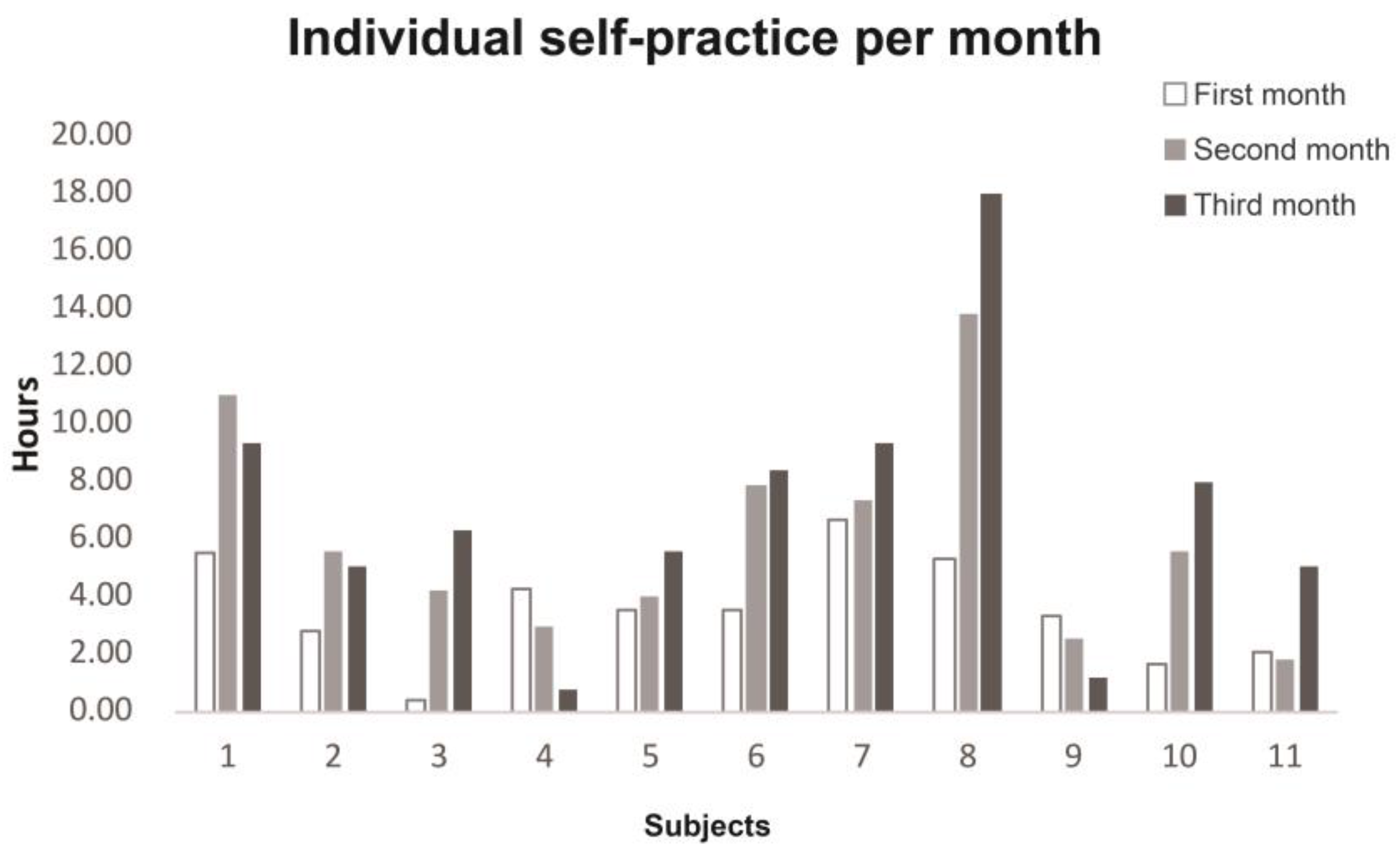
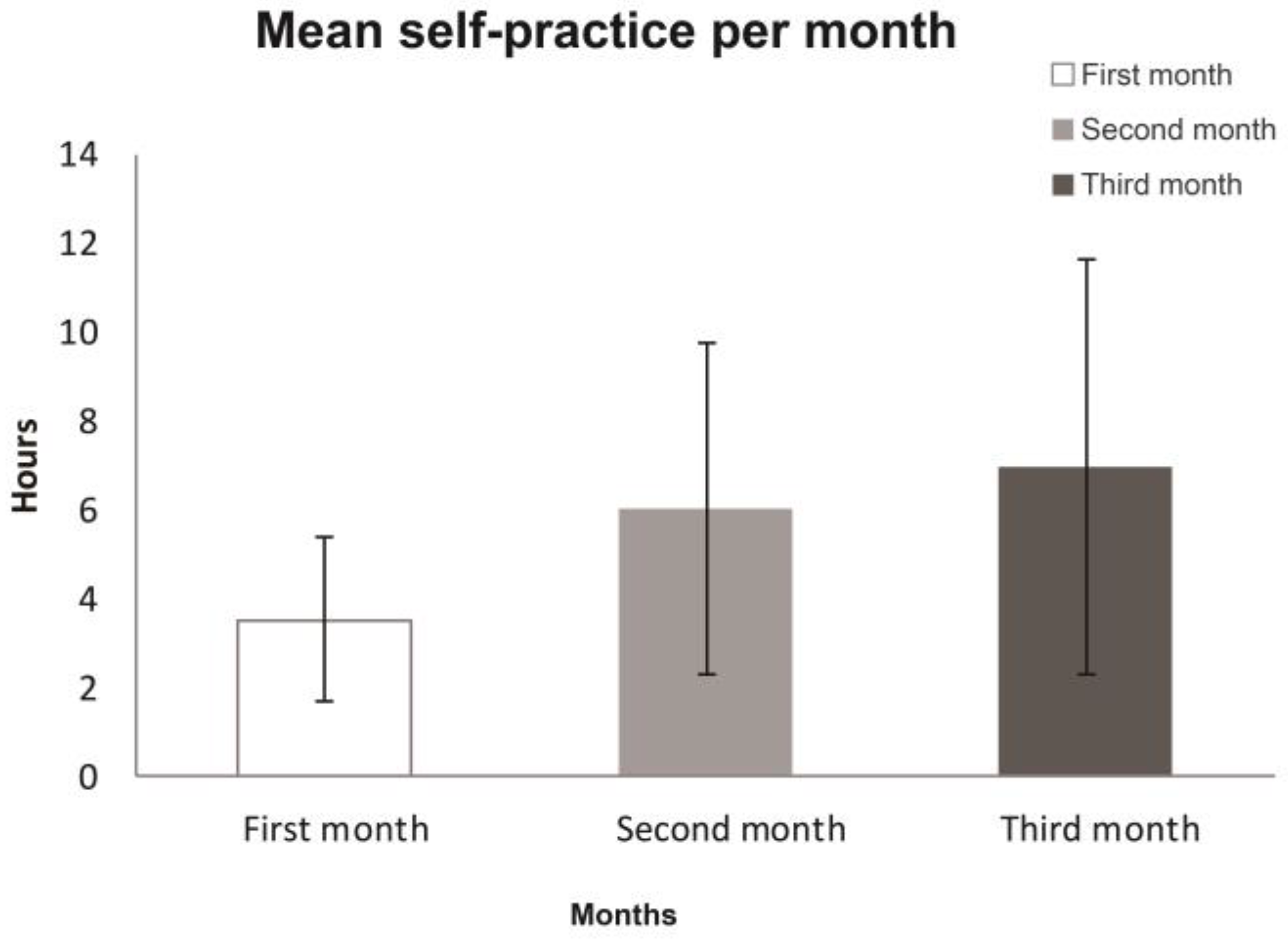
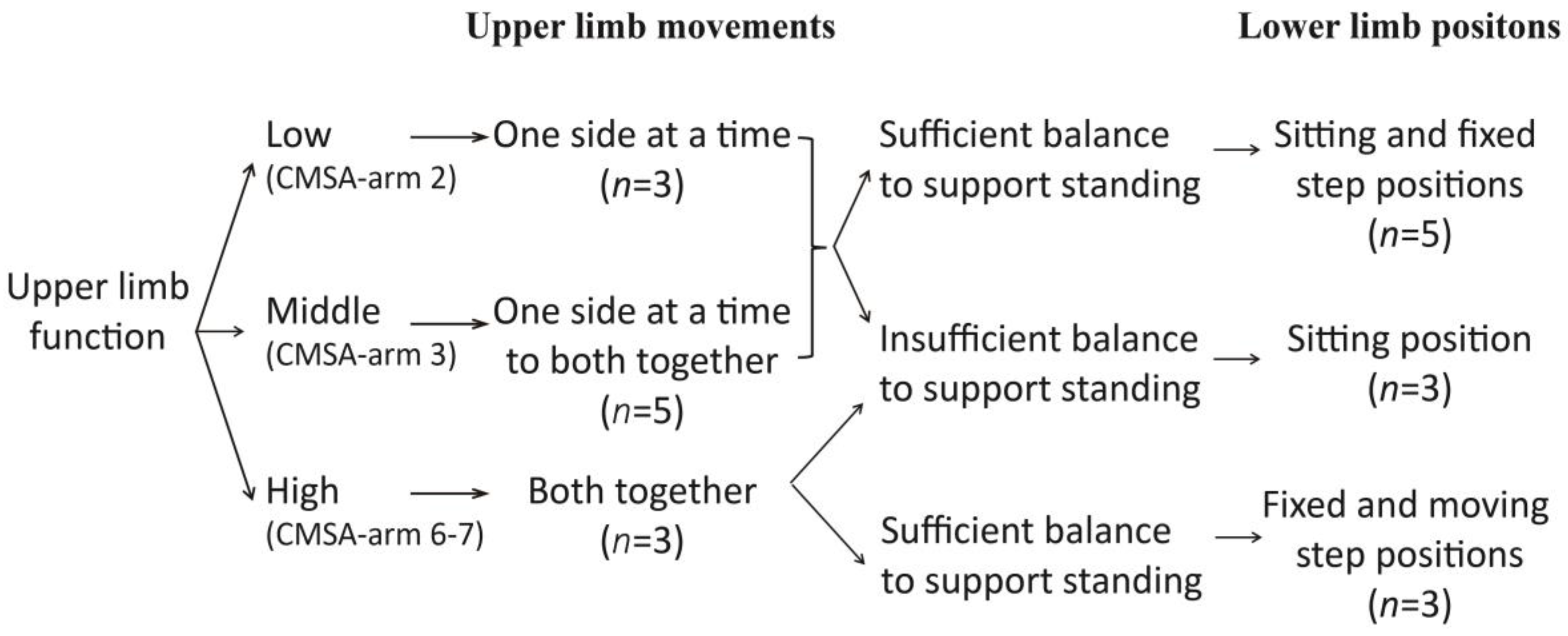
Results: Eleven participants completed the study. A clinical reasoning algorithm underlying the adaptation of TC was elaborated throughout the trial. Participants with varying profiles including a severely impaired upper limb, poor balance, shoulder pain, and severe spasticity were not only capable of practicing the adapted TC, but attended all 16 sessions and practiced TC at home for a total of 16.51 ± 9.21 h. The degree of self-practice for subgroups with low upper limb function, shoulder pain, or moderate-to-severe spasticity was similar to that of subgroups with greater upper limb function, no shoulder pain, and minimal-to-no spasticity.
Conclusion: Adapted TC seems feasible for upper limb rehabilitation post stroke. Although the study was based on a small sample size and requires confirmation, low upper limb function, insufficient balance, spasticity, and shoulder pain do not appear to hinder the practice of TC. View Full-Text