Use the labels in the right column to find what you want. Or you can go thru them one by one, there are only 34,264 posts. Searching is done in the search box in upper left corner. I blog on anything to do with stroke. DO NOT DO ANYTHING SUGGESTED HERE AS I AM NOT MEDICALLY TRAINED, YOUR DOCTOR IS, LISTEN TO THEM. BUT I BET THEY DON'T KNOW HOW TO GET YOU 100% RECOVERED. I DON'T EITHER BUT HAVE PLENTY OF QUESTIONS FOR YOUR DOCTOR TO ANSWER.
Changing stroke rehab and research worldwide now.Time is Brain!trillions and trillions of neuronsthatDIEeach day because there areNOeffective hyperacute therapies besides tPA(only 12% effective). I have 523 posts on hyperacute therapy, enough for researchers to spend decades proving them out. These are my personal ideas and blog on stroke rehabilitation and stroke research. Do not attempt any of these without checking with your medical provider. Unless you join me in agitating, when you need these therapies they won't be there.
What this blog is for:
My blog is not to help survivors recover, it is to have the 10 million yearly stroke survivors light fires underneath their doctors, stroke hospitals and stroke researchers to get stroke solved. 100% recovery. The stroke medical world is completely failing at that goal, they don't even have it as a goal. Shortly after getting out of the hospital and getting NO information on the process or protocols of stroke rehabilitation and recovery I started searching on the internet and found that no other survivor received useful information. This is an attempt to cover all stroke rehabilitation information that should be readily available to survivors so they can talk with informed knowledge to their medical staff. It lays out what needs to be done to get stroke survivors closer to 100% recovery. It's quite disgusting that this information is not available from every stroke association and doctors group.
Showing posts with label smartphone apps. Show all posts
Showing posts with label smartphone apps. Show all posts
APPALLING! 'Care' strategy NOT RECOVERY STRATEGY! Everyone here needs to be fired for not understanding the only survivor goal is 100% recovery! 'Care' should never be discussed; it is NEVER A SURVIVOR GOAL!
Digital tool aims to bridge gaps in stroke rehabilitation in resource-limited settings By:Express News Service Chandigarh Mar 21, 2026 10:16 PM ISTLed by neurologists and multidisciplinary experts from PGI, the research, published in the Journal of Neurosciences in Rural Practice, introduces the ‘Stroke Home Care’ (SHC) application, a web-based educational platform designed to assist caregivers in delivering structured and timely care to stroke patients. (File image)
In a significant step towards improving post-stroke rehabilitation in resource-constrained settings, researchers at PGI, Chandigarh, have developed a mobile application-based strategy to support stroke survivors and their caregivers at home. Led by neurologists and multidisciplinary experts from PGI, the research, published in the Journal of Neurosciences in Rural Practice, introduces the ‘Stroke Home Care’ (SHC) application, a web-based educational platform designed to assist caregivers in delivering structured and timely care to stroke patients. It highlights how digital tools can play a crucial role in preventing and managing post-stroke complications, especially in countries like India, where access to rehabilitation services remains limited.
Are you that fucking stupid? Ask the survivor; 'Are you fully recovered?' Then you work on survivor needs, NOT WHAT YOU THINK THE SURVIVOR CAN DO, WHAT THEY WANT!
'Measurements' don't get you recovered, only EXACT REHAB PROTOCOLS DO!
In assessing stroke patient rehabilitation, clinicians have largely relied on their eyes to measure how well a stroke patient can move, grasp and let go. But what if a pocket-sized tool could capture every motion, quantify progress and provide new insight — all in the time it takes to open an app?
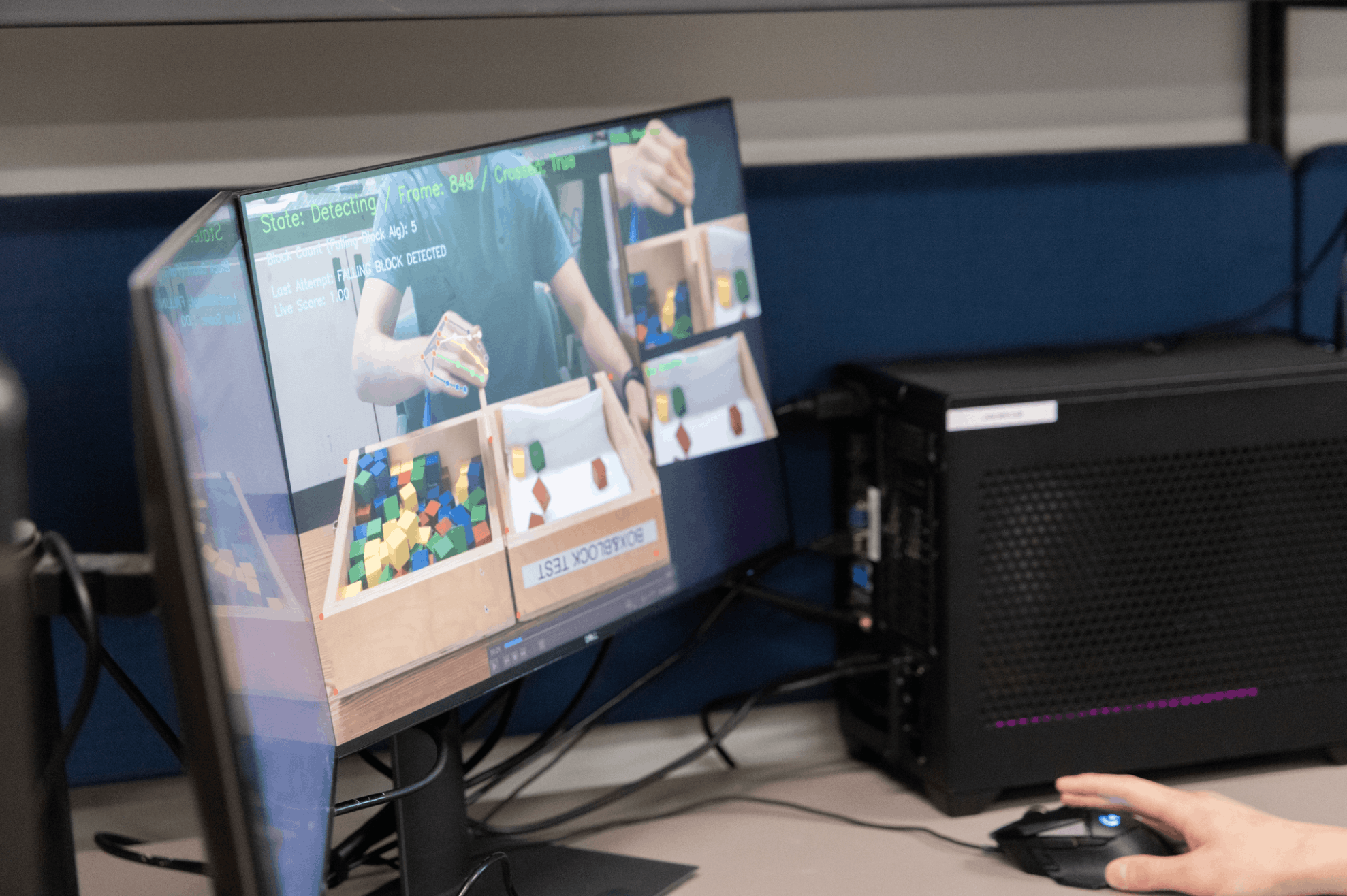
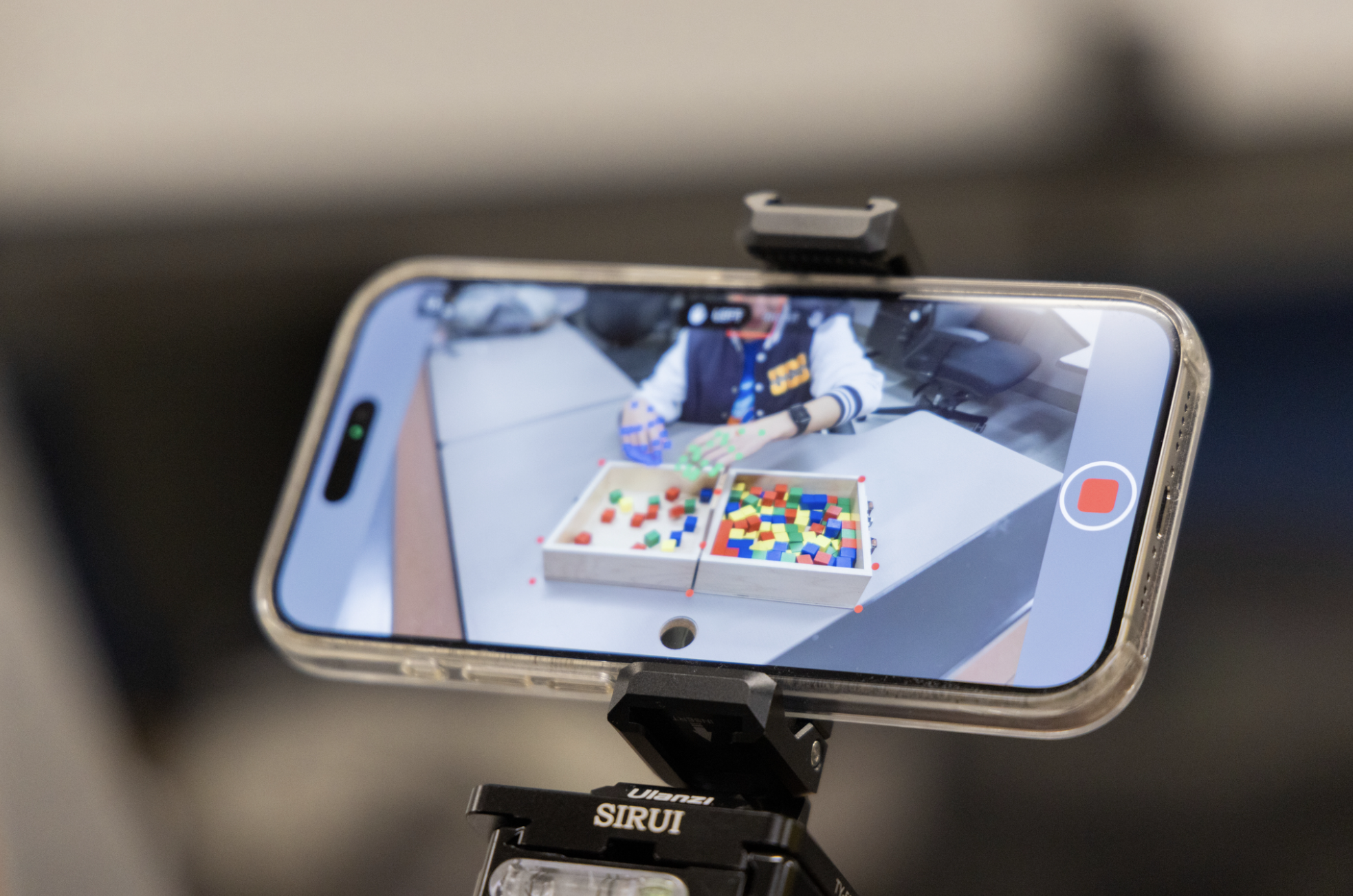
That’s the idea behind the Clinical Motor Recovery assessment tool, or C-MoRe, a new smartphone app developed by two University of California, Davis, master’s students in computer science, Ziqiang “Joe” Zhu and Jun Min Kim. By harnessing the technology of a smartphone’s camera and the power of machine learning, C-MoRe makes it possible to measure rehabilitation progress with unprecedented accuracy and speed, potentially transforming stroke care for patients and the clinicians who provide it.
A Pocket-Sized Tool with Big Potential
In collaboration with UC Irvine’s Department of Mechanical and Aerospace Engineering in the Samueli School of Engineering, C-MoRe has been applied to video footage of seven stroke patients performing the Box and Blocks Test, a standardized dexterity test in which patients must move blocks from one side of a partitioned box to the other.
In a recent paper published in IEEE Xplore, the researchers detail how C-MoRe has successfully detected block transfers with 100% accuracy when compared to humans. It also quantified various limb functions, including grasp and transfer duration, and movement amplitude and velocity, collecting data that can help a physician more accurately assess a stroke patient’s recovery and personalize their rehabilitation strategy, something that is near-impossible with a strictly human assessment.
“C-MoRe is two things. One is, let's make it easier for the clinicians who are actually administering this test by automating parts of it that they can then review,” Zhu said.
“Additionally, because we're recording everything with a camera and all the movements are precisely annotated, we're able to get data that human eyes can't.”
With its availability (anyone with a smartphone can access it) and ability to assess more details than the human eye, a tool like C-MoRe could provide new, important insights into stroke patient recovery and create a pathway to more personalized care.
An Idea Takes Shape
C-MoRe’s origins begin with Andria Farrens, who graduated from UC Davis with a Bachelor of Science degree in mechanical engineering and a minor in biomedical engineering.
While Farrens was conducting postdoctoral research at the UC Irvine Samueli School of Engineering’s Department of Mechanical and Aerospace Engineering, she led a randomized controlled trial on robotic hand rehabilitation for stroke survivors. One day, a UC Irvine Health physical therapist on the research team began using a smartphone camera to record patients performing the Box and Blocks Test to show them their progress.
At the same time, Farrens was working on a side project using Google’s MediaPipe Hand Landmarker open-source motion capture software, which lets users identify key parts of the hand and overlay visual effects. It was a lightbulb moment.
“We started to talk about, ‘Well, we can quantify that, and maybe not only have better information for the patient, but also a better understanding of what we actually improved in terms of hand function,’” said Farrens, who is now the manager of research programs at the Children’s Hospital of Orange County, a UC Irvine partner, and the C-MoRe project lead.
The idea for an app was forming, but Farrens didn’t feel she had the expertise to develop it herself. So, she turned to a familial UC Davis connection: her dad, Matthew Farrens, a professor of computer science. He connected her with Zhu and Kim, who were undergraduate computer science researchers at the time.
Teaching a Computer to See
In the past two years, Zhu and Kim have helped turn Andria Farrens’ idea into reality. They started by customizing MediaPipe Hand Landmarker settings to detect the hands of stroke patients in videos of them performing the Box and Blocks Test. They then developed a machine learning algorithm to detect the different states of the moving hand during the test.
One of the more challenging aspects of training a computer vision model on the Box and Blocks Test that Zhu and Kim encountered was detecting when a person released a block on the correct side. If a human sees someone release a block from their hand, the brain registers that the block was dropped. Computer vision models aren’t that intuitive.
Kim, left, and Zhu work on teaching a computer vision model to recognize and analyze certain hand motions. (Elena Troncoso/UC Davis)
C-MoRe tracks when a block is moved over the barrier and dropped on the other side. (Elena Troncoso/UC Davis)
“In our lab meetings, we would get together and really decompose what it means for us to understand that a block has dropped,” Kim said. “We had to really dumb it down to basic core principles and then train vision models to comprehend those principles.”
Zhu and Kim got around this by programming two proxies: one that examines the distance between the block and the hand, and another that detects changes on the destination side of the box, which can typically be attributed to the introduction of the block falling from someone’s hand.
Toward Precision Rehabilitation
One area Farrens hopes to make an impact with the data the app gathers is in assessing proprioception in stroke patients. Proprioception is the body’s ability to sense where it is in space without looking. It allows people to touch their nose with their eyes closed or walk without watching their feet.
The app will allow physicians to measure rehabilitation progress with unprecedented accuracy and speed. (Elena Troncoso/UC Davis)
In using this app, Farrens noticed that, when assessing the grasping phase, she can better identify individuals with proprioception deficits who may be candidates for more specialized training focused on that deficit, rather than just repetitive movement training.
“The app fits into this idea of precision rehabilitation and being able to identify factors that mediate recovery and then potentially evaluate better and different types of training that then cause recovery,” she said.
In addition to C-MoRe’s rapid clinical assessment (Zhu and Kim are working on implementing immediate analysis), Farrens, Zhu and Kim also aim for the app to help build a larger data set on stroke patient recovery and motor function. The dataset will be made open-source so other clinicians and researchers can use it for modeling and recovery prediction in similar clinical settings.
From Pilot to Practice
The app is currently in the pilot stage. Farrens will soon begin working with it more in a clinical setting, and as they gather more data, the team plans to publish their findings and make the app widely available. They hope C-MoRe proves to be a valuable tool in stroke patient rehabilitation and can offer new information that can help with recovery.
“We’re not looking to replace physicians; we’re looking to make their lives better,” Zhu said. “We’re quantifying the movements and looking at all of the hand movements and kinematics, which are just not possible with human eyes. By doing it this way, we might open up a new way to look at how stroke affects people.”
Tracking social contacts does NOT aid recovery. You need to provide 100% recovery, so survivors feel confident in social situations. Does no one in stroke know how to think about survivor recovery?
A smartwatch app that tracks social contact in hospitalised stroke survivors may aid recovery, new research suggests.
Researchers developed SocialBit, a machine learning app for Android smartwatches that detects social interactions in people with and without neurological conditions.
It is currently available only for research use.
Speech and language problems after stroke are common, including dysarthria, which affects speech muscles, and aphasia, which impairs language. Socialising is linked with better recovery.
In prior work, lead author Amar Dhand found socially isolated stroke survivors had worse outcomes at three and six months.
He said: “We created a tracker of social life customised for stroke survivors.
“Tracking human engagement is crucial, and social isolation can now be identified in real-world situations.
“This may be addressed by notifying the patient, family members, caregivers and health care professionals of social isolation.”
Dhand is an associate professor of neurology in the division of stroke and cerebrovascular disorders at Mass General Brigham in Boston.
The study recruited 153 adults during hospitalisation for ischaemic stroke.
Participants wore an Android smartwatch running SocialBit from 9 a.m. to 5 p.m. daily for up to eight days, some after transfer to a rehabilitation hospital.
The app logged minutes of social interaction using acoustic patterns of the participant or another person talking.
At the same time, human observers reviewed livestream video and recorded minute-by-minute interactions.
Compared with human observers, SocialBit was 94 per cent as accurate at recognising social interactions, and 93 per cent in people with aphasia.
Performance held up despite TV noise, side conversations, different settings and across Android watch models.
Greater stroke severity was linked with less social time, with about a 1 per cent drop in total interaction minutes for each 1-point rise on the NIH Stroke Scale, a standard measure of stroke severity.
Dhand said: “I was surprised by how well the app performed for people with aphasia.
“We used SocialBit to capture sounds instead of words to protect privacy, and this feature ended up being helpful for people with limited language skills.
“The SocialBit app may also help people recover from brain injuries. It can support therapies like speech, occupational and exercise therapy.”
Future studies could use SocialBit to flag patients at risk of social isolation in hospital and after discharge, and to examine links with depression and other post-stroke mental health changes. Researchers also plan to test it in other brain injuries and healthy ageing.
One limitation was that detailed social-interaction assessments were conducted only in hospital or rehabilitation settings.
Commenting on potential uses, stroke specialist Cheryl Bushnell said: “This research is fascinating in its capture of social interactions, which I presume can distinguish between conversations from case managers, nurses, therapists and the care team from non-hospital personnel.
“If not, then the amount of social interaction could be dependent on the size of the care team, or the nurse-to-patient ratio.
“If the app does distinguish hospital from non-hospital personnel, then distance from the hospital and the number of family and friends become major factors.
“Regardless, there are multiple interesting ways this app could be used in future studies, including measures of quality of hospital care and social interactions at rehab facilities and nursing homes.”
This review aims to synthesize current evidence on the use of mobile applications (Apps) for post-stroke rehabilitation, focusing on measurable clinical outcomes related to motor, language, balance, and functional recovery.
Recent Findings
Several mobile Apps have been recently developed for post-stroke rehabilitation. Many studies show significant improvements in validated outcomes such as motor performance, speech intelligibility, and functional independence. Features like gamification, feedback, and virtual or augmented reality enhance engagement and adherence. Overall, app-based interventions appear effective(It's a binary question; effective? Y/N? And your research proved you were total failures in helping survivors!) and feasible both in clinical and home settings.
Summary
From databases search, we found 18 relevant studies from 782 records. We examined study design, functionalities, and reported outcomes. The selected Apps addressed upper-limb rehabilitation, gait and balance training, language recovery, neglect therapy, and physical activity promotion. Significant improvements were consistently observed across validated measures, and immersive virtual or augmented reality systems produced measurable gains in motor performance, user engagement, and quality of life. We found that most interventions were tested in chronic, home-based contexts, and only a few studies were performed in an early acute–subacute inpatient setting, and this field should be better evaluated in future studies.
This does NOTHING to ensure recovery. Getting your survivor back to 100% recovery obviates the need for this secondary problem! CAN'T YOU PEOPLE THINK AT ALL?
A smartwatch app designed to measure social interactions of hospitalized stroke survivors may enable new treatments to preserve or enhance cognition, social engagement and quality of life after a stroke, according to a preliminary study to be presented at the American Stroke Association's International Stroke Conference 2026. The meeting is in New Orleans, Feb. 4-6, 2026, and is a world premier global event dedicated to advancing stroke and brain health science.(ABSOLUTE FUCKING BULLSHIT! You are doing nothing towards 100% recovery; THAT IS TOTAL INCOMPETENCE!
I will against my better nature hope all of you discover comeuppance when you have your stroke and DON'T RECOVER!)
Researchers developed a machine learning app called SocialBit, which is compatible with Android smartwatches, and can identify social interactions in both people with and without neurological conditions. The researchers noted that other devices to track social interactions are focused on people without disabilities. SocialBit is currently only available for use in research projects.
According to the American Stroke Association, the loss or change in speech (dysarthria) and language (aphasia) profoundly alters the social life of stroke survivors. Yet, research has shown that socializing is one of the best ways to maximize recovery after a stroke.
My previous research has demonstrated that stroke survivors who are socially isolated or have a smaller circle of friends and family have worse physical outcomes at 3 and 6 months after a stroke. We created a tracker of social life customized for stroke survivors. Tracking human engagement is crucial, and social isolation can now be identified in real-world situations. This may be addressed by notifying the patient, family members, caregivers and health care professionals of social isolation."
Amar Dhand, M.D., D.Phil., study lead author, associate professor of neurology, division of stroke and cerebrovascular disorders, department of neurology, Mass General Brigham, Boston
Amar Dhand, M.D., D.Phil., study lead author, associate professor of neurology in the division of stroke and cerebrovascular disorders in the department of neurology at Mass General Brigham in Boston
Researchers recruited 153 adults during their hospitalization for an ischemic stroke.
Participants wore a smartwatch with the SocialBit app while they were in their hospital rooms, between 9 a.m. to 5 p.m. daily, for up to 8 days (some of which may have been after transfer to a rehabilitation hospital). The app logged the amount of socialization time according to acoustic patterns from the participant and/or another person talking, indicating social engagement. During the same timeframe, members of the research team watched a livestream video of the participants and logged the same minute-by-minute social interactions of the participants with others.
The researchers found:
Compared with human observers, SocialBit was 94% as accurate in recognizing social interactions.
In patients with aphasia, SocialBit maintained accuracy at 93%.
SocialBit's performance remained consistent despite TV noise, side conversations, different environments (rehabilitation unit versus hospital) and across various Android smartwatch models.
Participants who had a more severe stroke had less social interaction, with about a 1% drop in total social interaction minutes for each 1-point increase in the NIH Stroke Scale, a standardized tool used to assess the severity of a stroke.
“Our purpose with mRehab is to develop a user-friendly, scalable system that promotes independence and improves the quality of life for stroke survivors while reducing caregiver burden. ”
Wenyao Xu, professor of computer science and engineering
University at Buffalo School of Engineering and Applied Sciences
BUFFALO, N.Y. — More than 700,000 Americans experience a stroke each year, with many survivors experiencing long-term motor impairments that limit their ability to perform everyday activities.
Access to rehabilitation programs often drops off within a few months after a stroke, leaving patients with minimal support when ongoing practice is still needed.
As a result, they’re turning to rehabilitation programs on mobile apps for help, but many apps are developed without the input of people who need them and don’t adapt to real-life challenges.
A University at Buffalo-developed rehabilitation system called mRehab is tackling this challenge, with the goal of helping people recover from stroke at home with greater success than traditional approaches.
UB researchers and partners at Georgia State University were recently awarded a $750,000 grant from the National Institute on Disability, Independent Living, and Rehabilitation Research (NIDILRR) to advance mRehab.
“Our purpose with mRehab is to develop a user-friendly, scalable system that promotes independence and improves(NOT RECOVERED!)the quality of life for stroke survivors while reducing caregiver burden,” says co-principal investigator Wenyao Xu, PhD, professor in the UB Department of Computer Science and Engineering.
mRehab tracks real-time performance and gives auditory and visual feedback.
The project’s principal investigator is Sutanuka Bhattacharjya, PhD, assistant professor of occupational therapy in the Lewis College of Nursing and Health Professions at GSU. She began working on mRehab in 2017 while a postdoctoral researcher at UB.
mRehab pairs everyday 3D-printed objects with a user’s smartphone to provide interactive exercises. It tracks real-time performance and gives auditory and visual feedback.
In preliminary studies of how stroke survivors were using the app, the team found that a few people found some exercises too challenging and some lost track of how to gauge their progress, but overall, stroke survivors made progress(NOT RECOVERED!) in their physical recovery.
Researchers will use the new award to refine the design of mRehab based on its usability and functionality for stroke survivors. The teams plan to compare its effectiveness against a commercially available system called FitMi.
With a system improved from the feedback of users, the team hopes to see increased engagement from users and better compliance, leading to greater mobility and independence for stroke survivors.
Other UB researchers working on the project include co-principal investigator Lora Cavuoto, PhD, professor in the Department of Industrial and Systems Engineering, whose expertise in ergonomics and human performance is critical for adapting mRehab exercises to the real-world needs of stroke survivors. Her work will ensure that the system not only promotes functional recovery, but also accounts for user comfort to support use during daily rehabilitation.
Also on the team are Hang Jin Jo, PhD, assistant professor in the Department of Rehabilitation Science; and Heamchand Subryan, MArch and MFA, director of interaction design at the UB Center for Inclusive Design and Environmental Access. Veronica Rowe, PhD, associate professor of occupational therapy in the Lewis College of Nursing and Health Professions, is also an investigator on the project.
Does your competent? doctor have enough functioning neurons to get this installed in their hospital? Or is your doctor brain dead? Valid question; how does your doctor stack up? Alive or dead?
 Led by neurologists and multidisciplinary experts from PGI, the research, published in the Journal of Neurosciences in Rural Practice, introduces the ‘Stroke Home Care’ (SHC) application, a web-based educational platform designed to assist caregivers in delivering structured and timely care to stroke patients. (File image)