Changing stroke rehab and research worldwide now.Time is Brain! trillions and trillions of neurons that DIE each day because there are NO effective hyperacute therapies besides tPA(only 12% effective). I have 523 posts on hyperacute therapy, enough for researchers to spend decades proving them out. These are my personal ideas and blog on stroke rehabilitation and stroke research. Do not attempt any of these without checking with your medical provider. Unless you join me in agitating, when you need these therapies they won't be there.

What this blog is for:

My blog is not to help survivors recover, it is to have the 10 million yearly stroke survivors light fires underneath their doctors, stroke hospitals and stroke researchers to get stroke solved. 100% recovery. The stroke medical world is completely failing at that goal, they don't even have it as a goal. Shortly after getting out of the hospital and getting NO information on the process or protocols of stroke rehabilitation and recovery I started searching on the internet and found that no other survivor received useful information. This is an attempt to cover all stroke rehabilitation information that should be readily available to survivors so they can talk with informed knowledge to their medical staff. It lays out what needs to be done to get stroke survivors closer to 100% recovery. It's quite disgusting that this information is not available from every stroke association and doctors group.

Showing posts with label amyloid beta. Show all posts

Sunday, October 11, 2026

Amyloid, p-tau, neurofilament light, and α-synuclein cerebrospinal fluid biomarkers across Alzheimer's disease, dementia with Lewy bodies, and Parkinson's disease

 With your risk of Parkinsons and dementia post stroke, what will your competent? doctor do with this to prevent those problems? 

1. A documented 33% dementia chance post-stroke from an Australian study?   May 2012.

2. Then this study came out and seems to have a range from 17-66%. December 2013.`    

3. A 20% chance in this research.   July 2013.

4. Dementia Risk Doubled in Patients Following Stroke September 2018 

Oh, sorry; NOTHING AT ALL! In my opinion your doctor is completely incompetent in not using research to get you recovered!

Amyloid, p-tau, neurofilament light, and α-synuclein cerebrospinal fluid biomarkers across Alzheimer's disease, dementia with Lewy bodies, and Parkinson's disease


Abstract

Introduction: Mounting evidence suggests overlapping pathology across Alzheimer's disease (AD), dementia with Lewy bodies (DLB), and Parkinson's disease (PD), yet its extent and clinical implications remain unclear.

Methods: Cerebrospinal fluid (CSF) amyloid beta (Aβ)42/40, phosphorylated tau 181 (p-tau181), neurofilament light chain (NfL), and total α-synuclein were centrally measured using fully-automated Elecsys immunoassays in 347 participants (European Platform for Neurodegenerative Diseases [EPND] cohort) and compared between groups. Associations of amyloid and tau positivity with cognitive and motor function were evaluated.

Results: Compared to controls, amyloid and tau levels were abnormal in DLB, but not in PD. Amyloid and tau positivity in DLB were associated with worse global cognitive outcomes, but not with motor performance. NfL levels were elevated across diseases, and total α-synuclein levels were associated with tau positivity.

Discussion: AD pathology is observed in DLB, and related to worse cognition, but it is less observed in PD. CSF NfL captures non-disease-specific processes, whereas CSF total α-synuclein likely reflects CSF tau positivity. Results can help patient management in clinical practice and trials.

Keywords: Alzheimer's disease; Elecsys; Parkinson's disease; amyloid; cerebrospinal fluid; cognition; dementia with Lewy bodies; longitudinal; motor function; neurodegenerative diseases; neurofilament light; risk factors; tau; α‐synuclein.

Monday, August 24, 2026

Common Anti-Seizure Drug Prevents Alzheimer’s Plaques from Forming

 Your competent? doctor is familiar with this drug for stroke and epilepsy, right? NO? Incompetent for over a decade and still employed? Wow, your board of directors is impossibly incompetent! Do something about that!

Levetiracetam (5 posts to November 2013)

Common Anti-Seizure Drug Prevents Alzheimer’s Plaques from Forming

While other drugs clear existing plaques, levetiracetam prevents production of toxic amyloid beta peptides

In a new study, Northwestern scientists have pinpointed when and where toxic proteins accumulate in the brains of Alzheimer’s patients and discovered that a decades-old drug can stop that process before it begins. Above, corresponding author Jeffrey Savas talks to members of his lab.

While physicians and scientists have long known Alzheimer’s disease involves the buildup of toxic protein fragments in the brain, they have struggled to understand how these harmful fragments are produced.

Now, in a study published in Science Translational Medicine, Northwestern University scientists have pinpointed when and where toxic proteins accumulate within the brains of Alzheimer’s patients — and discovered a decades-old Food and Drug Administration (FDA)-approved drug that can stop the accumulation process before it even begins.

By studying animal models, human neurons and brain tissue from high-risk patients, the team discovered a particularly toxic protein fragment, called amyloid-beta 42, accumulates inside neurons’ synaptic vesicles — the tiny packets that neurons use to send signals. But, when the scientists administered levetiracetam (an inexpensive, decades‑old anti‑seizure drug) to the animals and human neurons, the drug prevented neurons from forming amyloid-beta 42.

“While many of the Alzheimer’s drugs currently on the market, such as lecanemab and donanemab, are approved to clear existing amyloid plaques, we’ve identified this mechanism that prevents the production of the amyloid‑beta 42 peptides and amyloid plaques,” said corresponding author Jeffrey Savas, PhD, associate professor in the Ken and Ruth Davee Department of Neurology‘s Division of Behavioral Neurology at Northwestern University Feinberg School of Medicine. “Our new results uncovered new biology while also opening doors for new drug targets.”

Introduction of anti-seizure drug to the Alzheimer’s fight

At the heart of the new discovery is amyloid precursor protein (APP), a protein that plays important roles in brain development and synaptic formation. Abnormal processing of APP can lead to the production of amyloid‑beta peptides, which play a central role in the development of Alzheimer’s disease. The Northwestern scientists found that how APP is trafficked also controls whether a neuron forms amyloid-beta 42.

During the synaptic vesicle cycle — a fundamental process that underlies every thought, movement, memory or sensation — levetiracetam binds to a protein called SV2A. This interaction slows down a step in which neurons recycle synaptic vesicle components from the cell’s surface. By pausing this recycling process, the drug enables APP to remain on the cell’s surface longer, diverting it away from the pathway that produces toxic amyloid‑beta 42 proteins.

“In our 30s, 40s and 50s, our brains are generally able to steer proteins away from harmful pathways,” Savas said. “As we age, that protective ability gradually weakens. This is not a statement of disease; this is just a part of aging. But in brains developing Alzheimer’s, too many neurons go astray, and that’s when you get amyloid-beta 42 production. And then it’s tau (or ‘tangles’), and then it’s dead cells, then dementia, then neuroinflammation — and then it’s too late.”

Drug would need to be taken ‘very, very early’

To effectively prevent Alzheimer’s symptoms, high-risk individuals would need to begin taking levetiracetam “very, very early,” Savas said, possibly up to 20 years before the new FDA-approved Alzheimer’s disease test would even capture mildly elevated levels of amyloid-beta 42.

“You couldn’t take this when you already have dementia because the brain has already undergone a number of irreversible changes and a lot of cell death,” Savas said.

Because of this, Savas said he and his team might attempt to identify patient populations with genetic forms of Alzheimer’s, which includes patients with Down syndrome. Although these patients are somewhat rare, they are the key group to benefit from these discoveries.

Mining existing human clinical data

Leveraging its status as an FDA-approved and widely used drug, the team mined existing human clinical data to investigate whether Alzheimer’s patients who took levetiracetam experienced slowed cognitive decline. They obtained clinical data from the National Alzheimer’s Coordinating Center and conducted a correlative analysis, finding that Alzheimer’s patients who took levetiracetam were associated with a significant delay from the diagnosis of cognitive decline to death compared to those taking lorazepam or no/other anti-epileptic drugs.

“Although the magnitude of change was small (on the scale of a few years), this analysis supports the positive effect of levetiracetam to slow the progression of Alzheimer’s pathology,” Savas said.

Study also examined Down syndrome brains

In addition to using genetically engineered mouse models and cultured human neurons, the scientists also studied human brain tissue from deceased patients with Down syndrome who died in their 20s or 30s from car accidents or other events. More than 95% of patients with Down syndrome will develop an early and aggressive form of Alzheimer’s by around age 40, Savas said, because the APP gene is linked to the chromosome that is triplicated in their genome.  

“By obtaining Down syndrome patient brains from people who died in their 20s or 30s, we know they would have eventually developed Alzheimer’s, so it gives us an opportunity to study the very initial early changes in the human brain,” Savas said.

The study found these brains had the same accumulation of presynaptic proteins that Savas’ lab had found in engineered mouse models in a previous paper.

“That is what we and others call the paradoxical stage of Alzheimer’s disease, which is that before synapses are lost and dementia ensues, the first thing that happens is presynaptic proteins accumulate,” Savas said. “So conceivably, if you started giving these patients levetiracetam in their teenage years, it could actually have a preventative therapeutic benefit.”

Savas said levetiracetam “is not perfect,” and noted that the drug breaks down in the body very quickly. He and others are in the process of making a better version of levetiracetam, which would last longer in the body and help better target the mechanism that prevents the production of the plaques.

Notes

Other Northwestern study authors include Nalini R. Rao, Ivan Santiago-Marrero1, Olivia DeGulis, Toshihiro Nomura, Kritika Goyal, SeungEun Lee, Timothy J. Hark, Justin C. Dynes, Emily X. Dexter, Arun Upadhyay, Robert Vassar and Anis Contractor.

Funding for the study was provided by the National Institutes of Health and the Cure Alzheimer’s Fund.

Tuesday, August 18, 2026

Lithium and Brain Health: Could a Deficiency Raise Alzheimer’s Risk?

 A big warning buried in here: Lithium Is NOT Benign! Read all of this and grill your doctor on it.

Lithium and Brain Health: Could a Deficiency Raise Alzheimer’s Risk?

Here's a fascinating question: could lithium deficiency contribute to cognitive impairment? Is there a link between lithium and brain health?

Most healthcare professionals think about lithium, if they think about it at all, as the stuff in rechargeable batteries or as a powerful prescription drug for bipolar disorder. They probably do not think about lithium and brain health or imagine that too little of this natural mineral might have anything to do with Alzheimer’s disease. New research suggests it may be time to reconsider that assumption.

That idea is especially surprising because lithium is not officially recognized as an essential nutrient. There is no Recommended Dietary Allowance for lithium. Doctors do not routinely measure lithium levels in healthy people. There is no recognized “lithium deficiency disease” comparable to iron-deficiency anemia or vitamin D deficiency.

And yet a remarkable study published in Nature (August 6, 2025), raised a provocative possibility: tiny amounts of naturally occurring lithium may play an important role in keeping the aging brain healthy.

The title alone should have attracted enormous attention:

“Lithium deficiency and the onset of Alzheimer’s disease“

This was not a casual experiment carried out by investigators in a small lab in a foreign country. The research involved investigators from Harvard Medical School, Boston Children’s Hospital and the Rush Alzheimer’s Disease Center. They examined human brains as well as sophisticated mouse models of Alzheimer’s disease.

Lithium and Brain Health: A Mineral Hiding in Plain Sight?

Lithium is a naturally occurring element. It is found in rocks and soil. As a result, lithium gets into groundwater, drinking water, food and us. Unlike calcium, magnesium, iron or zinc, however, lithium has never achieved membership in the official essential-nutrient club.

Perhaps that is because the amounts normally present in the body are extraordinarily small. The lithium concentrations used to treat bipolar disorder, on the other hand, are vastly greater than the trace amounts normally circulating in people. The dose of lithium found in the prescription drug LITHOBID® prescribed for “manic episodes of Bipolar Disorder” is:

“3 tabs (900 mg) Morning” and “3 tabs (900 mg) Nighttime”

That’s a whopping 1,800 mg of lithium carbonate (or roughly 340 mg of pure lithium). There is considerable toxicity associated with this high dose of lithium and the boxed warning that comes with LITHOBID® (lithium carbonate) states:

WARNING

“Lithium toxicity is closely related to serum lithium levels, and can occur at doses close to therapeutic levels. Facilities for prompt and accurate serum lithium determinations should be available before initiating therapy.”

For decades, most medical interest in lithium has revolved around lithium the medication, not lithium the nutrient-like trace element.

If you would like to get a thorough background about the history of lithium dating back to the 19th century, you will want to read my prior article titled:

“Rediscovering Low-Dose Lithium for Mood Disorders“

You may be surprised to learn that the original soft drink “Seven Up” was once called 7UP Lithiated Lemon Soda. It has been estimated that the original formula contained 5 mg of lithium citrate. One marketing slogan was: “It takes the ouch out of the grouch.”

There is no lithium in the current 7UP!

Fast forward to Harvard researchers and their article a year ago in Nature (August 6, 2025).

What Did the Researchers Find in Human Brains?

The scientists measured 27 metals in the blood and brains of older people who had normal cognition, mild cognitive impairment (MCI) or Alzheimer’s disease. MCI is important because it can represent an early stage on the road toward dementia.

Of all the metals measured, lithium stood out. It was the only metal significantly reduced in the prefrontal cortex in both MCI and Alzheimer’s disease. That is intriguing enough. But there was another surprise.

Blood levels of lithium were not significantly lower in people with MCI or Alzheimer’s disease.

In other words, this was not simply a matter of people having less lithium circulating throughout their bodies. Something seemed to be happening specifically inside vulnerable parts of the brain. The investigators discovered a possible explanation: amyloid plaques appeared to trap lithium.

Amyloid beta is the sticky protein that accumulates in the brains of people with Alzheimer’s disease. The researchers found lithium concentrated in those deposits, leaving less lithium available to surrounding brain tissue. That raises the possibility of a nasty feedback loop:

Alzheimer’s pathology begins → amyloid traps lithium → less lithium remains available to brain cells → the shortage may make Alzheimer’s pathology worse → still more amyloid accumulates.

That is a hypothesis, not established medical fact. But it is a fascinating one.

Lithium and Brain Health: What Happens When the Brain Doesn’t Get Enough Lithium?

Here is where the research becomes quite intriguing. The investigators deliberately reduced lithium in the diets of mice. This lowered lithium levels in the cerebral cortex by roughly half. The consequences were dramatic.

Lithium depletion increased two hallmarks of Alzheimer’s disease:

  • Amyloid beta, which forms plaques
  • Phosphorylated tau, which contributes to the tangles found inside nerve cells

That was only part of the story. Lithium deficiency also activated inflammatory cells in the brain called microglia. I have to be honest with you. I am totally fascinated by microglia. Think of these cells as part of the brain’s housekeeping and immune system.

This is not a perfect analogy, but for our purposes you could imagine microglia as minute vacuum cleaners, sucking up debris, old cellular brain fragments and even infectious agents. In other words, they are part of the brain’s immune defense against pathogens. They also help dispose of the brain’s cellular debris, including amyloid.

When lithium became deficient, these cells shifted toward a more inflammatory state and became less effective at clearing amyloid. The lithium-depleted animals also lost synapses, axons and myelin. Synapses allow brain cells to communicate. Axons carry electrical messages. Myelin is the insulation surrounding many of those nerve fibers.

Here’s the key piece to the puzzle. The mice experienced accelerated memory and cognitive problems. That is a remarkable collection of results from reducing one trace element that most nutrition experts think is unimportant.

A Possible Culprit: GSK-3 Beta

Now we must take a brief foray into neuroscience. Please don’t let the alphabet soup scare you away. An enzyme called glycogen synthase kinase-3 beta, thankfully abbreviated GSK-3β, appears to play a key role in several processes associated with Alzheimer’s disease.

Among other things, excessive GSK-3β activity can contribute to abnormal phosphorylation of tau. Along with amyloid beta, phosphorylated tau is considered an important marker of Alzheimer’s disease. Consider this: The FDA has approved blood tests that measure phosphorylated tau. In its May 16, 2025 announcement the agency offered this headline:

“FDA Clears First Blood Test Used in Diagnosing Alzheimer’s Disease”

New Test Provides Less Invasive Option, Reduces Reliance on PET Scans and Increases Diagnosis Accessibility

Lithium and Brain Health

Lithium has been known to affect the enzyme GSK-3β. The Harvard investigators found that lithium deficiency increased GSK-3β activity in brain cells. When they blocked GSK-3β experimentally, they reversed many of the harmful effects produced by lithium deficiency. This included improvements in amyloid accumulation, tau abnormalities, inflammation and myelin problems.

That provides something scientists always want: a plausible biological mechanism. It does not, however, prove that taking lithium will prevent Alzheimer’s disease in human beings. That distinction is crucial.

Then Came Lithium Orotate

Perhaps the most intriguing part of the Nature experiment involved different forms of lithium.

The prescription form most people know is lithium carbonate. It is the form of lithium that is used by psychiatrists to treat people with bipolar disorder.

The Harvard scientists used lithium orotate.

Here is how they described their findings with regard to Alzheimer’s disease (AD):

“Replacement therapy with lithium orotate, which is a Li [lithium] salt with reduced amyloid binding, prevents pathological changes and memory loss in AD mouse models and ageing wild-type mice. These findings reveal physiological effects of endogenous Li in the brain and indicate that disruption of Li homeostasis may be an early event in the pathogenesis of AD. Li replacement with amyloid-evading salts is a potential approach to the prevention and treatment of AD.”

Their experiments suggested that lithium carbonate was more readily trapped by amyloid deposits. Lithium orotate appeared less likely to become sequestered in plaques and consequently delivered more lithium to the surrounding brain tissue.

When researchers gave extremely small amounts of lithium orotate to Alzheimer’s-prone mice, the results were impressive. In one model, lithium orotate nearly prevented the accumulation of amyloid and abnormal tau when given before substantial disease developed. In older animals that already had extensive pathology, treatment reduced amyloid deposits substantially.

In aging mice without genetically engineered Alzheimer’s disease, lithium orotate also helped preserve synapses and memory. Even more surprising, the doses were designed to keep lithium concentrations in the range naturally found in the body rather than the much higher blood concentrations used to treat bipolar disorder.

Long-term treatment at these tiny doses did not produce detectable changes in the kidney and thyroid laboratory tests the investigators monitored in the mice. Please notice the last three words in that sentence: “in the mice.”

We cannot automatically assume that the same dose, safety or brain benefits would apply to people. That is why clinical trials matter!

What About Human Evidence Re: Lithium and Brain Health?

Fortunately, the lithium story does not depend entirely upon laboratory animals. There have been some intriguing human clues for years. One of the largest comes from Denmark (JAMA Psychiatry, Oct. 1, 2017).

Investigators compared lithium concentrations in drinking water with dementia diagnoses in 73,731 people with dementia and 733,653 controls.

People exposed over the long term to the highest category of lithium in drinking water had a lower rate of dementia than people in the lowest category:

“Long-term increased lithium exposure in drinking water may be associated with a lower incidence of dementia in a nonlinear way…”

But there was a wrinkle. The relationship was not linear. An intermediate exposure group actually had a higher rate of dementia than the lowest group. The investigators therefore appropriately warned that geography, socioeconomic factors or other unmeasured differences might have influenced the results.

That study should prevent anyone from making the simplistic argument that “more lithium in the water equals less dementia.” It isn’t that straightforward.

Another observational study from England found that people exposed to prescription lithium had a lower incidence of dementia (PLoS Medicine, March 17, 2022).

The conclusions:

“We observed an association between lithium use and a decreased risk of developing dementia. This lends further support to the idea that lithium may be a disease-modifying treatment for dementia and that this is a promising treatment to take forwards to larger randomised controlled trials (RCTs) for this indication.”

A “systematic review” of “Trace lithium levels in drinking water and risk of dementia” published in the International Journal of Bipolar Disorders (Aug. 30, 2024) concluded:

“The reviewed evidence shows that trace-Li levels in the water are sufficient to lower the incidence or mortality from dementia. Considering the lack of options for the prevention or treatment of dementia, we should not ignore these findings. Future trials of Li should focus on long term use of low or even micro doses of Li in the prevention or treatment of dementia.”

Again, however, observational research can identify an association. It cannot prove cause and effect. It can encourage investigators to perform large-scale, long-term randomized clinical trials.

One relatively small “pilot” clinical trial produced disappointing results (JAMA Neurology, April 1, 2026). There were 41 people getting lithium carbonate (150 or 300 mg of lithium carbonate) and 39 getting placebo. There was no meaningful benefit for those getting lithium.

Were Researchers Studying the Wrong Dose…and the Wrong Lithium?

The Harvard 2025 Nature experiment was not testing conventional psychiatric doses of lithium carbonate. It was investigating something fundamentally different: restoration of lithium concentrations toward the extraordinarily low levels normally present in brain tissue. It also found that lithium orotate behaved differently from lithium carbonate in the presence of amyloid.

That raises a question worth answering:

Would truly tiny doses of lithium orotate protect the human brain without producing the adverse effects associated with much larger doses of lithium carbonate?

We don’t know. Nobody should pretend that we do. But in June 2026, a review in JAMA Psychiatry made almost exactly that point:

“The 25-Year Evolution of Lithium as a Disease-Modifying Agent in Dementia”

The authors introduce their review this way:

“Lithium, a long-established cornerstone therapy for bipolar disorder, is a biologically plausible disease-modifying agent for neurodegenerative disorders, including mild cognitive impairment (MCI) and Alzheimer disease (AD).”

The authors have pulled together a wealth of information in this article. We highly recommend that all neuroscientists interested in dementia and Alzheimer disease read this article in its entirety. If you know such researchers, please pass it along!

They conclude:

“Across molecular, cellular, imaging, epidemiologic, and early clinical domains, lithium displays remarkable convergence across translational domains. Yet compelling biology alone is insufficient. Definitive, adequately powered randomized clinical trials are required to determine whether lithium meaningfully slows cognitive decline.”

“If validated, lithium could represent a rare example of a low-cost, mechanistically grounded, disease-modifying therapy for neurodegeneration. In short, 75 years after transforming psychiatric care, lithium is now at the forefront of a new frontier: the fight against dementia.”

Why Hasn’t the Link Between Lithium and Brain Health Received More Attention?

Imagine if a pharmaceutical company announced a new molecular compound that:

  • influenced amyloid and tau;
  • calmed inflammatory brain cells;
  • helped preserve synapses and myelin;
  • affected an enzyme implicated in Alzheimer disease;
  • restored memory in animal experiments;
  • and might cost pennies rather than thousands of dollars.

We suspect Wall Street analysts, biotech investors and Alzheimer’s researchers would be paying very close attention. They might be competing to invest in the company developing such a drug.

Lithium presents an awkward economic problem. It is an element. You cannot patent lithium itself. Companies can potentially patent new formulations, delivery systems or particular uses, so saying there is no commercial opportunity would go too far. Nevertheless, the financial incentive for enormous clinical trials may be considerably weaker than it is for a proprietary new drug that could sell for tens of thousands of dollars a year.

That is precisely why public and philanthropic funding could be so important. A cheap treatment should not become scientifically uninteresting simply because it is cheap. We believe the Alzheimer’s research community should pursue this question aggressively, precisely because the answer might turn out to be either very important or completely disappointing. Both outcomes would be valuable.

Lithium Is NOT Benign!

Before anyone rushes to the Internet to order lithium orotate, we need to wave a large red flag.

Lithium can be toxic.

Prescription lithium carries a boxed warning because toxic blood concentrations can occur surprisingly close to therapeutic concentrations. Kidney function, thyroid function, electrolytes and lithium blood concentrations require monitoring when conventional lithium therapy is prescribed.

Lithium as a drug for bipolar disorder can cause:

  • tremor
  • nausea and diarrhea
  • thirst and excessive urination
  • fatigue and muscle weakness
  • thyroid problems
  • kidney problems
  • neurological toxicity at excessive blood concentrations

Dehydration and changes in salt intake can alter lithium concentrations.

Drug interactions are another concern. Diuretics, ACE inhibitors and NSAID-type pain relievers can increase the risk of lithium accumulation and toxicity.

That is why experimenting on your own with prescription lithium is a terrible idea.

And we would not recommend taking even a low-dose, over-the-counter lithium supplement for the prevention or treatment of dementia without discussing it with a very knowledgeable health professional.

“Natural” and “low dose” do not automatically mean “risk free.”

Don’t Confuse Milligrams of a Salt With Milligrams of Lithium

Here is another source of enormous confusion.

A bottle may list the weight of lithium orotate, while another product or prescription lists lithium carbonate. Those numbers do not necessarily represent the same amount of elemental lithium.

It is rather like comparing the weight of sodium chloride with the amount of sodium it contains.

Anyone designing a clinical trial—or contemplating supplementation—needs to distinguish carefully between:

  1. the weight of the lithium compound,
  2. the amount of elemental lithium it supplies,
  3. and the blood or tissue lithium concentration it ultimately produces.

This is one more reason amateur home compounding is a bad idea.

What We Know and What We Don’t

Here is what the science suggests today.

  • Naturally occurring lithium is present in the human brain.
  • The Harvard-led investigators found significantly less available lithium in vulnerable brain tissue from people with mild cognitive impairment (MCI) and Alzheimer’s disease.
  • Reducing lithium in mice aggravated amyloid, tau, inflammation, structural brain damage and memory loss.
  • Very-low-dose lithium orotate prevented or reversed many of those abnormalities in mouse models.
  • Several epidemiological studies and some small human trials have produced intriguing signals suggesting that lithium exposure might be associated with less dementia or slower cognitive decline.

But…

  • We do not know whether lithium deficiency causes Alzheimer disease in humans.
  • It is not clear that low-dose lithium orotate can prevent MCI or Alzheimer disease.
  • The ideal dose remains a mystery.
  • We do not know whether long-term, very-low-dose lithium would be safe.
  • And we do not know if measuring lithium in blood tells us anything useful about lithium availability inside the human brain. The Nature study suggests it may not.

Those are not minor unanswered questions. They are precisely the questions a well-designed randomized clinical trial should answer.

Our Bottom Line on Lithium and Brain Health

For over 75 years, medicine has viewed lithium primarily as a psychiatric drug for bipolar disorder. Perhaps that focus has been too narrow. The 2025 Nature study raises the startling possibility that lithium also has a normal physiological role in the aging brain and that disruption of lithium balance could contribute to the processes that eventually produce Alzheimer disease. The finding that lithium orotate protected aging and Alzheimer-prone mice is provocative.

But mice are not people! We are not recommending lithium orotate to prevent or treat Alzheimer’s disease. The human evidence is nowhere near strong enough to justify such a recommendation.

What we are recommending is research. Lots of it.

The appropriate response to this research is neither breathless enthusiasm nor a dismissive shrug. It is a large, carefully designed, long-term randomized trial testing very-low-dose lithium orotate against placebo, with careful monitoring of cognition, Alzheimer biomarkers, kidney function, thyroid function and adverse effects.

If lithium fails, we need to know that. If an inexpensive trace element can help preserve the aging human brain, we desperately need to know that too.

For a disease as devastating as Alzheimer’s, this is one stone that should not be left unturned.

Final Words:

We know there were a lot of technical terms in this article and we are grateful that you hung in there with us for this complicated story. We sincerely hope you found the research we described intriguing. There are a number of references at the bottom of this post that you could share with healthcare providers who are interested. We hope you will pass this article on to friends, family members, physicians and neuroscientists.

Should you wish to learn more about lithium and Alzheimer disease, you might want to listen to our podcast on this topic:

Show 1451: Rethinking Dementia: Is What We Believed about Alzheimer’s Wrong?
Instead of focusing only on amyloid plaque in the brain, should we be rethinking dementia? Multiple interventions could protect cognition.

Here are links to the podcast on Apple podcasts and Spotify.

These long analyses take many hours to create and your support is invaluable. Should you wish to support our work, here is a link.

Citations
  • Moore, G.J., et al, "The 25-Year Evolution of Lithium as a Disease-Modifying Agent in Dementia: A Narrative Review," JAMA Psychiatry, June 10, 2026, doi: 10.1001/jamapsychiatry.2026.1296
  • Aron, L., et al, "Lithium deficiency and the onset of Alzheimer’s disease," Nature, Aug. 6, 2025, doi: 10.1038/s41586-025-09335-x
  • Kessing, L.V., et al, "Association of Lithium in Drinking Water With the Incidence of Dementia," JAMA Psychiatry, Oct. 1, 2017, doi: 10.1001/jamapsychiatry.2017.2362
  • Chen, S., et al, "Association between lithium use and the incidence of dementia and its subtypes: A retrospective cohort study," PLoS Medicine, March 17, 2022, doi: 10.1371/journal.pmed.1003941
  • Fraiha-Pegado, J., et al, "Trace lithium levels in drinking water and risk of dementia: a systematic review," International Journal of Bipolar Disorders, Aug. 30, 2024, doi: 10.1186/s40345-024-00348-5
  • Gildengers, A.G., et al, "Low-Dose Lithium for Mild Cognitive Impairment: A Pilot Randomized Clinical Trial," JAMA Neurology, April 1, 2026, doi: 10.1001/jamaneurol.2026.0072

Saturday, July 11, 2026

Alcohol Alters Brain Flexibility Based on Hidden Dementia Markings

 Ask your competent? doctor for the EXACT LIMITS on your alcohol consumption if you're doing it(like me) to increase your social connections and thus prevent dementia! NO answer or just a blank stare; INCOMPETENCE! Fire them!

Alcohol Alters Brain Flexibility Based on Hidden Dementia Markings

Summary: A new study focused on the corticostriatal circuit, a critical neural pathway governing decision-making, goal-directed behavior, and behavioral flexibility. Using animal models representing isolated features of the disease, the team discovered that alcohol dramatically reduces communication in the presence of amyloid-beta, but significantly amplifies circuit communication in the presence of tau. This unexpected divergence proves that everyday exposures can interact with pre-existing biological conditions in entirely non-linear ways.

Key Facts

  • The Cognitive Overlap: Behavioral flexibility is heavily impaired in both substance addiction and early-stage Alzheimer’s disease. This operational overlap prompted the Wang lab to investigate whether alcohol use alters the specific brain circuits targeted during early dementia progression.
  • The Additive Assumption Upended: Because amyloid-beta pathology naturally causes abnormal spikes in neural activity and tau causes depressed communication, researchers assumed alcohol would act as a simple additive risk factor, pushing each condition further in its existing path. Instead, alcohol triggered the exact opposite pattern.
  • The Amyloid Suppression: In animal models characterized by amyloid-beta accumulation, alcohol exposure severely decreased signaling communication across the corticostriatal pathway.
  • The Tau Amplification: In stark contrast, when applied to models defined by tau protein tangles, alcohol exposure sharply increased signaling communication within the exact same brain highway.
  • Microglia Immune Disruption: Beyond altering circuit-level communication, the study revealed that alcohol actively interferes with microglia, the resident immune cells of the brain. In the amyloid-dominated models, alcohol disrupted the microglia’s ability to clean up and respond to toxic amyloid buildup.
  • Rejecting Uniform Profiles: These findings emphasize that Alzheimer’s disease is not a uniform condition. Because human patients carry completely different ratios of amyloid and tau depending on their genetics, lifestyle, and disease stage, a person’s neurological response to alcohol will vary significantly based on their unique internal pathology.

Source: Texas A&M

Alcohol use has been associated with an increased risk of cognitive decline and dementia. But new research from the Texas A&M University Naresh K. Vashisht College of Medicine at Texas A&M Health suggests the relationship between alcohol and Alzheimer’s disease is more complicated than previously thought.

Instead of affecting all Alzheimer’s-related brain changes in the same way, alcohol interacted differently with amyloid-beta-related and tau-related pathology in animal models, two key pathological processes involved in Alzheimer’s disease.

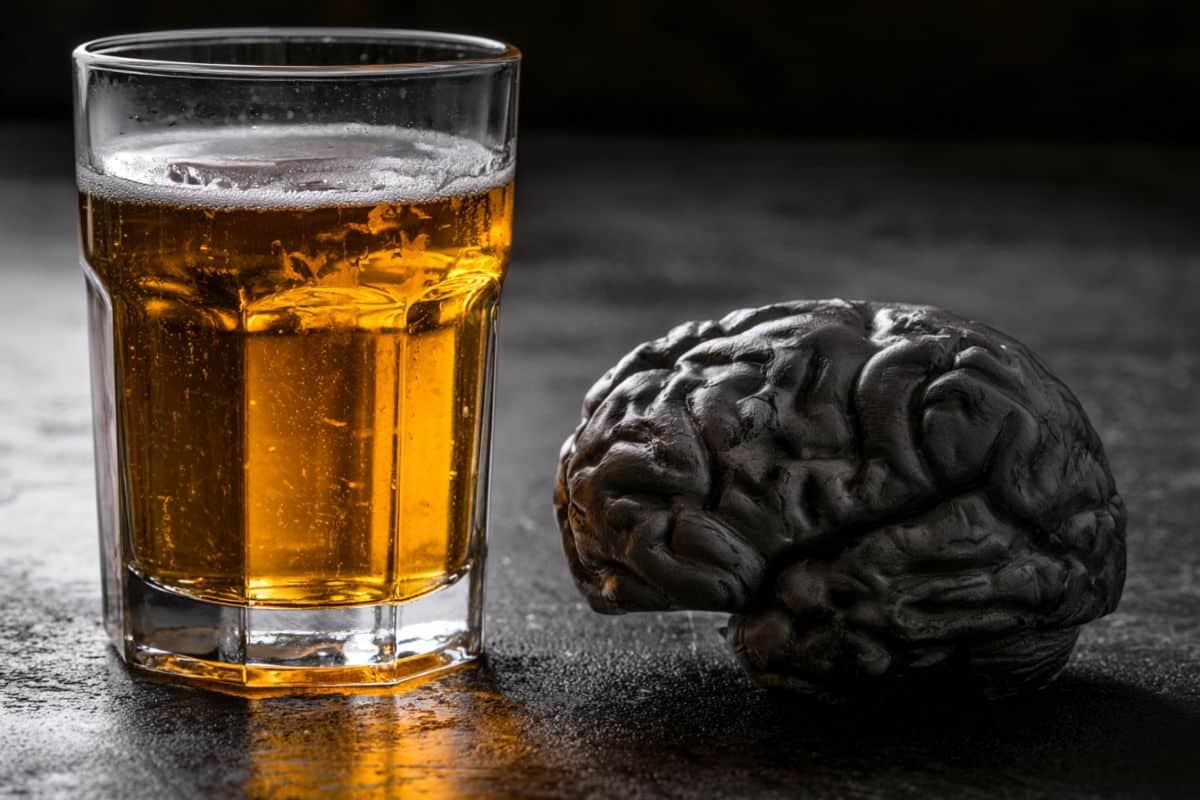
This shows a drink and a brain.

Alcohol exposure triggers opposite signaling behaviors within the brain’s corticostriatal circuit depending on the presence of amyloid-beta or tau protein hallmarks, shattering the long-standing medical assumption that lifestyle risk factors induce a uniform additive effect on dementia progression. Credit: Neuroscience News
The study was led by postdoctoral research associate Dr. Yufei Huang in the lab of Dr. Jun Wang, professor in the Department of Neuroscience and Experimental Therapeutics. The researchers focused on how alcohol affects brain circuits that are important for behavioral flexibility, or the ability to adjust behavior when situations change. This ability often becomes impaired in both addiction and Alzheimer’s disease.

“We started thinking about whether the same circuits involved in flexibility and adaptation might also be important in Alzheimer’s disease,” Huang said.

The team studied a brain circuit called the corticostriatal circuit, which helps control decision-making and behavioral flexibility. When this circuit does not work properly, people may struggle to adapt to new information or changing environments.

To test the effects of alcohol, the researchers used animal models that represent different Alzheimer’s-related pathological features. One model was based on amyloid-beta, a protein that forms plaques in the brain. The other was based on tau, a protein that forms tangles inside brain cells.

What they found surprised them.

Alcohol affected communication differently in the corticostriatal circuit, a major neural pathway involved with goal-directed behaviors. In animal models with amyloid-beta pathology, alcohol reduced communication in the circuit. In those with tau pathology, alcohol increased communication in the same circuit. In other words, the same exposure led to opposite effects depending on the type of Alzheimer’s-related change present.

“This finding was a complete surprise to us,” Huang said. “We expected alcohol to worsen both conditions in a similar way, but that was not what we saw.”

The researchers explained that amyloid-beta and tau affect the brain differently. Amyloid-beta pathology is often associated with abnormal increases in neural activity, whereas tau pathology is frequently linked to decreased communication between brain cells.

Based on these known differences, the team initially expected alcohol to push each model further in its existing pathological direction—increasing circuit communication in the amyloid-beta model and decreasing it in the tau model. Instead, alcohol produced the opposite pattern, reducing communication in the amyloid-beta model while increasing it in the tau model.

“The results were almost the opposite of what we expected,” Huang said. “To us, this highlights an important principle in biology: Combining two risk factors does not always produce a simple additive effect.”

The study adds to a growing understanding that Alzheimer’s disease is not a single, uniform condition. Different people may have different combinations of disease stage, pathology, genetics and lifestyle factors, which could influence how the brain responds to outside factors such as alcohol.

“This is important because Alzheimer’s disease is not a uniform condition,” Huang said. “People may differ in disease stage, type of brain changes, genetics and lifestyle factors.”

The study also highlights an unexpected link between Alzheimer’s research and addiction science. The Wang lab has long studied how substances like alcohol affect brain circuits involved in learning and decision-making. Those studies showed that substance use can lead to long-term changes in brain flexibility, which is also affected early in Alzheimer’s disease.

That overlap led researchers to ask whether alcohol might also influence Alzheimer’s-related brain changes.

Beyond effects on brain signaling, the study also found that alcohol may interfere with immune cells in the brain, especially in the amyloid model. These immune cells, called microglia, help maintain brain health and respond to disease-related changes such as amyloid accumulation.

“Alcohol not only altered brain circuit function but also appeared to disrupt immune cell responses in the brain,” Huang said. “This may be one way alcohol contributes to Alzheimer’s-related brain dysfunction.”

While the study was done in animal models, the researchers say the findings raise important questions for human health. Alcohol may not affect everyone with Alzheimer’s risk in the same way. People who already have early disease-related brain changes, or who carry genetic risk factors, may respond differently to alcohol exposure.

The team hopes future studies will look at alcohol use in people alongside brain biomarkers such as amyloid, tau and inflammation markers. This could help clarify whether alcohol has different or stronger effects in people who are already in the early stages of Alzheimer’s disease.

For now, the study adds to a growing understanding that brain health is shaped by a combination of biology, environment and lifestyle. Alcohol, rather than having a single effect on the brain, may interact with existing conditions in ways that are more complex than once thought.

Ultimately, the researchers say the goal is not only to understand Alzheimer’s disease better, but also to better understand how everyday exposures may shape brain health over time.

Funding: This research was supported by funding from the National Institute on Alcohol Abuse and Alcoholism (NIAAA/NIH; U01AA025932, R01AA027768, and R01AA030293) and the Texas A&M University Division of Research Targeted Proposal Teams (TPT) funding program.

Key Questions Answered:

Q: Why did scientists expect alcohol to affect amyloid-beta and tau proteins in the exact same way?

A: Traditionally, air pollution, high blood pressure, and alcohol use have been treated as generic risk factors that simply worsen brain health across the board. Because both amyloid plaques and tau tangles are toxic to brain tissue, researchers naturally assumed that adding alcohol to the mix would act like pouring gasoline on a fire, speeding up the damage uniformly. Discovering that alcohol actually dials down brain communication in one model while winding it up in the other was a complete biological surprise.

Q: What is behavioral flexibility, and why is this specific brain circuit so important?

A: Behavioral flexibility is your brain’s ability to smoothly change its strategy or choices when your environment shifts. The corticostriatal circuit is the primary brain highway that controls this decision-making process. When this circuit is damaged or altered, individuals get “stuck” in repetitive loops and struggle to process new information. Because this flexibility breaks down very early in both alcohol addiction and Alzheimer’s disease, understanding how they intersect is crucial to protecting adult cognitive health.

Q: Does this mean alcohol could actually be good for certain types of Alzheimer’s patients?

A: Absolutely not. While alcohol caused an unexpected surge in communication within the tau model, an abnormal spike in signaling can be just as toxic and damaging to brain networks as a drop in communication. Dr. Yufei Huang stresses that the real takeaway is that combining two different health risks doesn’t produce a simple, predictable outcome. Instead of showing that alcohol is beneficial, the study proves that everyday lifestyle exposures interact with our unique internal biology in highly complex, unpredictable ways.

Editorial Notes:

  • This article was edited by a Neuroscience News editor.
  • Journal paper reviewed in full.
  • Additional context added by our staff.

About this Alzheimer’s disease research news

Author: Laura Tolentino
Source: Texas A&M Health
Contact: Laura Tolentino – Texas A&M Health
Image: The image is credited to Neuroscience News

Original Research: Open access.

“Chronic alcohol exposure produces pathology-dependent corticostriatal circuit remodeling in Aβ- and tau-based mouse models of Alzheimer’s disease” by Himanshu Gangal, Jianrong Li, Jun Wang, Ruifeng Chen, Xuehua Wang, Xueyi Xie, Yufei Huang, Zhenbo Huang. Neuropharmacology
DOI:10.1016/j.neuropharm.2026.111069