Showing posts with label sugar substitute. Show all posts
Showing posts with label sugar substitute. Show all posts
Sunday, August 2, 2026


Thursday, June 6, 2024
Common sugar substitute linked to increased risk of heart attack and stroke
Is your competent doctor going to IMMEDIATELY contact the dietician and get the hospital diet protocol changed so this is not involved?
Common sugar substitute linked to increased risk of heart attack and stroke
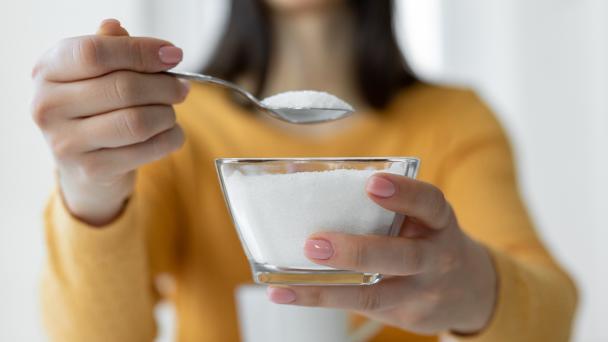
The safety of sugar substitutes is once again being called into question.
Researchers led by the Cleveland Clinic linked the low-calorie sugar substitute xylitol to an increased risk of heart attack, stroke or cardiovascular-related deaths, according to a study published today in the European Heart Journal.
Xylitol is a sugar alcohol that is found in small amounts in fruit and vegetables, and the human body also produces it. As an additive, it looks and tastes like sugar but has 40% fewer calories. It is used, at much higher concentrations than found in nature, in sugar-free gum, candies, toothpaste and baked goods. It can also be found in products labeled "keto-friendly," particularly in Europe.
The same research team found a similar association last year to the popular sugar substitute erythritol. The use of sugar substitutes has increased significantly over the past decade as concerns about rising obesity rates mount.
“We’re throwing this stuff into our food pyramid, and the very people who are most likely to be consuming it are the ones who are most likely to be at risk” of heart attack and stroke, such as people with diabetes, said lead author Dr. Stanely Hazen, chair of cardiovascular and metabolic sciences at Cleveland Clinic’s Lerner Research Institute.
Many heart attacks and strokes occur in people who do not have known risk factors, like diabetes, high blood pressure or elevated cholesterol levels. The research team began studying sugar alcohols found naturally in the human body to see if the compounds might predict cardiovascular risk in these people.
In the study, the investigators measured the level of naturally occurring xylitol in the blood of more than 3,000 participants after overnight fasting. They found that people whose xylitol levels put them in the top 25% of the study group had approximately double the risk for heart attack, stroke or death over the next three years compared to people in the bottom quarter.
The researchers also wanted to understand the mechanism at work, so they fed xylitol to mice, added it to blood and plasma in a lab and gave a xylitol-containing drink to 10 healthy volunteers. In all these cases, xylitol seemed to activate platelets, which are the blood component that controls clotting, said Hazen. Blood clots are the leading cause of heart attack and stroke.
“All it takes is xylitol to interact with platelets alone for a very brief period of time, a matter of minutes, and the platelet becomes supercharged and much more prone to clot,” Hazen said.
The next question is what causes naturally-occurring xylitol to be elevated in some people and how do you lower it, said Dr. Sadiya Khan, a cardiologist at Northwestern Medicine Bluhm Cardiovascular Institute and a professor of cardiovascular epidemiology at Northwestern Feinberg School of Medicine who was not involved in the new study.
Much more research needs to be done, said Hazen. In the meantime, he is telling patients to avoid eating xylitol and other sugar alcohols, whose spelling all end in ‘itol.’ Instead, he recommends using modest amounts of sugar, honey or fruit to sweeten food, adding that toothpaste and one stick of gum are probably not a problem because so little xylitol is ingested.
The report had key limitations.
First, the study of naturally occurring xylitol in people’s blood was observational and can show only an association between the sugar alcohol and heart risk. It does not show that xylitol caused the higher incidence of heart attack, stroke or death.
Nevertheless, given the totality of the evidence presented in the paper, “it’s probably reasonable to limit intake of artificial sweeteners,” said Khan. “Perhaps the answer isn’t replacing sugar with artificial sweeteners but thinking about more high quality dietary components, like vegetables and fruits, as natural sugars.”
Artificial sweeteners shouldn’t be difficult to avoid, said Joanne Slavin, PhD, RDN, a professor of food science and nutrition at the University of Minnesota-Twin Cities. They are listed on the ingredient list of packaged goods.
“Would I say never eat xylitol?” asked Slavin, who had no connection to the study. For some people who struggle to reduce sugar in their diet, sugar substitutes are one tool, and it comes down to personal choice, she said.
While Slavin found the study interesting and cause for some concern, she noted that sugar alcohols are expensive and are generally used in very small amounts in gum and sugar-free candies.
Another limitation of the study is that the participants whose xylitol levels in the blood were measured were at high risk for or had documented heart disease, and so the results may not apply to healthy individuals.
Still, many people in the general public share the characteristics of the study participants, said Hazen.
“In middle-aged or older America, it’s common to have obesity and diabetes or high cholesterol or high blood pressure,” he said.
This article was originally published on NBCNews.com
Friday, October 28, 2022
Horrifying – New Study Indicates That Popular Sugar Substitutes Worsen Your Memory
I never really drank any diet drinks at all.
Horrifying – New Study Indicates That Popular Sugar Substitutes Worsen Your Memory

Consuming low-calorie sweeteners also had an impact on the body’s
metabolic signaling, which may result in diabetes and other metabolism-related diseases.
Using laboratory models, scientists discovered that ingesting FDA-approved levels of saccharin, ACE-K, and stevia early in life may result in many changes to the body, including brain areas linked to memory and reward-motivated behavior.
Early-life high-sugar diets have been linked to impaired brain function, but what about low-calorie sugar substitutes? According to recent research, they could have a negative impact on the developing gut and brain.
The News
Researchers from the University of Southern California Dornsife College of Letters, Arts, and Sciences report that adolescents who consumed the low-calorie sweeteners saccharin, ACE-K, and stevia showed long-term memory impairments in a study that was recently published in the journal JCI Insight.
- The results are consistent with other studies that demonstrated sustained memory impairment in adolescent rats who consume sugar.
- Consuming low-calorie sweeteners also affected metabolic signaling in the body, which can lead to diabetes and other metabolism-related diseases.
- Rats
that ate low-calorie sweeteners as adolescents were less inclined to
work for sugar as adults, but they ate more sugar if it was readily
accessible, which is another factor that may influence the chance of
developing metabolic disease.

Diet soft drinks often use low-calorie sugar substitutes such as stevia and
acesulfame potassium, or Ace-K, which might have long-term effects on memory,
behavior and metabolic functions.
Why It Matters
There is a broad range of advice on what to eat and when to consume it. According to the researchers, information from studies like these may aid consumers and medical professionals in making better decisions at all stages of life.
“While our findings do not necessarily indicate that someone should not consume low-calorie sweeteners in general, they do highlight that habitual low-calorie sweetener consumption during early life may have unintended, long-lasting impacts,” said Scott Kanoski, associate professor of biological sciences at USC Dornsife.
What It Means for Humans
While most studies of low-calorie sweeteners focus on one substance and use amounts far exceeding the norm, the researchers made sure the study was in line with real-life conditions for people.
- Sweeteners tested include saccharin, acesulfame potassium (ACE-K) and stevia — which are commonly used in sweetened foods.
- The amount of sweetener consumed fell within FDA-approved guidelines for humans.
In Their Words
“Research using rodent models and low-calorie sweeteners has typically involved consumption levels that far exceed the FDA ‘acceptable daily intake’ (ADI) levels and used only a single sweetener. To design our research to be more applicable to humans, we kept consumption levels within the ADI and used multiple low-calorie sweeteners to determine if effects were specific to a given sweetener or general across sweeteners.” — Lindsey Schier, Gabilan Assistant Professor of Biological Sciences at USC Dornsife
The Experiment
To determine the effect of low-calorie sweetener consumption on memory, the researchers used methods that test object recognition and spatial recognition.
Rats were provided water sweetened with either stevia, ACE-K or saccharin or plain water, along with their normal food.
After
a month, the rats’ memory was tested using two different methods — one
tests if they remember an object they’ve seen before and the other is a
maze.
In the end, rats consuming sweetener were less likely to
remember an object or the path through the maze than those that drank
only plain water.
What Else?
The scientists also found other effects among the rats after they consumed sweeteners.
- They had fewer receptors on their tongues that detect sweet taste.
- The biological mechanism in their intestines that transports glucose into the blood was altered.
- Their brains had changed, specifically in regions associated with memory control and reward-motivated behavior.
What’s Next?
Kanoski and Schier say the findings reveal more questions worth exploring, including:
- How do sweetener substitutes cause a reduction in sweet taste receptors and how does that affect later dietary behavior?
- What does the change in the nutrient transport in the gut mean for health?
- What biological mechanisms link sweetener consumption with the changes to the brain?
The researchers say they intend to explore ways to reverse the long-lasting effects of adolescent low-calorie sweetener consumption and to study how it influences food choices and preferences later in life.
Reference:
“Early-life low-calorie sweetener consumption disrupts glucose
regulation, sugar-motivated behavior, and memory function in rats” by
Linda Tsan, Sandrine Chometton, Anna M.R. Hayes, Molly E. Klug, Yanning
Zuo, Shan Sun, Lana Bridi, Rae Lan, Anthony A. Fodor, Emily E. Noble,
Xia Yang, Scott E. Kanoski and Lindsey A. Schier, 13 September 2022, JCI Insight.
DOI: 10.1172/jci.insight.157714
The
study was funded by the National Institute of Diabetes and Digestive
and Kidney Diseases, the National Insitute on Deafness and Other
Communication Disorders, and the National Science Foundation.
Subscribe to:
Posts (Atom)