Changing stroke rehab and research worldwide now.Time is Brain! trillions and trillions of neurons that DIE each day because there are NO effective hyperacute therapies besides tPA(only 12% effective). I have 523 posts on hyperacute therapy, enough for researchers to spend decades proving them out. These are my personal ideas and blog on stroke rehabilitation and stroke research. Do not attempt any of these without checking with your medical provider. Unless you join me in agitating, when you need these therapies they won't be there.

What this blog is for:

My blog is not to help survivors recover, it is to have the 10 million yearly stroke survivors light fires underneath their doctors, stroke hospitals and stroke researchers to get stroke solved. 100% recovery. The stroke medical world is completely failing at that goal, they don't even have it as a goal. Shortly after getting out of the hospital and getting NO information on the process or protocols of stroke rehabilitation and recovery I started searching on the internet and found that no other survivor received useful information. This is an attempt to cover all stroke rehabilitation information that should be readily available to survivors so they can talk with informed knowledge to their medical staff. It lays out what needs to be done to get stroke survivors closer to 100% recovery. It's quite disgusting that this information is not available from every stroke association and doctors group.

Showing posts with label positive affect. Show all posts

Saturday, August 17, 2024

Study finds certain personality traits can predict dementia

 Did your competent? doctor explain this to you so you can work on preventing dementia post stroke? NO? So you don't have a functioning stroke doctor, do you?

I'm extremely good at the positive ones.

Your chances of getting dementia. YOUR DOCTOR IS RESPONSIBLE FOR PREVENTING THIS!

1. A documented 33% dementia chance post-stroke from an Australian study?   May 2012.

2. Then this study came out and seems to have a range from 17-66%. December 2013.`    

3. A 20% chance in this research.   July 2013.

4. Dementia Risk Doubled in Patients Following Stroke September 2018

The latest here:

Study finds certain personality traits can predict dementia

A new study titled “Can Personality Traits Predict Dementia?” looks at various personality traits and their correlation with whether or not the person with them is more or less likely to develop dementia. The study, conducted by researchers from Northwestern University and the University of California, Davis, involved analyzing data from 44,531 participants who were part of eight longitudinal studies conducted across three continents and five countries. The researchers focused on personality traits such as conscientiousness, extraversion, neuroticism, positive affect, and negative affect. The data was combined and harmonized to examine whether personality traits and subjective reports of well-being influenced the neuropsychological and neuropathological characteristics of dementia. (1)
 
Neuroticism, low conscientiousness, and negative affect were linked to an increased risk of dementia, while conscientiousness, extraversion, and positive affect were associated with a lower risk. Interestingly, no consistent associations were found between personality traits and dementia-related brain changes. It is important to note that the samples used in the study were predominantly from the United States, which presents a limitation in terms of generalizability across diverse populations.
 
Before continuing to talk about the study, let's quickly define what the personality traits mentioned in the study actually mean:©Provided by The Hearty Soul
  • Conscientiousness: A trait associated with the tendency to be responsible, organized, hard-working, goal-directed, and to adhere to norms and rules. These people tend to exhibit self-control, industriousness, responsibility, and reliability. (2)
  • Extraversion: A trait associated with a general tendency to experience positive emotions, as well as traits such as sociability, assertiveness, high activity level, positive emotions, and impulsivity. (3)
  • Neuroticism: the trait disposition to experience negative affects, including anger, anxiety, self‐consciousness, irritability, emotional instability, and depression. Persons with elevated levels of neuroticism respond poorly to environmental stress, interpret ordinary situations as threatening, and can experience minor frustrations as hopelessly overwhelming. (4)
  • Positive Affect: PA is characterized by joy and high levels of energy, concentration, enthusiasm, and alertness. (5)
  • Negative Affect: NA is characterized by distress, anger, contempt, and nervousness or fear.
The results of this study provide valuable insights into the potential predictive power of personality traits in relation to dementia. Identifying these risk factors earlier could assist in the development of targeted interventions and personalized strategies to mitigate the risk of developing dementia. The findings also highlight the need for further research to explore these associations using biomarkers of dementia and in more diverse and inclusive populations.
 
If you possess certain personality traits, it is important to be aware of their potential implications in relation to dementia. Individuals who exhibit neuroticism, low conscientiousness, or negative affect may be at an increased risk of developing dementia. On the other hand, those high in conscientiousness, extraversion, or positive affect may have a reduced risk. Understanding these associations can act as a trigger for individuals to take proactive steps in monitoring their cognitive health and adopting lifestyle choices that may help reduce the risk of dementia.
 
Dementia is a broad term used to describe a range of symptoms that result from progressive brain damage. It affects memory, thinking, behavior, and the ability to perform everyday tasks. Alzheimer’s disease is the most common type of dementia, accounting for around 60-70% of cases. Other types include vascular dementia, Lewy body dementia, and frontotemporal dementia. Dementia is a significant public health issue, not only for individuals and families affected but also for healthcare systems and society as a whole. (6)  
 

Saturday, May 25, 2024

Can personality traits predict dementia?

Conscientiousness - I was extremely this way growing up and through most of my life. I have now decided I will no longer be the responsible person in the group.

For almost all my life, until I moved alone to Michigan, I considered myself introverted. But in order to meet people here I jumped at any invitation.  

Positive affectivity refers to positive emotions and expression, including cheerfulness, pride, enthusiasm, energy, and joy. This describes me pretty well. Life is great.

Ask your competent? doctor if these traits are enough to prevent your risk of dementia post stroke.

Your risk of dementia, has your doctor told you of this?

1. A documented 33% dementia chance post-stroke from an Australian study?   May 2012.

2. Then this study came out and seems to have a range from 17-66%. December 2013.`    

3. A 20% chance in this research.   July 2013.

4. Dementia Risk Doubled in Patients Following Stroke September 2018

The latest here:


Can personality traits predict dementia?

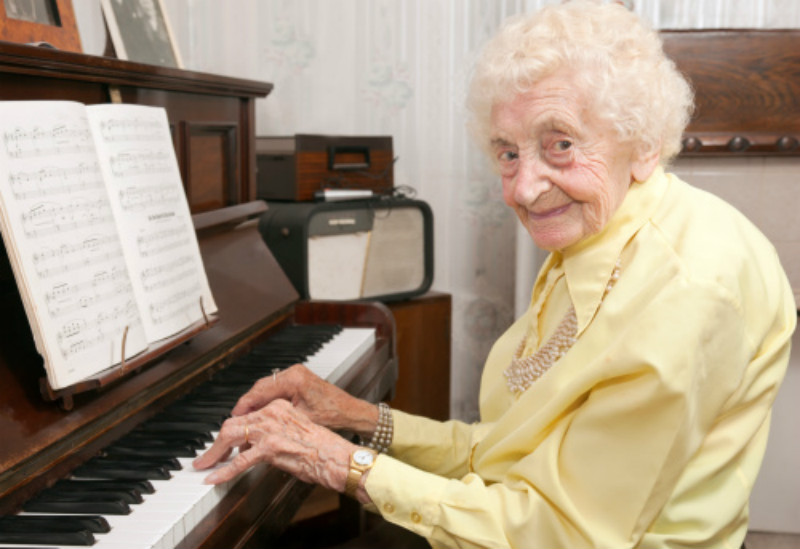
An NIA-funded study supports a predictive link between personality traits and dementia. The study found that conscientiousness, extraversion, and positive affect were associated with a lower risk for dementia while neuroticism and negative affect were associated with an increased risk. However, no associations were found between personality traits and dementia-related brain changes. The results, published in Alzheimer’s and Dementia, the Journal of the Alzheimer’s Association, may help researchers understand whether changes in personality can predict one’s risk for dementia.senior-beautiful-grey-haired-woman-wearing-casual-shirt-and-glasses-over-yellow

For this study, researchers from Northwestern University and the University of California, Davis analyzed data from 44,531 participants who were part of eight separate longitudinal studies conducted in three continents and five countries. The team harmonized the data and tested whether personality traits and subjective reports of well-being predicted neuropsychological and neuropathological characteristics of dementia.

The results support the idea that certain personality traits may be risk factors for dementia. Neuroticism, low conscientiousness, and negative affect were associated with dementia diagnoses across samples, measures, and time. Other personality traits may be more protective; for example, conscientiousness, extraversion, and positive affect were associated with a lower risk for dementia.

Among the combined participant data, approximately 50% of all the cases included autopsies. A limited number of samples (1,703) from the combined data were from people who developed dementia. This enabled researchers to compare autopsy results with personality traits. They found no consistent associations. One limitation of the study is that all the neuropathology samples were from the United States and none of the studies were representative with respect to race.

The study authors note that more research is needed to prospectively explore such associations using biomarkers of dementia and among more diverse and inclusive populations and to establish whether aspects of personality or subjective well-being are causally linked to dementia outcomes.

This research was supported by NIA grants P01AG043362, R01AG018436, R01AG067622, R01AG017917, P30AG010161, P30AG72975, R01AG15819, R01AG072559, and P01AG03949.

These activities relate to NIH’s AD+ADRD Research Implementation Milestones 2.J, Disease Mechanisms: Social and psychosocial factors, and 11.B, Enabling Tech: Outcome measures harmonization.

Reference: Beck ED, et al. Personality predictors of dementia diagnosis and neuropathological burden: An individual participant data meta-analysis. Alzheimer’s & Dementia. 2024;20(3):1497-1514. doi: 10.1002/alz.13523.

Friday, December 1, 2023

Personality Traits: A Surprising Factor in Dementia Risk

 With your chances of dementia is your doctor informing you of the ways to prevent it?

Your chances of getting dementia.

1. A documented 33% dementia chance post-stroke from an Australian study?   May 2012.

2. Then this study came out and seems to have a range from 17-66%. December 2013.`    

3. A 20% chance in this research.   July 2013.

4. Dementia Risk Doubled in Patients Following Stroke September 2018 


The latest here:

Personality Traits: A Surprising Factor in Dementia Risk

Summary: Researchers revealed that certain personality traits, such as conscientiousness, extraversion, and positive affect, can reduce the likelihood of a dementia diagnosis.

This comprehensive analysis involved over 44,000 people, with 1,703 developing dementia. Surprisingly, the researchers found no correlation between these protective personality traits and brain pathology in deceased individuals, suggesting these traits may enhance resilience to dementia-related impairments.

This study highlights the potential of targeting personality traits in interventions to lower long-term dementia risk, emphasizing the role of non-genetic factors in dementia development.

Key Facts:

  1. Positive personality traits like conscientiousness and extraversion are linked to a lower dementia risk.
  2. The study analyzed data from over 44,000 individuals, providing a broad perspective on the issue.
  3. No direct link was found between these personality traits and brain pathology, suggesting a resilience mechanism at play.

Source: UC Davis

People with personality traits such as conscientiousness, extraversion and positive affect are less likely to be diagnosed with dementia than those with neuroticism and negative affect, according to a new analysis by researchers at the University of California, Davis and Northwestern University.

The difference was not linked to physical damage to brain tissue found in dementia patients, but more likely to how certain personality traits help people navigate dementia-related impairments.

The work is published Nov. 29 in Alzheimer’s & Dementia: The Journal of the Alzheimer’s Association.

Previous studies have tried to establish links between personality traits and dementia, but these were mostly small and represented only specific populations, said Emorie Beck, assistant professor of psychology at UC Davis and first author on the paper.

“We wanted to leverage new technology to synthesize these studies and test the strength and consistency of these associations,” Beck said. If those links hold up, then targeting personality traits for change in interventions earlier in life could be a way to reduce dementia risk in the long term, she said.

Beck and colleagues analyzed data from eight published studies including over 44,000 people, of whom 1,703 developed dementia. They looked at measures of the “big five” personality traits  (conscientiousness, extraversion, openness to experience, neuroticism and agreeableness) and subjective wellbeing (positive and negative affect, and life satisfaction) compared to clinical symptoms of dementia (performance on cognitive tests) and brain pathology at autopsy.

Personality is typically thought to be linked to dementia risk through behavior, Beck said. For example, people who score high on conscientiousness may be more likely to eat well and take care of their health, which results in better health in the long term.

The researchers found that high scores on negative traits (neuroticism, negative affect) and low scores on positive traits (conscientiousness, extraversion, positive affect) were associated with a higher risk of a dementia diagnosis. High scores on openness to experience, agreeableness, and life satisfaction had a protective effect in a smaller subset of studies.

Link to diagnosis but not pathology

To their surprise, however, no link was found between these personality traits and actual neuropathology in the brains of people after death.

“This was the most surprising finding to us,” Beck said. “If personality is predictive of performance on cognitive tests but not pathology, what might be happening?”

One explanation is that some personality traits could make people more resilient to the damage caused by diseases such as Alzheimer’s.

People with higher levels of some traits may find ways, whether they are aware of it or not, to cope with and work around impairments. Other work by members of the study team has shown that some people with quite extensive pathology can show little impairment on cognitive tests.

The researchers also looked at other factors that could moderate the relationship between personality and dementia risk and neuropathology, including age, gender and educational attainment.

“We found almost no evidence for effects, except that conscientiousness’s protective effect increased with age,” Beck said.

Many factors contribute to the development of dementia. Among those that aren’t directly related to genetics, this study is a first step in teasing out the associations between personality and dementia, Beck said.

The researchers plan to continue and expand the work, including looking at people who show little impairment in the face of a lot of pathology. They also hope to look at other everyday factors that might play a role in developing dementia.

Part of the work was conducted while Beck was a postdoctoral researcher at Northwestern University in Chicago. Coauthors are: Tomiko Yoneda, UC Davis and Northwestern; Daniel Mroczek and Eileen Graham, Northwestern; Bryan James, David Bennett and John Morris, Rush University Medical Center, Chicago; Jason Hassenstab, Washington University School of Medicine, St. Louis; Mindy Katz and Richard Lipton, Albert Einstein College of Medicine, the Bronx.

Funding: The work was supported by grants from the National Institute on Aging.

About this personality and dementia research news

Author: Andrew Fell
Source: UC Davis
Contact: Andrew Fell – UC Davis
Image: The image is credited to Neuroscience News

Saturday, April 20, 2019

The secret to living past 100

Well I got the worse physical health out of the way at age 50 so I get to be disabled for half my life. All because our stroke medical world has completely failed at even attempting to get survivors to 100% recovery. Even chronic survivors like me should recover, you just need to solve neuroplasticity and neurogenesis and make them repeatable on demand.  Fuck them, I'm going for 100 regardless. 

The secret to living past 100

Naveed Saleh, MD, MS, for MDLinx | April 18, 2019
The idea of living past 100 years of age may be a difficult sell for some, but to others it’s alluring. Granted, an elderly person who is relatively healthy may have a much stronger desire to live past 100 than a younger person who is cushioned from the inevitability of aging.

Positive mindset plays an important role in exceptional longevity.
Throughout the world, the global population is aging at a historic rate. The number of nonagenarians (people in their 90s) rose from 7.8 million to 16.5 million between 2000 and 2015. The number of centenarians (people age 100 and older) is expected to jump from 180,000 in 2000 to 3.2 million by 2050.
In nonagenarians and centenarians, exceptional longevity is characterized by positive psychological traits and mindset, hard work, and strong bonds with family, faith, and land, according to the results of a mixed-methods quantitative-qualitative study recently published in International Psychogeriatrics.
“Studying the strategies of exceptionally long-lived and lived-well individuals, who not just survive but also thrive and flourish, enhances our understanding of health and functional capacities in all age groups,” wrote the authors, led by Anna Scelzo, PsyD, MSc, Department of Mental Health and Substance Abuse, Azienda Sanitaria Locale 4, Chiavarese, Italy.
The investigators examined positive psychological traits among 29 nonagenarians and centenarians and 51 “young-old” family members (aged 51-75 years) by using standardized rating scales of mental and physical well-being, resilience, optimism, anxiety, depression, and perceived stress.
The researchers also conducted qualitative interviews to detail personal narratives, such as migrations, beliefs, and traumatic events. Next, they interviewed the young-old family members regarding the personality traits of their nonagenarian and centenarian relatives.
The researchers found that nonagenarians and centenarians experienced worse physical health but maintained better mental well-being vs their younger relatives. This superior mental well-being was negatively associated with levels of depression and anxiety. This “paradox” of better well-being in the elderly despite worsened physical state jibes with previous research on the topic.
In qualitative interviews, themes that emerged included positivity (resilience and optimism), working hard, and strong ties to both family and religion(neither for me).
Nonagenarian and centenarian subjects exhibited a strong need for control (ie, domineering). These older individuals also wanted to be in charge of their own social lives and were described as “stubborn” by their younger relatives. Among all subjects, engagement in social activities was cited as a necessity to feel responsible, important, and connected.
Resilience was also identified an integral part of nonagenarian and centenarian identity. The authors highlighted that centenarians are role models for resilience because they have survived decades of risk and threats. They have had to adapt to countless daily stressors through a long life. Furthermore, exceptional longevity could represent sustainability, which involves a complex mix of identity, tradition, and change—thus indicating the importance of resilience, optimism, and purpose in life.
This study was conducted in Cilento, a city in southern Italy, which is the “Birthplace of the Mediterranean diet.” The investigators suggested that, based on previous research in this population, there could be partially linked heritability of longevity and positive traits.
One major limitation of this study is that it relied on retrospective accounts of life experiences, which could be biased. The investigators also used semi-structured vs in-depth interviews, which could make it more difficult to elicit themes.
“Exceptional longevity was characterized by a balance between acceptance of and grit to overcome adversities along with a positive attitude and close ties to family, religion, and land, providing purpose in life,” the researchers concluded.